
January 24 – April 22, 2026
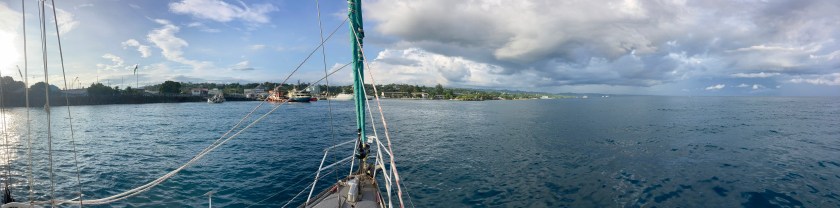
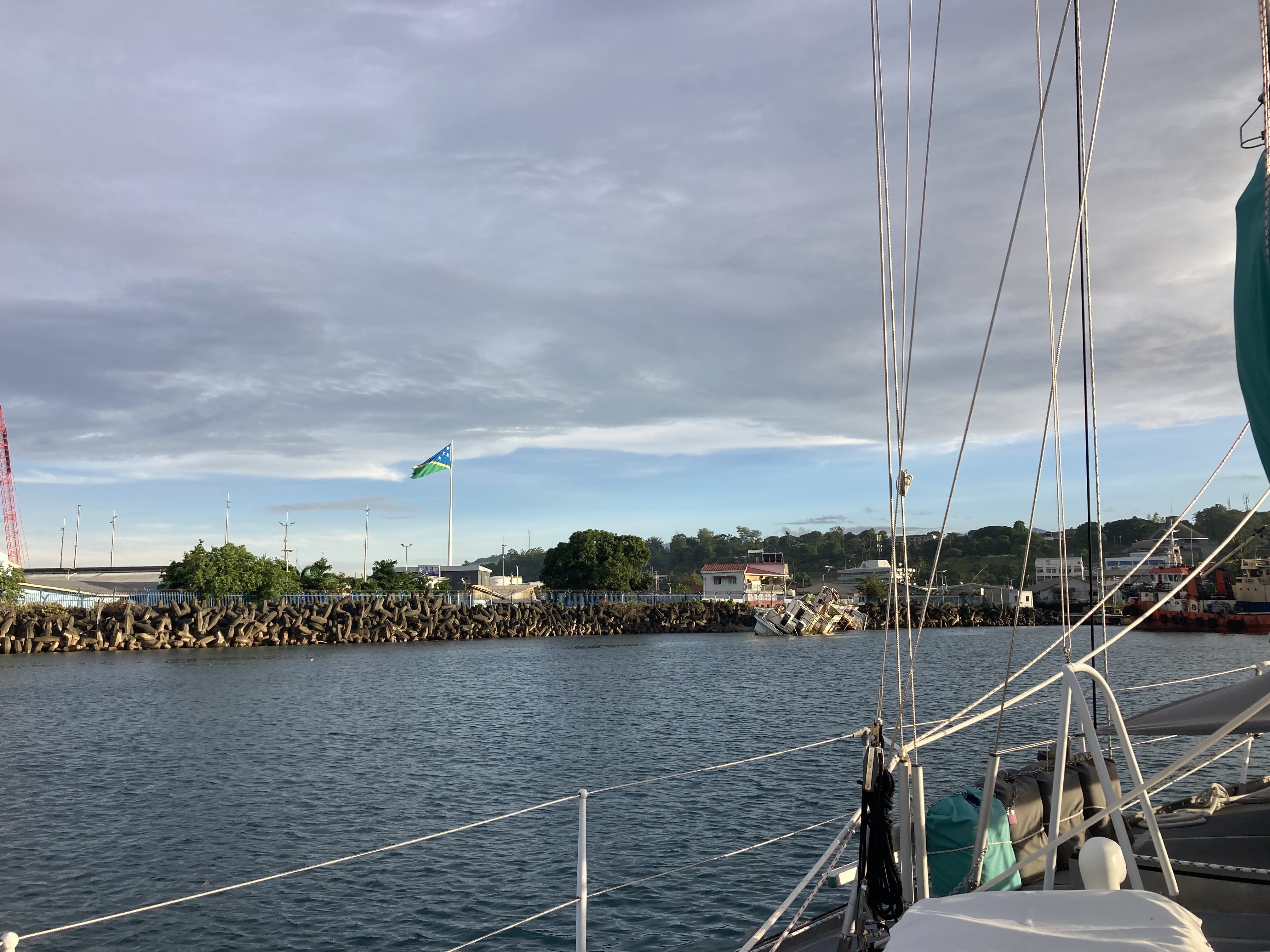
Excluding return visits to the US via airplane, Honiara would represent our first visit to a city of over 60,000 people since departing La Paz, Mexico in 2024 when Exit commenced with its Pacific crossing. It’s a bit stunning to realize that there are actually so incredibly few densely populated areas within the unbelievably vast space that the Pacific Ocean occupies.
With a population of right around 130,000, Honiara is the largest city on Guadalcanal (and the Solomon Islands for that matter). In fact, it is one of only four cities with a population over 100,000 to be found in the entire 2,100 mile wide corridor (between the latitudes of 15°N and 15°S) that stretches some 8,000 miles from the west coast of North America to the east coast of Australia (Honiara in the Solomon Islands, Suva in Fiji, Lae and Port Moresby in Papau/New Guinea…all with populations less than 200,000). By comparison, Honolulu is the sole city in the entirety of the Pacific Ocean between the Americas and Australia (outside of New Zealand) with a population exceeding one million people…but that’s over 3,500 miles from our current location.
Honiara…a Pacific metropolitan. And, as such, the most likely hub for us to get some shit done that really needed doing. To be fair, the list wasn’t that long. But it was getting quite critical.
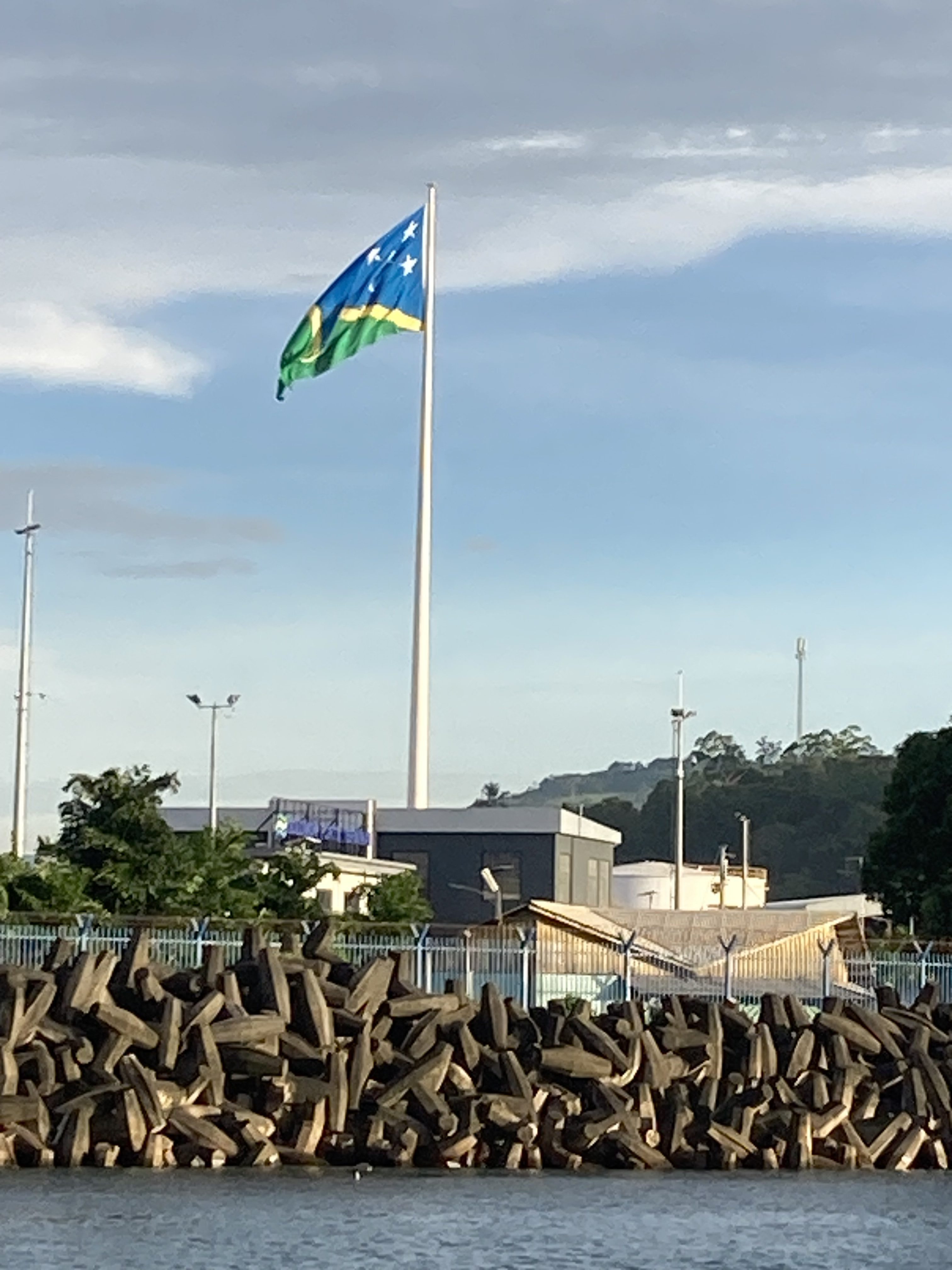
At the top of the list: obtaining some Solomon’s cash. Like the sea gypsies of old had done long before standardized currency emerged among civilizations, for nearly month we had managed to barter for goods using only what we carried aboard Exit. But, with our trading stocks – primarily school supplies, along with a very limited supply of miscellaneous unneeded and redundant items we still carried – largely depleted by scores of fruit-bearing and vegetable-bearing midgets, we really needed to find another source of capital. And Honiara represented the first place in the Solomons where we stumbled across that source…ATMs.
The second item on the list: a visit to immigration. For some reason we never fully deciphered, the immigration officials at Lata had only issued us a thirty day visa, instead of ninety days, upon our arrival. It was now only one day before that deadline. Fortunately, when we had first reached out to Dave (the manager of the dive live aboard Bilikiki, who had graciously offered us the use of the mooring Exit was currently tied to), he had also offered to make contact with the immigration office in Honiara to pre-arrange the necessary visa extension logistics for us. His experience with all the immigration gymnastics he already performed regularly on behalf of his own employees, as well as familiarity with the people at the immigration office, meant he could sort out everything in advance of our arrival. All that was now required of us was to stop by the immigration office with our passports and cash. Boom…done! Again and again, Dave proved to her an incredibly friendly and helpful individual, demonstrating repeatedly that he was worth more than his weight in gold as a local resource.
We got item one done. And item two. We topped up our fuel. That was item three on the list.
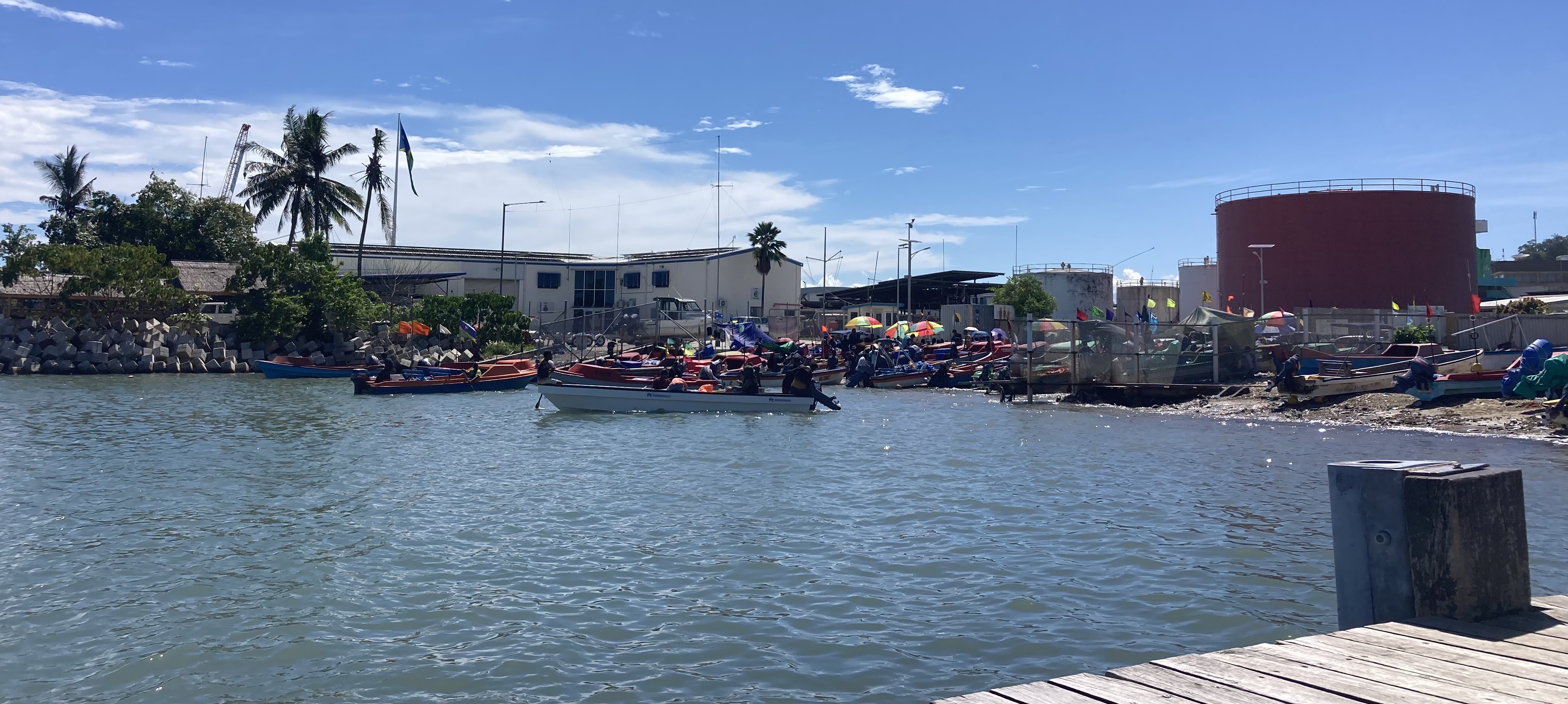
A wooden jetty owned by a bar calling itself the Honiara Yacht Club made for a much easier task than would have been the case had we needed to beach the dinghy.
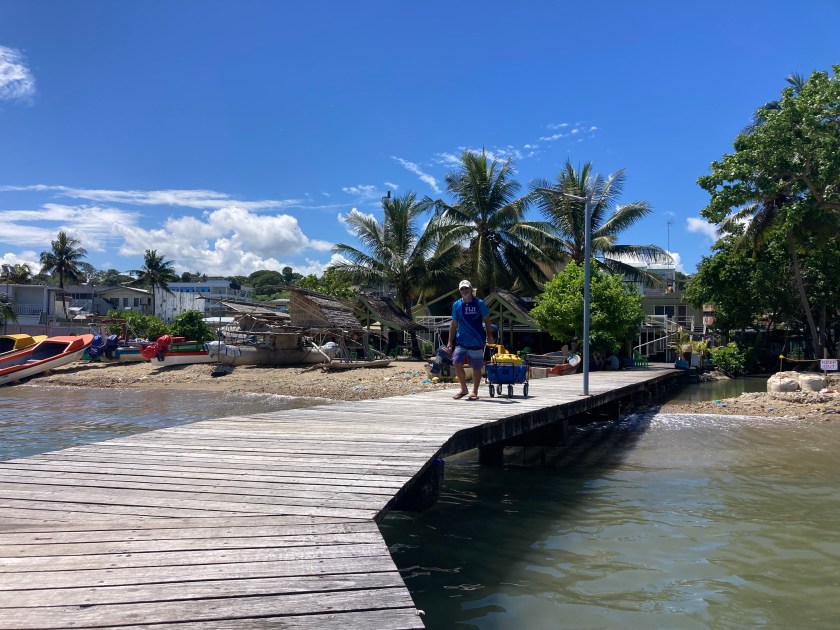
Thankfully, “The Bluetooth Walker”, completely recovered from its quadrupedal (or quadricyclic?) transplant surgery, was entirely up to the task of hauling diesel and petrol jugs. Lucky for us, the petrol station was within a hundred meters of the yacht club’s front doors.
We were able to get our compressor ashore and dropped off at Emperor Divers for Dave to take a look at. Item number four on the list. We were lucky the dive shop was also close by, right across the street from the yacht club, and the compressor fit perfectly in the wagon.
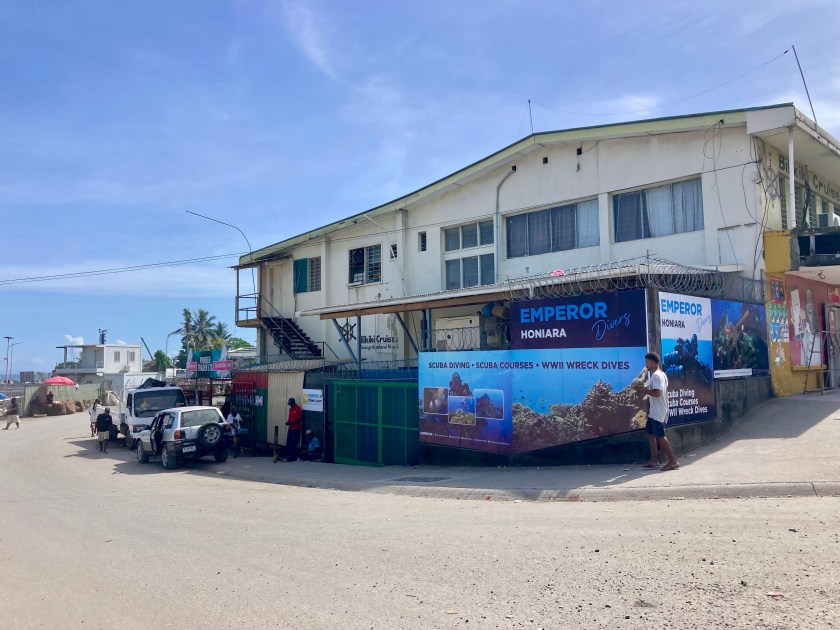
We even got to enjoy a couple of meals ashore at a small restaurant along the waterfront breakwater where we were also allowed to leave our dinghy (a very lucky thing as we met the owner of the restaurant – another foreign expat named Fred…who would also turn out to be an extremely important local resource in very short order).
However, our improving good fortune couldn’t last.
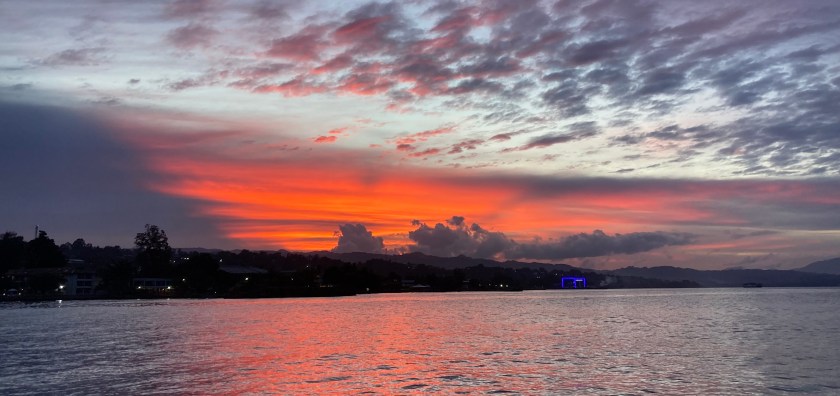
Having access to Bilikiki’s mooring, though it couldn’t have been a more literal example of “being off the hook” regarding not having to anchor in Iron Bottom Bay, did not mean we were “off the hook” from being dealt other cards of chaos from the deck that Poseidon holds and deals from.
The weather forecasts looked like potentially a lot of rain was coming. Farther out in the channel, it would be screaming from the west with sustained winds reaching twenty-eight knots and gusts that could reach into the forties. However, all indications were that, at the shoreline of Honiara, winds would be less than ten knots. It didn’t look like a big deal.
Wrong.
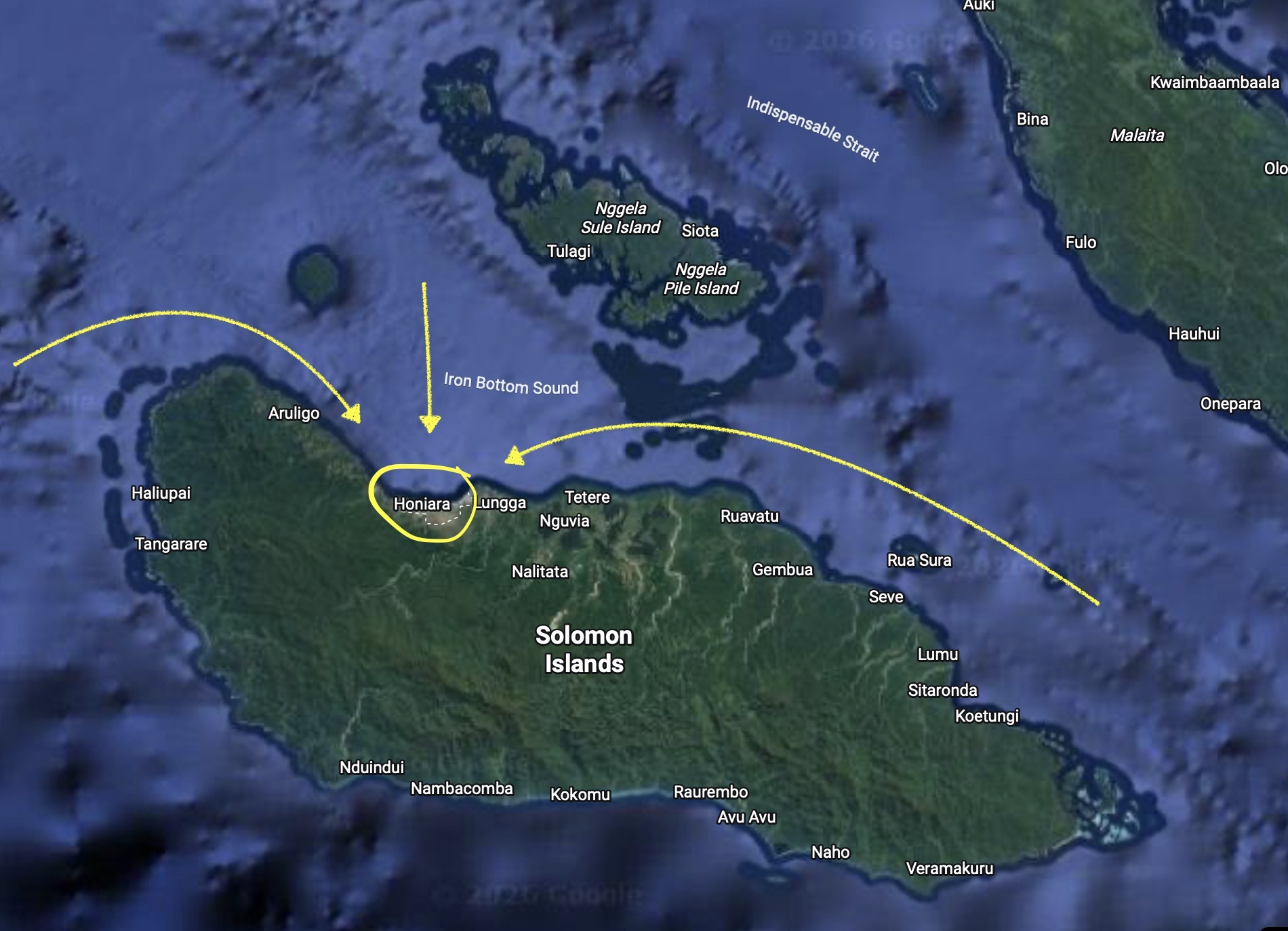
As it turns out, Iron Bottom Bay doesn’t need winds coming straight into it to become thoroughly untenable…even dangerous. The bay is exposed enough that winds from the east or west can create swell that manages to wrap around and right into Iron Bottom Bay.
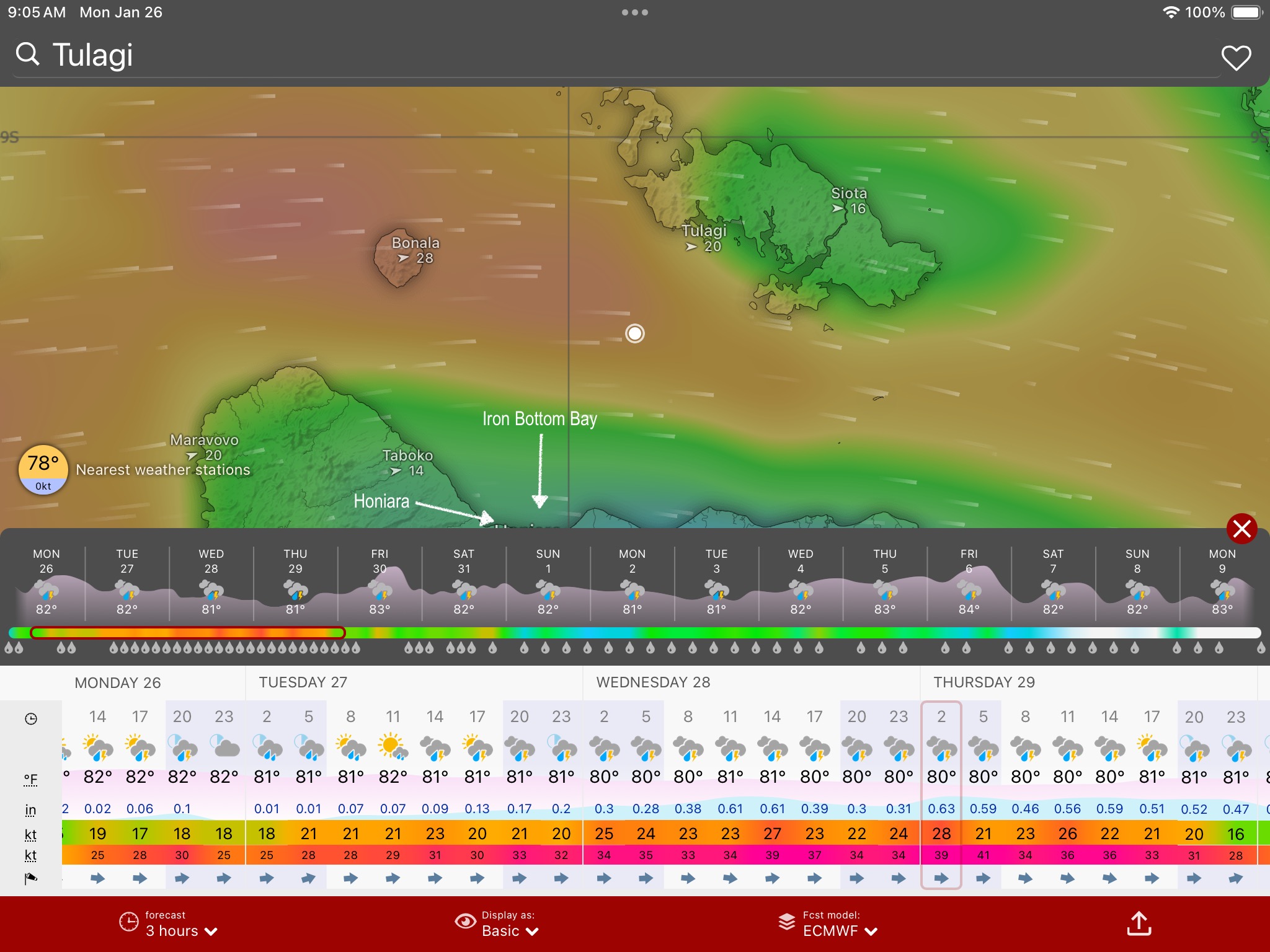
The ominous gray clouds starting to roll in were our first alarm bells.
What were initially only gentle, tiny swells started to build…and build.
Then, well before anything drastic started to kick up, waves began coming in.
Before long, those waves started breaking.
When they were approaching three feet, enough that they were beginning to break over Exit’s toe rails onto the deck, we started feeling the jerks of a mooring line that was coming up short due to the up and down motion. As this became more and more pronounced, we realized we couldn’t stay. Our welded deck cleats would hold up fine, but we were likely to break the mooring line if things continued. And the shore was well too close to deal with that drama.
The island of Tulagi, part of the Florida Islands group to the north, was twenty nautical miles away…not a great prospect considering how conditions were deteriorating out there. But well better than staying put where we currently were. If waves are coming over the bow, better to be underway than sitting on a mooring. We made an immediate decision to untie and leave, before the situation became dire. We’d have to reconnect with Dave and sort things out later, after things settled back down.
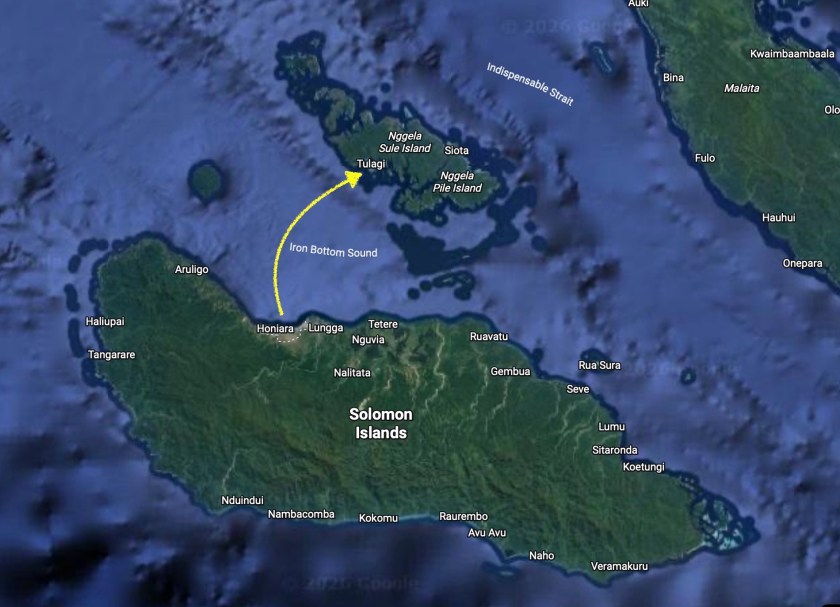
Once we were underway and heading for Tulagi, we reached out to Fred (the restaurant owner that we’d met earlier) via text messenger. He responded immediately and, lo and behold, he informed us he had a mooring on Tulagi that we were free to use. Sweeeeet!
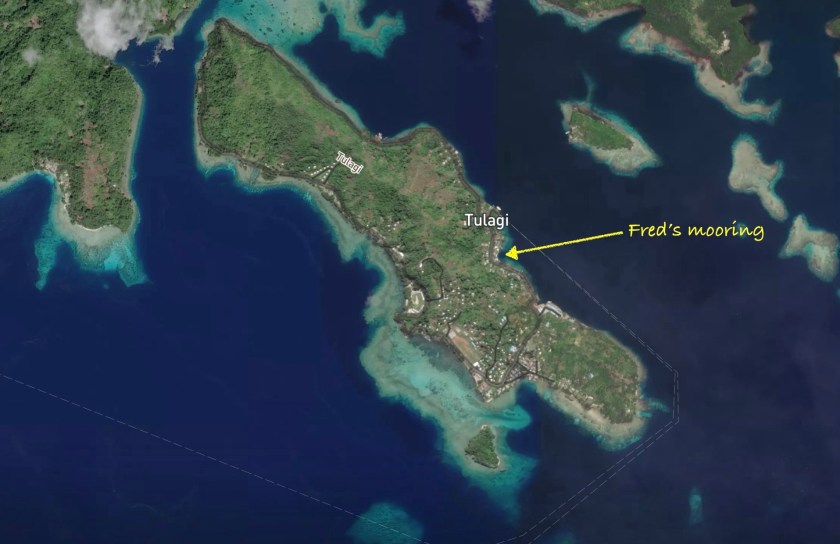
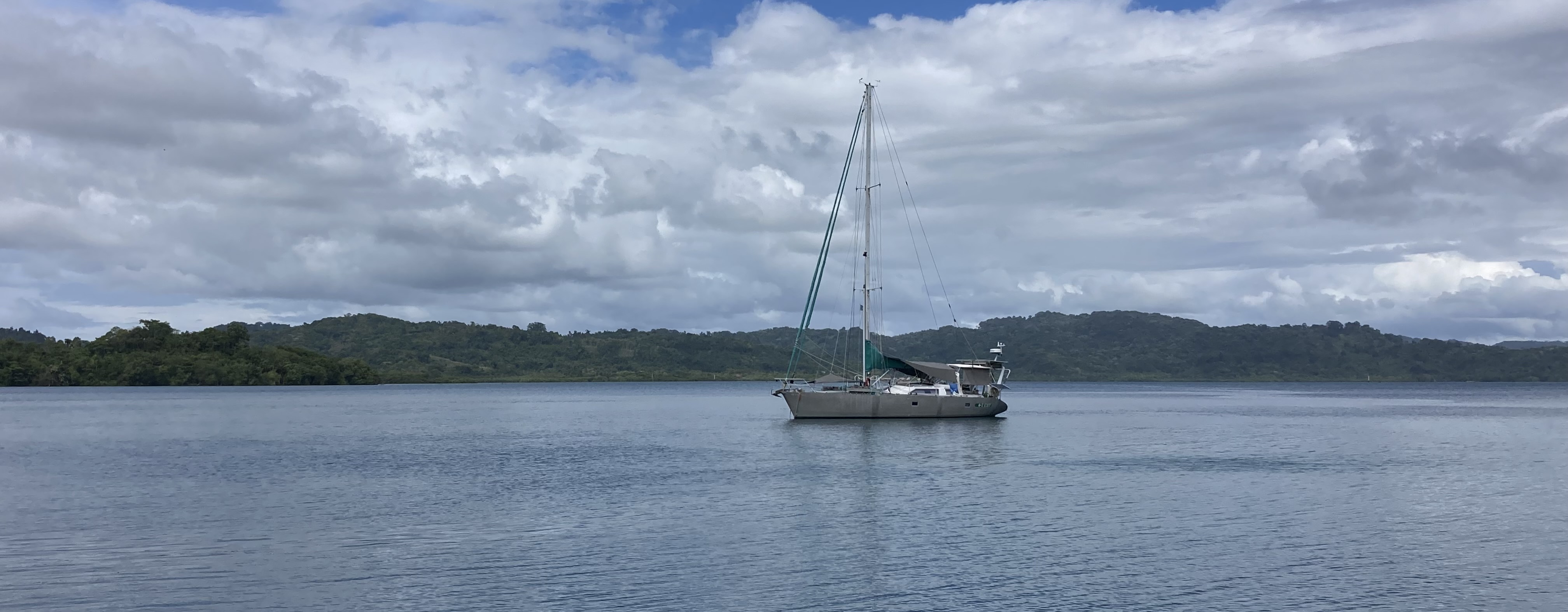
When we arrived at Tulagi we were met at the mooring by the caretaker of Fred’s property, who helped us get tied up to the mooring. It was a perfect location to sit through the weather.
It rained and blew…
…and rained…
…and rained and blew…
…and rained and blew some more.
After three days, it seemed as though Mother Nature finally grew tired of the maelstrom and relented.
We were happy.
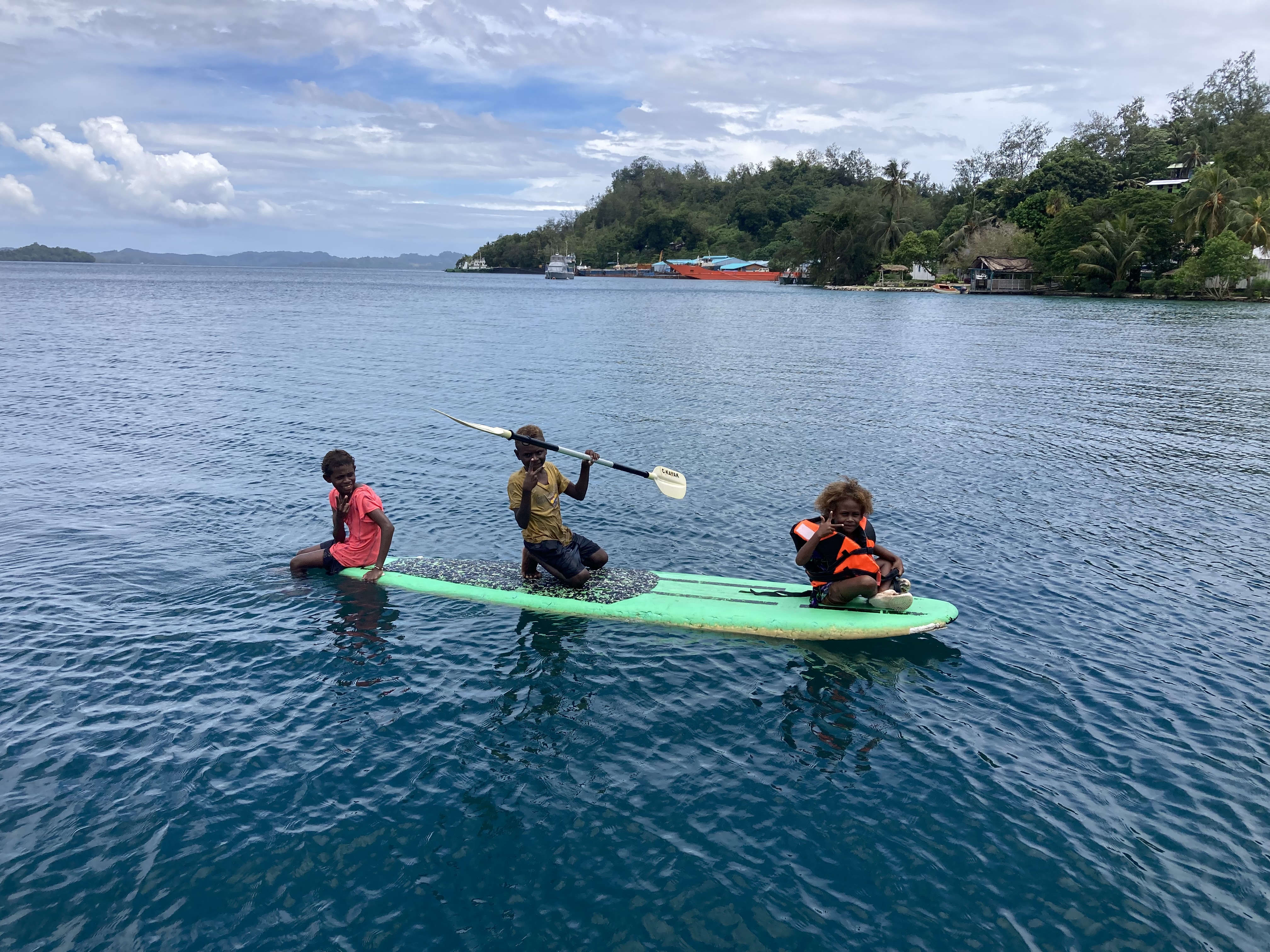
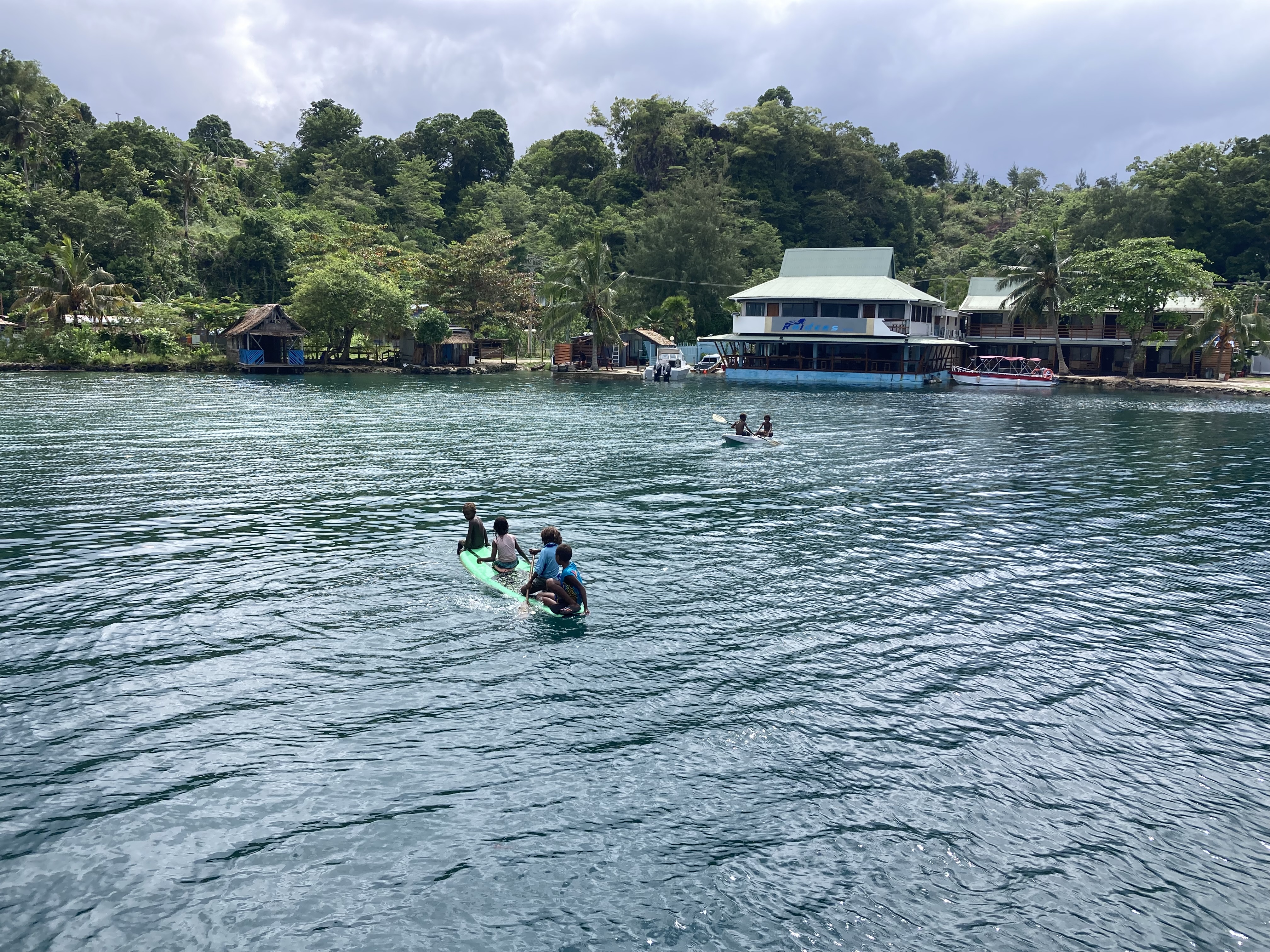
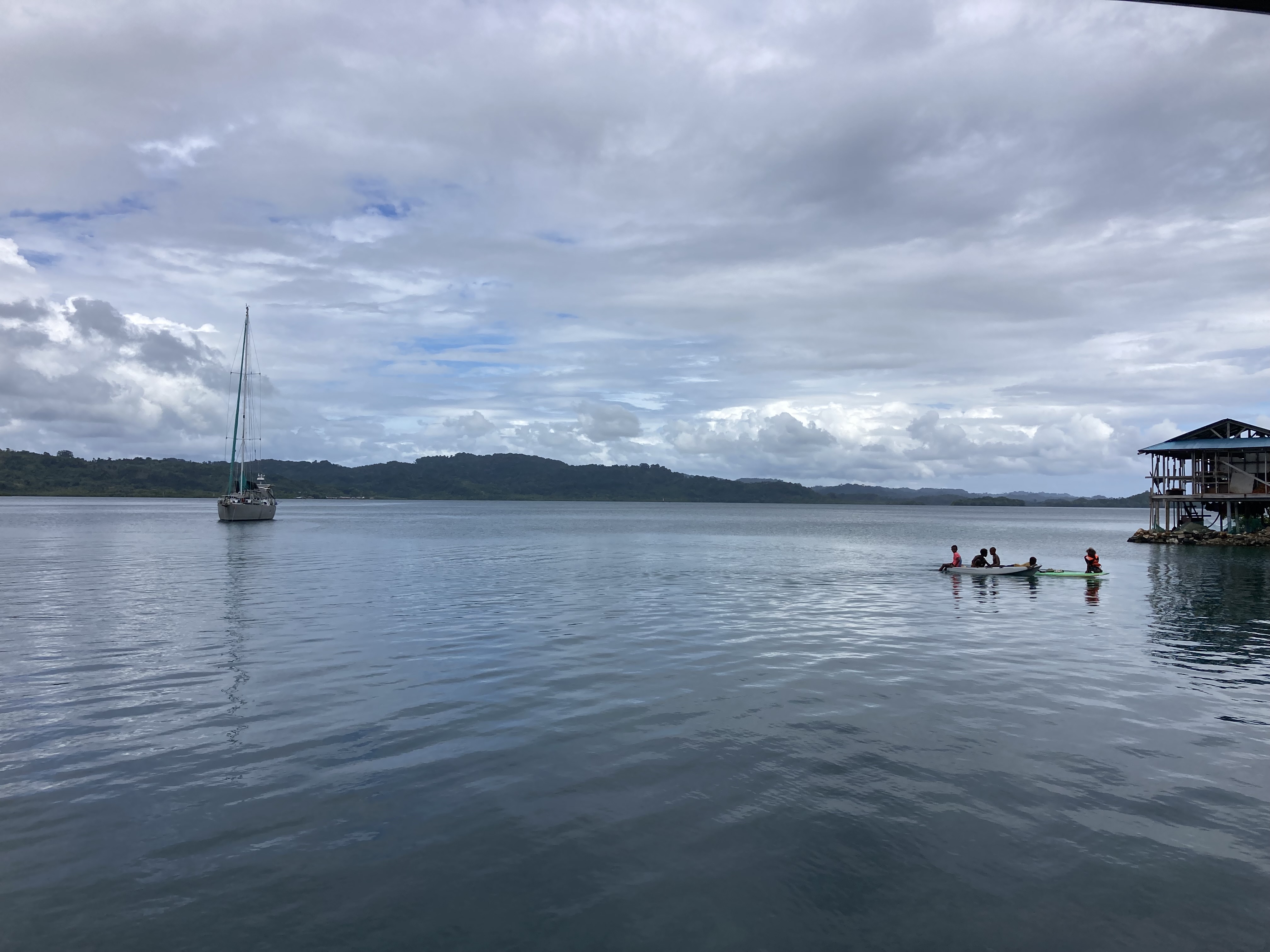
The local kids were happy.
Our unanticipated exodus from Honiara had prevented us from addressing item number five on the list…our diesel engine’s coolant leak. We knew this was going to be a major undertaking. The fresh water cooling pump was, more than likely, going to need replacing. This meant I’d be replacing the timing belt (in the way of the cooling pump and reaching its own replacement date) at the same time. Fortunately, both were spares we had in our parts locker. The critical thing was: if the timing belt was not done correctly, it was a huge deal…potentially major damage, and we’d be dead in the water without an engine.
We’d had the same issue in the Bahamas, so I’d already had the benefit of watching a diesel mechanic do the job twice…incorrectly the first time and then a second time to get it right. On one hand, good that I got to see it done. On the other, bad that I knew how easily it could be fucked up, even by a professional diesel mechanic.
I felt confident. It would be a bitch…but doable.
First, we had to get back to Honiara. Unbeknownst to me, the sealant I would need for the water pump had dried up completely while sitting in the locker. We opted to leave Exit on the mooring and take a local boat back to Honiara.
Small boat…big adventure. Big waves. Blinding rain. Unfortunately, no photos.
We finally got back to Tulagi after a trip that took all day, looking like half-drowned rats. But we had the sealant in hand!
Taking off the timing belt cover, I was immediately reminded of the potential for disaster. A track of melted plastic still remained all the way around the inside of the cover where the timing belt had tried to burn a hole right through the cover eight years ago when the mechanic misaligned it on the first try…
I heeded the warning. I would not fuck this up. Slowly but surely…get ‘er done.
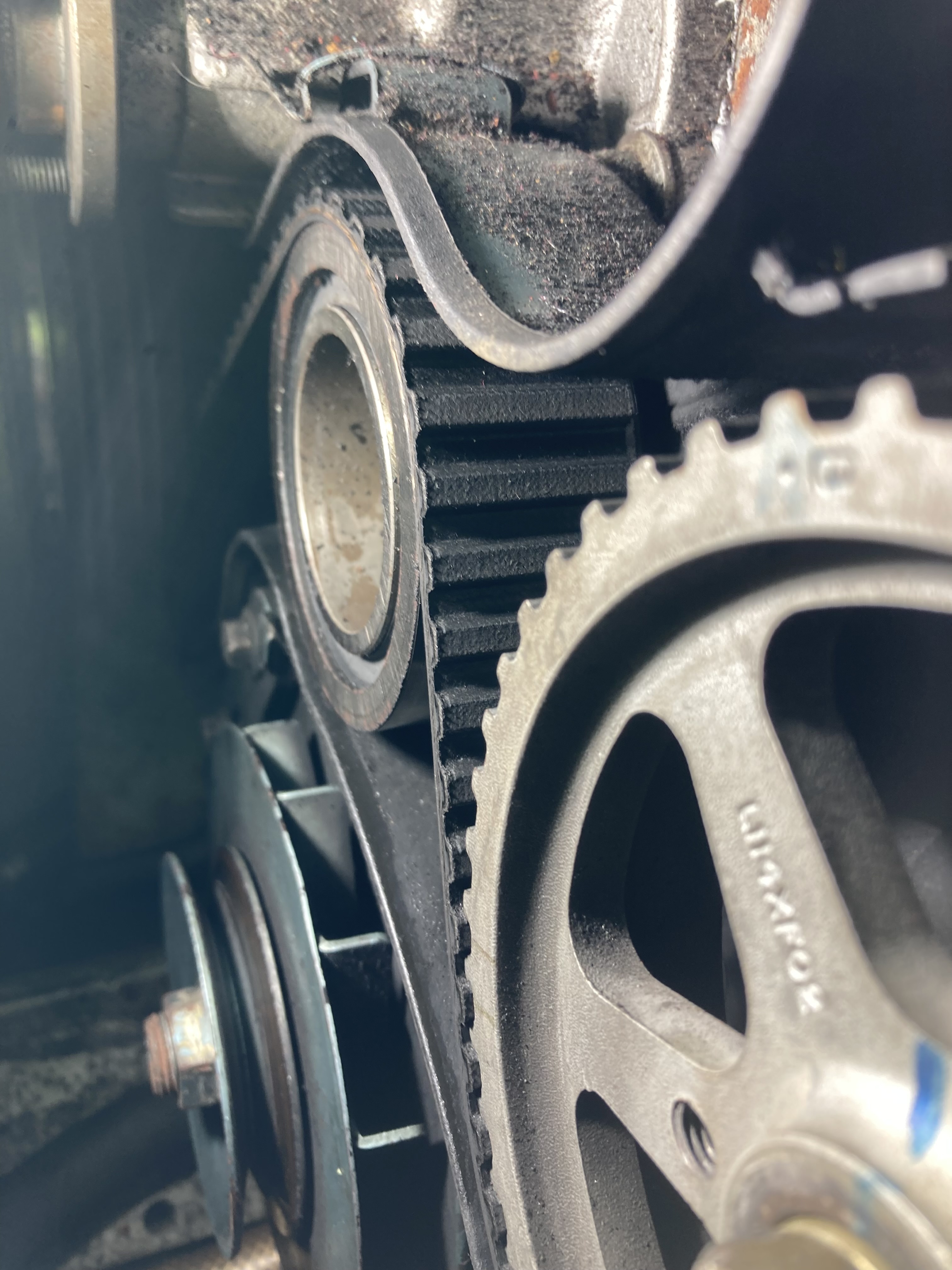
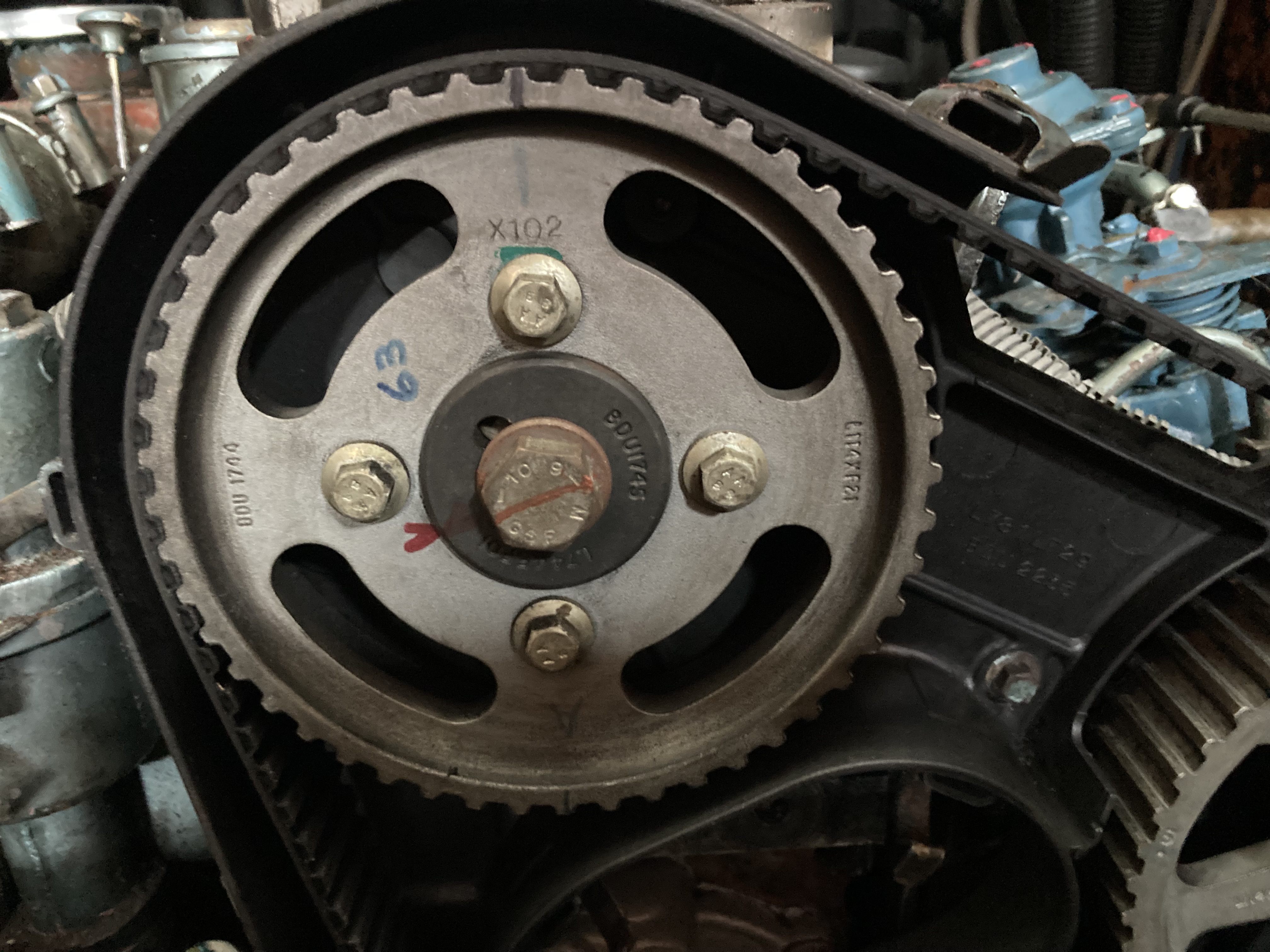
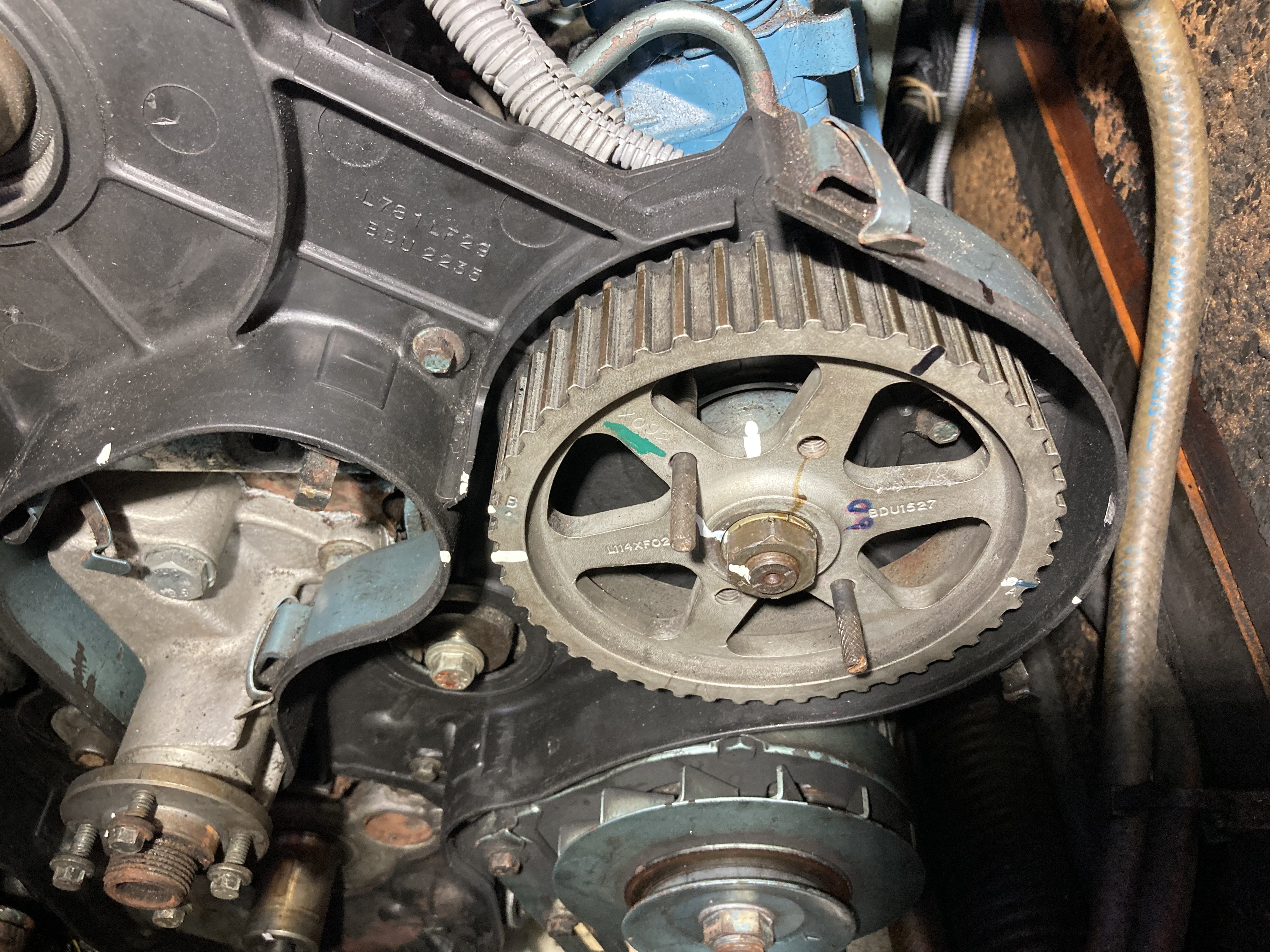
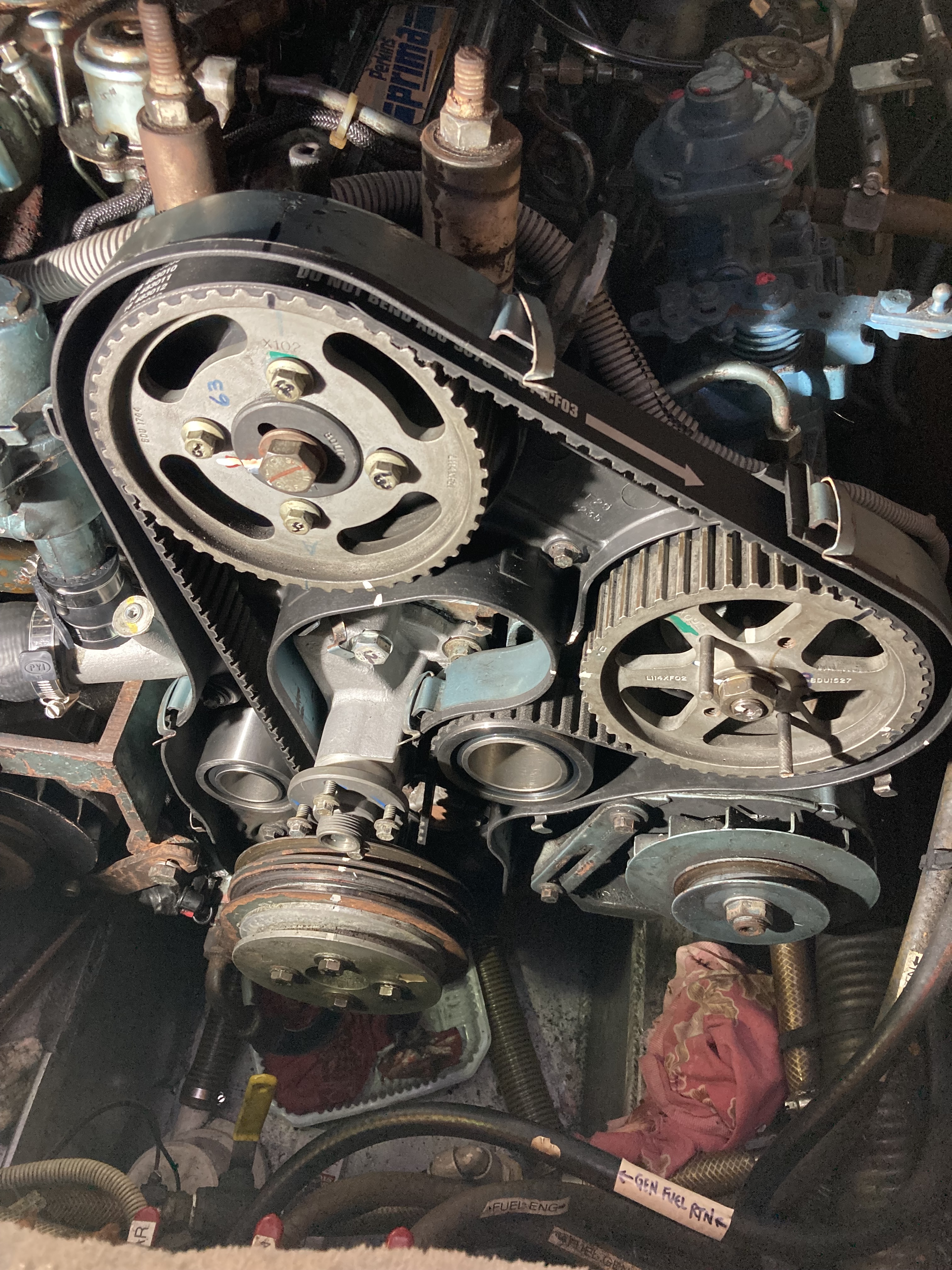
Three days and a significant number of expletives later…
New cooling pump. New timing belt. The engine started up on the first crank. Ran perfect. No leaks. Done right, first time around.
Mentally exhausted, greasy, and slightly bloodied…victory was ours.
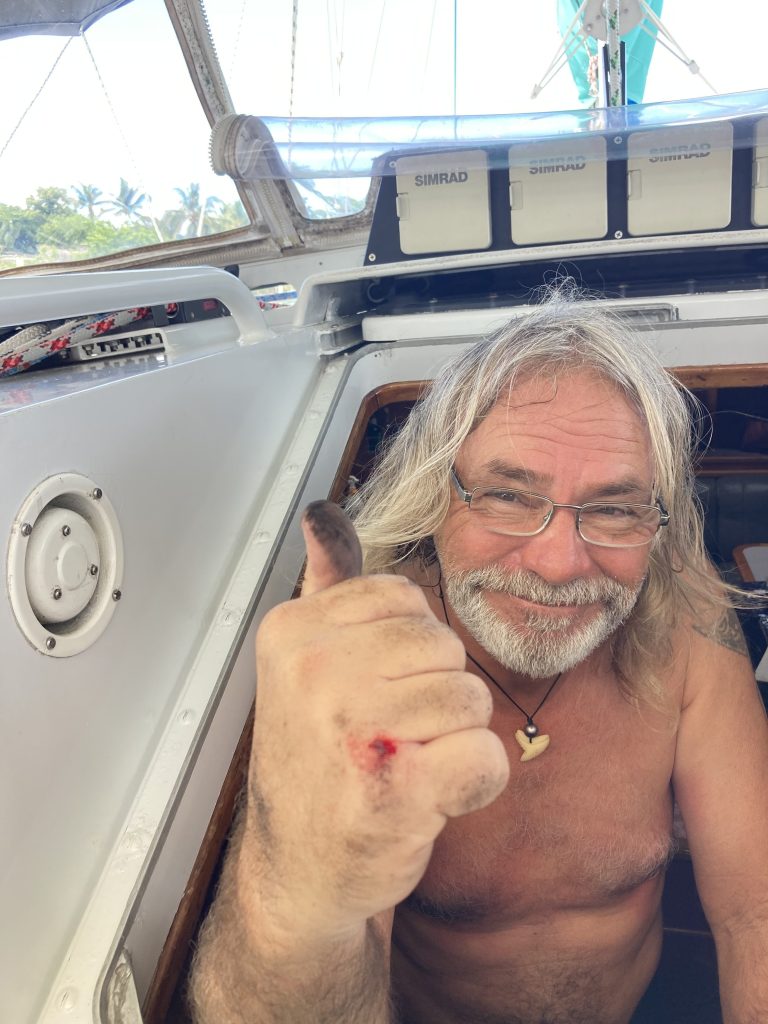
Item number five on the list…done.
By the time we headed back to Honiara, we had been on Fred’s mooring at Tulagi for nearly three weeks. The Emperor Divers live aboard boat had needed the mooring in Honiara for a bit, but was now gone. We could, once again, use their mooring.
We had a bit of a walk around and did some shopping at the local market.
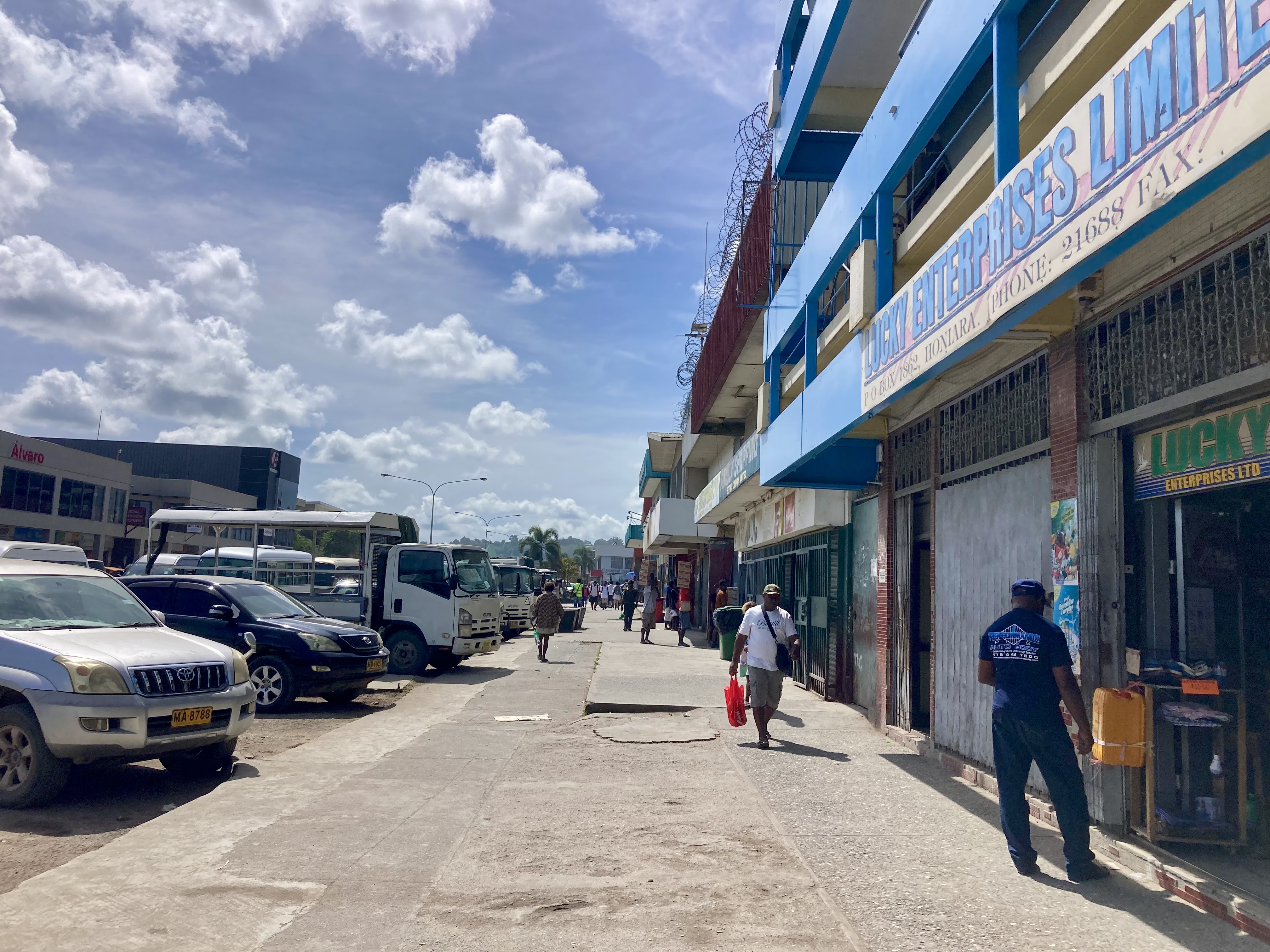
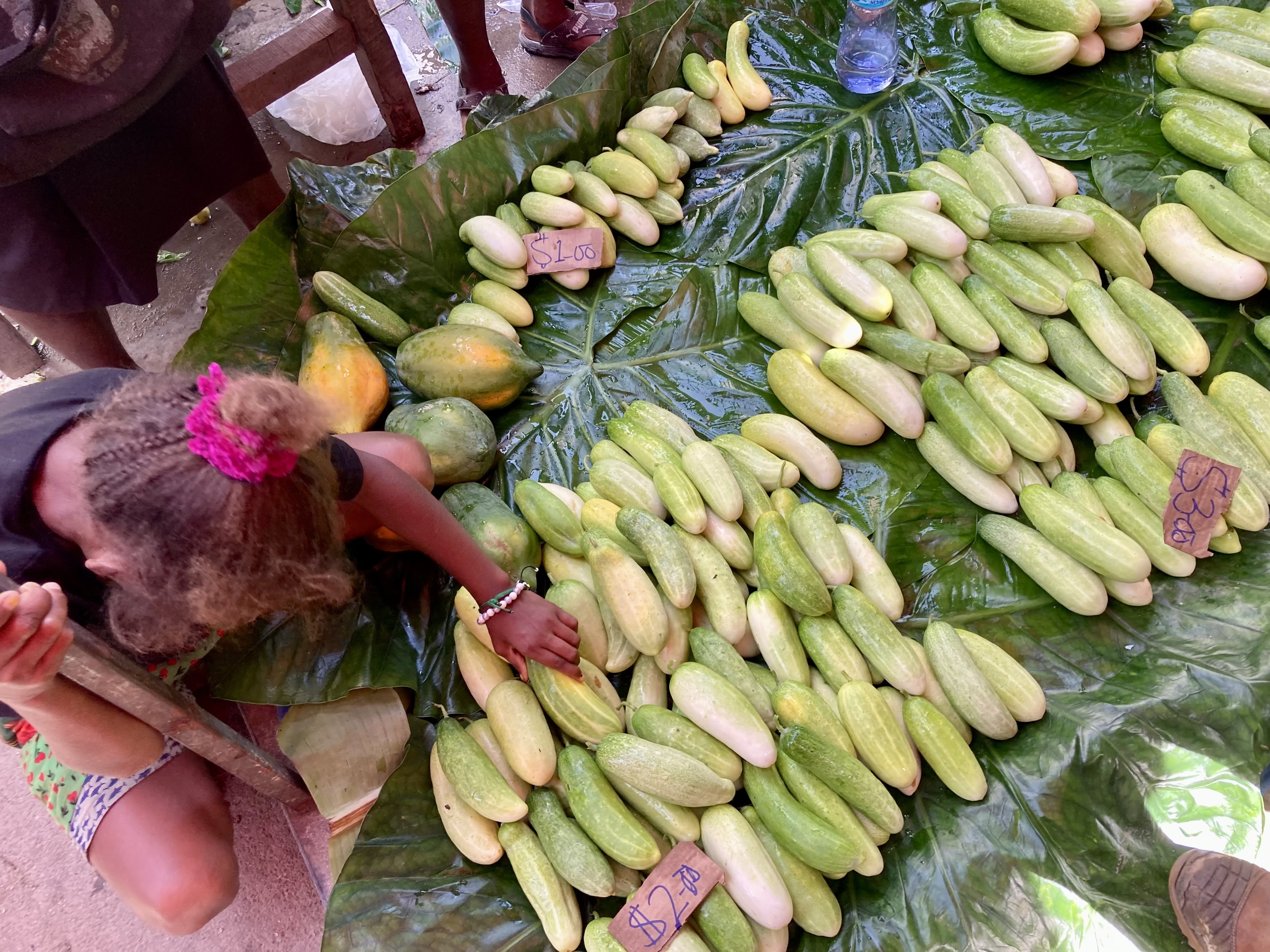
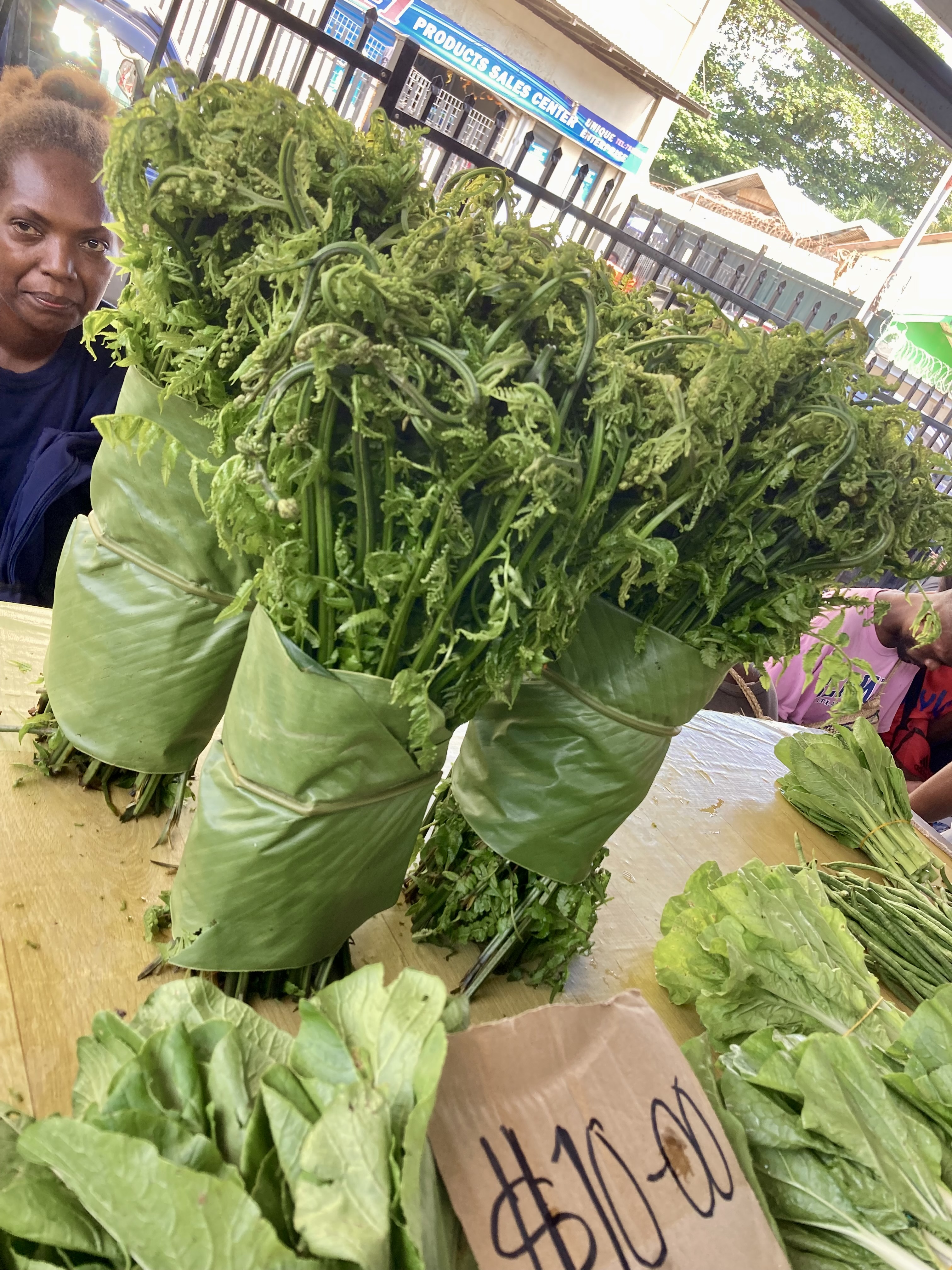
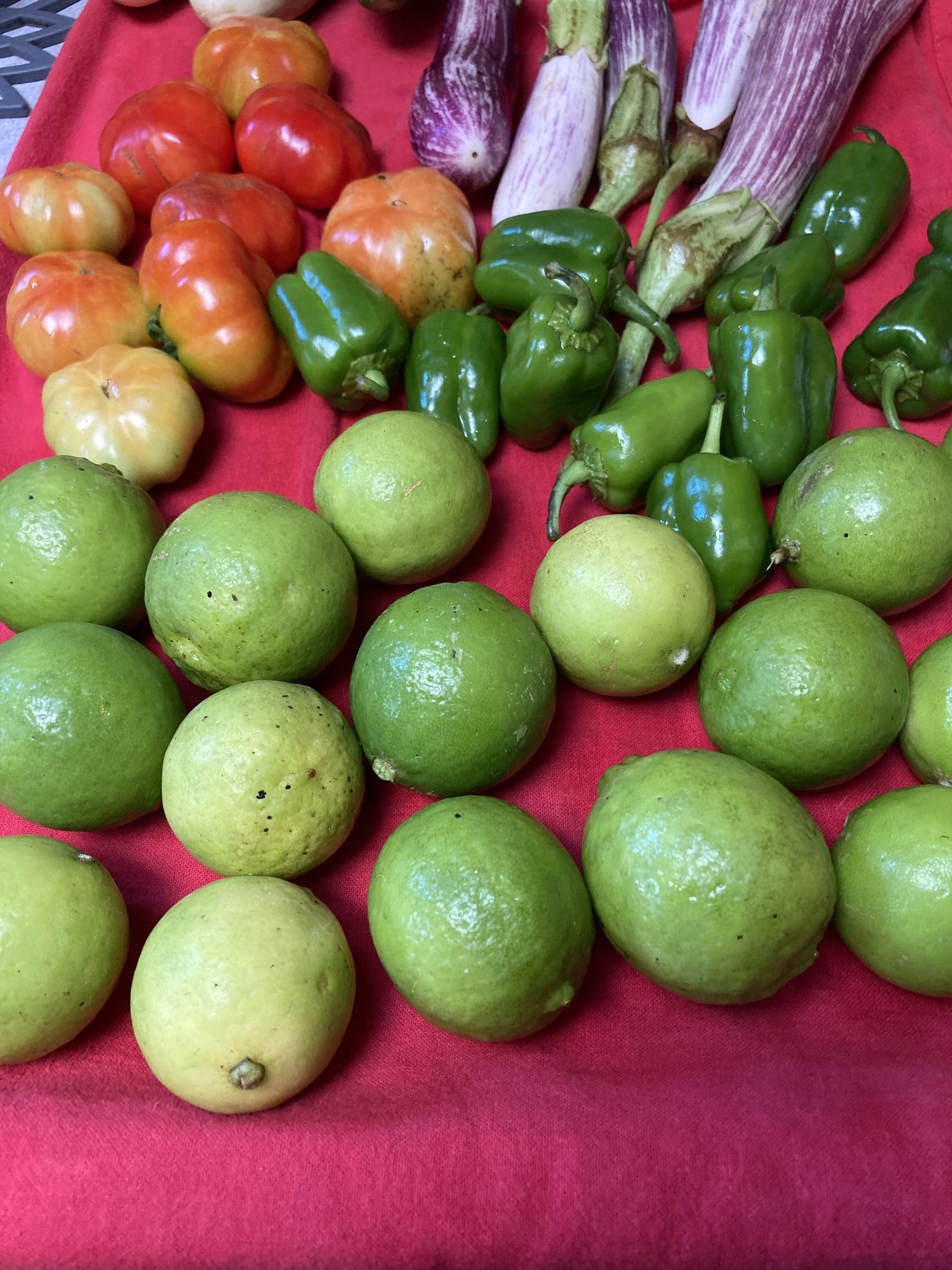
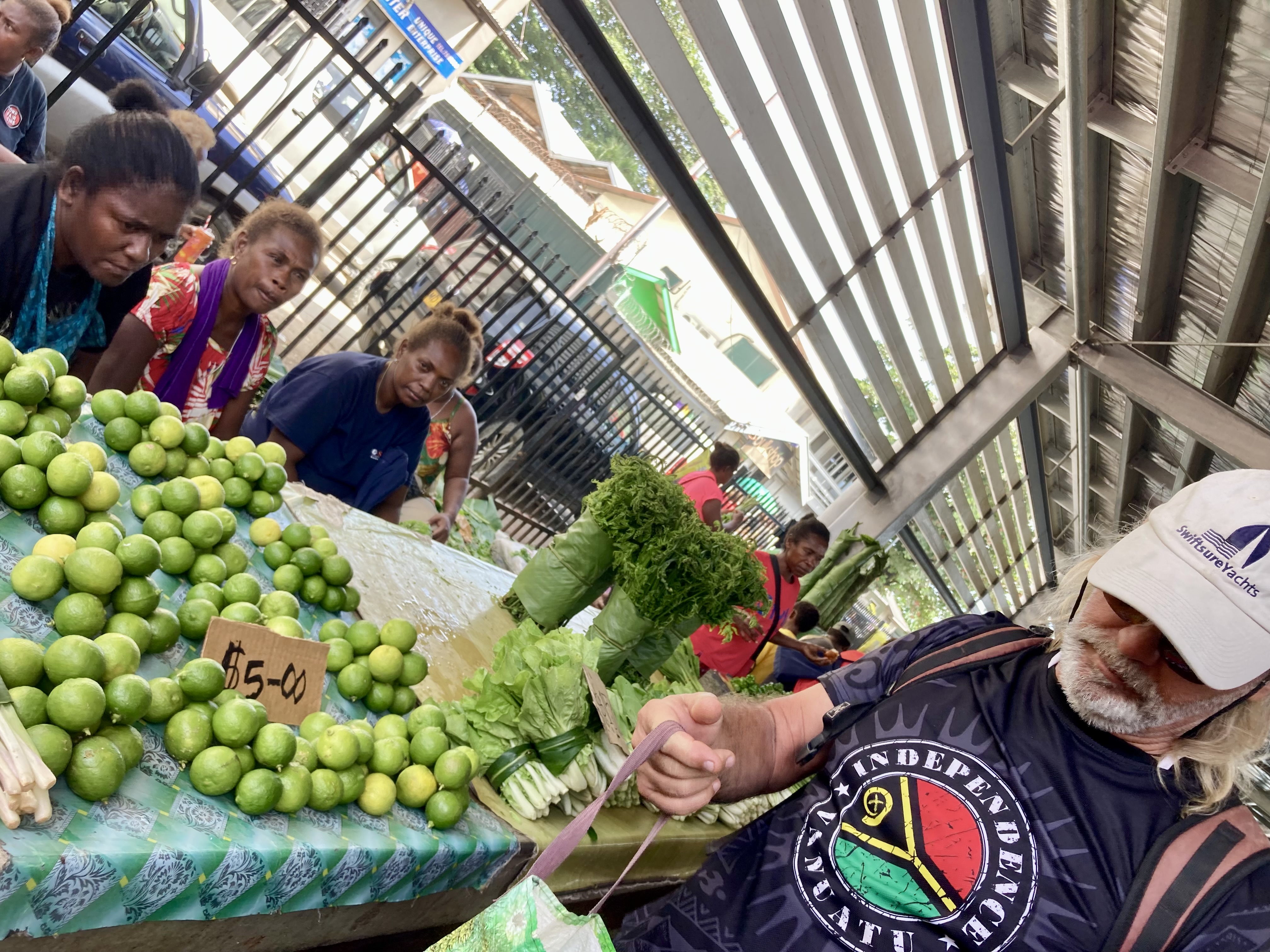
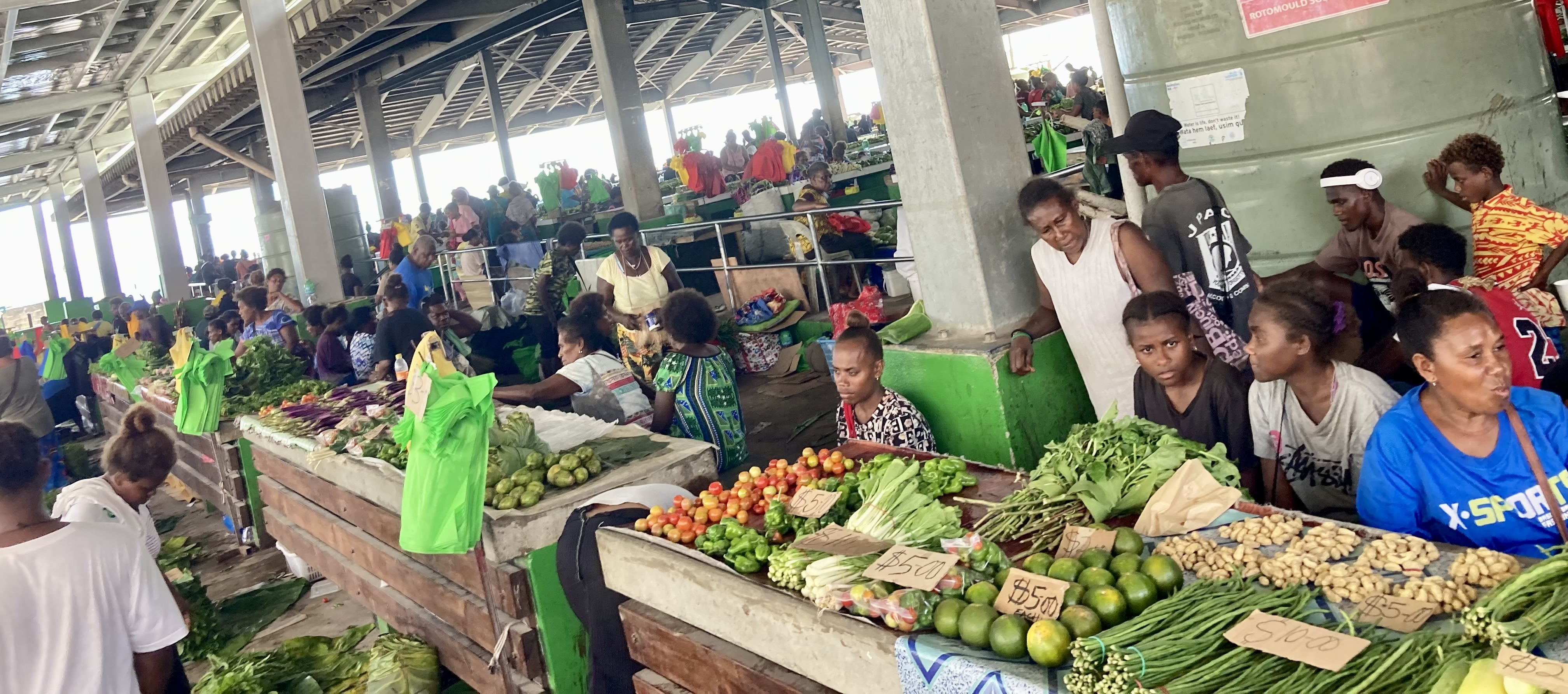
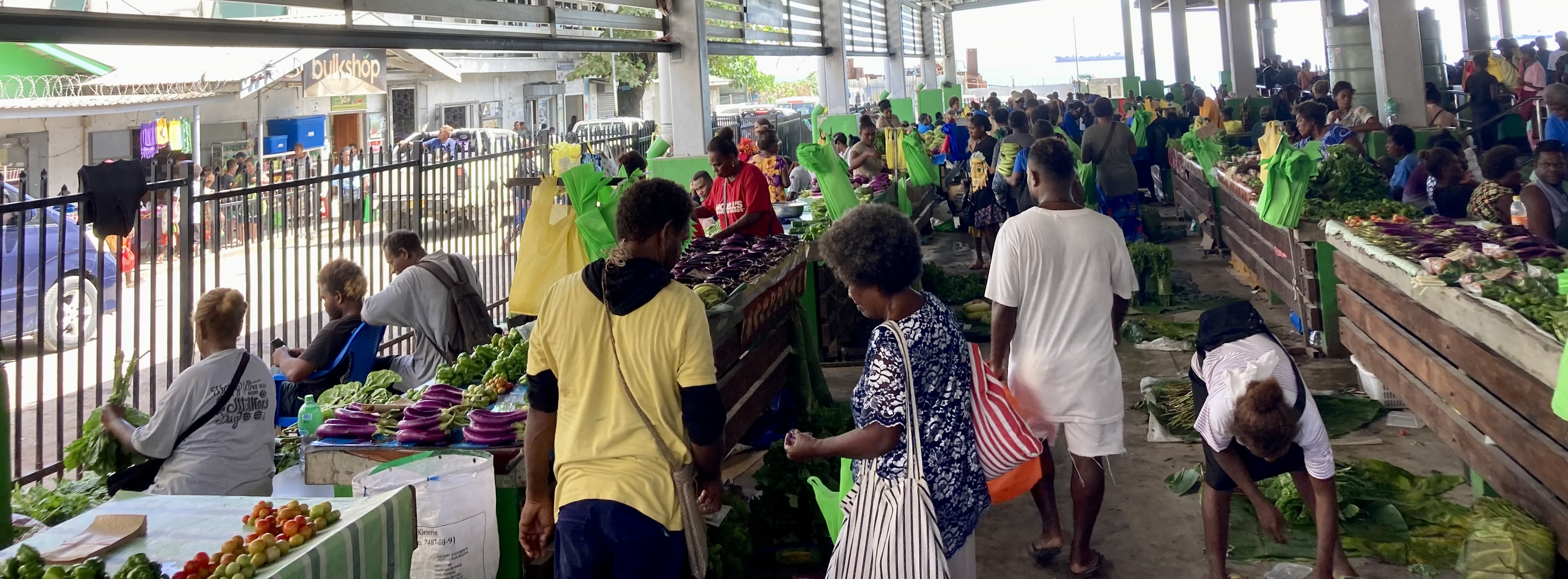
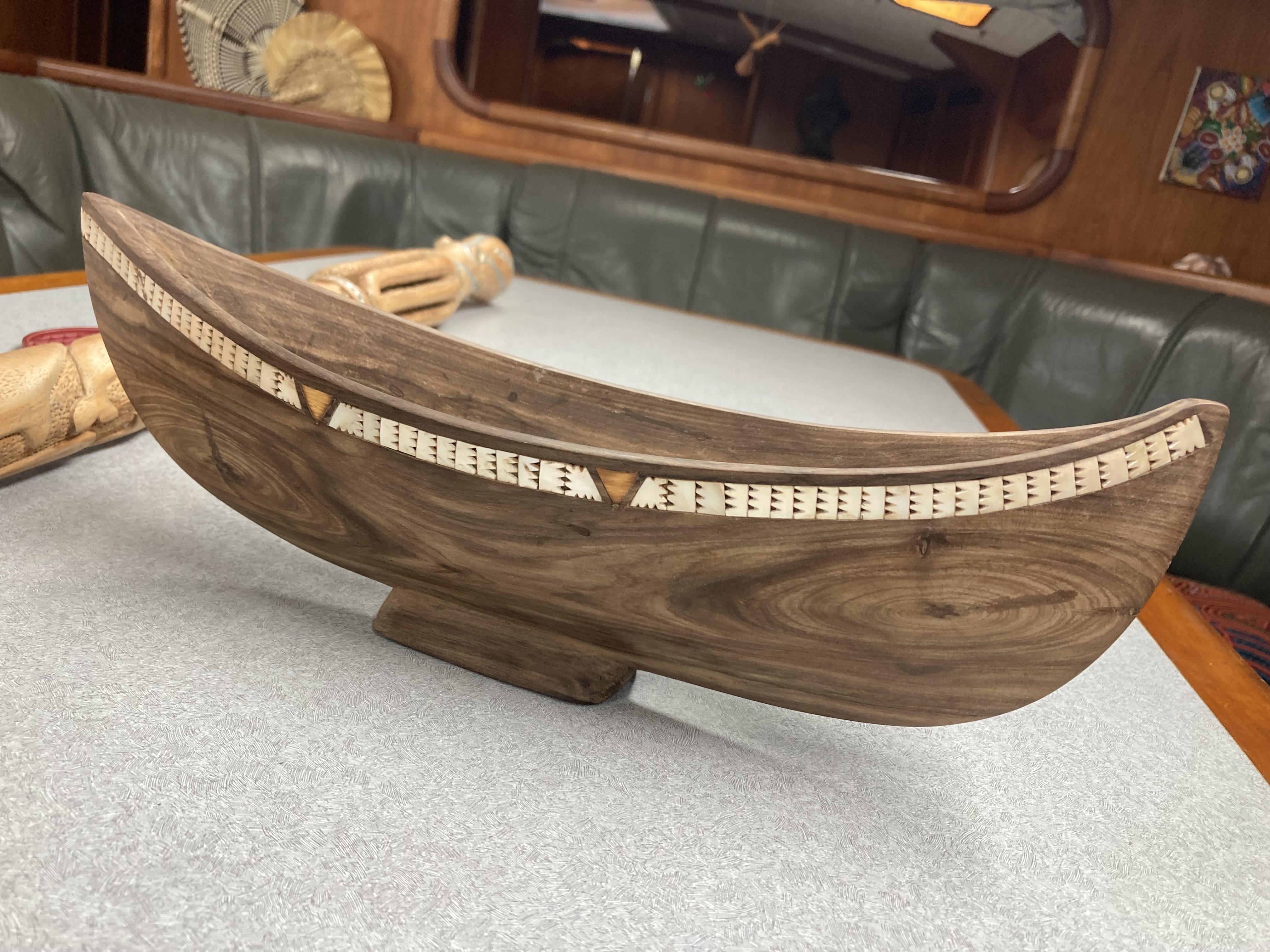
Visited the shops of some local artists/wood workers and ended up buying a number of absolutely stunning carvings that we couldn’t resist.
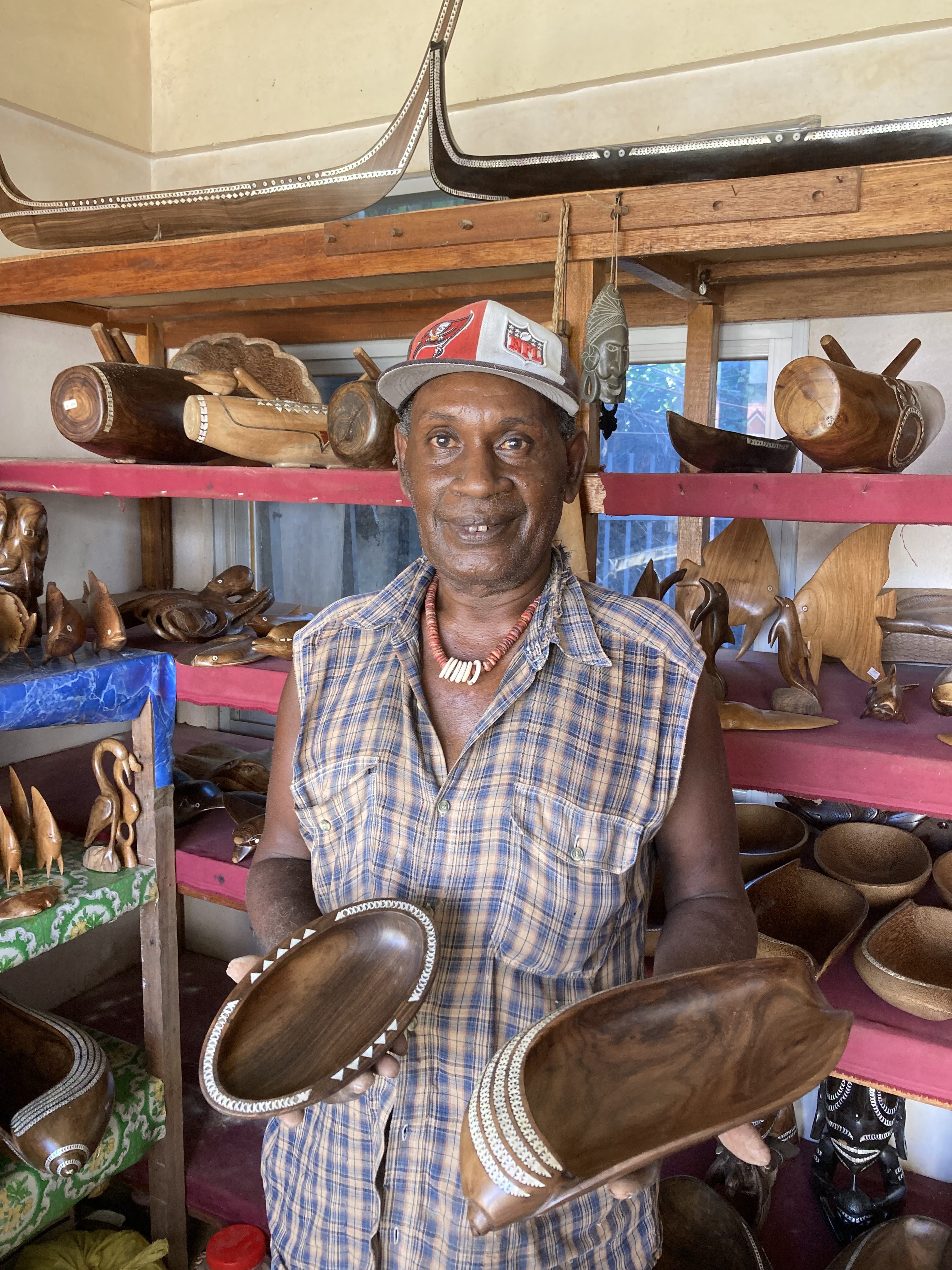
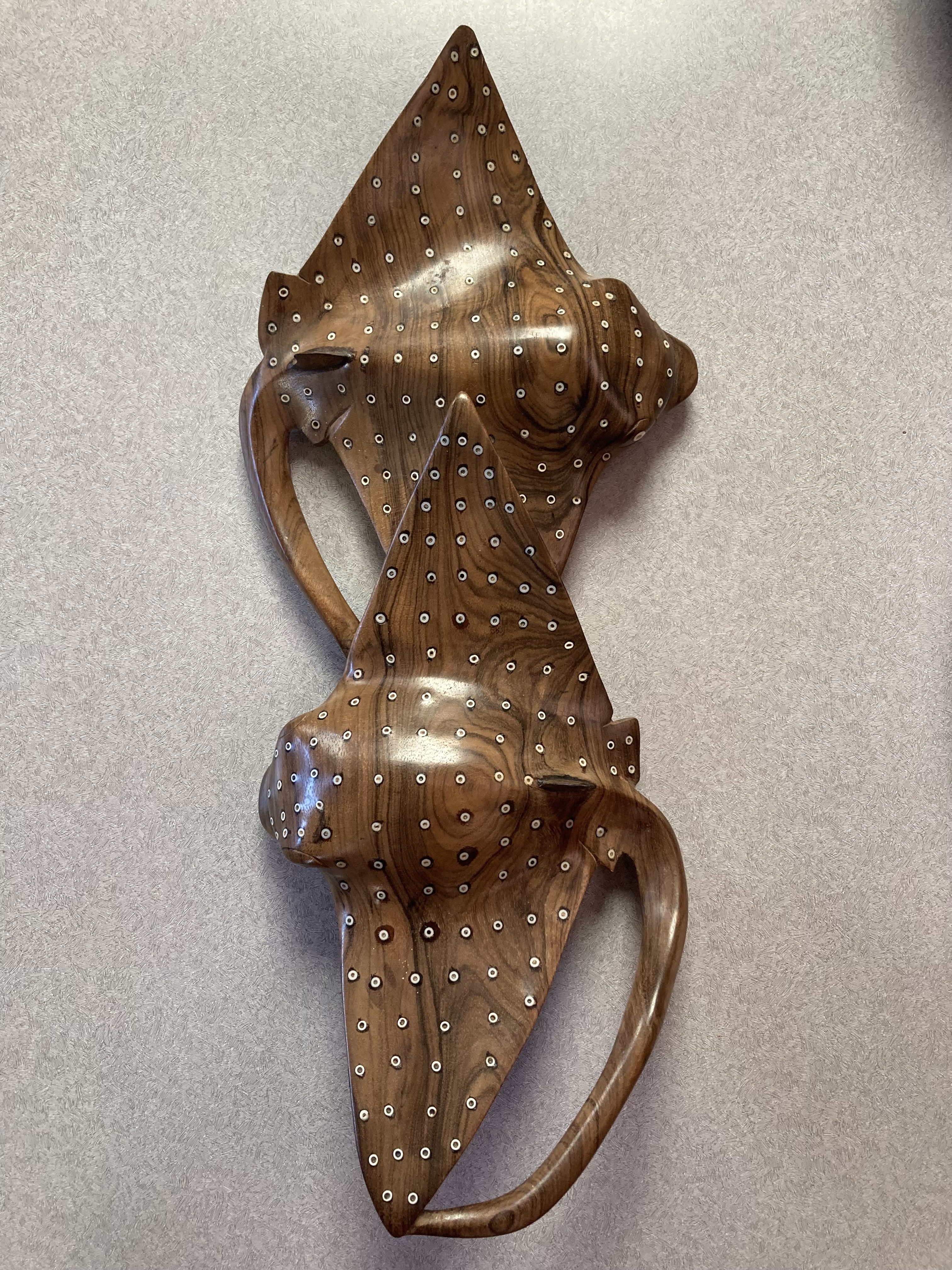
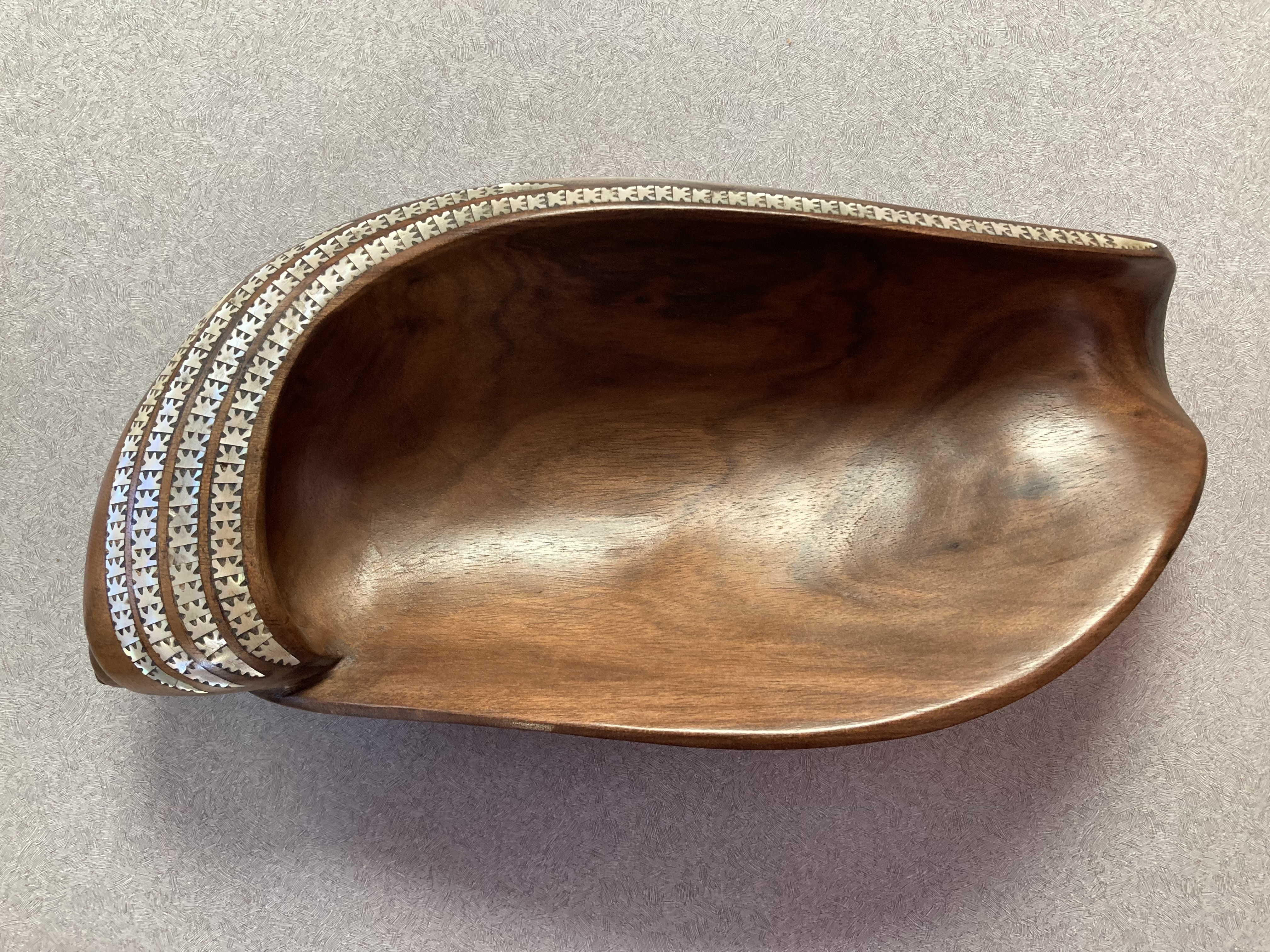
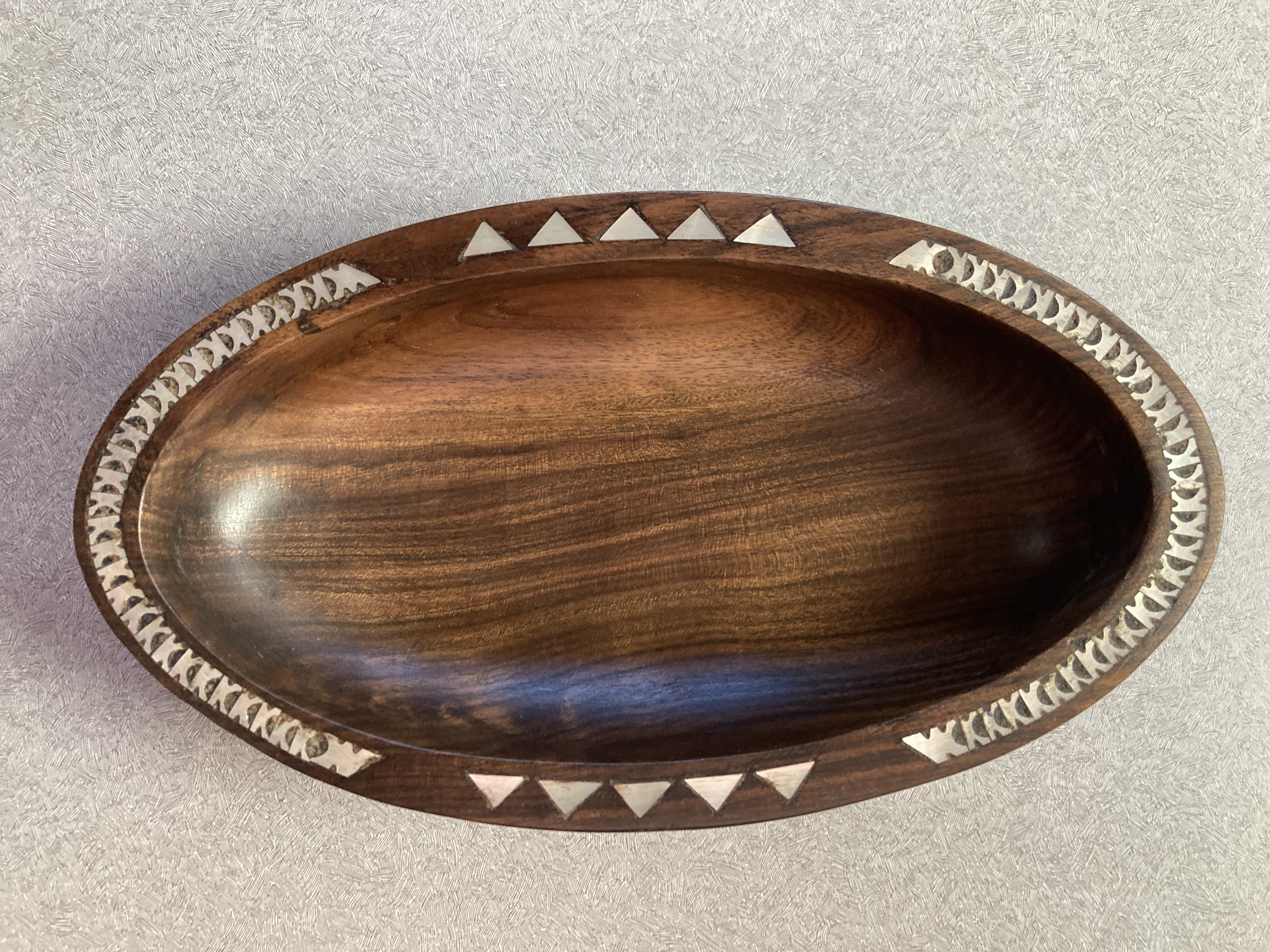
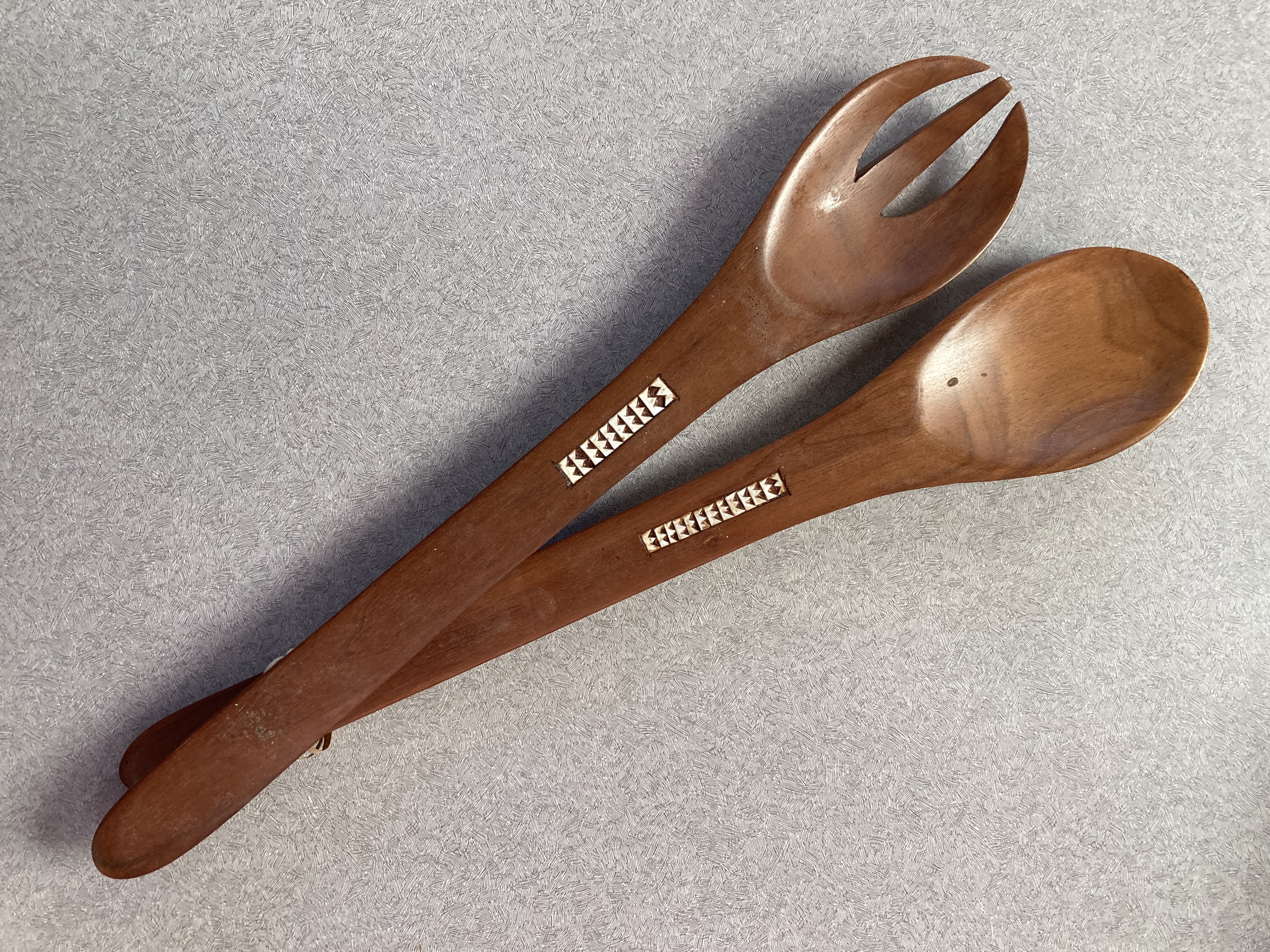
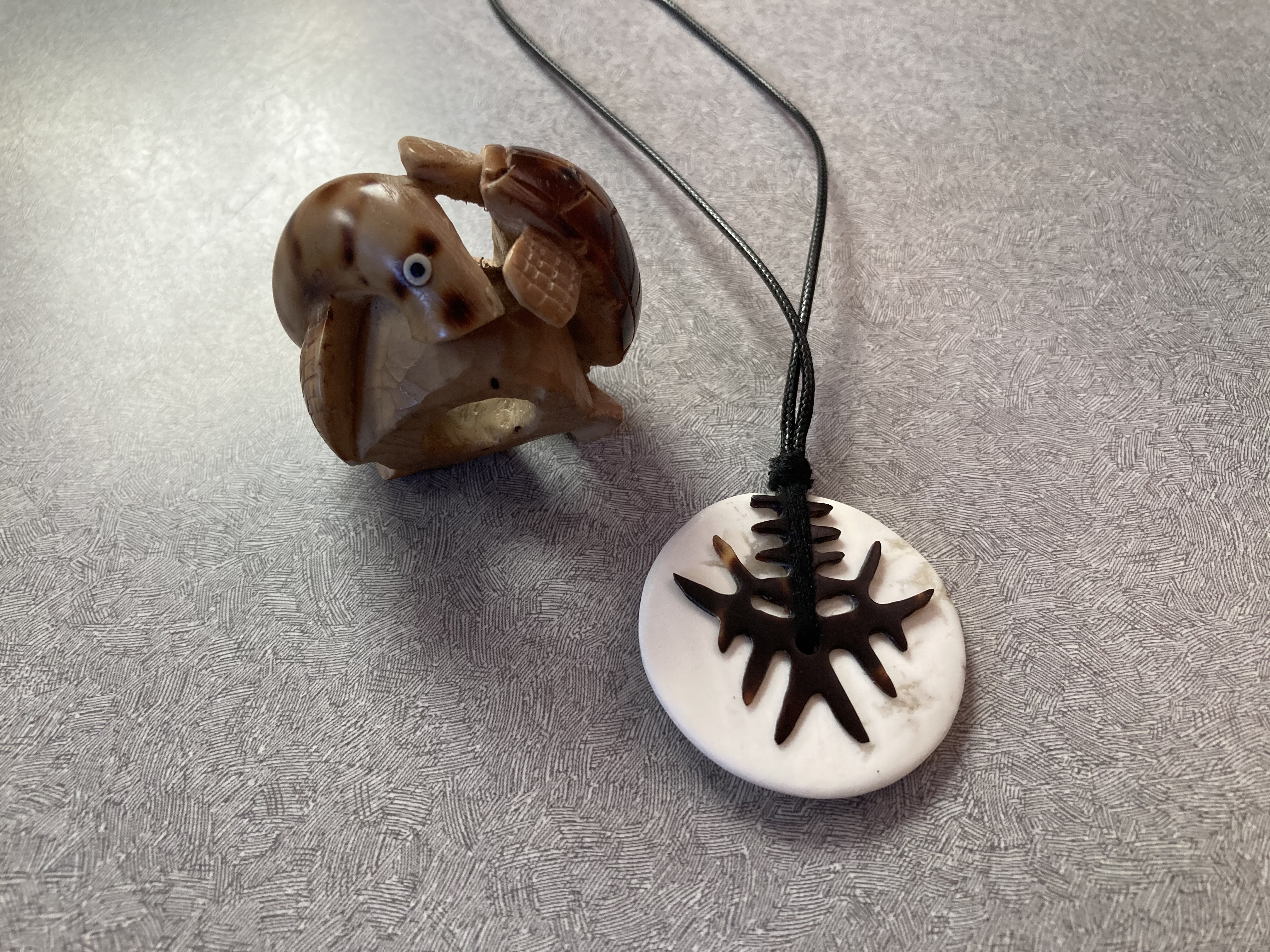
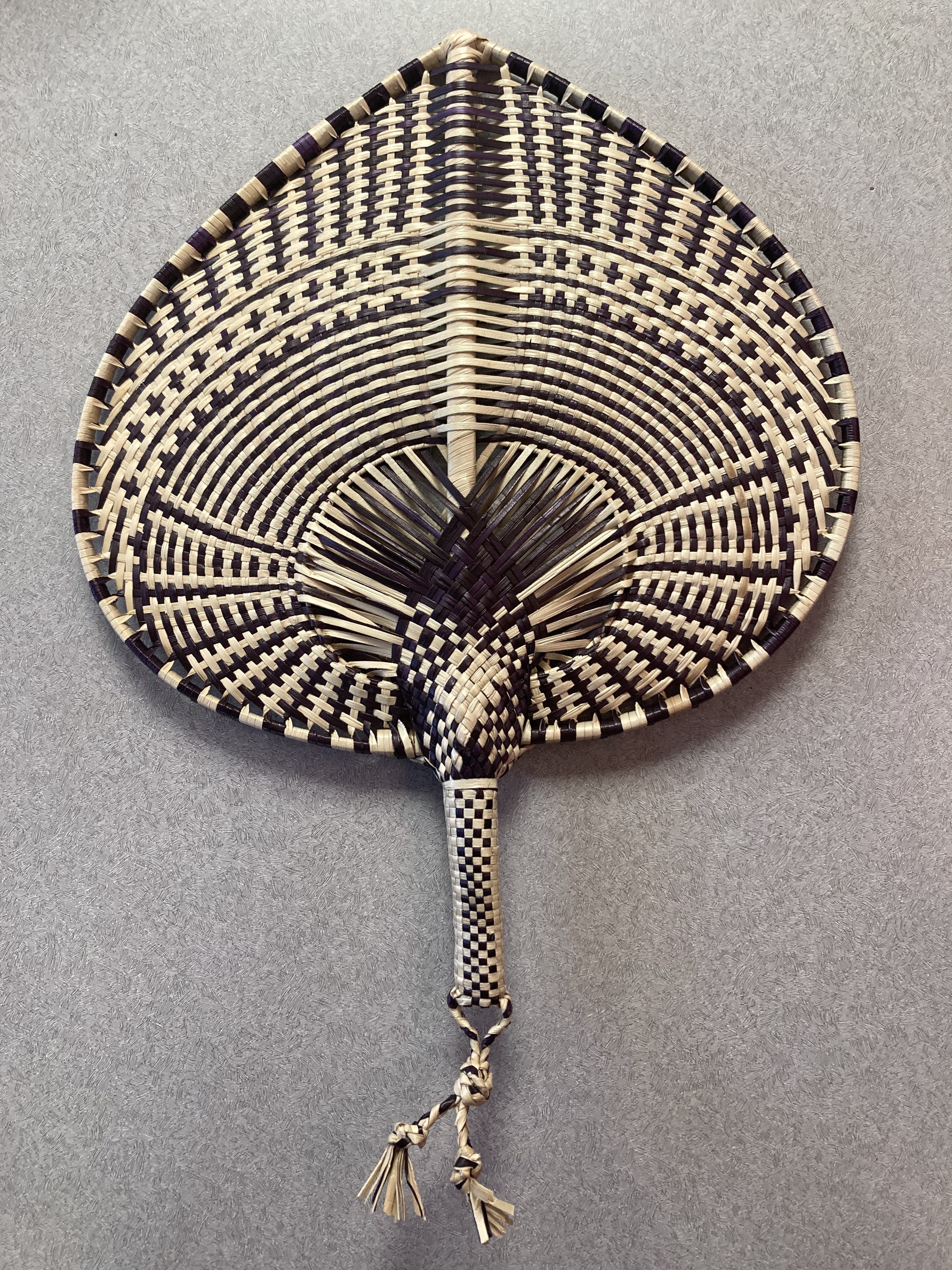
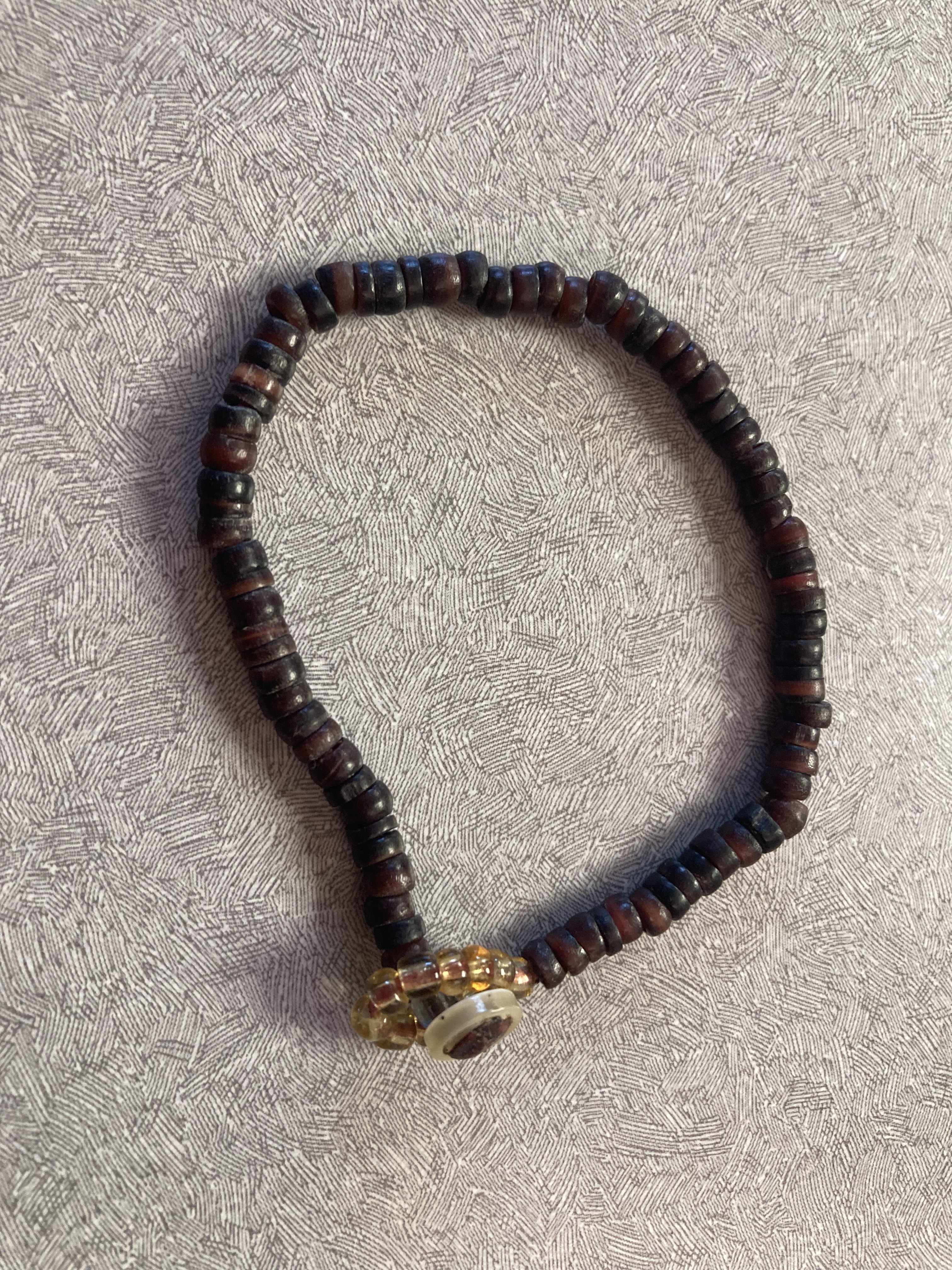
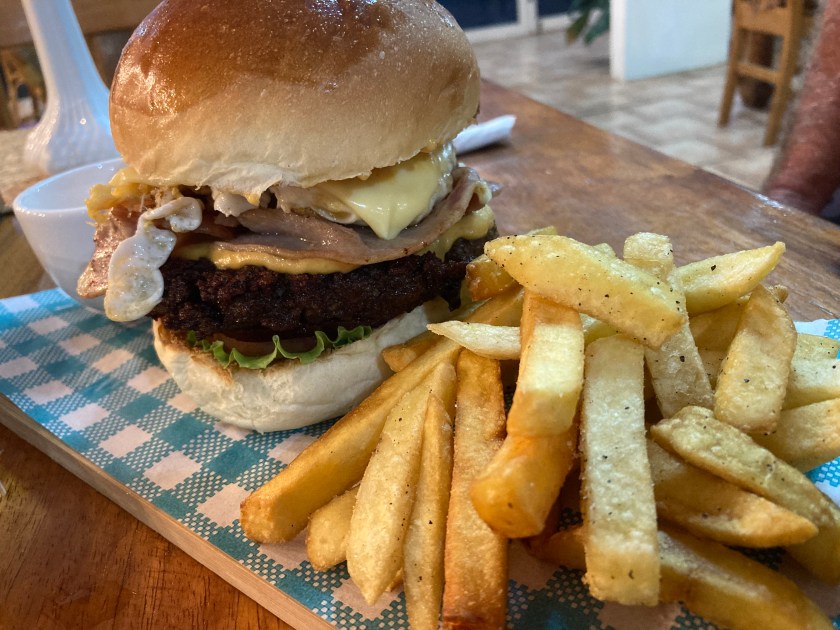
Had a delicious bacon cheeseburger at Fred’s restaurant.
The final task on our list?
Our dinghy had been sluggishly moping along for over six months, unable to get up on a plane, even with only the two of us inside. During unsuccessful attempts to get on a plane (with minimal boat contact being made with the water), we plodded along slowly, pushing up a massive wake of water behind us, burning a lot more fuel…a shitty combination.
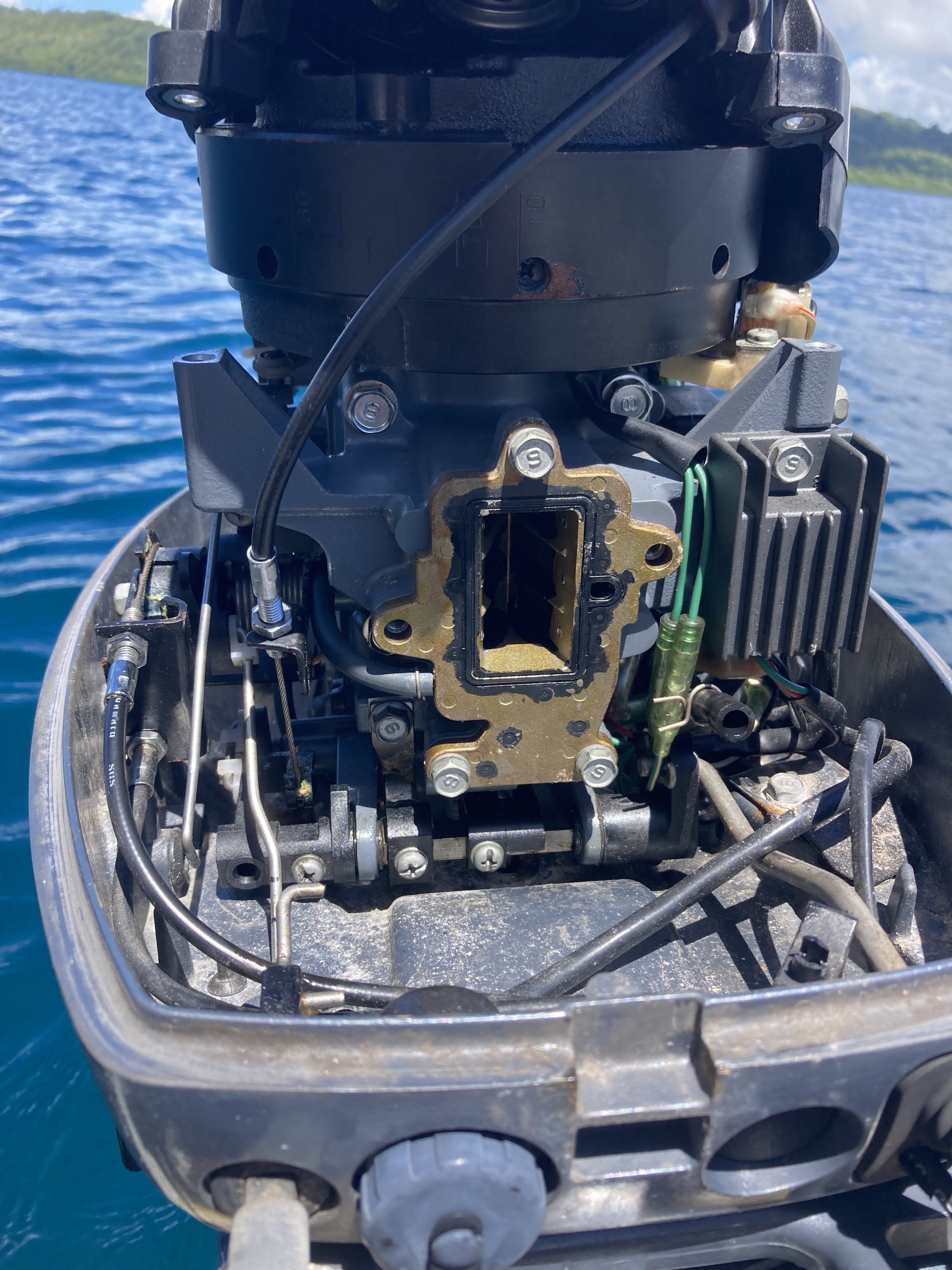
It was more than likely an issue with the outboard’s carburetor. There was a Yamaha dealer in Honiara and so we decided, what the fuck. Just get a new carburetor and a rebuild kit, install the new one, try to rebuild the old one, and have a spare in hand.
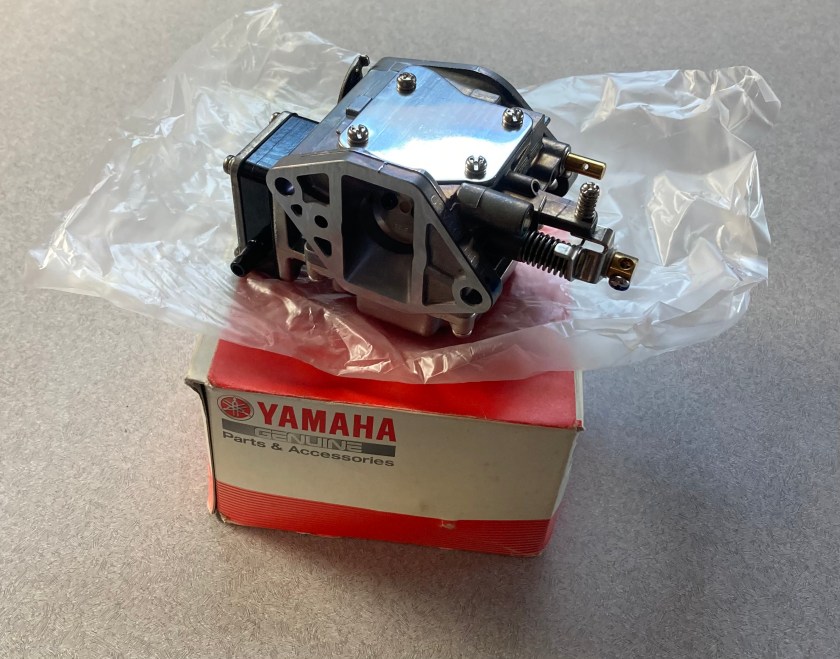
And just like that…boom. Item six on the list, the final one, done!
Hmmmmm. Wait a minute.
List done, minus one.
Ya…that fucking dive compressor. After tearing it halfway apart, Dave determined it was gonna need a shitload of parts. Parts we didn’t have. There was no way we were going to sit around trying to sort out getting parts sent to us while we were currently at what seemed like the edge of the universe.
Once again, the Coltri had proven to be great until it wasn’t…and now it sure as hell wasn’t. It would now have to sit below deck as dead weight, at least until we reached Australia. We had seven full scuba tanks…three fun dives and a bottom cleaning.
Fuck.
Not ideal.
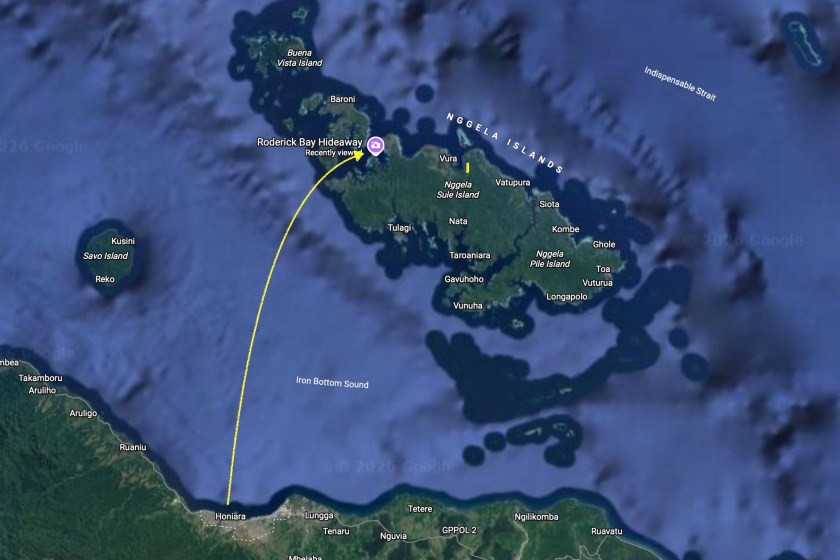
Next stop, back to the Florida Islands just to the north of Honiara. Roderick Bay Hideaway, on the northwest side of Tulagi. Another mooring. Maybe only the twentieth mooring we had ever used since moving aboard Exit. This would be our third in three anchorages…strange.
Without having any verifiable information about the quality, strength, or method by which the mooring has been secured, much less its maintenance status, we are typically pretty squeamish about using them. We’d rather trust our own ground tackle, which we do implicitly. However, some anchorages are simply too deep or too cluttered with potential entanglements. With no concerning weather on the immediate horizon, we decided to give it a try.
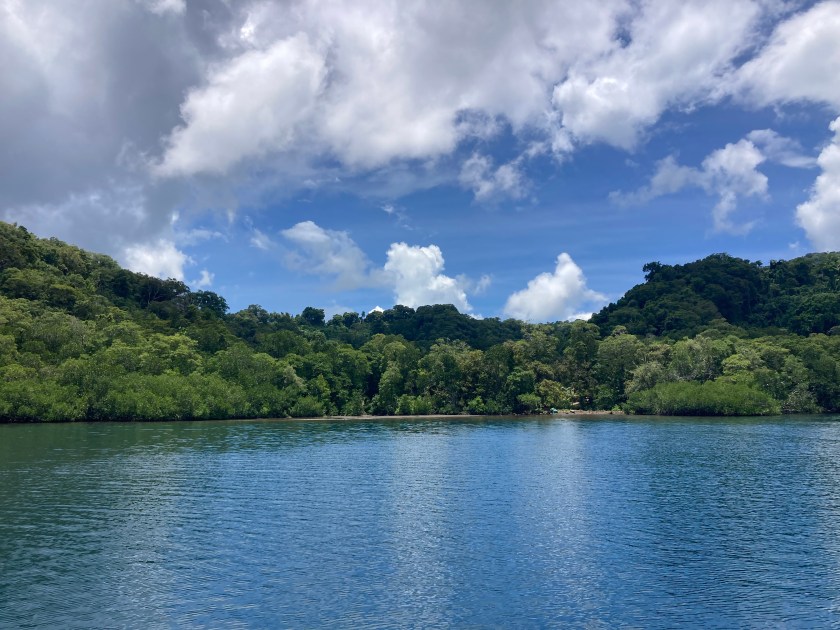
Turns out Roderick Bay Hideaway is made up of an extended family occupying a handful of houses that make up a tiny community. We were immediately met at the mooring by one of the sons, Joseph, who helped sort out the lines. He turned out to be one of the friendliest locals we met during our time in the Solomons.
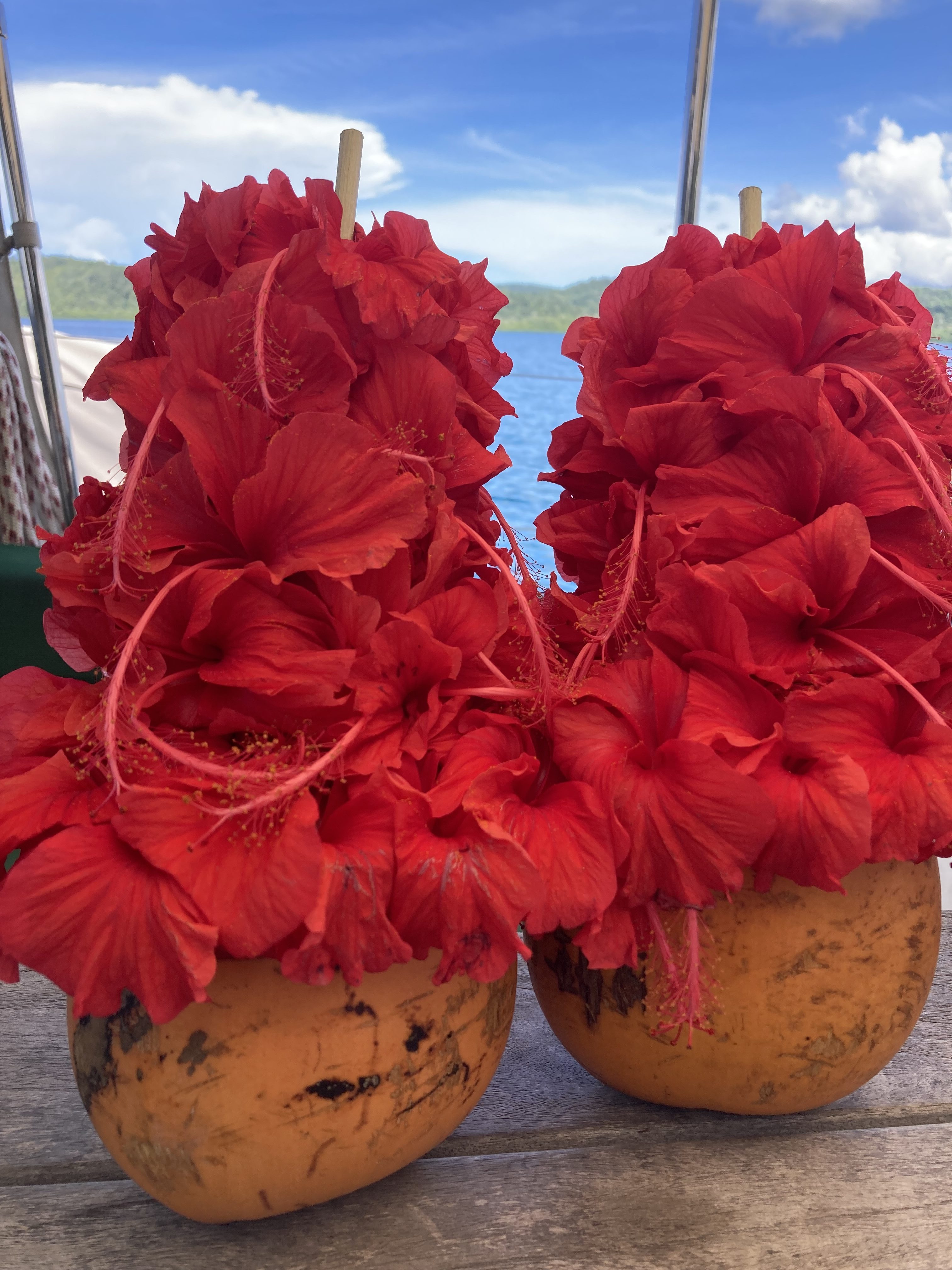
A short time after we were secured on the mooring, he returned with two fresh coconut drinks that had been decorated with an absolutely unbelievable flower arrangement.
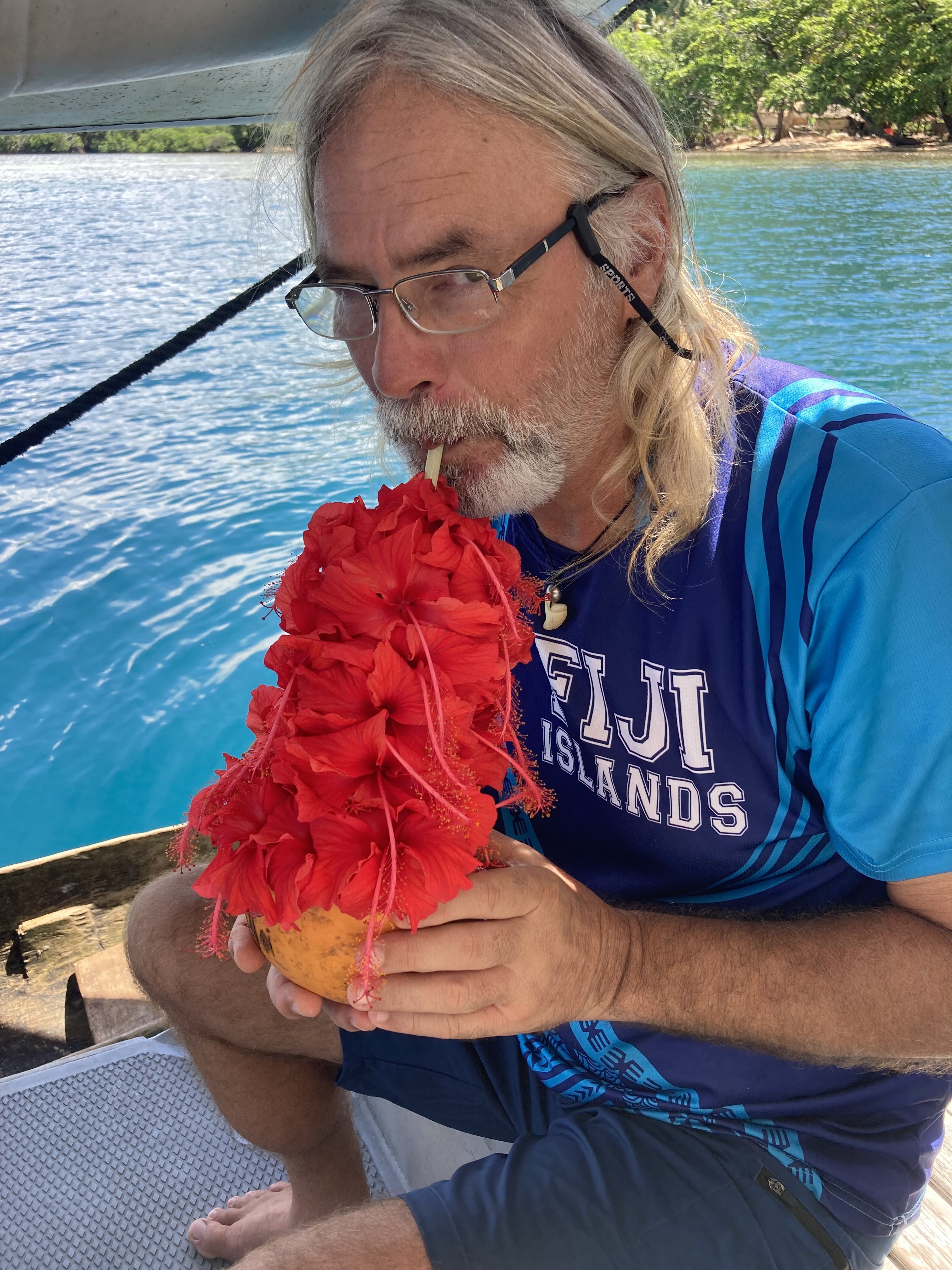
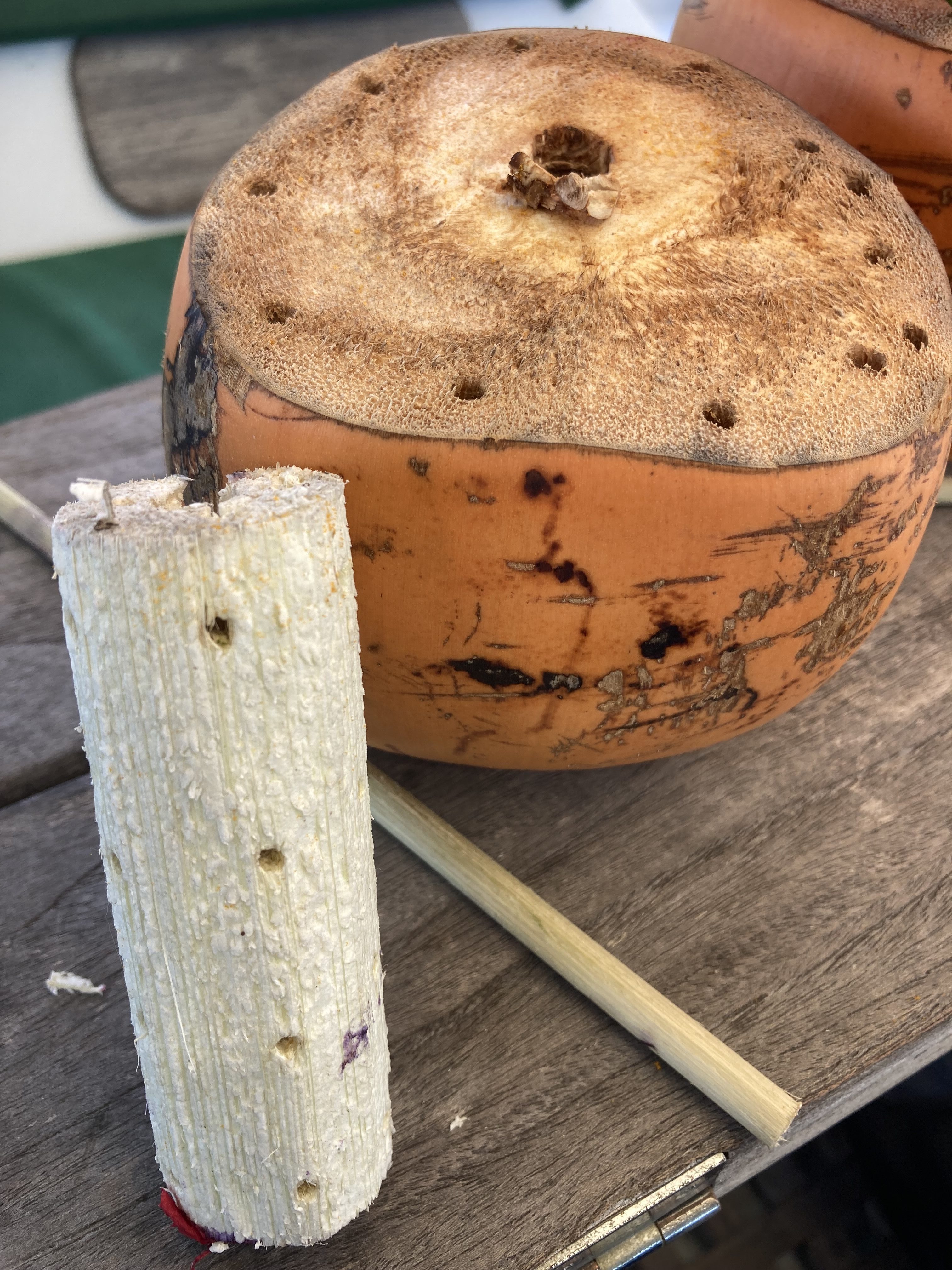
It was only after the flowers began to wilt that we saw how clever the arrangement had been engineered.
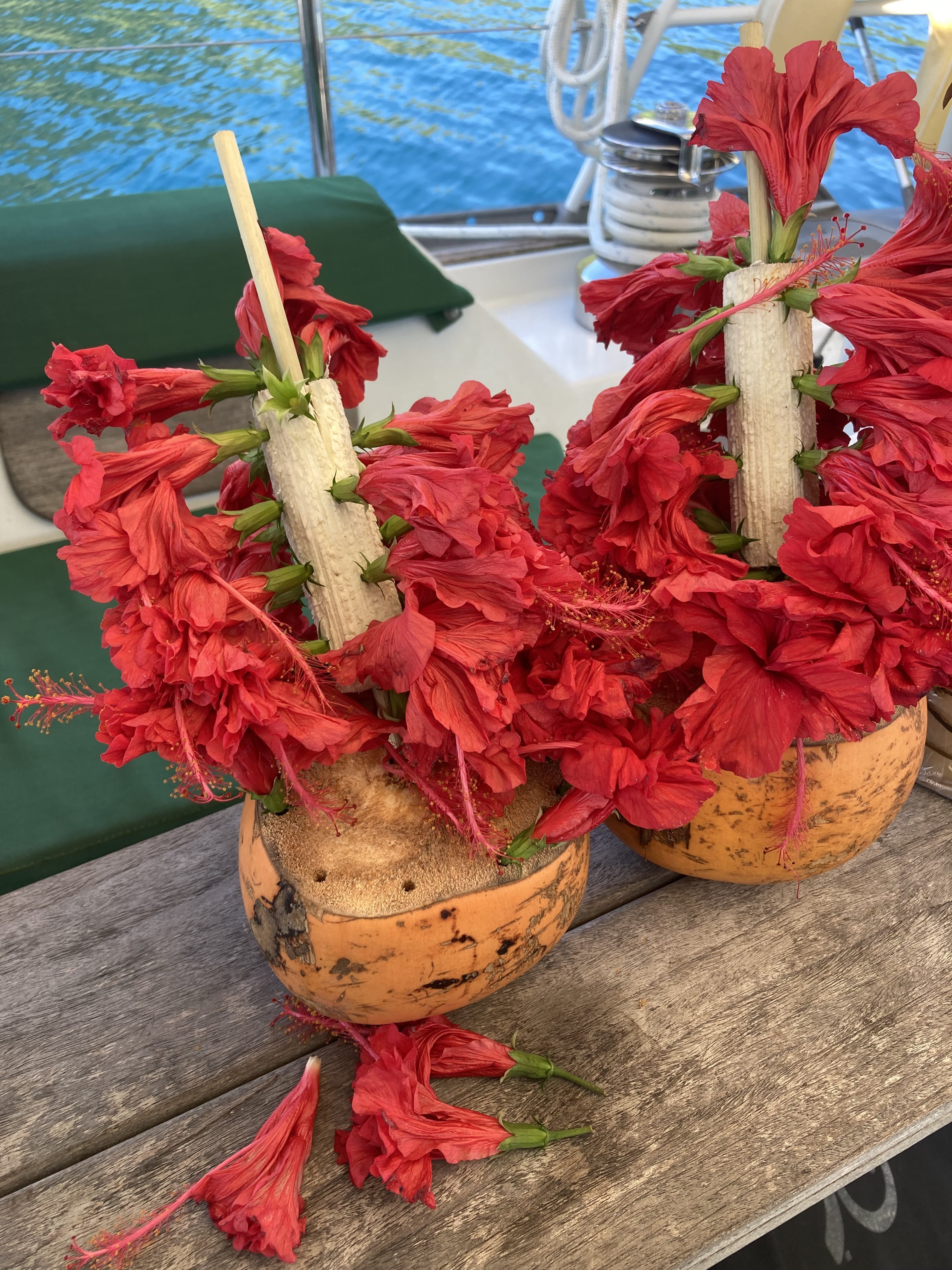
A day later he brought us yet another magnificent flower arrangement…no expectations or strings attached. Simply an astounding local welcome.
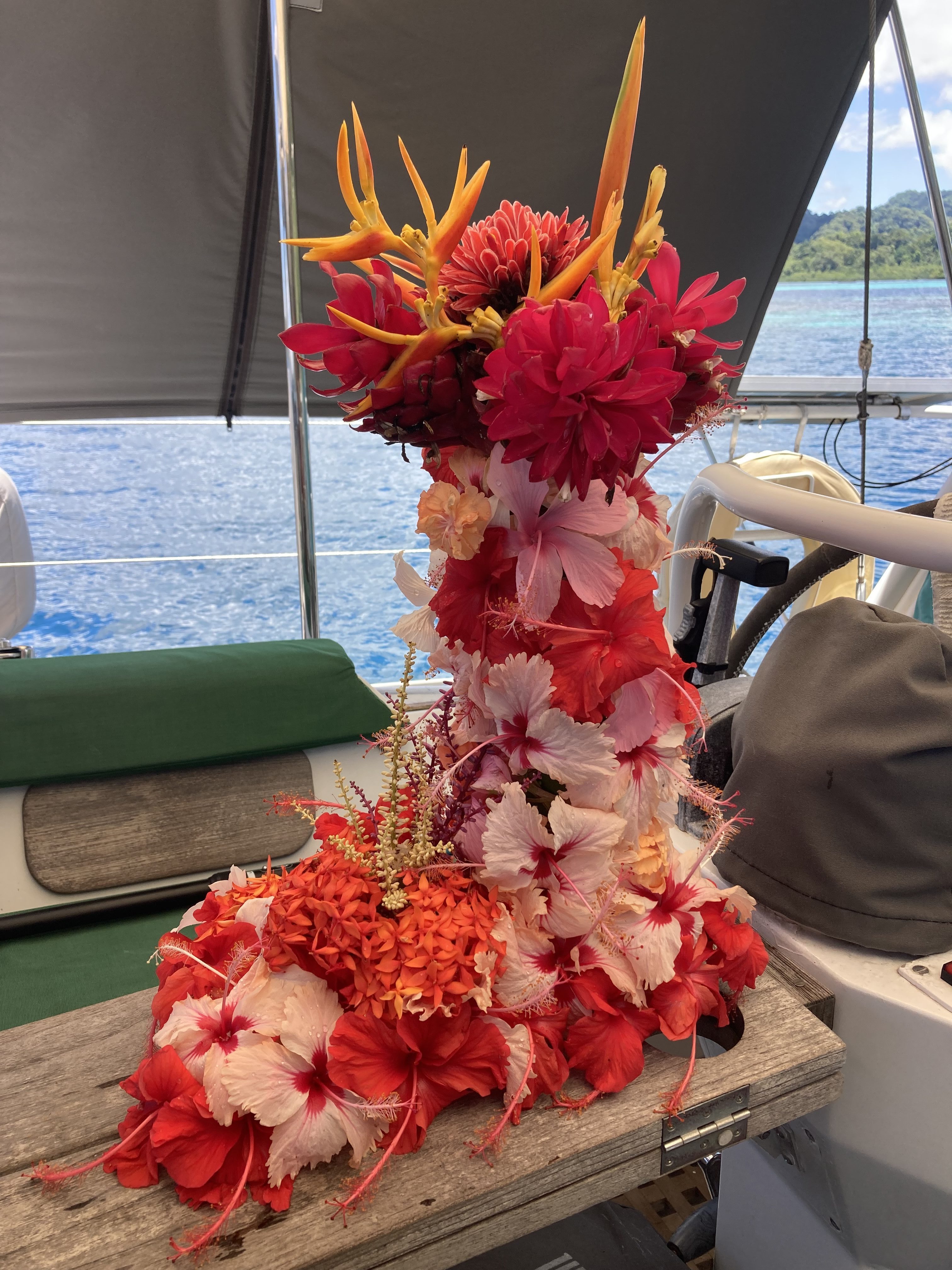
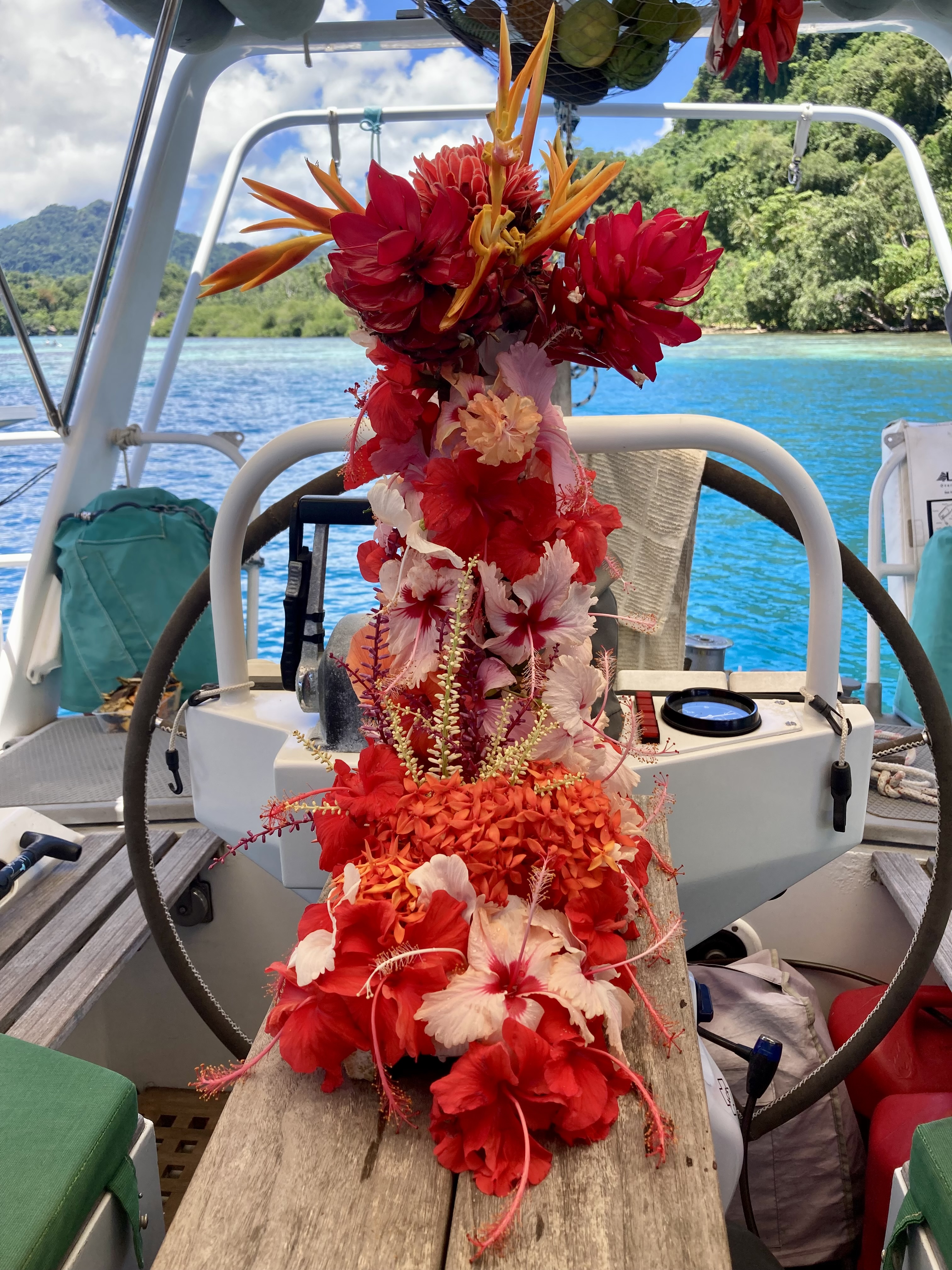
Chief John, along with his five sons (Joseph, Robert, Ismail, John, Jefferey) and their families, had created a community where they could simultaneously exist happily, welcome visitors, and share aspects of their culture in a very chilled, no pressure atmosphere.
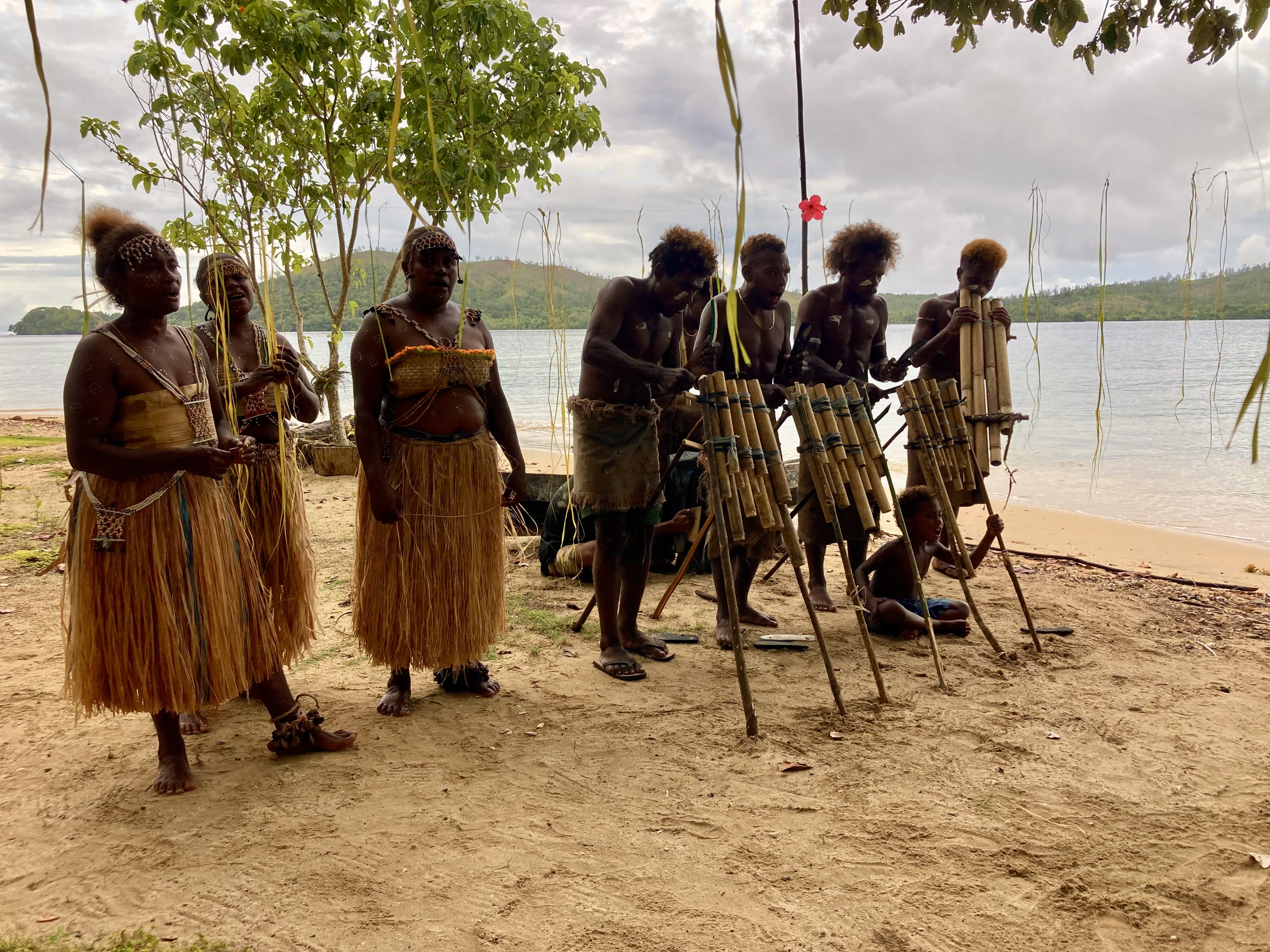
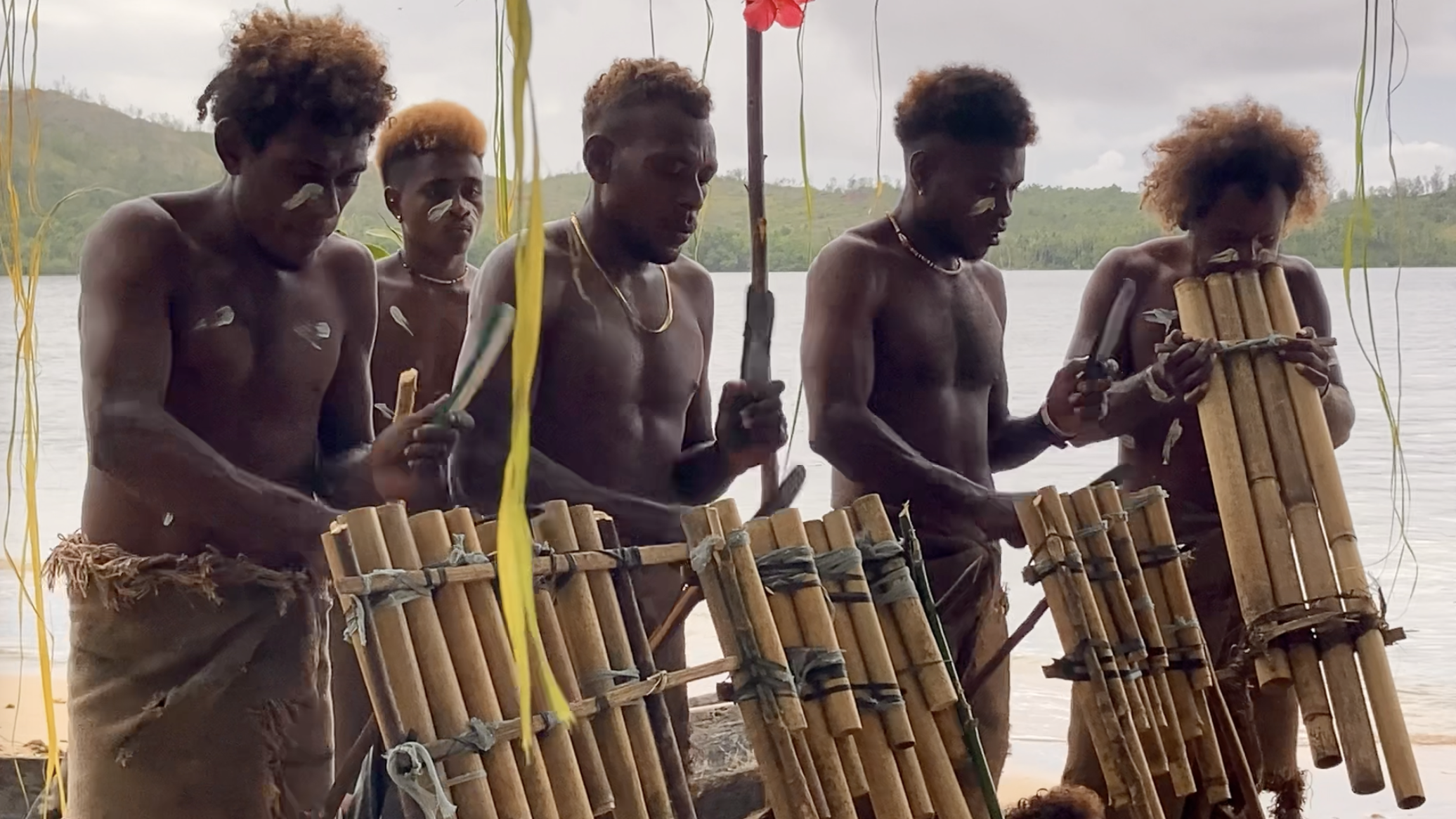
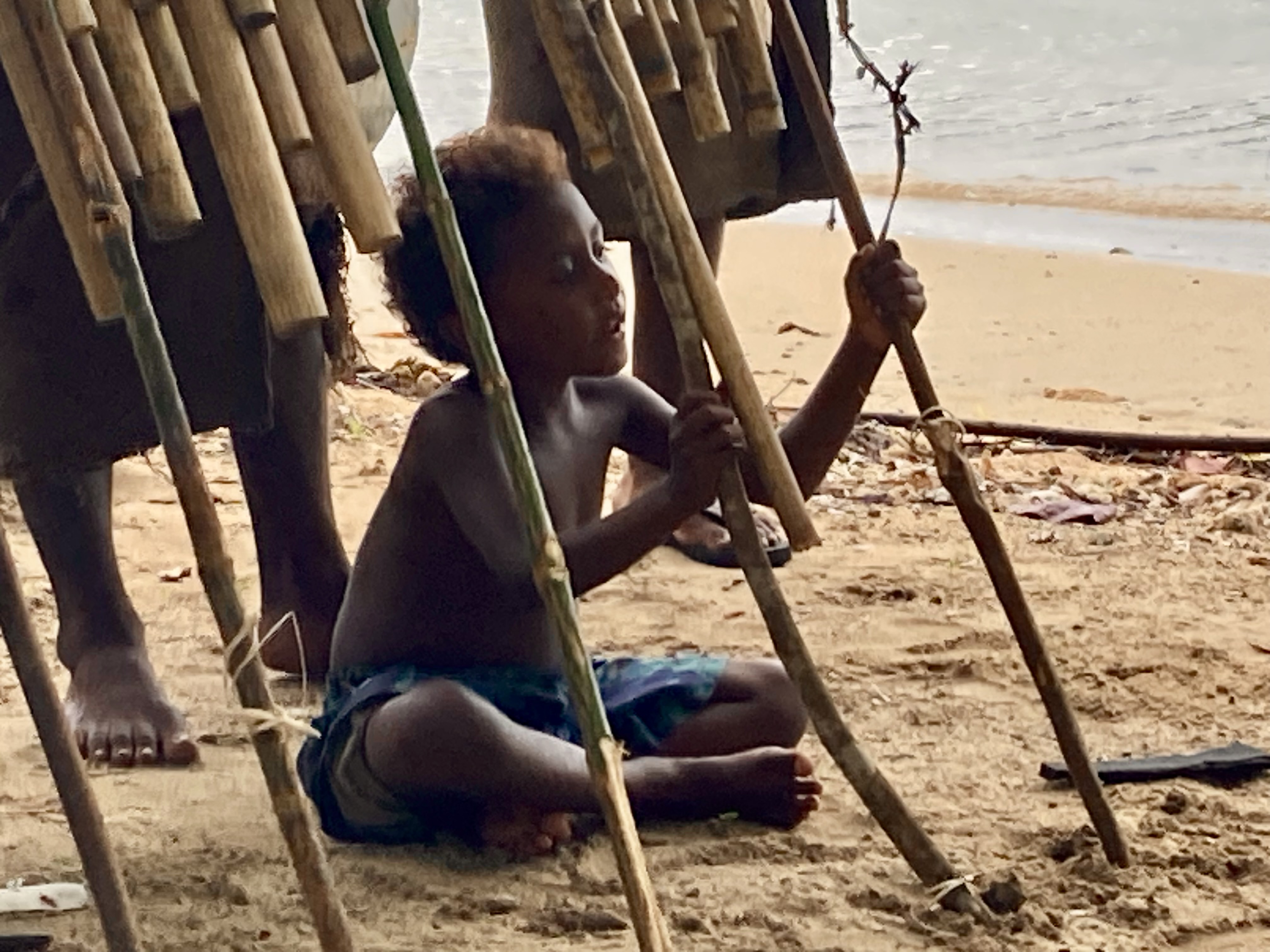
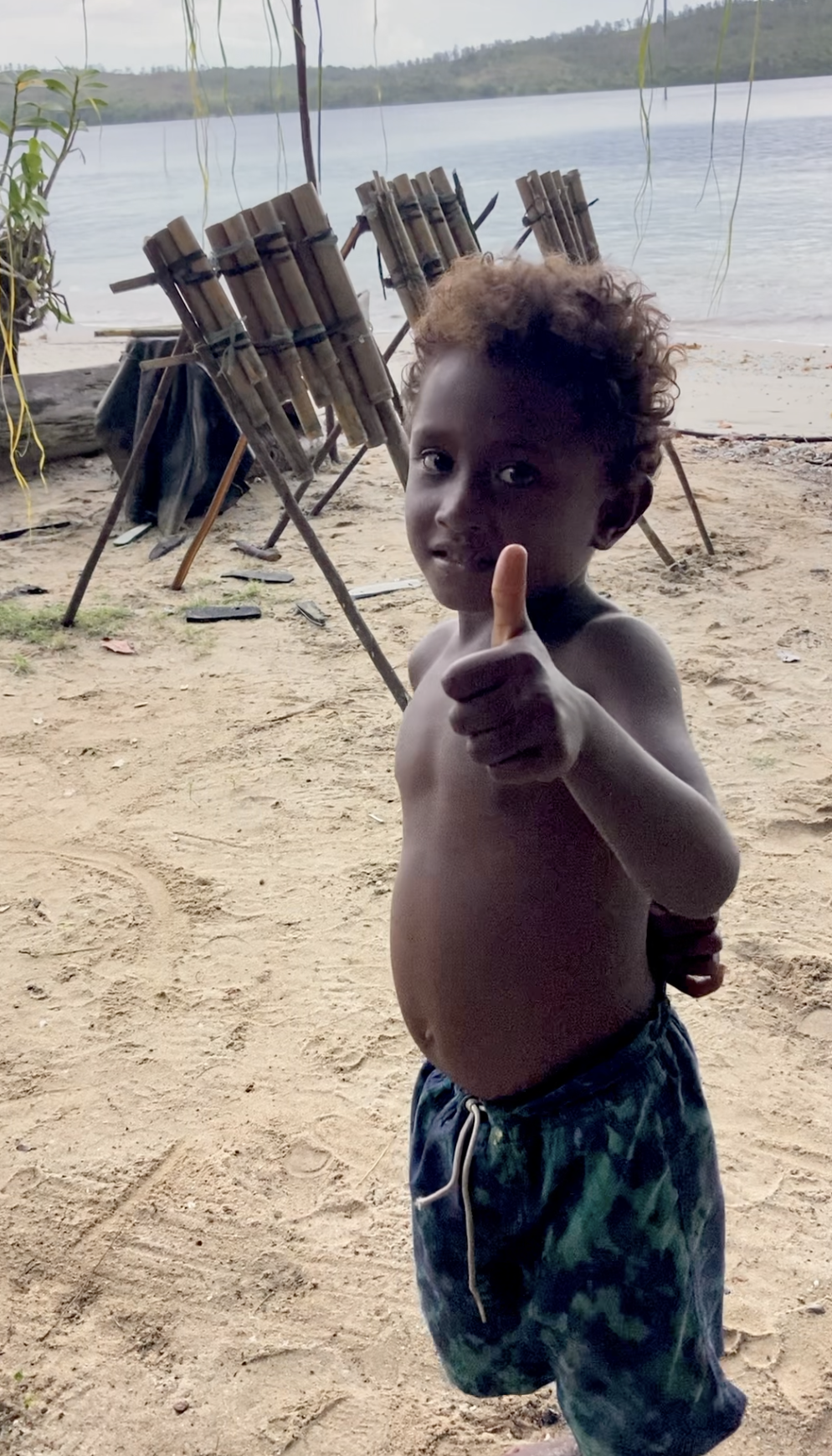
While there, we were treated to a very humble cultural show that highlighted singing, dancing, and the extremely unique bamboo pipe drums of the area. One of the drummers was actually using flip-flops as a rubber paddle.
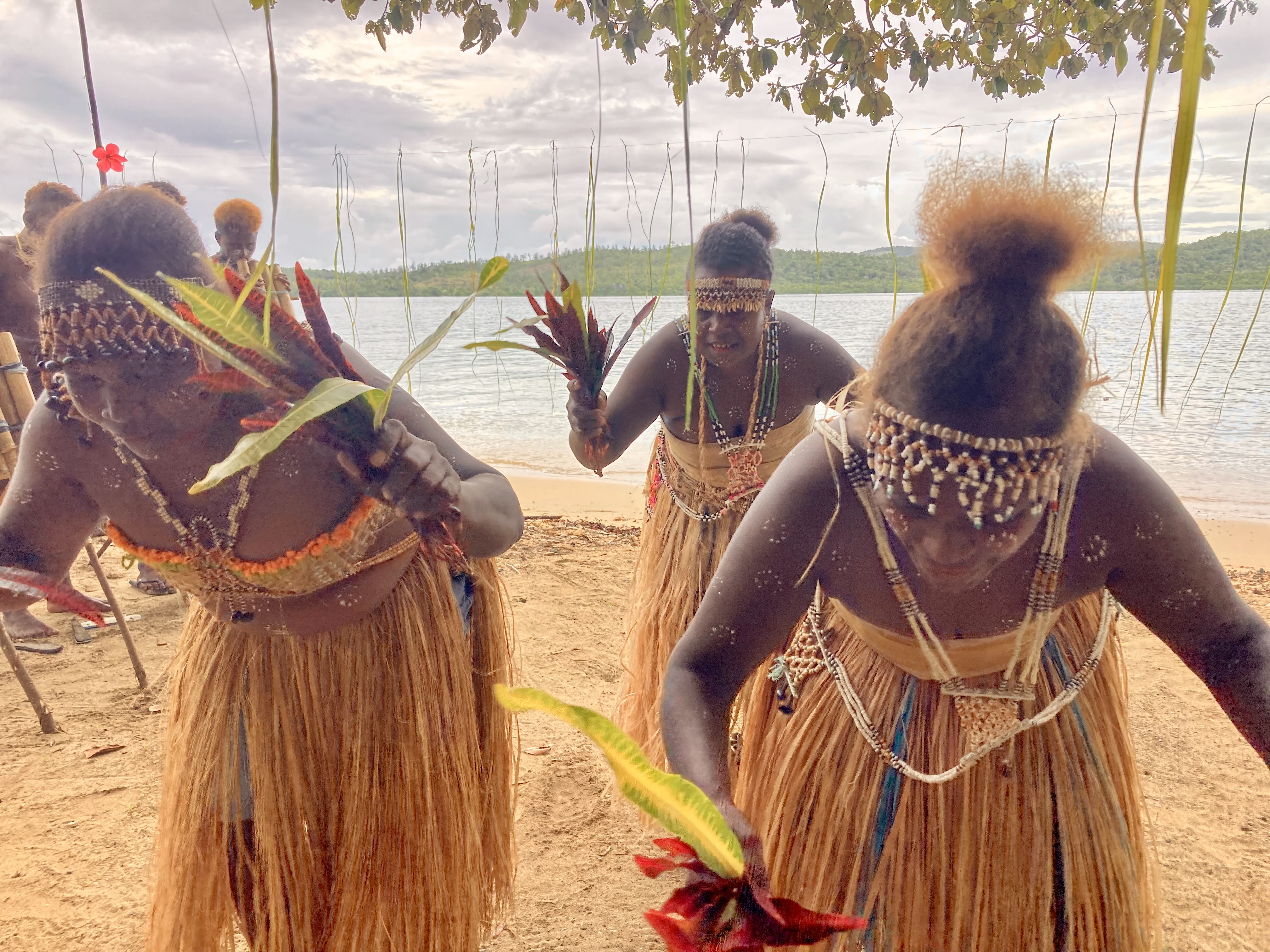
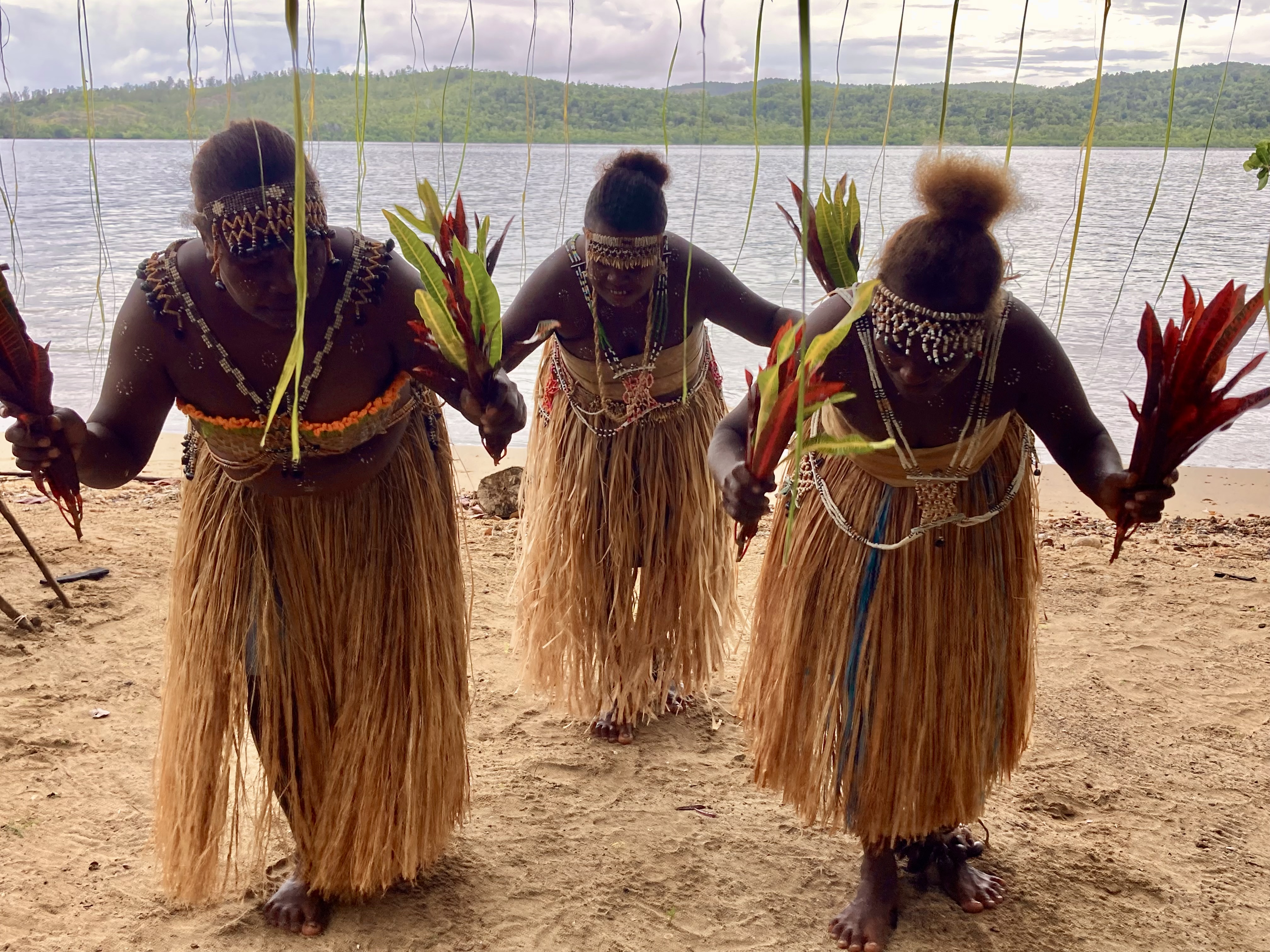
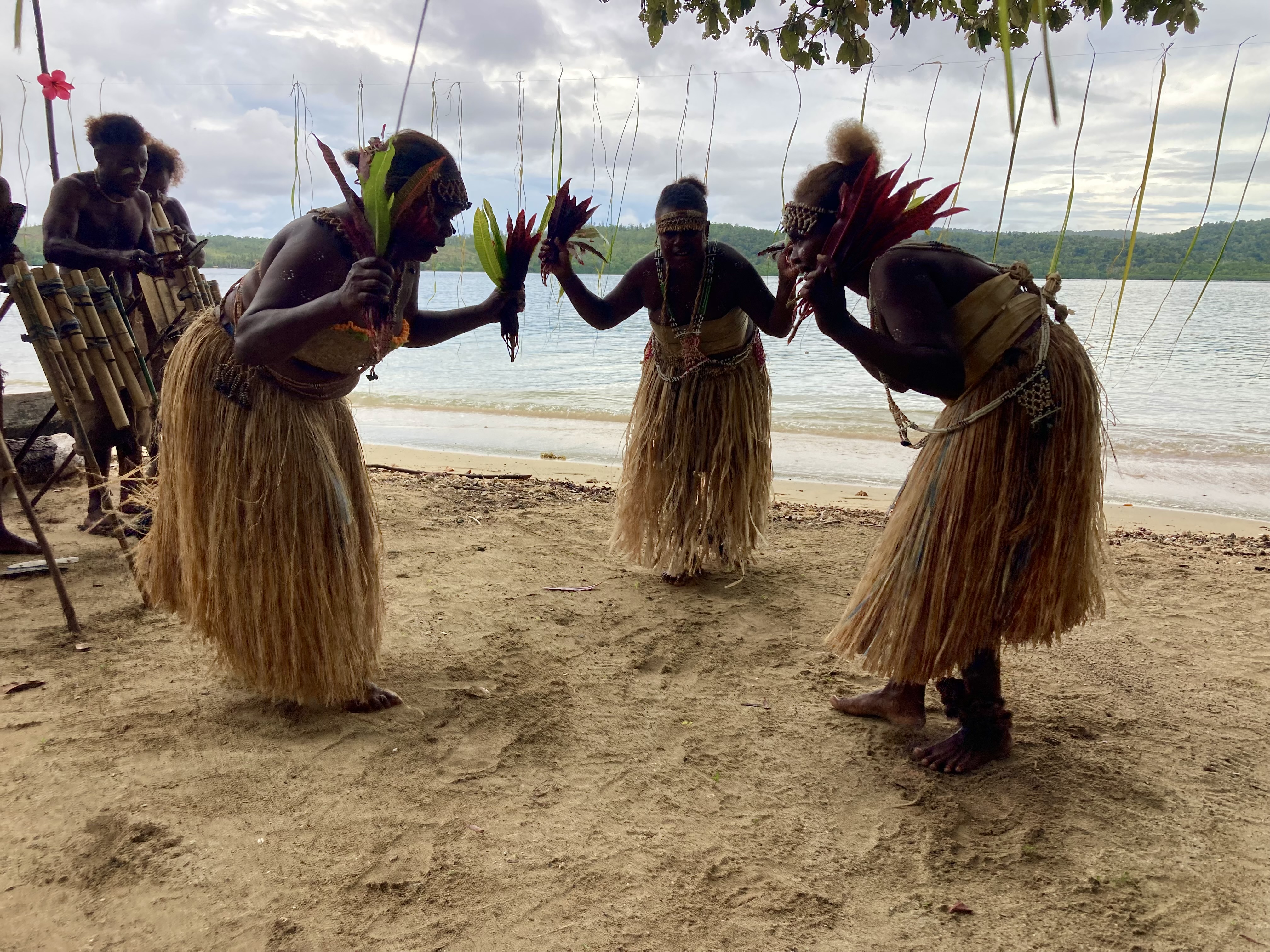
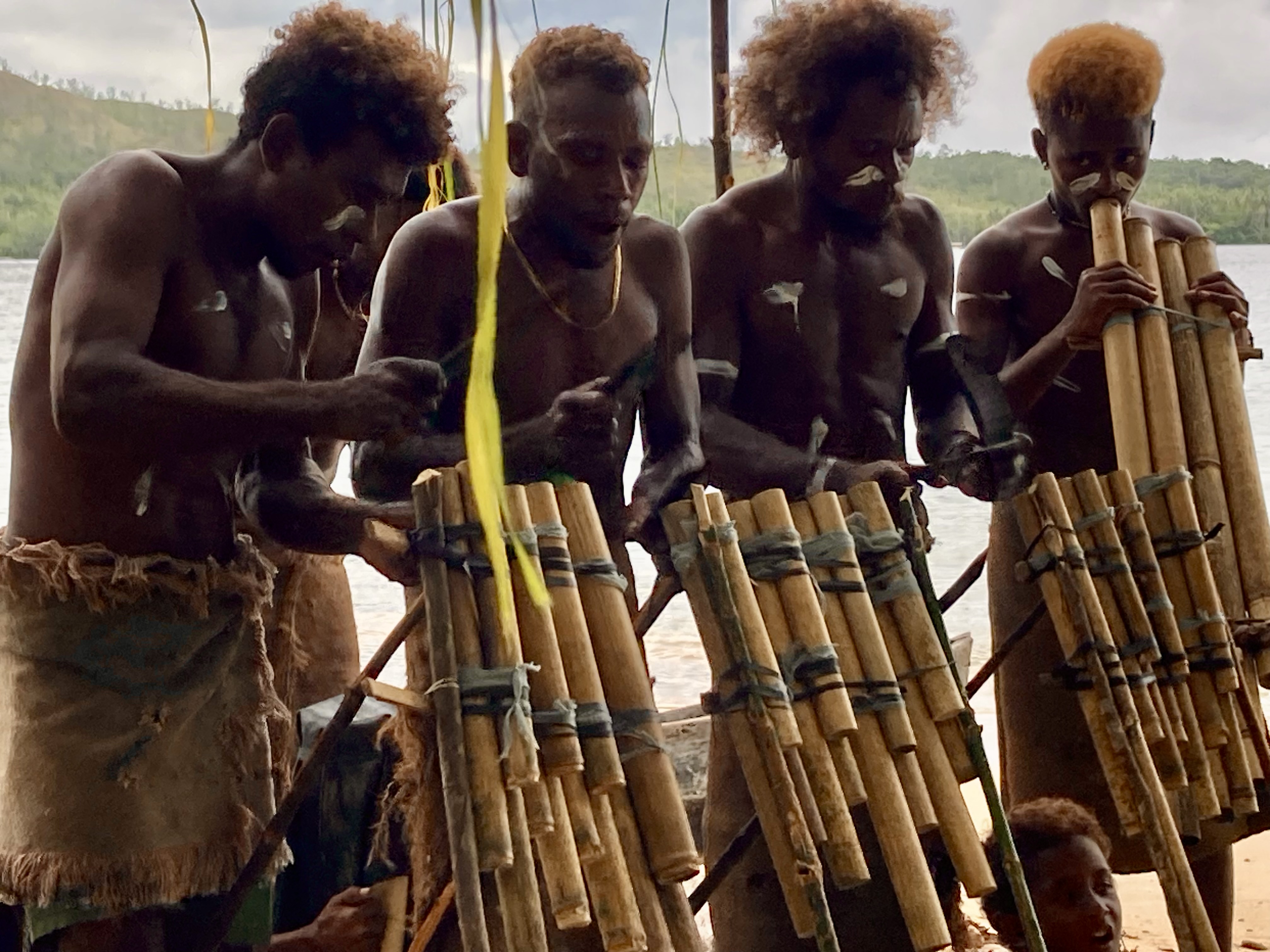
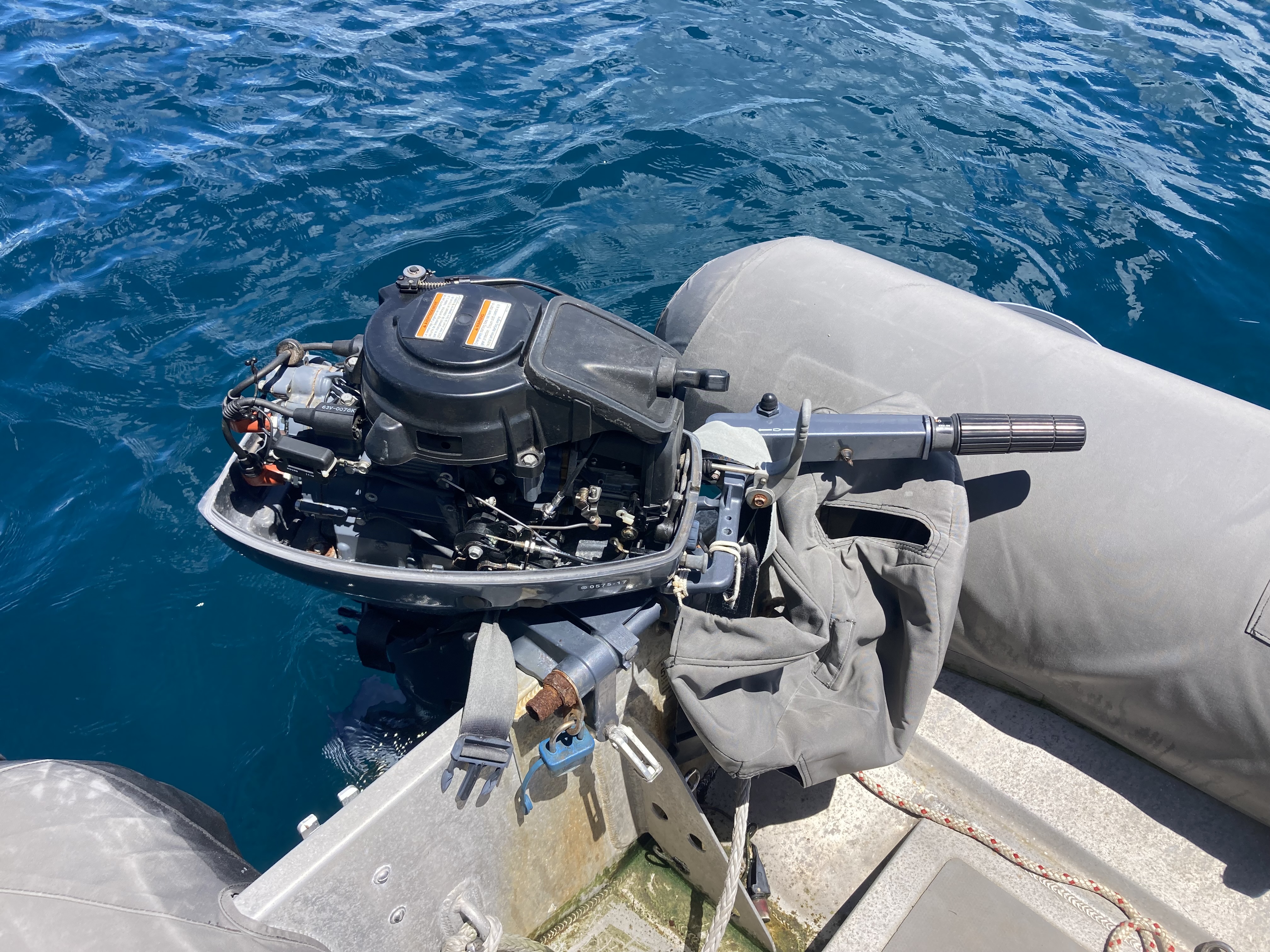
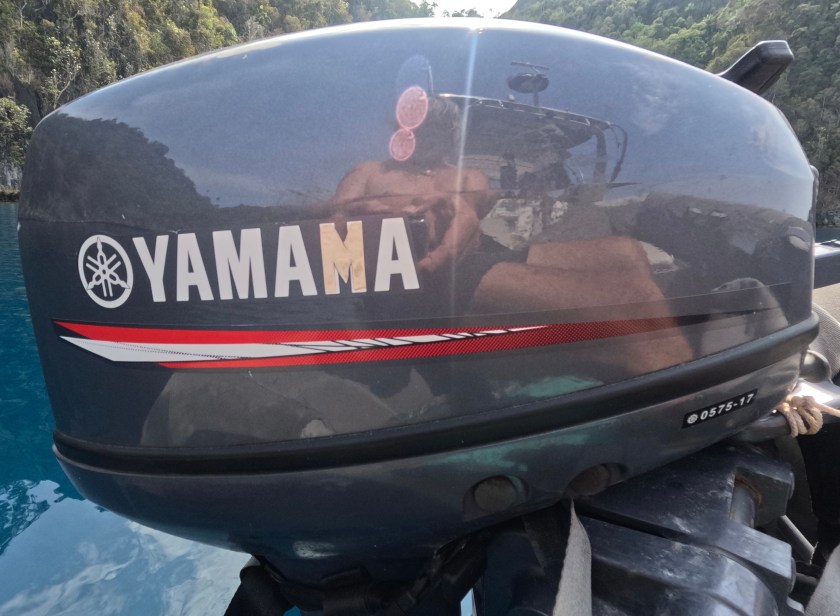
During our stop at Roderick Bay Hideaway, we were finally able to sort out the ailing Yamaha outboard engine regarding its lack of get-up-and-go. It turned out the new Yamaha carburetor was just what the patient had needed. After a rather painless organ transplant, the Yamaha (affectionately known as “YaMama” after a simple one letter replacement) was back to performing at 100%.
Shall I say, YaMama done got her groove back…? Yep, I just did!
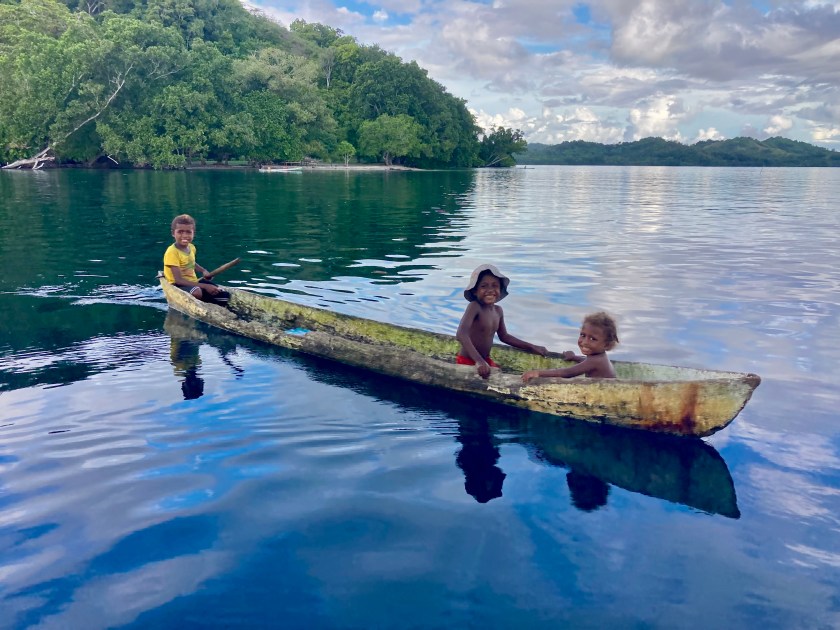
As had become the norm in the Solomon Islands, we were still getting daily visits by the local pint-sized ruffians shaking us down for smiles and potential treats.
In complete contrast, certainly near the top on the list of the “rather surreal and looking out of place” category, was waking up to see a global traveling luxury French cruise ship which had anchored in the small bay overnight.
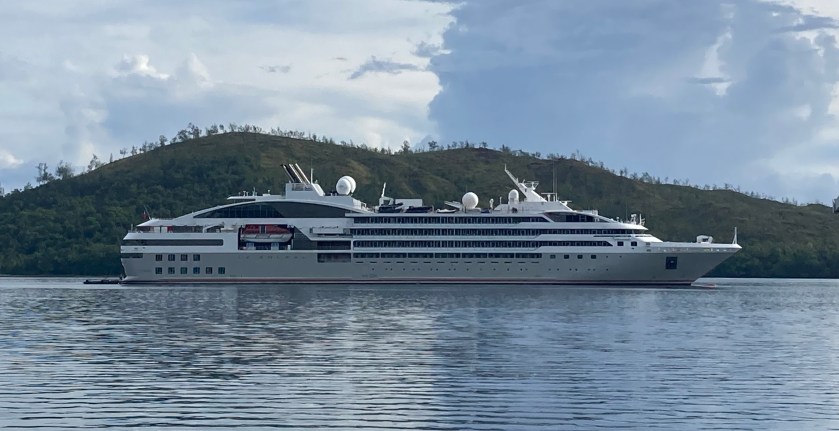
Apparently, Le Soléal cruises with its 250 or so passengers who cough up a minimum of something like $1000 a day for the privilege of venturing between Australia, New Zealand, Fiji, Guam, Japan, South Korea, Antarctica, Solomon Islands and Indonesia. Even more strange, we would see the very same boat again seven months and 2,700 nautical miles later during an overnight passage in Indonesia (but that is leaping into the future).
Also near the top of the “rather surreal and looking out of place” category, though much less expensive, was the view from the cockpit watching Kris attempting to dry laundry during a rain storm!
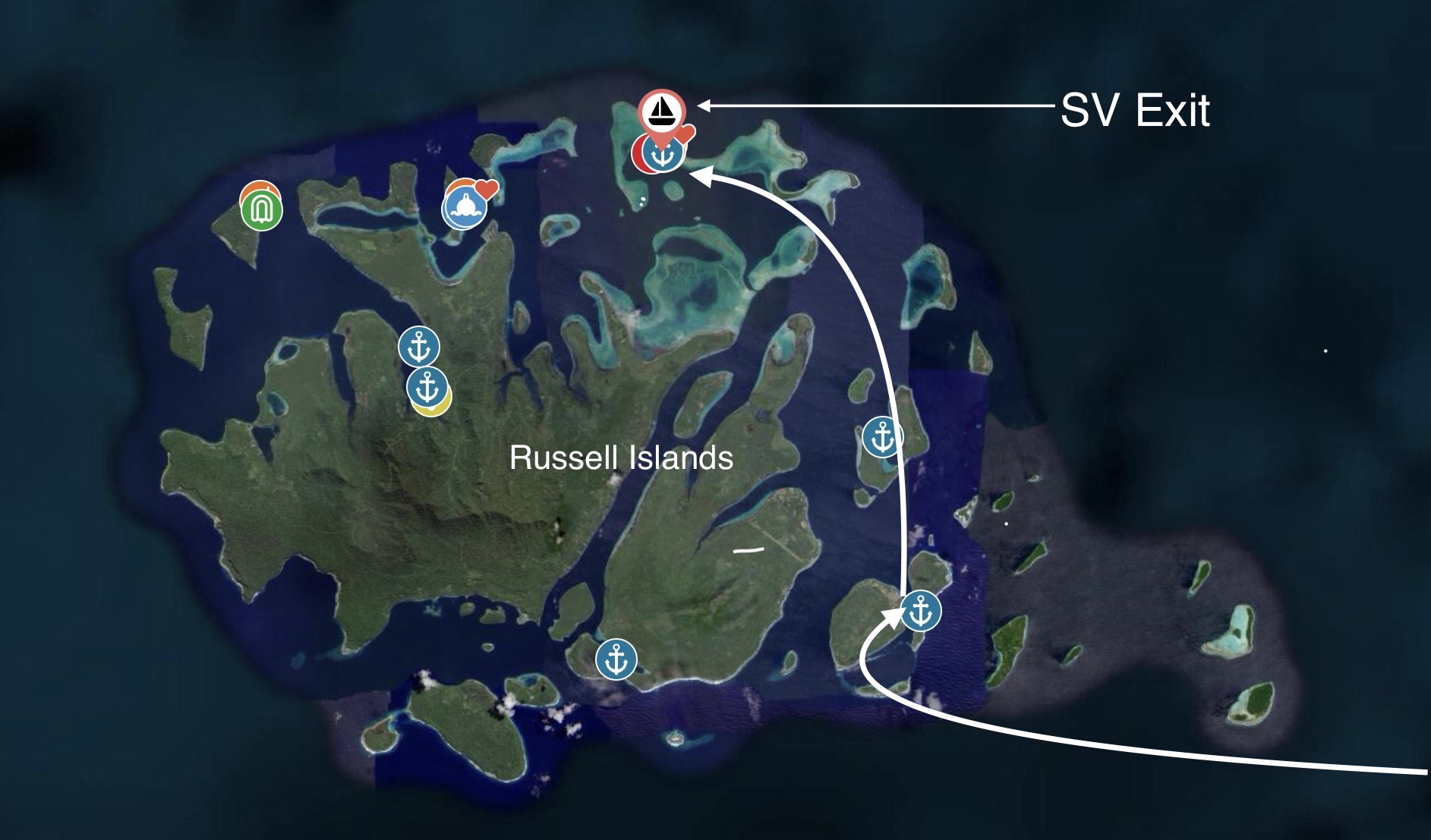
After ten days at Roderick Bay Hideaway, we said farewell to our new acquaintances, and headed for the Russell Islands sixty nautical miles to the west.
With the assistance of a small pod of dolphins as escorts…
…we made it about a third of the way there before stopping at Savo Island. It ended up being only an overnight stop. Once at anchor, we could see just how exposed to the weather Savo really is, and we were tersely reminded by Mother Nature that you can never take for granted just what she may have in store for you.
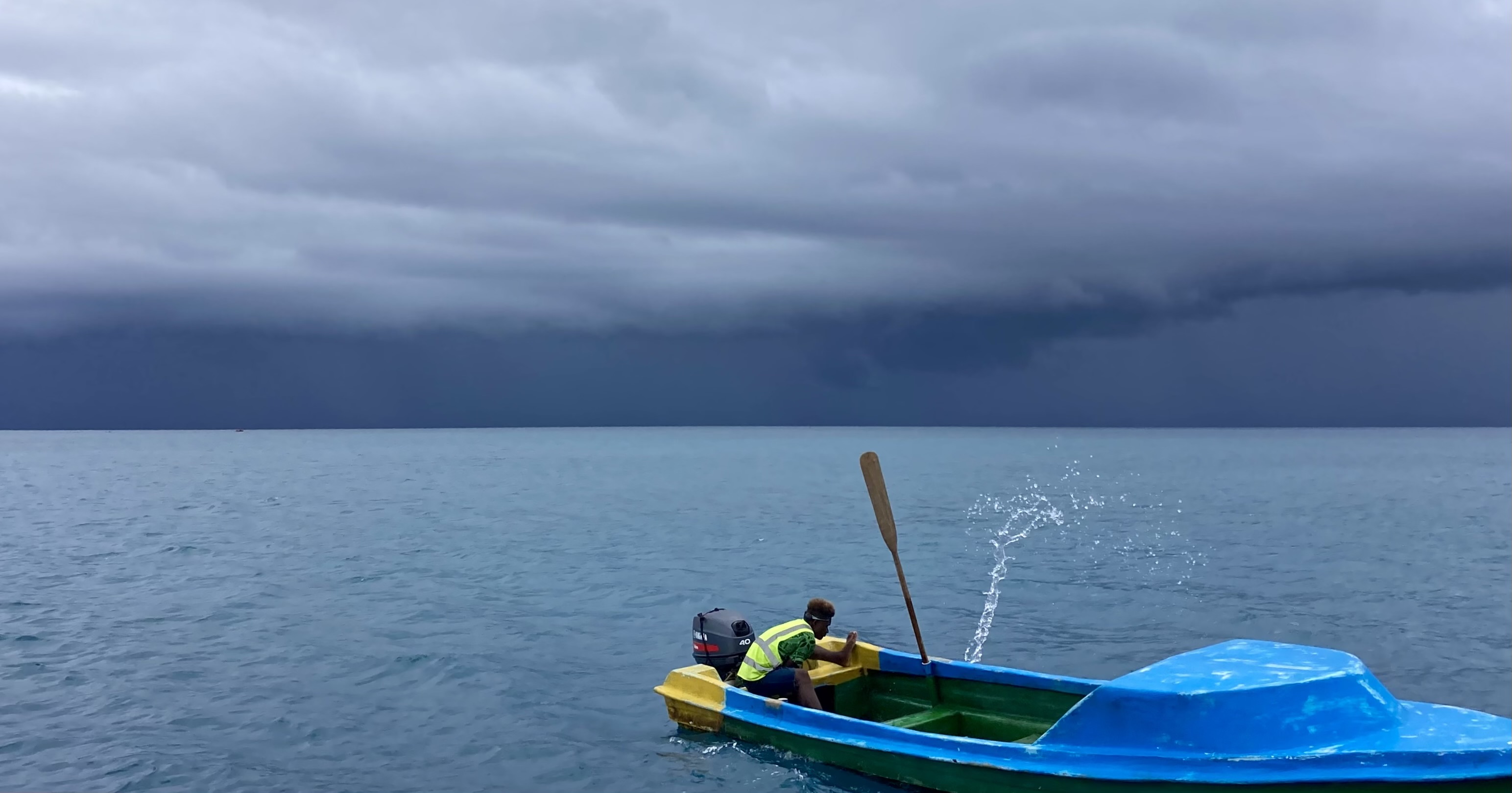
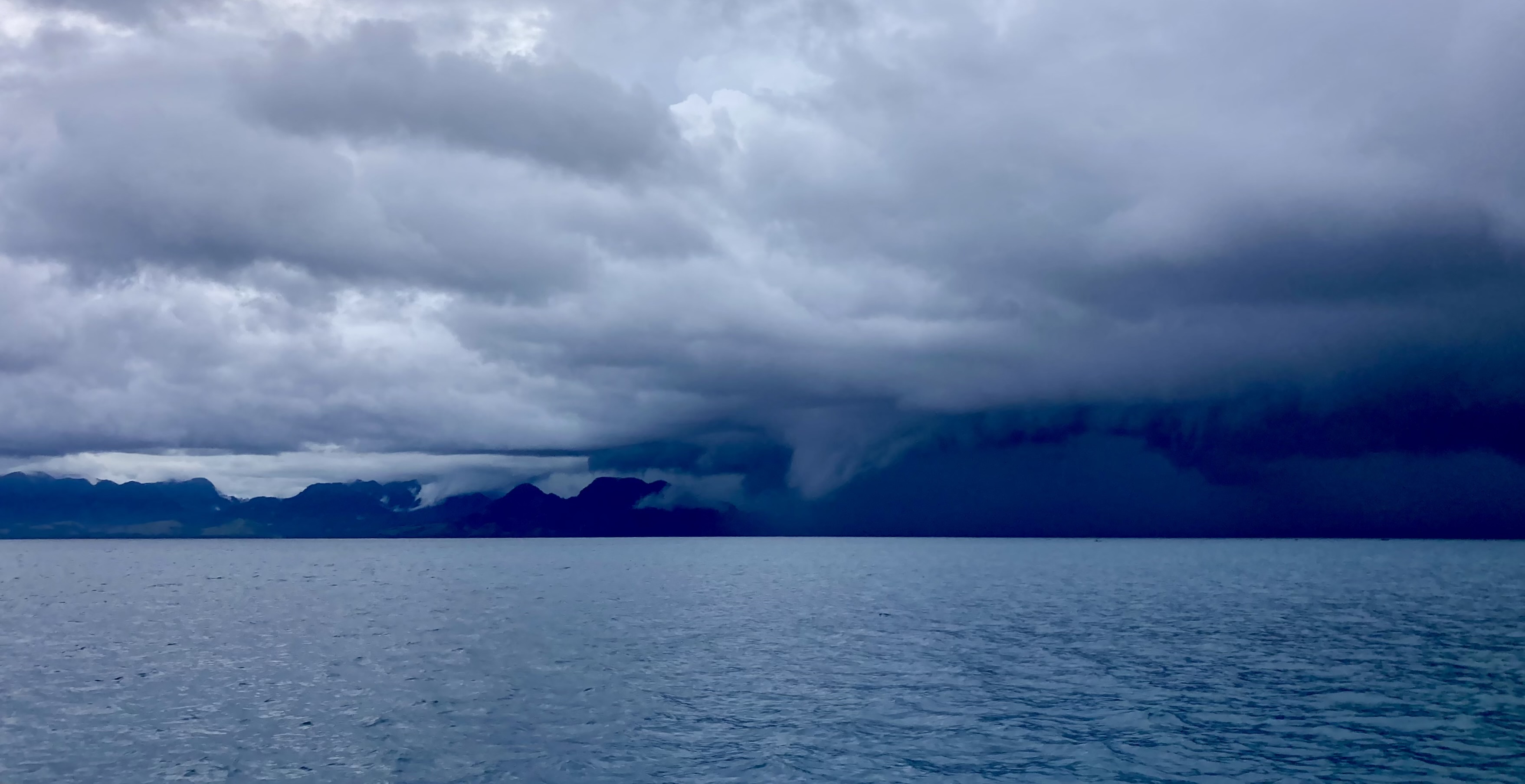
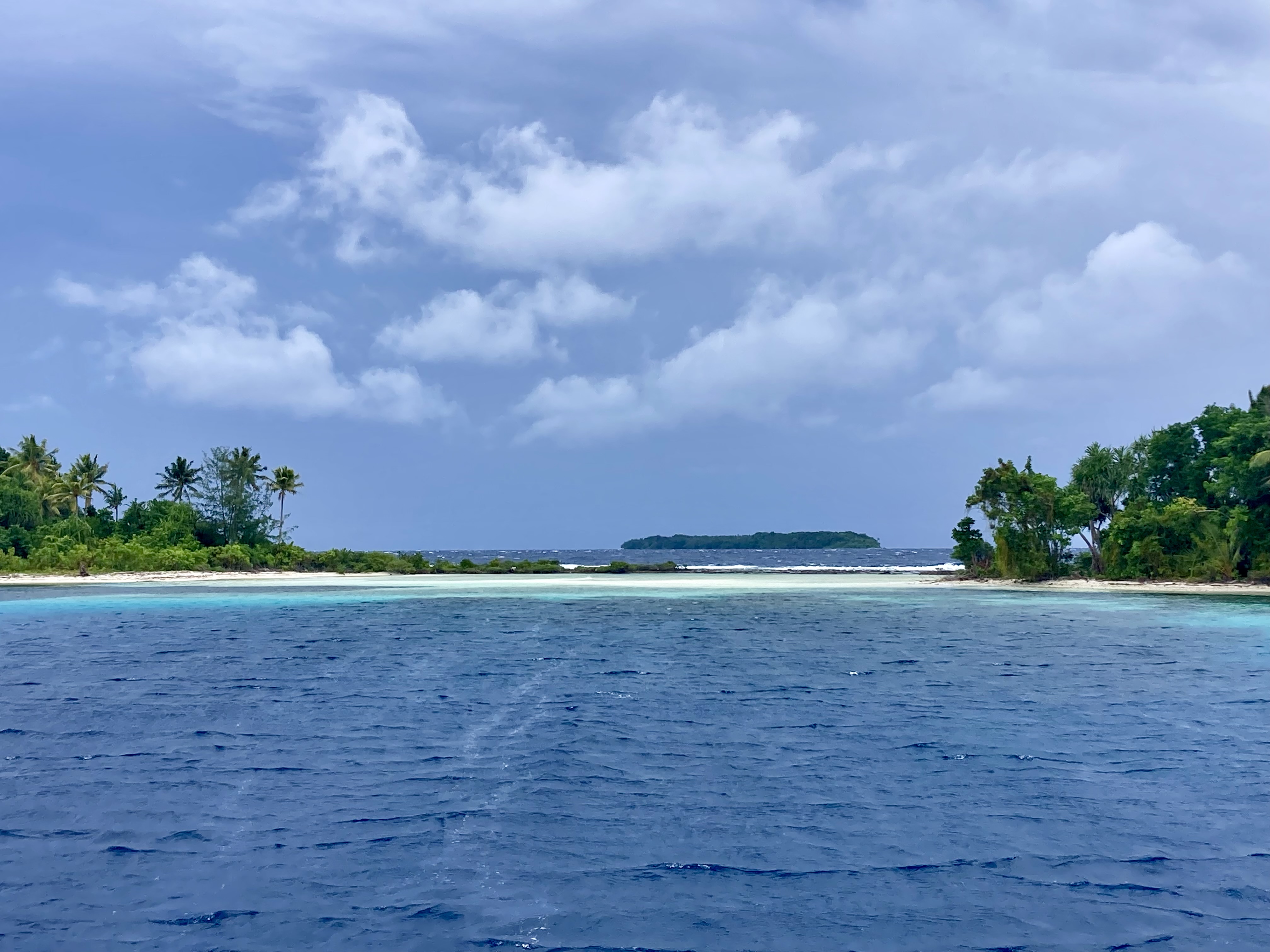
The following day, an eight hour sail brought us to Telin Island, at the southeast tip of the Russell Islands. We anchored along a narrow shoreline of the island that gave us a perfect front window view of the stretch of water we had just crossed.
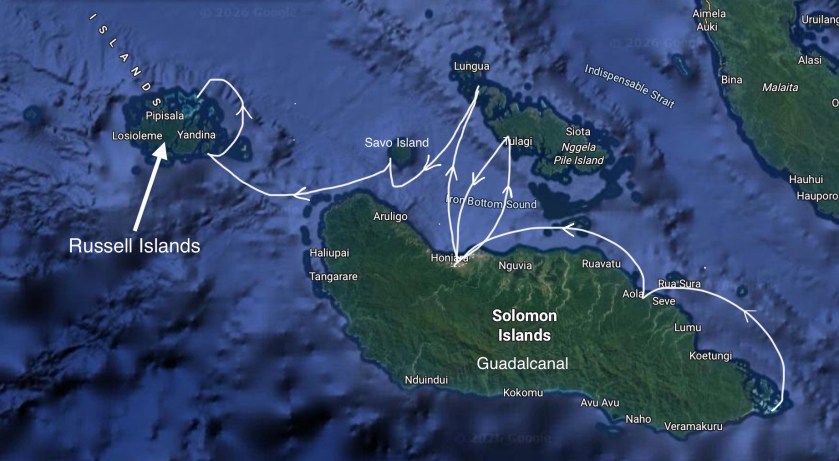
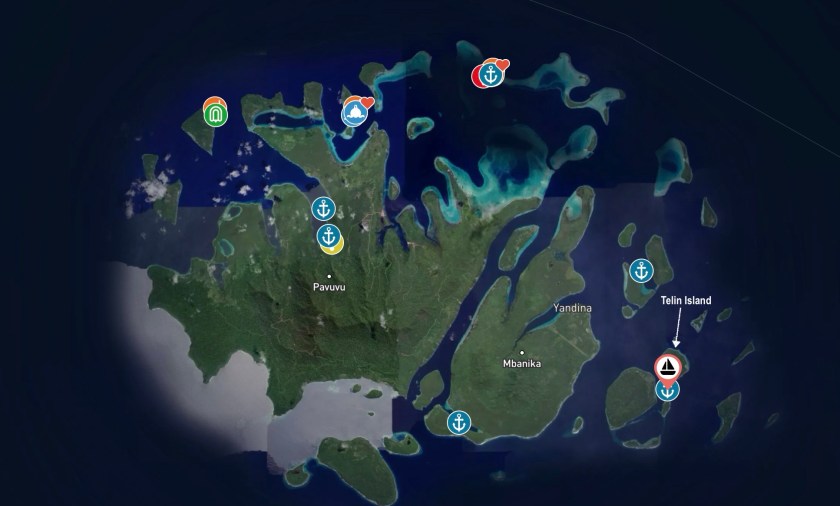
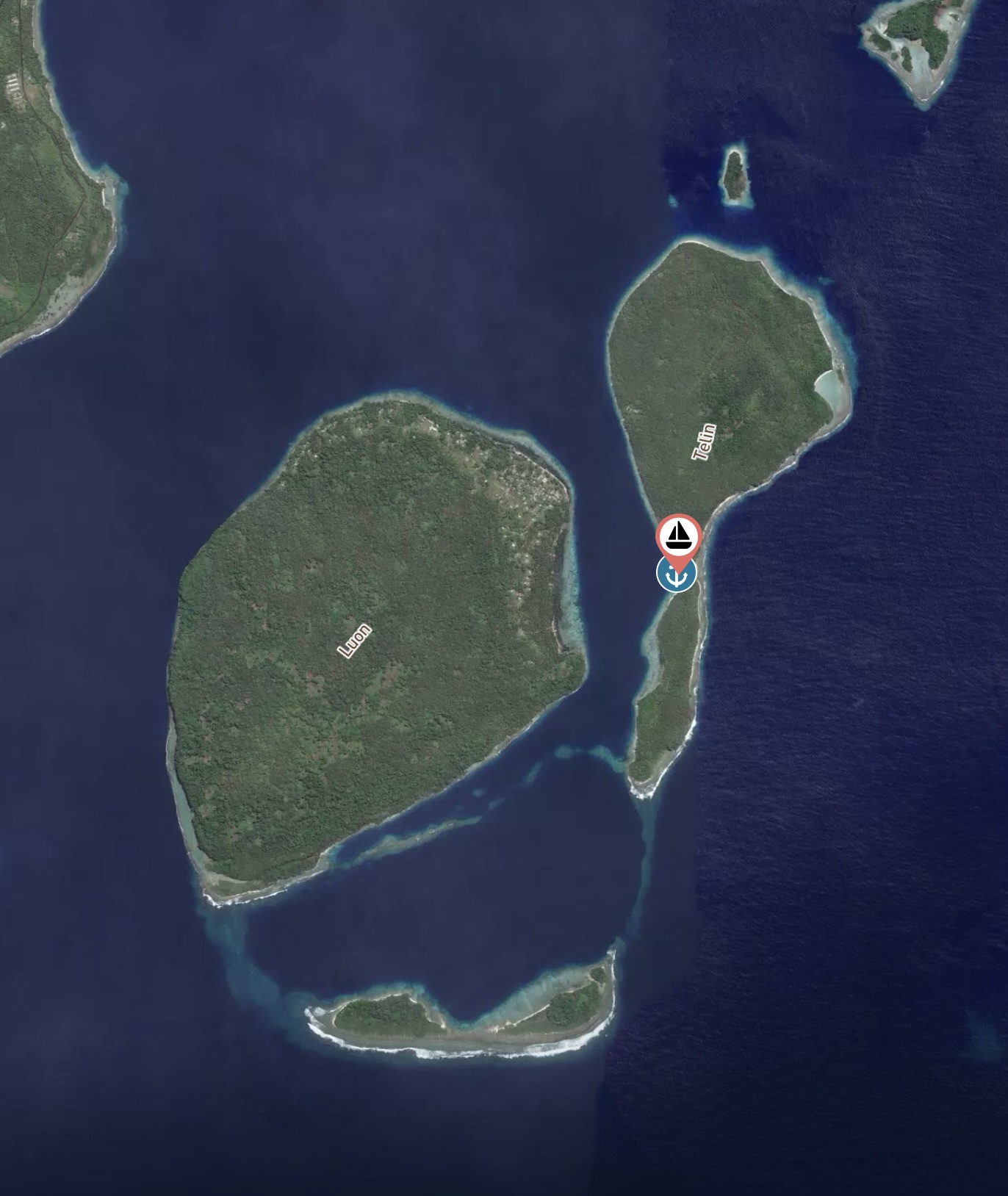
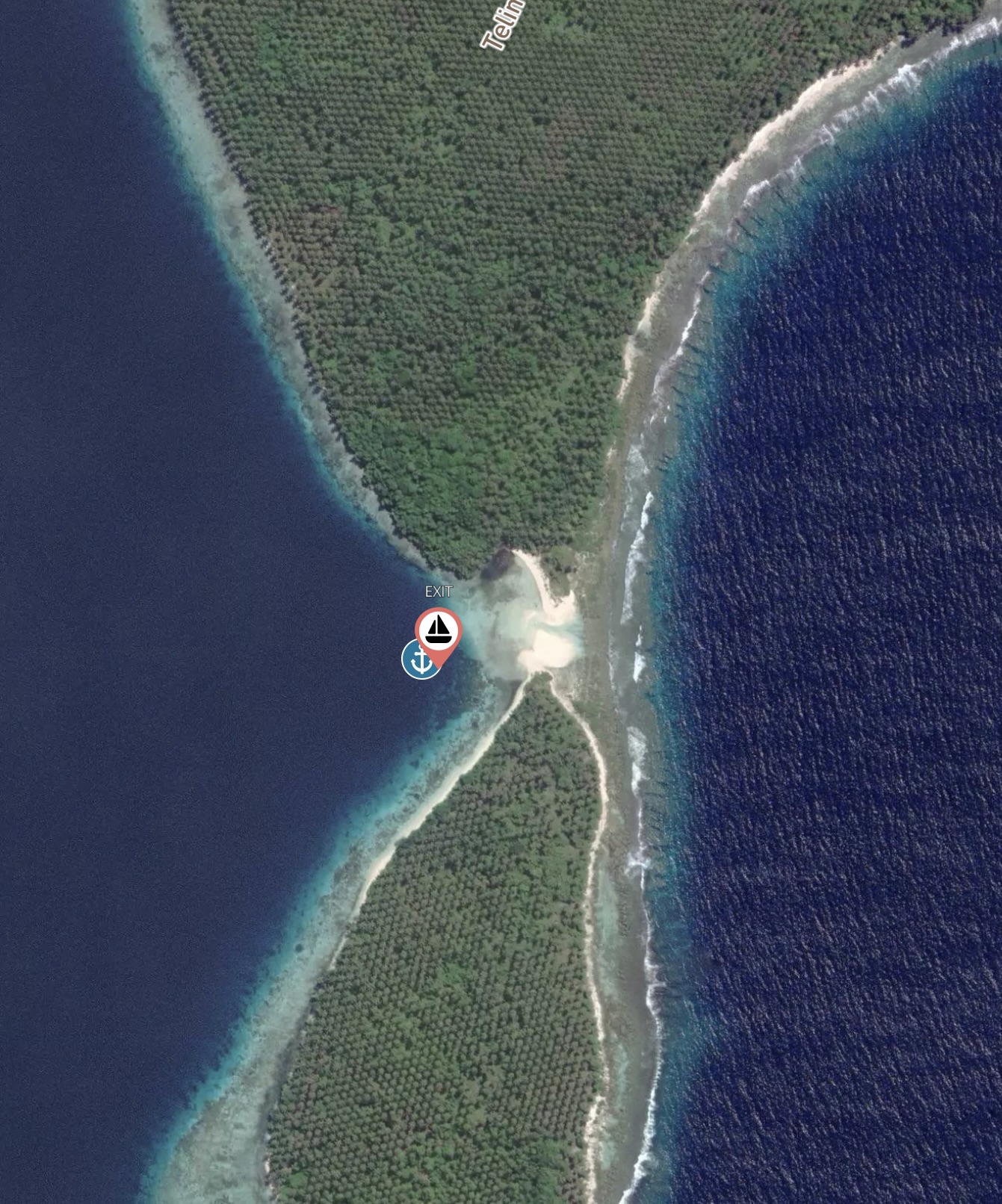
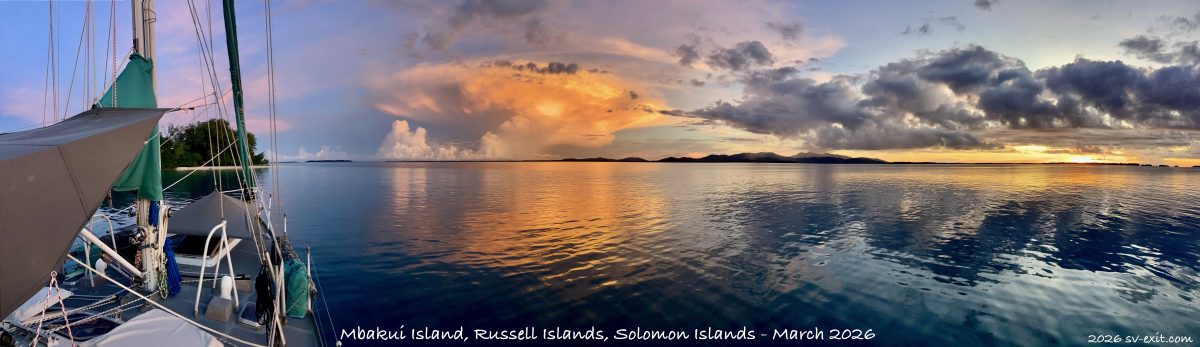
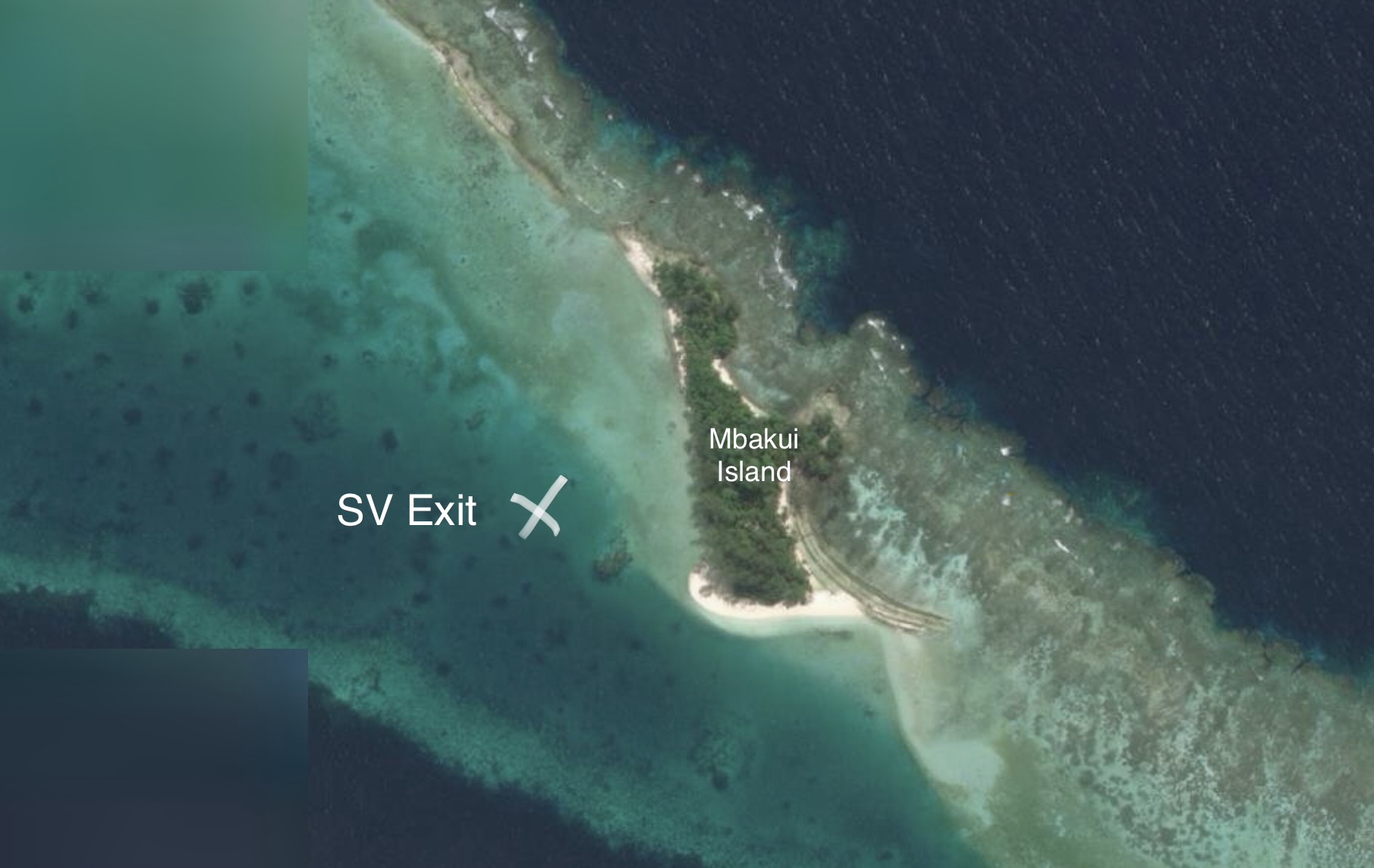
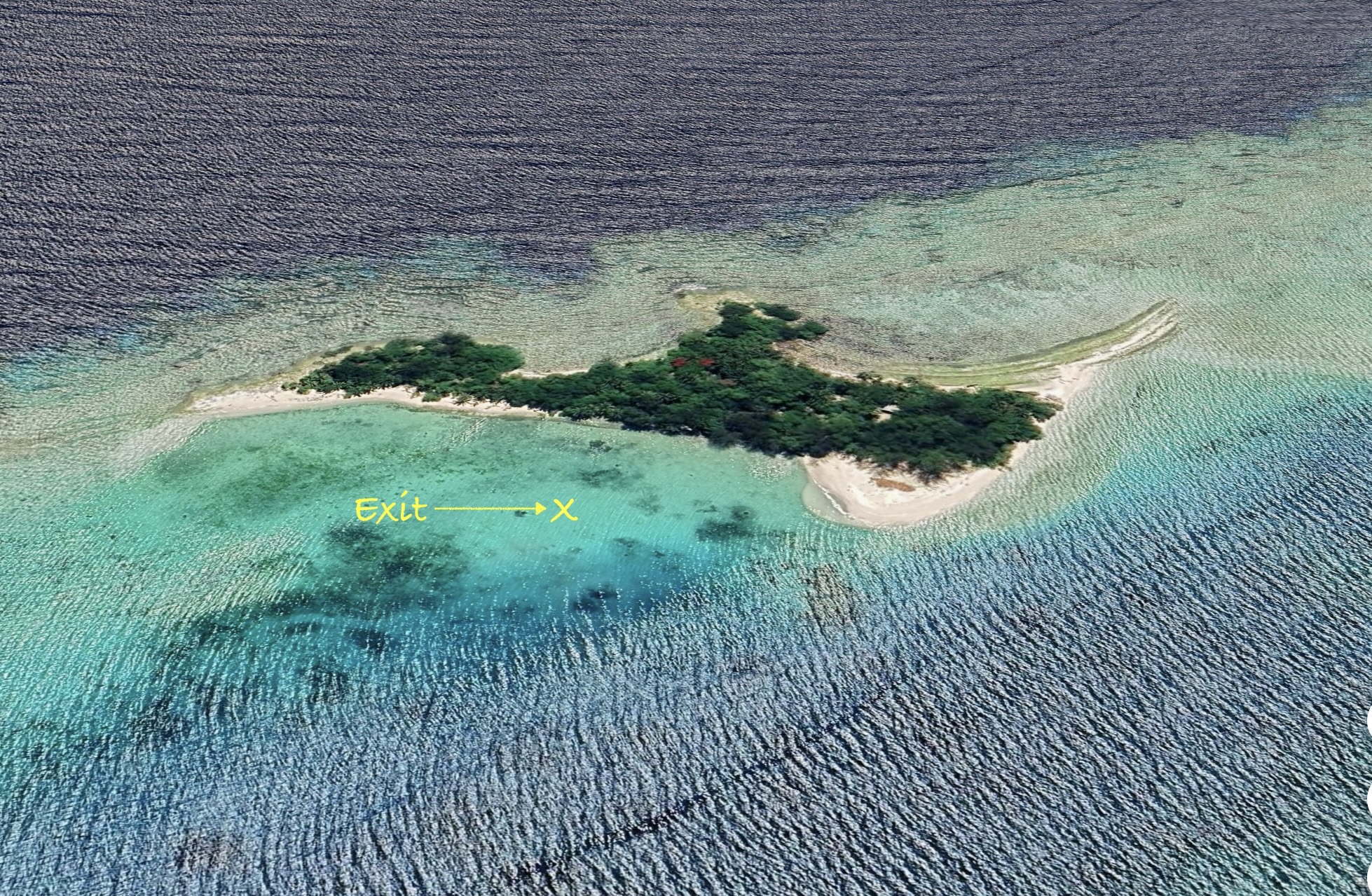
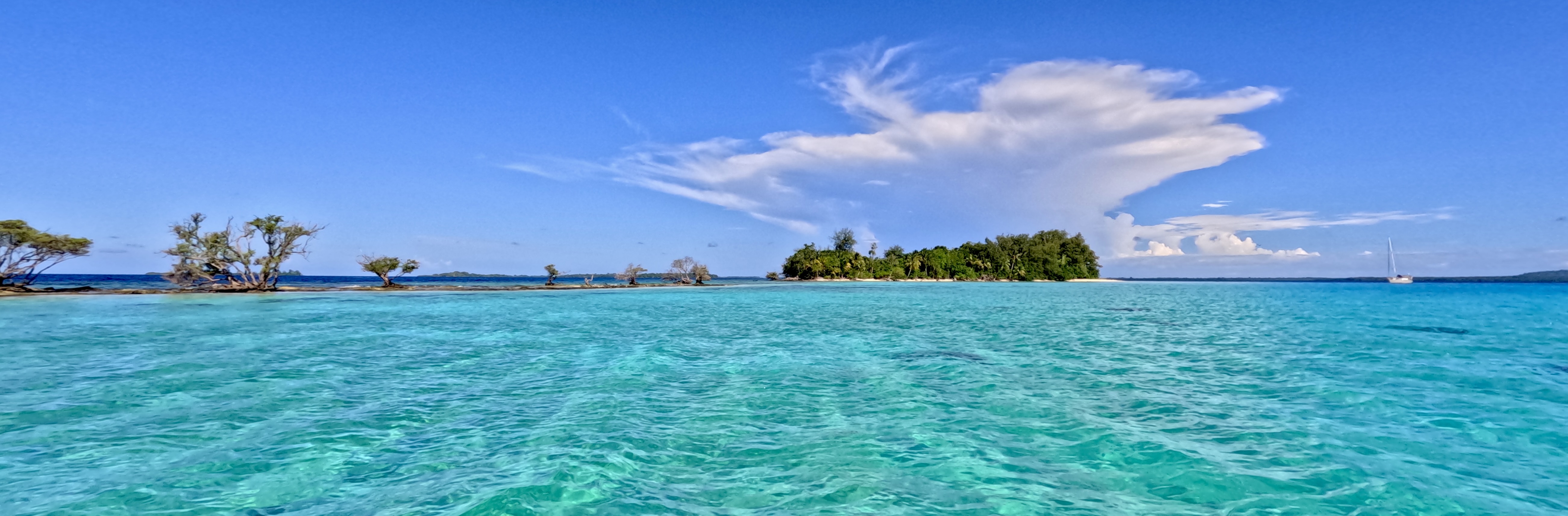
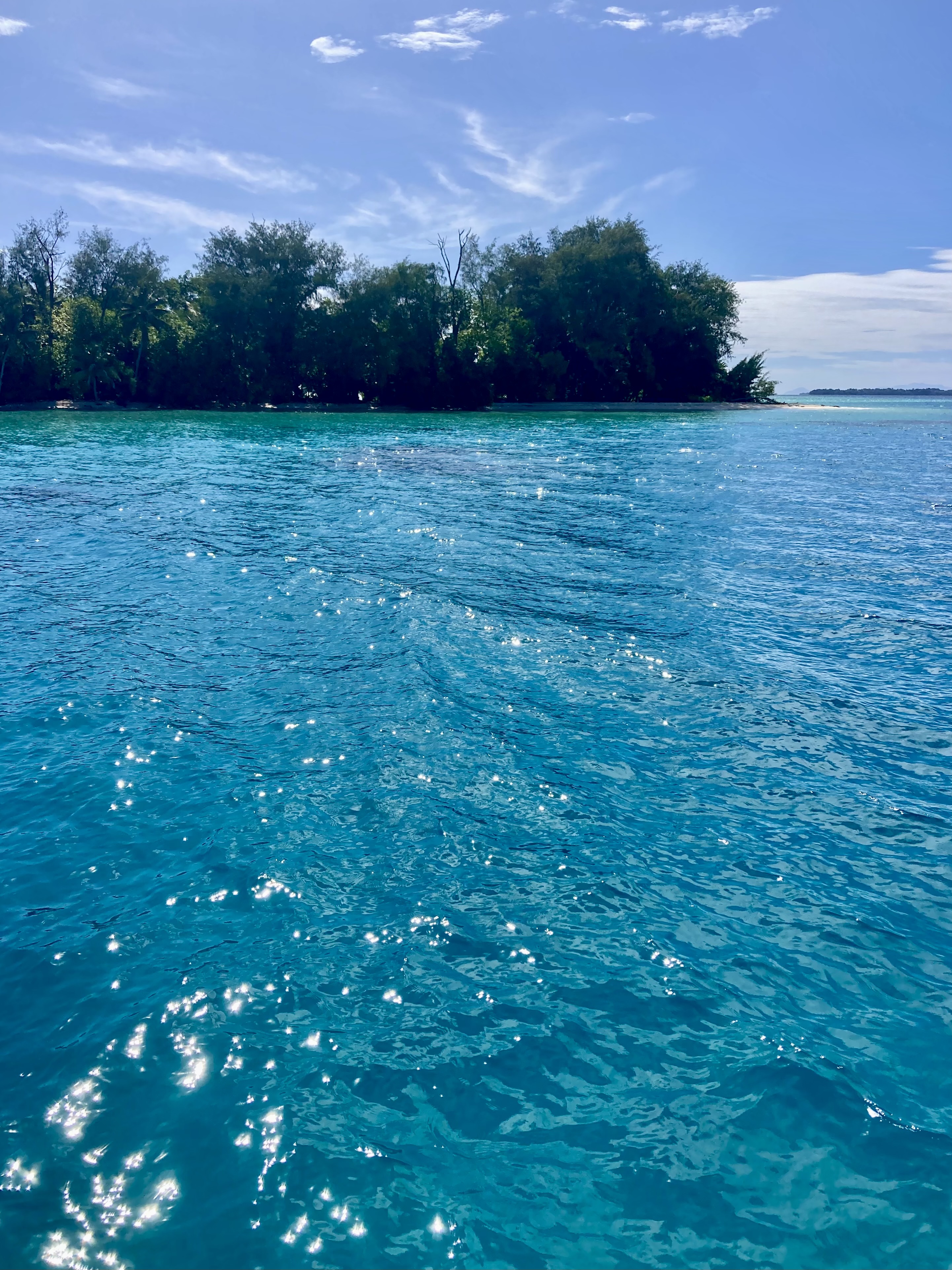
The next day we continued eleven nautical miles to Mbakui Island, right at the northern edge of the Russell group. It was the quintessential picture post card location. Just what we had been looking for. Tiny island. Completely isolated. Not another boat to be seen. No village in the area. Amazing shades of blue stretching from the sky to the water. Only one house on the island that was currently unoccupied. Almost perfect.
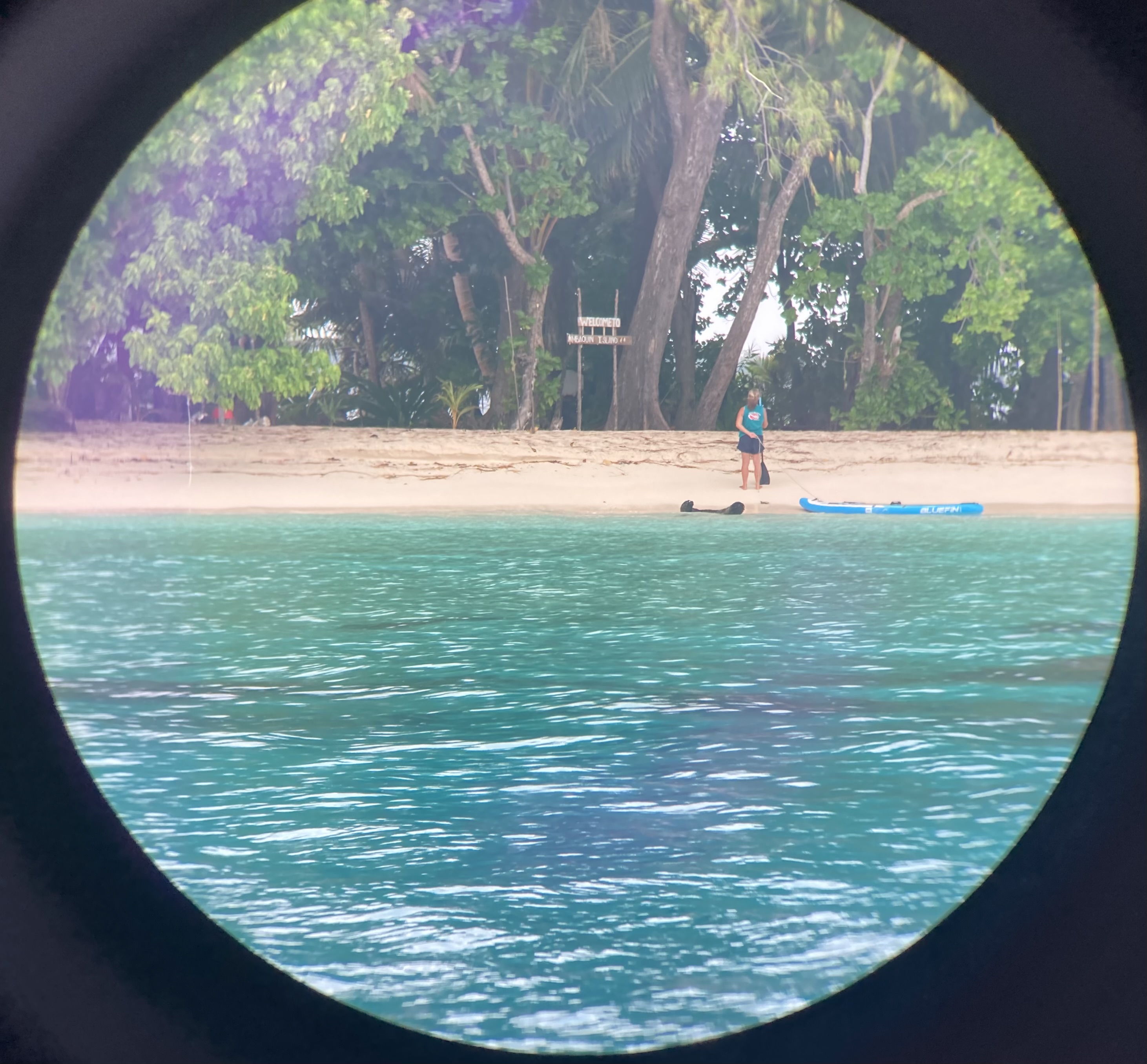
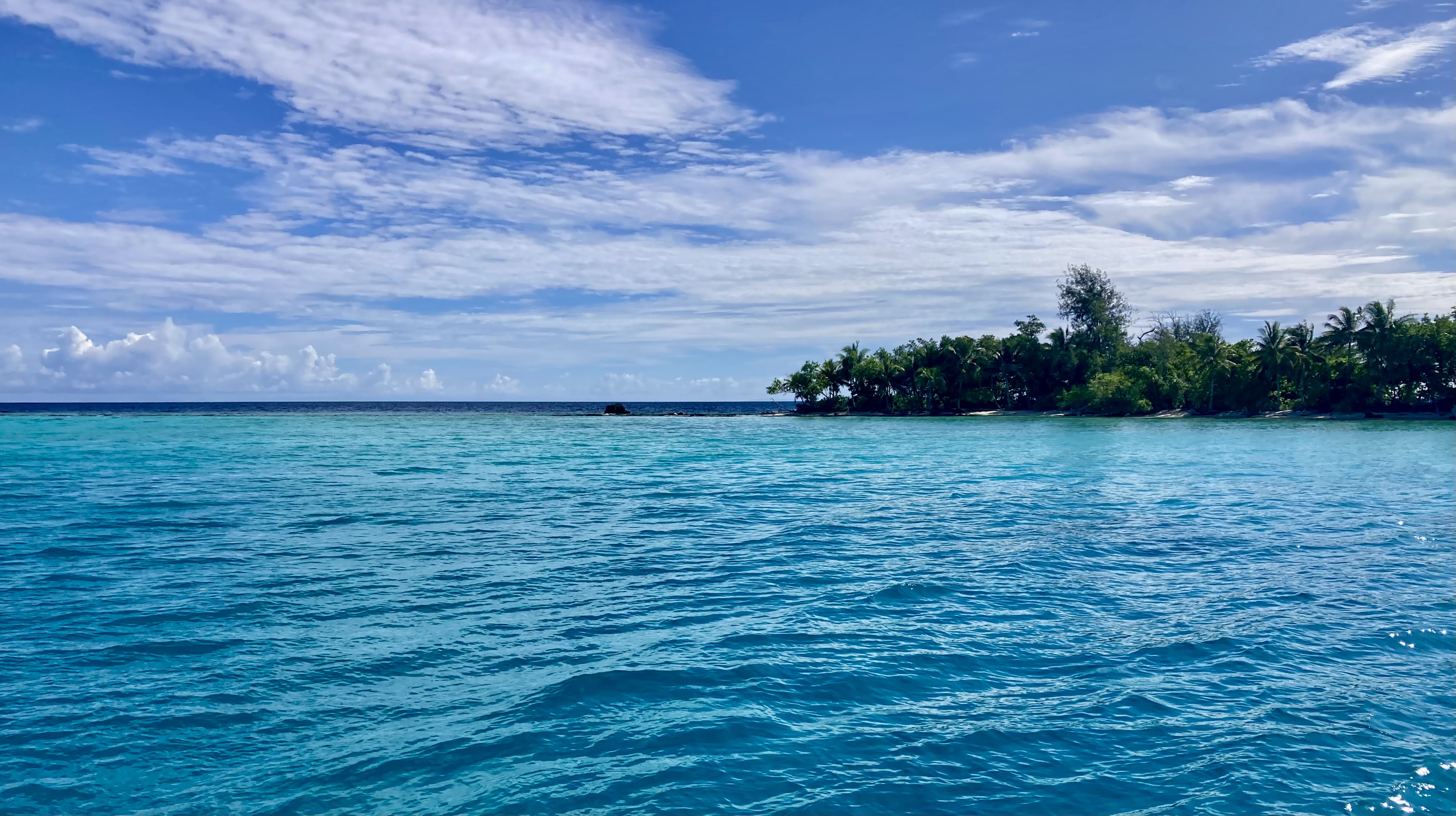
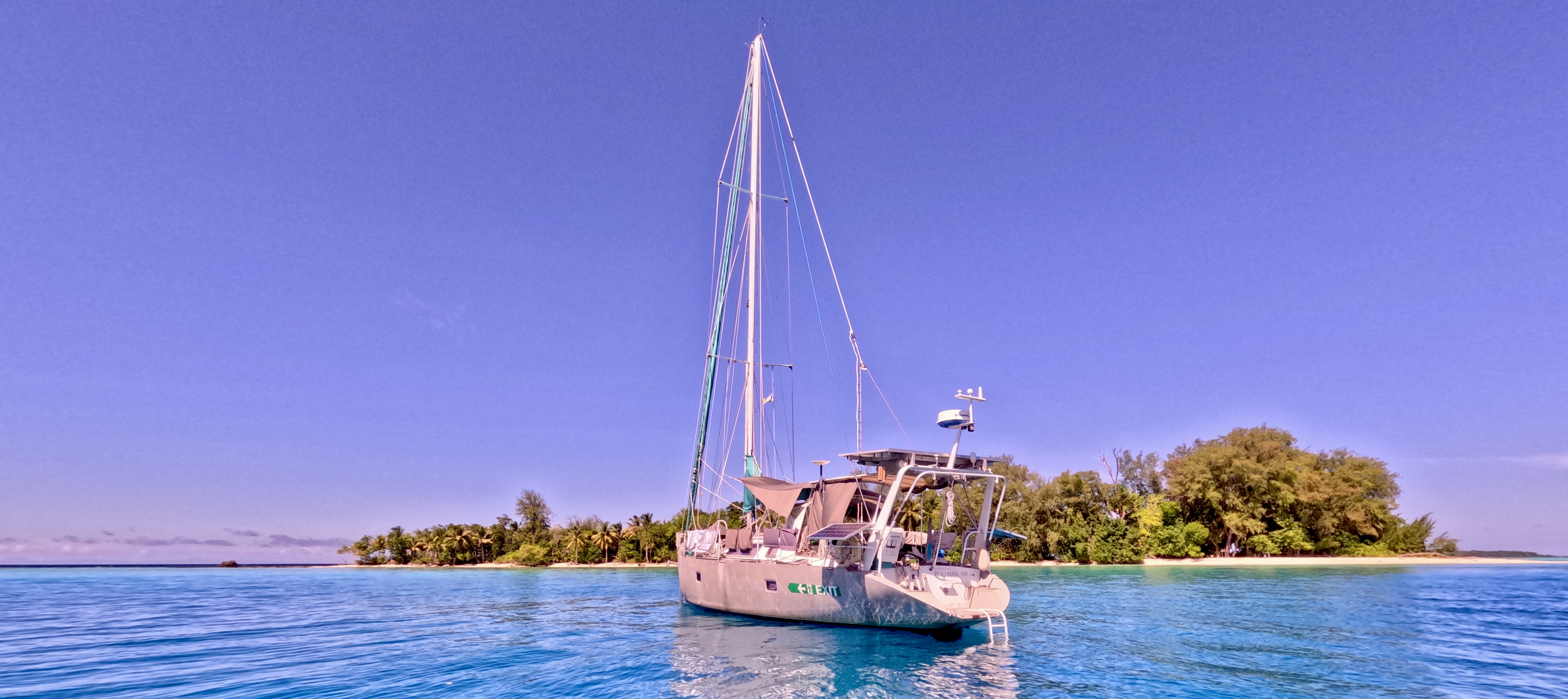
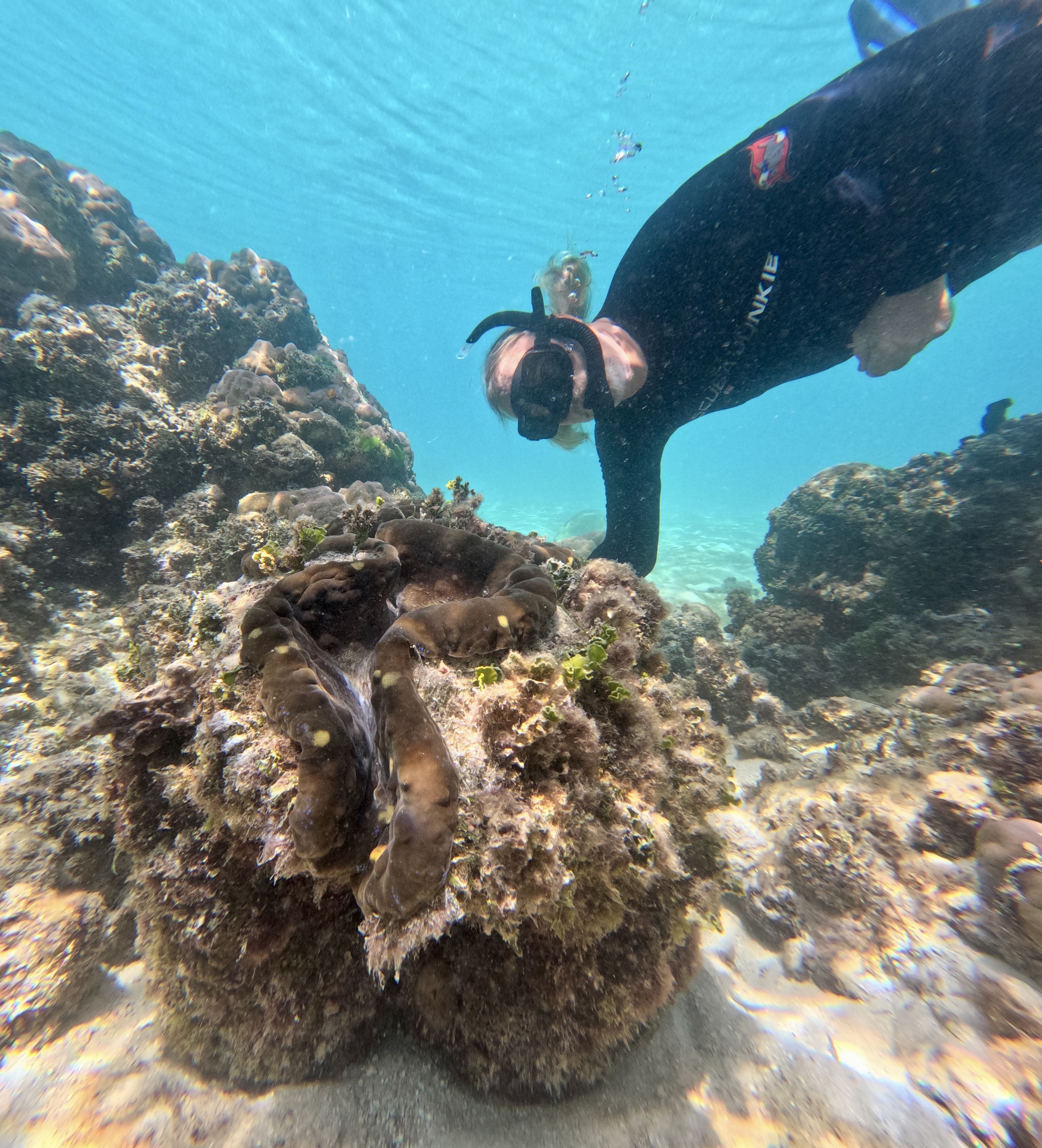
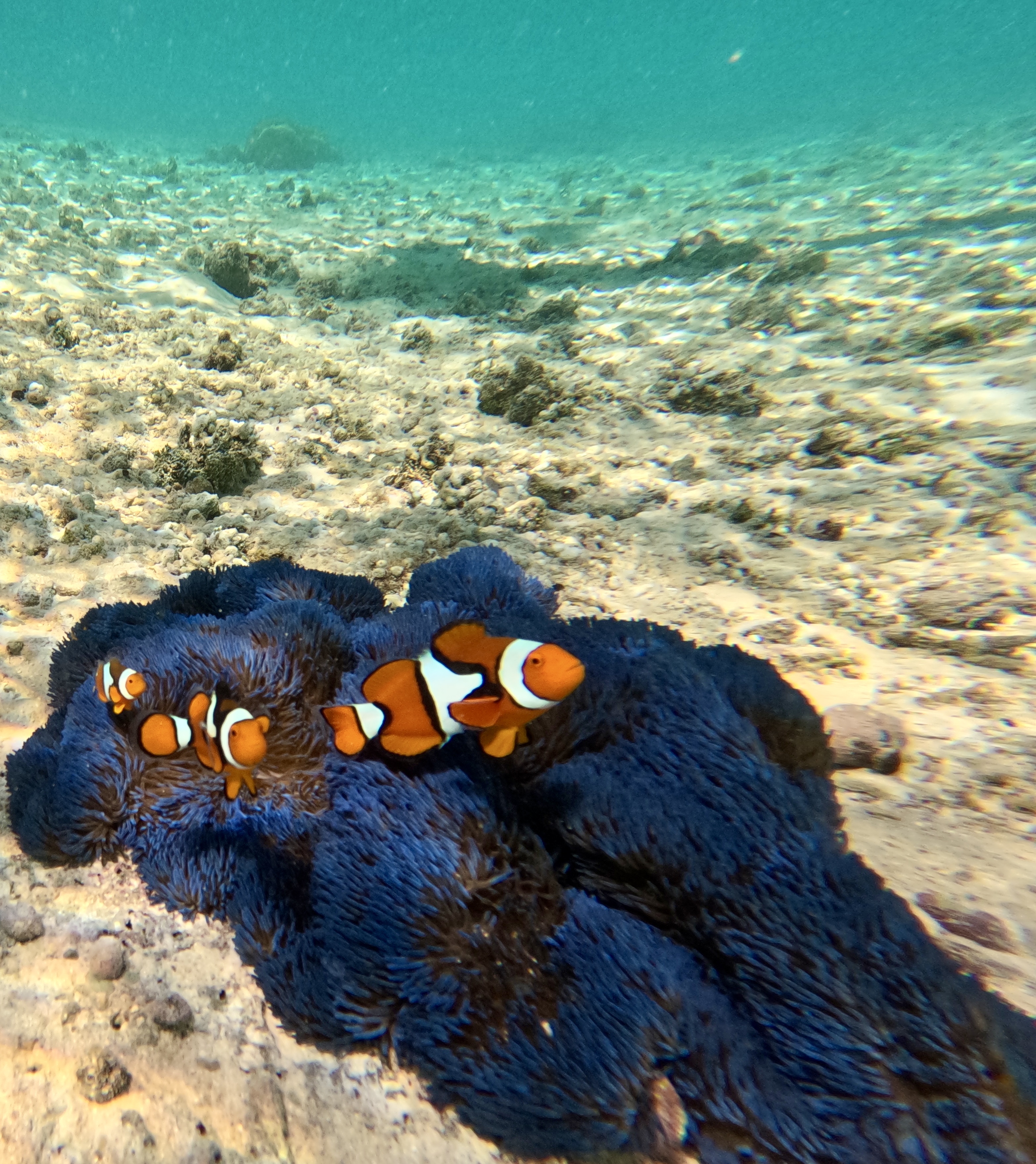
The snorkeling was not breathtaking, but scattered healthy bommies here and there provided plenty of reason to get in the water. At one location, a number of surprisingly massive giant clams. We had seen bigger, but usually in an area shallow enough to snorkel, they will have been harvested long ago. In another location, a stunningly colored blue anemone with a family of very proud and defensive anemone fish. But not just any common anemone fish…actual clown anemone fish. None other than the real “Nemo”.
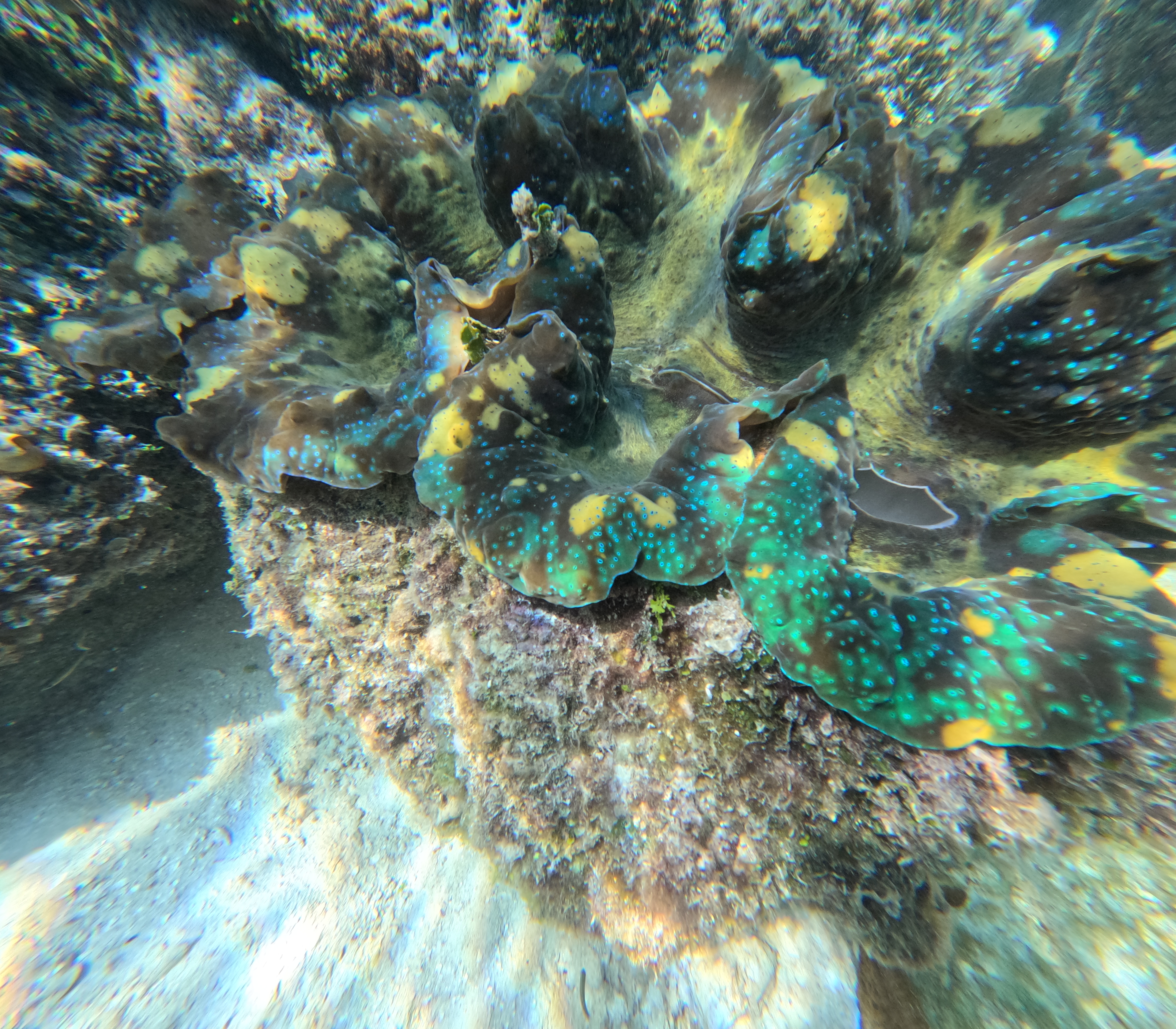
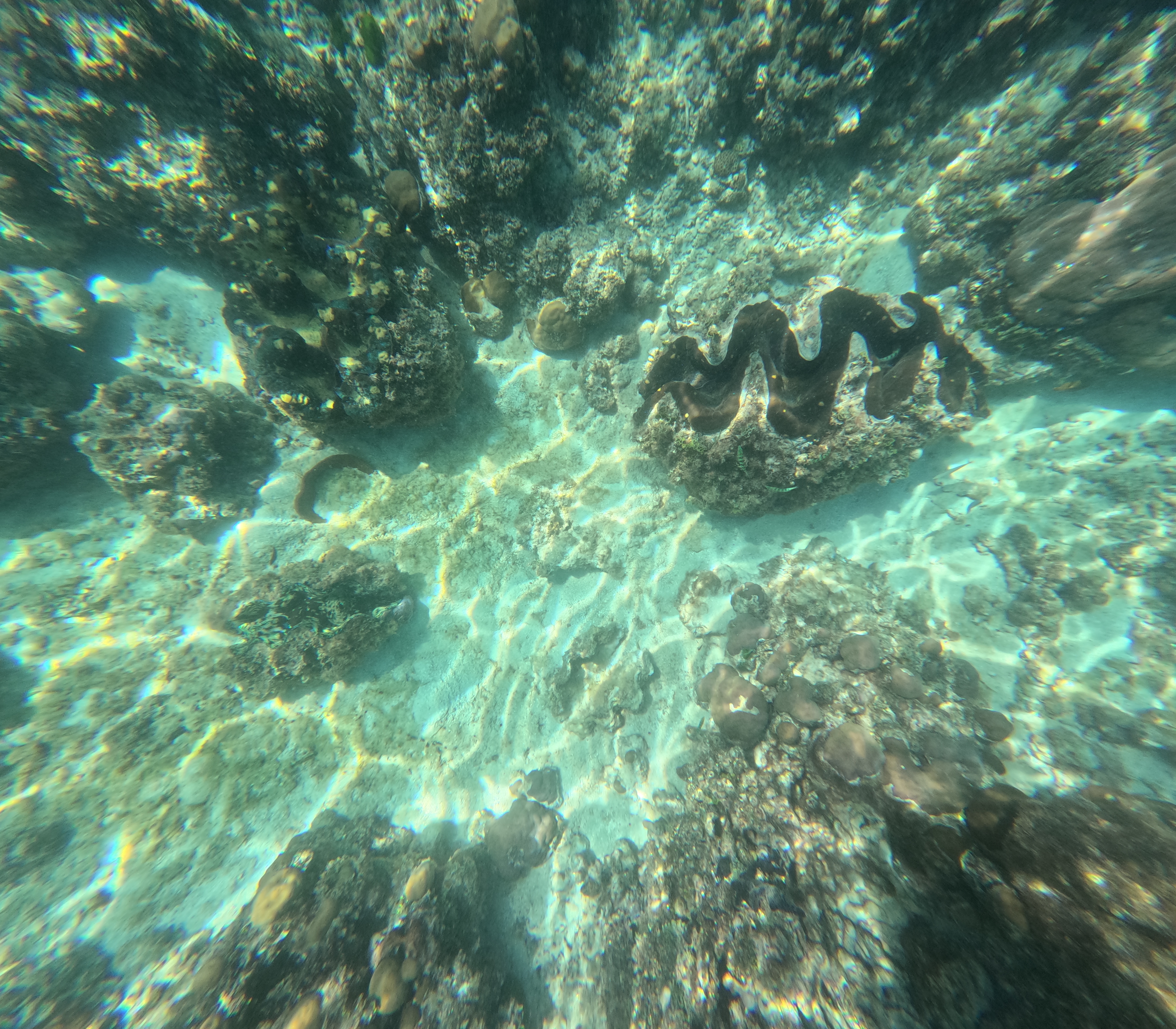
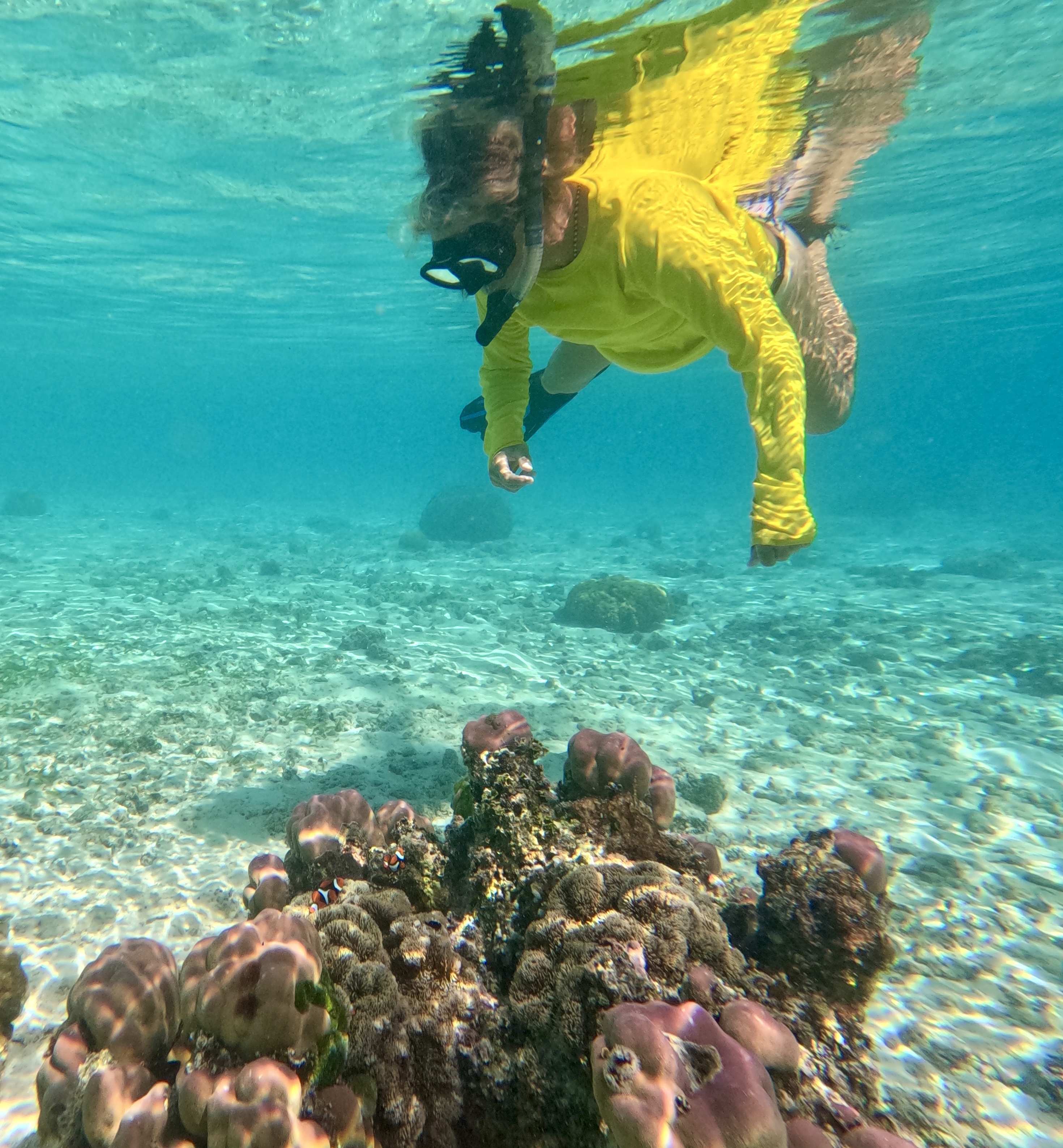
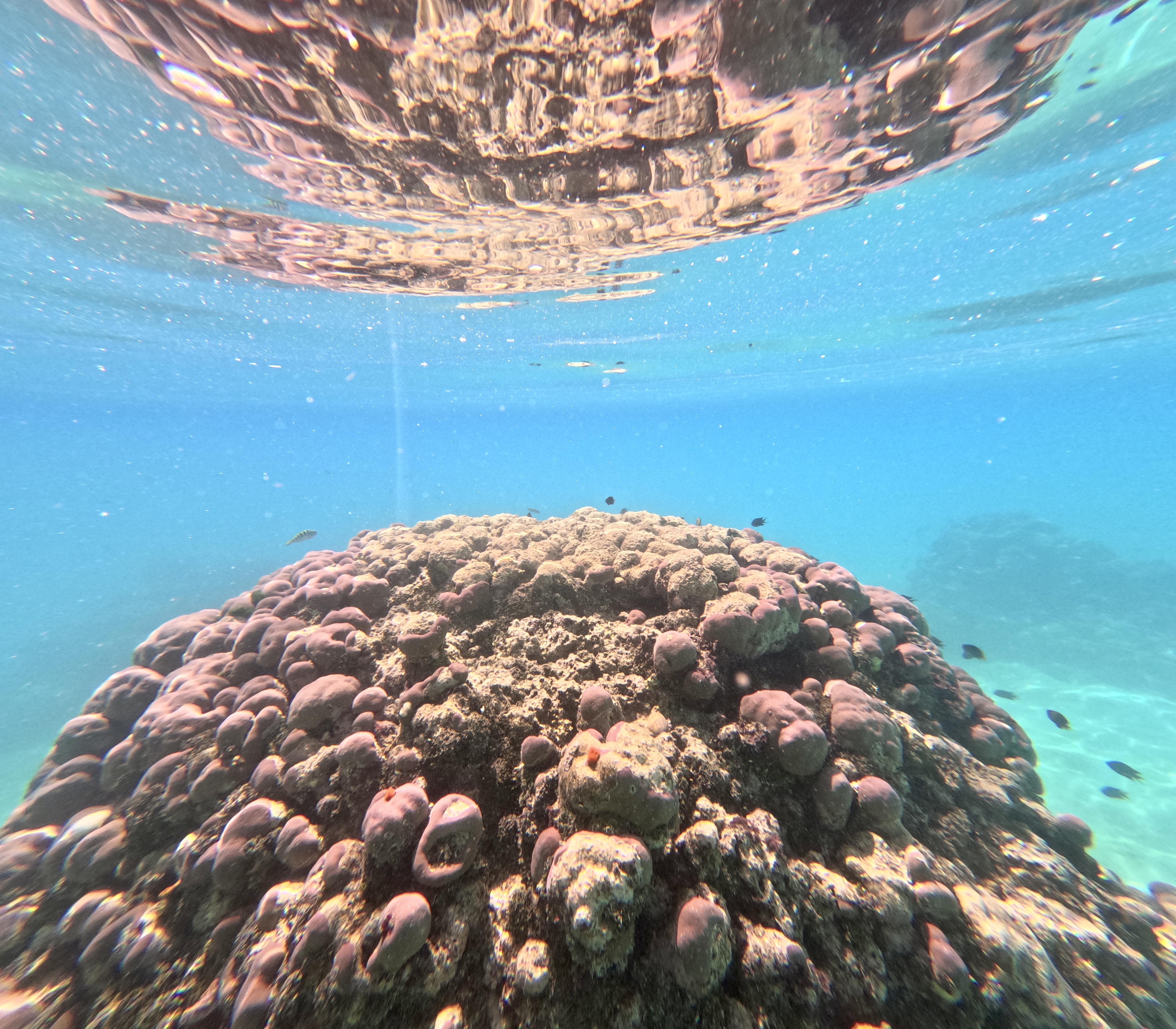
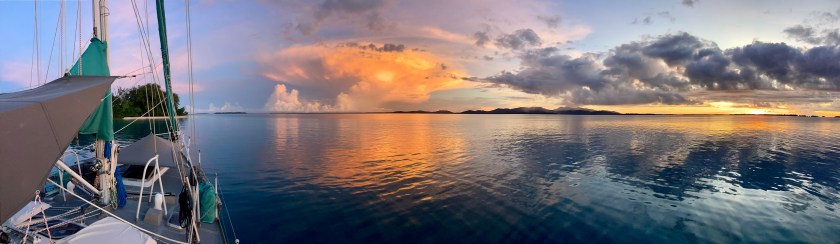
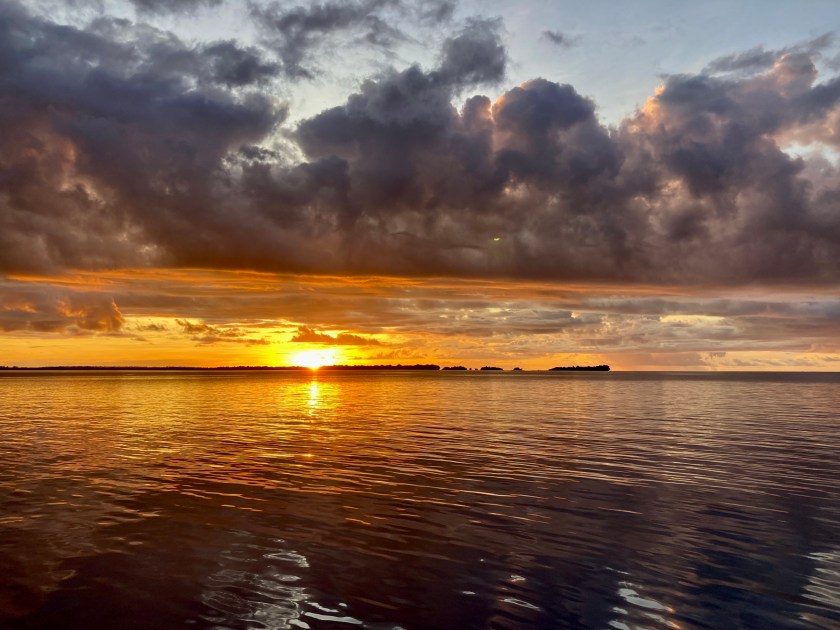
The sunsets, by way of comparison, WERE truly breathtaking.
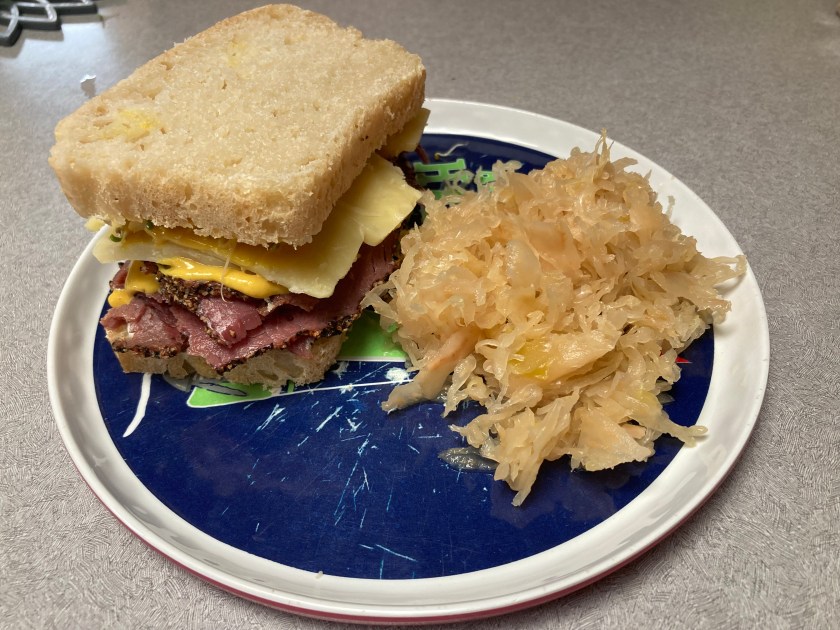
And so was my Rueben sandwich. New Zealand pastrami and cheese imported to Fiji that we still had stashed in the freezer on fresh homemade bread, along with sauerkraut dug out of our locker that went all the way back to Wallis and Futuna nearly a year before. Ohhhhhhh my…while there may be many restaurants, bars and cafes you can order this from, I guarantee it doesn’t taste nearly as good as when it is the only sandwich of its kind for a thousand or more miles in any direction!
Now and again, days were punctuated with the reminder that it was still cyclone season in the Pacific. Not that we had any major concerns…we were more likely to be plagued with no wind than too much wind where we currently were. But the occasional squall or multi-day weather front that interrupted our typically mild days did keep us from growing complacent.
We decided to move 5nm west, just off a small island called Kovilok, to see if it potentially could offer a bit more protection than our present location in the event that weather got a bit messy. Once there, we quickly realized the island really wasn’t big enough to offer any more wind protection, and the anchoring space didn’t have nearly as good of a sandy bottom (the kind that allows you to sleep soundly at night regardless of what’s happening outside). There were also many more coral bommies and shallow areas scattered around…the kind that make you a lot more nervous if the anchor does start to slip.
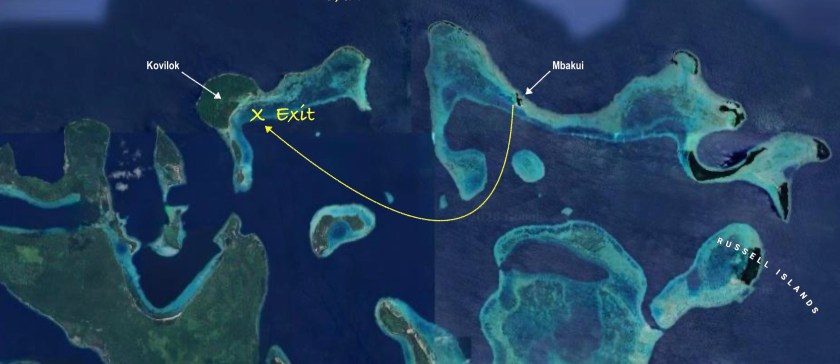
It turned out we were now closer to a small village just to the south, which inevitably meant more traffic passing by. All friendly folks…things just got a bit busier.
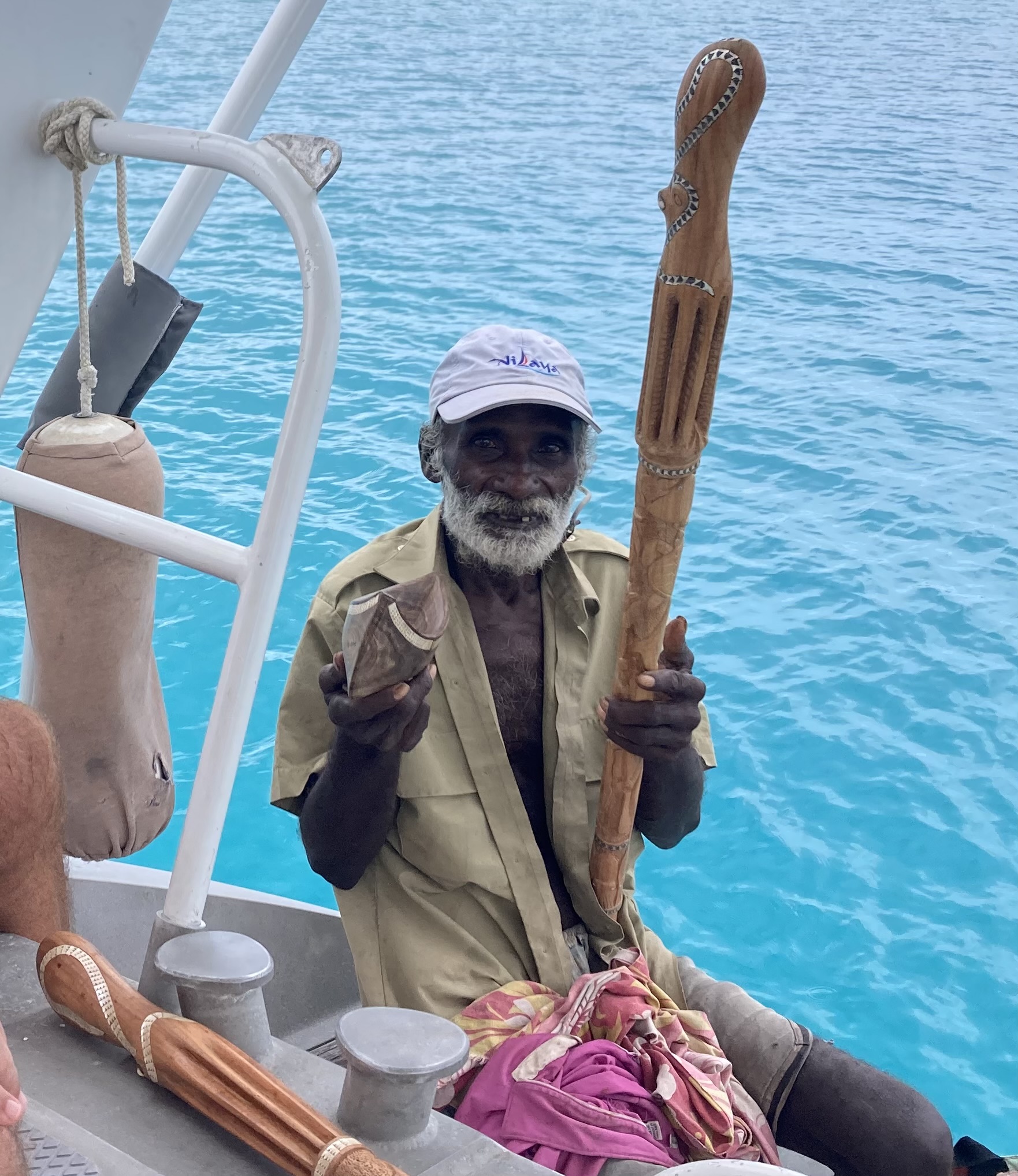
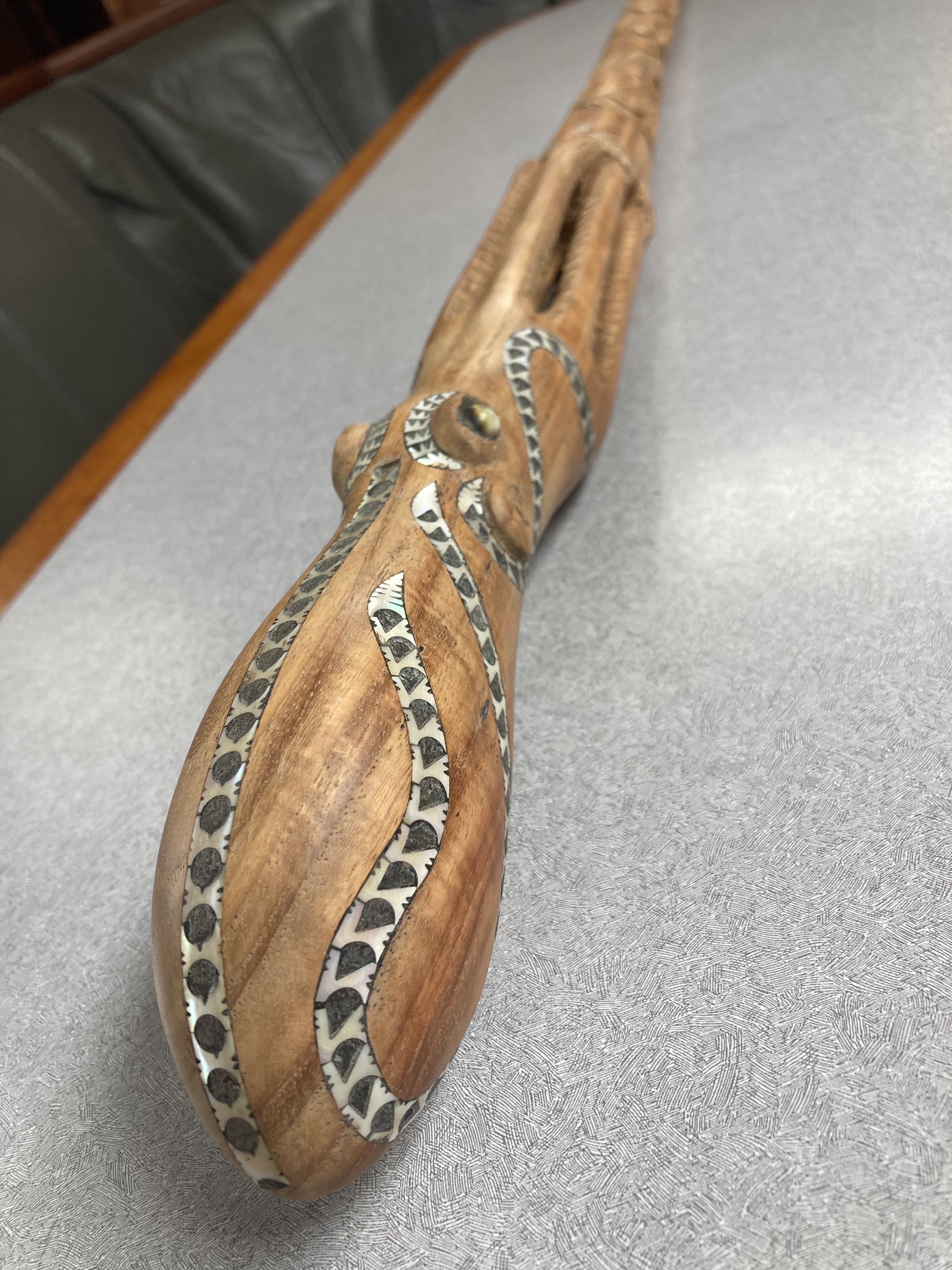
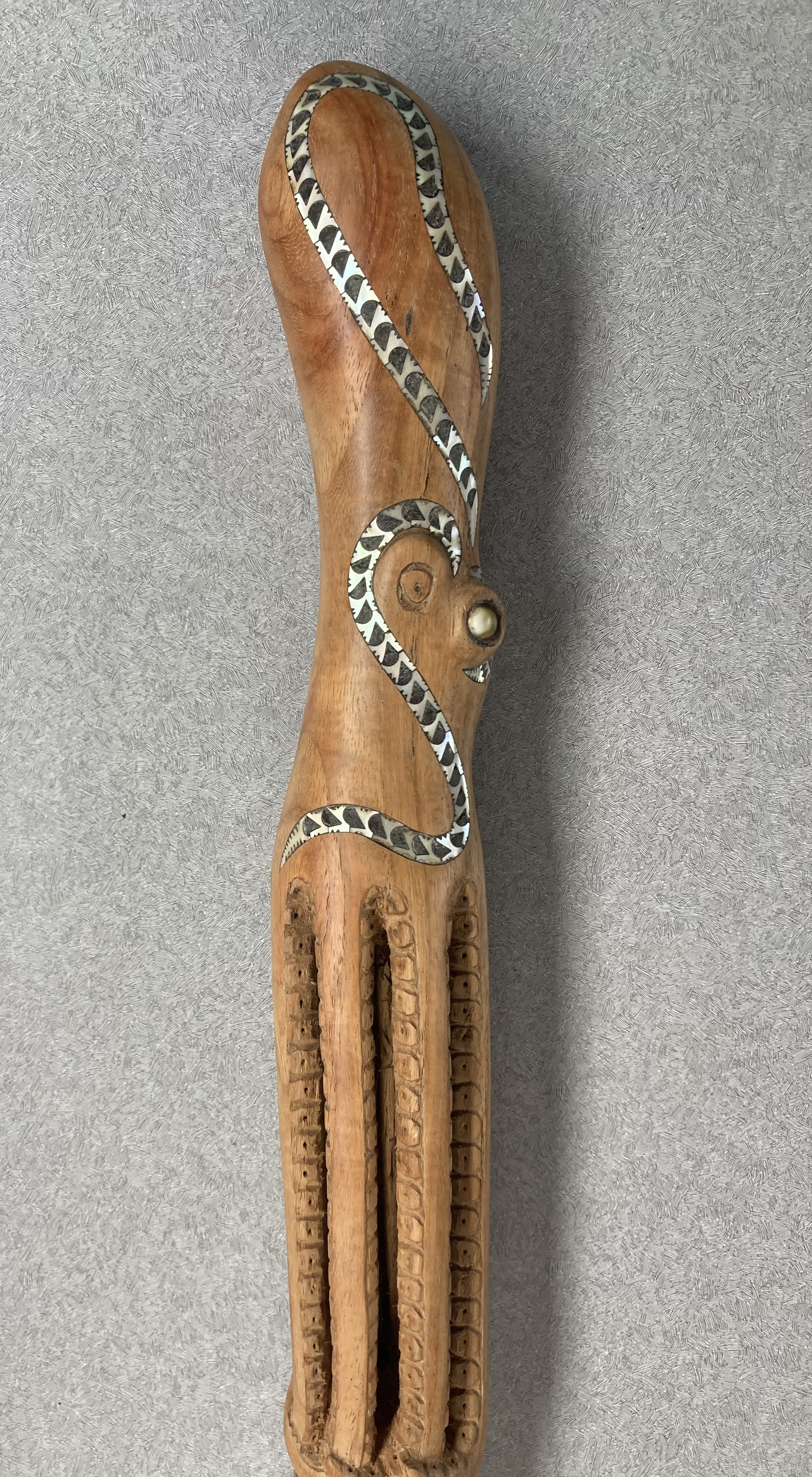
On our second day there, we received a visit from a carver that had truly amazing works of art. We had seen some pretty stunning pieces in other places in the Solomon Islands and had already purchased a number of incredible carvings in Honiara at an artist market that featured some of the local talent, but this guy was as good as anything we had seen elsewhere in the country. Undoubtedly, the most original things that stood out to us were his walking sticks…complete with marine life carved along its entire length and, in particular, an intricately caved and inlayed octopus at the top. We were flabbergasted at the level of detail, attention, and artistry.
Once again, we couldn’t resist.
On the third day, we returned to where we had previously been, just off Mbakui Island.
Despite a few more squalls and rainy days, Kris attempted to go out for as many SUP paddles as humanly possible.
And then, finally, it happened.
With the exception of a few local boats here and there, we had pretty much had every anchorage all to ourselves. The last time we had physically seen another yacht had been all the way back in Luganville, Vanuatu in December.
An entirely different country and an entirely different year!
Without warning, a mast appeared on the horizon, and before we knew it…suddenly, we were not alone. Our personal anchorage had been invaded by a cata-moron!
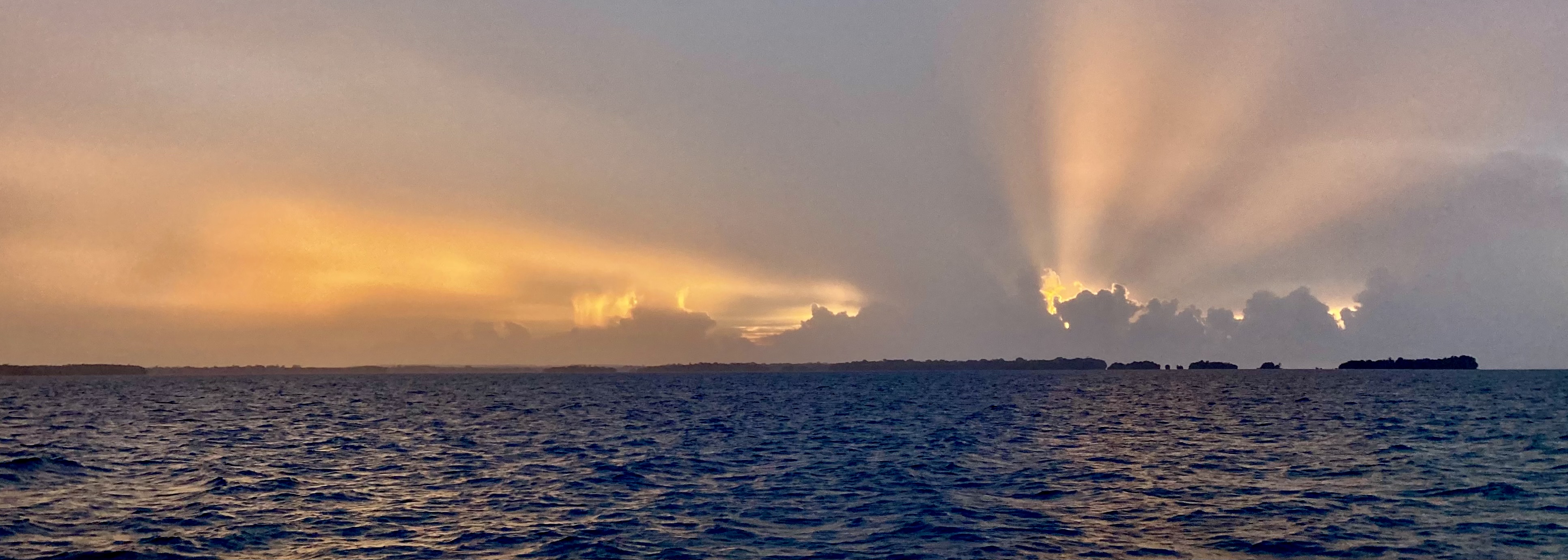
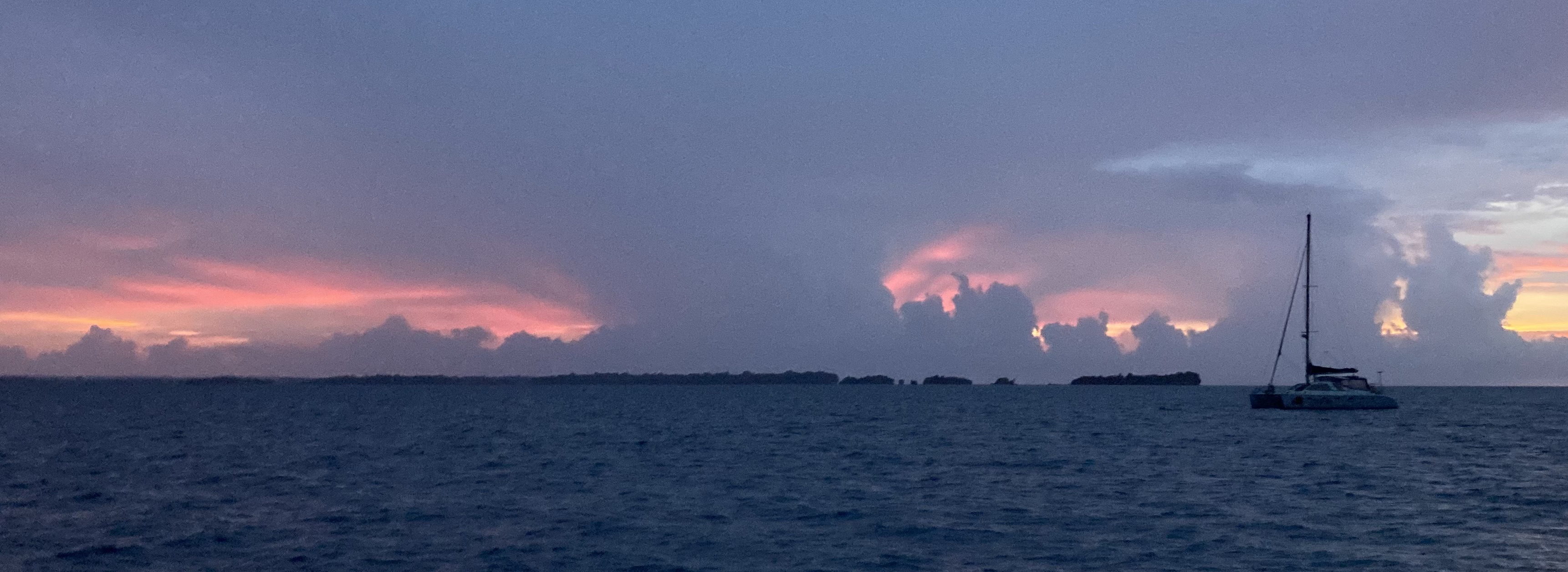
To be fair, they turned out to be very nice people. Divers even. As far as invaders go…I suppose it was the best you could hope for.
And really, just how greedy could a person be? Truth be told, we were just as guilty of invading, as far as local status goes.
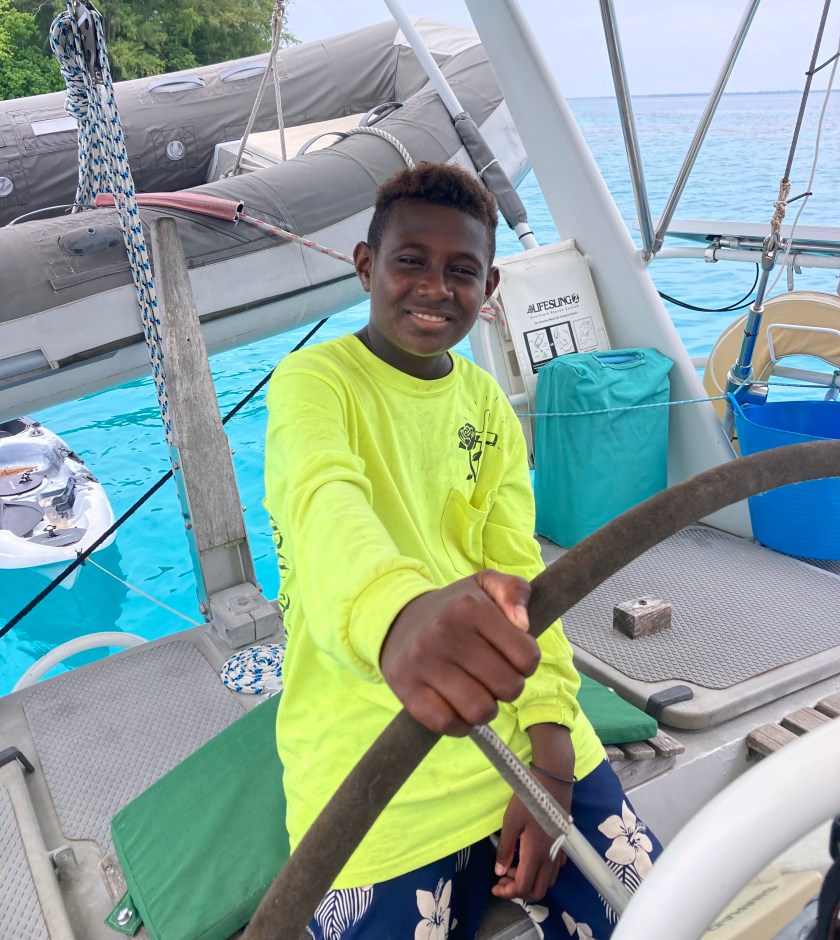
Fortunately, when the locals did return to Mbukai, they were more than happy to share their little slice of paradise…as long as we temporarily granted captain status for a photo or two.
And then the weather decided to become more belligerent. LOTS of rain and a wind shift to the south alerted us to a change in attitude regarding the forces of nature. The weather forecast forewarned us that the winds would be getting even uglier over the next few days.
This was not the place we would want to be when that happened.
Far too exposed.
The prospect of some good rain catch was welcome. But it was obviously going to require more than a canvas cover to deal with what was on the way.
It was time to move.
In preparation for winds forecasted to potentially reach into the thirties, we decided to move to Linggatu Cove, in the middle of the Russell Islands cluster. Sitting at the very northern edge of the Russell Islands, Mbakui was simply too exposed to risk staying. The island was tiny and the outer reef offered very limited protection from outside waves. At every high tide, or if the swell started to reach three feet or higher, waves would push right over the top of the reef.
The other boat, Gato Go, had the same idea. They had chosen the same place as the best option. That was ok with us…if anything, it reinforced our own decision as prudent and well-founded.
Moving to Linggato Cove turned out to be a wise strategic move. While Mbakui got bashed by wind and waves, we sat contently fourteen nautical miles to the south. We saw some rain but the winds but the islands around us blocked almost all of the nasty blustering winds.
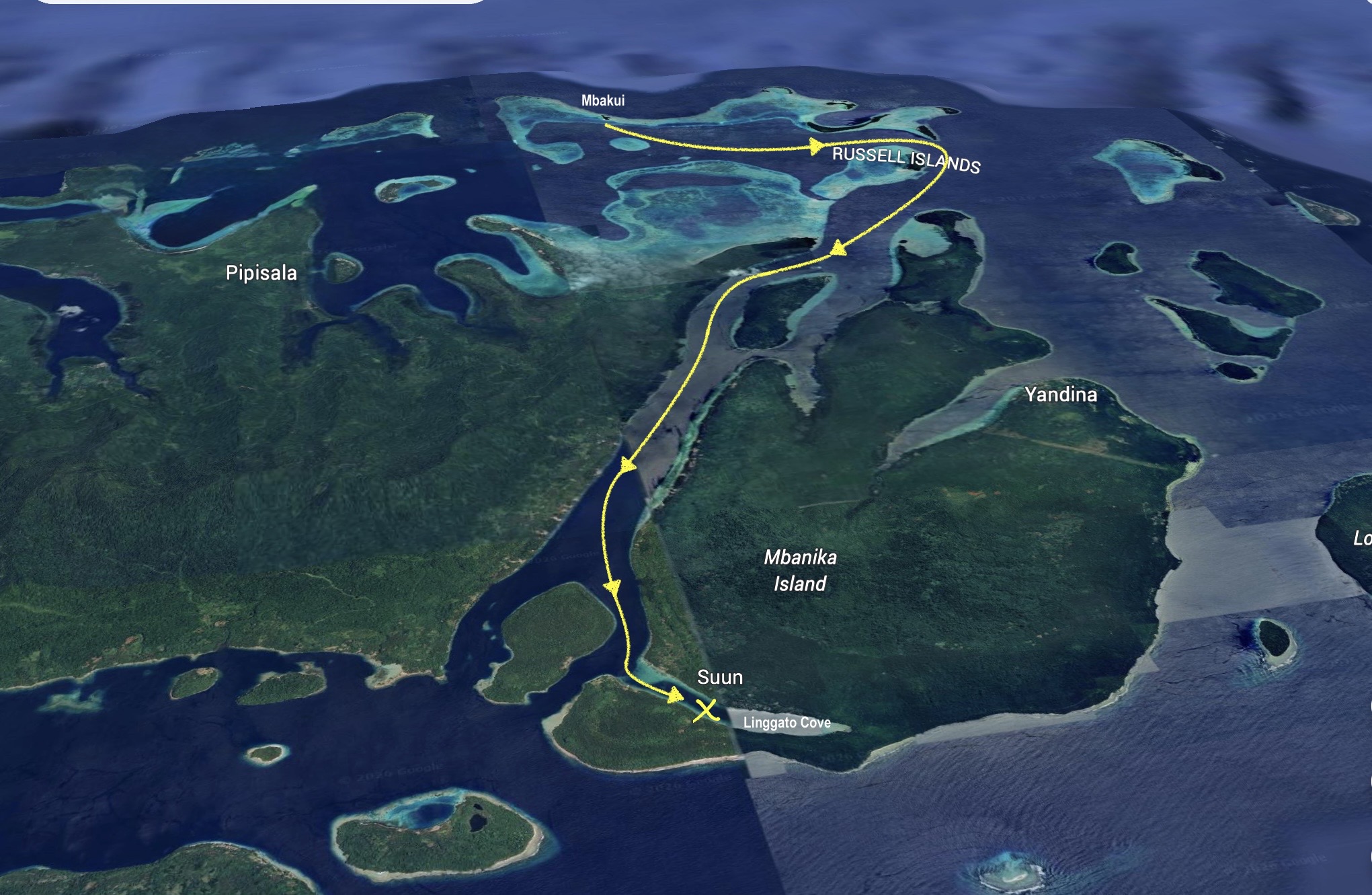
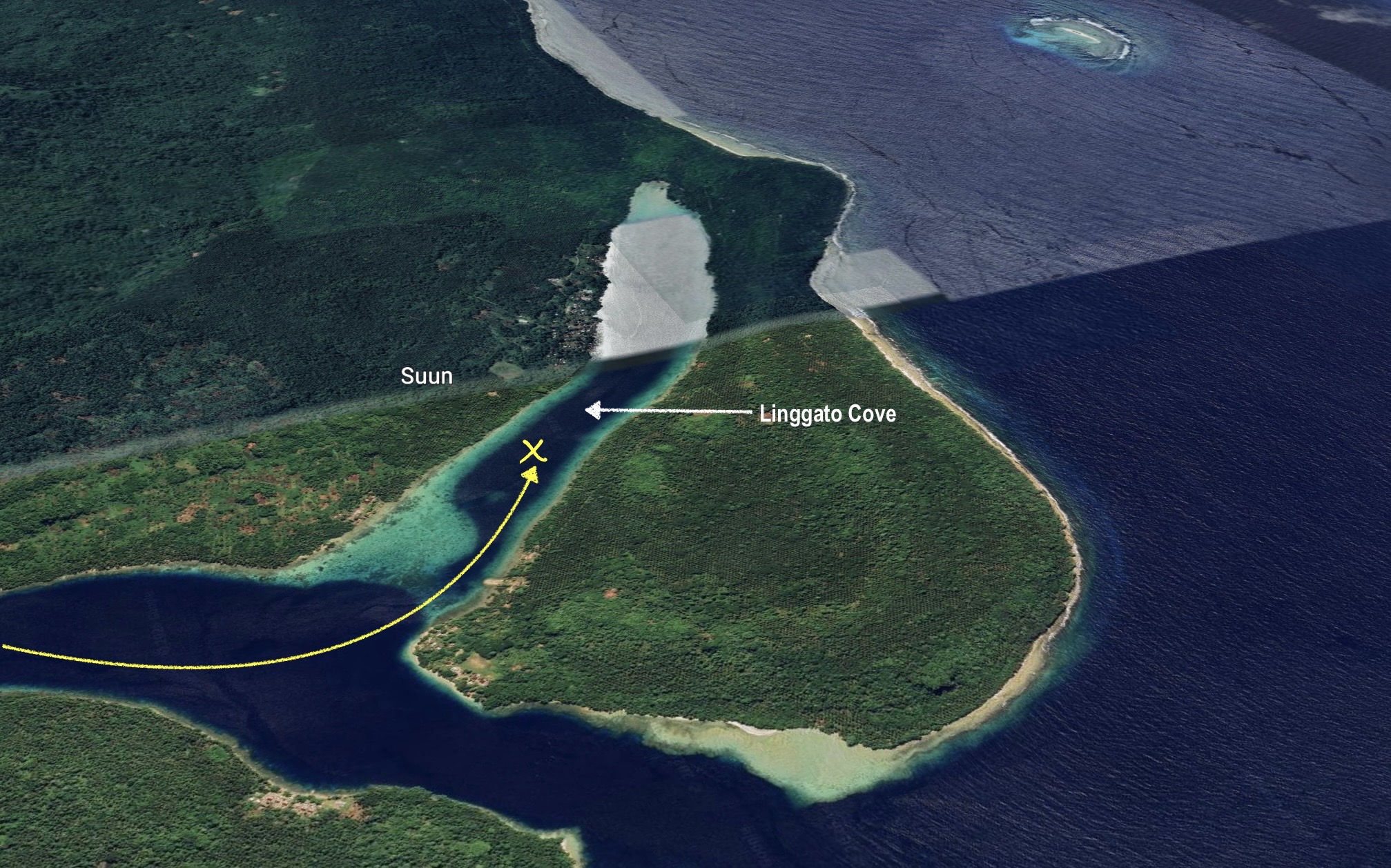
That’s not to say there weren’t other challenges. Linggato turned out to be probably the most trying location to deal with local visitors. Every morning we woke up to voices outside…a parade of dugout canoes carrying kids from the village a bit farther down the bay. Charming and cute…except for the fact that we were still experiencing the pleasure of their company come sunset. Some would show up, and hang out, then more would show up, then some would leave, then more would come…on and on. There was a constant appeal for cookies, or coloring books, or pencils. Sometimes facilitated with items brought for trade…sometimes bearing nothing more than a sly smile.
Gato Go ended up acting as a buffer for us when it came to visitation duties with the community onlookers. It helped…somewhat.
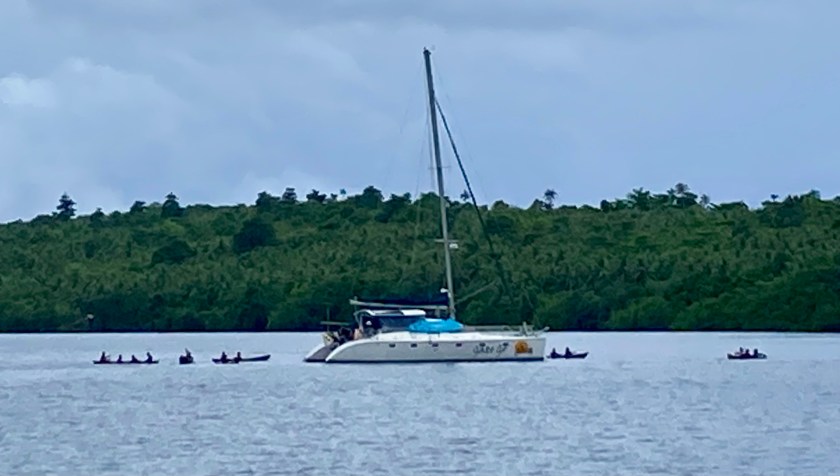
Not a complete buffer, mind you. We still saw plenty of visitors.
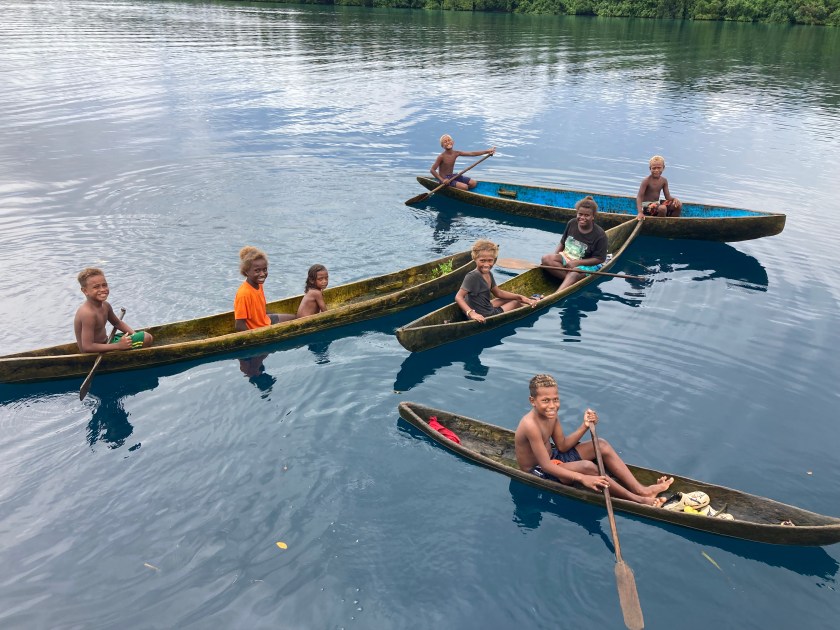
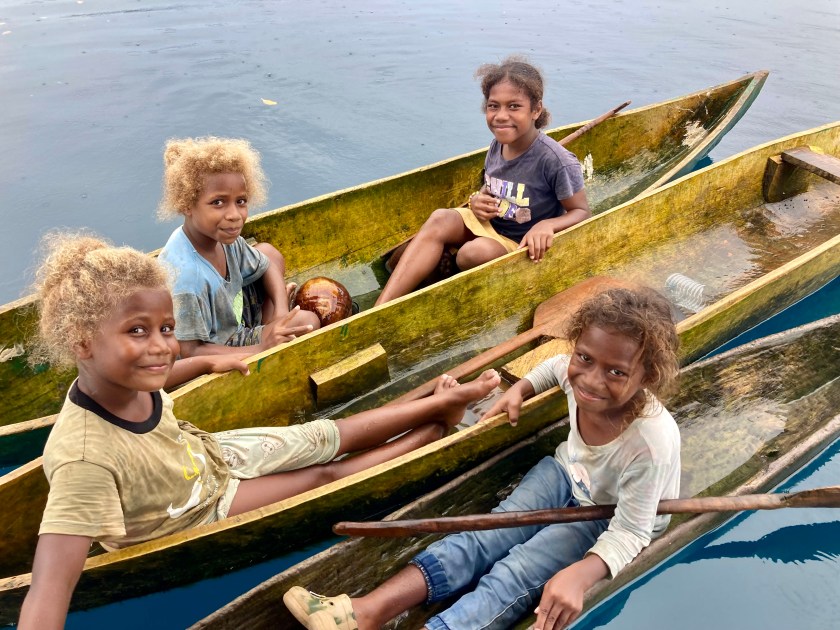
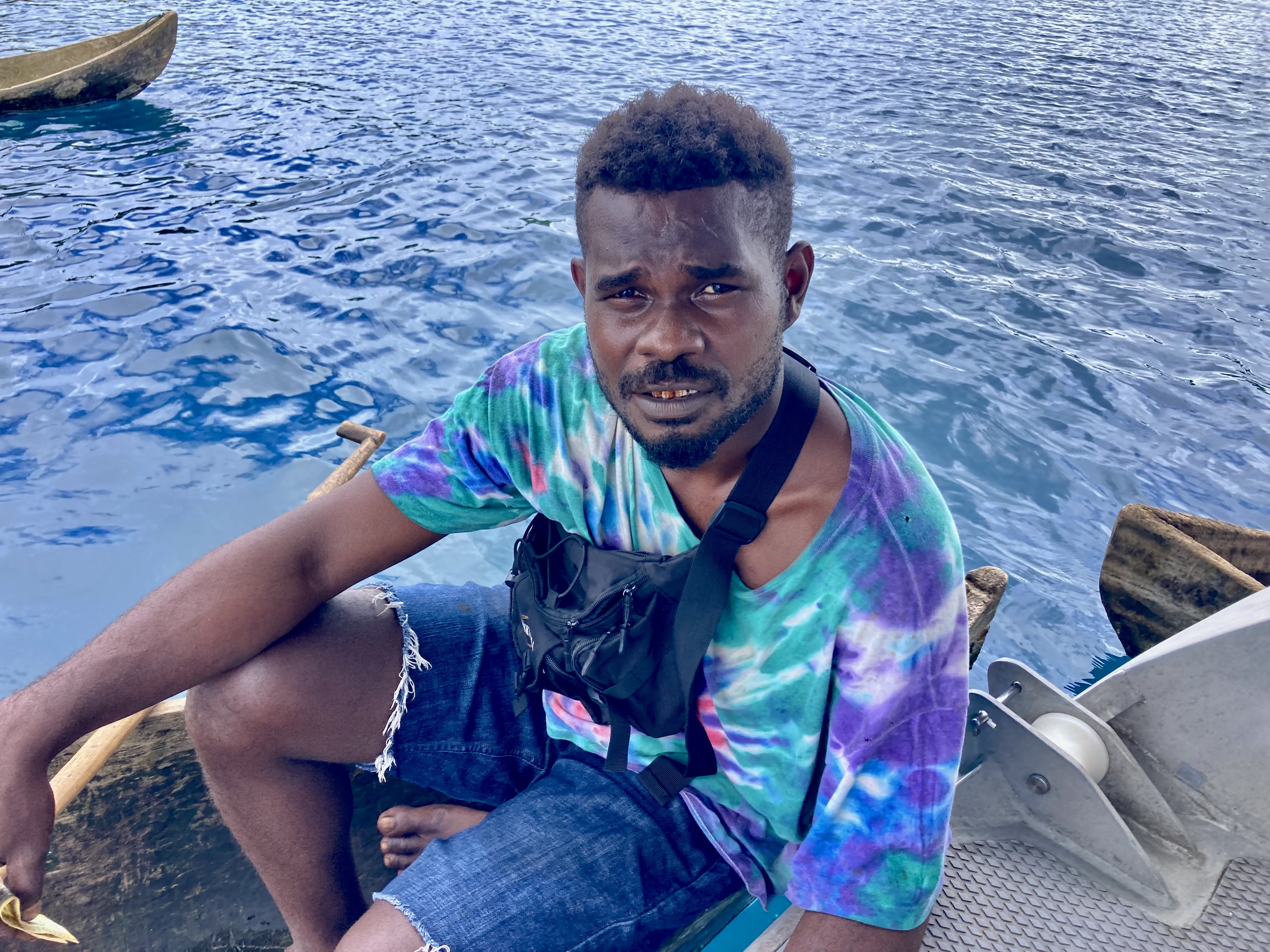
Word got out that we needed limes…
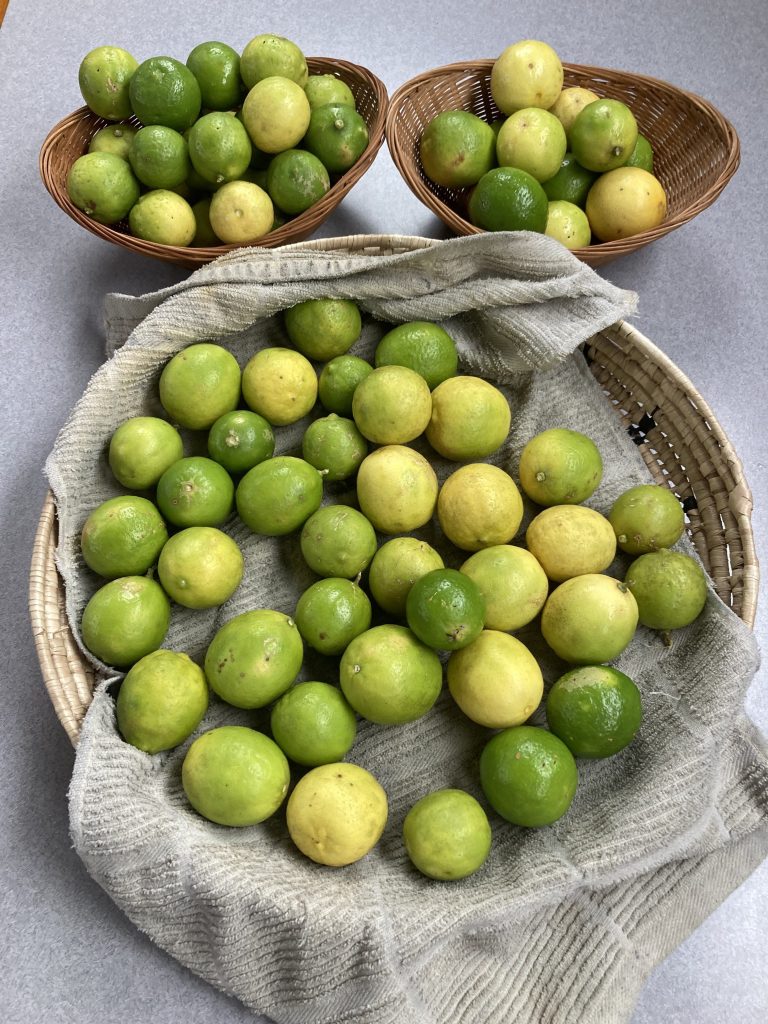
…and suddenly we had enough for a week’s worth of margaritas!
Once the weather settled back down, we quickly decided we had reached our limit as far as social graces and visitor exchanges…especially with the relentless sunrise to sunset gawking of the ever enthusiastic midget brigades.
It was time to return to Mbakui…for a bit.
By the time the first week of April came to a close, we realized we had been in the Russell Islands for a full month! All but five of those days had been sitting in front of Mbakui Island, completely alone for most of that time.
The other reality we couldn’t ignore was our visa situation. We had cleared into the Solomons on Christmas Eve, but only received a one month visa, which we renewed in Honiara one day before it expired in January. The renewed visa was good for three months. However, the fact was that we had less than three weeks left on that visa before, it too, expired.
The nearest port of call we could clear out of was a community called Noro, one hundred fifty nautical miles to our northwest.
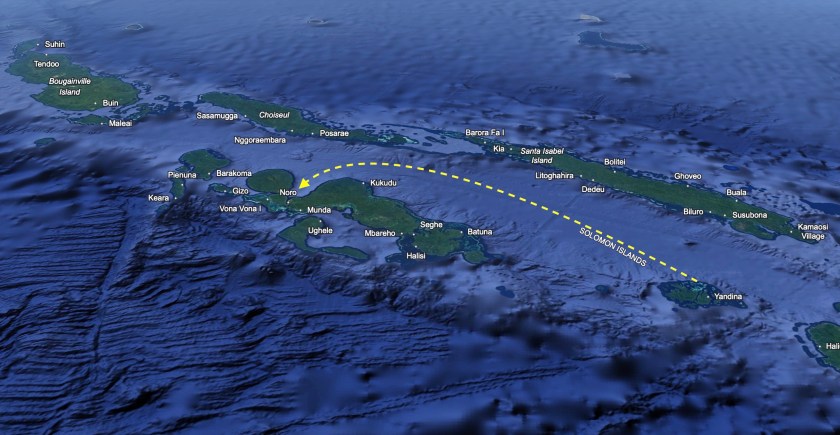
However, it looked as though the currently non-existent winds, which we would depend upon to get us to Noro, were not going to make an appearance for another week.
Furthermore, as a small community of only about seven thousand people, Noro was not going to offer the appeal and decadent excesses of a large city…only the bare bones necessities.
We reached the conclusion that we could sort out all the logistical planning of provisioning, clearing out, and plotting the passage of our eminent departure from the Solomon Islands, while spending one more week enjoying Mbakui Island. When the wind re-appeared, we would make an overnight jump all the way to Noro, get our shit done quickly, and take the first weather window that opened up for us to hightail it out, hopefully before our looming visa deadline arrived.
And that’s exactly what we did.
Six weeks after first dropping anchor at Mbakui, with the return of fair winds we picked up anchor once again, raised our sails, and made for Noro.
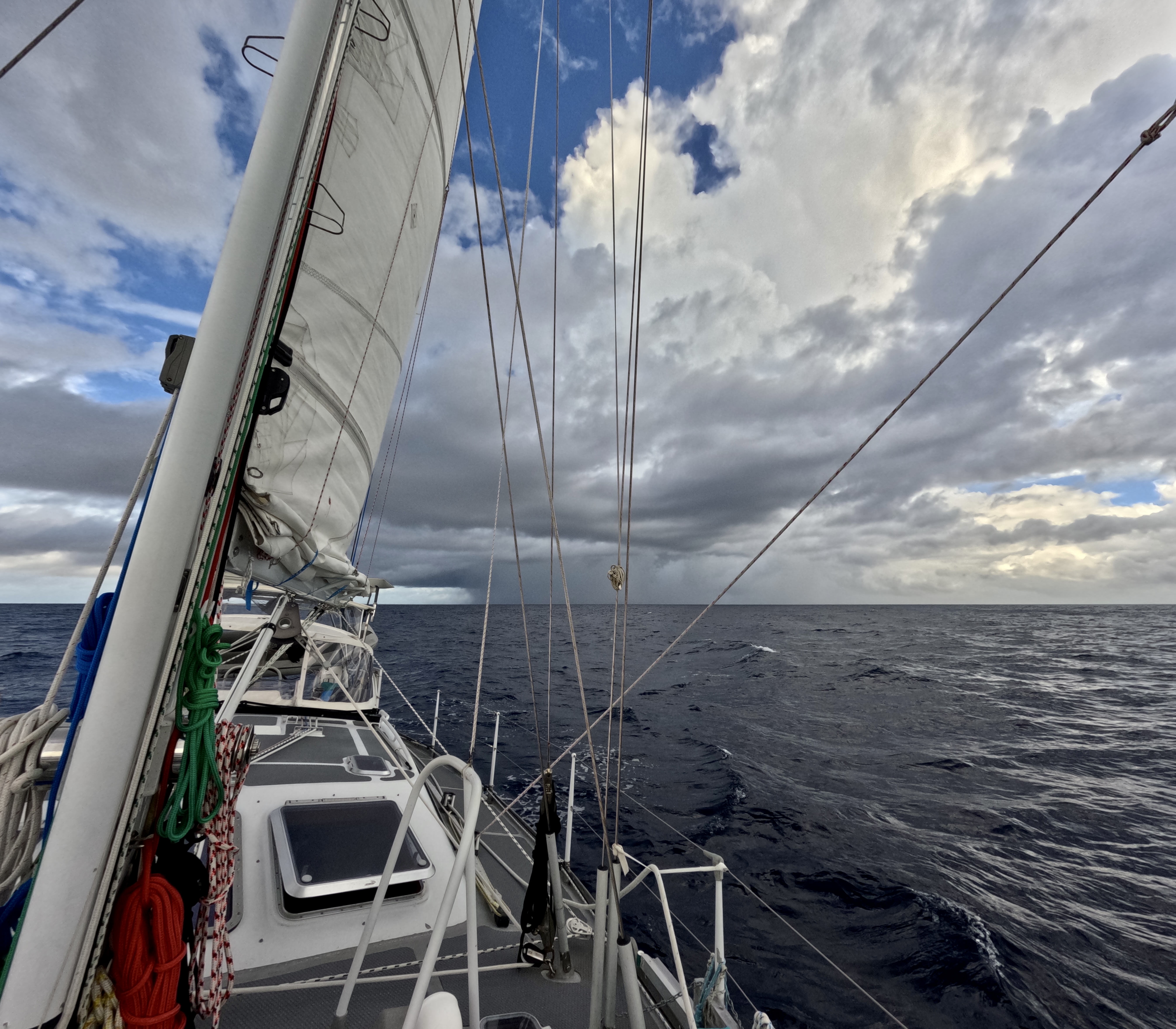
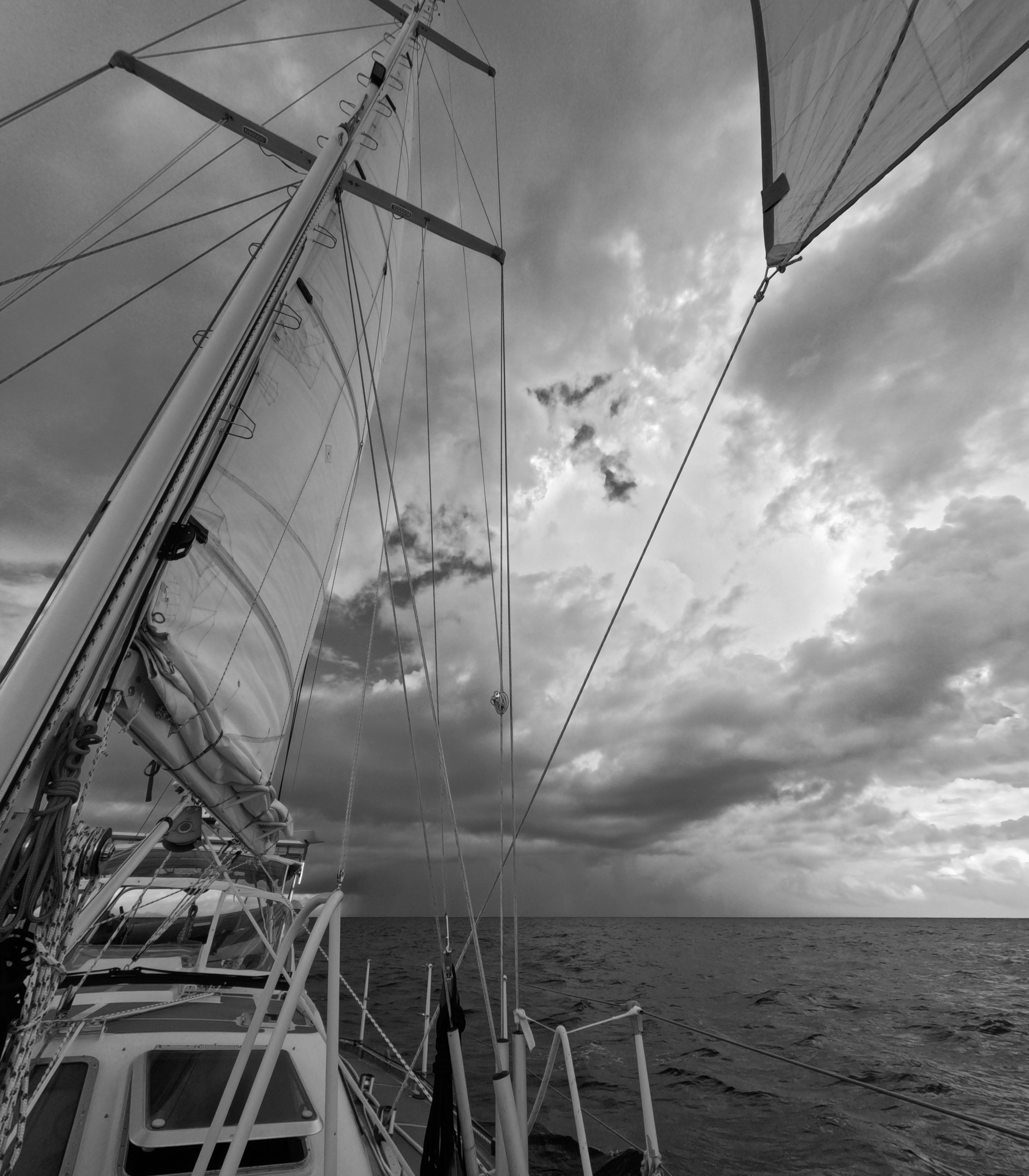
That evening, in the cockpit, as the light disappeared with the dwindling sunset, we got fleeting glimpse of something through the isinglass window. Either our newest crew member was still with us and growing, apparently continuing to find an endless source of insects, or we were witnessing an alien landing.
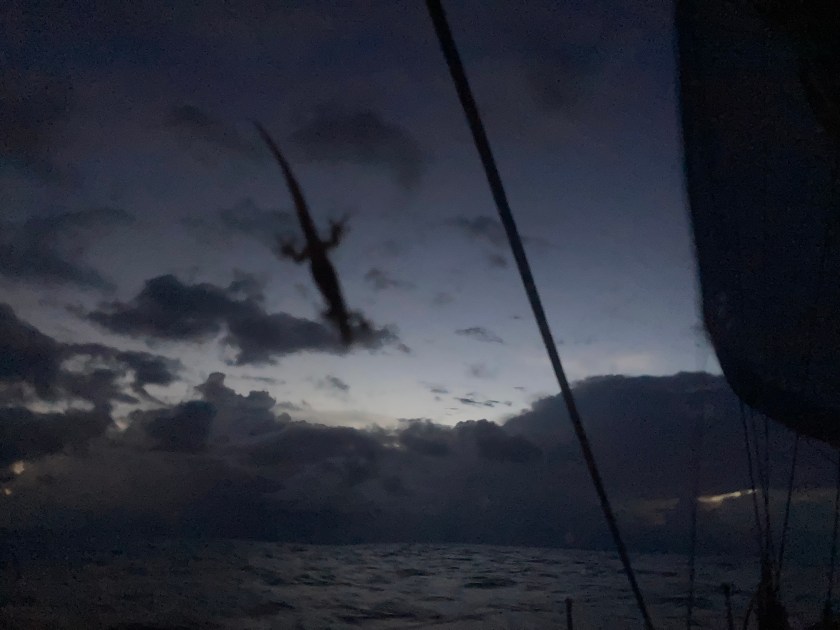
We could only hope Mr. Lizard (or Mrs. Lizard…we still weren’t sure which) didn’t make an appearance during our next clearing in inspection. That would be a big problem…
Thankfully, almost the entire hundred sixty nautical mile passage was completed under sail using only the wind and no diesel. After thirty two hours, we rolled into Noro.
And then we got busy. We had only nine days before our visa expired.
Regarding wind and weather, we could only monitor the forecasts and hope that Mother Nature and Poseidon came through for us. On the other hand, completing our to-do list was completely up to us…provisioning, replenishing our fuel, and prepping the boat.
From top…
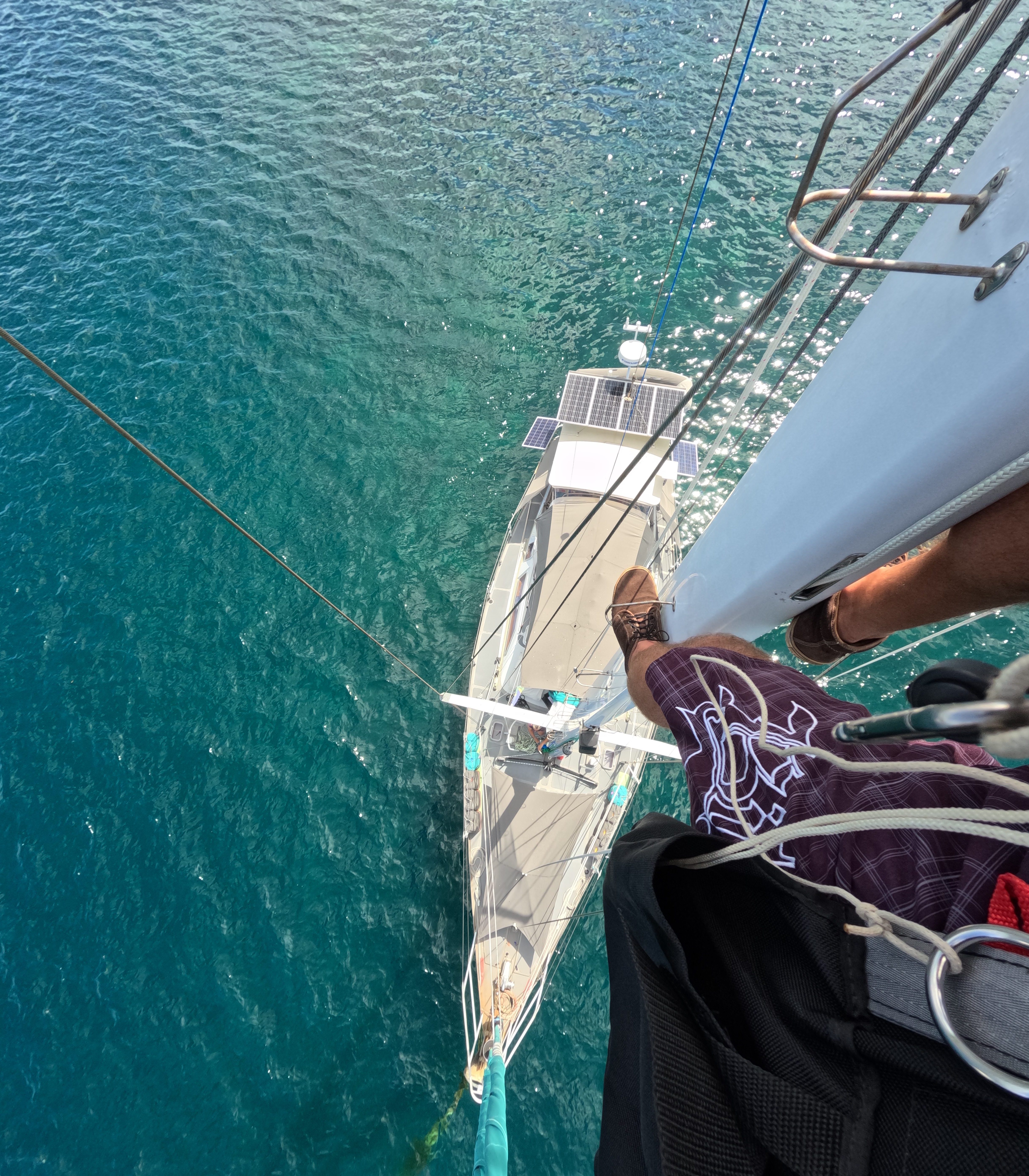
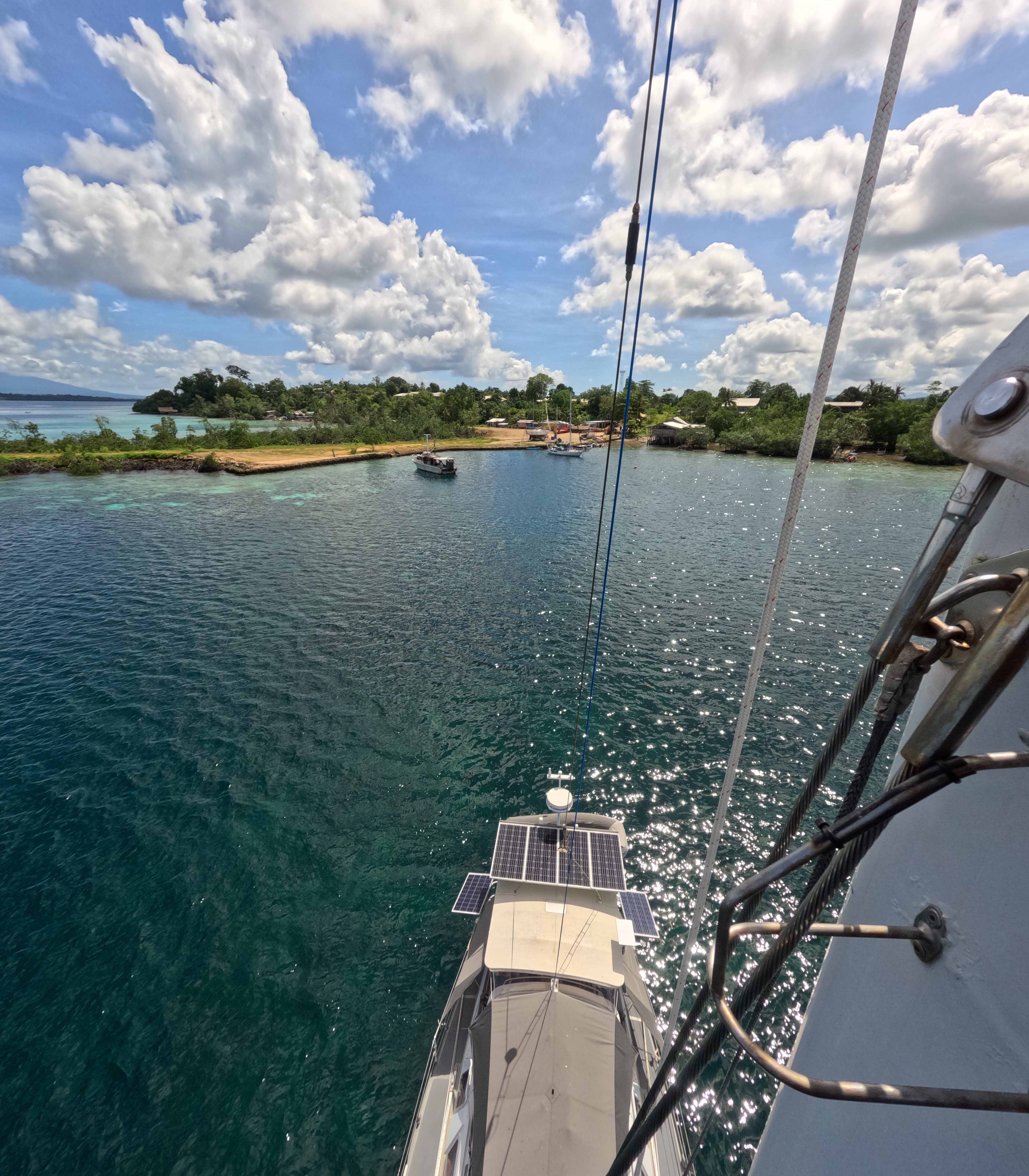
…to bottom.
Although our hull was pretty spotless, which would bode well for our speed during the passage, as well as any subsequent inspections that might be required once we arrived at the next country (to confirm we didn’t have any hitchhikers on our hull that could potentially become the country’s next invasive species), we realized our hull was pretty lacking in bottom paint. You can see large areas where the black anti-fouling paint is completely missing. It was a good thing that a haul out was on the agenda once we reached our next destination.
But, first, we had to get there.
In almost nine years aboard Exit, only twice had we completed passages of over one thousand nautical miles. Ironically, both in 2024…a whopping 3,126nm from Mexico to French Polynesia in April, and then 1,366nm from French Polynesia to American Samoa in August. That was a big year!
It was highly likely that this passage would be number three.
From the Solomon Islands to Cairns, Australia…almost exactly one thousand nautical miles.

