
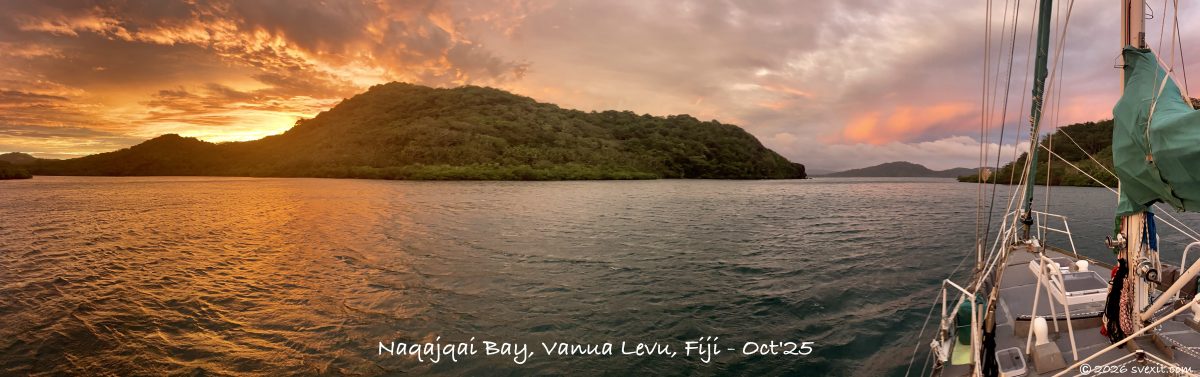
October 27 – November 8, 2025
Author’s Twilight Zone time travel note: Alas…it is not October, nor is it 2025. We are not currently in Fiji…nor are we currently in Vanuatu…nor the Solomon Islands. In fact, we are in Australia. However, due to the untimely and certainly inconvenient demise of our laptop in early 2026, all of our blog posts had to be put on a temporary hiatus. It was only after returning to the US that we were able replace what turned out to be an unrepairable computer. A grueling five week haul-out once we returned to Australia further delayed any additional blog work. Finally, I was able to start filling in the blank spaces and incomplete posts. So, we now take you back in time… to where we previously left off...
Regarding the weather and sea conditions we would encounter underway to Vanuatu, our departure from Fiji turned out to be a pretty accurate preview of coming attractions.
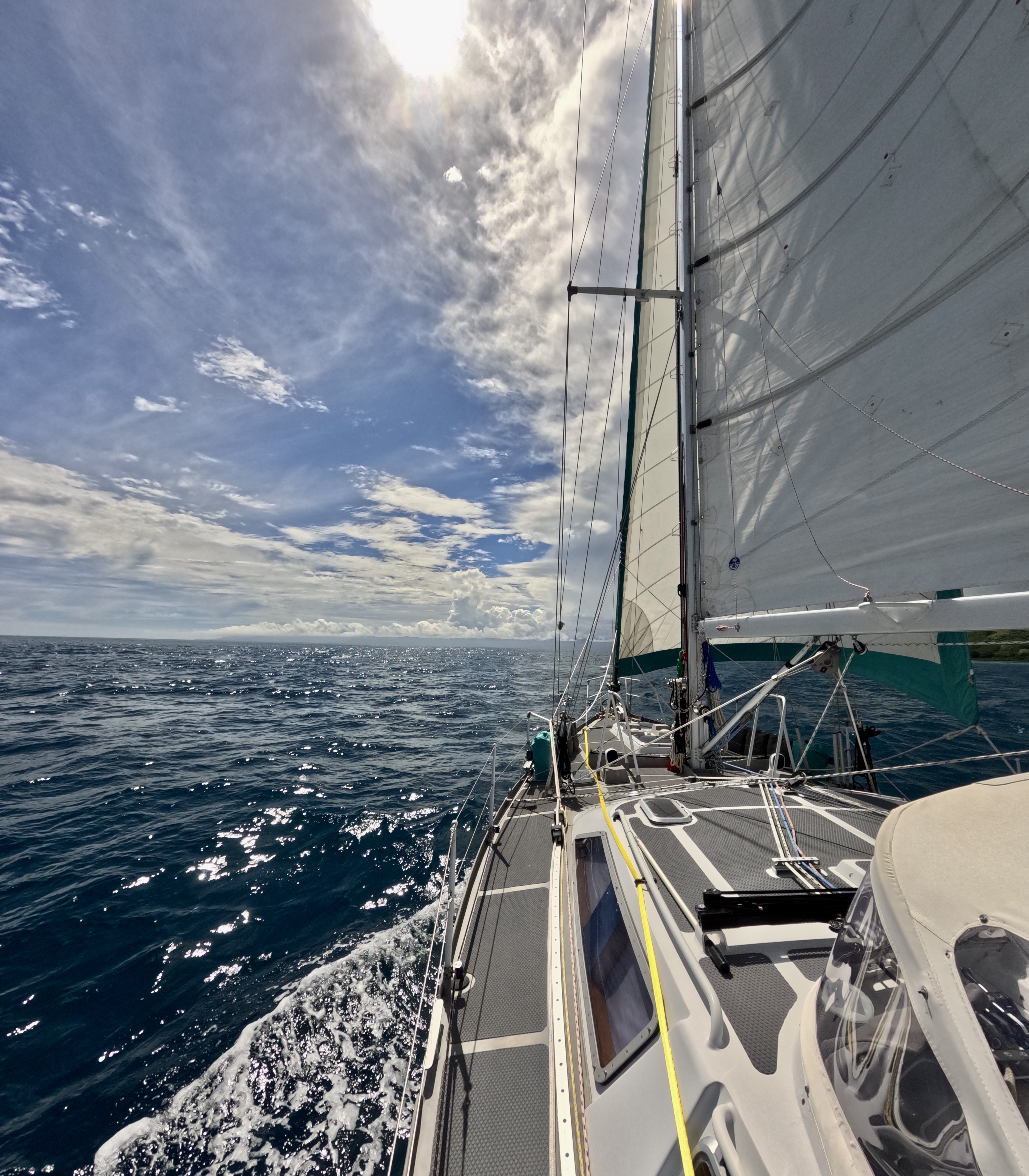
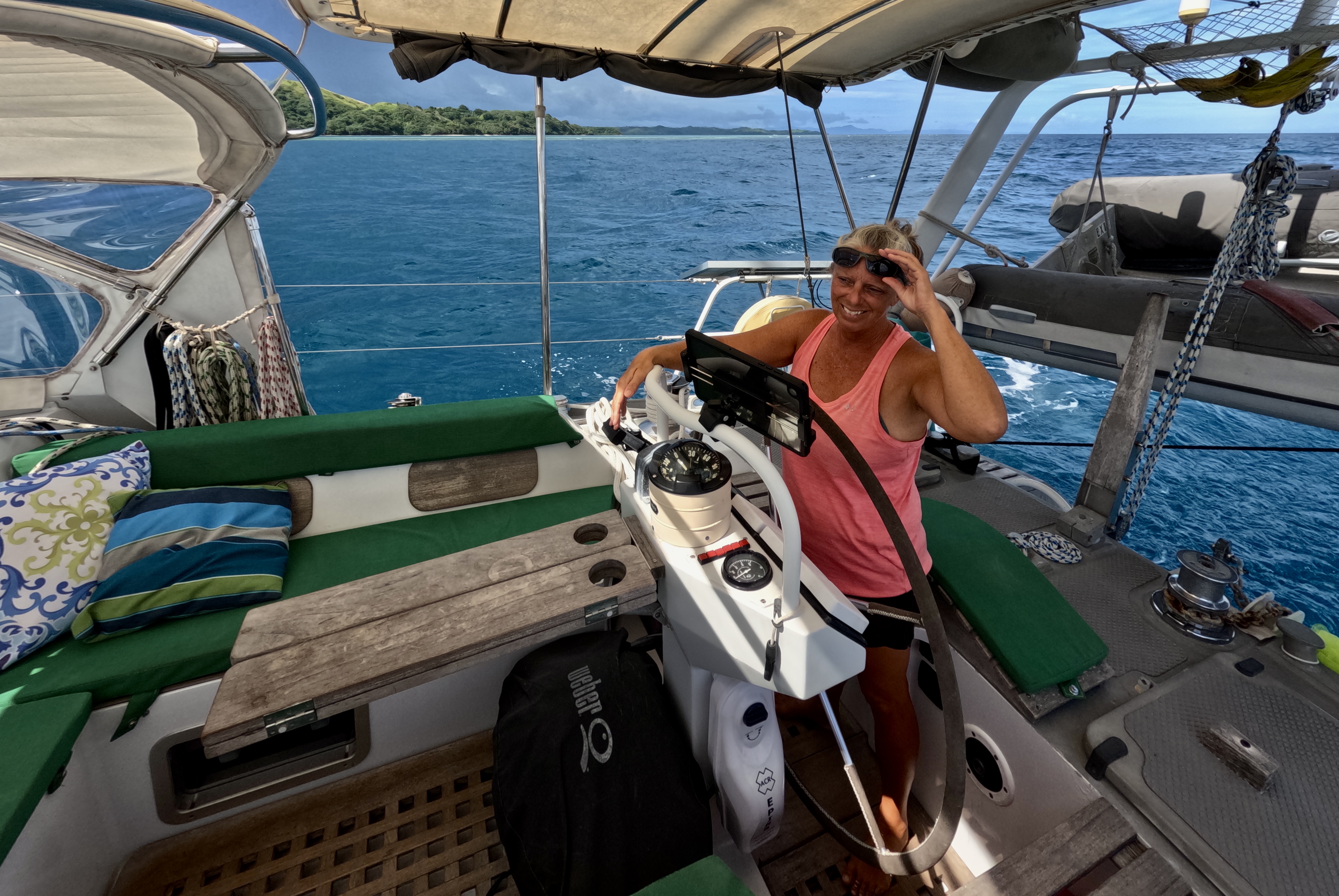
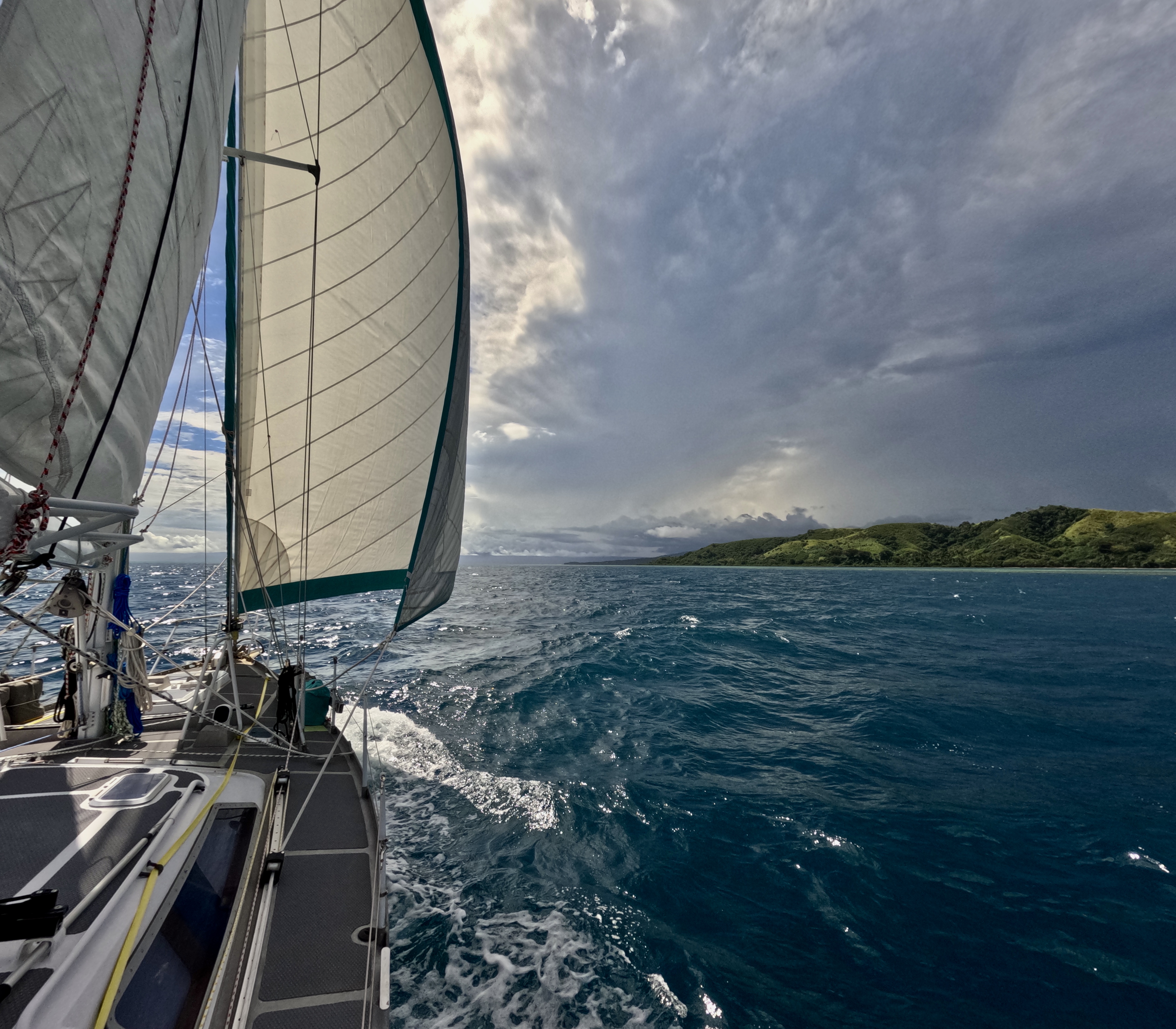
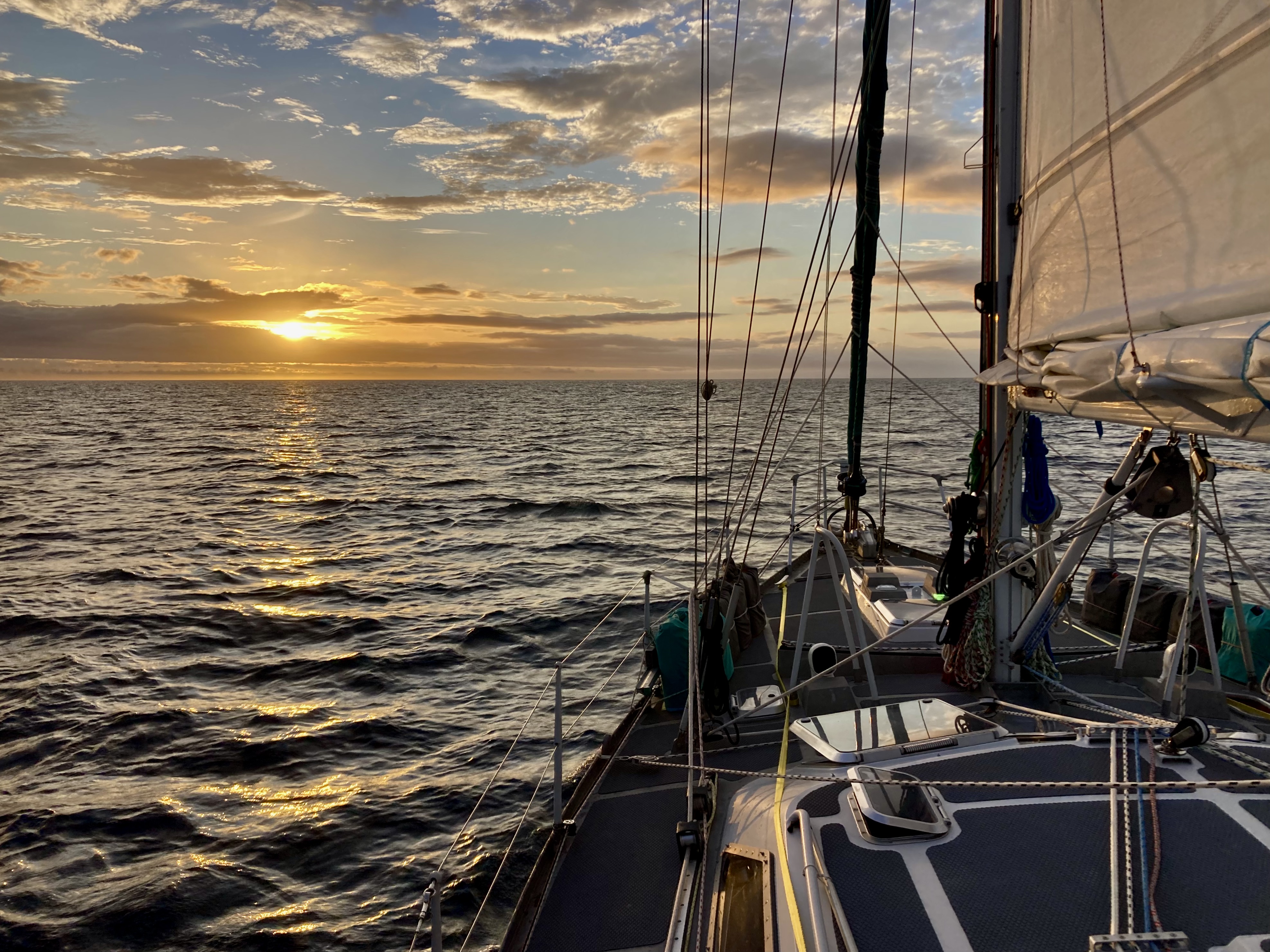
Mild with the constant reminder of potential storms in the distance.
Overall, one of the more benign passages we have ever experienced. Not to say there wasn’t excitement…maybe just less than usual.
The 150 hour passage from Savusavu, Fiji to Port Vila, Vanuatu covered 775 nautical miles, averaging a pretty typical 5.1 knots of speed. What possibly made it more interesting was the fact that, during our nearly six and a half days at sea, we managed to harness the power of the wind for over ninety percent of the journey. The sails were down for only about one hour in total and Exit was required to fall back on its trusty Perkins diesel engine to assist in motor sailing for a mere eleven hours.
Burning any diesel is regrettable. Nothing would make us happier than following in the footsteps of our dear friends and sailing inspirations aboard SV Cetacea by completely forgoing what they referred to as their “infernal combustion engine” for an electric motor. Kudos to them for having the ambitious vision of truly breaking free from the chains of petroleum slavery and actually seeing it through to reality. Unfortunately, as of yet, we have been unable to sort out a logistically feasible and financially digestible means of providing the battery power and adequately sized electric motor that our hefty twenty three ton aluminium girl would require to have a auxiliary electric propulsion source we would consider safe, reliable, and prudent.
Oh well…there is always hope. For now the answer is simply not firing up the engine whenever humanly possible.
Electronics, on the other hand, we fully embrace. The scientific and technical advances of the past century we utilize on Exit – depth sounders, boat speed sensors, wind speed and direction transducers, electronic navigational charts (like Navionics) and navigational assistance electronic apps (like NoForeignLand), GPS and AIS location tracking (of both us and other boat traffic), electronic autopilot, radar, VHF and SSB radio communications, Iridium and Starlink satellite connections, downloadable real time weather data and forecasting models, Internet technology and resources, solar energy collection, watermaking capabilities…and of course the stereo – all make life aboard a tiny boat in the middle of the ocean both safer and far more pleasant.
Which is why it felt like a kick in the nuts when it all started going awry. Barely more than twenty four hours into our passage, just as we were coming around the northern tip of the Yasawa Islands (which we had never made it to during our time in Fiji), all of our electronics died (depth, speed, wind information, GPS location), followed immediately by our autopilot, followed by the water maker (which had been happily converting sea water into drinking water for the past hour). Damn…talk about a fuckery trifecta!
Nothing but blank screens on all of the electronics displays…a heart-stopping beeping alarm indicating that our autopilot (who we refer to as Jeeves) has gone on strike and no one is steering the boat…as well as a second quieter alarm from below decks subtly telling us the water maker has experienced a “System Stall” and is no longer our friend.
After two hours of troubleshooting, sweating, swearing, and general pants crapping, we managed to resuscitate the electronics – apparently it had been victim to a temporary possession involving connections and electrical voodoo. Shortly afterward, Jeeves, who it seemed had decided on a short term strike or unannounced nap, decided to return to work. The water maker (who we refer to as Larry, because when it’s working right is “happy as Larry”) had developed a not-insignificant leak at one the fittings. The leak was containable after the water maker was powered down, but the repair would require us to be at anchor. This meant no more water making until after we had reached Vanuatu. Fortunately, the two one hundred gallon water tanks were already almost full and it would not be an issue.
We took the Meat Loaf victory – “Now don’t be sad, cause two outta three ain’t bad” – and considered ourselves lucky to have the two most important things up and running again.
We got back to concentrating on sailing.
Twelve hours later, as midnight approached, our charts indicated us currently tracking over the North Fiji Basin. To say the least, even in good conditions it is a truly surreal and eerie sensation one experiences realizing in the blackness of the night that there is between ten to sixteen thousand feet of ocean between you and the sea floor. If nothing else, it provides a poignant reminder that, no matter what, the most important thing on a boat is keeping the air in and the water out.
Forty eight hours into the passage the entry in the ship’s log simply reads: This is what it’s all about.
As we completed our third day at sea, we briefly celebrated the achievement of having surpassed 26,000 nautical miles travelled aboard Exit.
After four days of floating by ourselves on a sailboat in the open ocean, as Dena and James of SV Cetacea affectionately say, we had “gone feral.” I’m not certain, but I take that as a good thing.
However, our first potential drama since the electronics fiasco began to unfold. We had been watching scores of AIS (automatic identification system) targets on our chart plotter display scattered around the ocean in front of us for days. Some of these were fishing boats or cargo ships, but we believed most of them were electronic markers for the fishermen’s longlines – dozens and dozens, if not hundreds of miles of fishing lines with thousands of fishing hooks hanging from them at regular intervals.
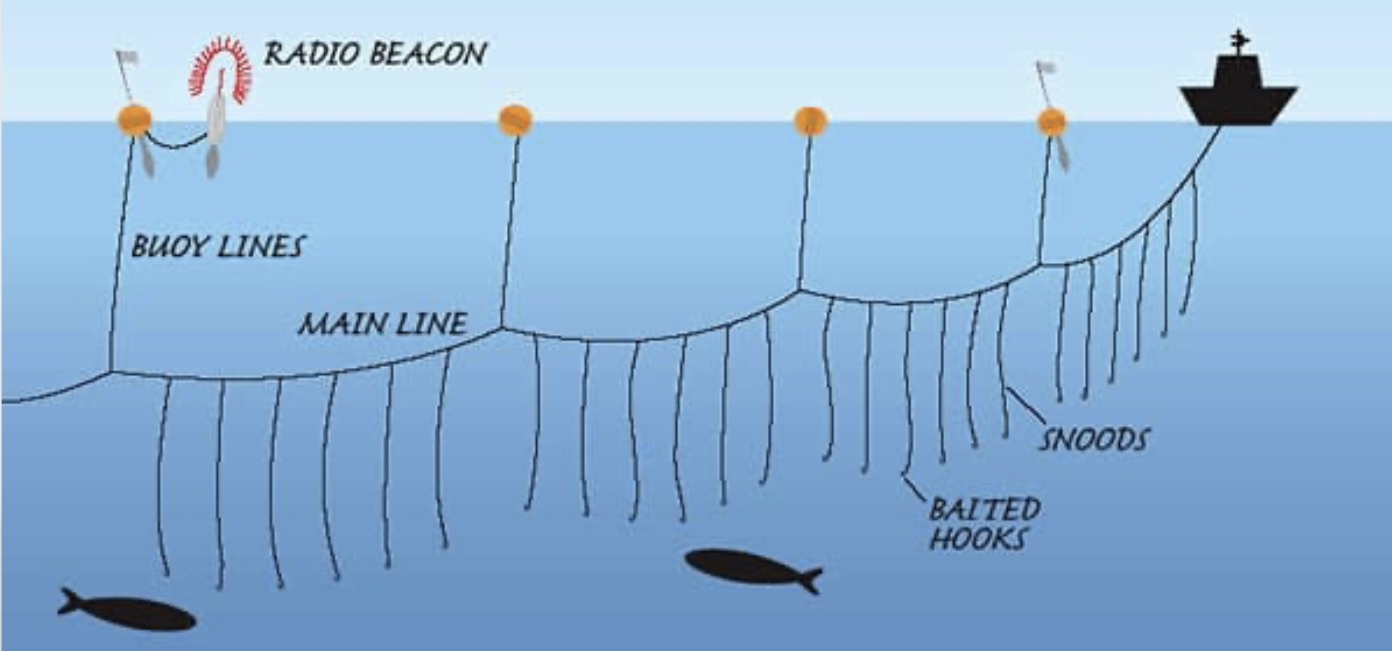
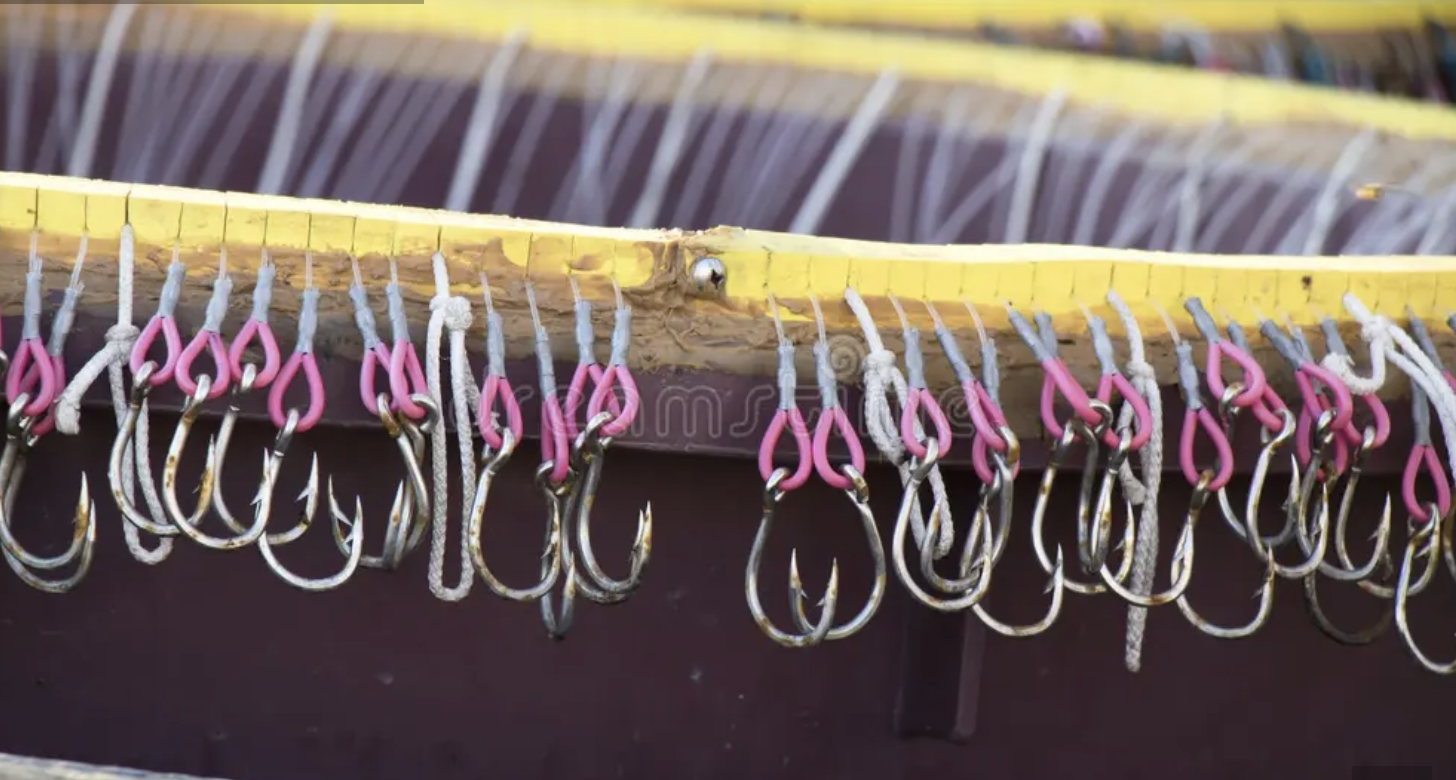
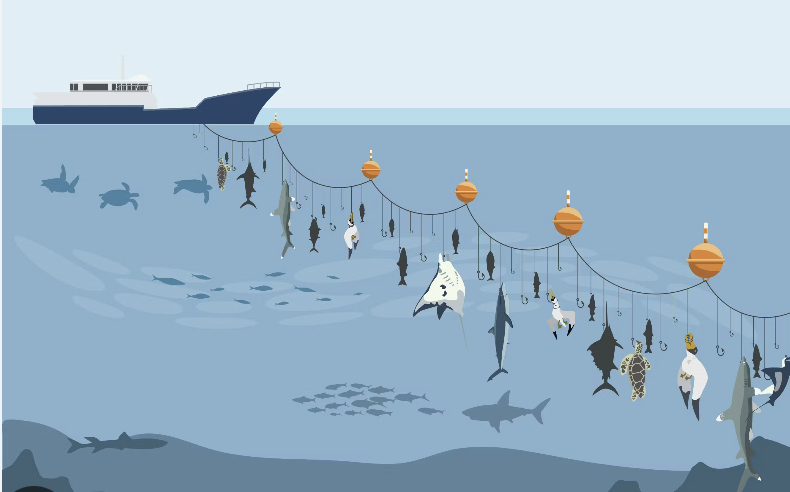
A brutally effective means to get marine life from the ocean into the hold of a fishing boat…unfortunately with an equally brutal disregard for what is being hooked. Unintended by-catch resulting from longline fishing ranges from twenty to forty percent. Sharks, turtles, dolphins, rays, seabirds…all fall into the category of: “Oops”. But that is subject worthy of an entirely separate conversation.
The AIS targets visible on our electronic charts are likely floats attached to the longlines transmitting their location at the surface for the fishing boats to track. After being placed, the longlines drift in the currents just under the surface, randomly hooking and killing anything that happens by. Not only is it one of the least efficient fishing methods, allowing insane amounts of unintended by-catch to be killed, it also creates a gauntlet of potential hazards for sailors like us to avoid.
Our understanding is that the AIS transmitters are attached to buoys floating at the surface (they can’t transmit their position from underwater) which obviously represent potential collision hazards, however, the longlines stretching between the AIS markers are supposedly deep enough under water that boats can sail over the top of them. A plausible theory…and yet, not something that we wanted to prove, nor a concept that provides any peace of mind when you are looking at the veritable army of objects in your path. Especially when the lines of AIS obstacles seemed different every time we downloaded a new screen. We expected them to drift slowly with the currents, not appear and disappear randomly or change location drastically overnight.
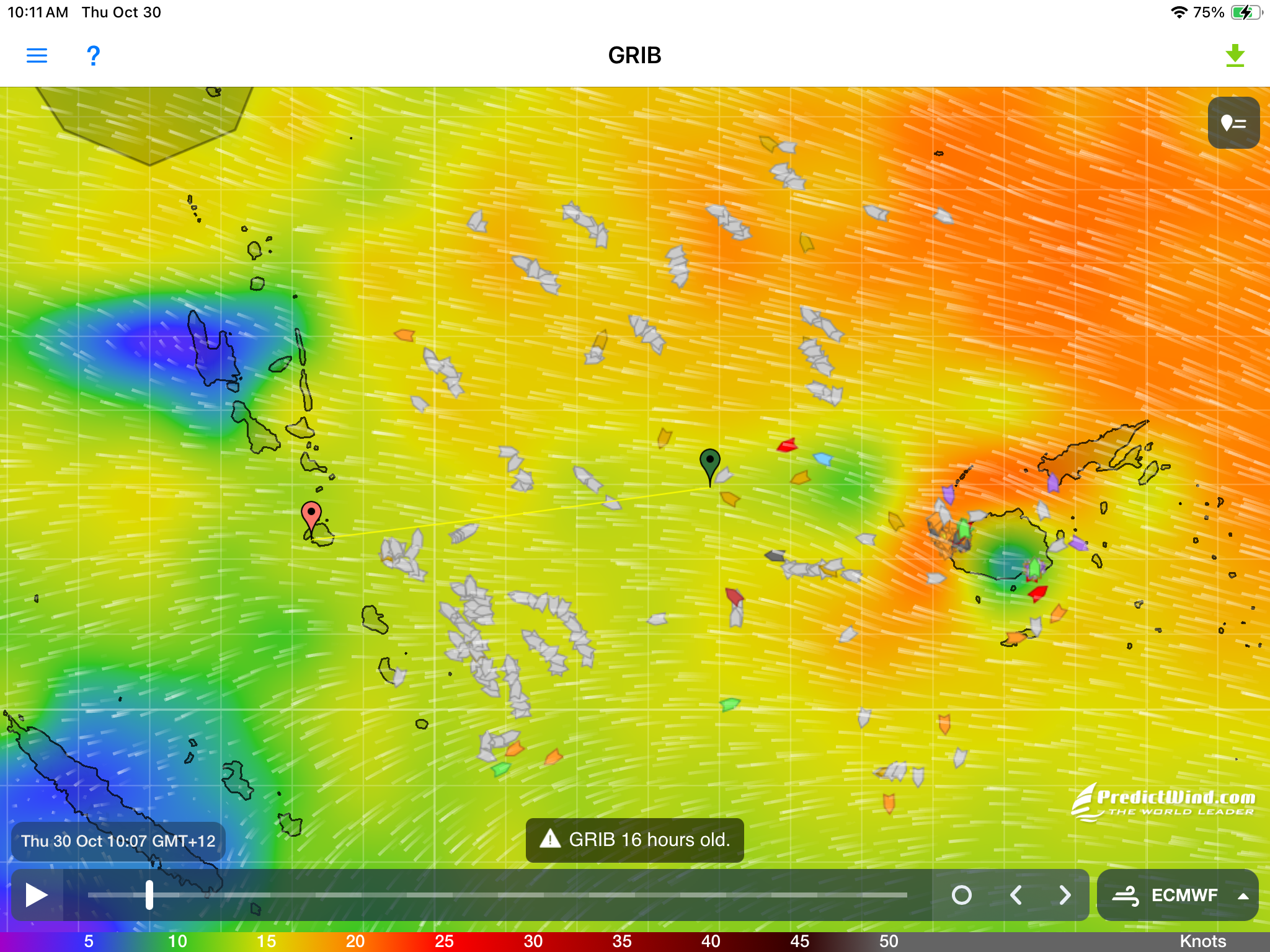
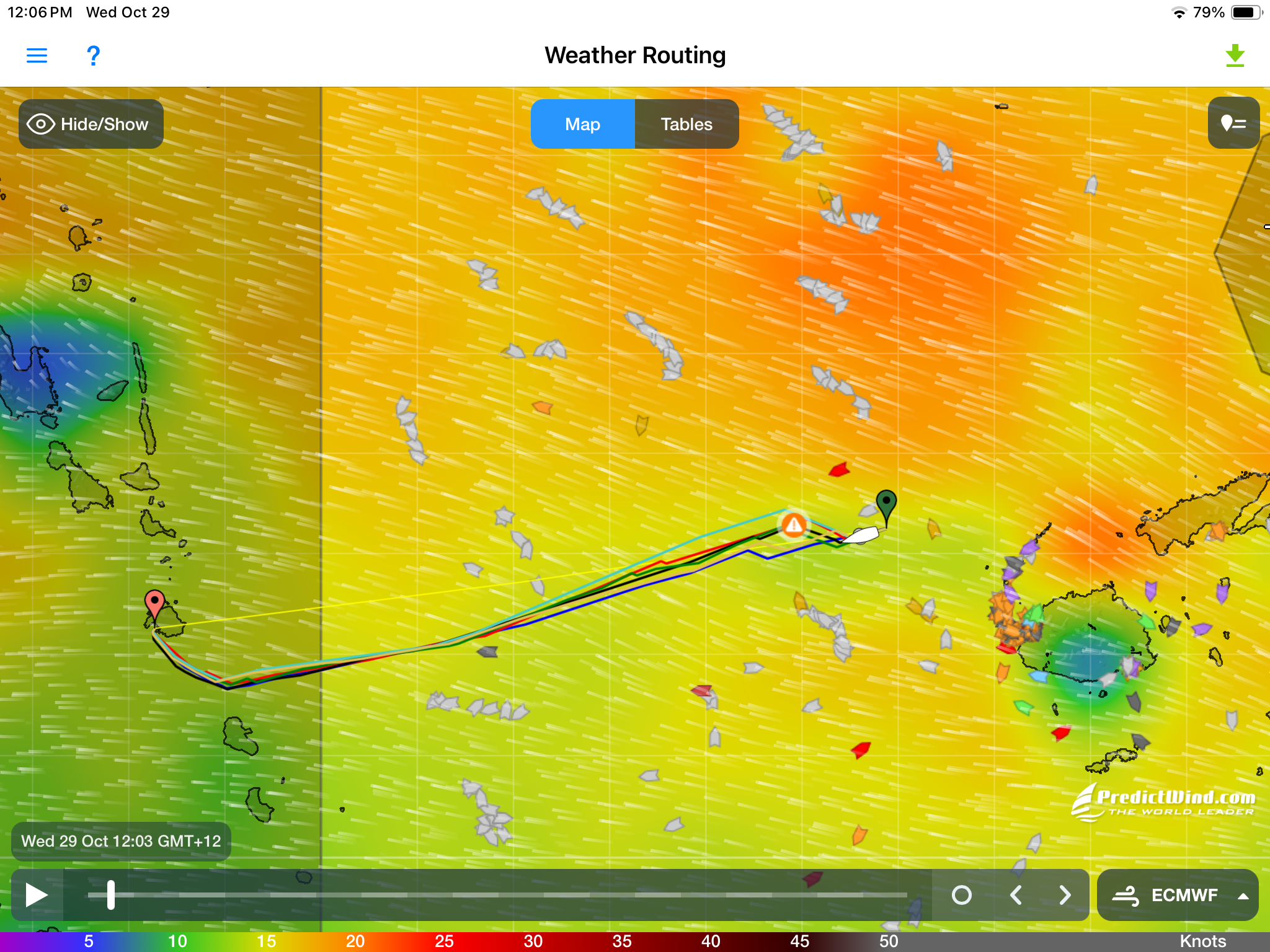
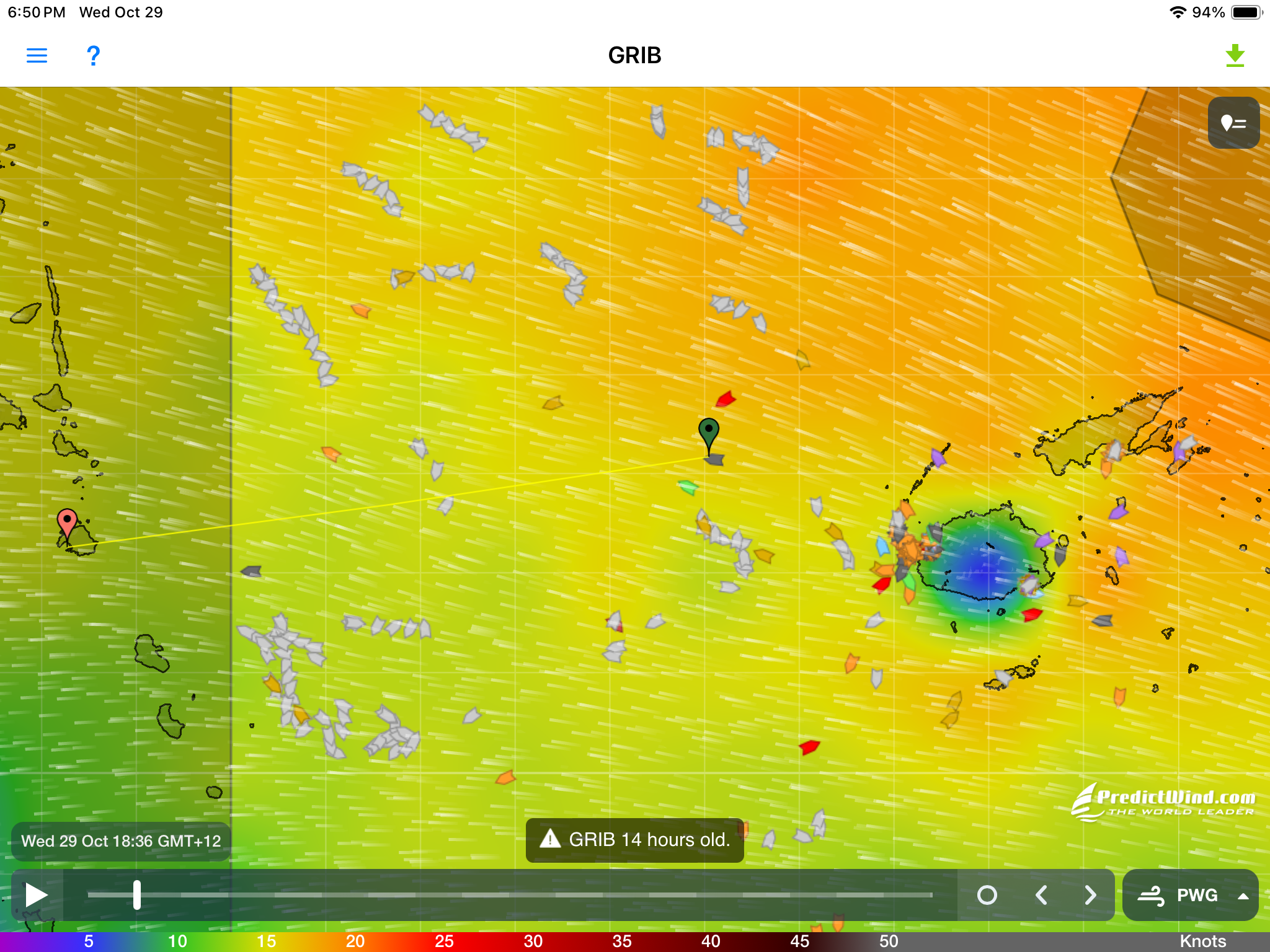
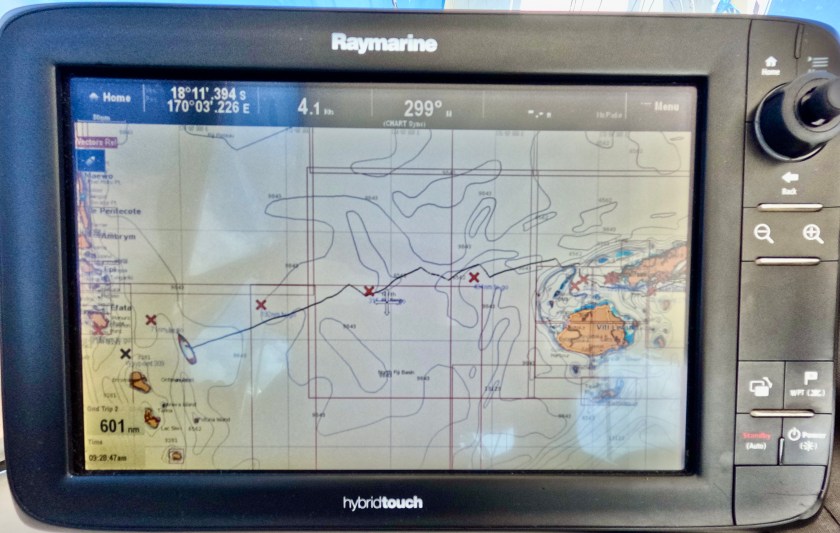
And while the zig-zagging path we followed between Fiji and Vanuatu may have appeared to be either the evasive maneuvers of a yacht trying to avoid the minefields of longlines or simply the random meanderings of a drunken sailor, in actuality it was largely a never-ending series of gybes meant to cope with the direction of both the wind and swell. Essentially, we were crab walking our way to Vanuatu while trying to minimize rolling and maximize comfort. Ya gotta do what ya gotta do.
One evening, in the midst of enjoying a particularly striking sunset, rather than dwelling on concerns regarding potential longlines, we found ourselves more annoyed at an exceptionally belligerent booby bird who seemed hell bent on finding a place to spend the night on Exit. Rude.
Curiously, as we ran the longline gauntlet, we only saw the actual lights of a single fishing boat in the distance during one night. Never a longline buoy. In the end it seemed we had lucked out as, day after day and night after night, a clear corridor appeared in front of us on the navigation screen, despite being surrounded by AIS targets.
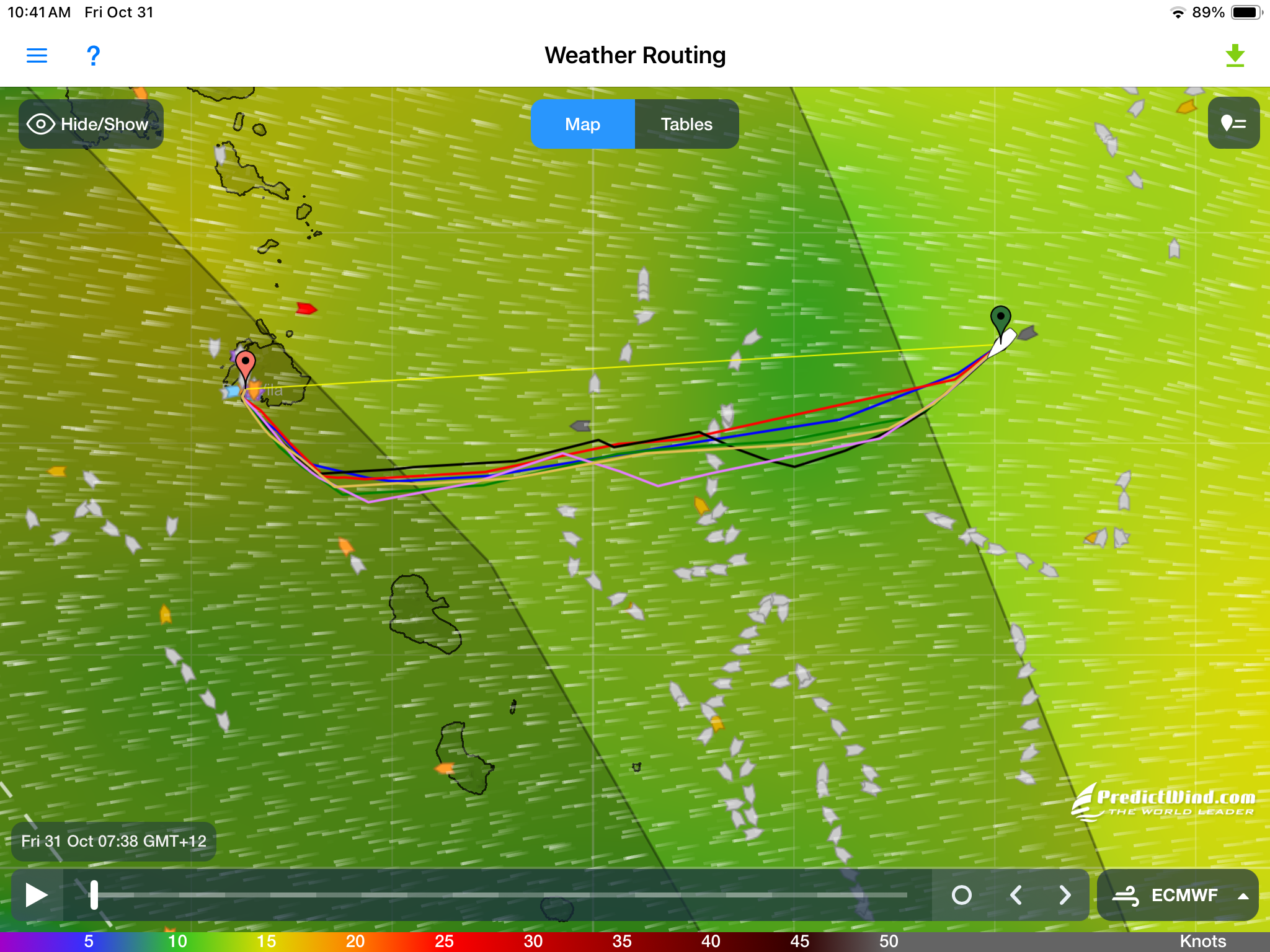
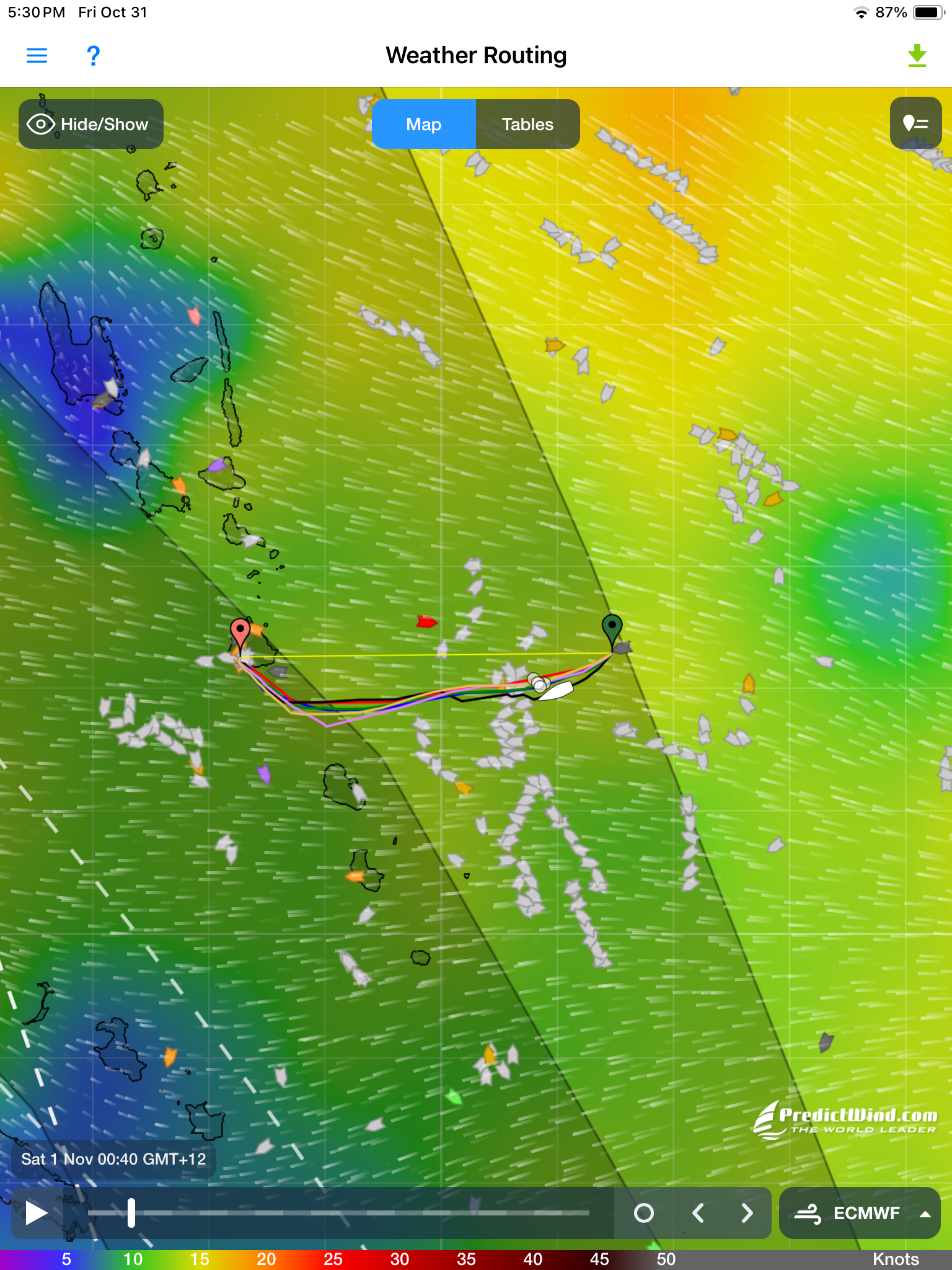
It was not our only stroke of luck during this passage. After six days at sea, we still had not seen a single drop of rain since before leaving Savusavu, Fiji. We had also not seen winds that ever exceeded twenty knots.
Then, while still fifty nautical miles offshore from the nearest land, we were surprised to suddenly see what appeared to be a stretch of shallows just in front of us…shallows that were definitely not supposed to be there.
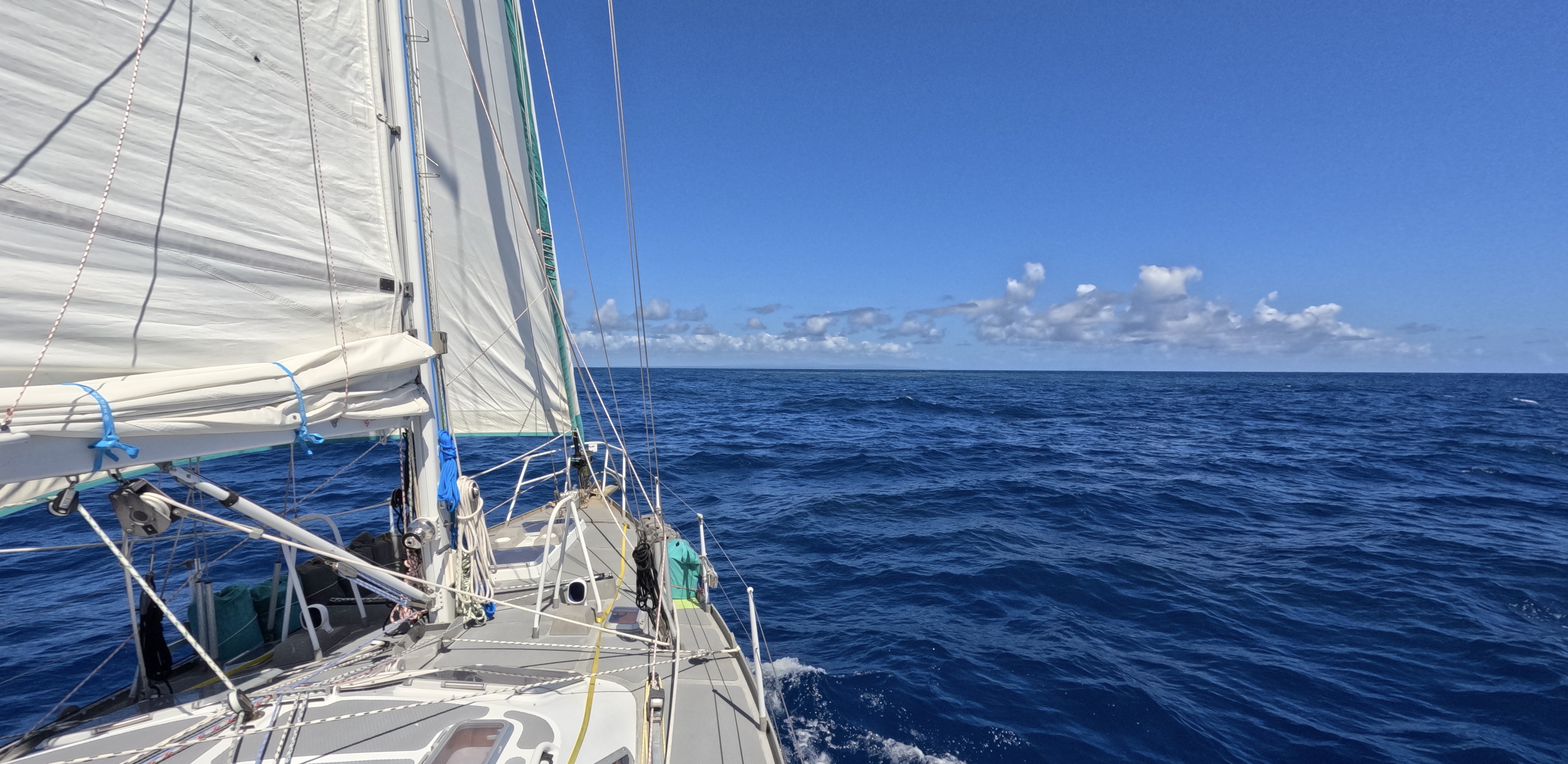
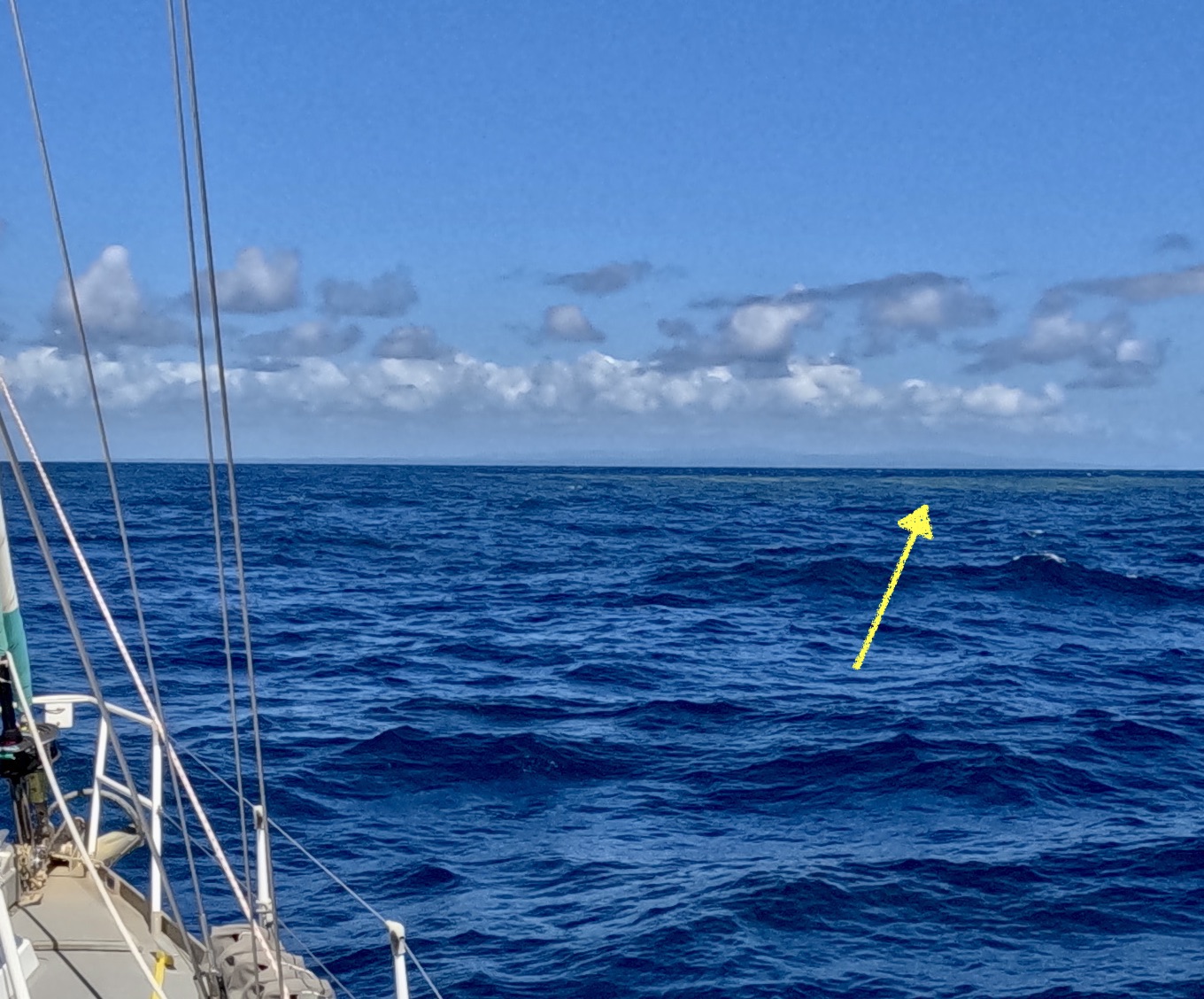
It was a brief period of wtf…trying to assess what it was we were approaching. Until we passed through it. What looked like an area of shoaling turned out to be a nasty expanse of algae blooms. Or red tide.
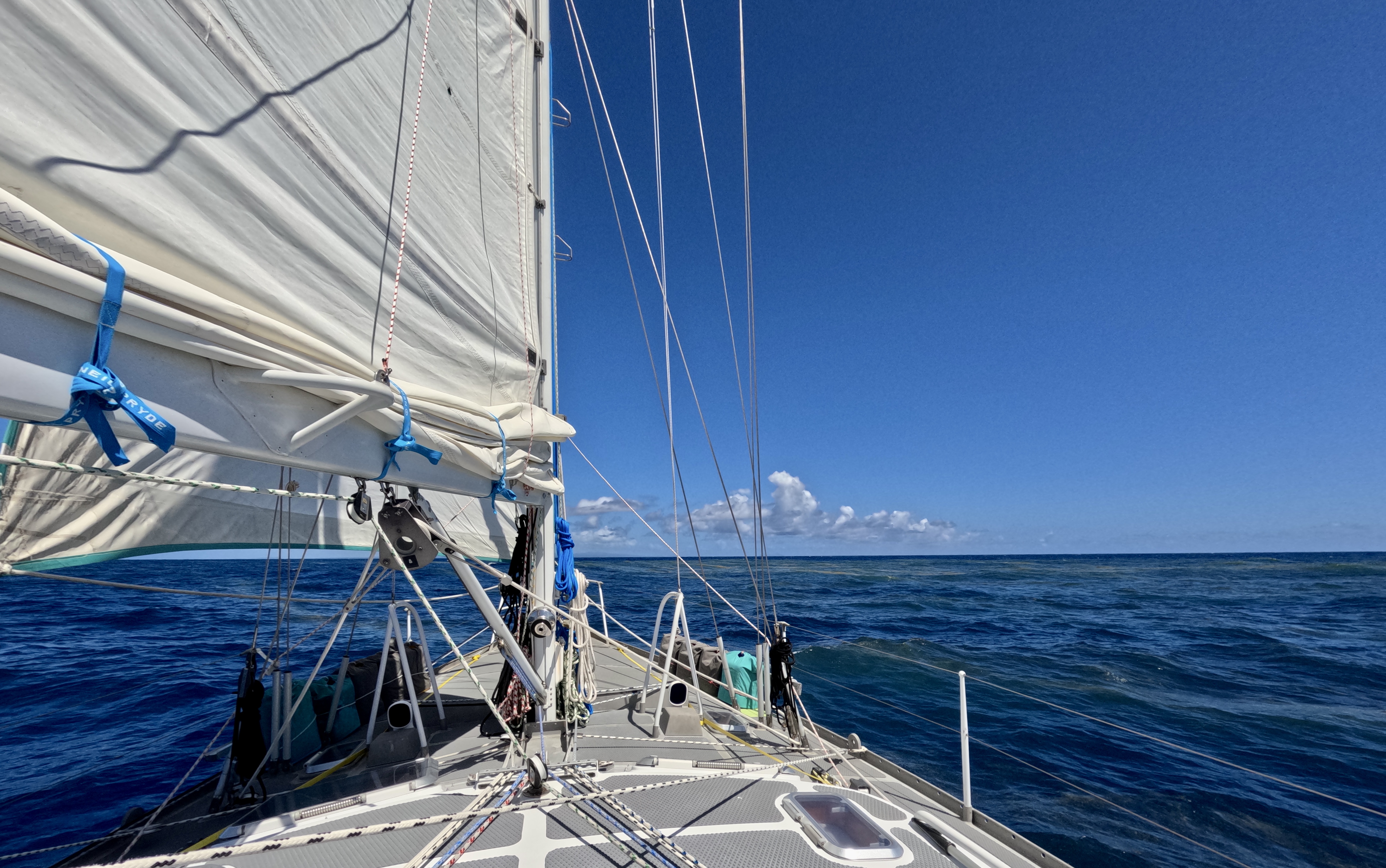
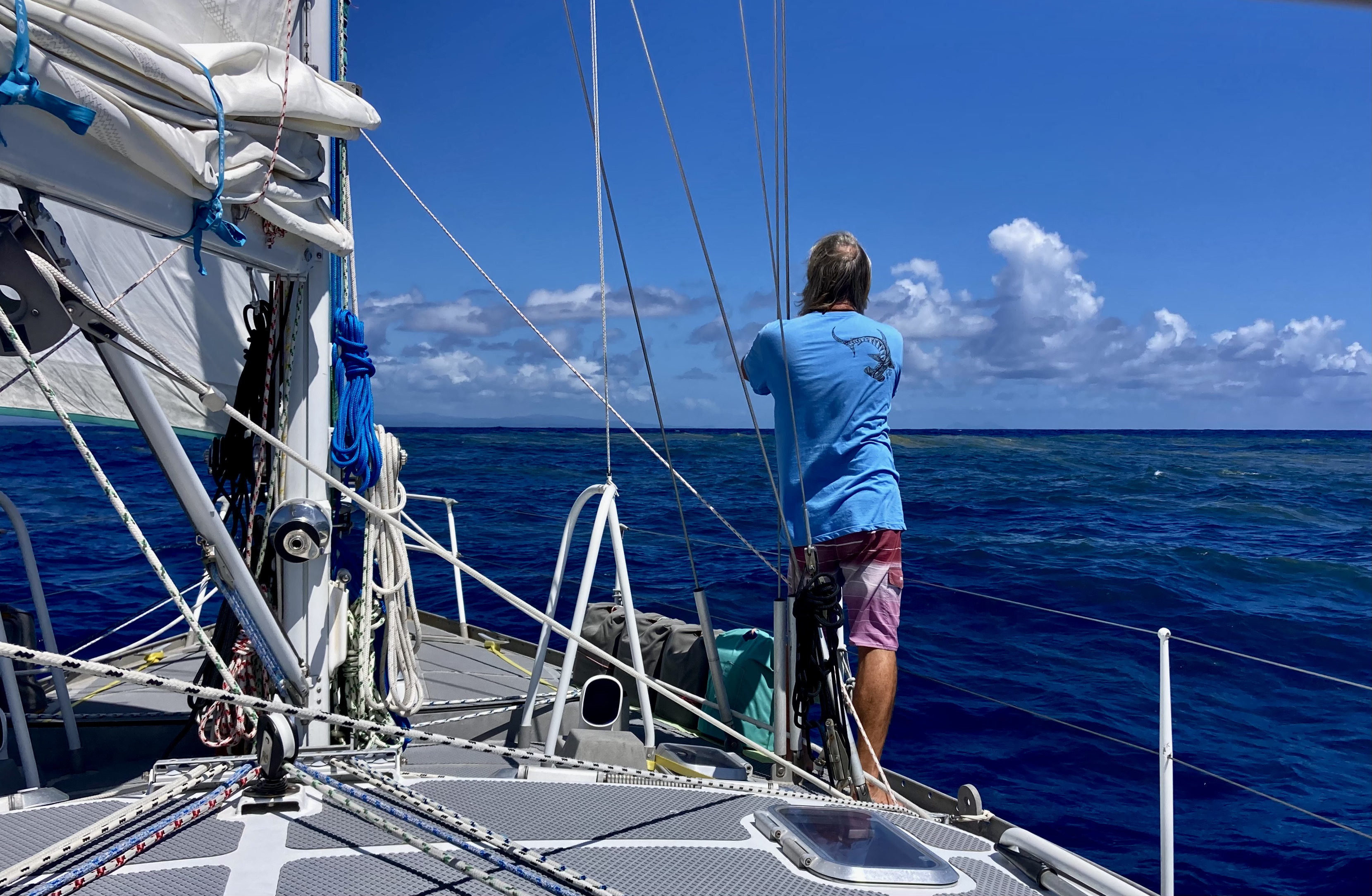
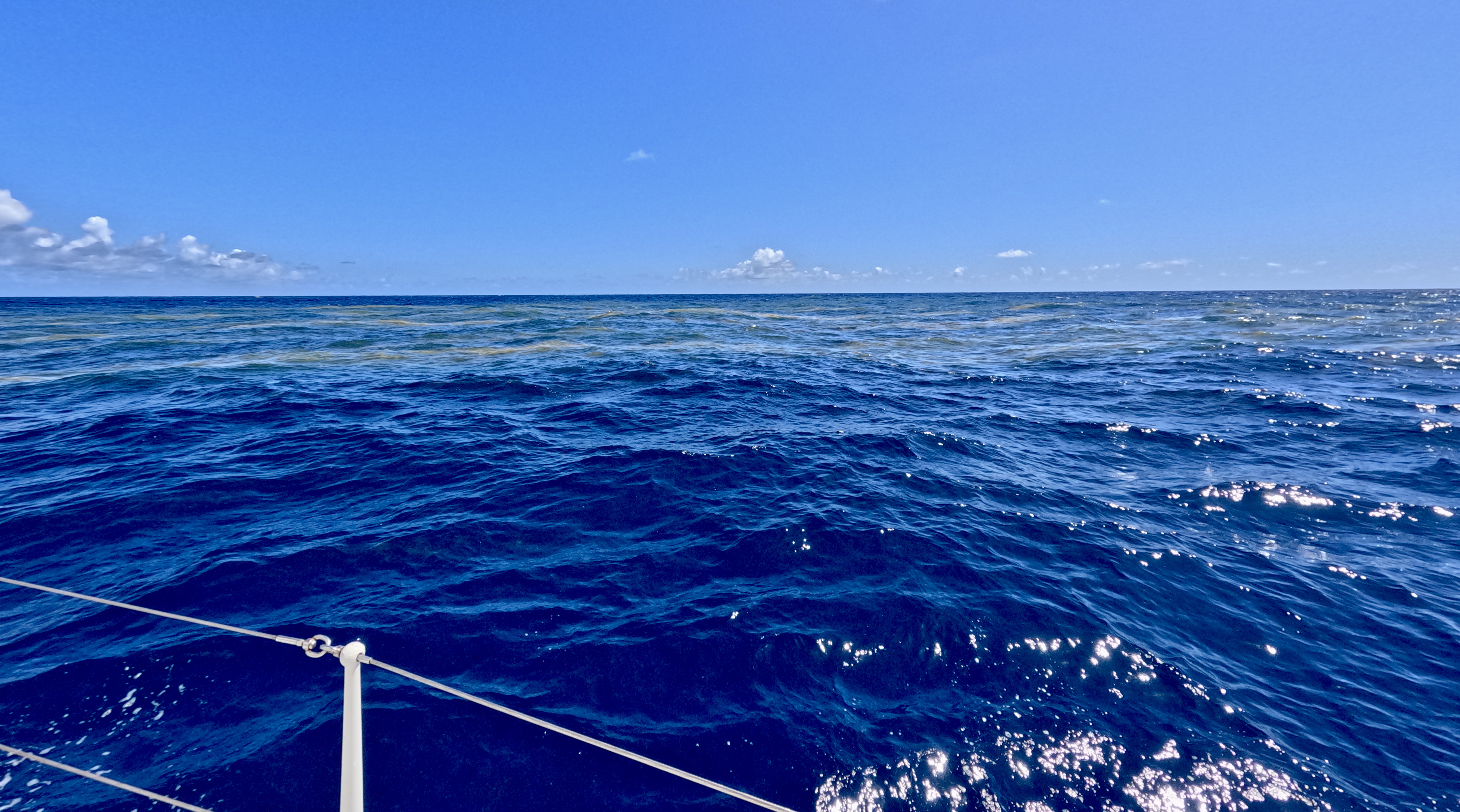
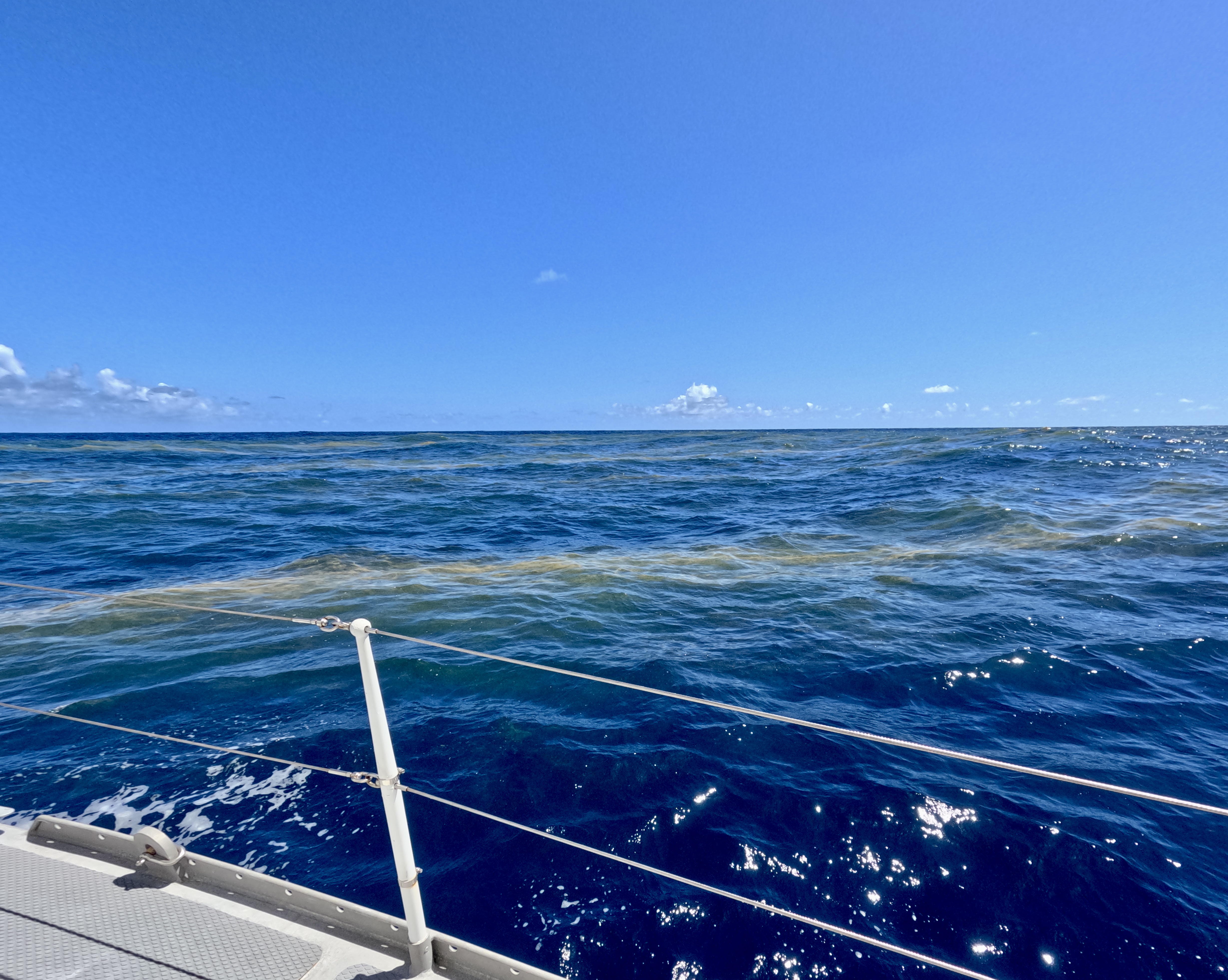
At the time, we were thankful that our currently non-functioning water maker had not been operating. Red tide had wreaked havoc on our water maker back in the Sea of Cortez. Little did we know that what we were currently seeing was merely a preview of things to come. We would experience the same grief over the course of our stay in Vanuatu. A bad flashback.
Ninety minutes later, there was no mistaking what we were seeing on the horizon…land ho! Vanuatu was just ahead. More specifically, the island of Efate and the town of Port Villa, where we would clear into the country.
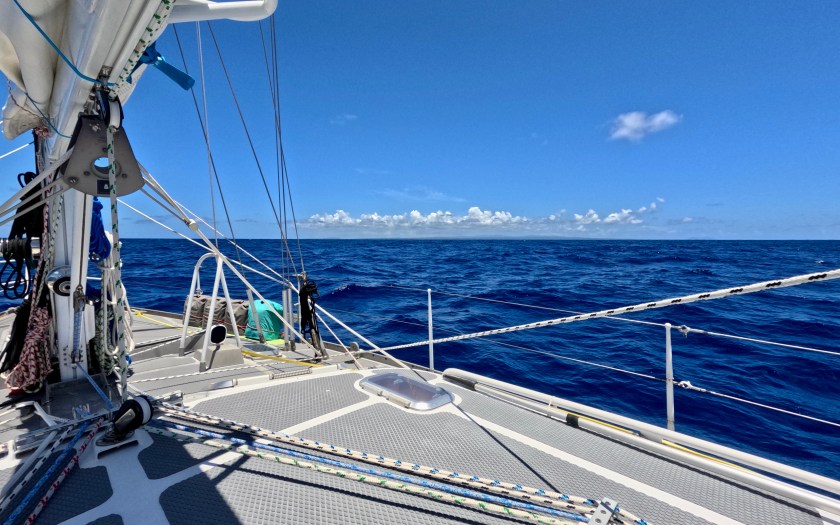
Over the course of the next four hours, we made our way around Efate to the back side of the island where we could enter Mele Bay and access Port Villa.
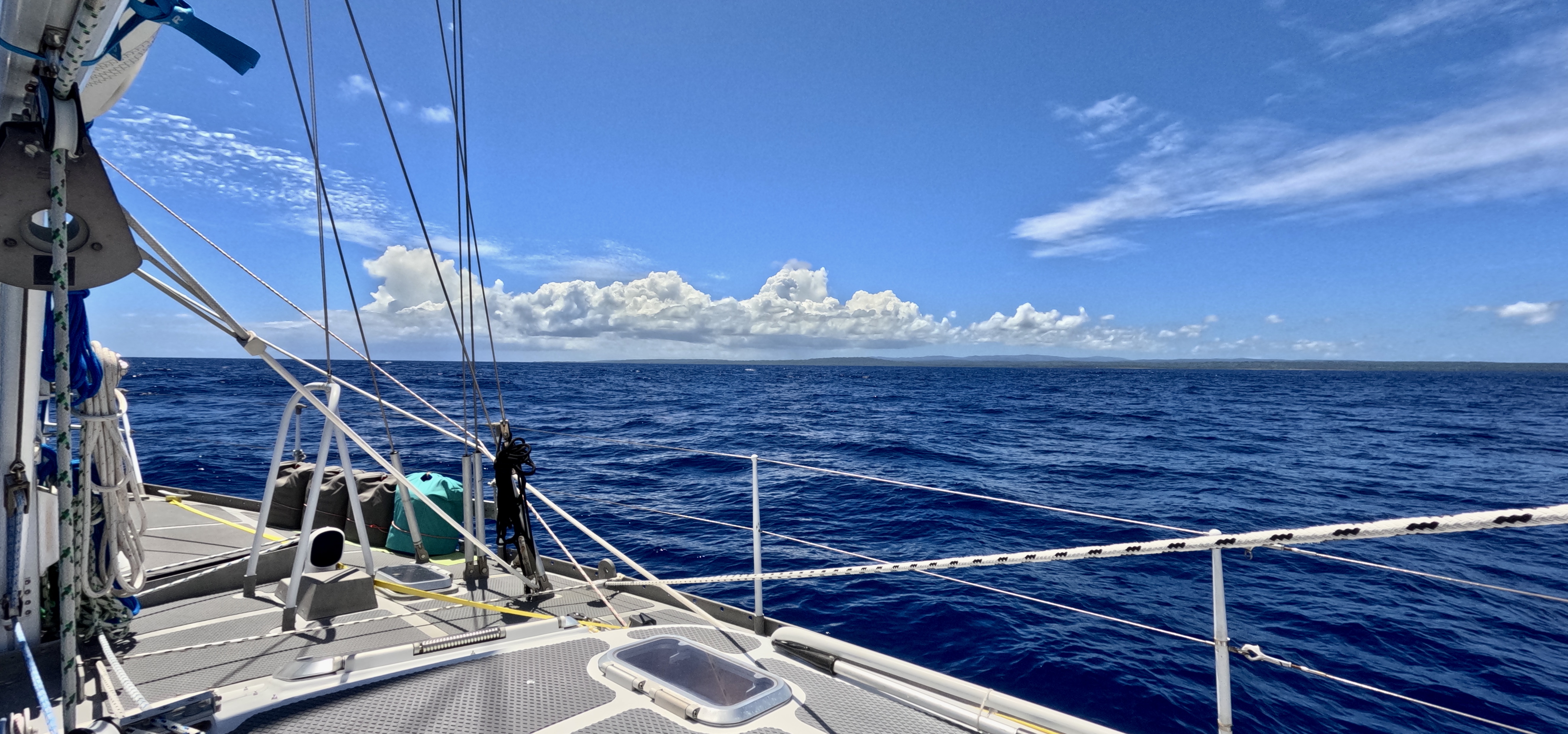
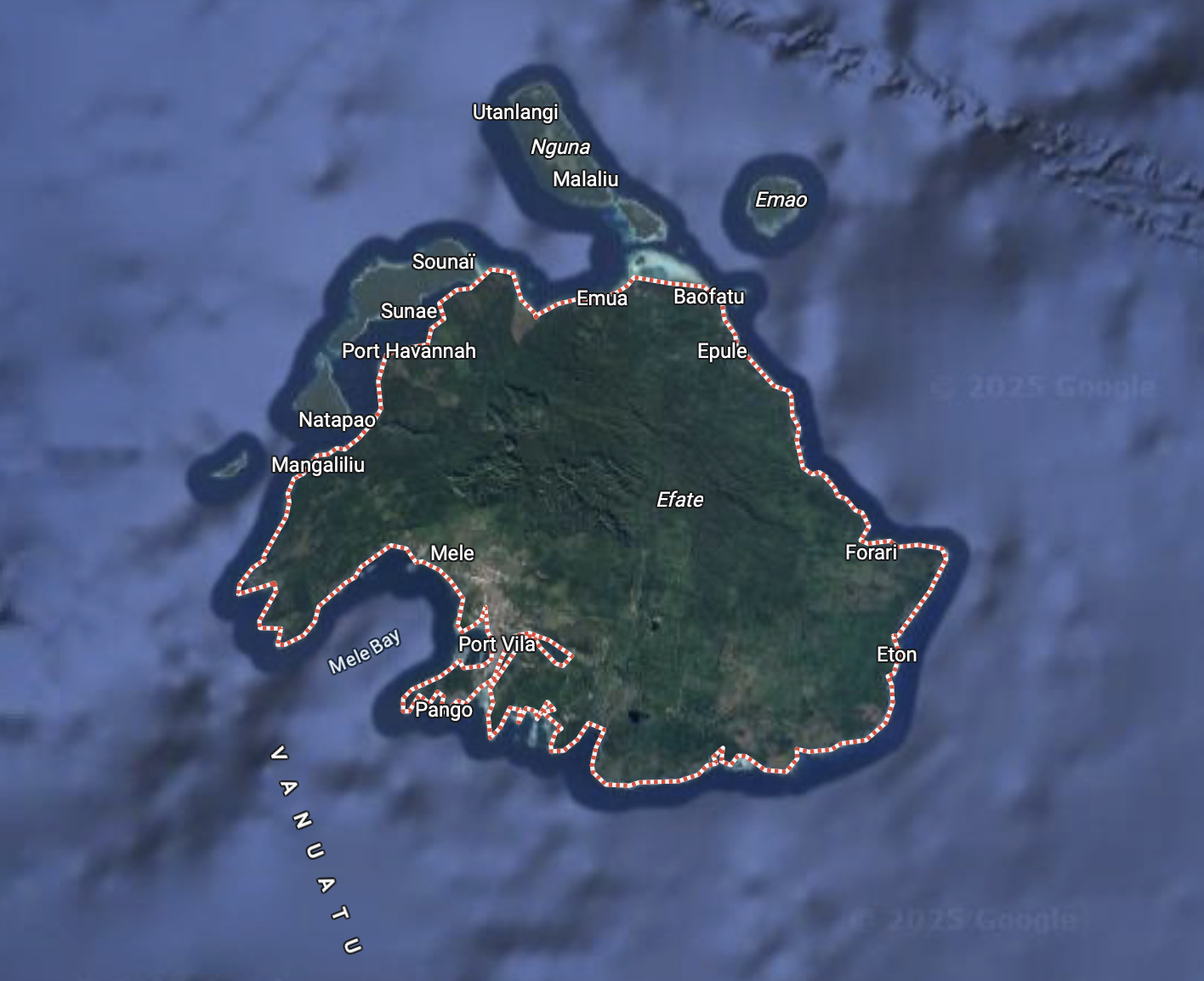
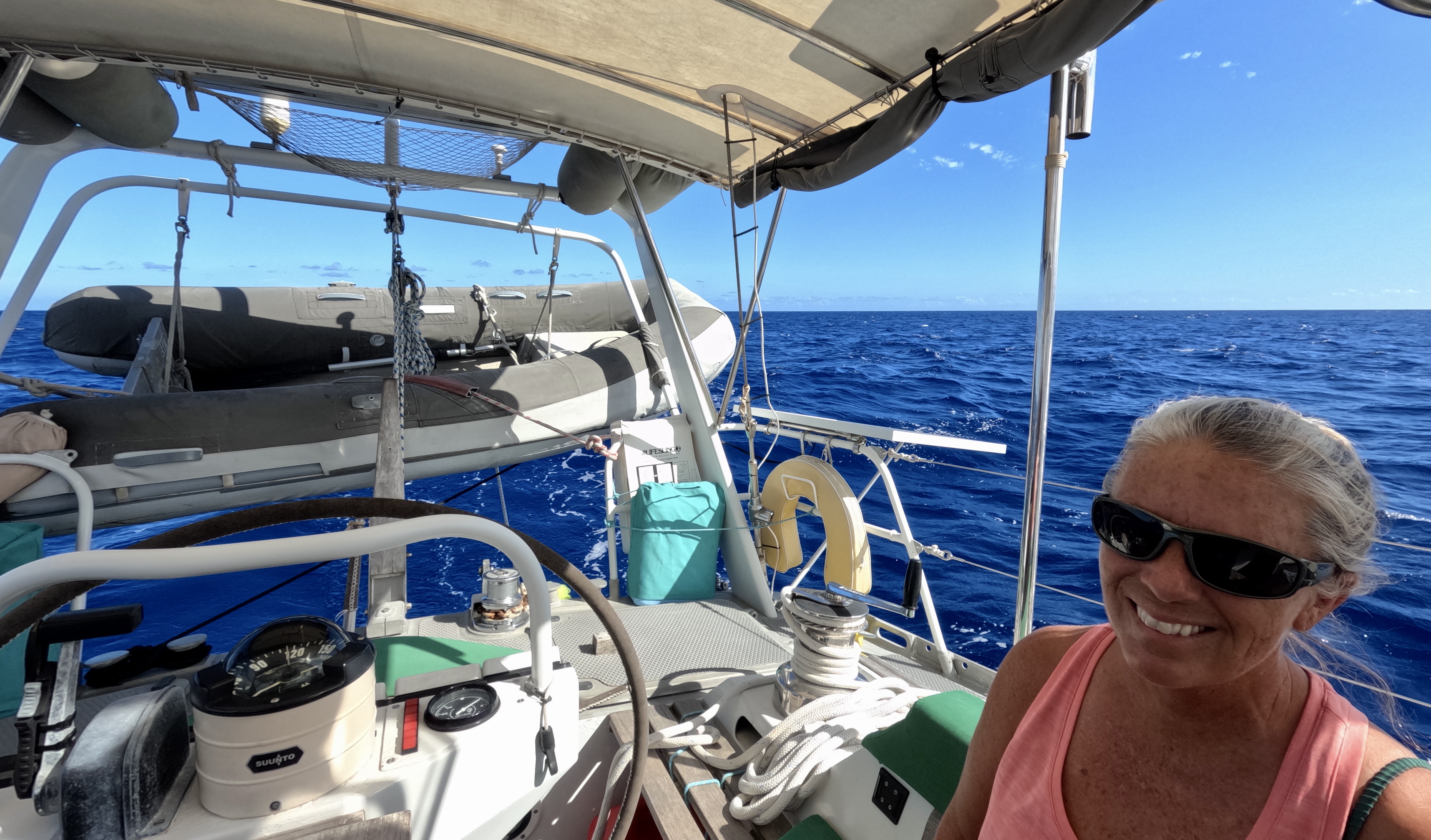
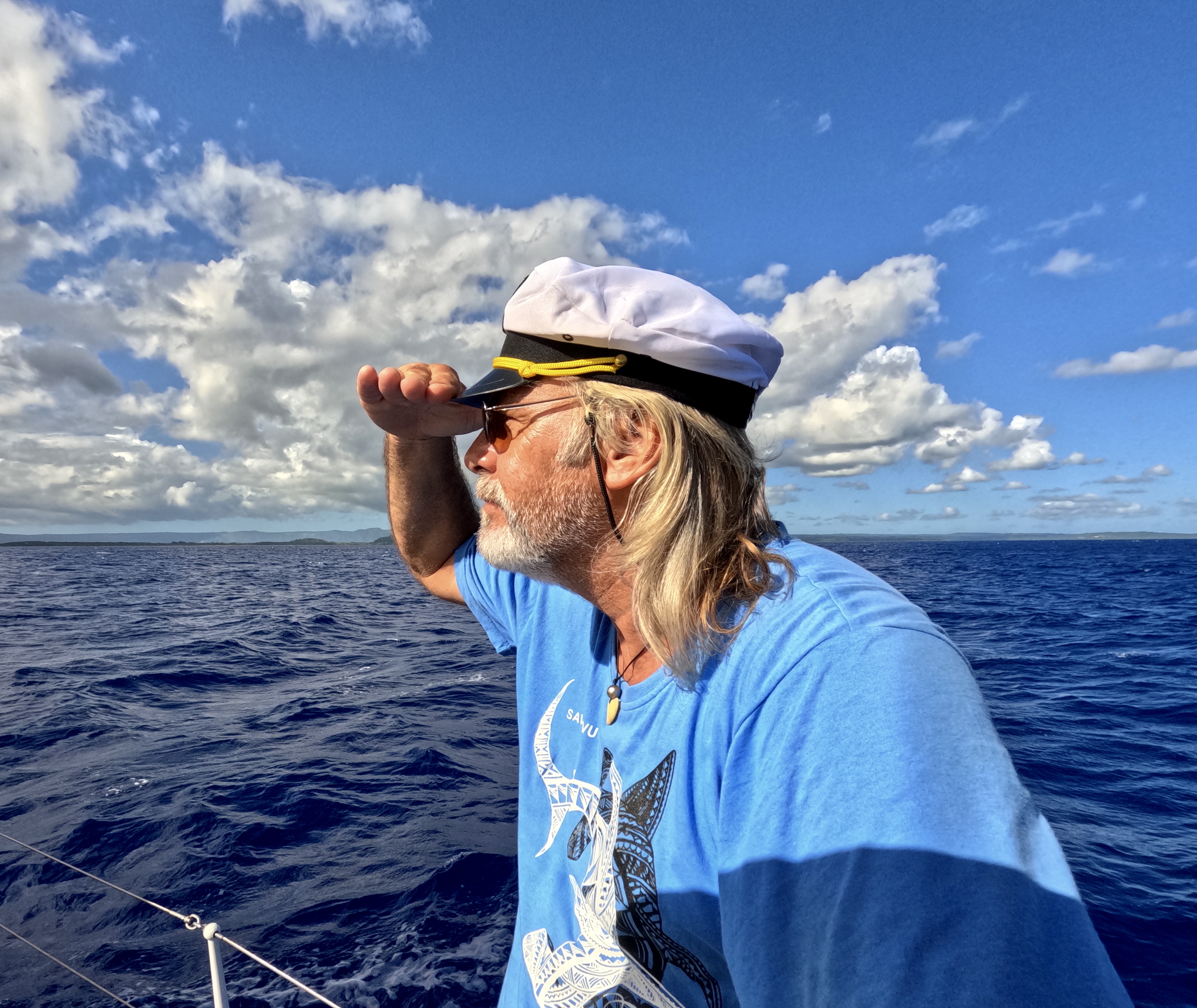
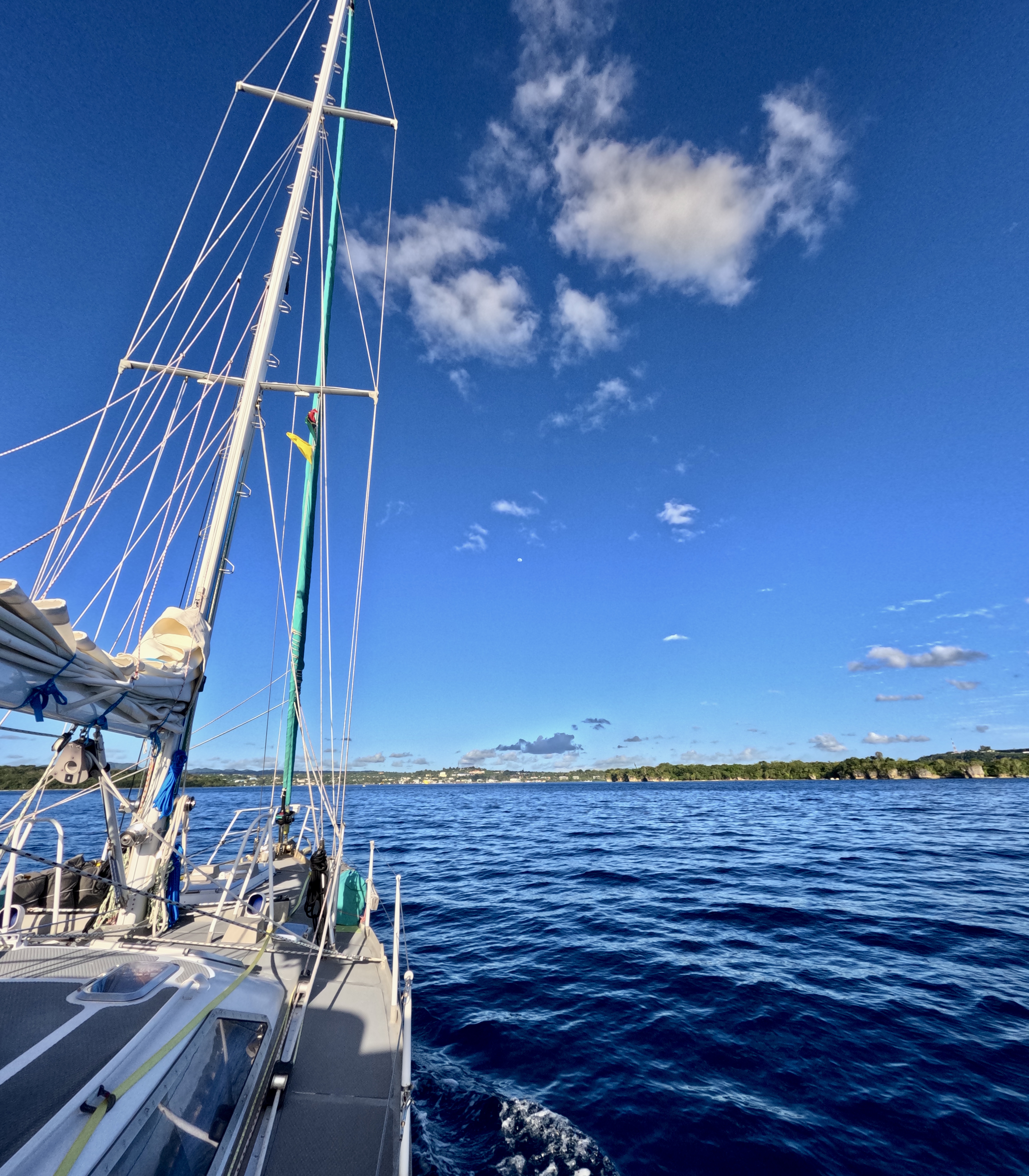
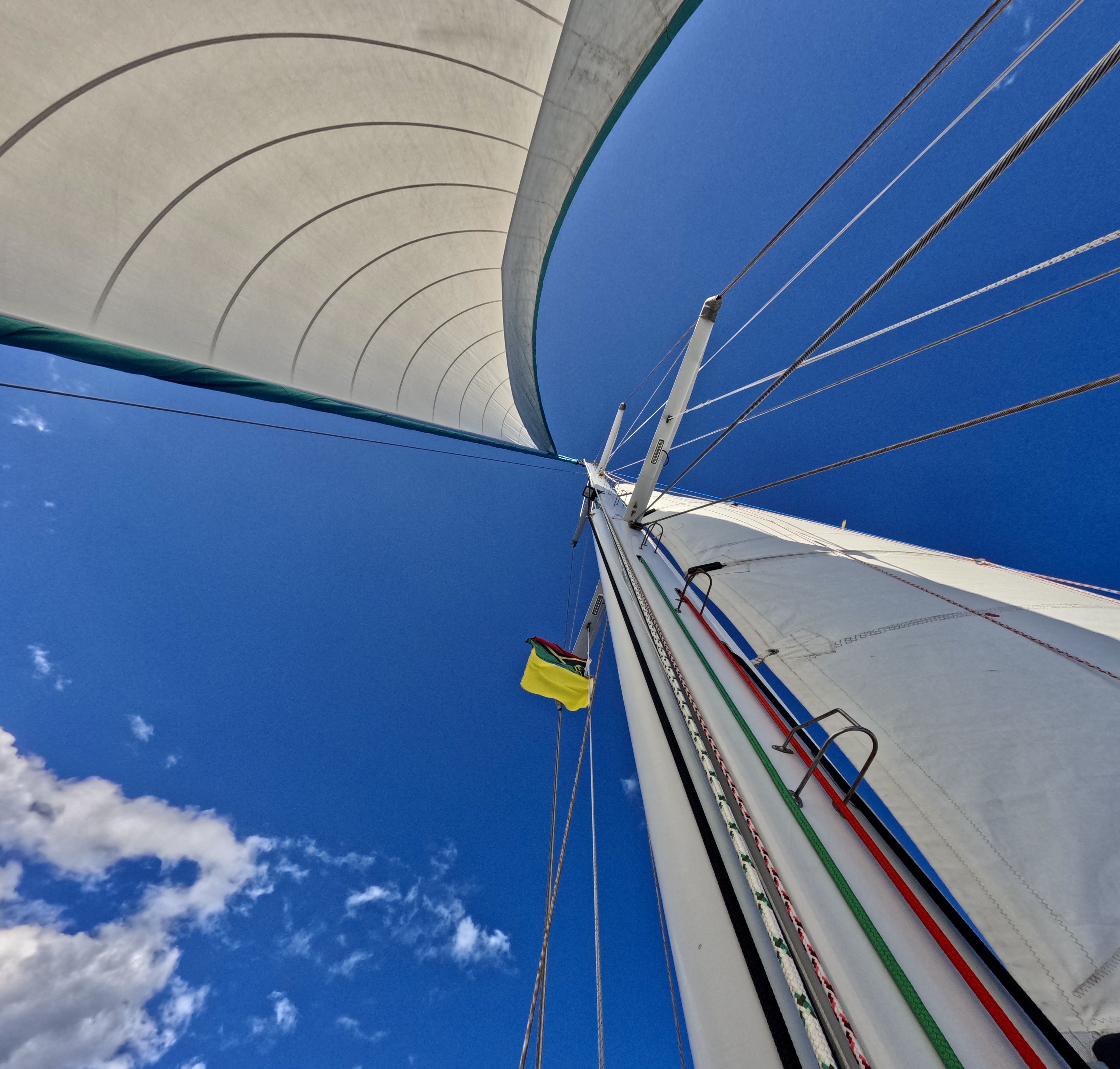
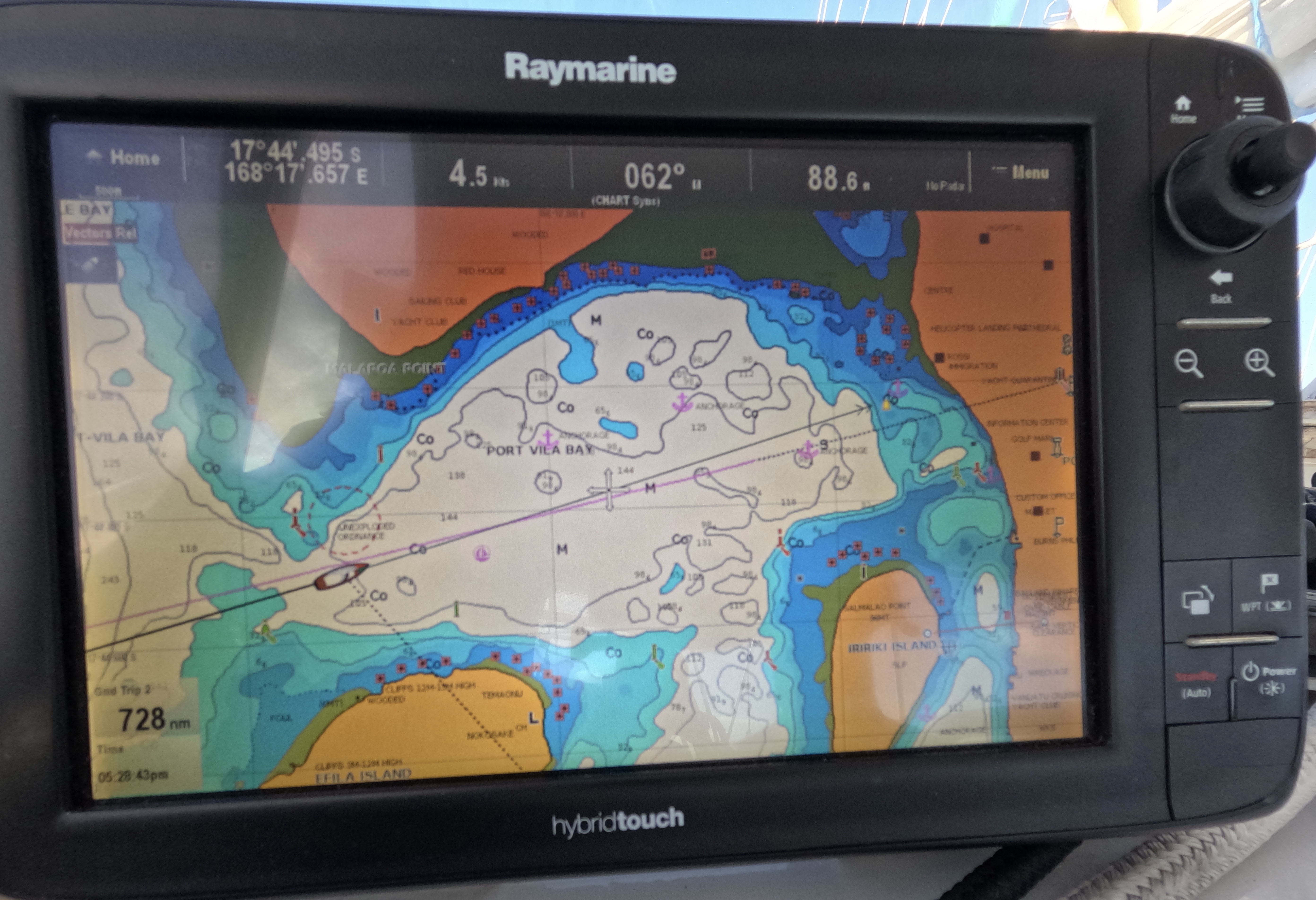
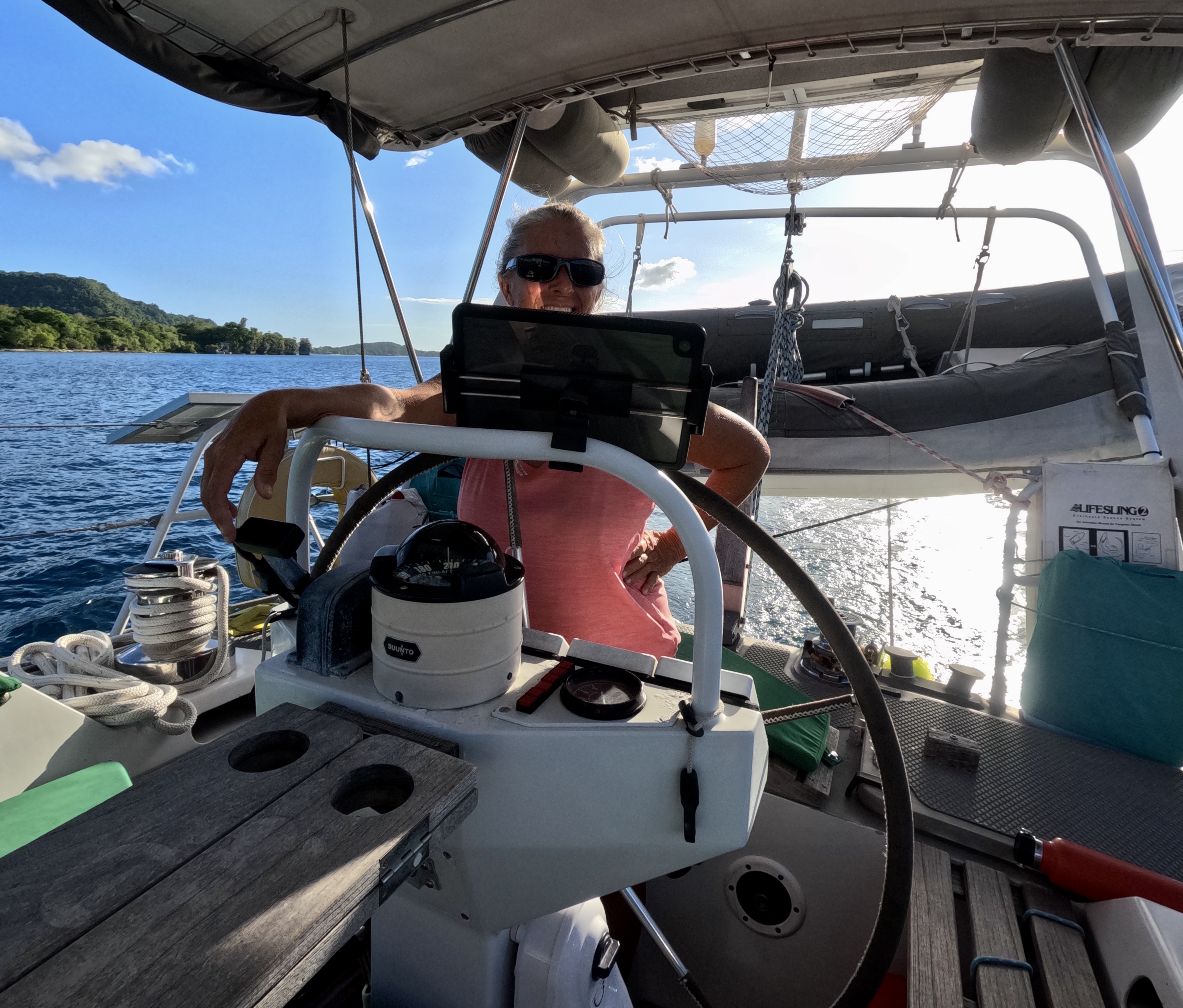
Just before the sun began to set, Exit dropped anchor in the bay right next to the town of Port Vila, where we would clear into Vanuatu. We had just completed one of our most benign passages to date. Not the fastest. But steady. Nearly eight hundred nautical miles in less than six and a half days. And that was worth a sundowner toast.
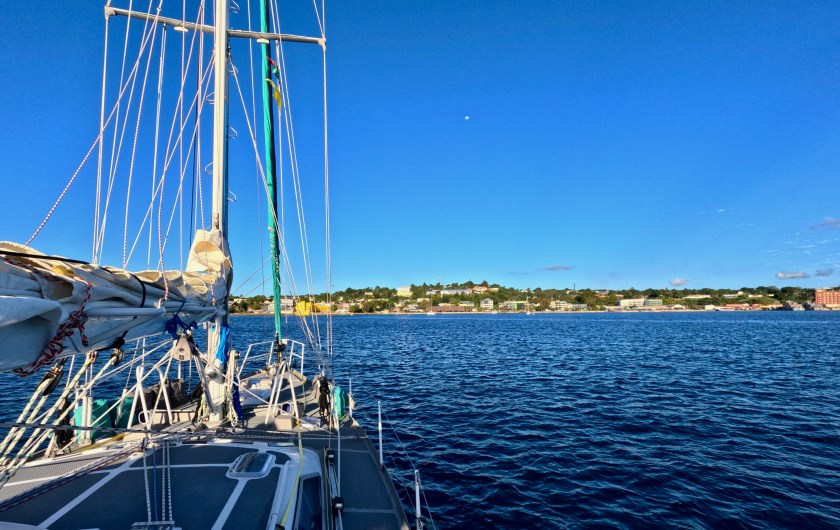
Vanuatu, like many other Pacific island chains, long existed under the strong influence of Western explorers. It was renamed twice in the 1700’s (from Great Cyclades to New Hebrides) and didn’t actually gain full independence from the century long joint rule by both Great Britain and France until it became Vanuatu in 1980.
The eighty three islands (thirteen larger and seventy smaller) that comprise the country of Vanuatu, actually show evidence of human habitation stretching back some five thousand years. Though its first inhabitants were tied closely to the sea, with time they developed extensive agricultural skills, taking advantage of the heavily wooded mountainous areas, fertile valleys, and extensive rain forests.
The current population of Vanuatu is around 200,000 with about eighty percent living in rural areas. The split between those living near the sea versus farther inland is about half. As for urban centers, Port Vila (the country’s largest port) on one of the larger islands of Efate that we had just arrived at, has a population of about 30,000. Luganville, by comparison, on the northern island of Espiritu Santo, has about 11,000 people.
We arrived in Vanuatu knowing full well that our timing would, in all likelihood, be at fault for some potential shortcomings and disappointments in our visit. It was late in the cruising season…more accurately, the season had effectively ended a month ago. Not that countries schedule things around the presence of yachts, but yachts often schedule their appearance based upon the goings on in an area. And by the time we had arrived in Vanuatu, everyone else was pretty much gone. In and of itself, a good thing. And yet, the timing also carried with it some less than ideal realities.
Mount Yasur, on Tanna Island, is one of the biggest attractions of Vanuatu. The glow of this active volcano, which has been erupting for hundreds of years, was apparently what first attracted Captain Cook in 1774. Those that visit its thousand foot diameter summit invariably walk away with a once in a lifetime memory as well as some of the most iconic video footage one can obtain without actually becoming magma. However, it is located in the very southern end of Vanuatu and, for us, this posed a problem. The timing of our arrival would coincide with a shift in winds from the southeast trade winds to winds typical of the cyclone season from the north and the west. The farther south we placed ourselves, the harder it would be to make our way northwest through the Solomons. In addition, the fact that we were arriving already after the official start of the cyclone season meant that our risk increased the further south that we placed ourselves. Not ideal.
The other huge attraction of Vanuatu are the land divers of Pentecost. This is an amazing ritual where men leap off of wooden towers twenty to thirty meters tall with nothing more than two tree vines wrapped around their ankles. Many consider the tradition to be the source of inspiration for modern bungie jumping. However, the ritual only occurs between April and June, when the vines are at their most elastic. Sensibly, during the rest of the year when the vines become more brittle, locals refrain from what would effectively be jumping off a three story building only to land head first in the dirt…a much harder tourist sell, and landing.
Still, after so many years of travel, we have learned that it is rare to have a couple of top tourist attractions make or break a country. Despite having to forego a visit to the active volcano of Mount Yasur, as well as missing the legendary land divers of Pentecost, we expected Vanuatu would still be well worth the visit.
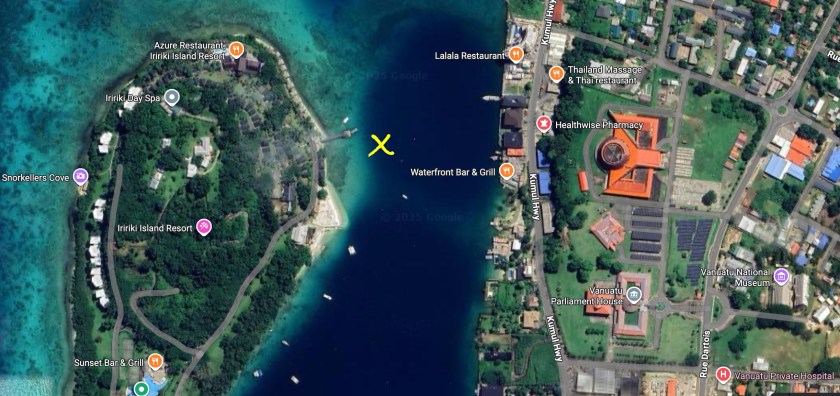
Following an uneventful and painlessly smooth process of clearing into Vanuatu, which included a visit to the customs office as well as meeting with both the immigration official and bio-security officer at a table in one of the waterfront restaurant/bars, we moved onto a mooring ball at Yachting World Marina as we had heard security at anchor in Port Vila could sometimes be a concern. We ended with the same view as a $300 a night island resort we were right next to.
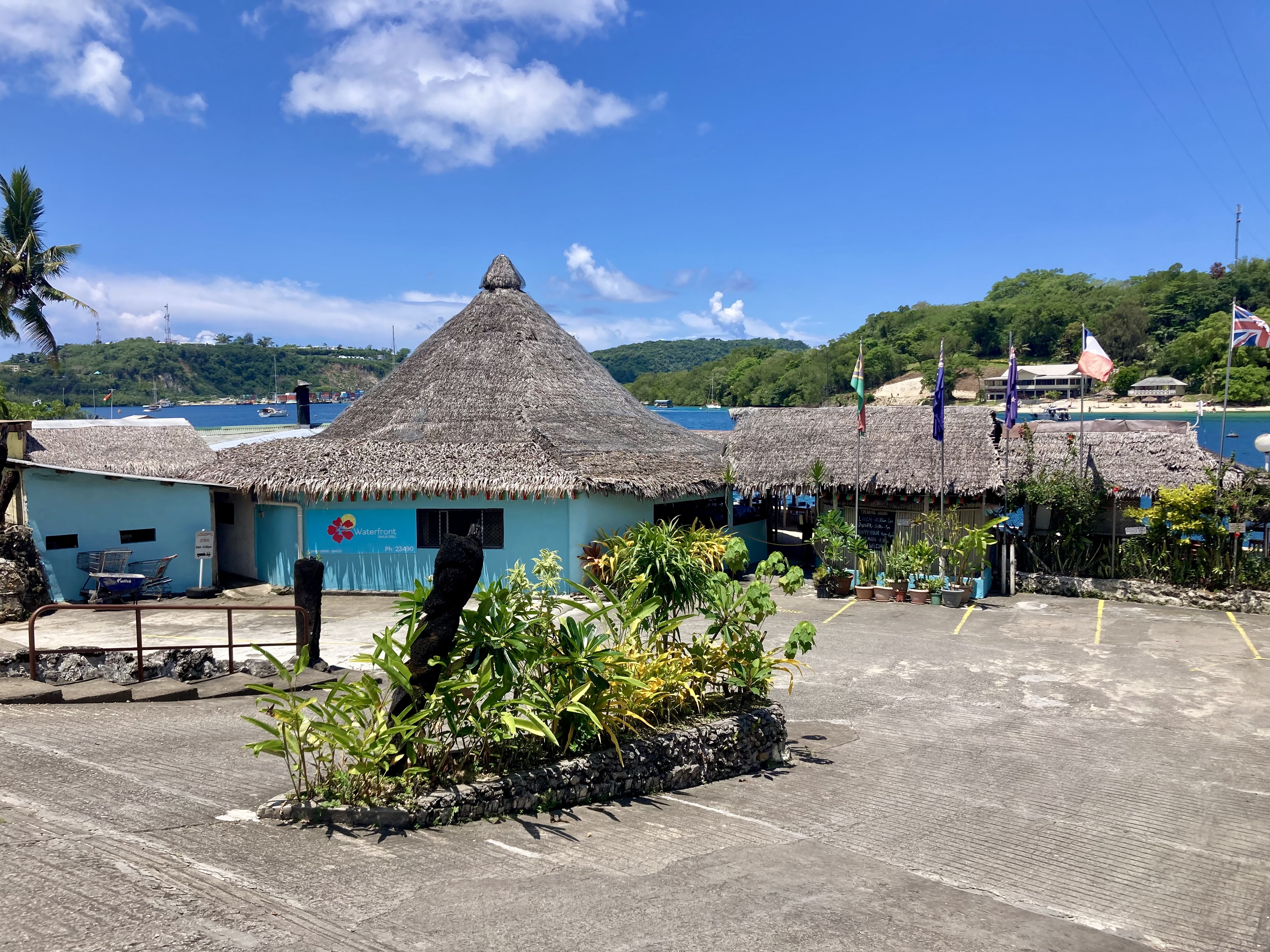
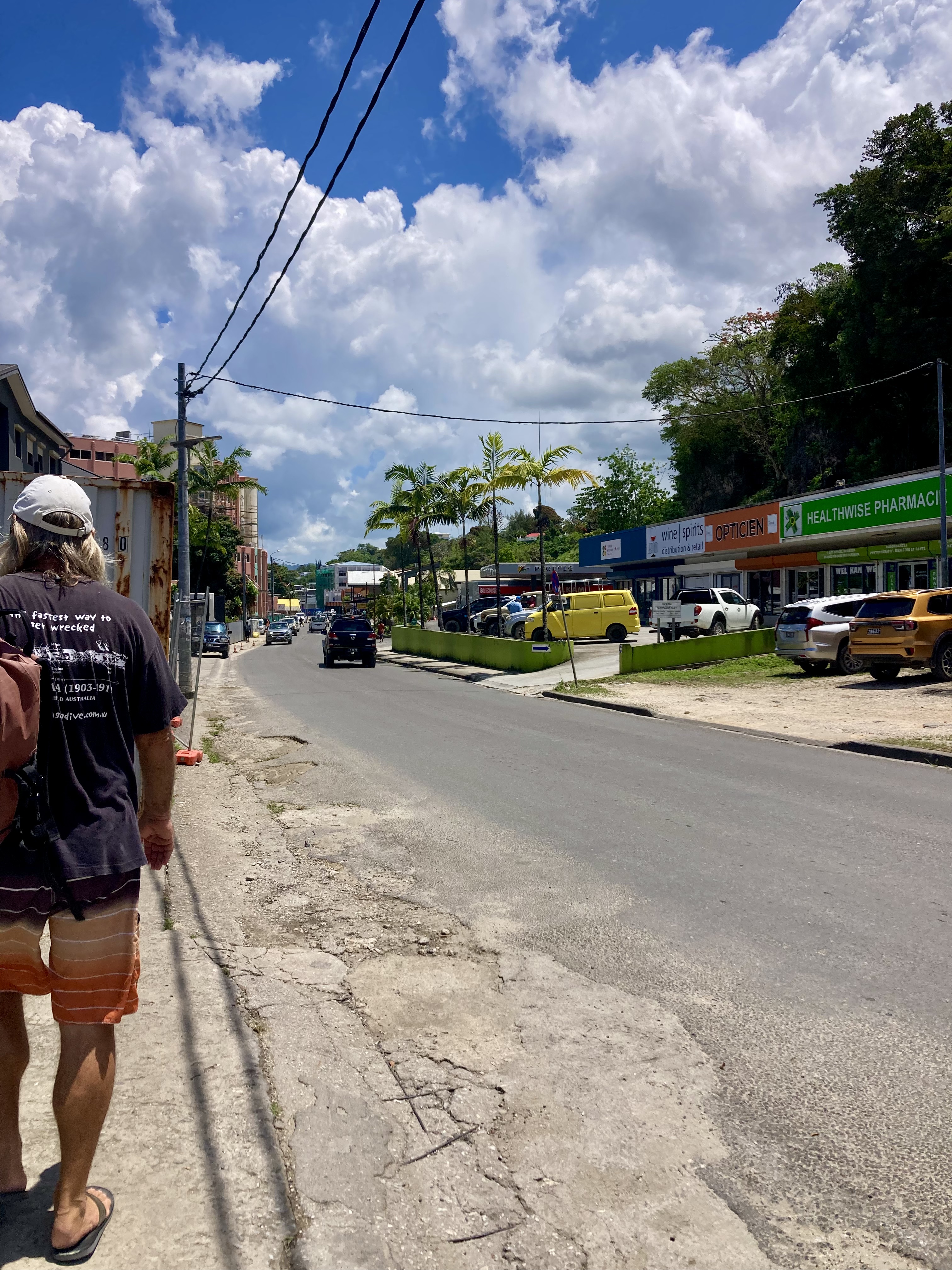
Afterwards, we were able to enjoy a bit of an introductory wander through the town. Port Vila’s sprawling population of 30,000 or so people hardly qualifies as a big city by most standards, and yet it seemed like quite a metropolis compared to what we had become used to at Savusavu, with its 3,000 inhabitants.
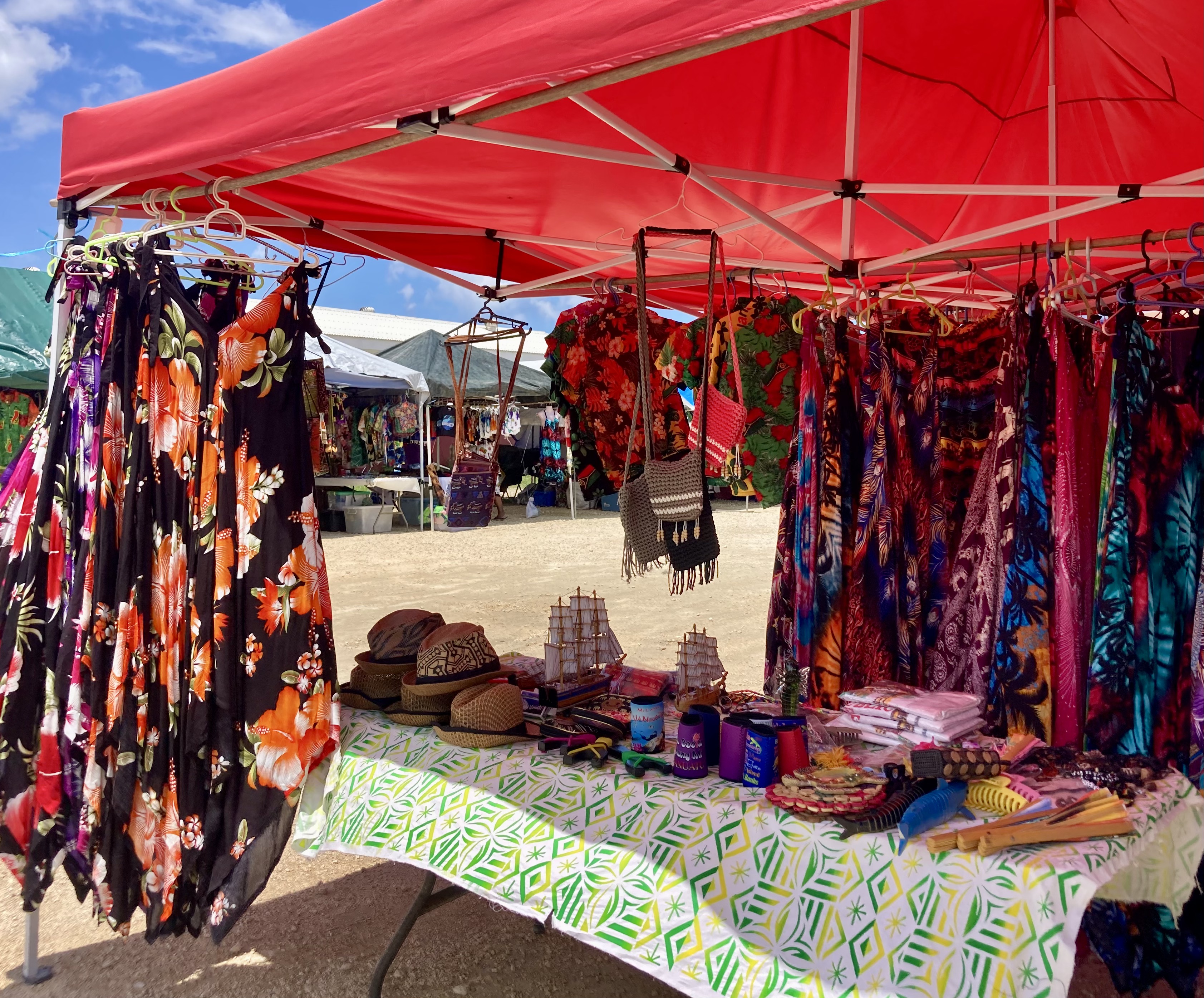
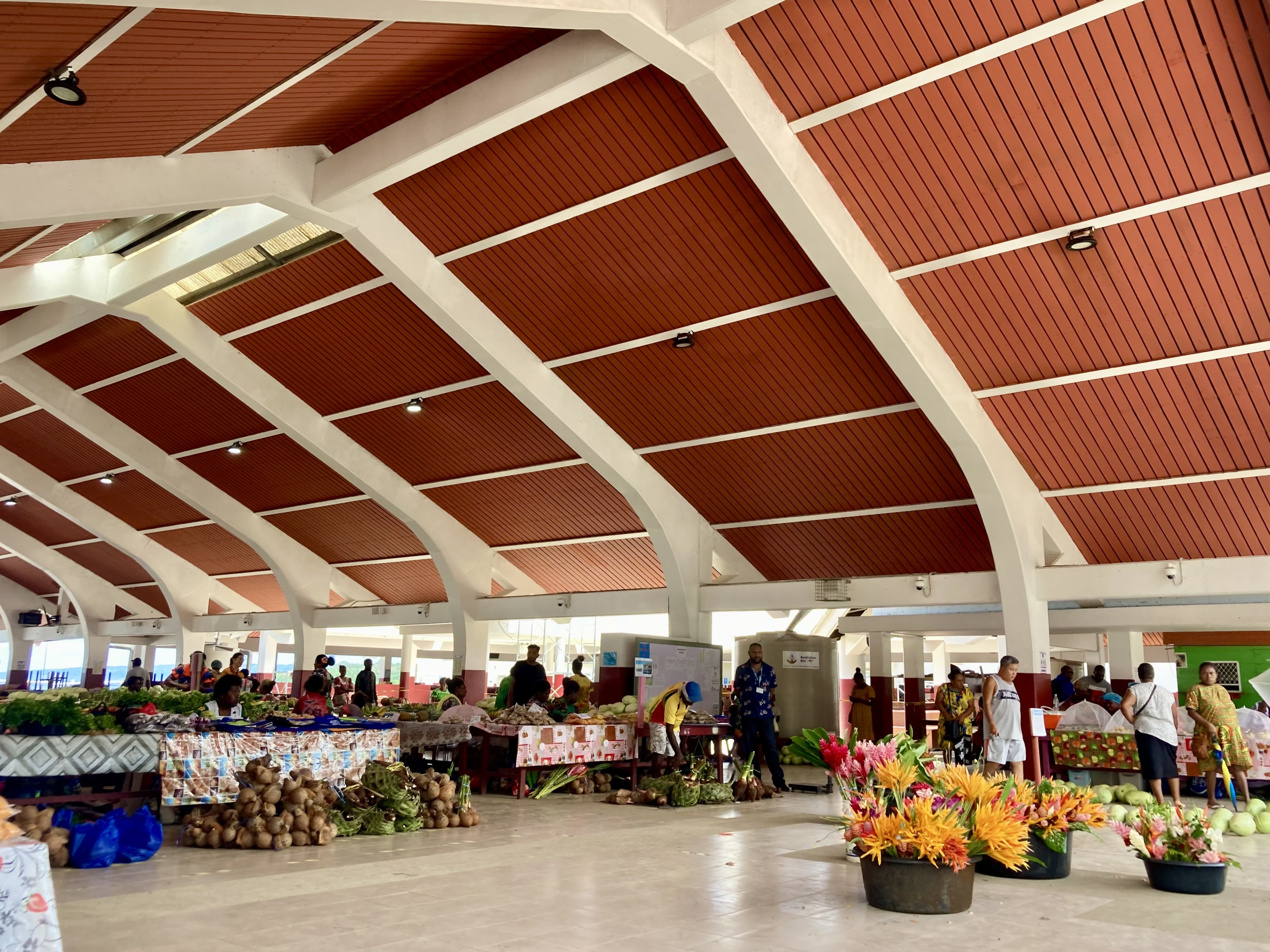
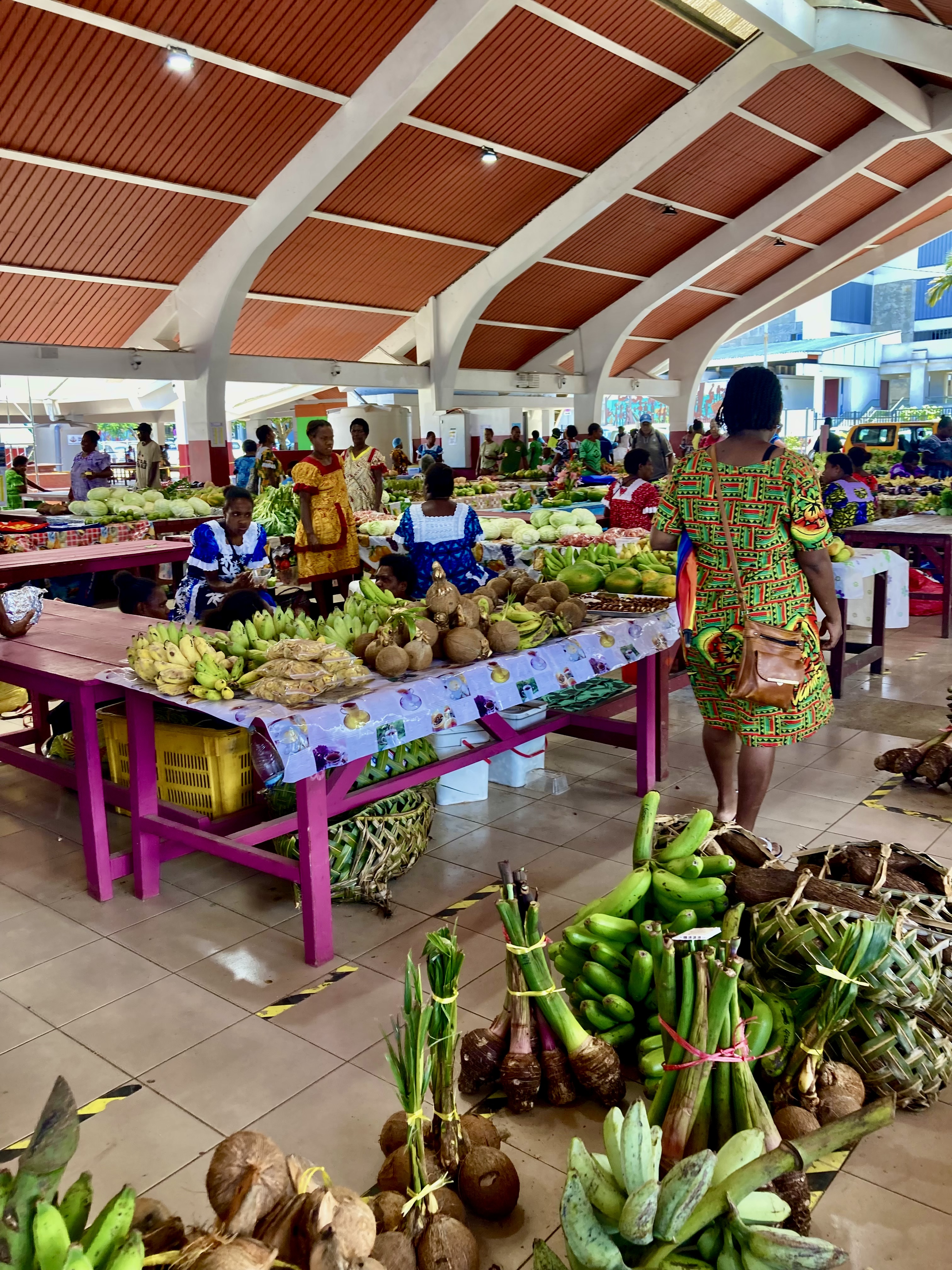
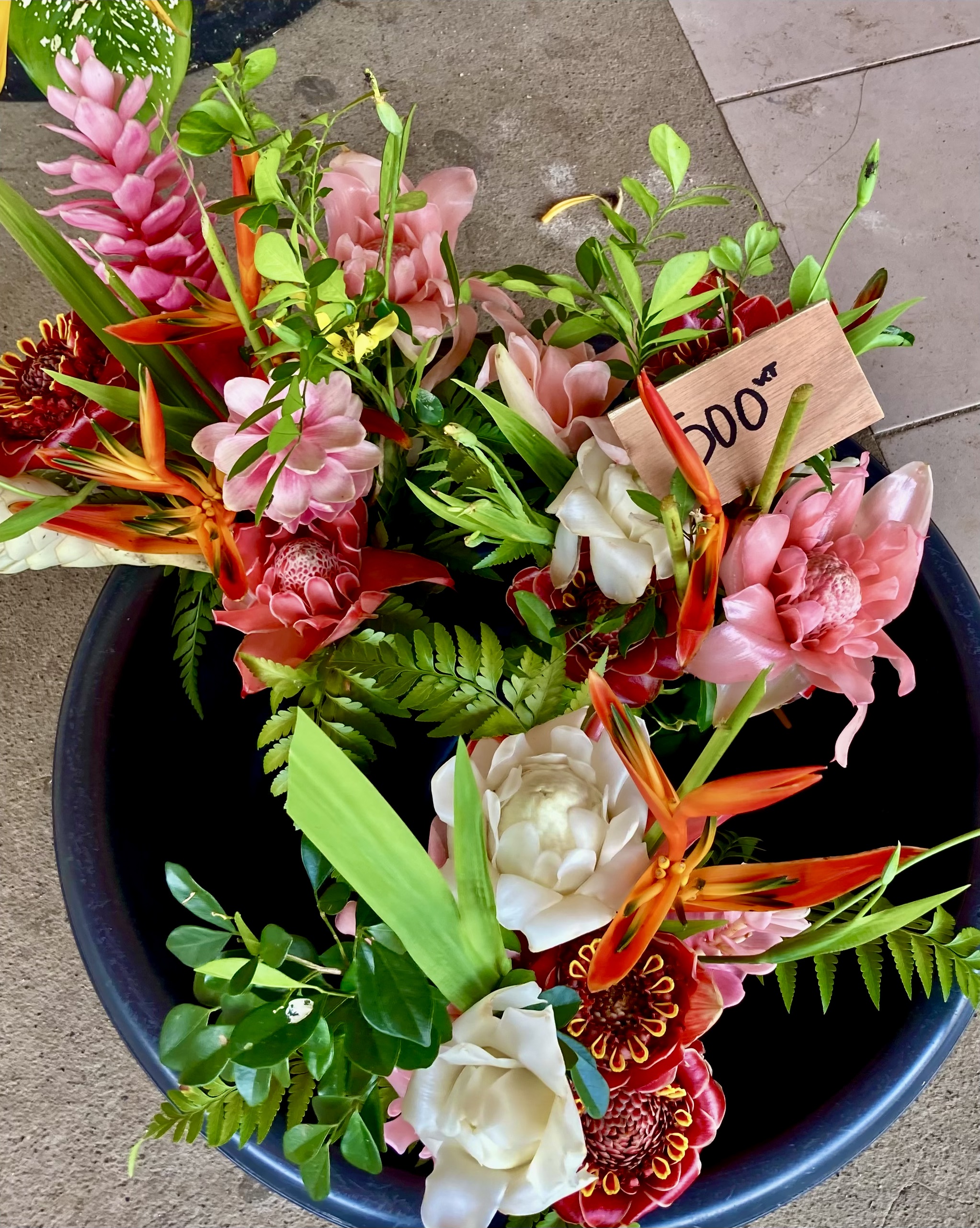
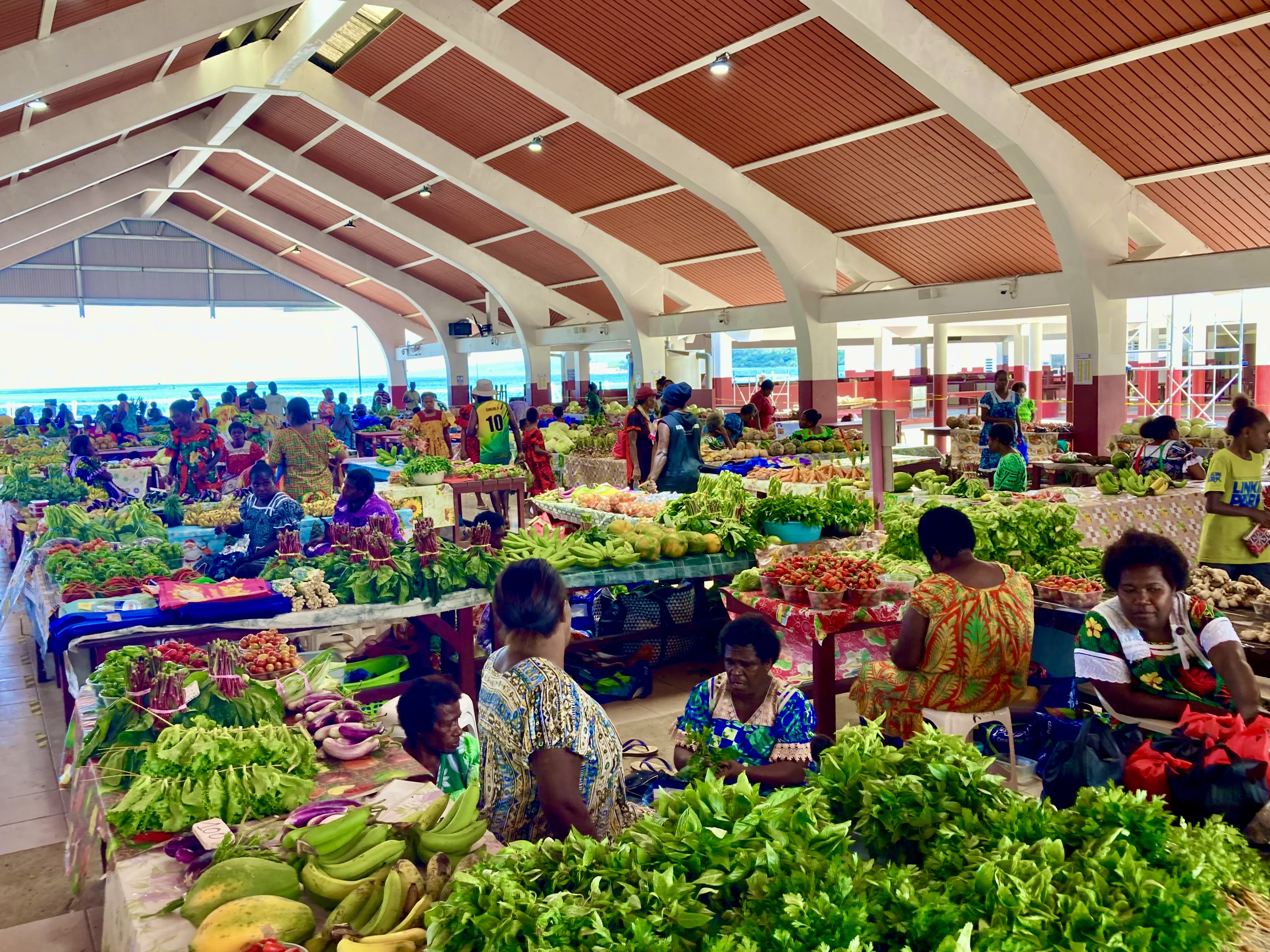
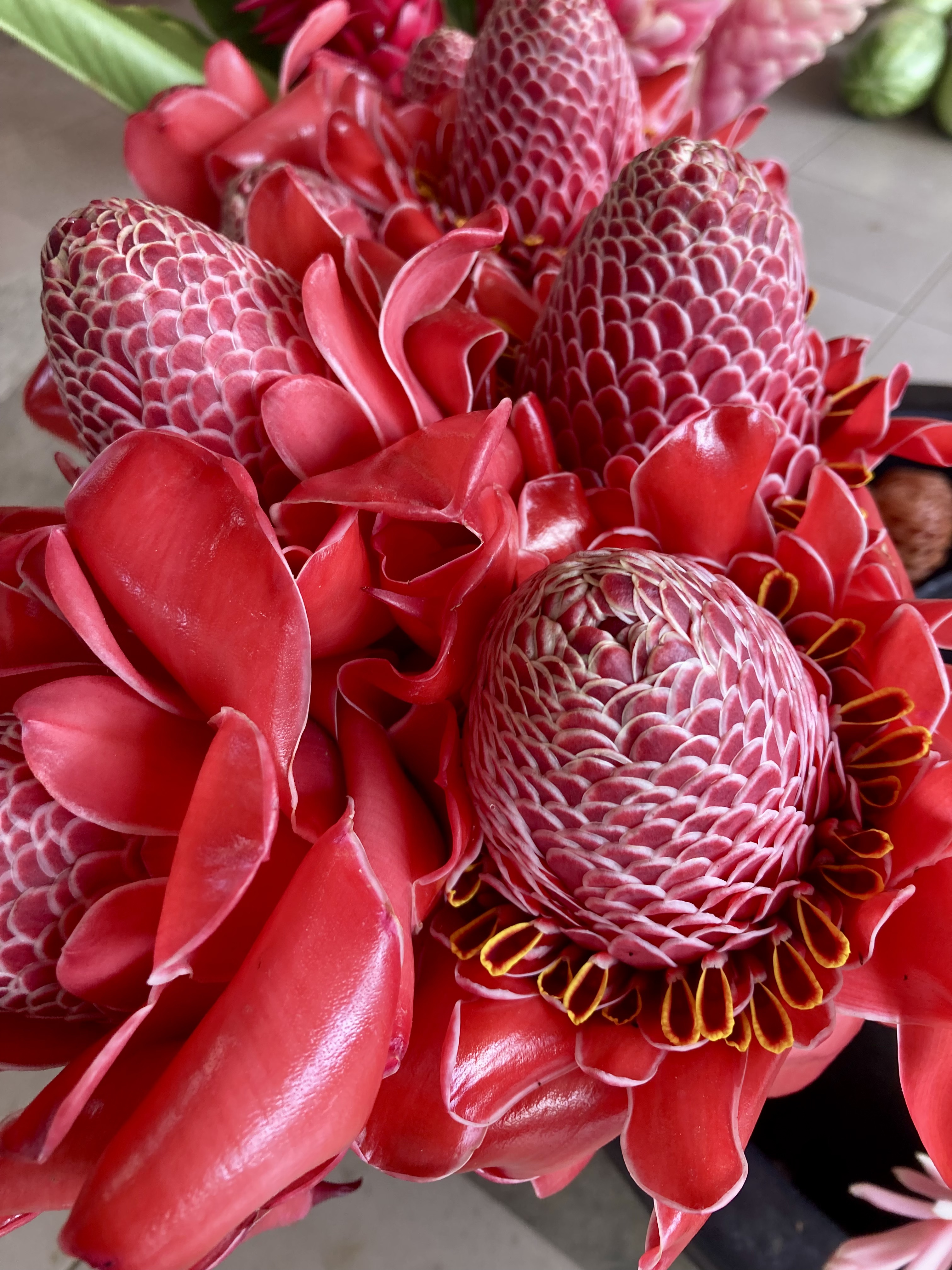
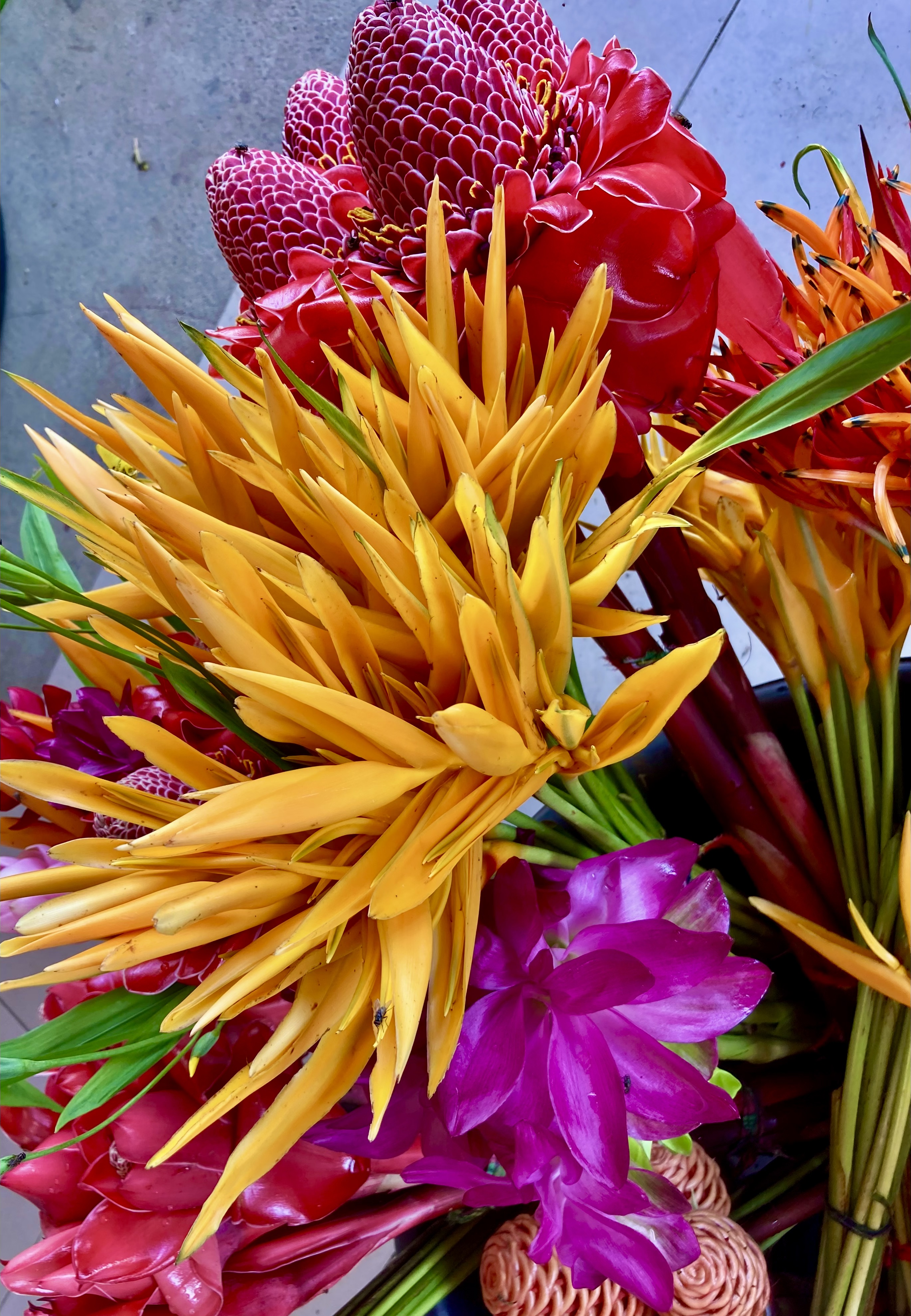
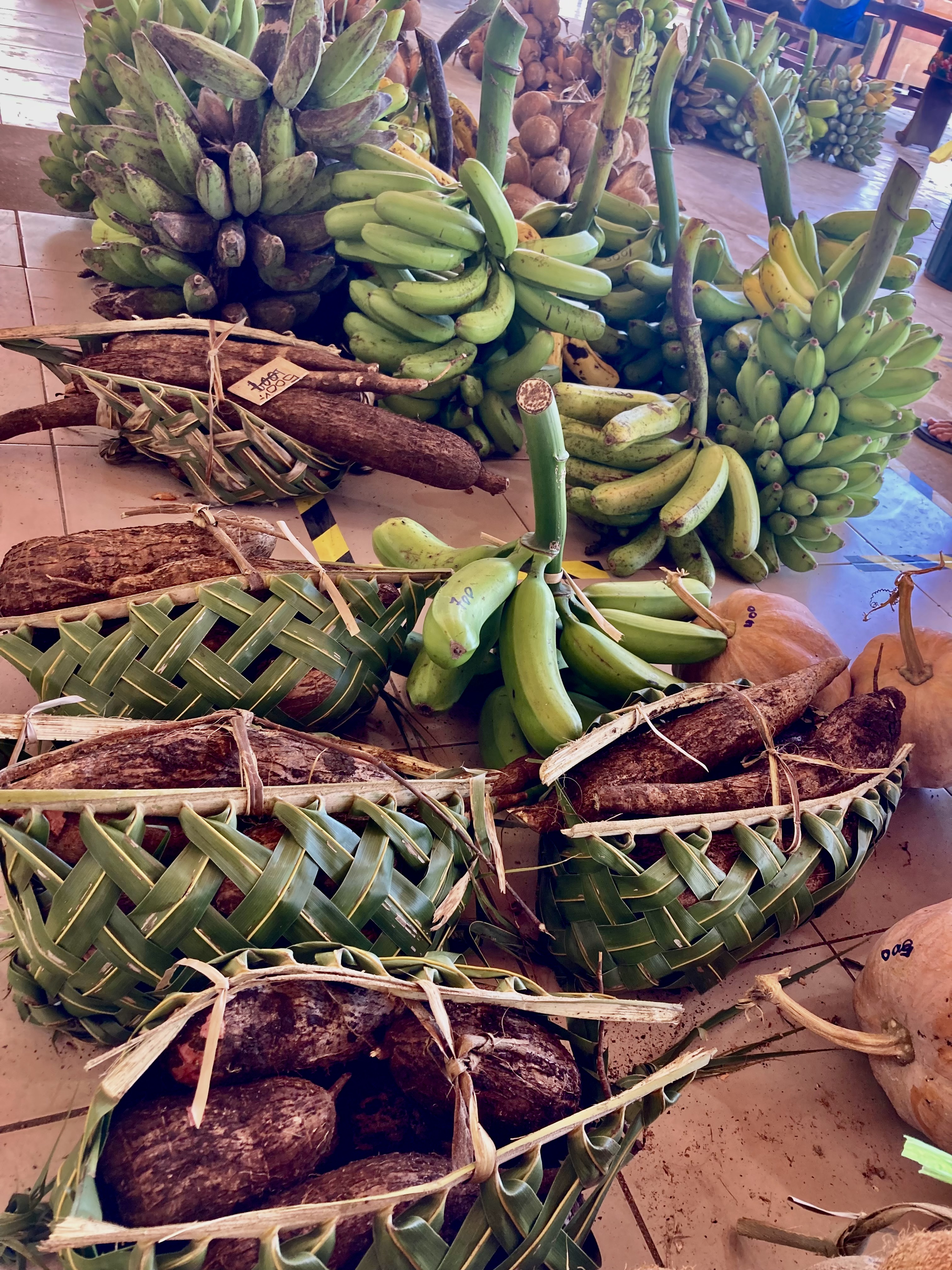
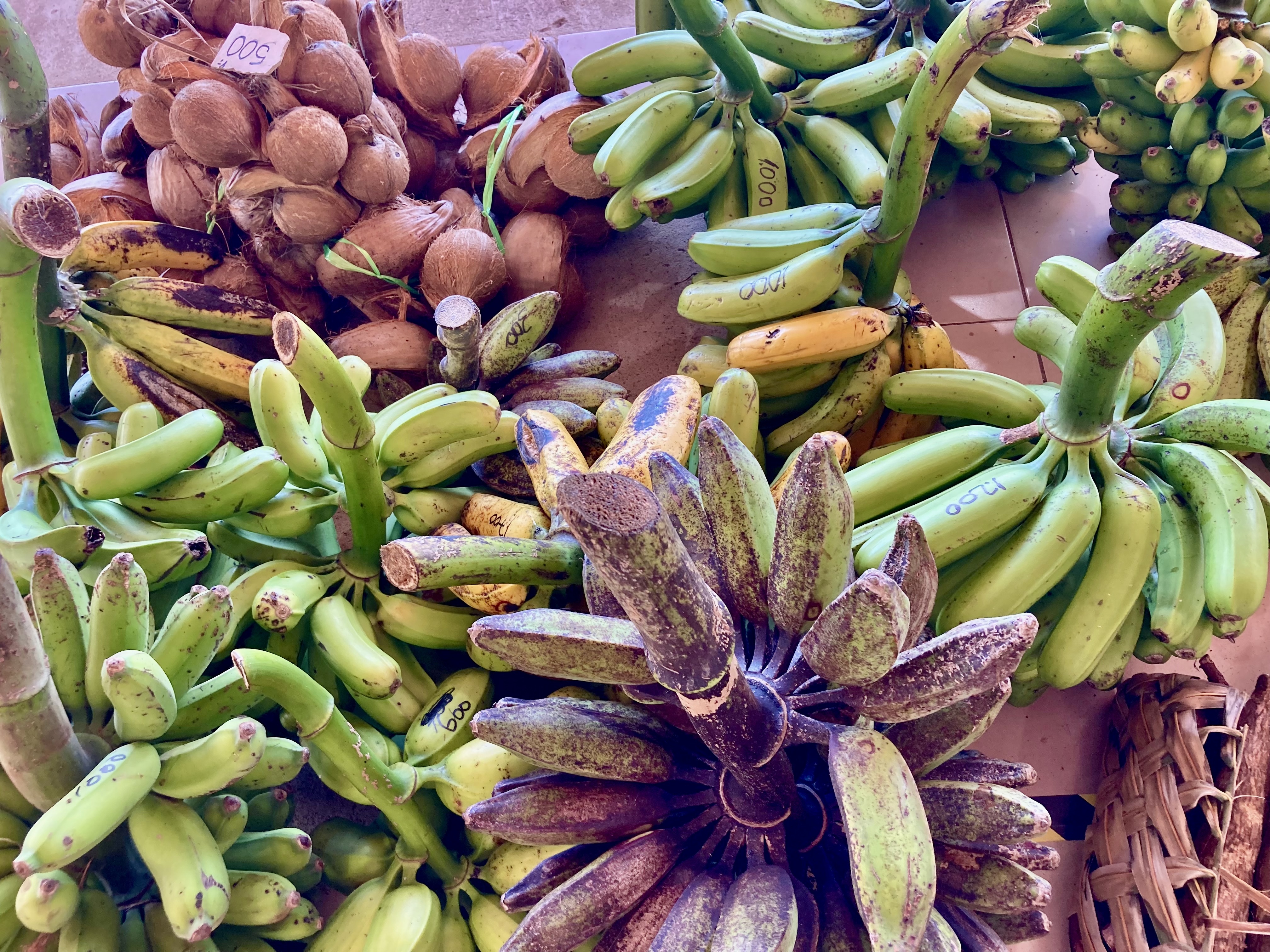
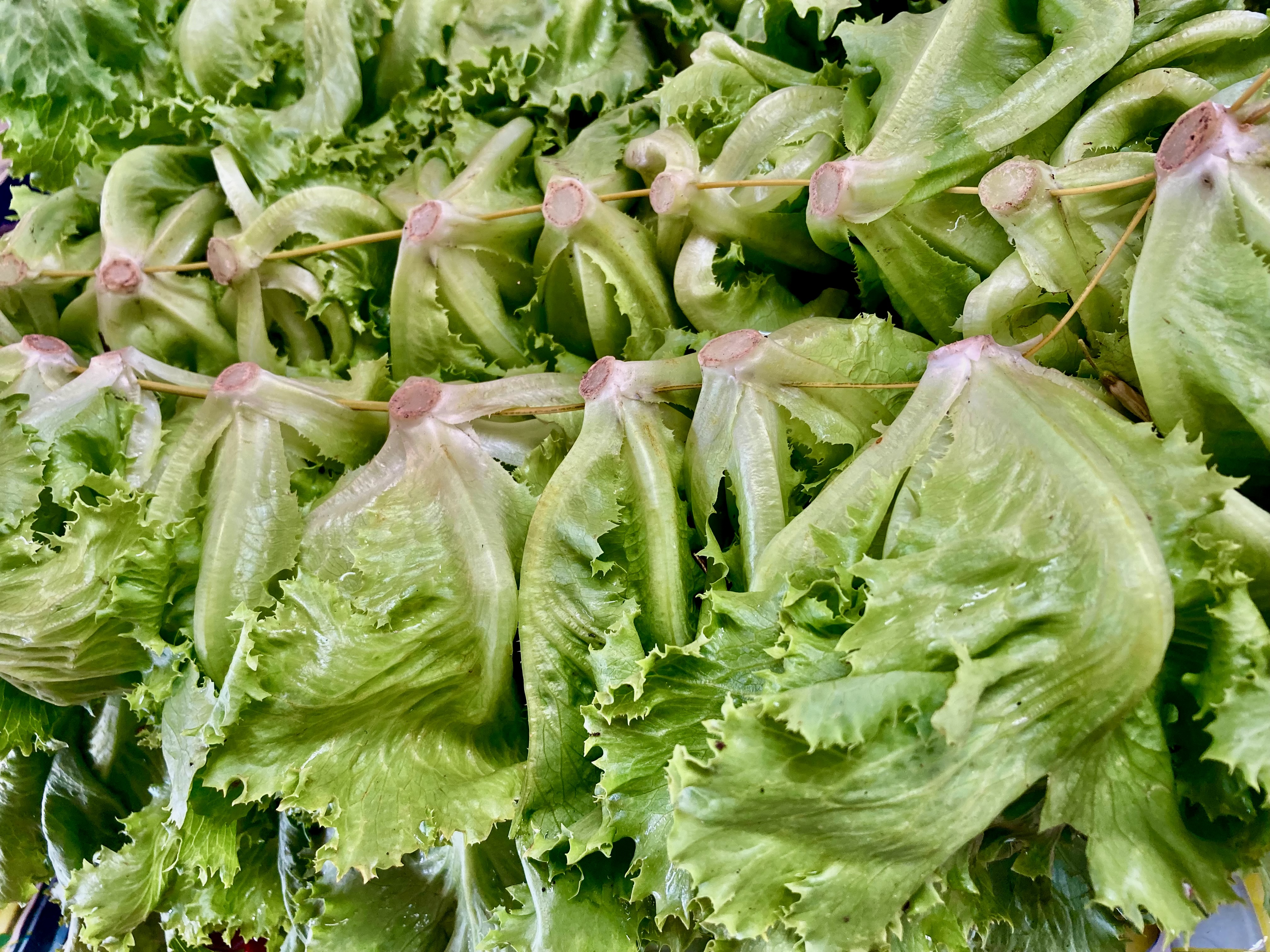
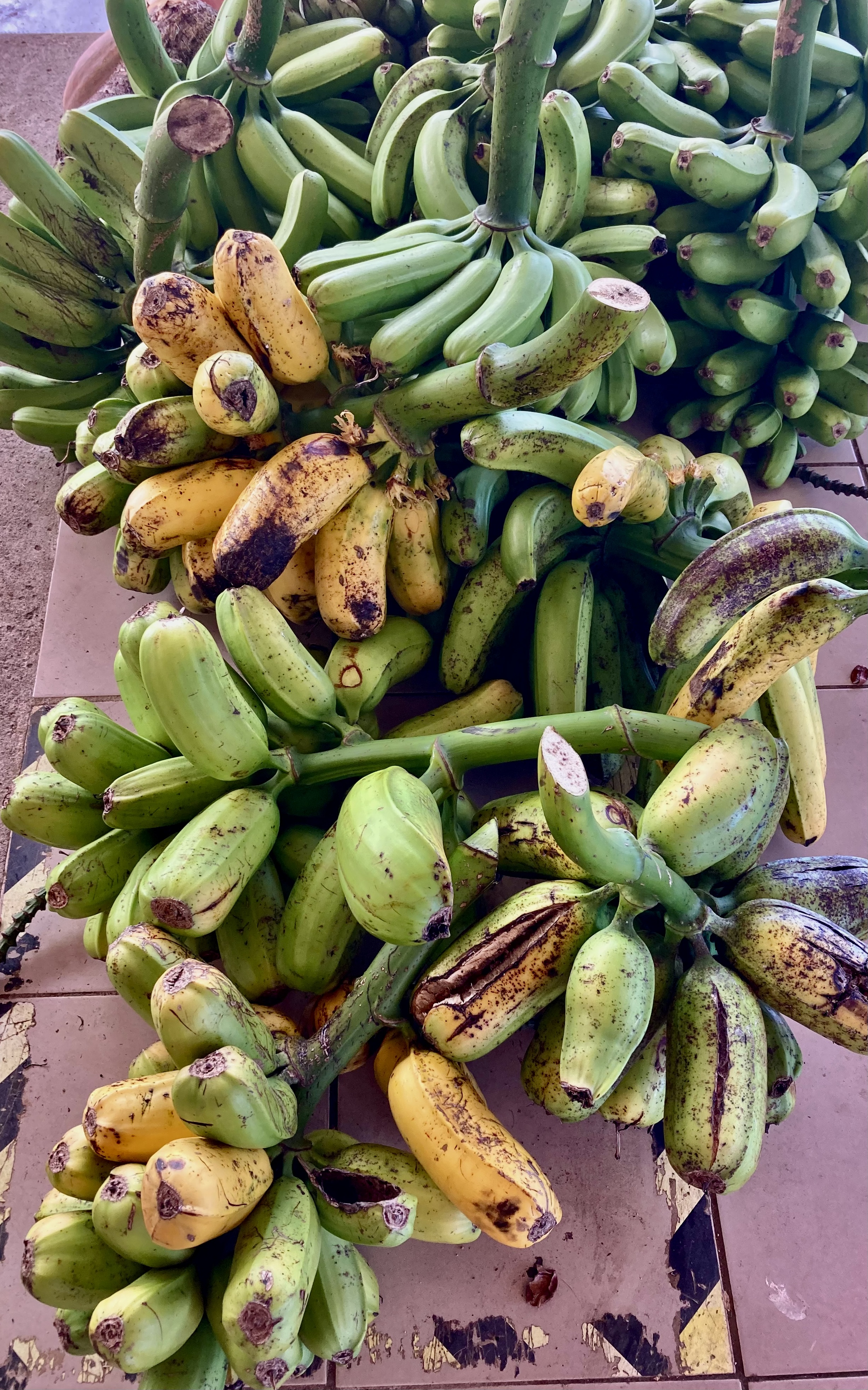
The market we visited was not only a jackpot of fruits, veggies, flowers, and produce of every kind, but also a stunning display of every color under the sun, all gathered under the towering roof of a huge permanent structure. Compared to most buildings that house local markets we had seen in other remote islands of the Pacific, to say this location was plush would be a vast understatement.
One of the pleasures of returning to civilization, especially after being at sea for nearly a week, is the ability to get off the forty seven by fourteen foot island you have been floating on and have someone else cook your meals for you. After arriving at a new location, part of the adventure is determining where the best location for that is.
Throughout the Caribbean and Central America – Honduras, Guatemala, Mexico, Panama – the cost of a beer was often a good preliminary indicator. If an establishment offered beers for a buck, they had our attention. However, once we crossed the Pacific, things changed quickly. When it comes to remote islands in the middle of the ocean, hundreds or even thousands of miles away from large distribution hubs and networks, apparently it costs as much or more to deliver the beer as the beer itself costs. Even in grocery stores, two dollar beers are far and few between. So the buck a beer threshold for restaurants and bars is immediately out the window.
Another good indicator in choosing a place to eat is whether the tables in the restaurant are actually occupied. An open establishment full of nothing but empty tables can speak volumes as to what other people already know. If nobody is eating there, it may be for a very good reason. Even those full of tourists may have merely a stellar advertising presence while still serving shit food. The real test is whether or not the locales are eating there.
Even so, there are no sure bets…as we would be reminded later during our stay in Vanuatu. The world is full of many more generalities than absolutes. All part of the adventure.
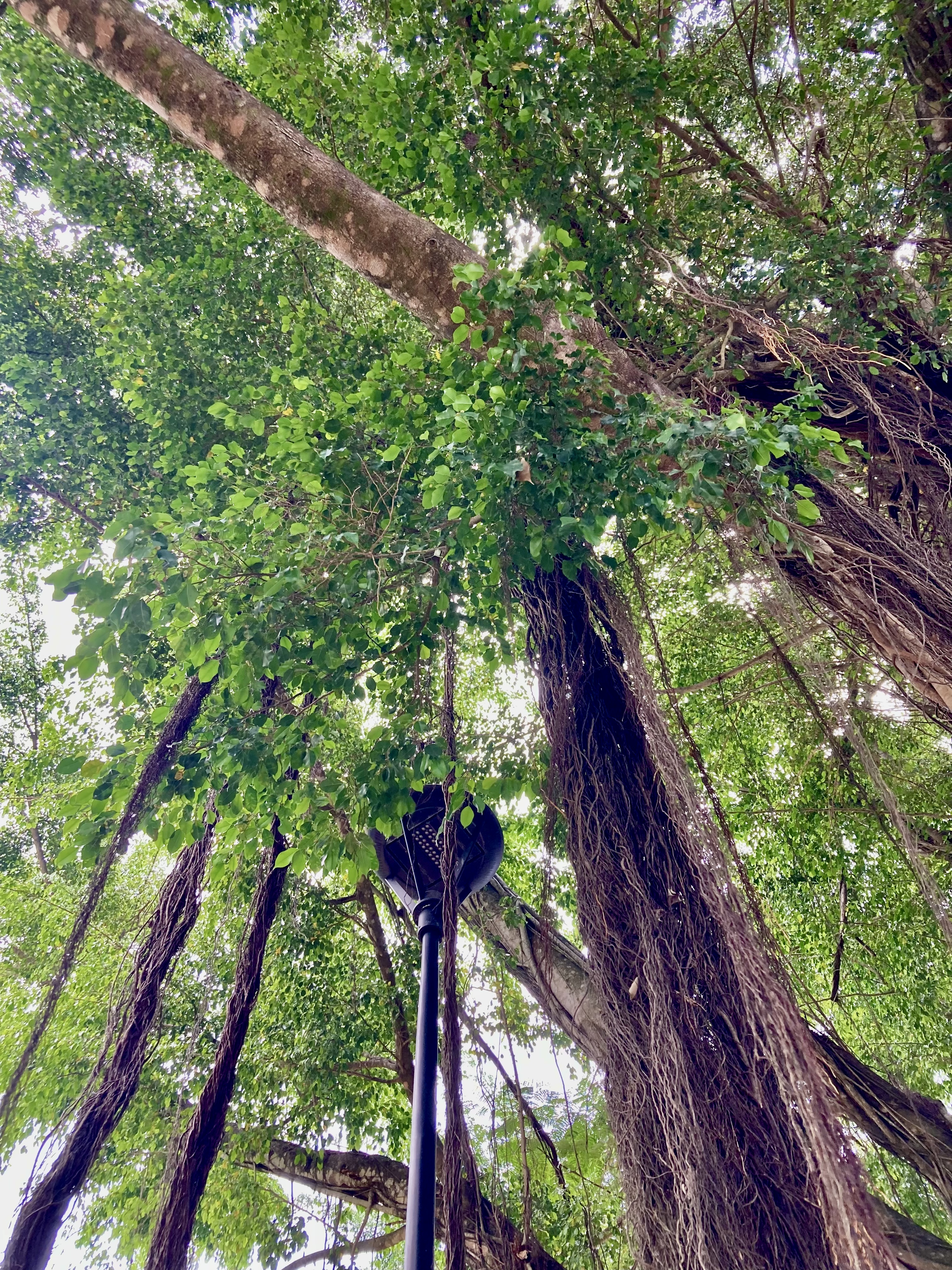
In Port Vila, we found ourselves at a place called The Beach Bar. Not a very unique name, but it appeared to be popular with the locales. With rustic tables and chairs scattered under numerous funky trees overlooking the sandy beach and Mele Bay, where Exit was moored, the outdoor restaurant/bar had a great vibe. Energetic music, a friendly bartender, excellent pizza and fries, as well as cold local Tusker Premium beers (three bucks each), all combined to provide a perfect atmosphere.
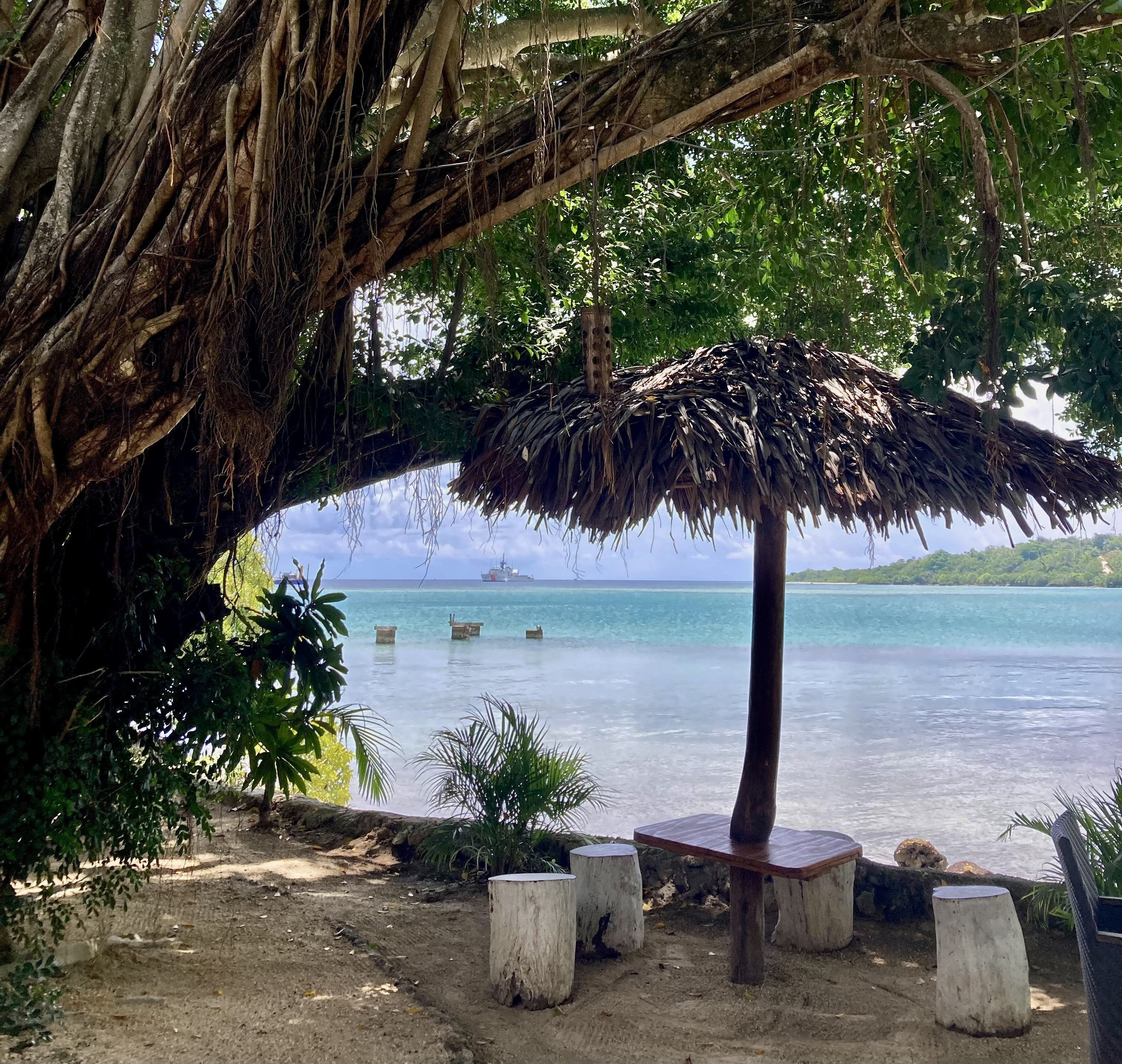
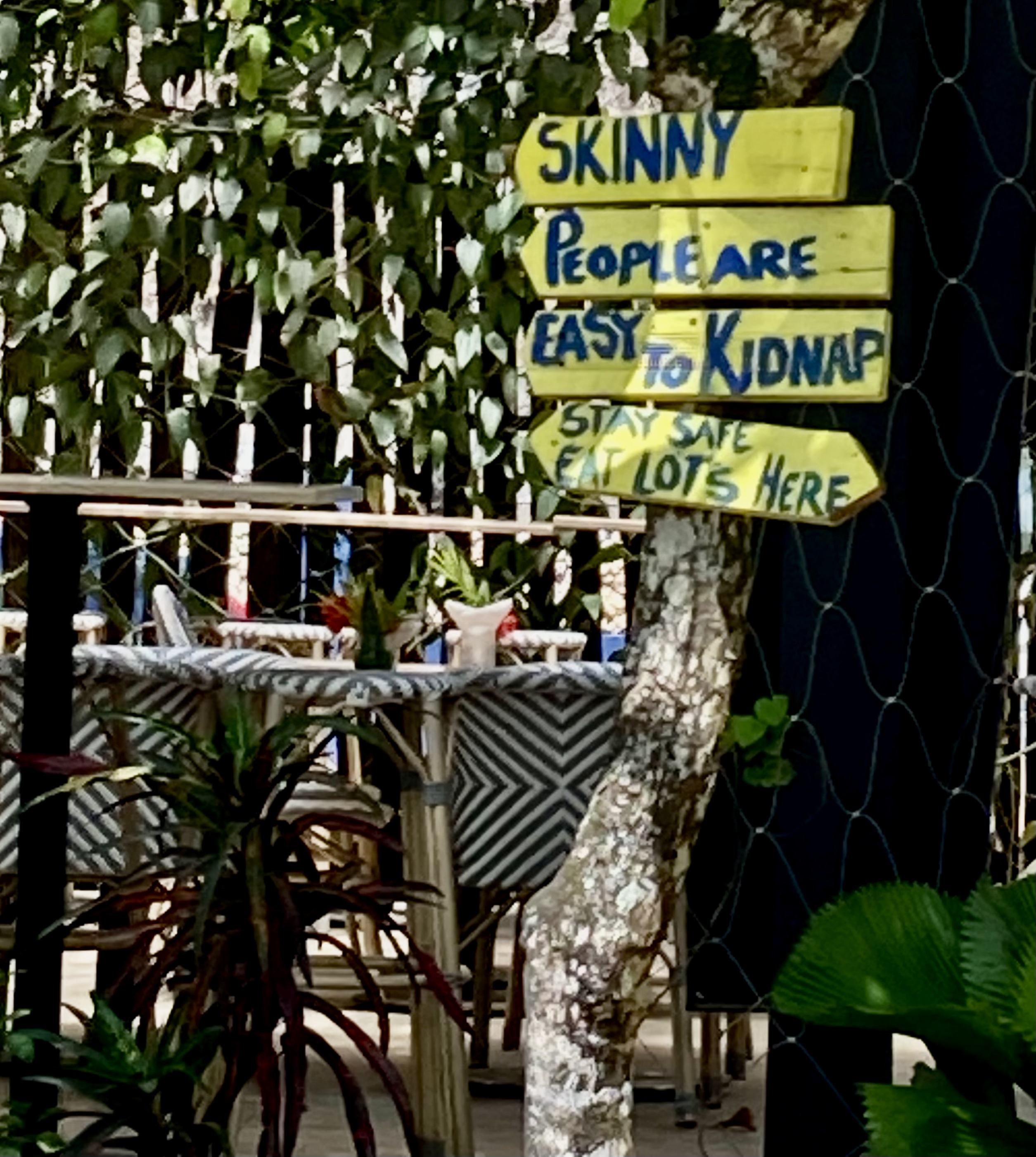
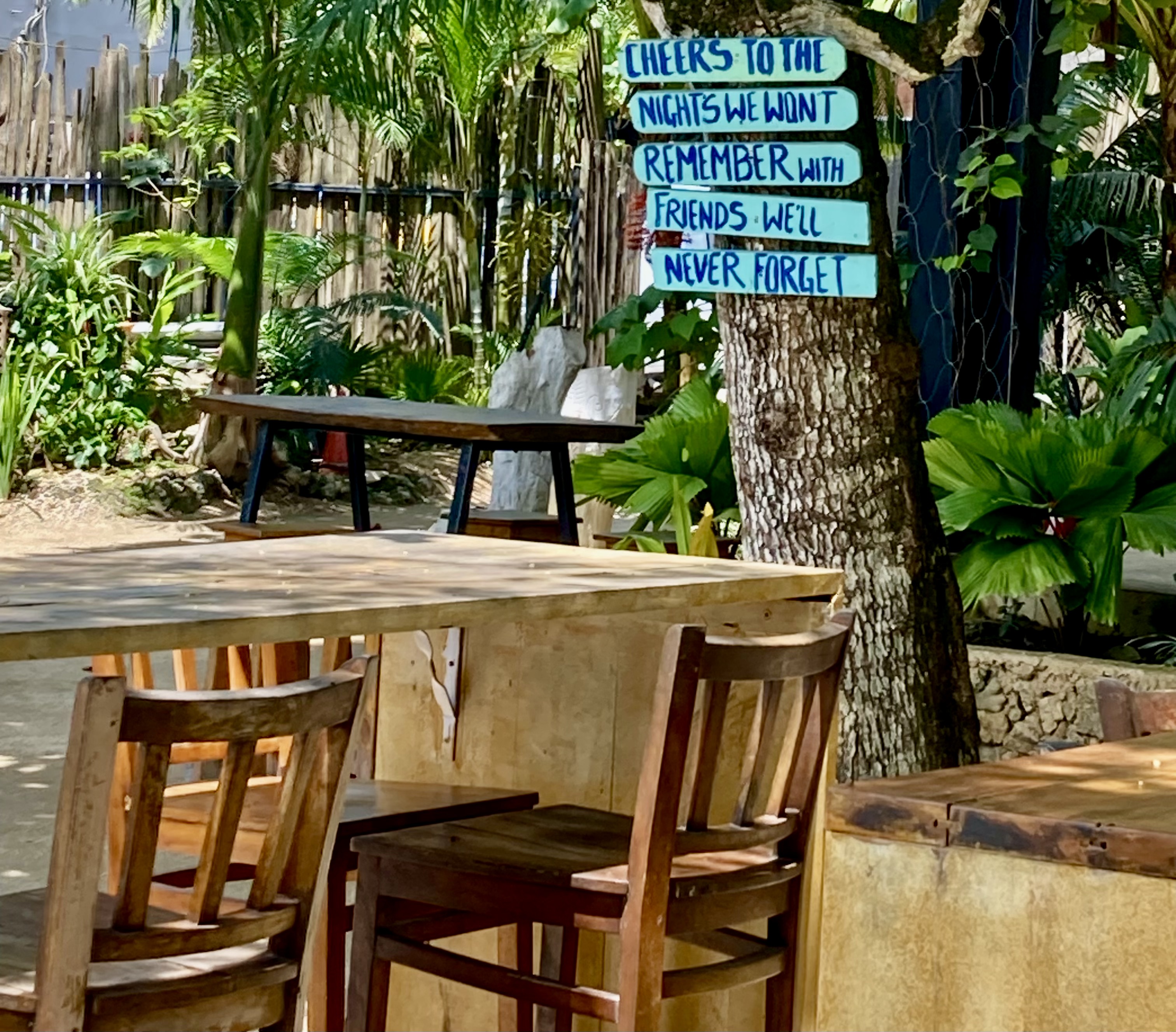
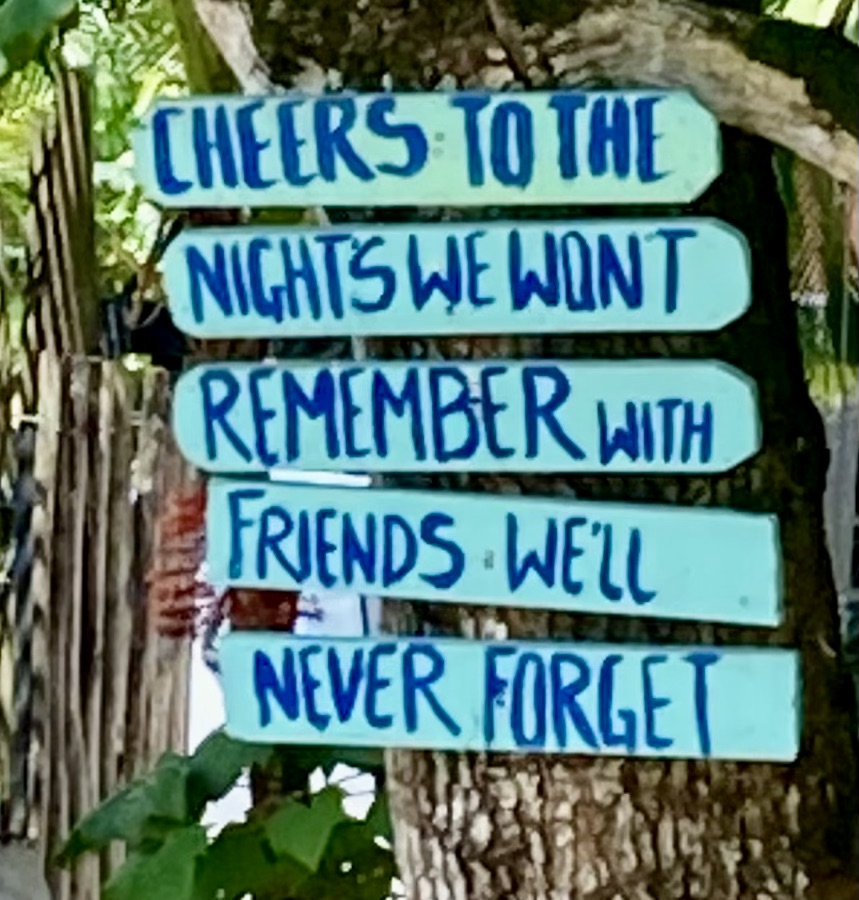
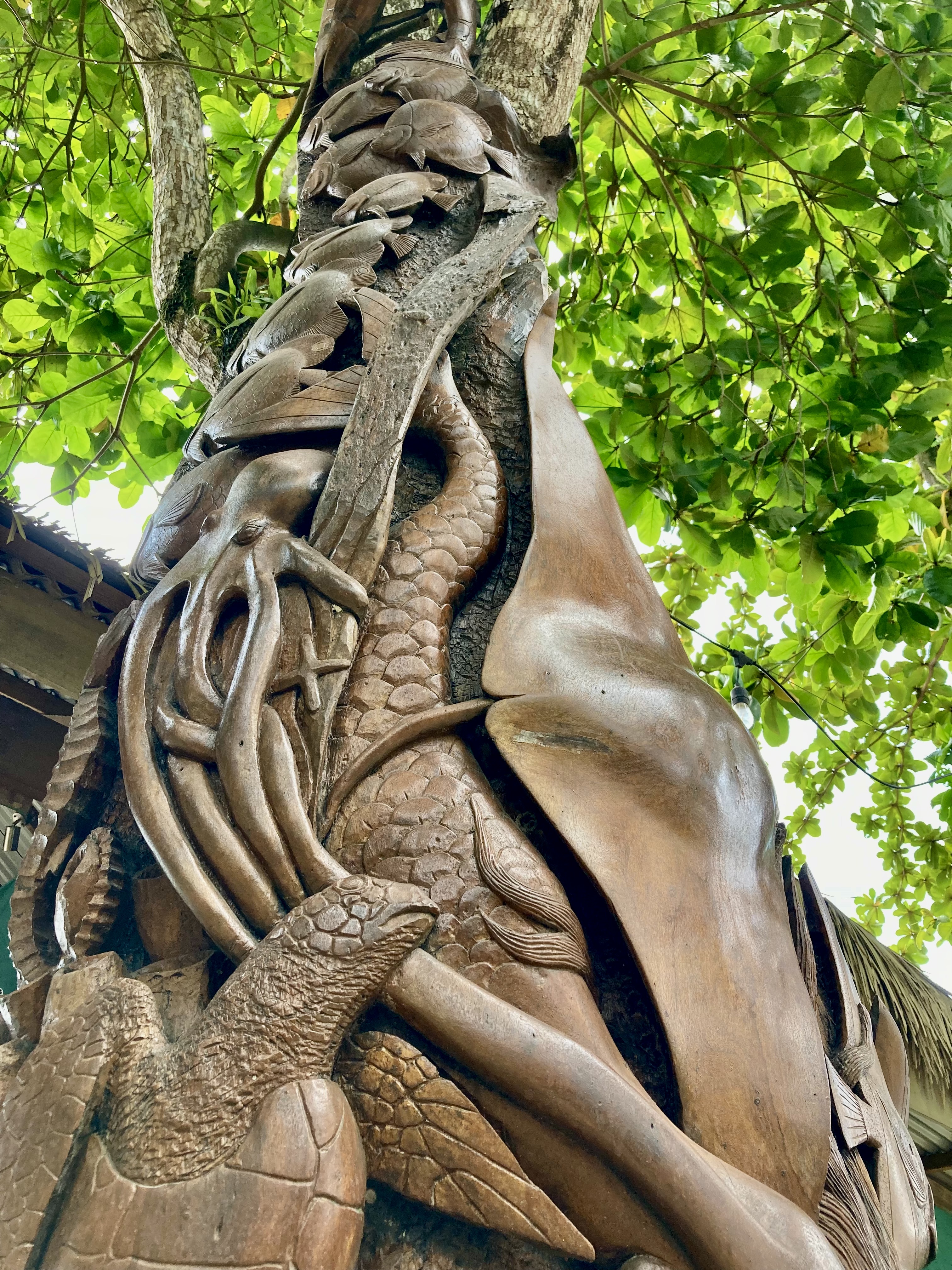
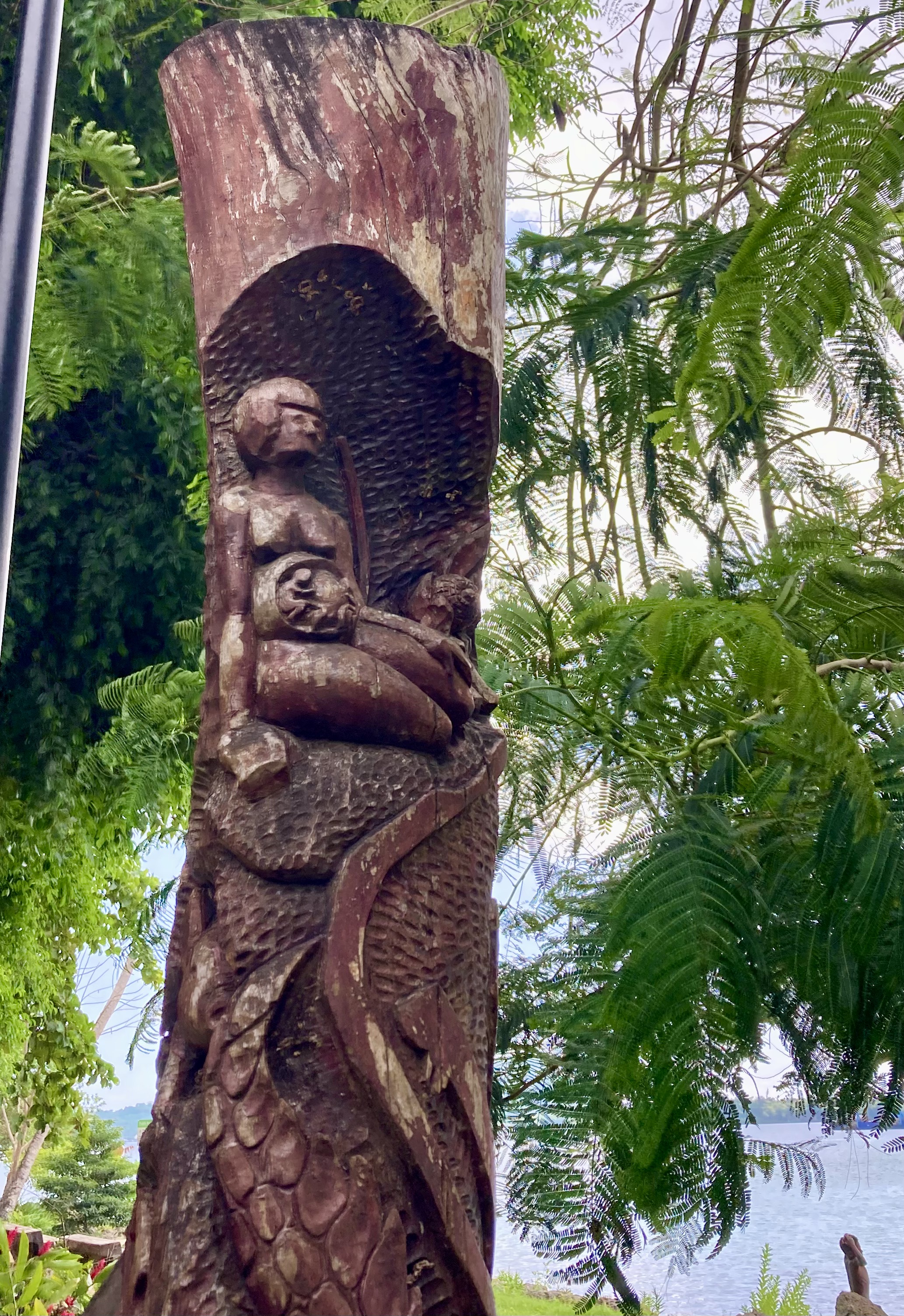
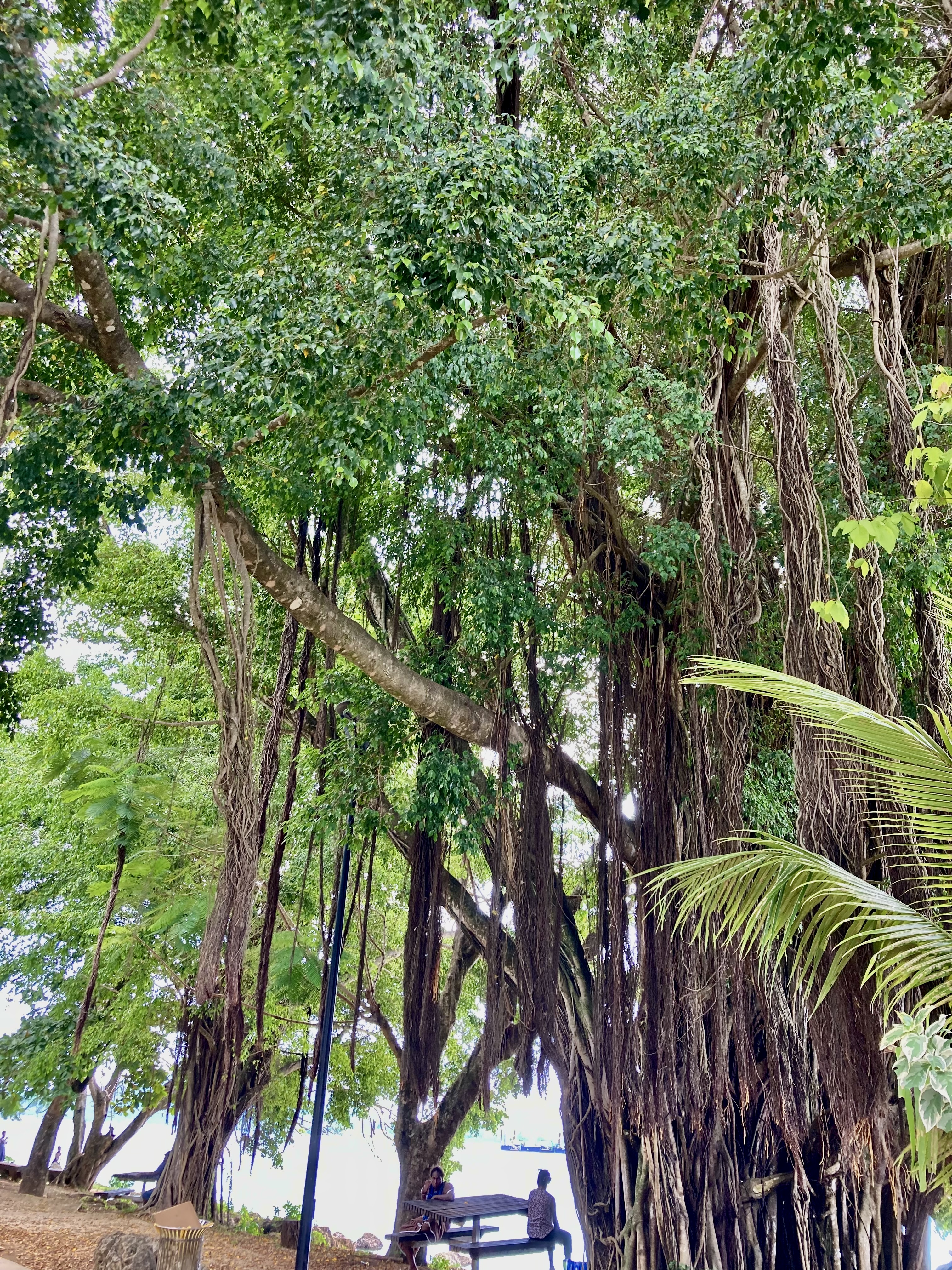
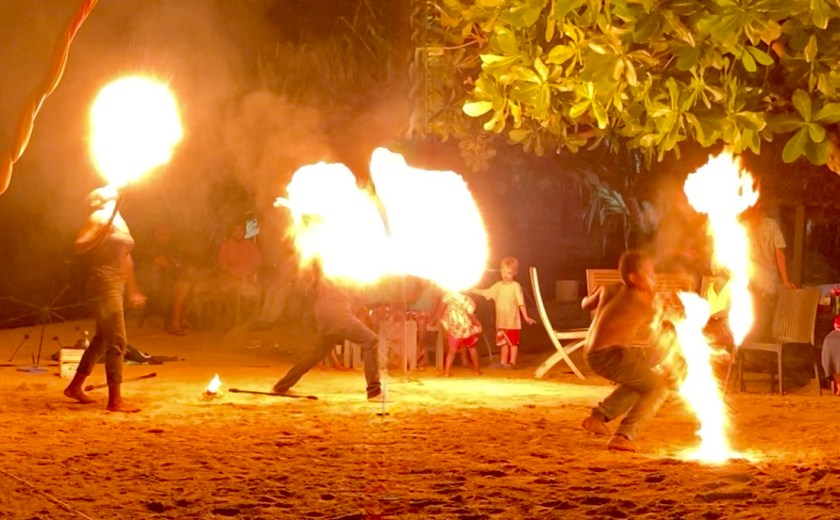
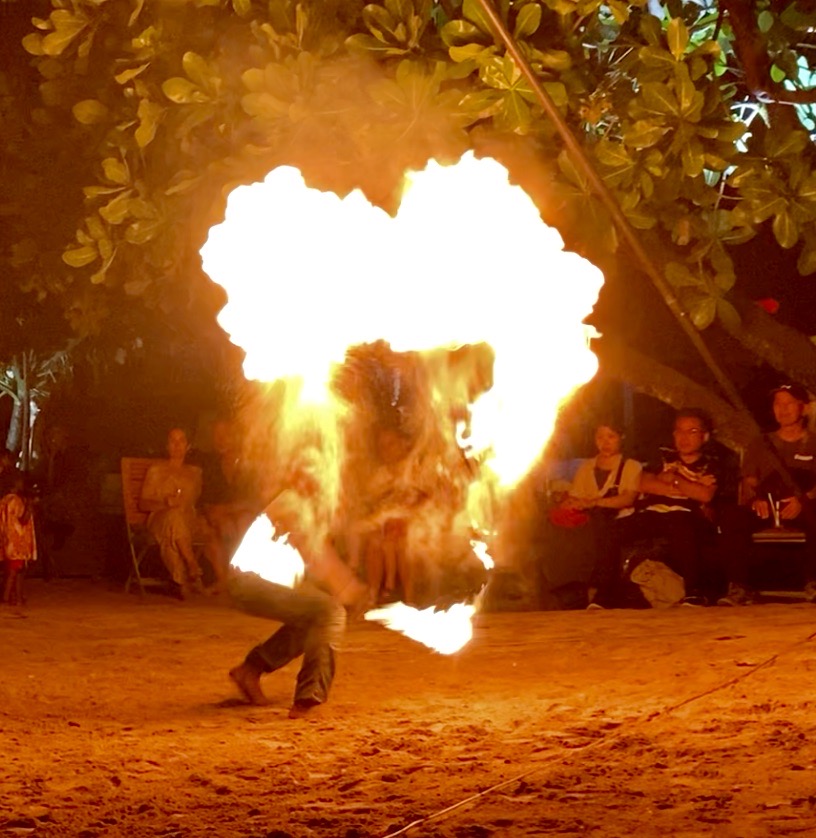
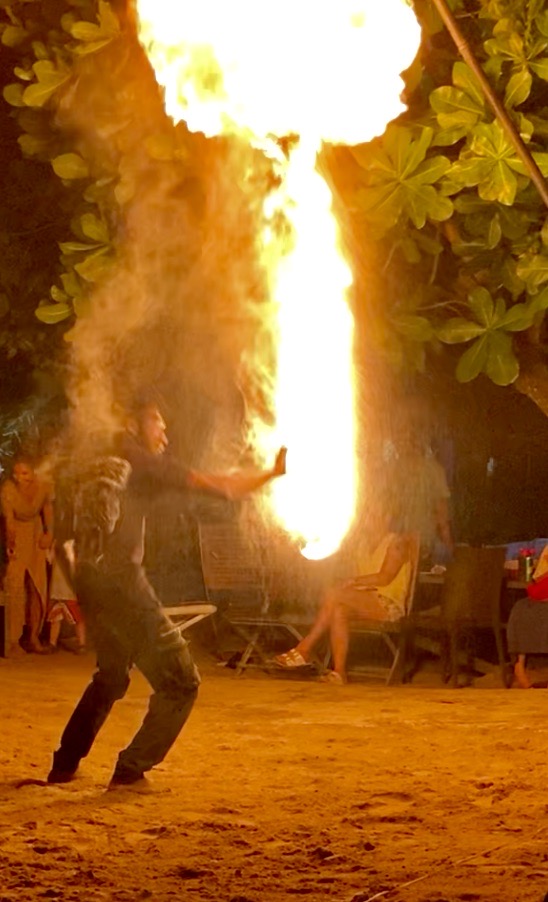
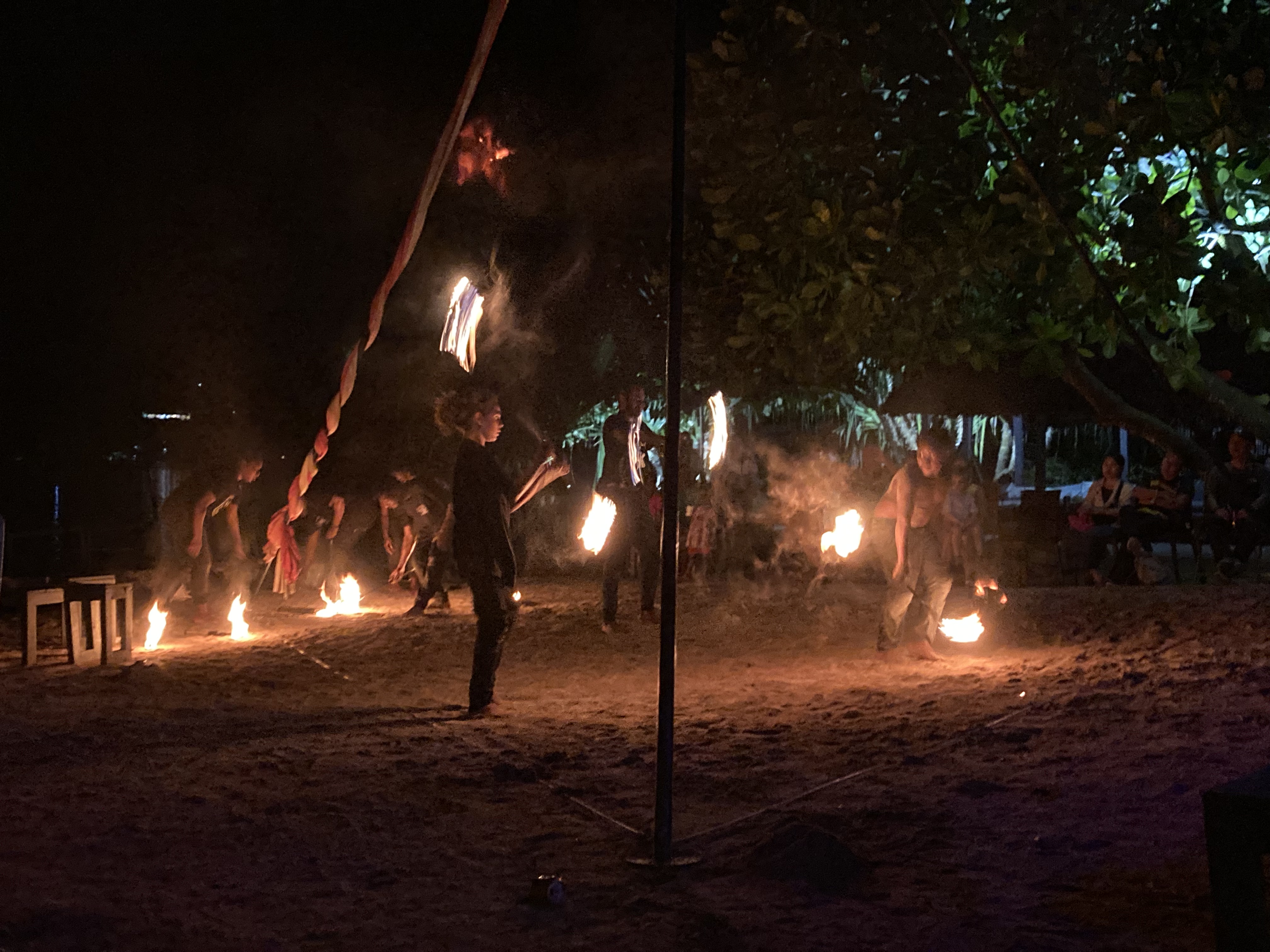
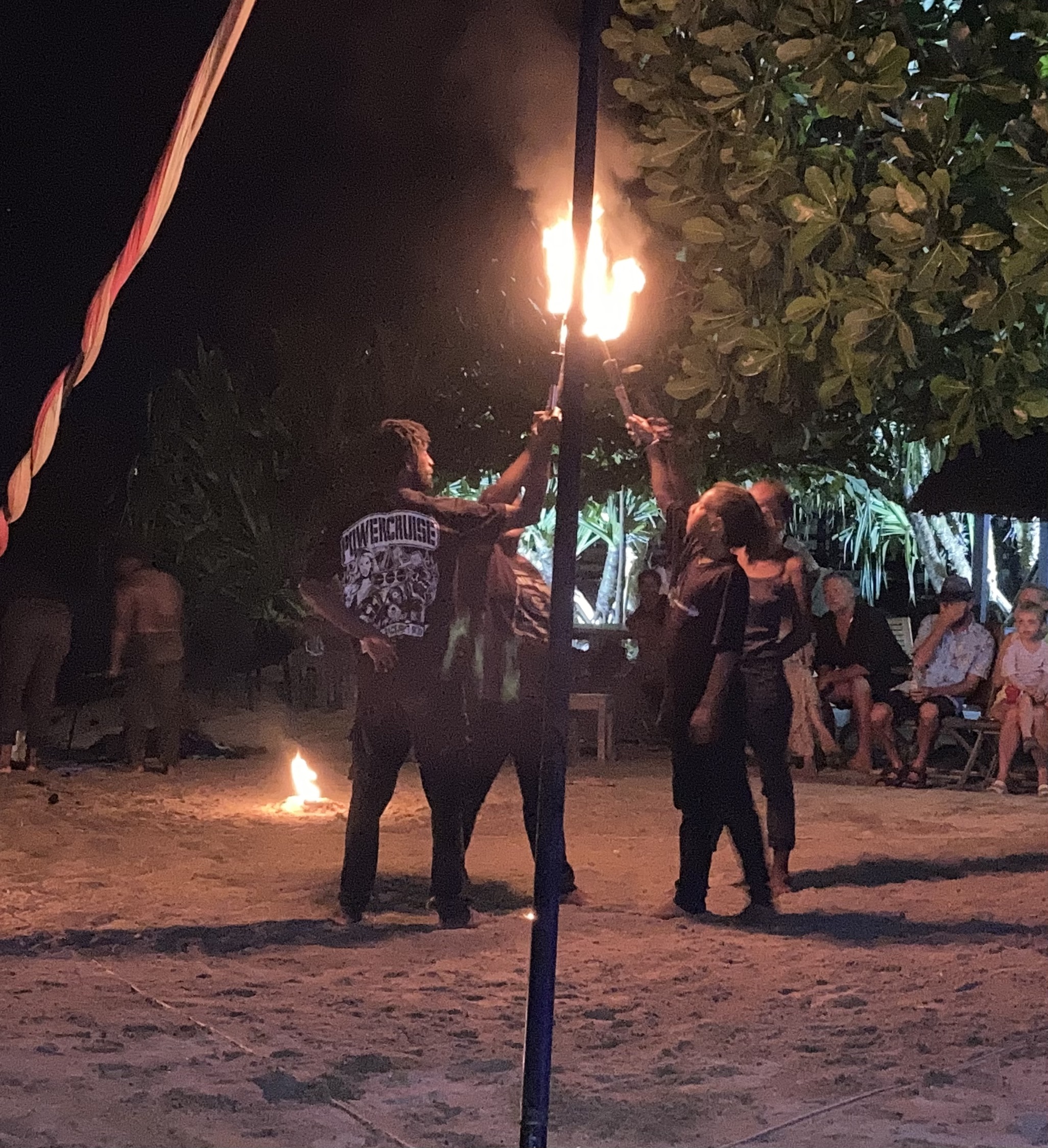
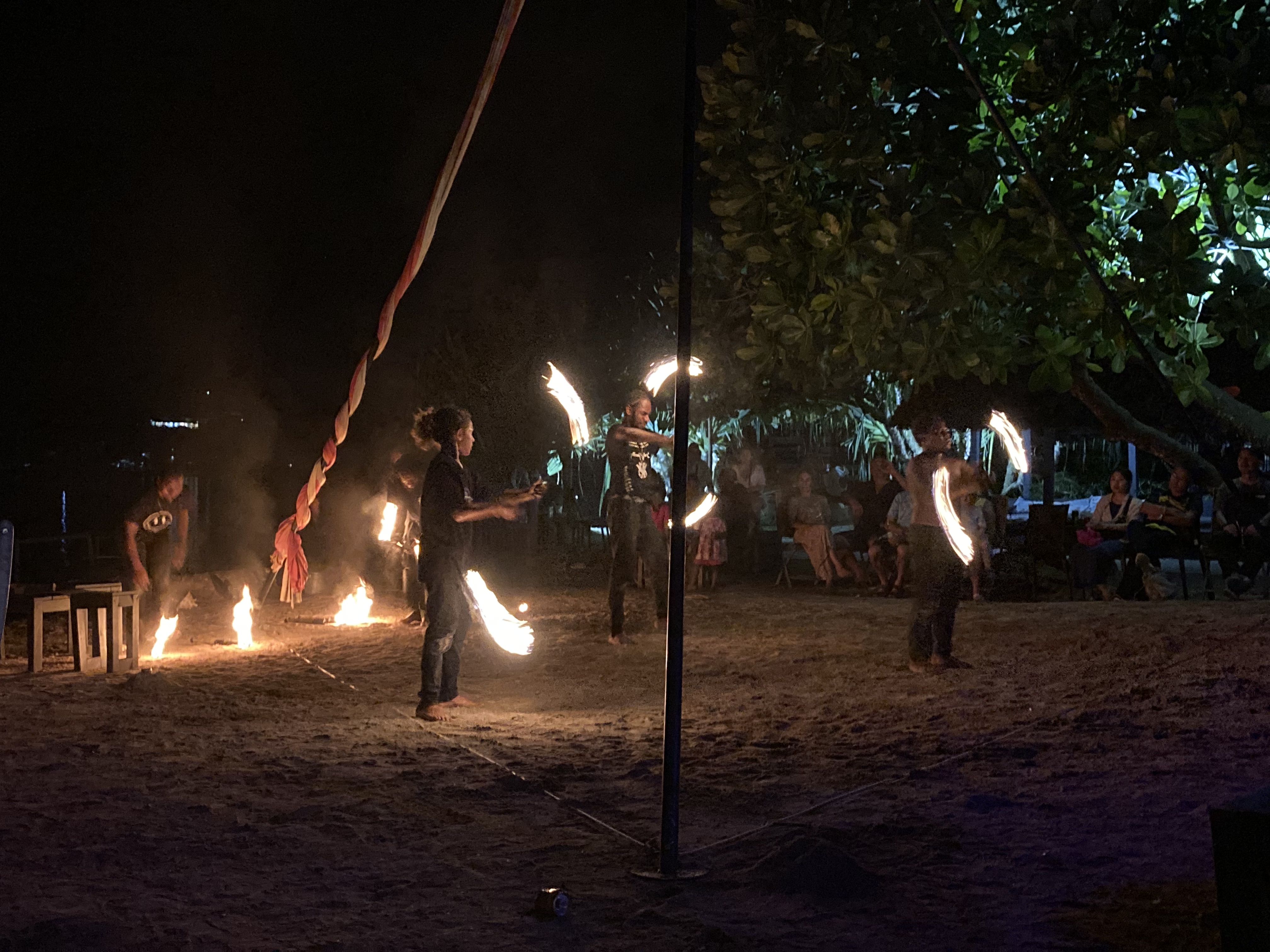
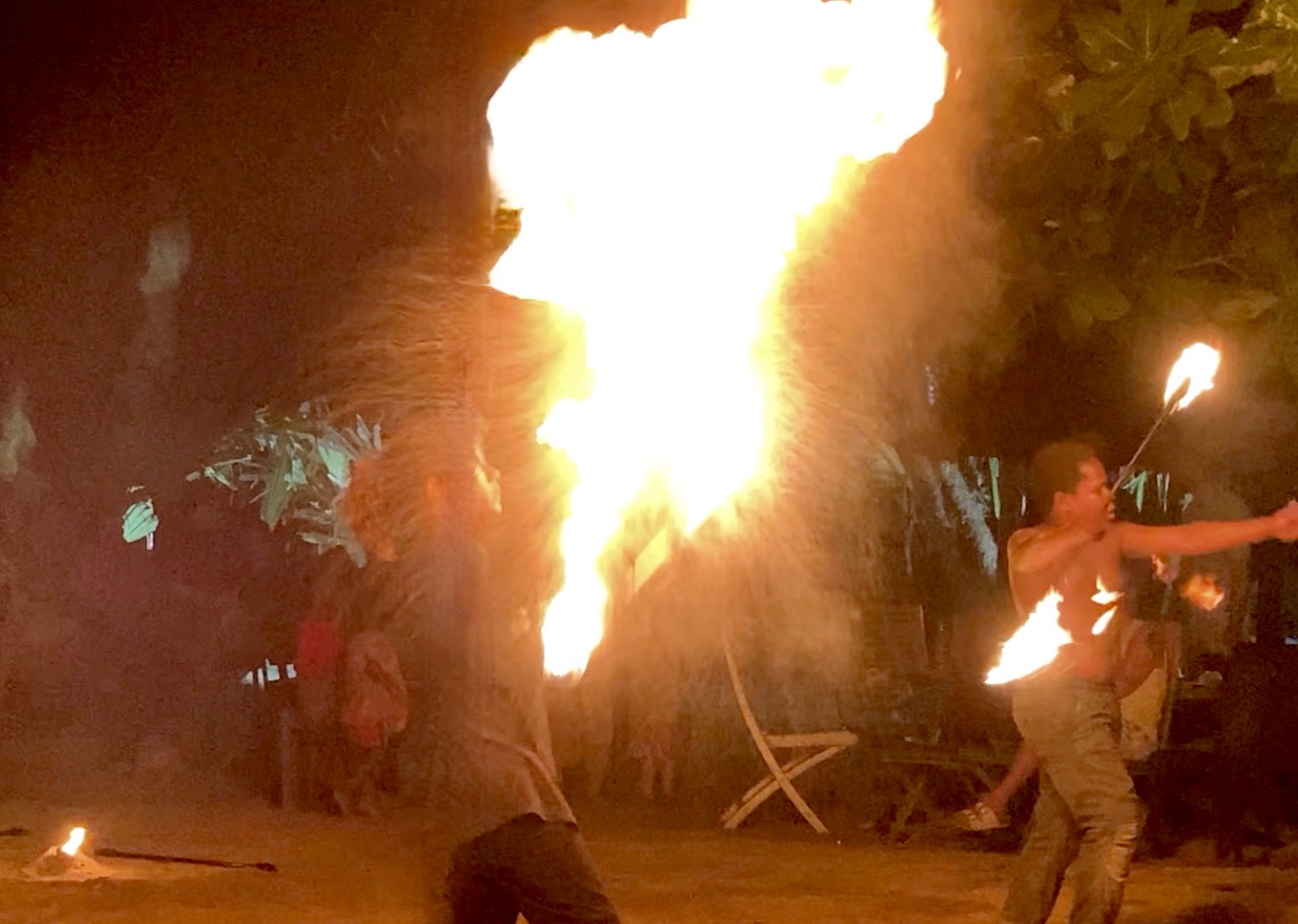
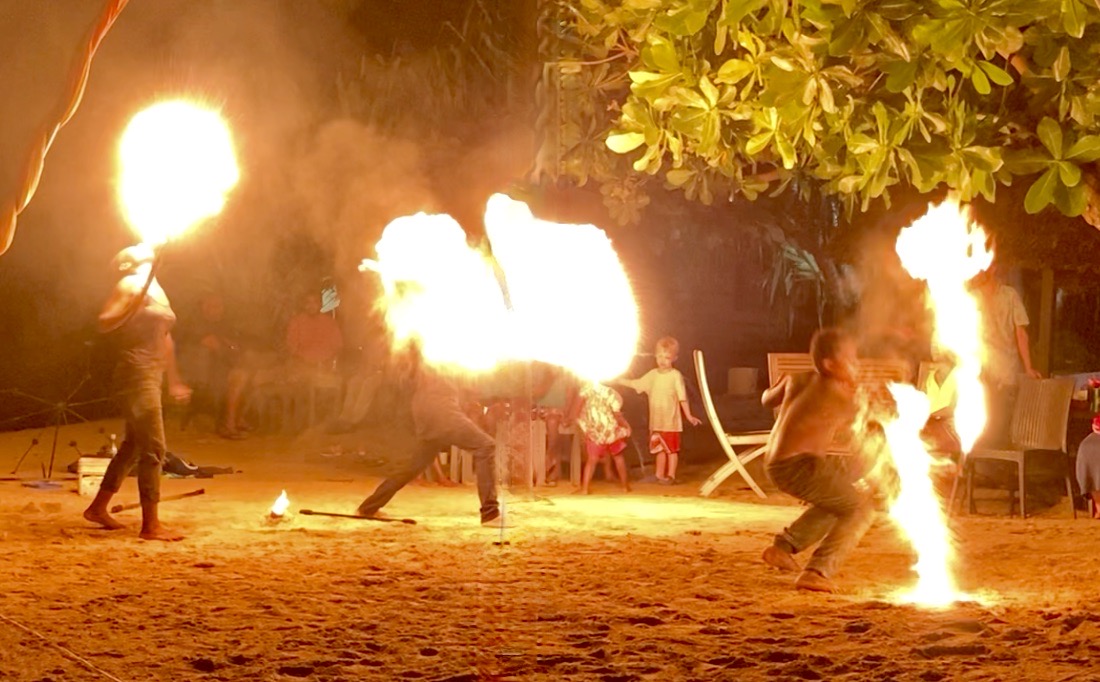
We enjoyed it so much that we returned a second time, and were treated to a traditional fire poi show. Both exciting and memorable.
On the other hand, less than a month later in Luganville, we would be reminded that local popularity does not always dictate success when we tried a place called The Sand Bar (a more clever name than The Beach Bar in Port Vila). Reviews indicated it had phenomenal steaks and pizzas. When we arrived, it was full of locales…a good sign. However, when we asked for a menu, we were informed that it was buffet pizza night. Either you could pay for an eight slices and help yourself to any of the pizzas on the menu, all lined up at a buffet table, or buy a whole pizza. No steak available tonight. We had walked quite a ways to get to The Sand Bar, and weren’t too keen on walking back on an empty stomach, so we decided what the heck.
Kris often refers to me as a human garbage disposal…I prefer the term any-tarian. I will eat just about anything put on a plate. However, as a vegetarian, Kris’ options are much more specific. We opted to share a whole vegetarian pizza. Unfortunately, the whole pizza for a single table apparently was a lower priority than getting a dozen pizzas on the buffet table for the rest of the restaurant. Forty five minutes later, with eight empty beer bottles (at three bucks a piece) sitting on the table, our vegetarian pizza arrived. To Kris’ dismay, it was covered with peas, diced carrots, and green beans…fresh out of the can. I laughed and proceeded to shove multiple slices down the garbage disposal (my mouth). Kris was not nearly as amused. But I now find myself diverging by jumping ahead in the story…
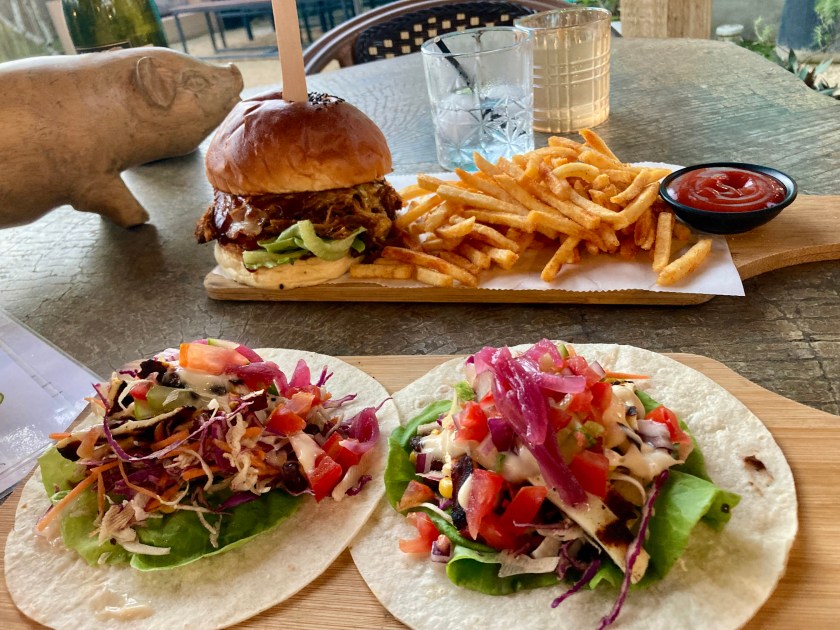
Another Port Vila restaurant named “Three Pigs” (complete with a carved wooden pig on our table) delivered in spades. Ahhhh…the simple pleasures.
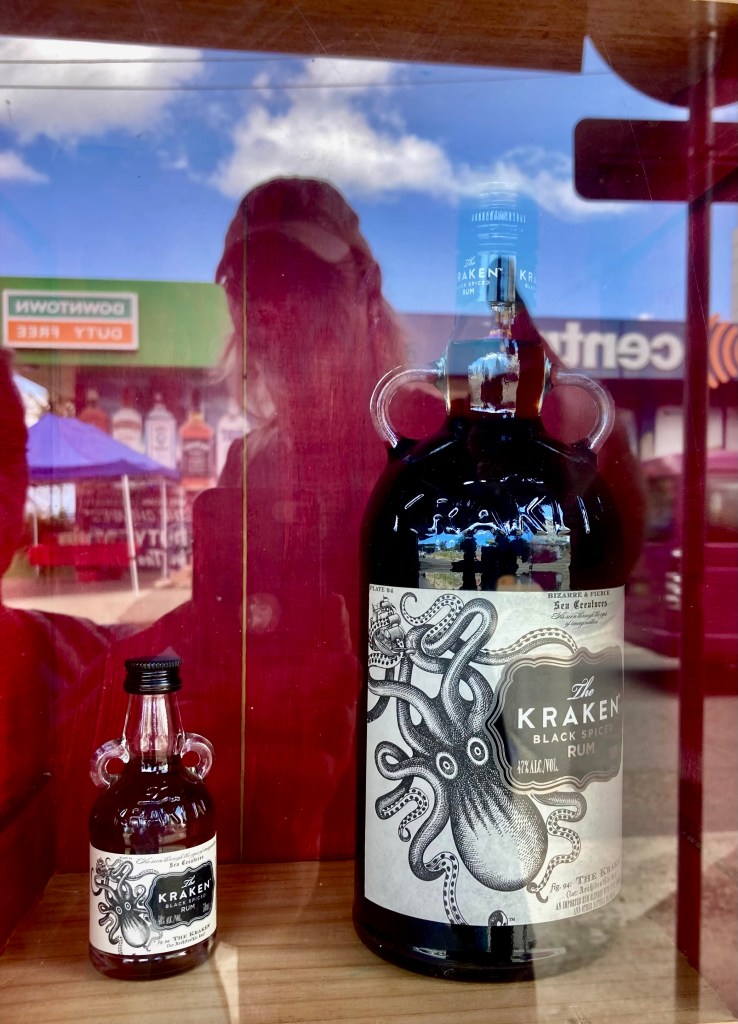
Finally, after a week or so of urban decadence and guilty pleasures, we were ready to go exploring Vanuatu. We had fully stocked our provision lockers less than two weeks ago while still in Savusavu, Fiji so we had little need for shopping, even though we couldn’t help having a wander through the massive grocery store Bon Marche (Vanuatu’s equivalent of Safeway). Nor could we miss the front window display of one of the liquor stores we passed by that, of all things, had one of our favorite bottles of Black Spiced Kraken Rum prominently and proudly featured on display.
All that remained to be done before escaping the trappings and expense of civilization was to fix our water maker…a full day’s task that required disassembling a large portion of it in order to access the leaking fitting and broken sensor.
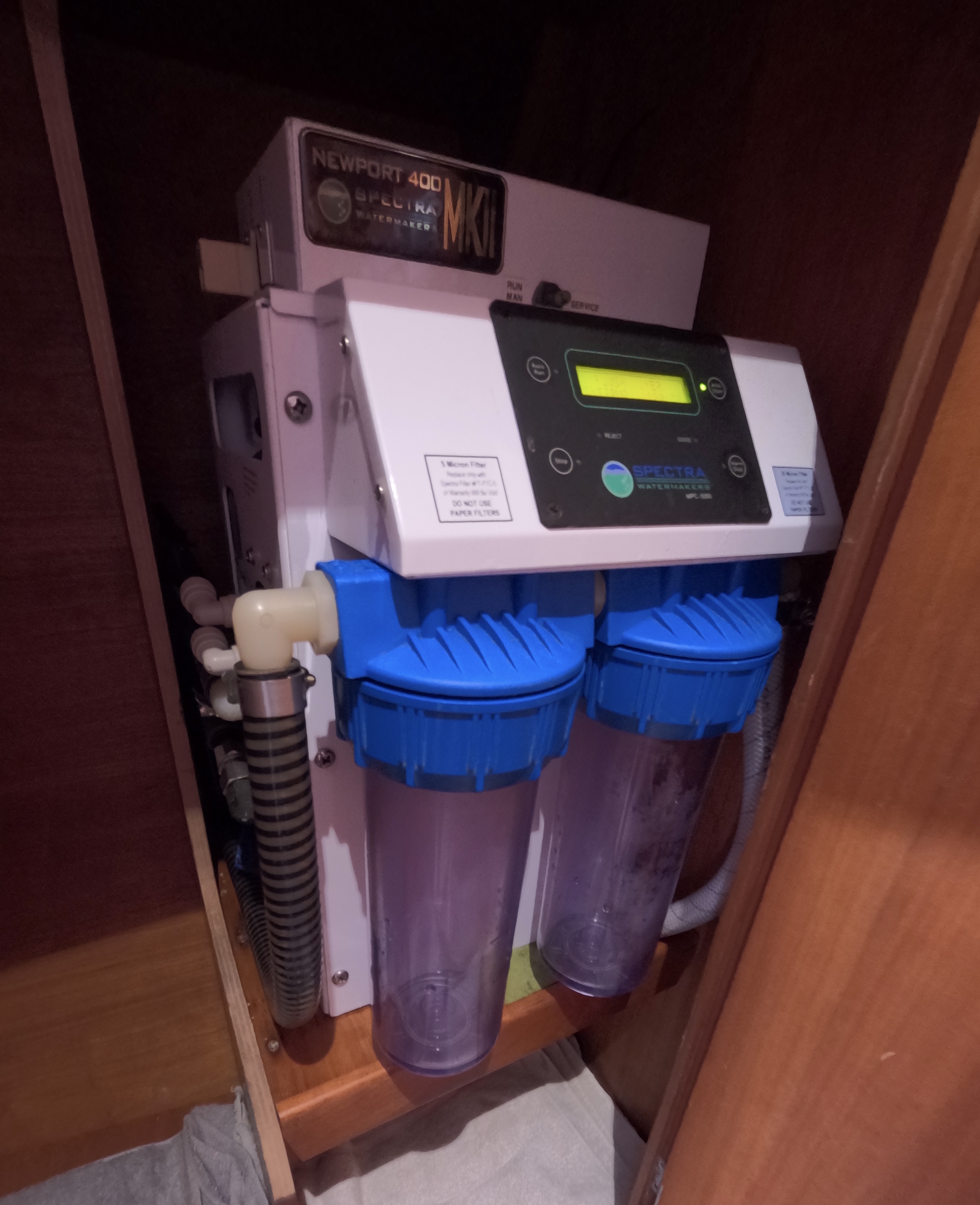
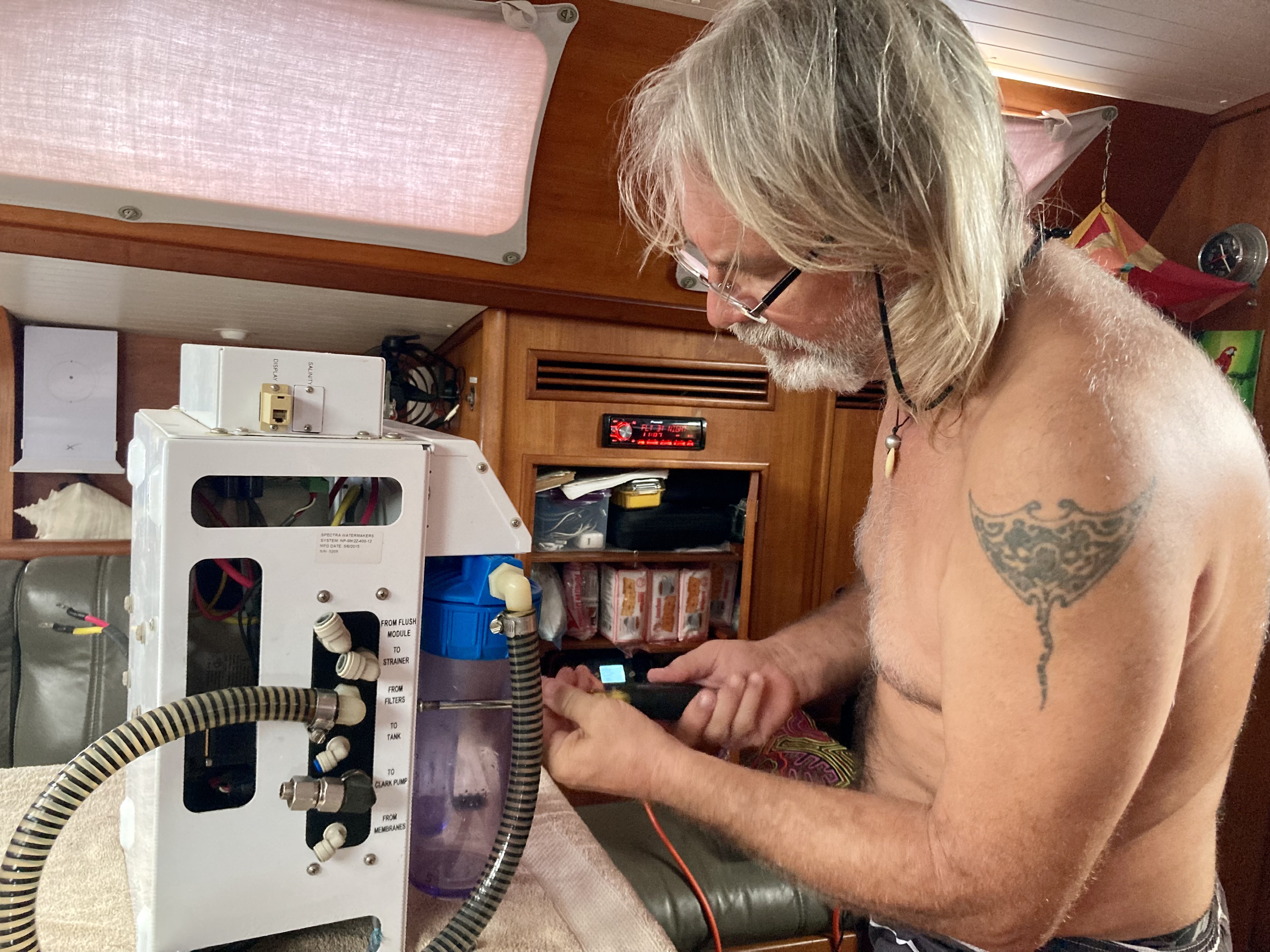
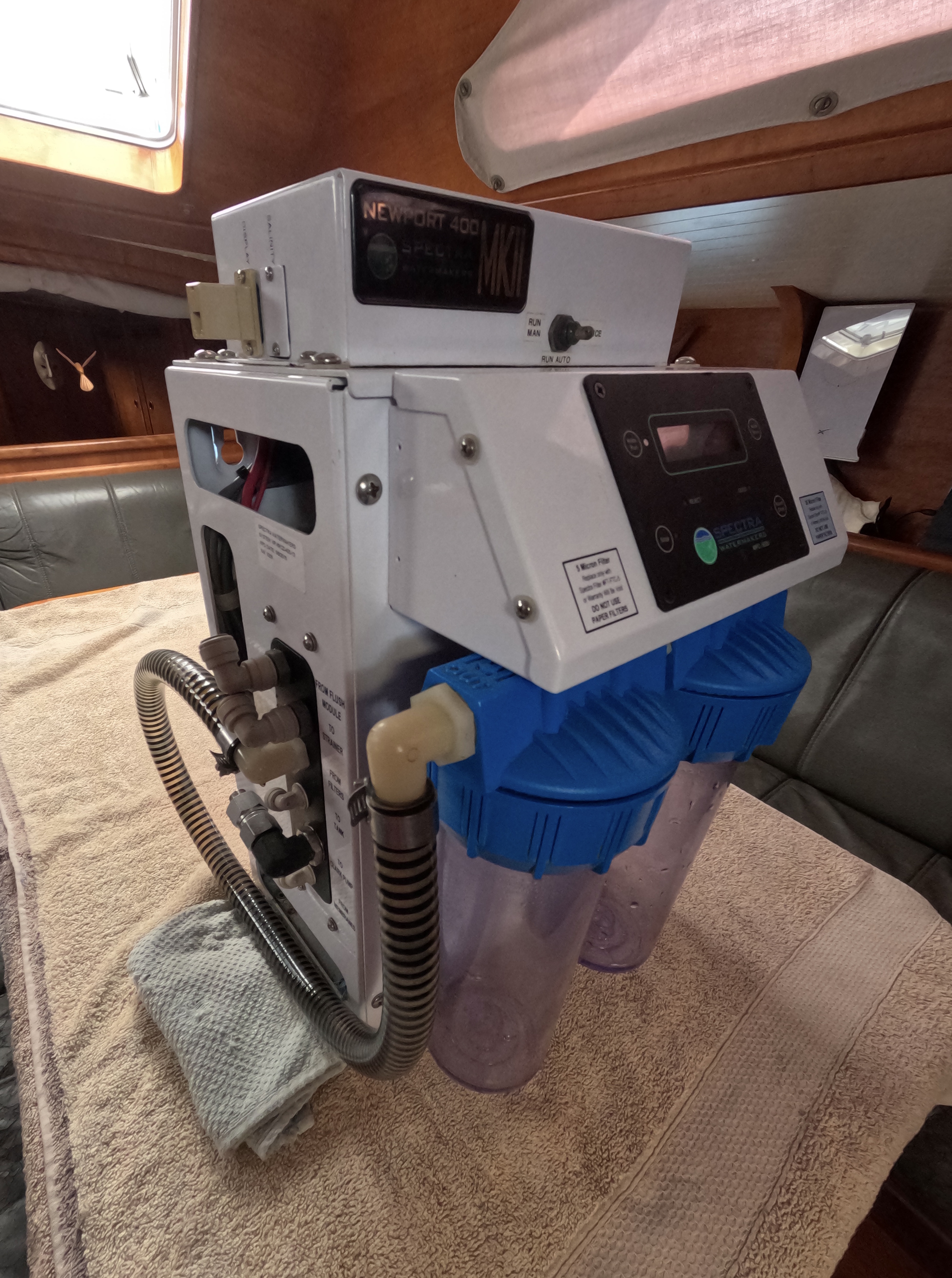
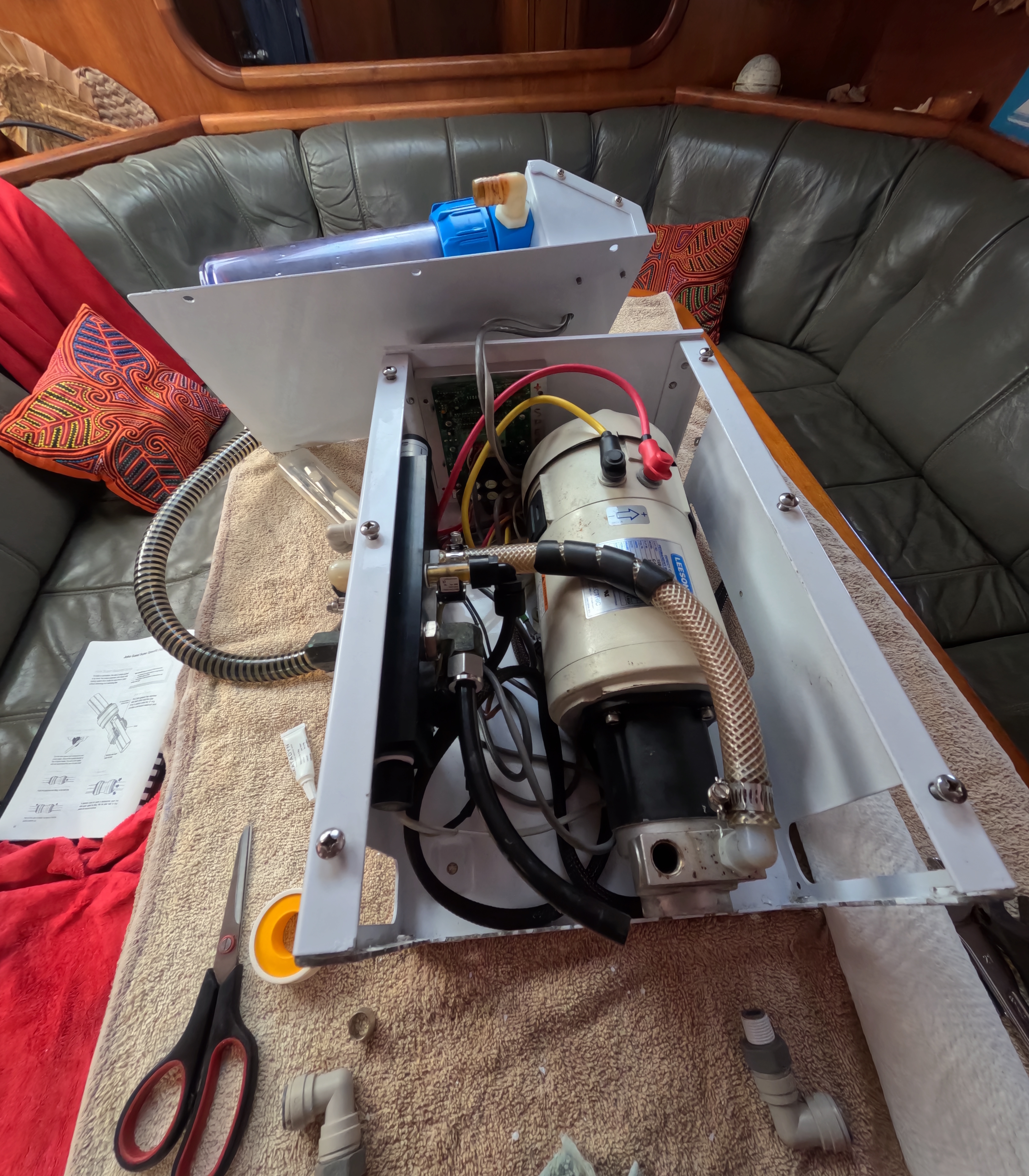
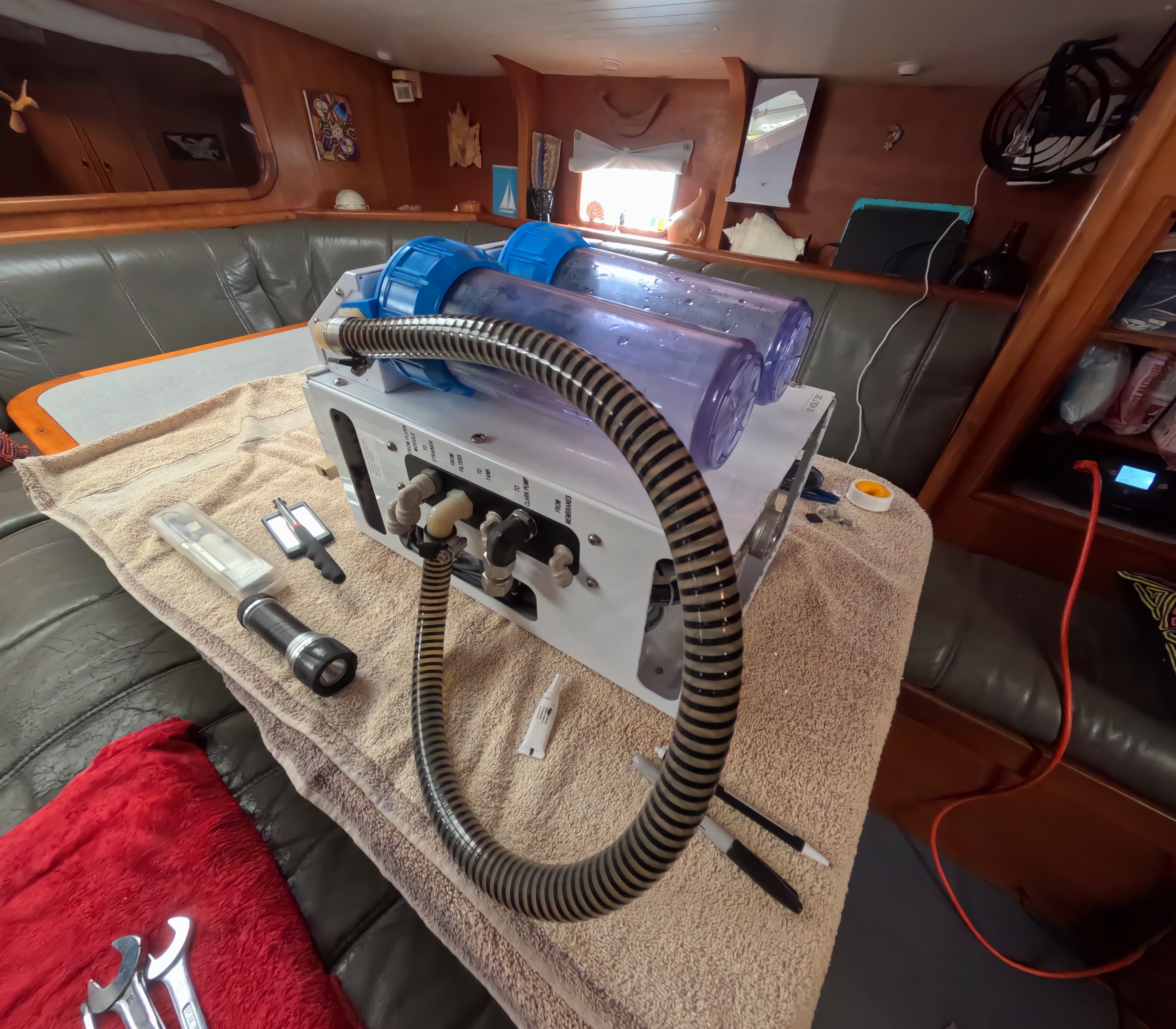
After successfully reviving the water maker, we decided it was time to get off the mooring, depart Port Vila, and see what Vanuatu had to offer.
The only question was, “Where to go?”
 sv-exit.com