
December 16 – 17, 2025
October 26. A significant day. For me, over the course of the past forty three years, it has been the day to celebrate Kris’ birthday. Of course, for her, that celebration goes back even further.
But, nearly a century ago on October 26, 1929, thirty nine years before Kris even drew her first breaths as a newborn baby, a contract was signed agreeing to build a $7 million luxury liner (approximately the equivalent of $137 million in today’s currency).
One can only imagine the irony at the time, during the height of the Depression, of building a luxury passenger ship emblazoned with literal “$” signs on the vessel’s funnels (reflecting the Dollar Steamship Line that owned the ship) while people struggled just to survive. Nonetheless, like a current day $400 million ballroom, it managed to emerge from the cauldron of extremely mundane and limited means to shine as a beacon for those wealthy enough at the time to afford carefree, pompous, and unlimited consumption. It was christened on February 21, 1931 by the Second Lady herself, as the SS President Coolidge.
As it would turn out, October 26 was not only the day of legal conception for the SS President Coolidge. Thirteen years later, in 1942, it would also be the day the Coolidge died.
Perhaps the most ironic and intriguing aspect of all this, is the story of how such an iconic and exotic symbol of decadent excess, could become such an iconic and exotic dive site, considered by many to be the most accessible and one of the best wreck dives on the planet. A playground for not only the extraordinarily wealthy, but even for humble sea gypsies such as ourselves.
Authors note: The information contained herein was gathered not through Wikipedia, AI harvested data, nor internet scrolling on a laptop—-but rather through visiting actual museums (the WWII Museum of Luganville), reading actual paper books (“The Lady and the President”), and actually diving the SS President Coolidge wreck…so there!
THE BACK STORY:
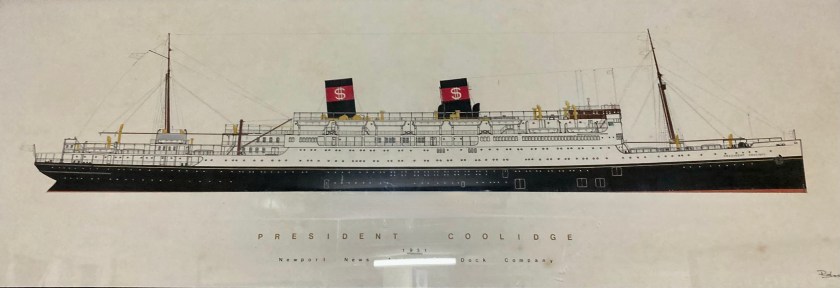
The SS President Coolidge, originally built in 1929 as one of a pair of identical sister luxury passenger liners, was on the cutting edge of technology for its time. It measured 654 feet from bow to stern, 81 feet in beam, with a draft of 34 feet and her twin screws were driven by 32,000 horsepower turbo electric engines that could propel the ship’s nearly 22,000 tons through the water at a cruising speed of 21 knots (compared to Exit’s 80 horsepower turbo diesel that propels its 23 tons through the water at a cruising speed of a whopping five to seven knots). The President Coolidge and her twin sister President Hoover represented the largest merchant ships built in the US at the time.
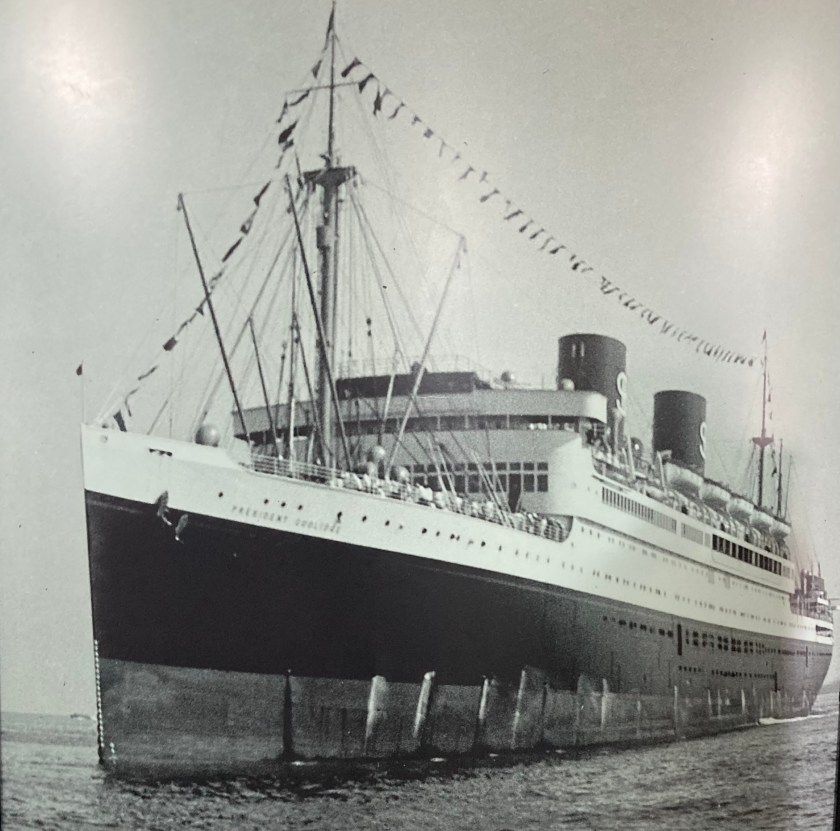
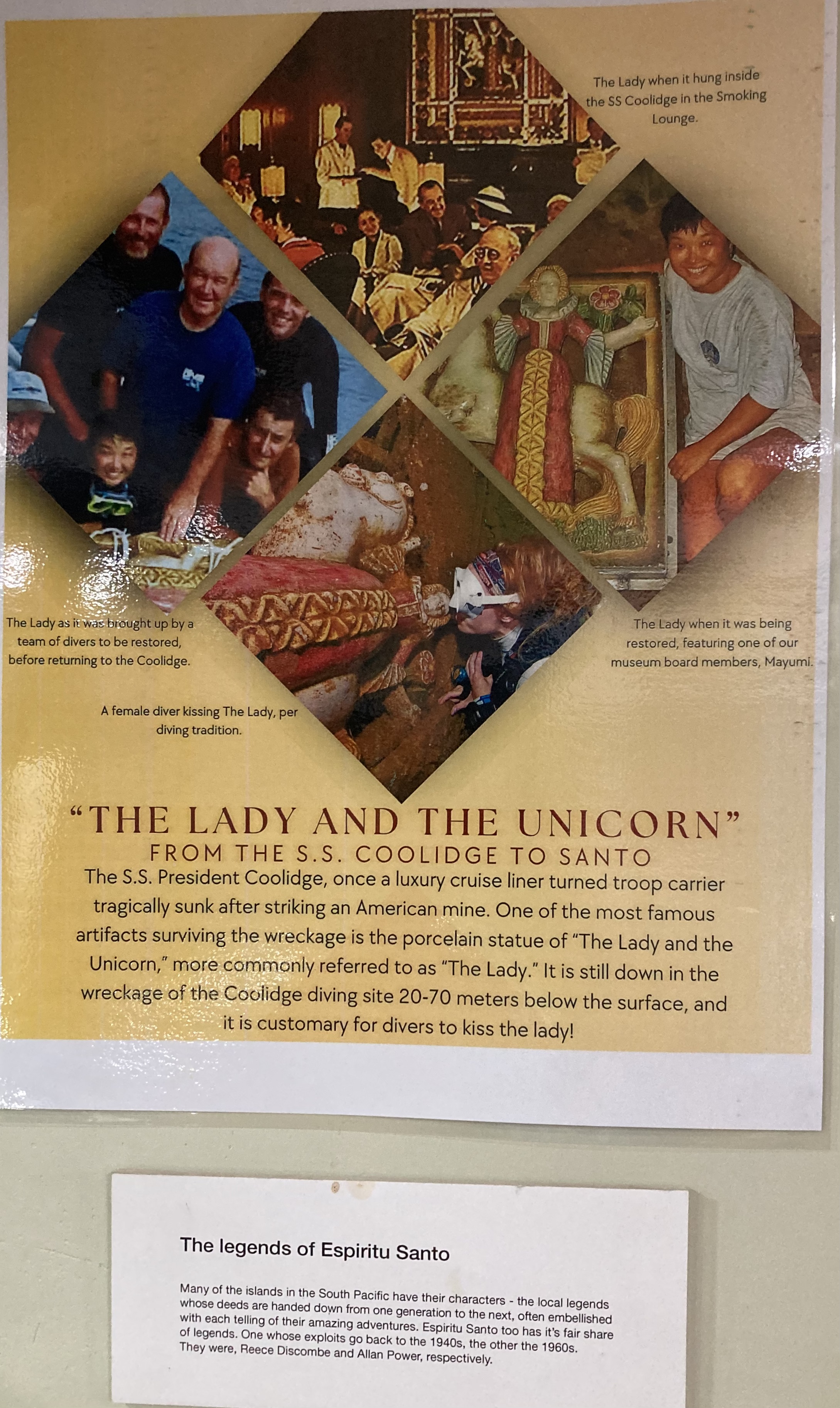
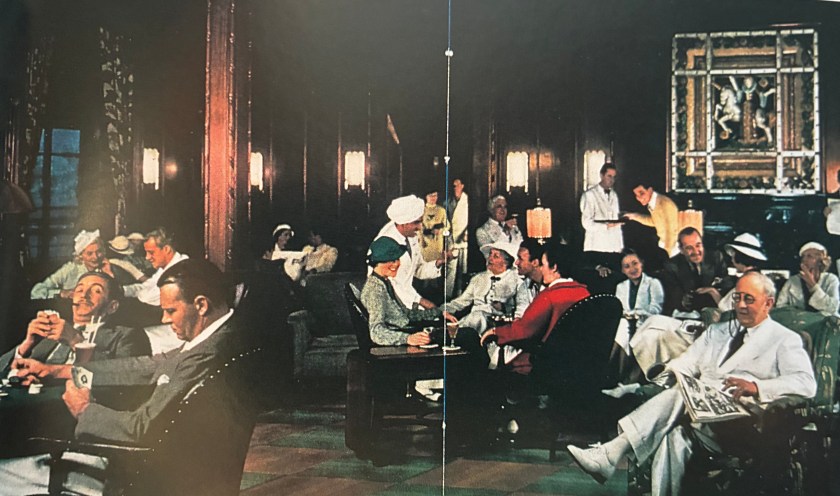
No expense was spared when it came to the entertainment and comfort of the SS President Coolidge’s passengers. It boasted elegant and modern accoutrements associated with the most lavishly decorated vessels of the time—two swimming pools, gymnasium, shipboard stock exchange, shopping arcade, beauty salon, barber shop, library, theatre, intricately carved wooden interiors and furnishings, ornate glasswork, private rooms with air conditioning as well as telephones and private baths, a two-deck first class dining saloon for fine gourmet dining stocked with china and silver and a musicians gallery, as well as a luxurious and vast first class smoking room complete with electric fake fireplace above which the The Lady (a sculpted decorative hanging wall panel that has become one of the icons of the ship and can still be visited by scuba divers today) looked down upon the privileged passengers.
Of its potential 988 passengers, pampered and looked after by the ships crew which numbered over 300, only about thirty percent were the rich and famous recipients of First-class designation. The other sixty percent, those of limited means (or ‘oriental’ heritage as it was deemed at the time), were crammed into Special-class (a softer term for those with some money who would be offended by the title Second-class), or Third-class, or Steerage accommodations.
For years, SS President Coolidge made trans Pacific crossings between locations including San Francisco, Hawaii, China, Japan, Philippines, and Hong Kong, breaking numerous speed records for transit times while simultaneously wooing thousands of passengers with the epitome of luxury ocean travel.
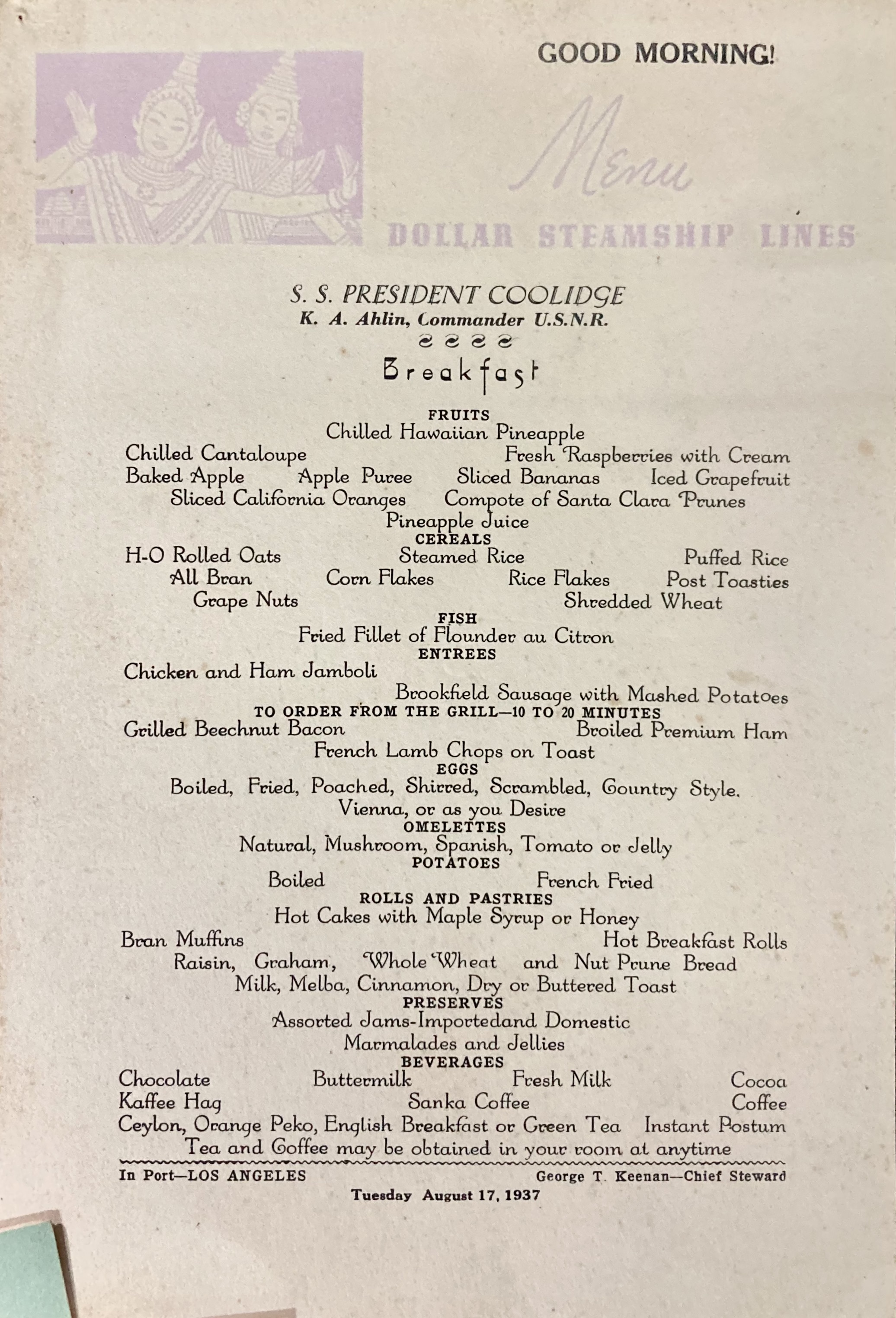
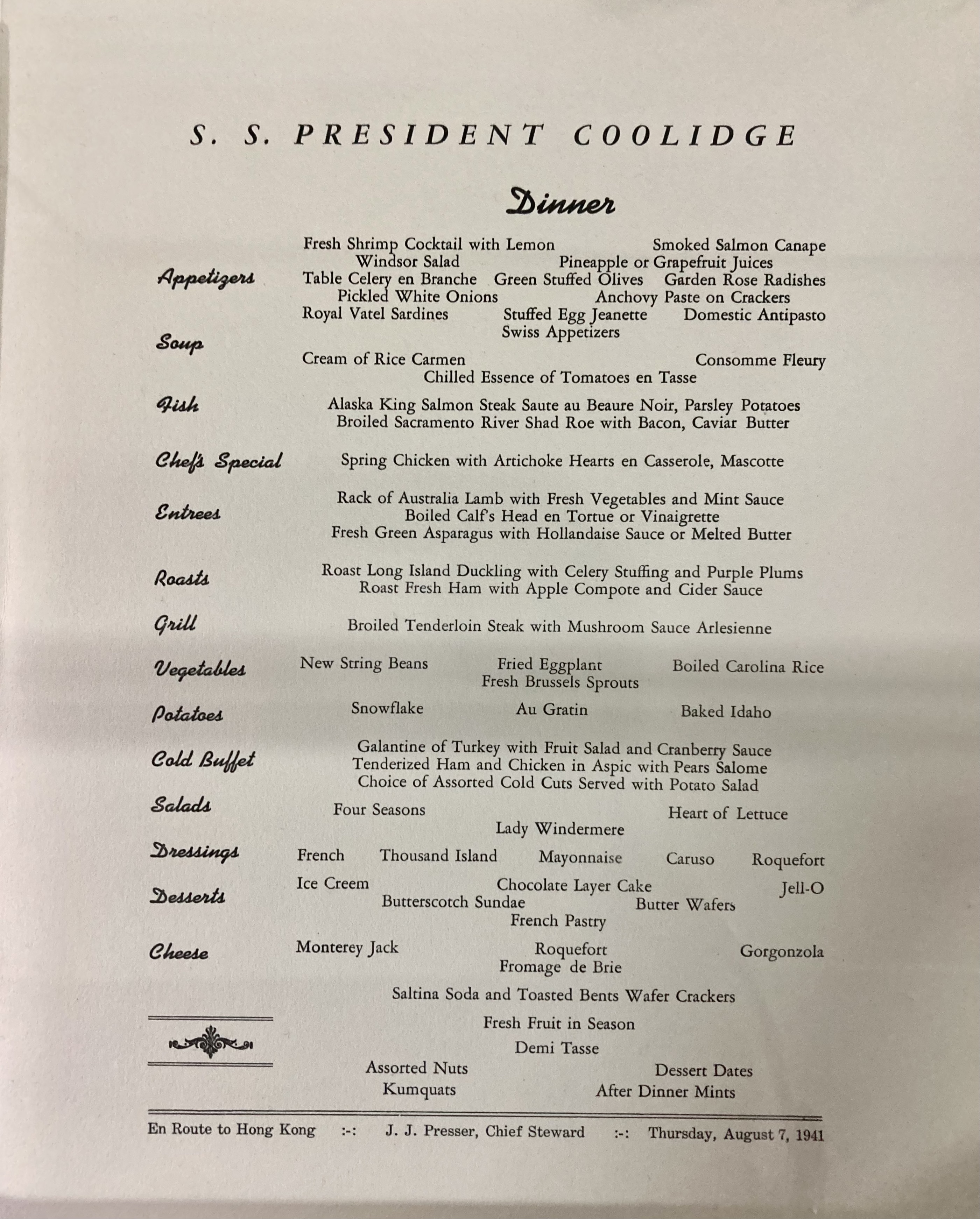
However, despite the profitability of President Coolidge within the Dollar shipping line, in 1936, the Dollar line filed for bankruptcy. After two years of creditor disputes, Congressional acts, and industry re-alignments, most of the company’s stock ended up being transferred to the government in exchange for debt liability relief. Included in this ‘takeover’, was the President Coolidge itself, whose ownership was surrendered to the United States Department of Commerce on July 20, 1938.
Then, with the outbreak of WWII, as America began to see the writing on the wall concerning its inevitable future involvement, the US began converting a number of civilian vessels that was converted for wartime use by the military. Two months after Pearl Harbor was attacked, President Coolidge’s refitting was complete, converting her from a luxury passenger ocean liner to a military transport ship carrying troops and supplies.
Modifications to the ship included installing deck guns, an increase in capacity to transport up to 5,000 troops, as well as conversion of endless cargo compartments to be capable of hauling everything from general and medical supplies, guns and ammunition, military hardware, and even jeeps and troop transport vehicles. She now bore the drab grey colors of a warship. Curiously, despite all the changes aboard the vessel as well as the fact that the Coolidge was now being used for military purposes in combat areas, while most luxurious fittings were stripped, some aspects of luxury were either kept in place or remained aboard in storage.
Between January and August of 1942, President Coolidge made three war runs, transporting troops and supplies to the South-West Pacific region including Australia, French Polynesia, Fiji, and New Zealand. On October 6, 1942, she departed San Francisco on her fourth and final voyage. She was fully loaded with just over 5,000 troops and 340 ships crew; the holds were likely full to capacity with weapons and ammunition (ranging from rifles to howitzers), artillery and ordinance, jeeps, transport vehicles, a few light tanks and tracked reconnaissance cars, tractors, ambulances, food, currency, military and medical equipment, parts, and supplies (including 519lbs of quinine, the entire reserve supply of the South Pacific Area for the prevention of malaria).
As they passed under the Golden Gate Bridge, few aboard had been told where their ultimate destination was. For two weeks, President Coolidge zig-zagged across the Pacific Ocean, completely alone and unescorted, with all lights extinguished at night, comforted by the unproven belief that the ship’s speed of over twenty knots was sufficient to outrun any submarines of that era.
On October 20, the ship arrived for a four day layover in New Caledonia, before continuing to a secret military base (the largest in the South Pacific with an approximate 40,000 troop population that saw 500,000 servicemen passing through in total during the course of the war) at Luganville on the island of Espiritu Santo in Vanuatu (then called New Hebrides), after which the President Coolidge was to continue to Guadalcanal in the Solomon Islands, providing much needed reinforcement troops and supplies to the battered US Marines already stationed there.
Early in the morning of October 26 President Coolidge approached the tiny island of Tutuba, just off Espiritu Santo in Vanuatu. Behind Tutuba was a bay that connected to Segond Channel on the southern edge of Santo, where the port for the massive military base at Luganville was located. As had been the case all the way across the Pacific, attack from a Japanese submarine had been the primary concern of Captain Nelson and his officers, and they were still strictly abiding to running totally dark at night as they approached Luganville. As a Japanese sub had shelled the island only days before, these concerns were well founded.
Following standard procedures during WWII, Captain Henry Nelson had been following routing instructions, given to all vessels before sailing from or to any port in a combat area which dictated specific routes to be followed offering the greatest protection from enemy engagement as well as identifying channels not obstructed by mines. For some unknown reason, the incredibly detailed nine page packet gave precise instructions to a point on the southeast side of Tutuba named “Hypo”, but failed to specify the actual route around Tutuba.
When asked by his First Officer if he planned to, ‘lay off Hypo and wait for a pilot or guide,’ Captain Nelson concluded that, ‘it’s too dangerous to be playing around outside with the probability of submarines in the area.’ Based upon the fact that no instructions or warnings had been issued, and no pilot assistance had been forthcoming, the ship headed straight into Segond Channel via the quickest and most direct route. President Coolidge had been approaching from the southeast, which meant passing around the northern side of Tutuba was in line with their current course. To pass around the southern side, the ship would be required to turn nearly ninety degrees to port from Point Hypo and proceed through a narrower channel.
On the surface, the decision seemed appropriate. However, the critical, and most important, piece of information that Captain Nelson was missing was that entire bay approaching Second Channel had been mined and the only clear path through the minefield was accessed from the south side of Tutuba.
At 0935 hours, as the vessel unknowingly passed around the north side of Tububa and aligned itself to enter Segond Channel, a naval shore station close to Luganville recognized the mistake and began urgently flashing the approaching vessel with a signal lamp. The signal officer aboard the President Coolidge didn’t wait for the full message once he recognized the first four Morse code letters: S-T-O-P. However, just as the order reached the bridge to ‘STOP ENGINES – FULL ASTERN’ and the two signalers completed writing down the naval shore station’s full Morse code message: ‘STOP. YOU ARE STANDING INTO MINES’, the entire hull of the ship shuddered from a violent underwater explosion.
The President Coolidge had struck a mine laid by its own forces. Less than thirty seconds later, their forward momentum carried them into a second friendly mine which exploded amidships and tore an additional hole in the massive hull. Captain Nelson’s immediate assessment of the damage led him to the decision to use the headway the ship was still making to turn the ship directly into shore, which likely saved hundreds of lives. Three minutes later, the President Coolidge struck the coral ledge less than two hundred feet from shore, and Captain Nelson called ‘Abandon Ship.’
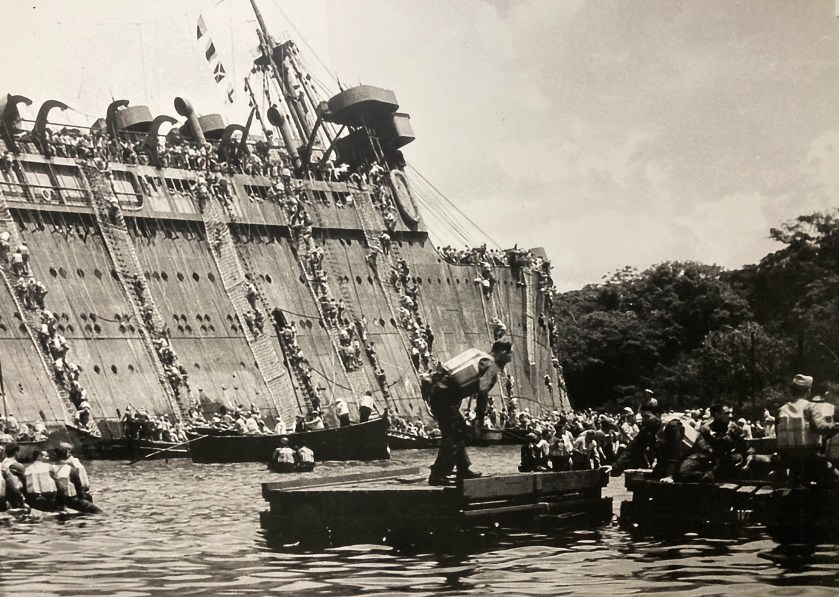
Within twenty minutes, the shipwas listing 35 degrees to port, increasing at a rate of nearly one degree per minute. Had the Coolidge run aground fifty yards in either direction, it would have rested on a bottom that shoals off gradually, allowing the vessel to settle above the waterline and potentially be salvaged. As it was, in what became the ship’s final stroke of bad luck, it had actually struck the reef at a point that drops off abruptly to over one hundred feet and then to 240 feet. At 1052 hours, one hour and seventeen minutes after striking the first mine, the President Coolidge slid off the edge of the reef and disappeared into what would become her grave.
Amazingly, some 4000 men were able to successfully abandon the ship before she went under.
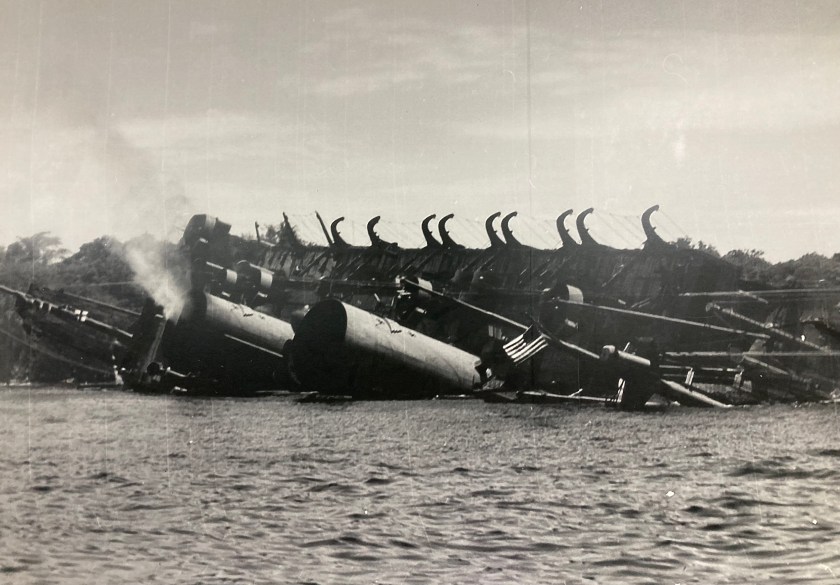
Officially, there were only two casualties from the sinking of the President Coolidge: Fireman Robert Reid who was killed belowdecks by one of the mine explosions and Troop Mess officer Captain Elwood J. Euart who, after safely reaching his abandon-ship station, returned to rescue men still trapped in the hold. Though the trapped men were rescued, Captain Euart did not make it out.
Unofficially, the number of troops that died as a result of the sinking can never be truly assessed. Many marines died on Guadalcanal waiting for troops and equipment support that had been aboard the Coolidge. In addition to the personnel deployments that were delayed, weapons, ammunition and ordinance, equipment, supplies, and other items trapped in the cargo holds of the sunken ship never arrived at their intended destinations. This included 519lbs of quinine (some 250,000 doses of anti-malaria medication), the US military’s entire reserve supply for the South Pacific Area.
Ironically, more people have subsequently died inside the President Coolidge as a result of poor scuba diving practices and bad decisions than did on the day she sank over eighty years ago.
Fast forward to December, 2025.
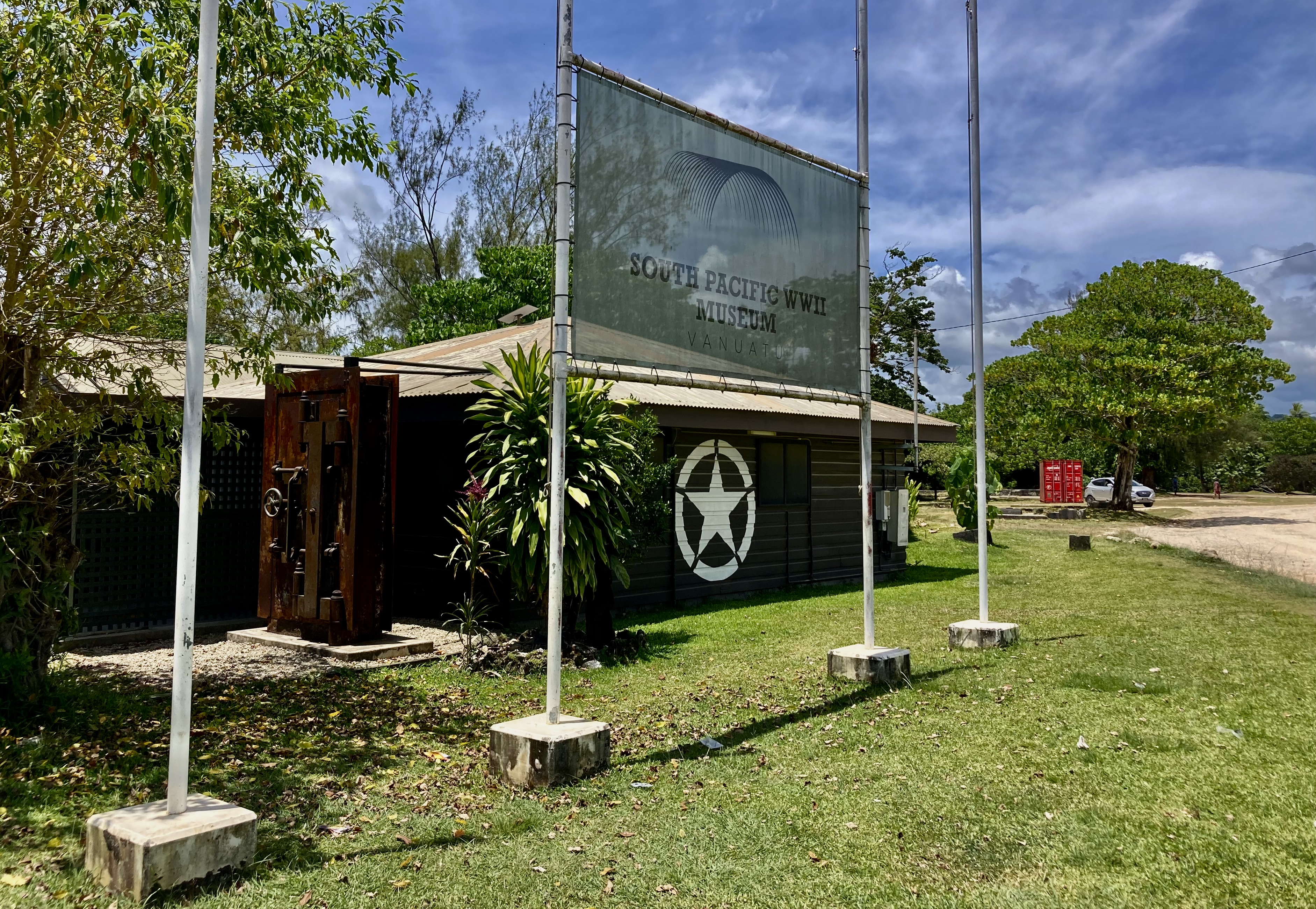
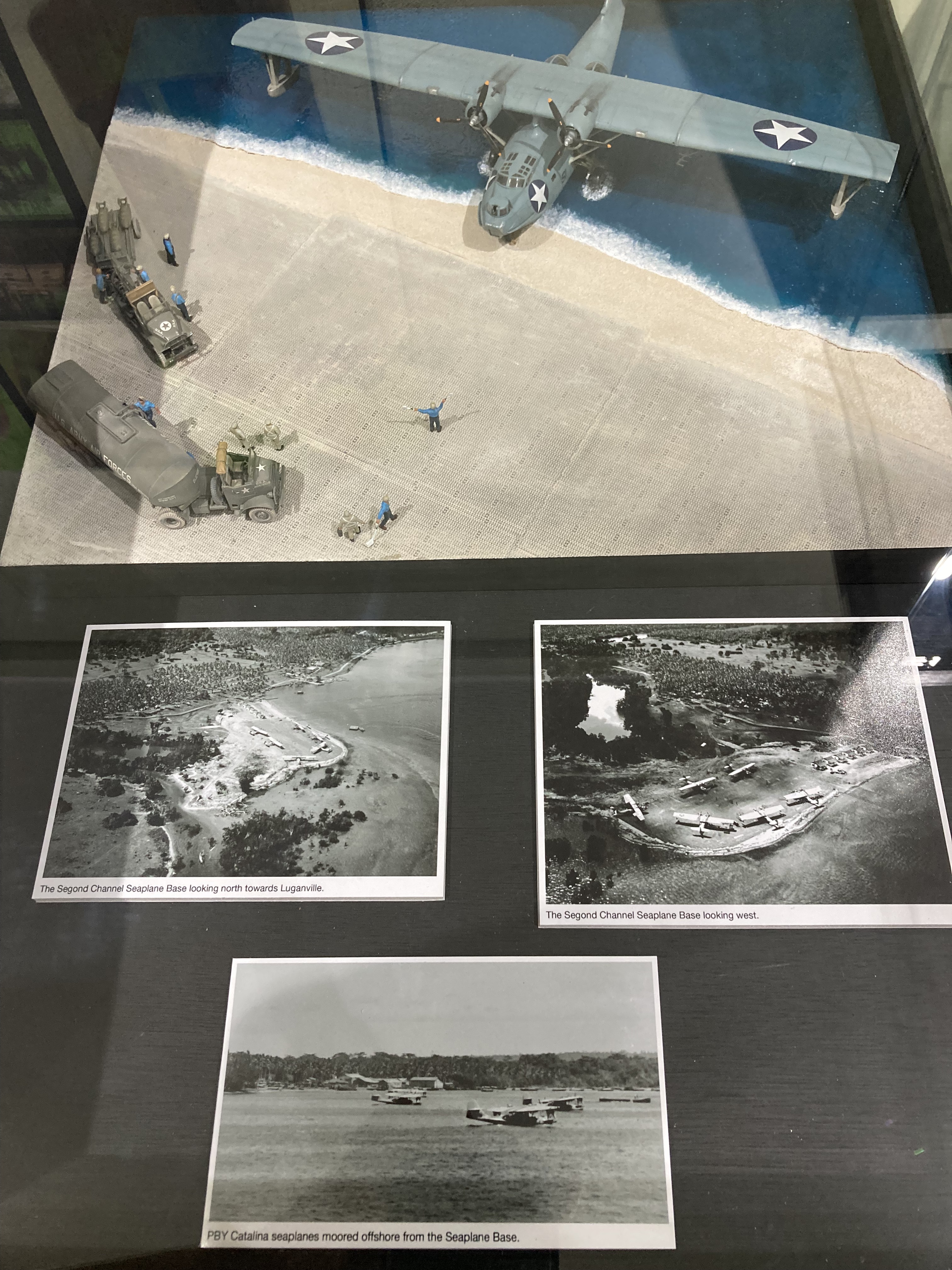
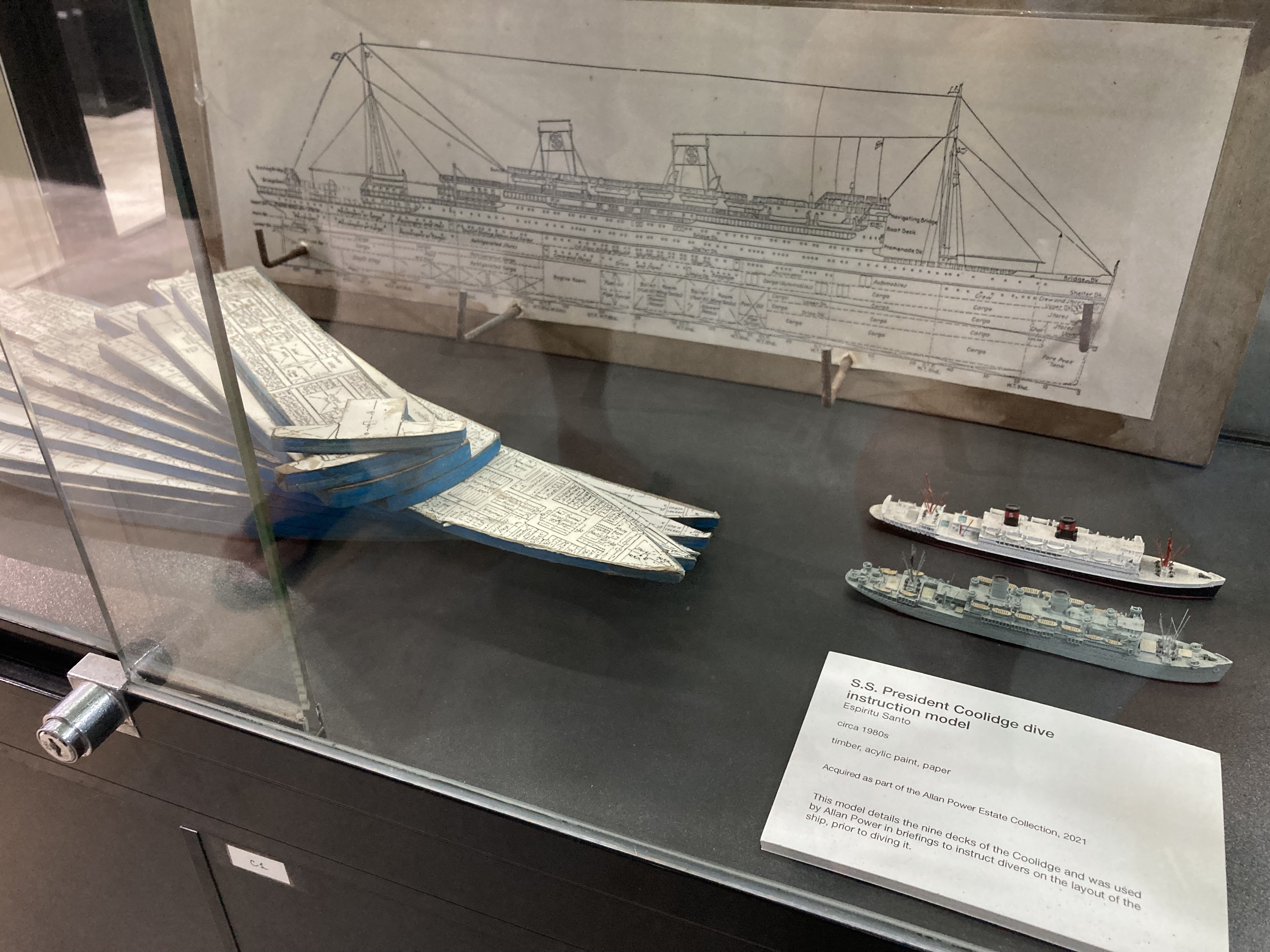
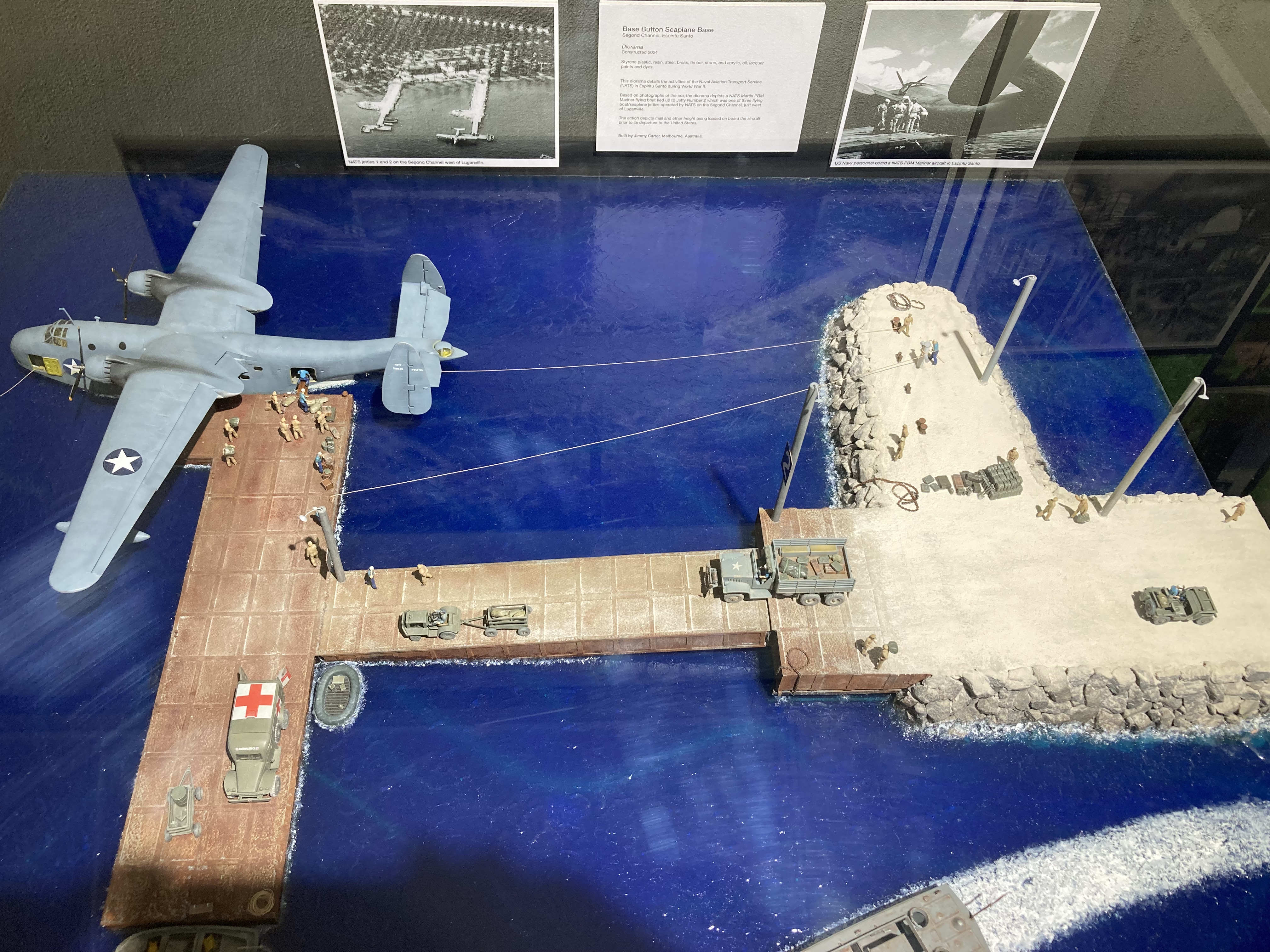
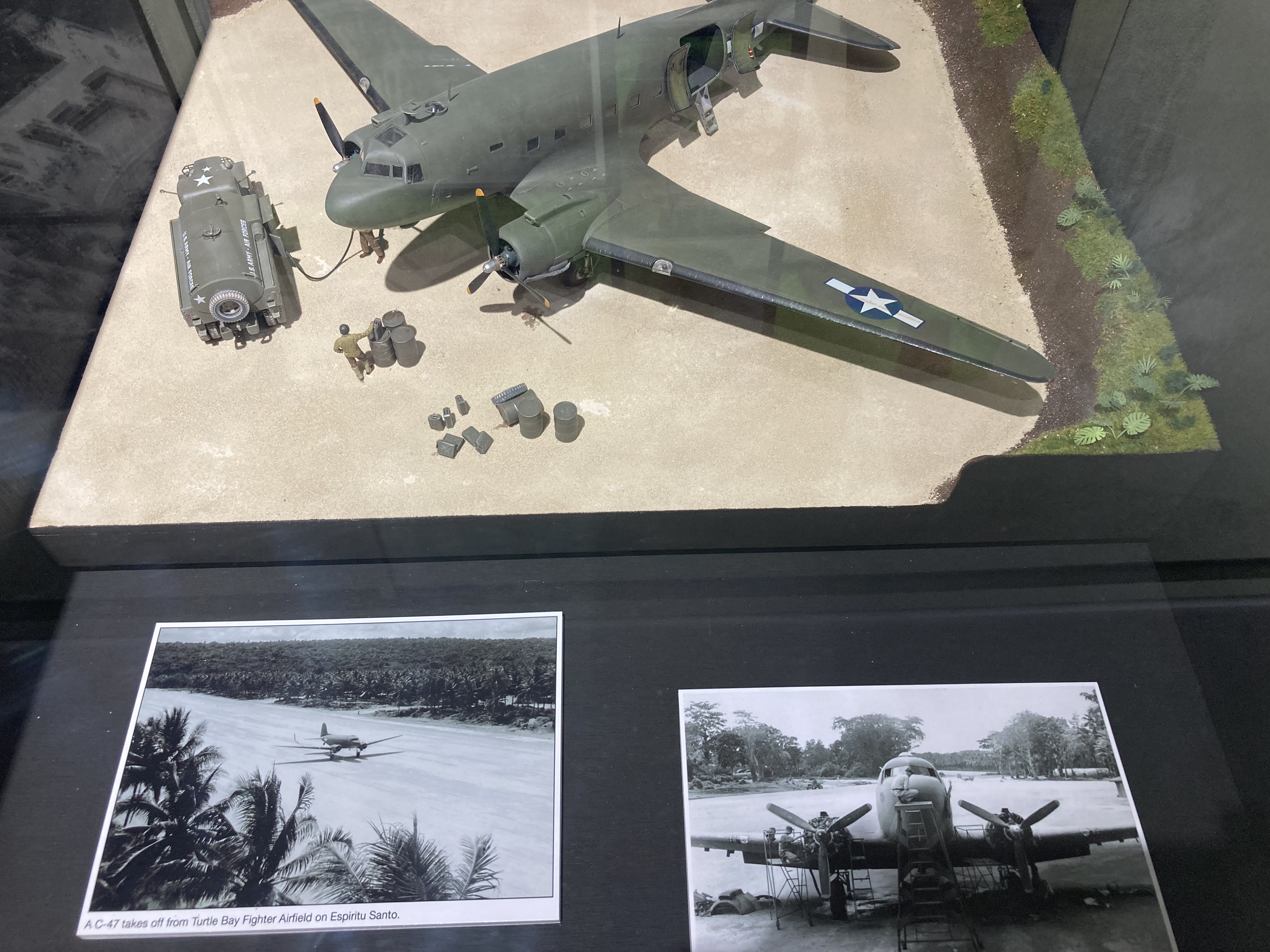
Before diving the SS President Coolidge, we visited the fascinating WWII museum for some context and a better understanding of the events that led up to the sinking of the Coolidge.
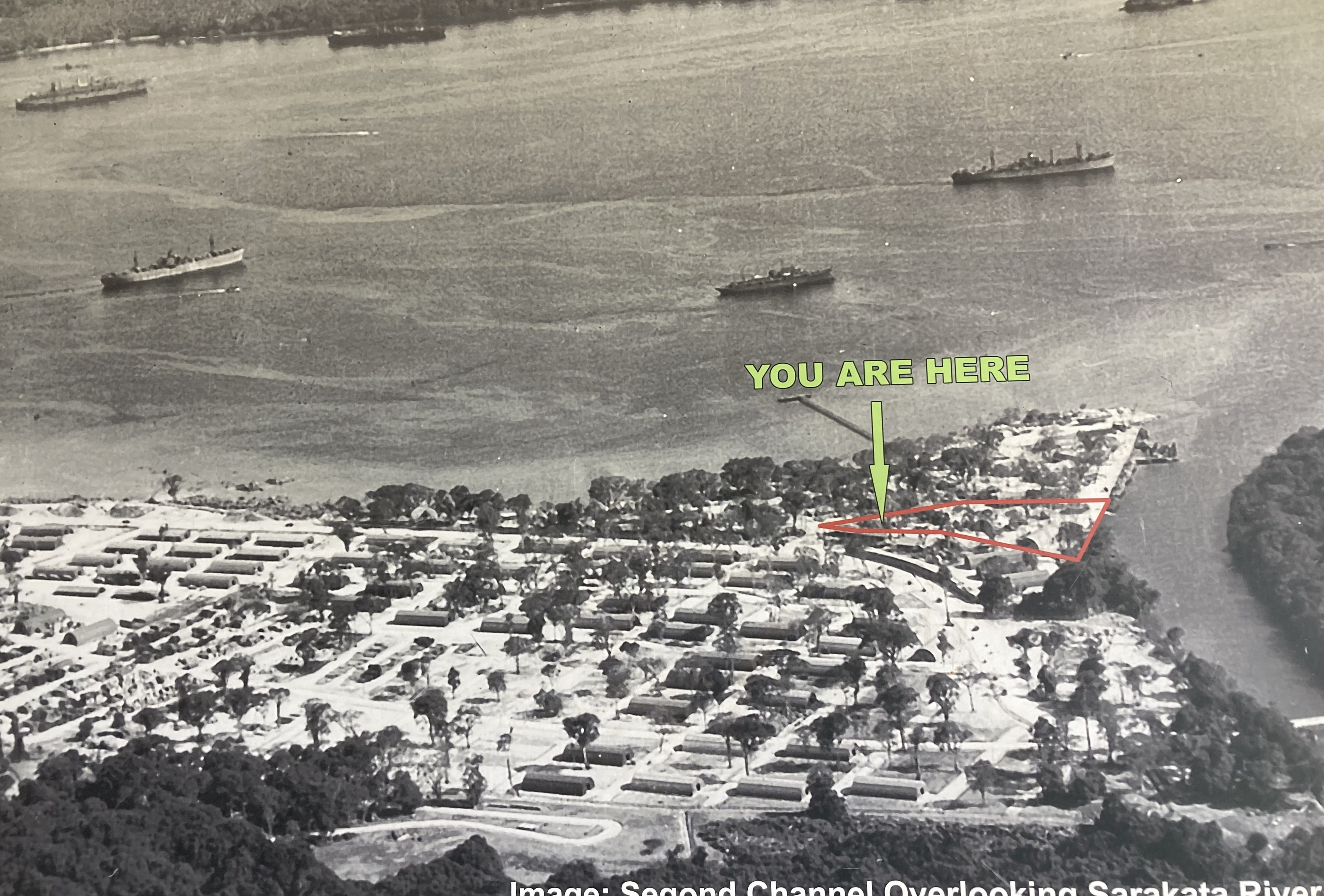
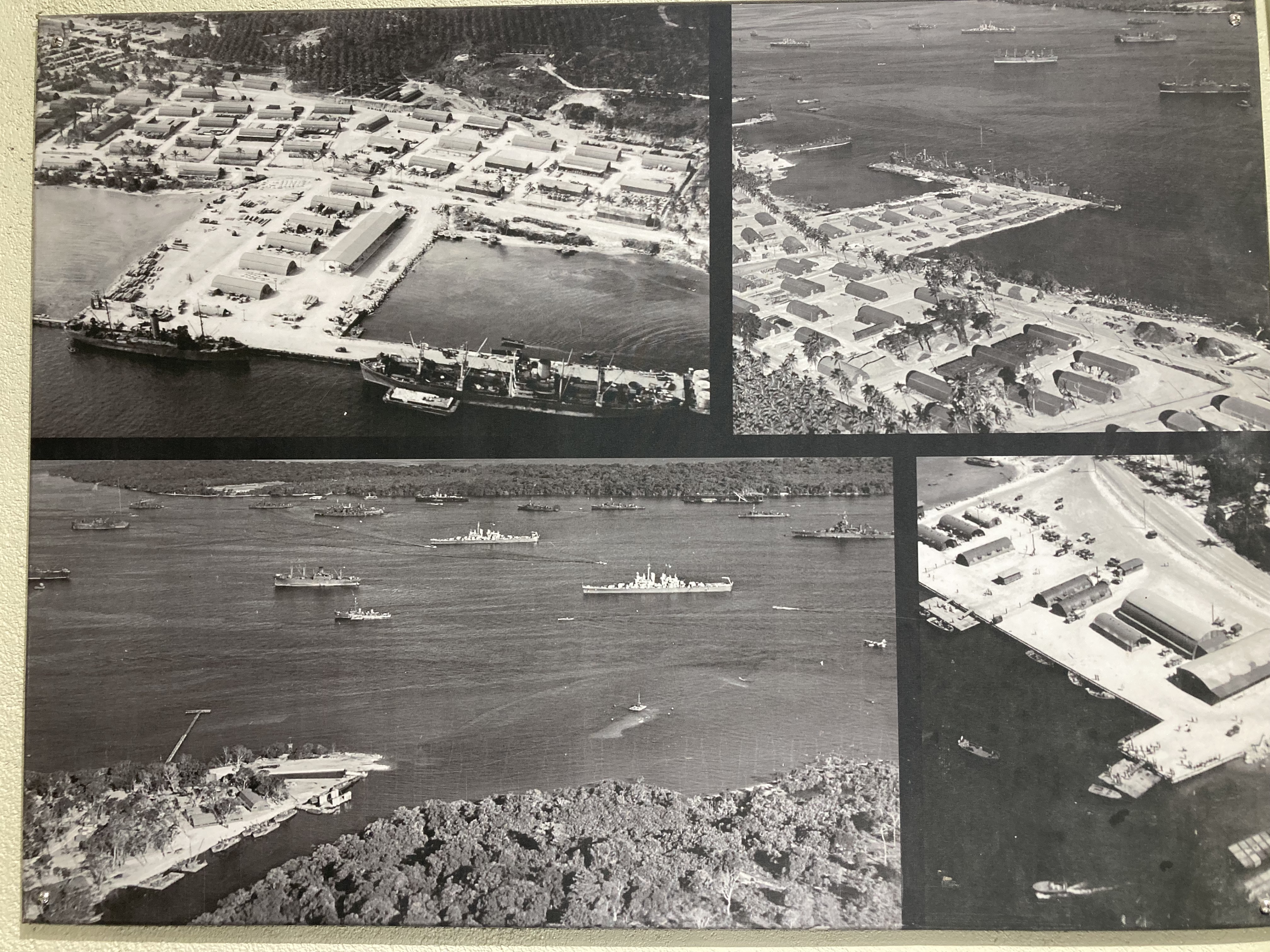
Photos of the original military base in Luganville from 1942 .
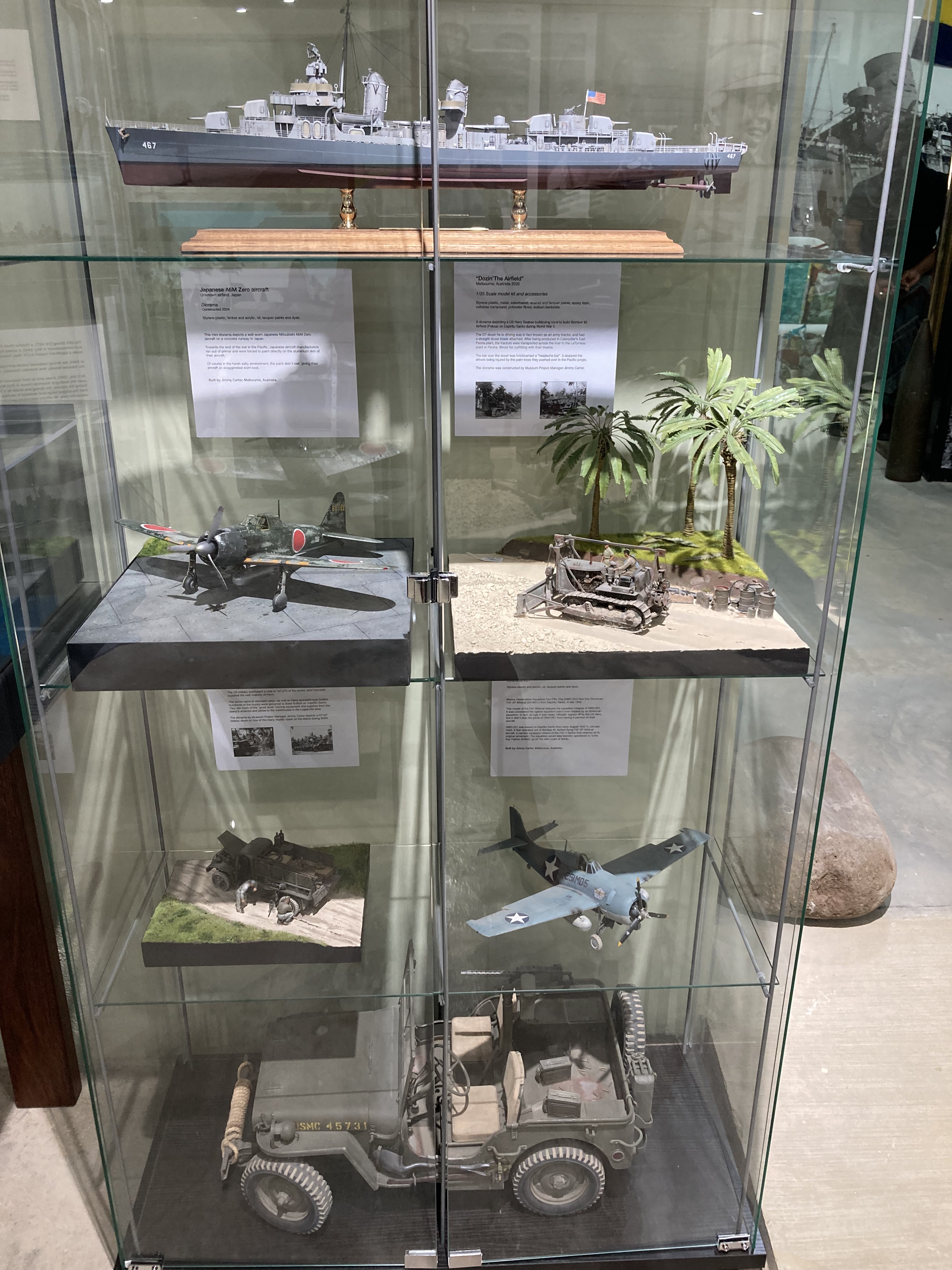
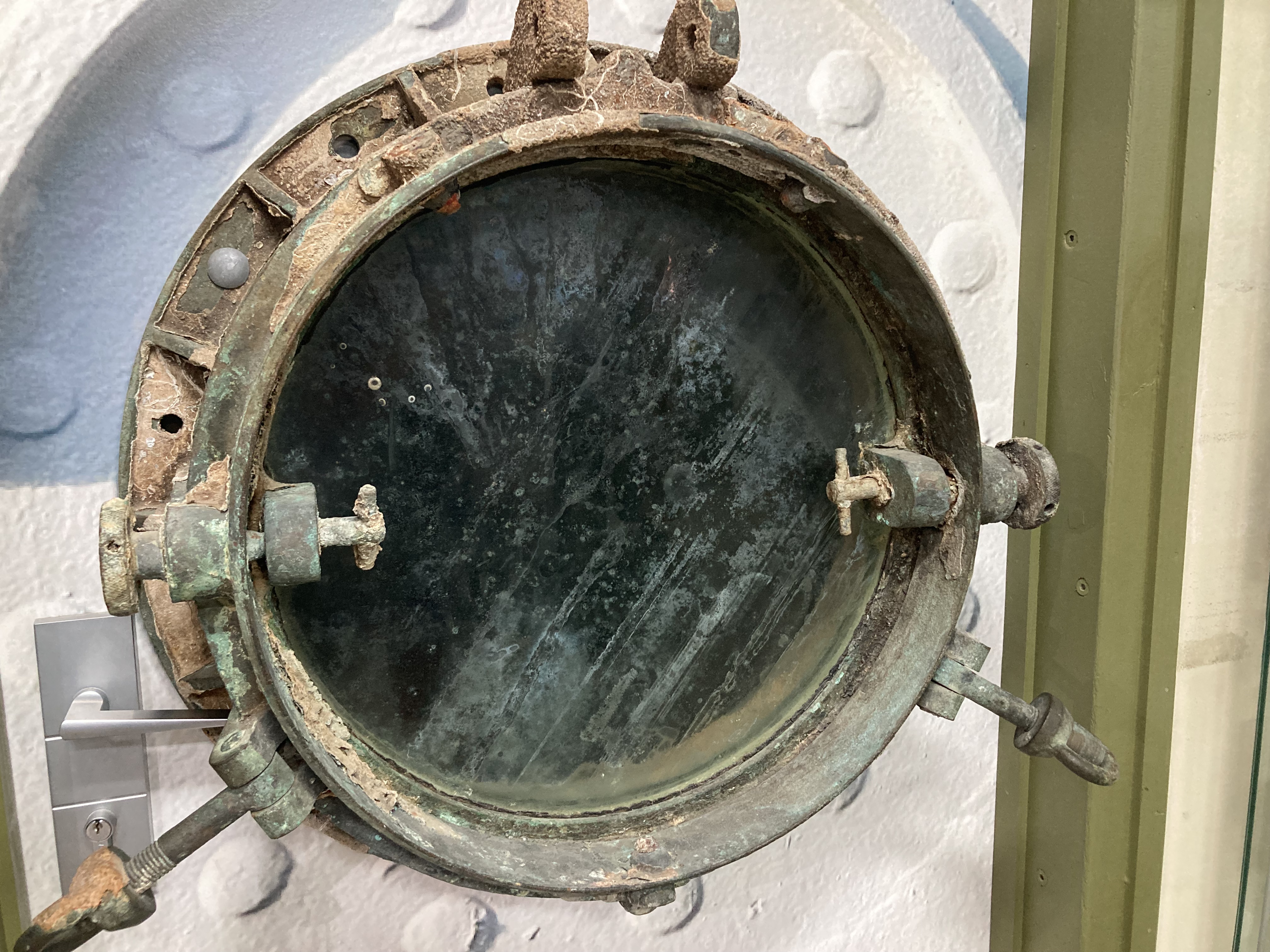
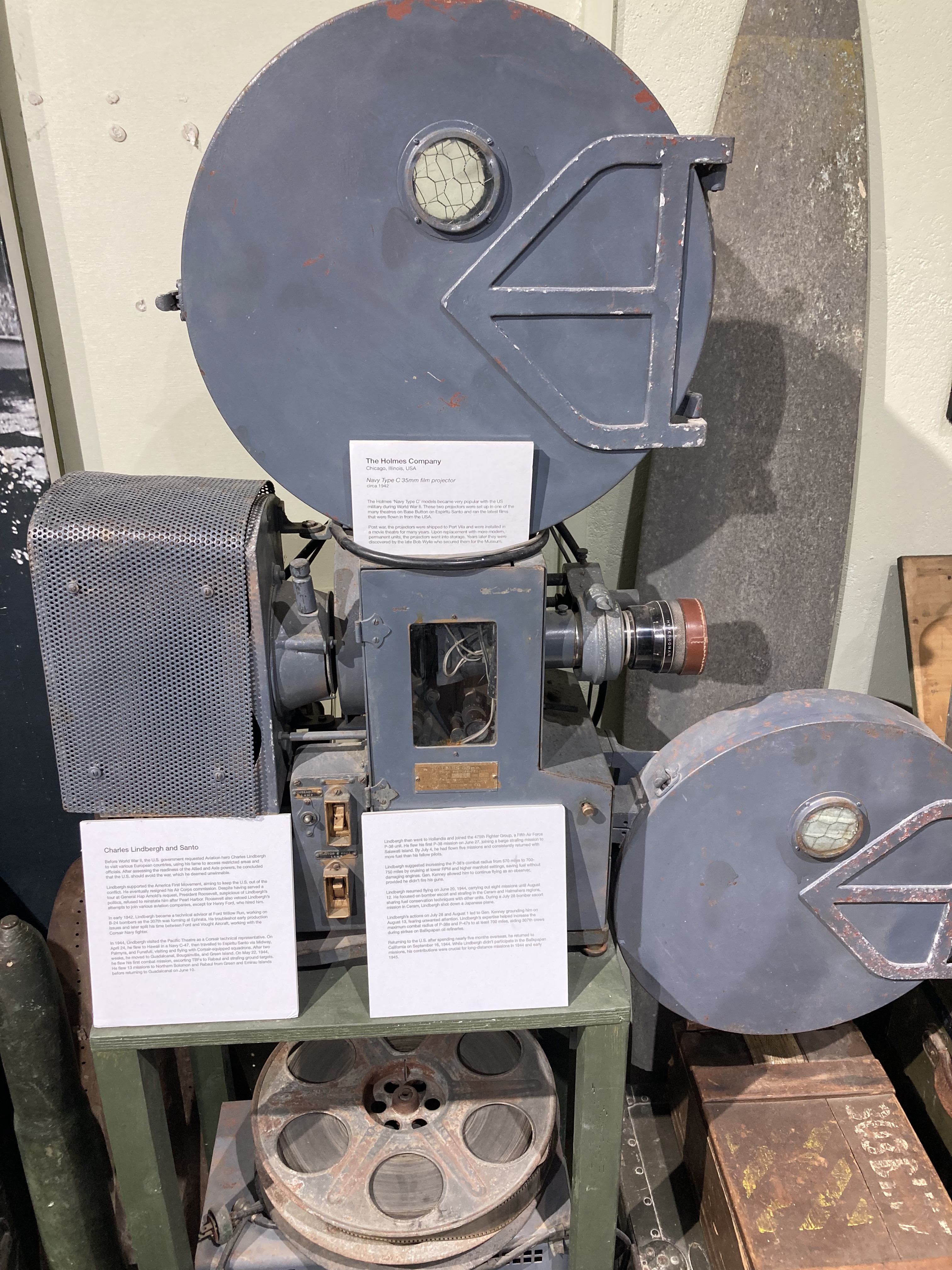
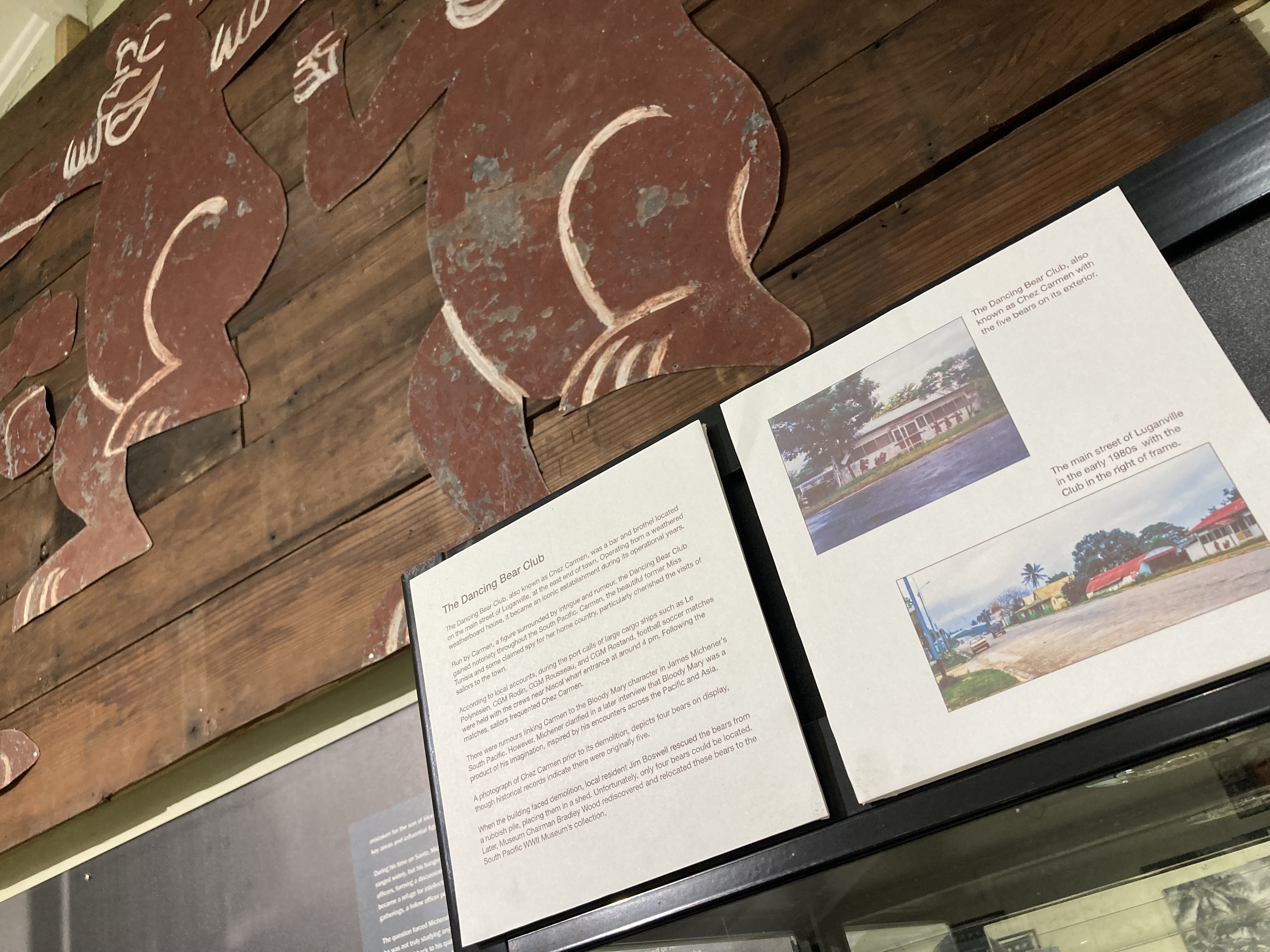
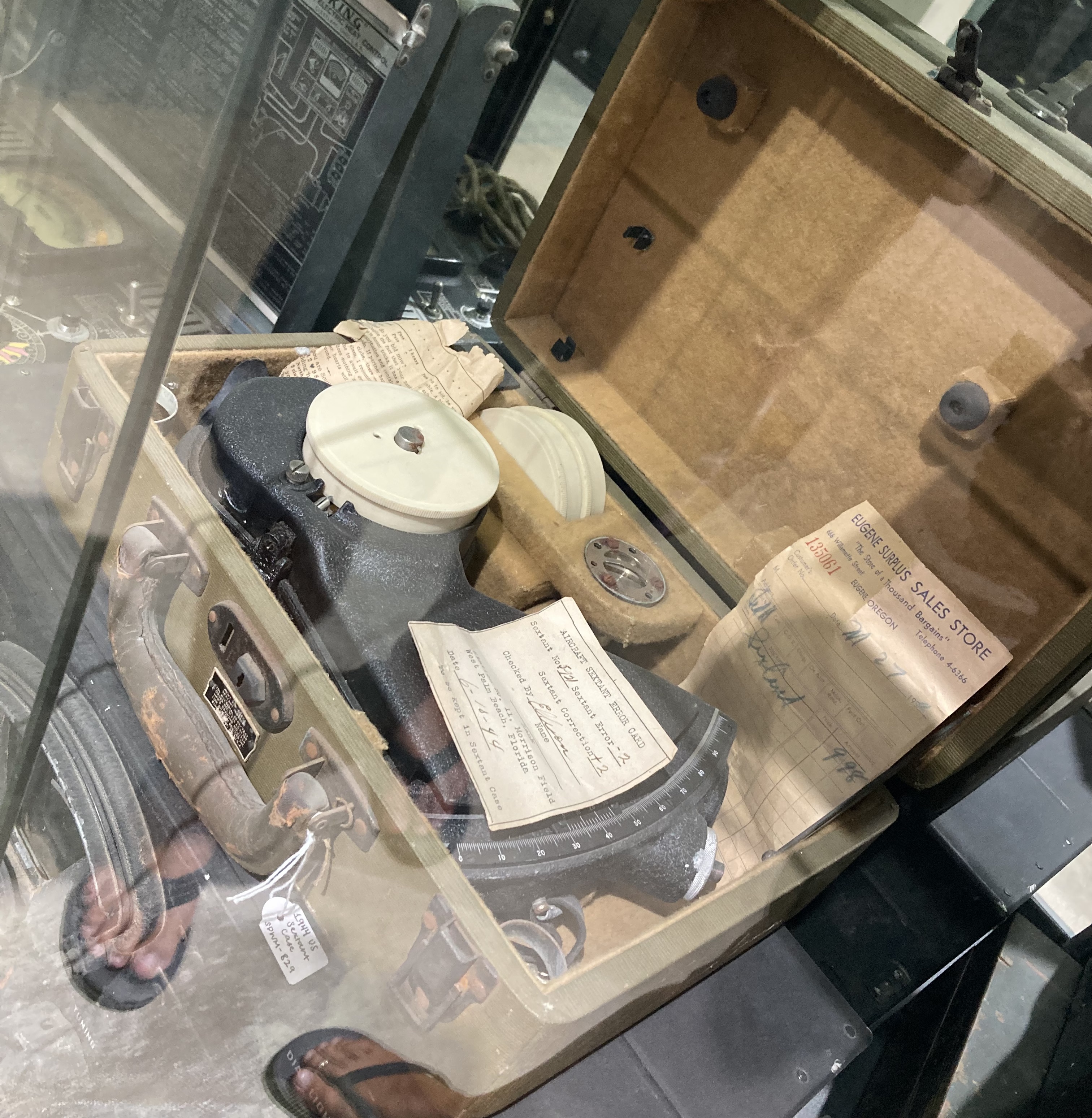
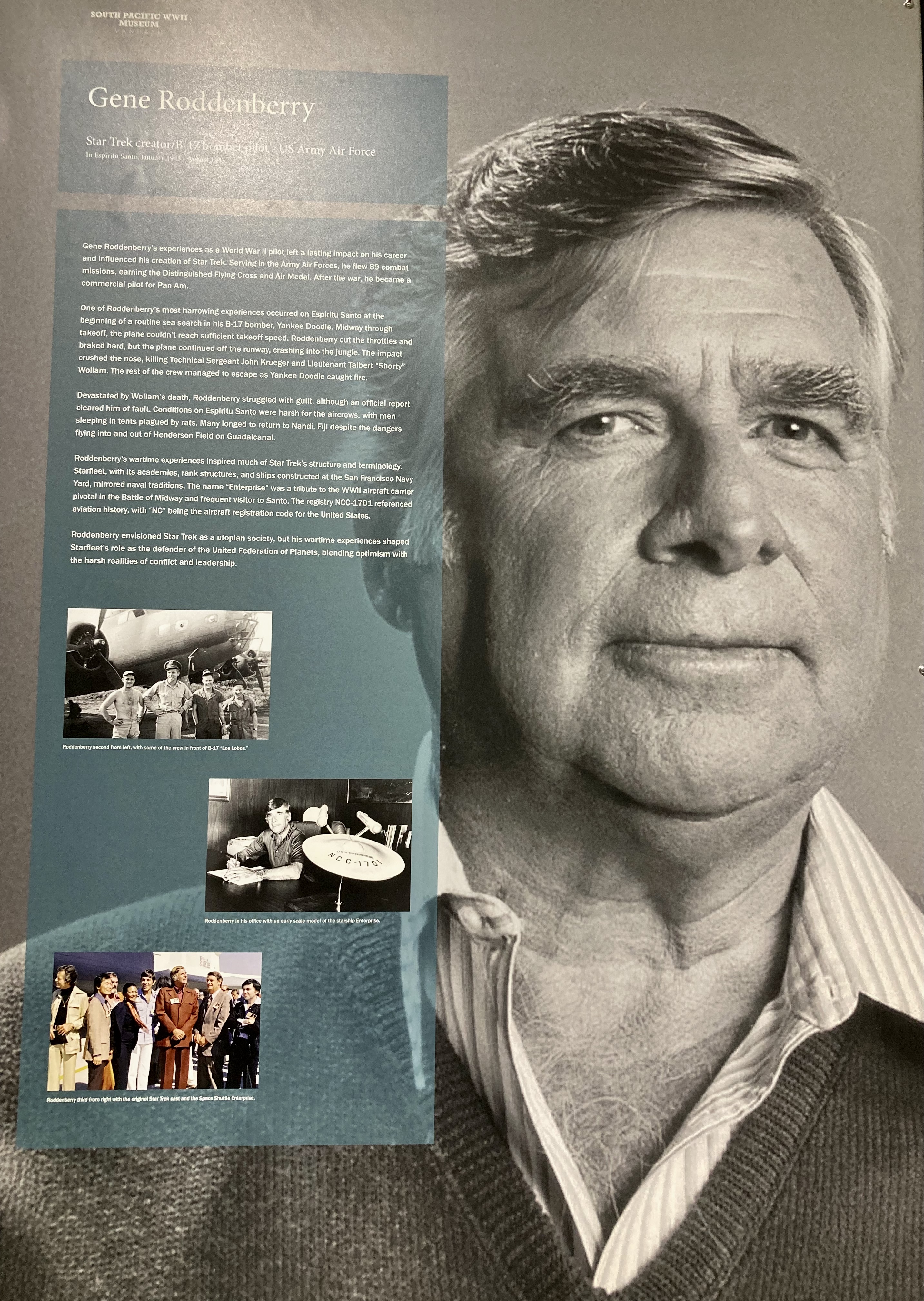
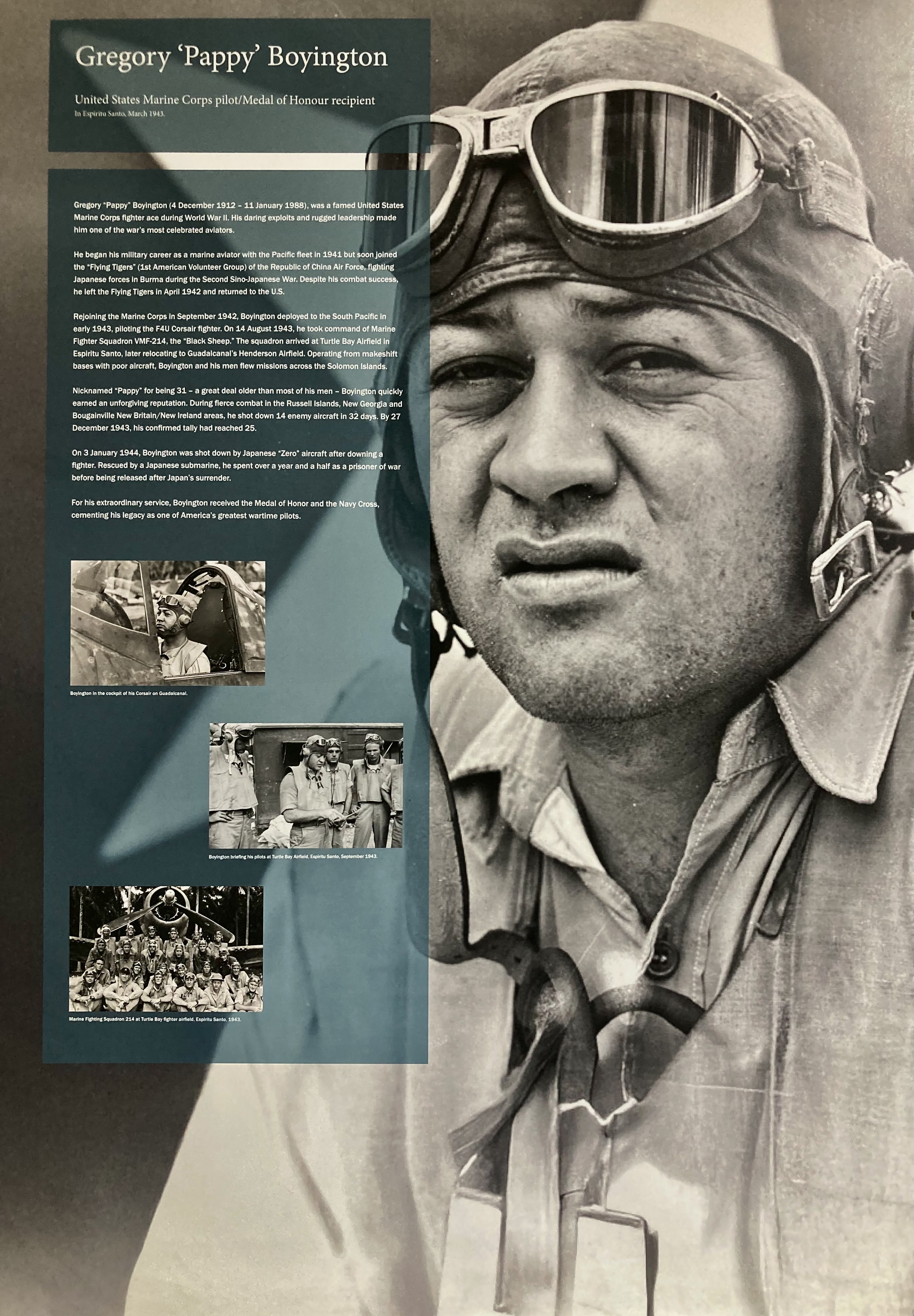
Models and displays inside the museum, including relics and artifacts from the base donated by survivors and their families as well as recovered from the wreck.
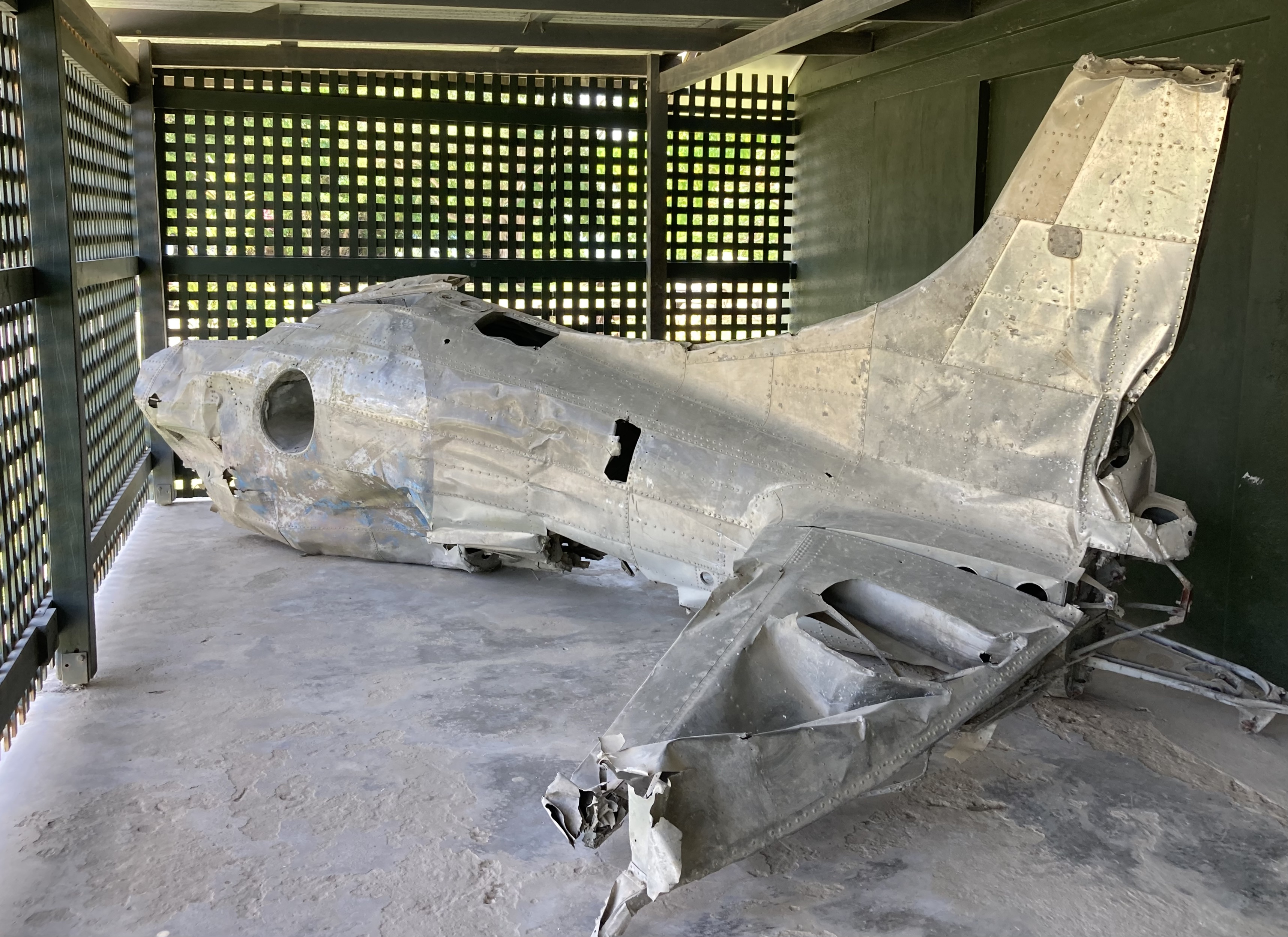
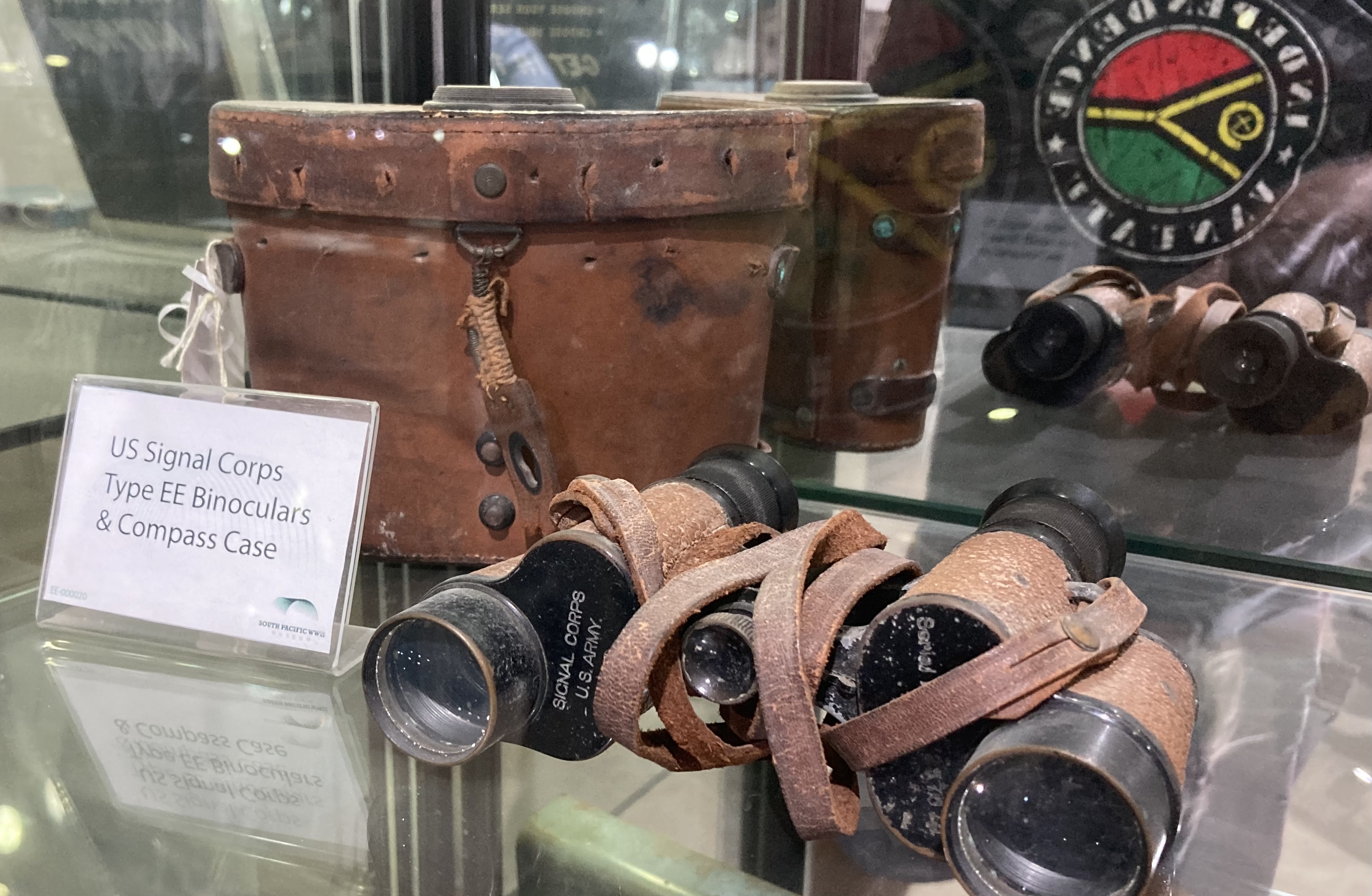
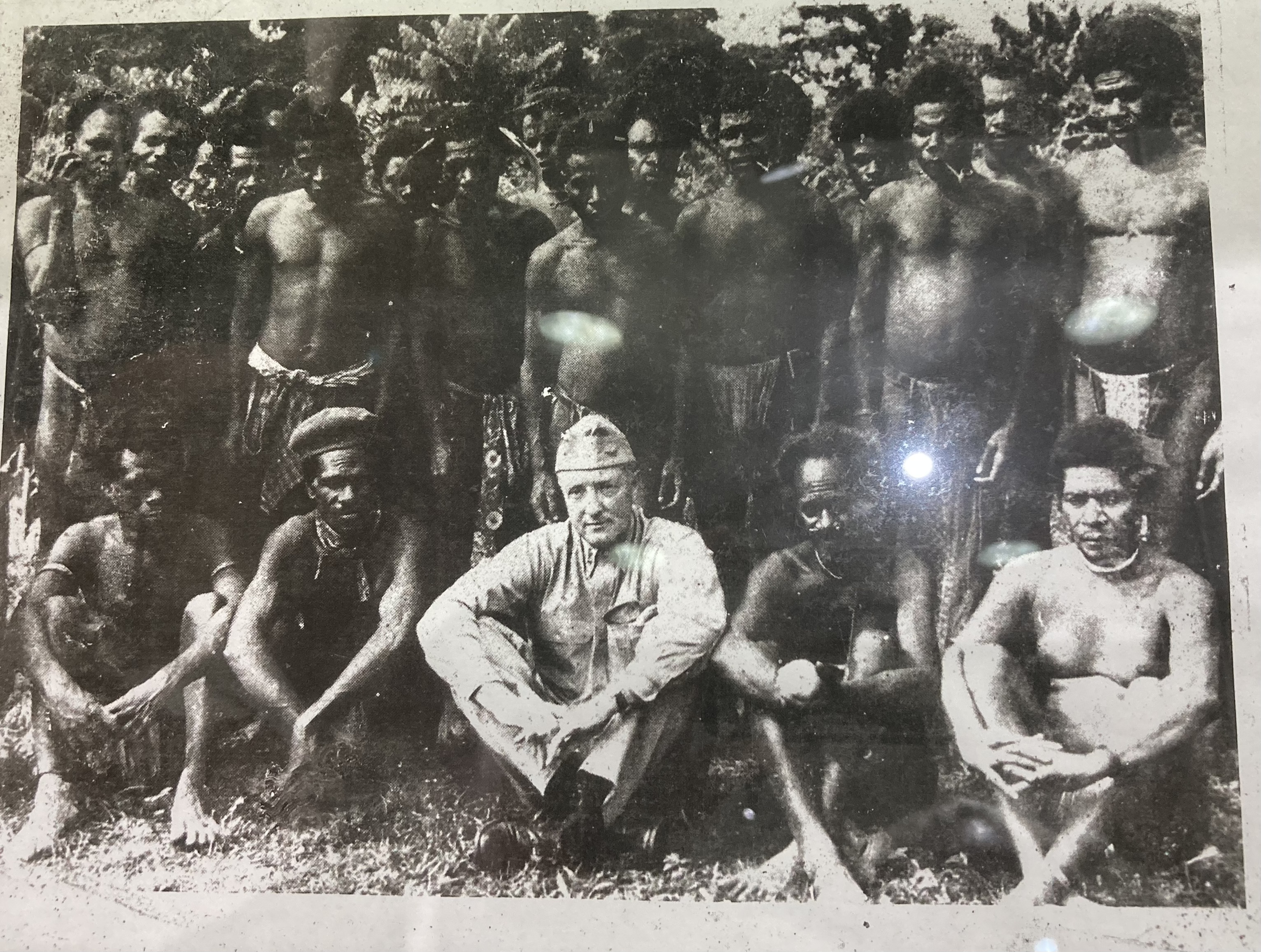
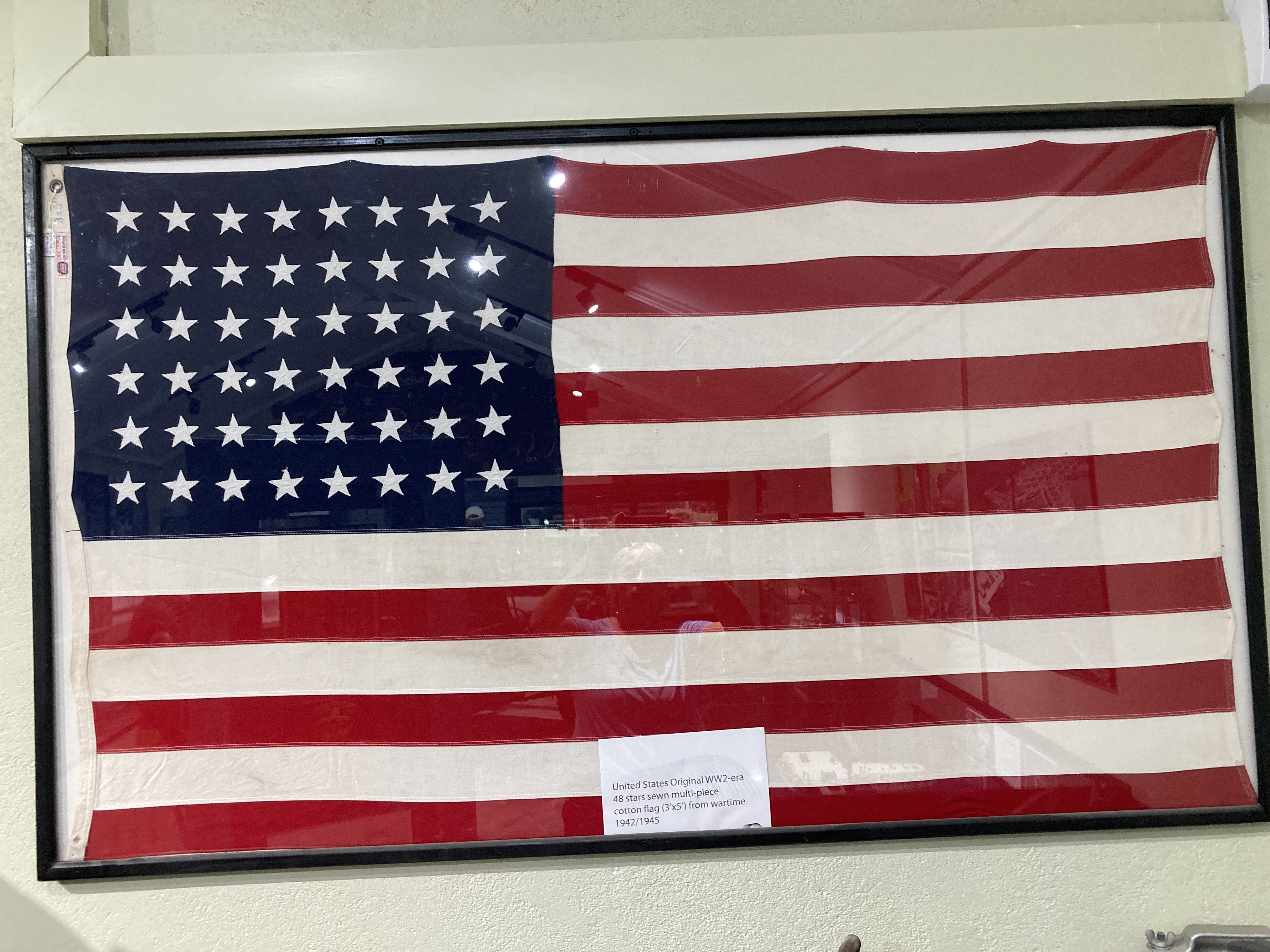
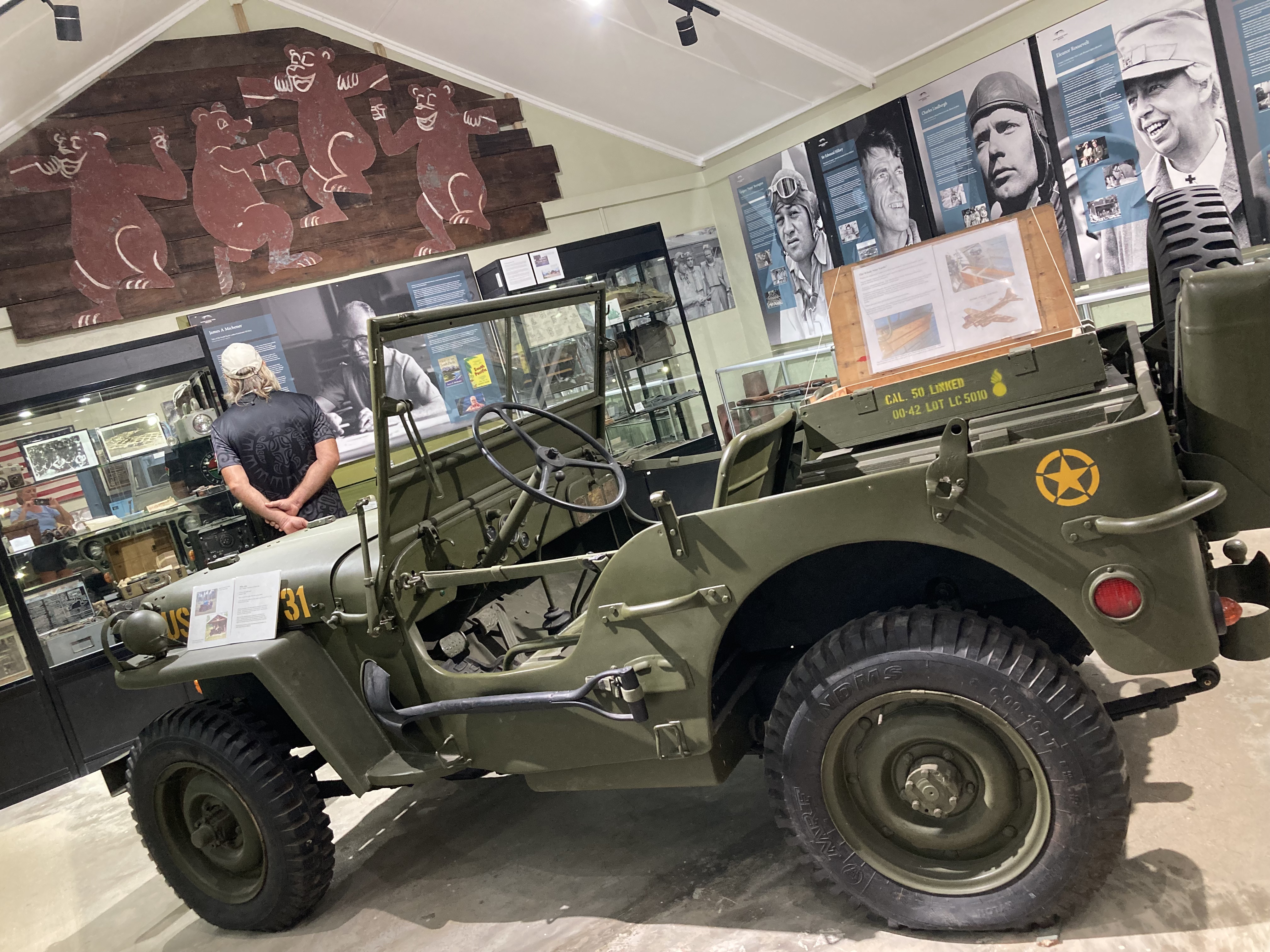
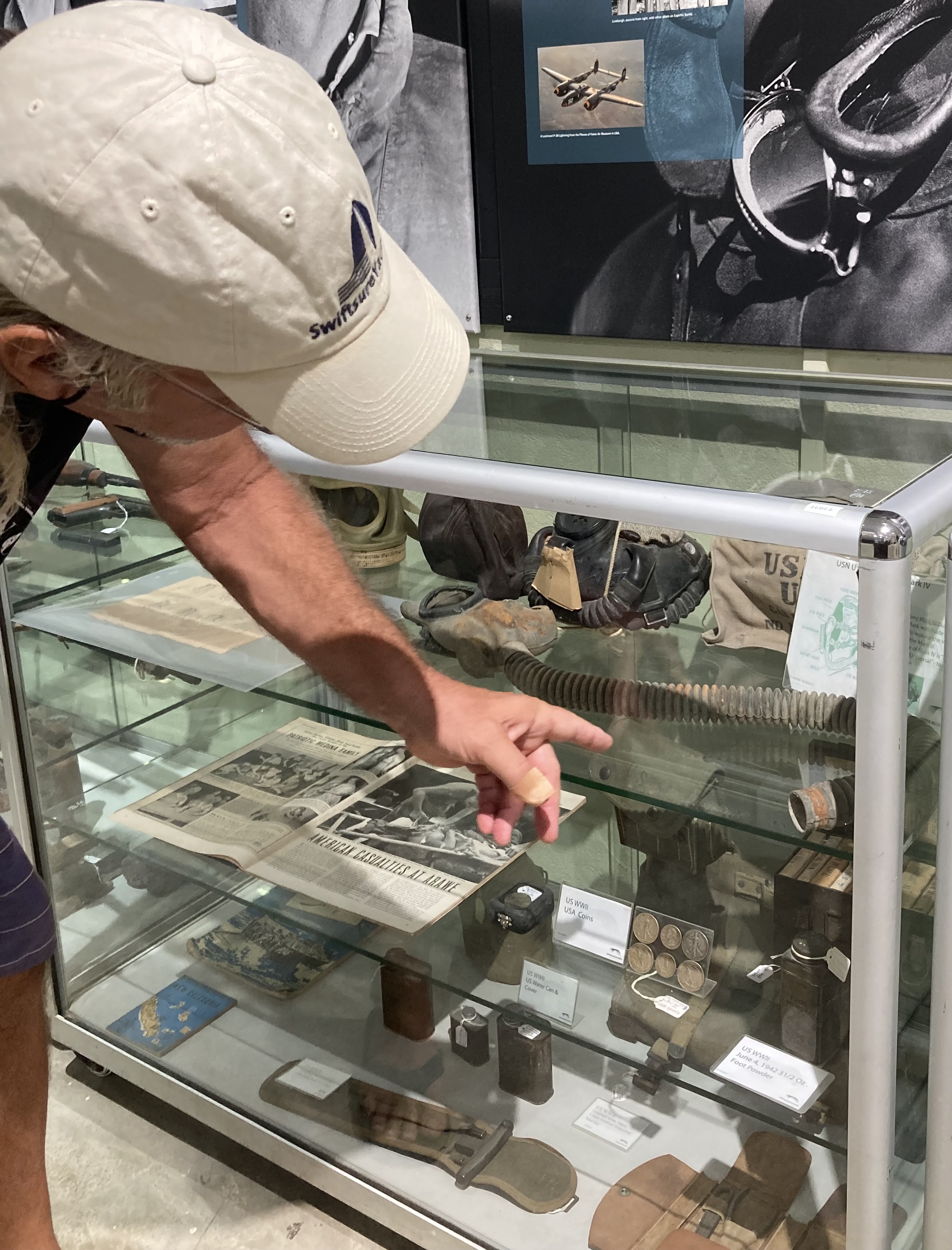
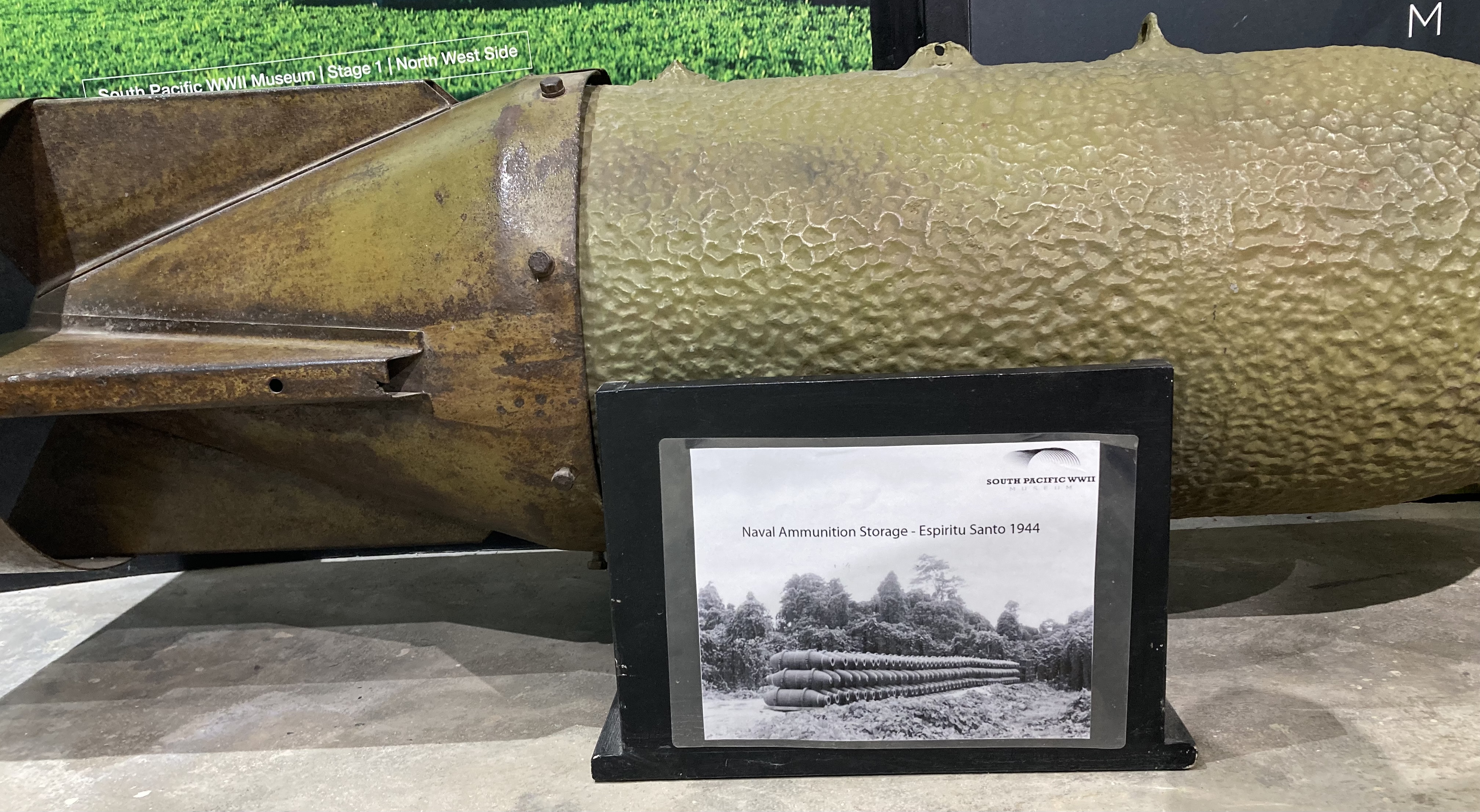
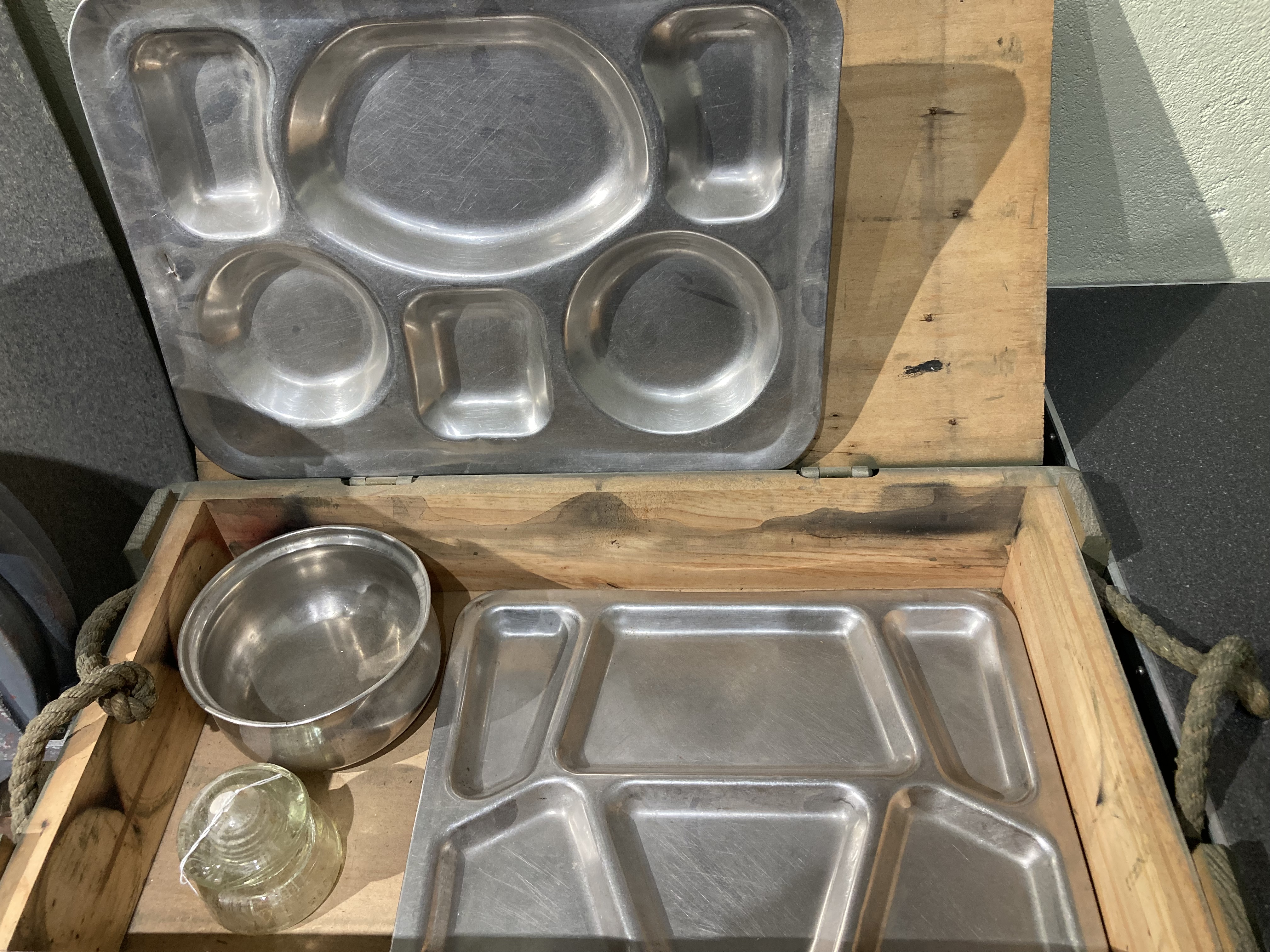
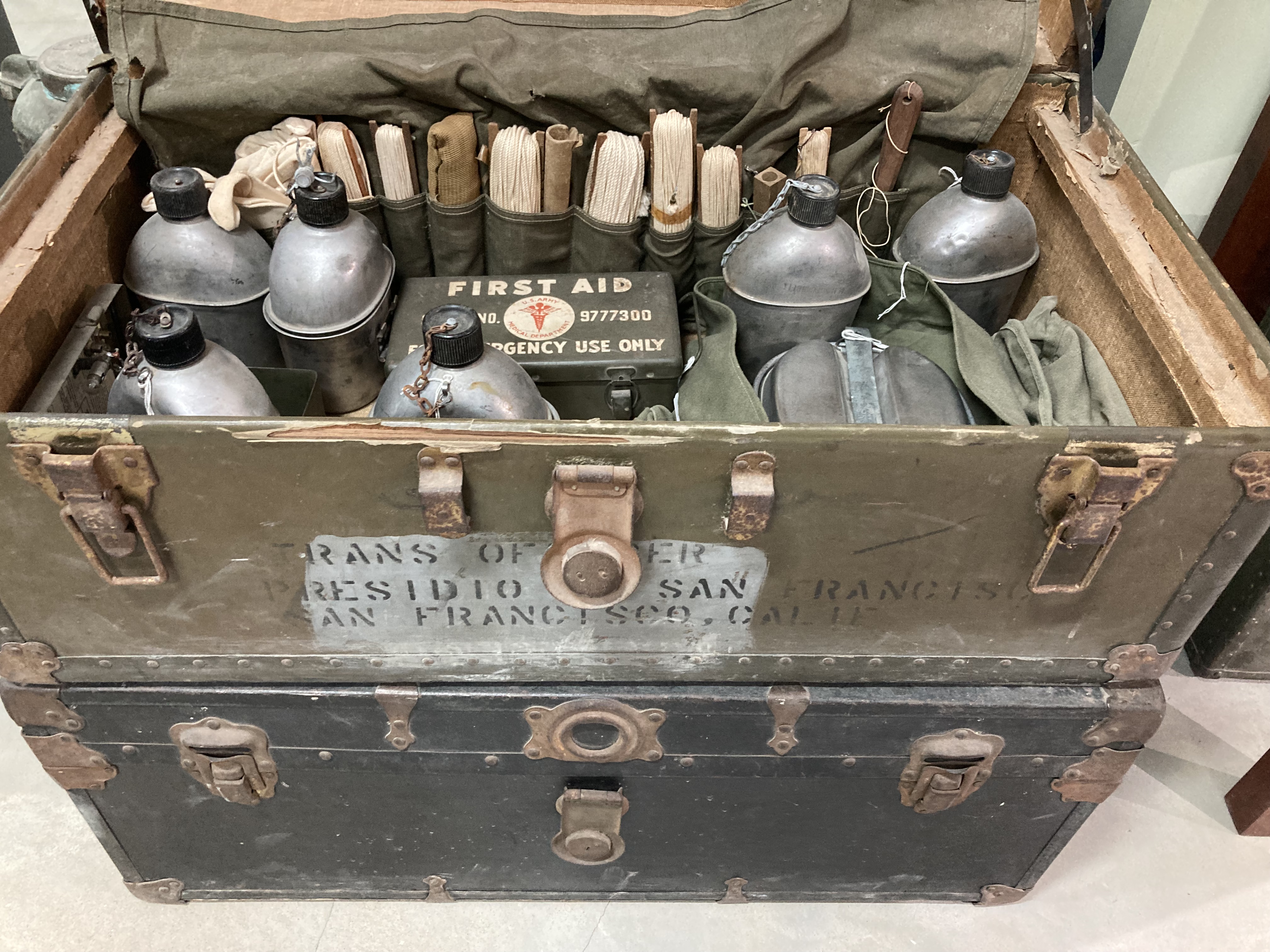
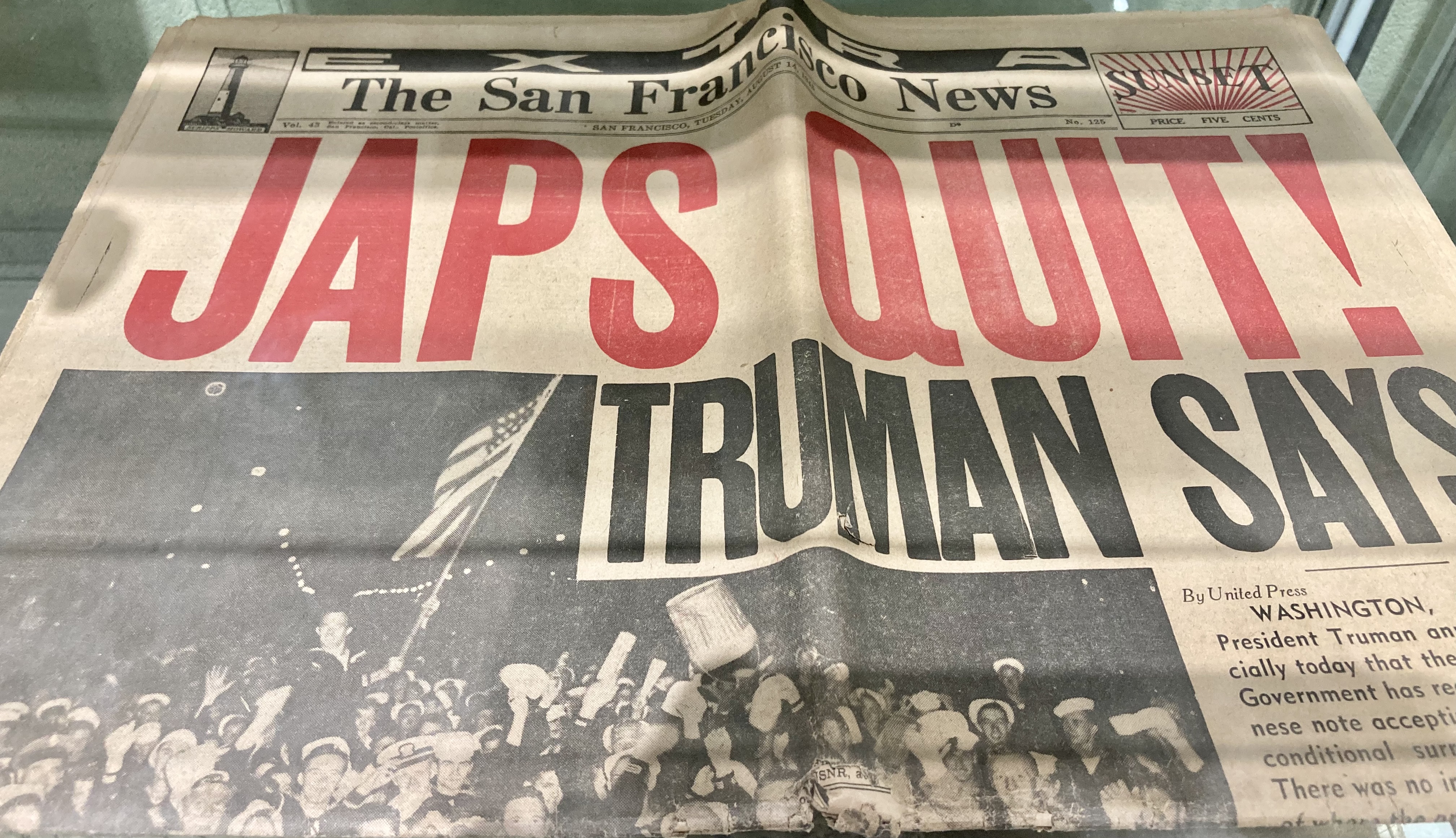
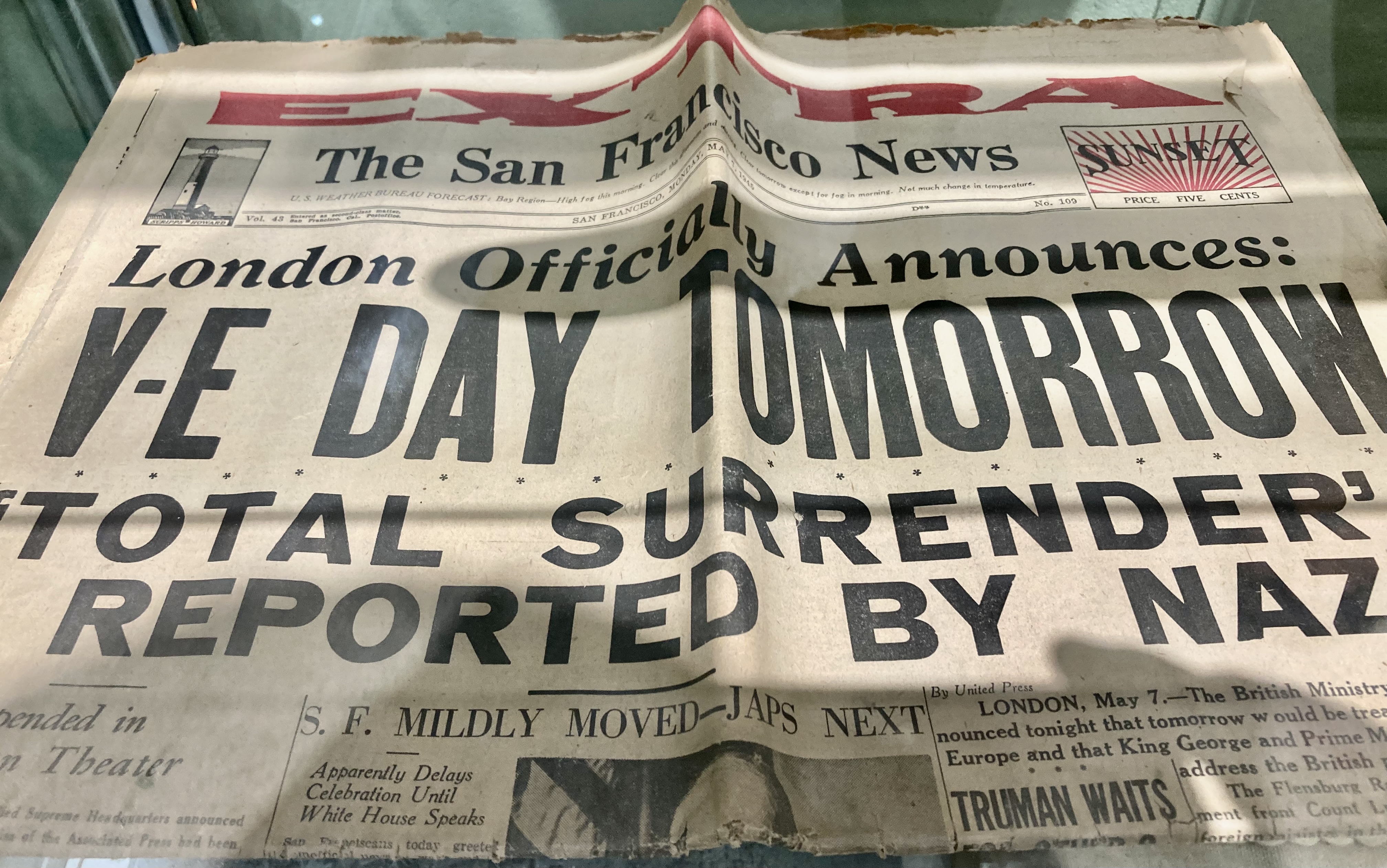
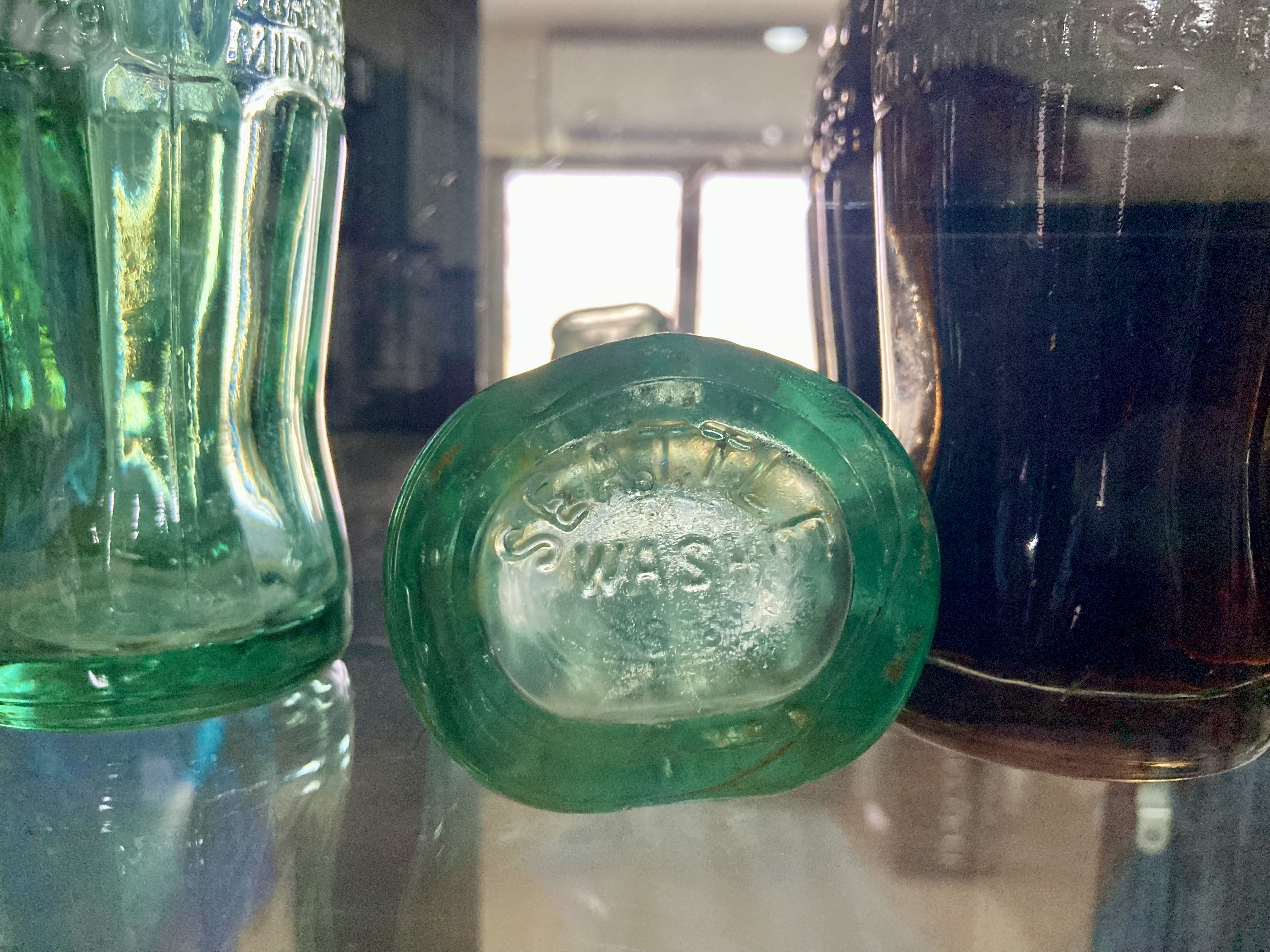
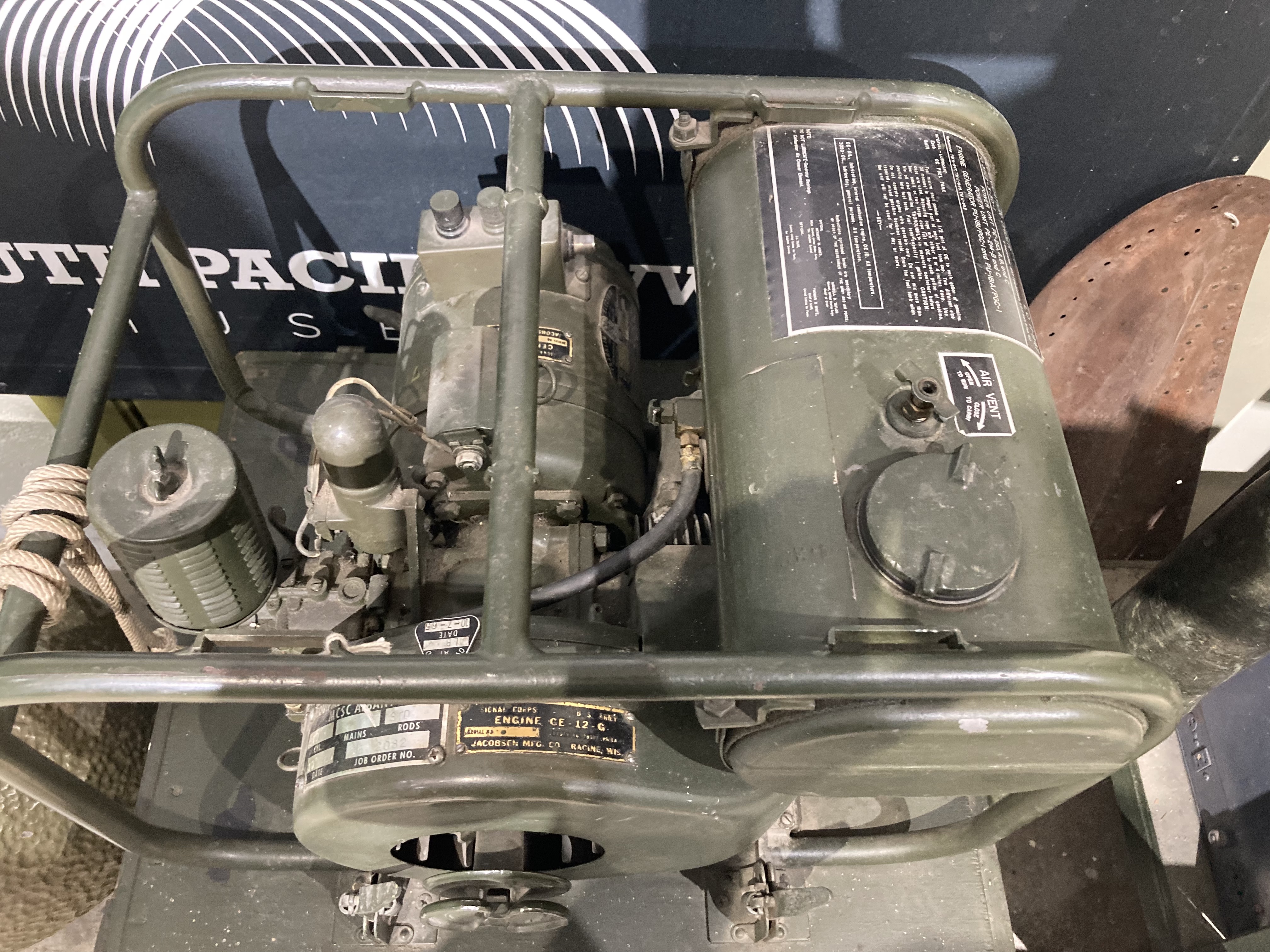
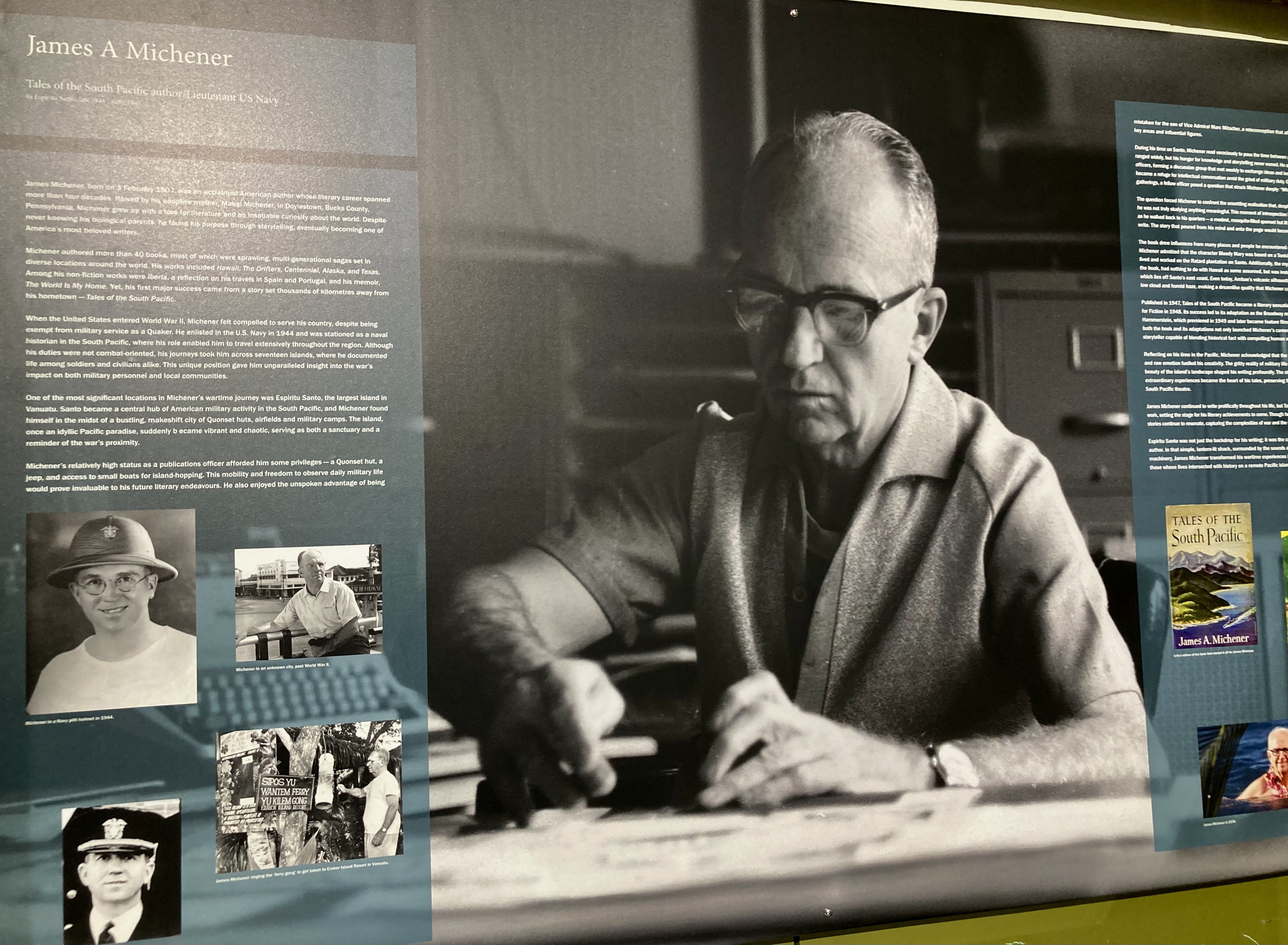
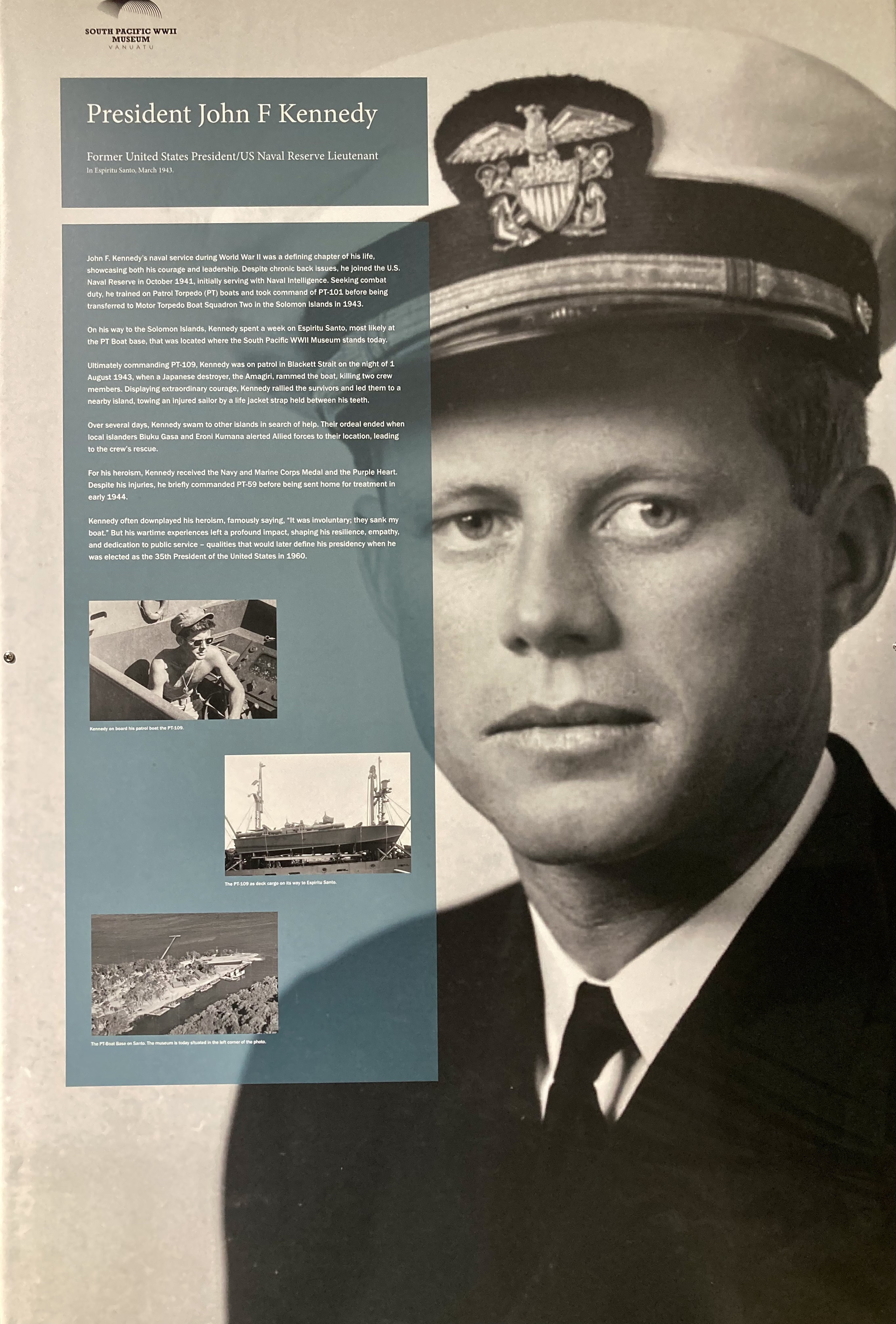
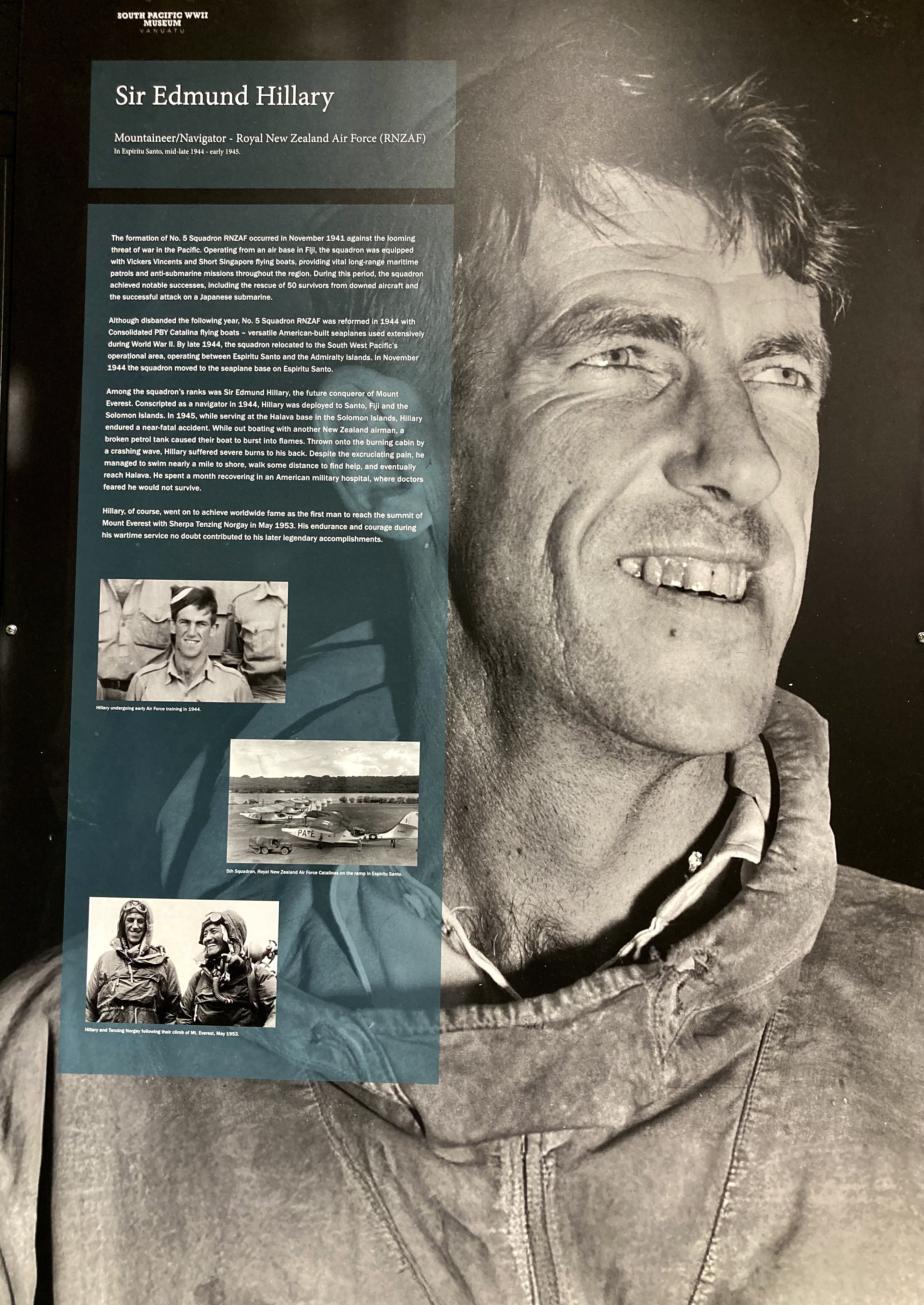
Recognizable faces and names from history who passed through or were at one point stationed at the base on Espiritu Santo:
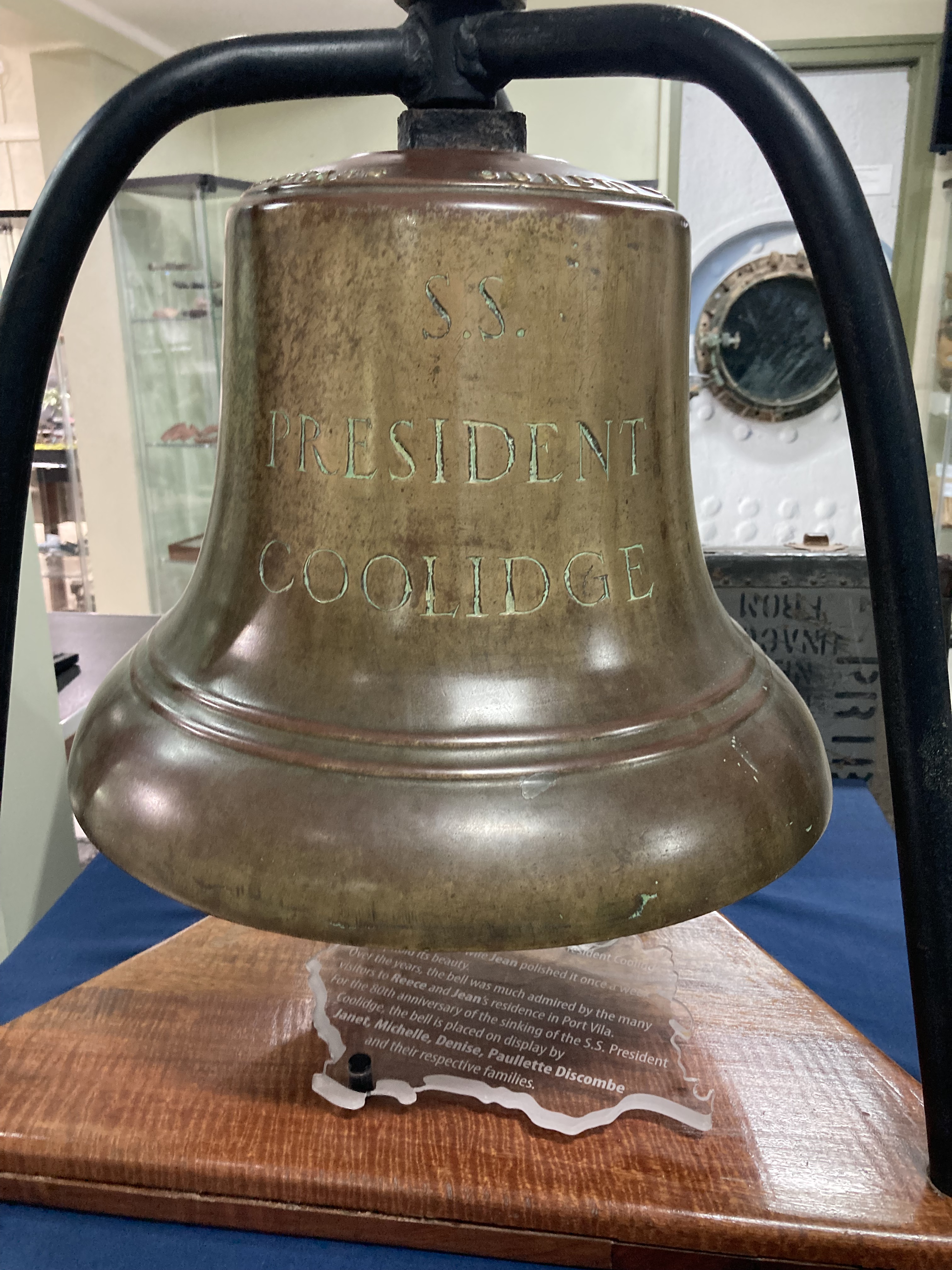
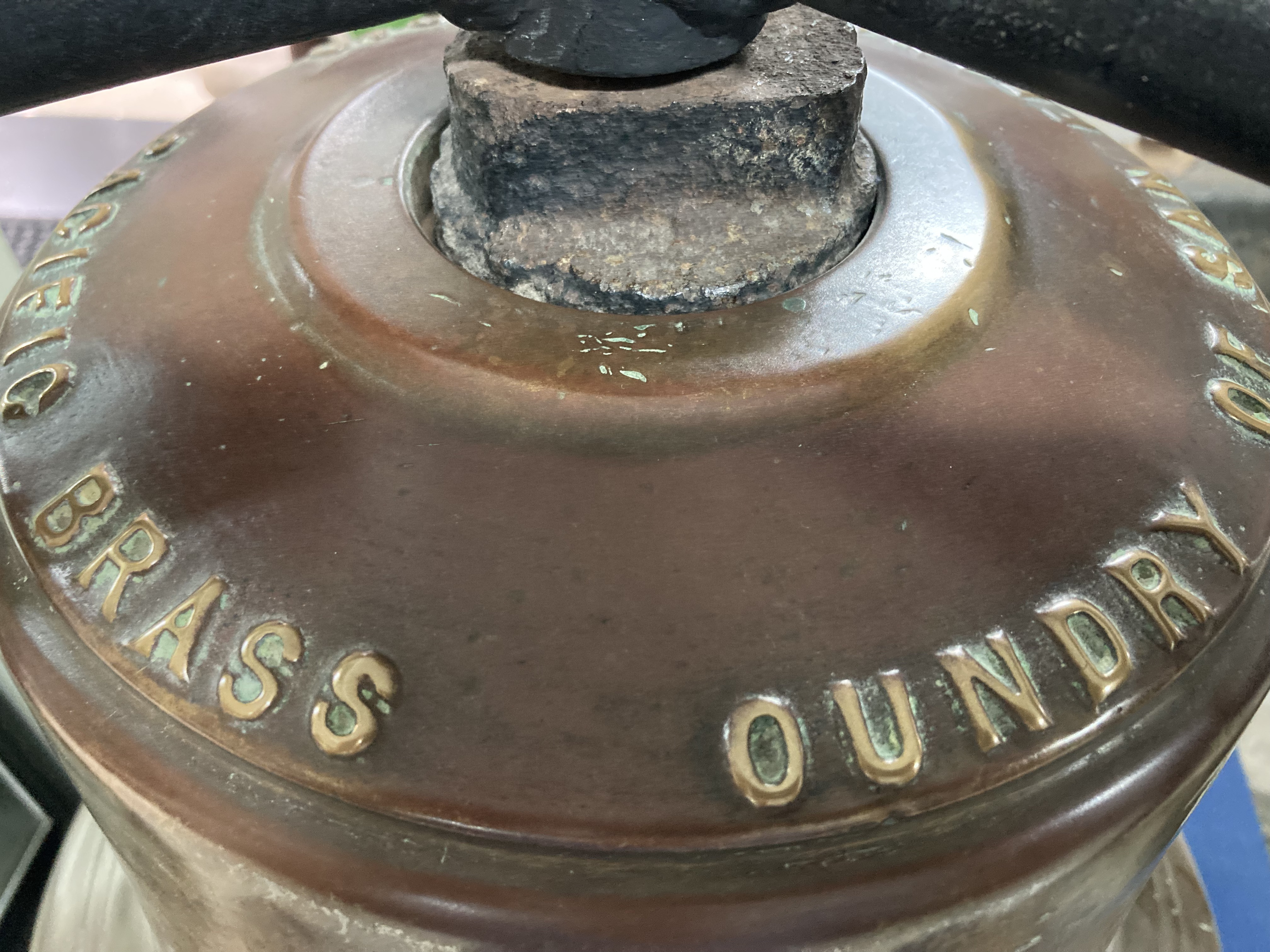
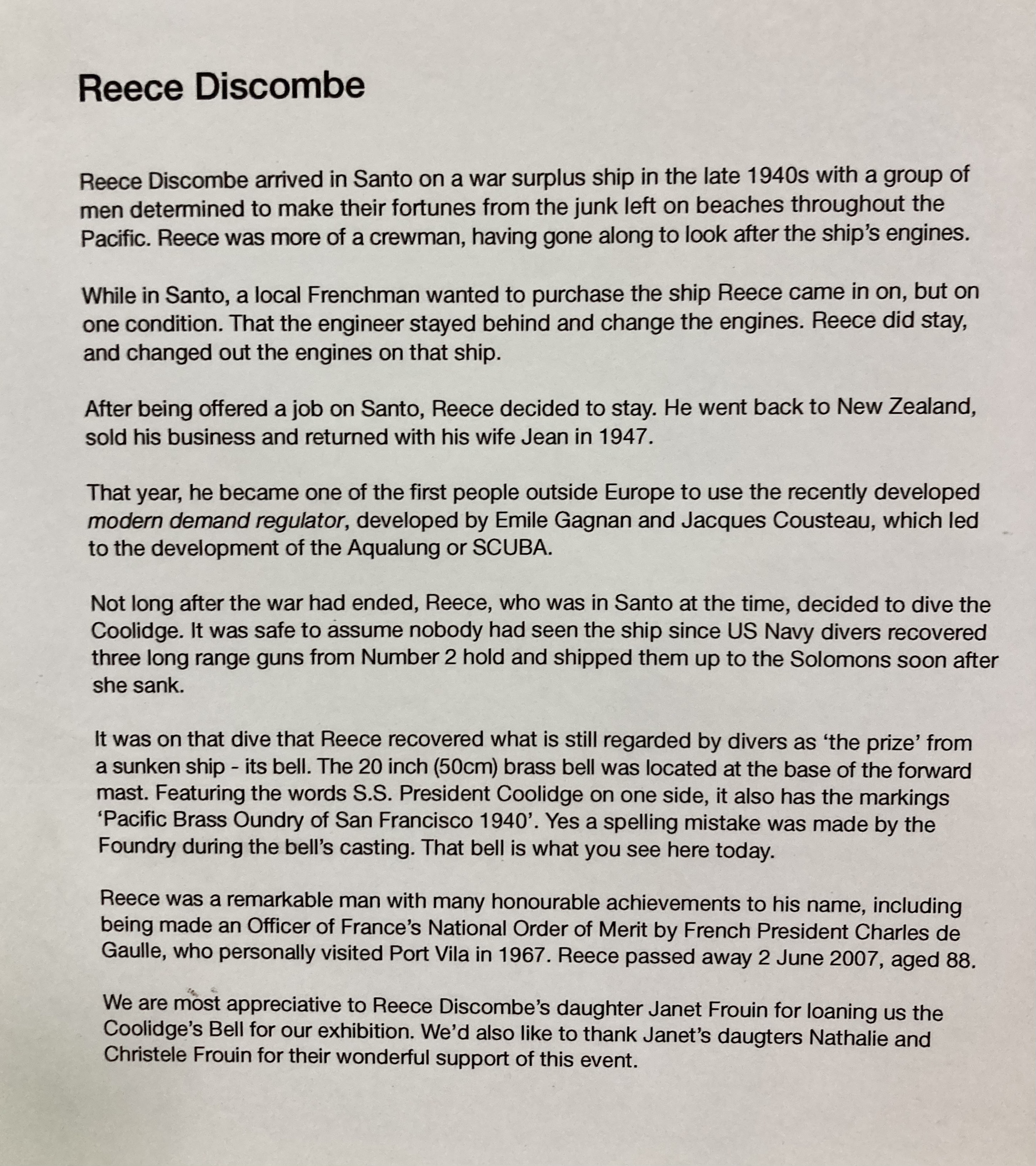
The ship’s bell that was recovered five years after the President Coolidge sank:
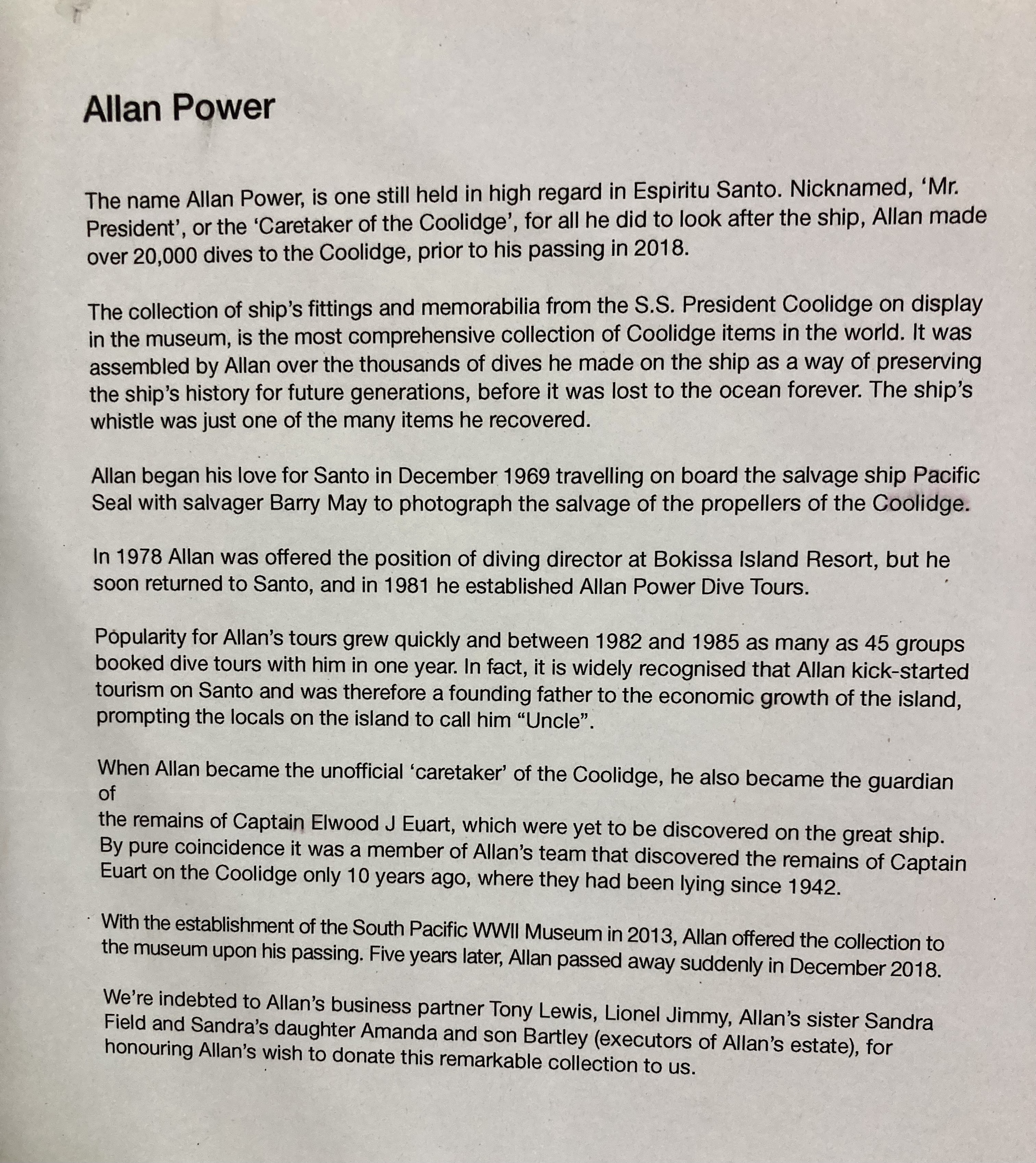
Allan Power and Reece Discombe…the two individuals probably most involved in the initial surveys, explorations, recoveries, and documentation of the President Coolidge wreck. Discombe was likely the first civilian to dive the wreck on scuba and Power logged over 20,000 dives at the Coolidge.
And now it was our chance to visit this historic wreck…
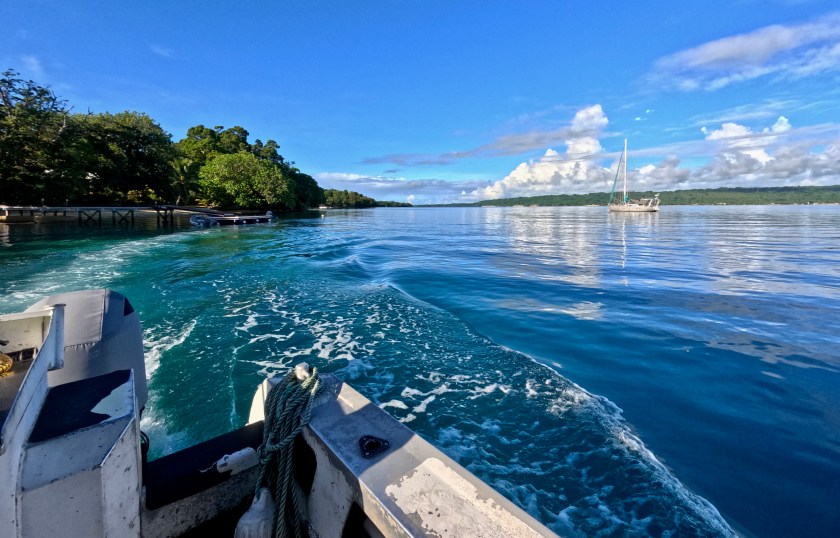
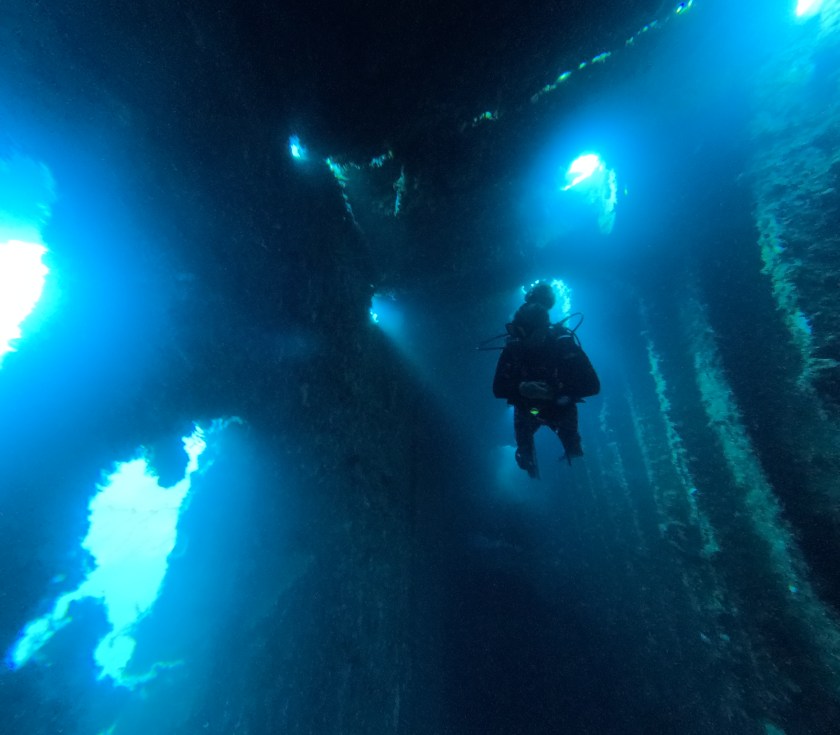
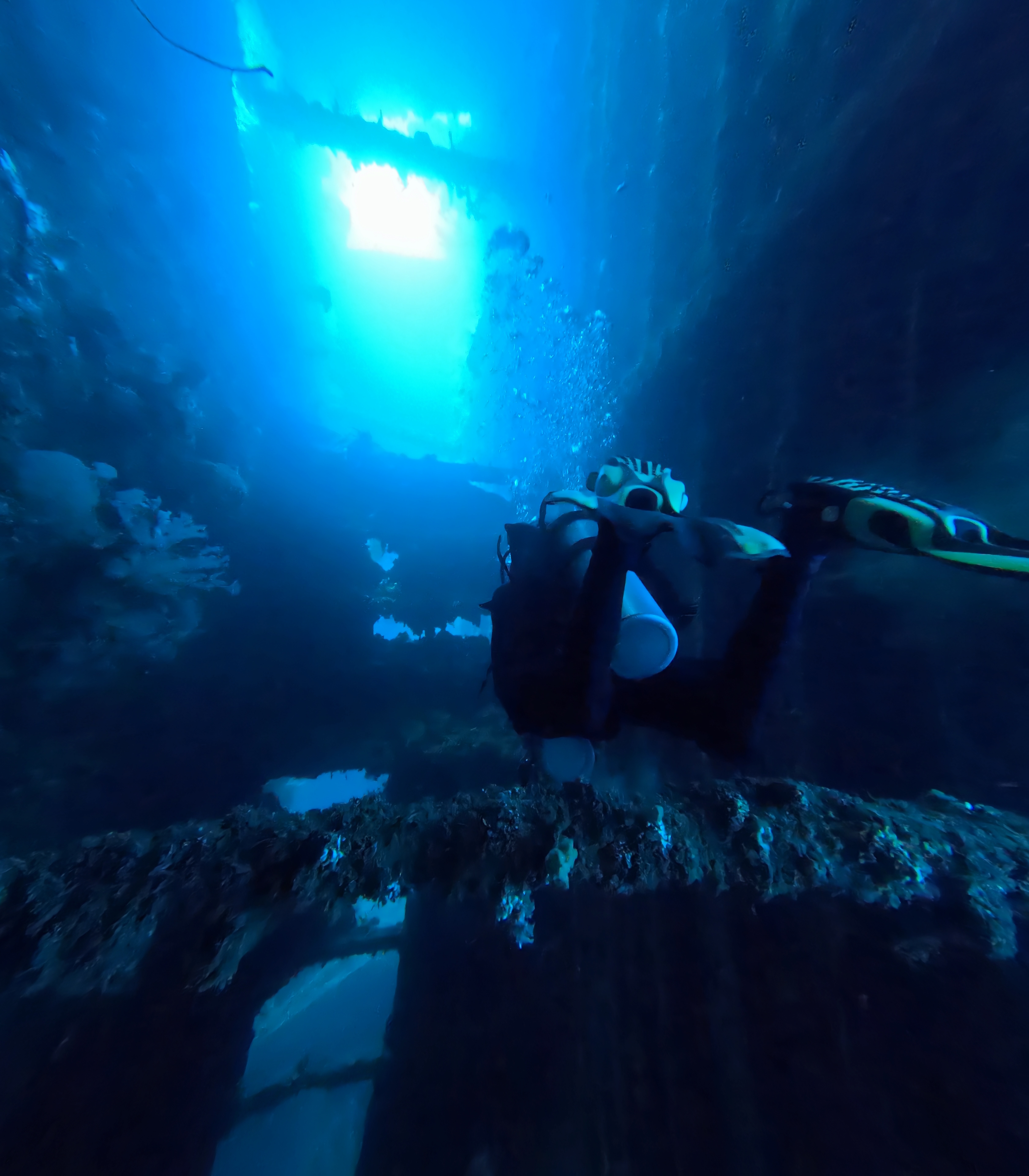
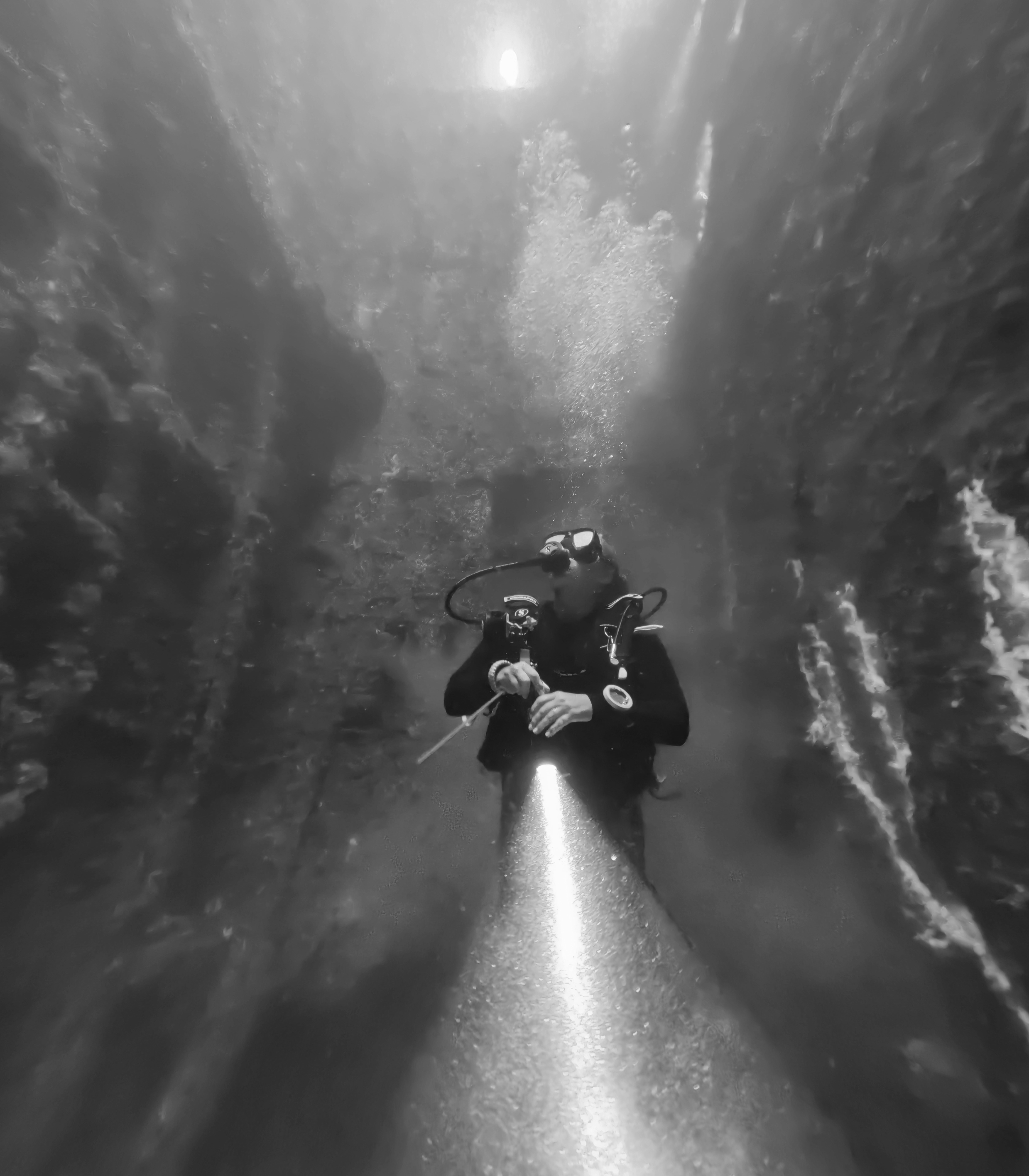
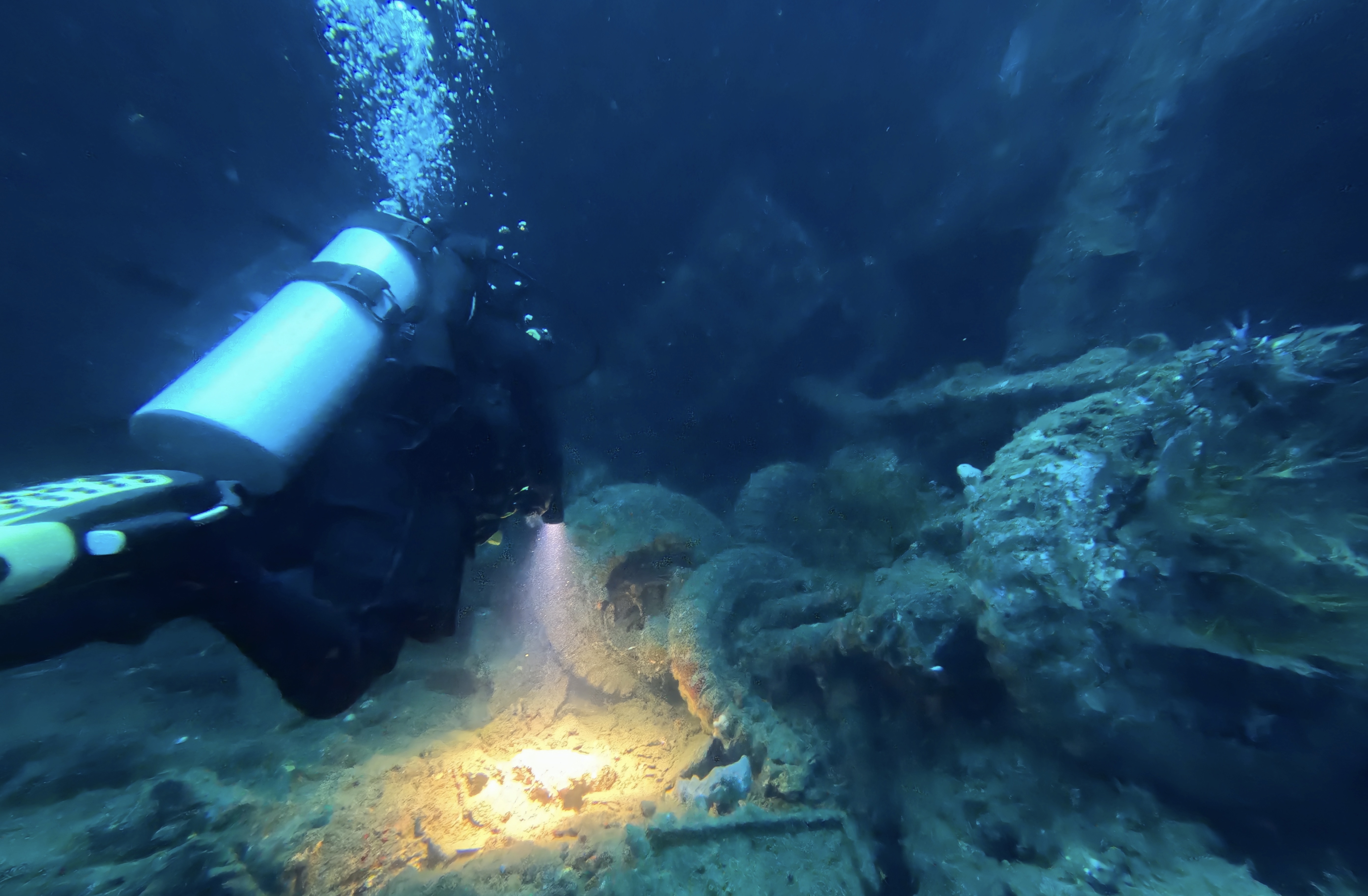
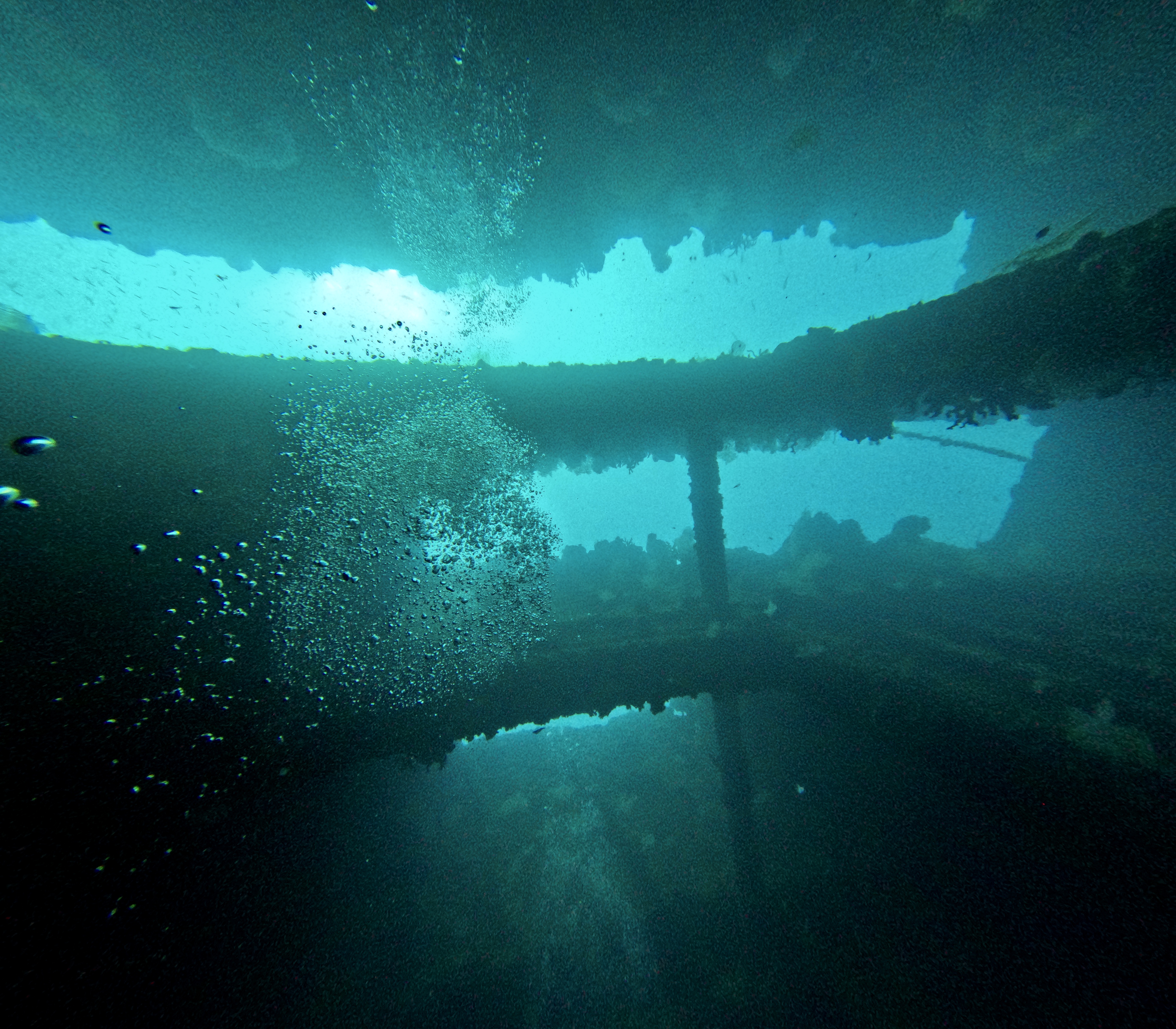
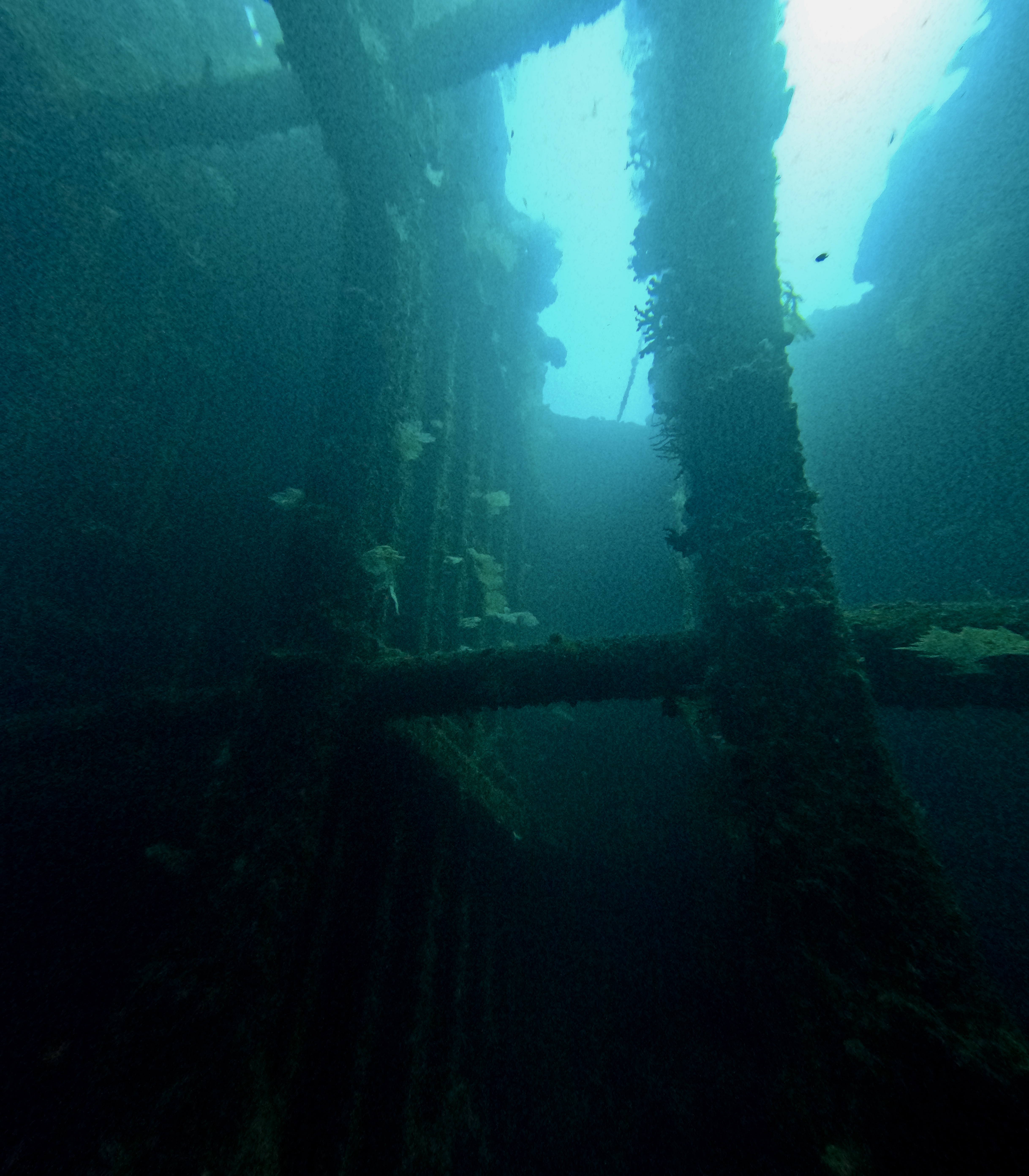
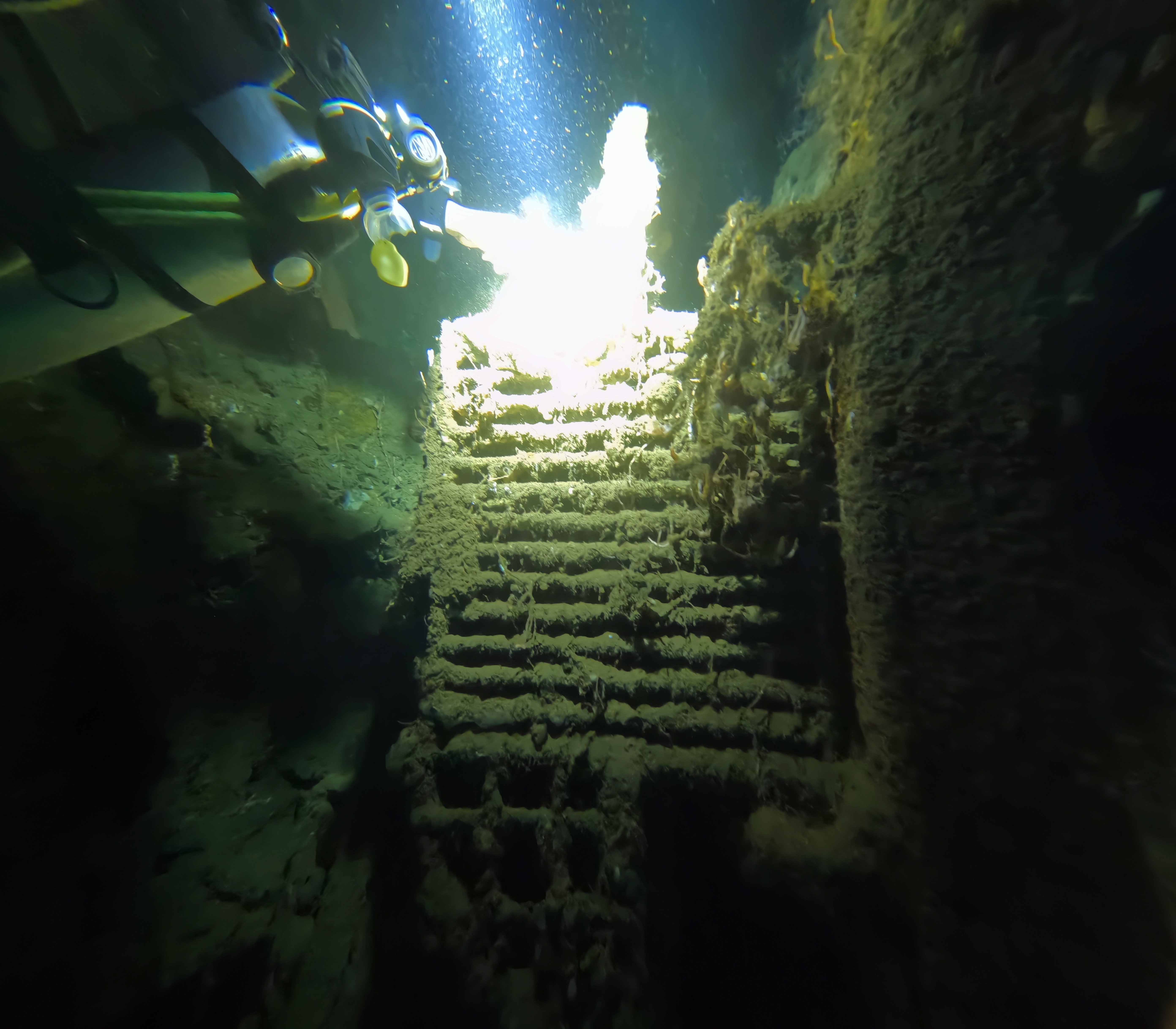
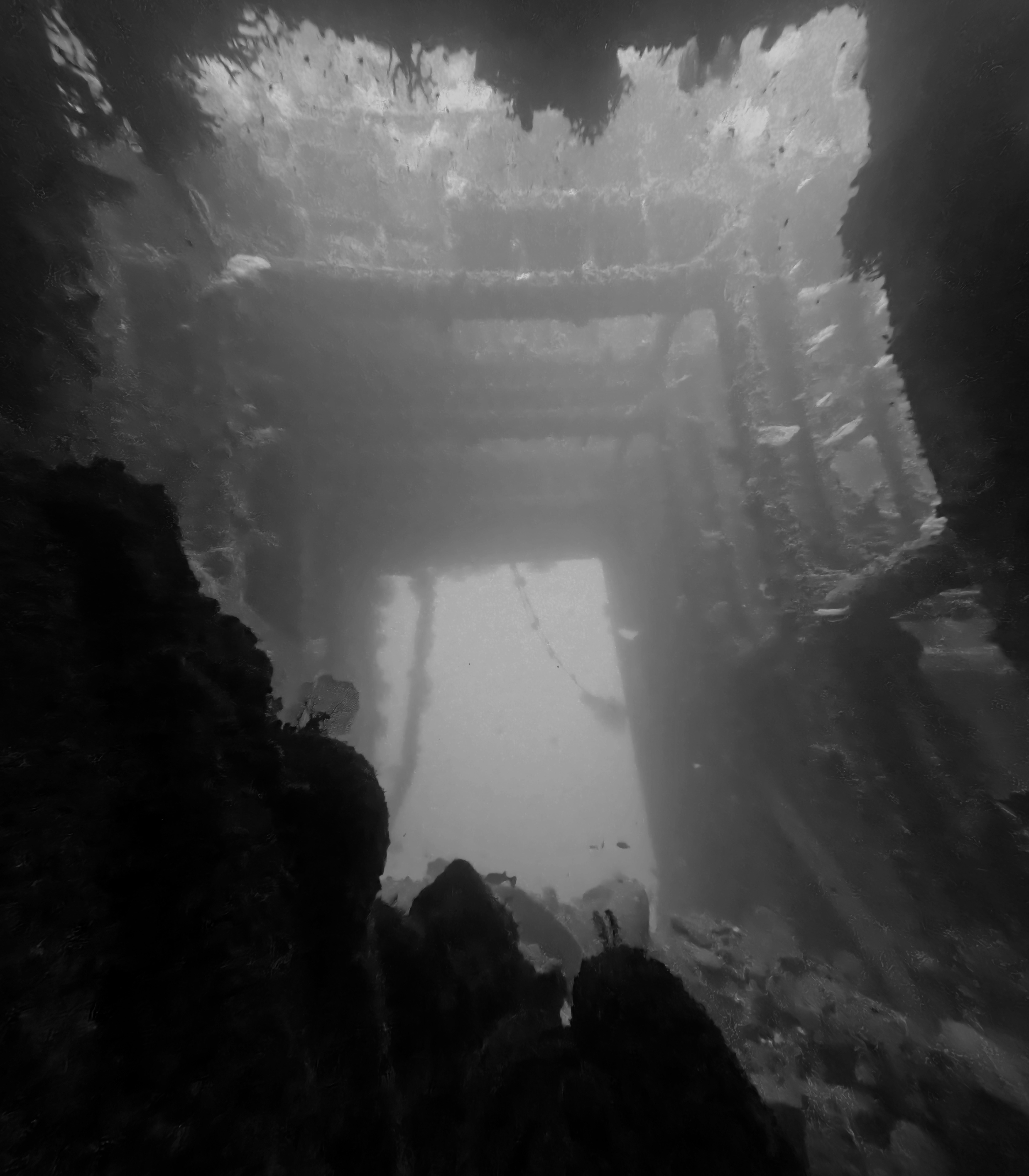
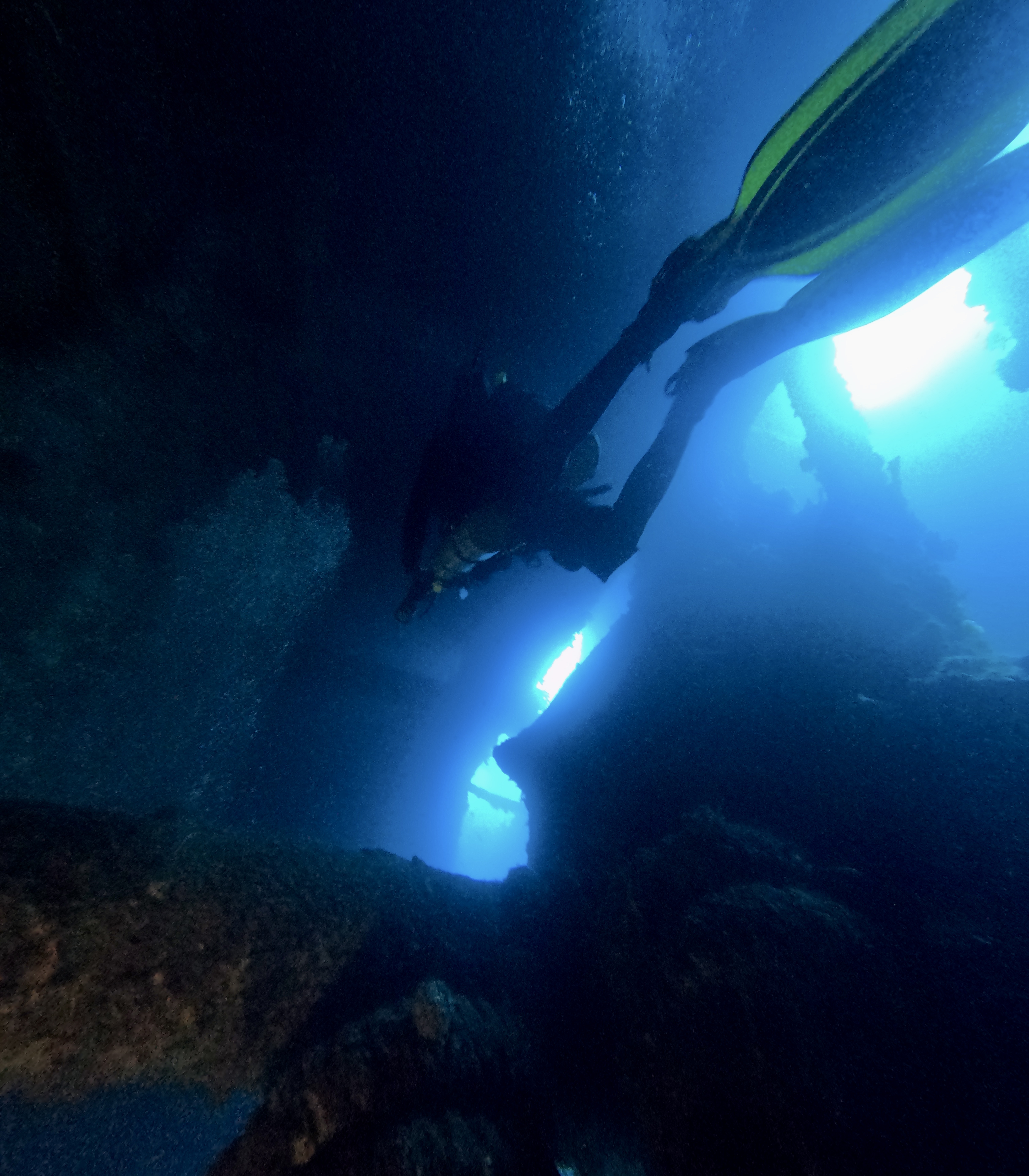
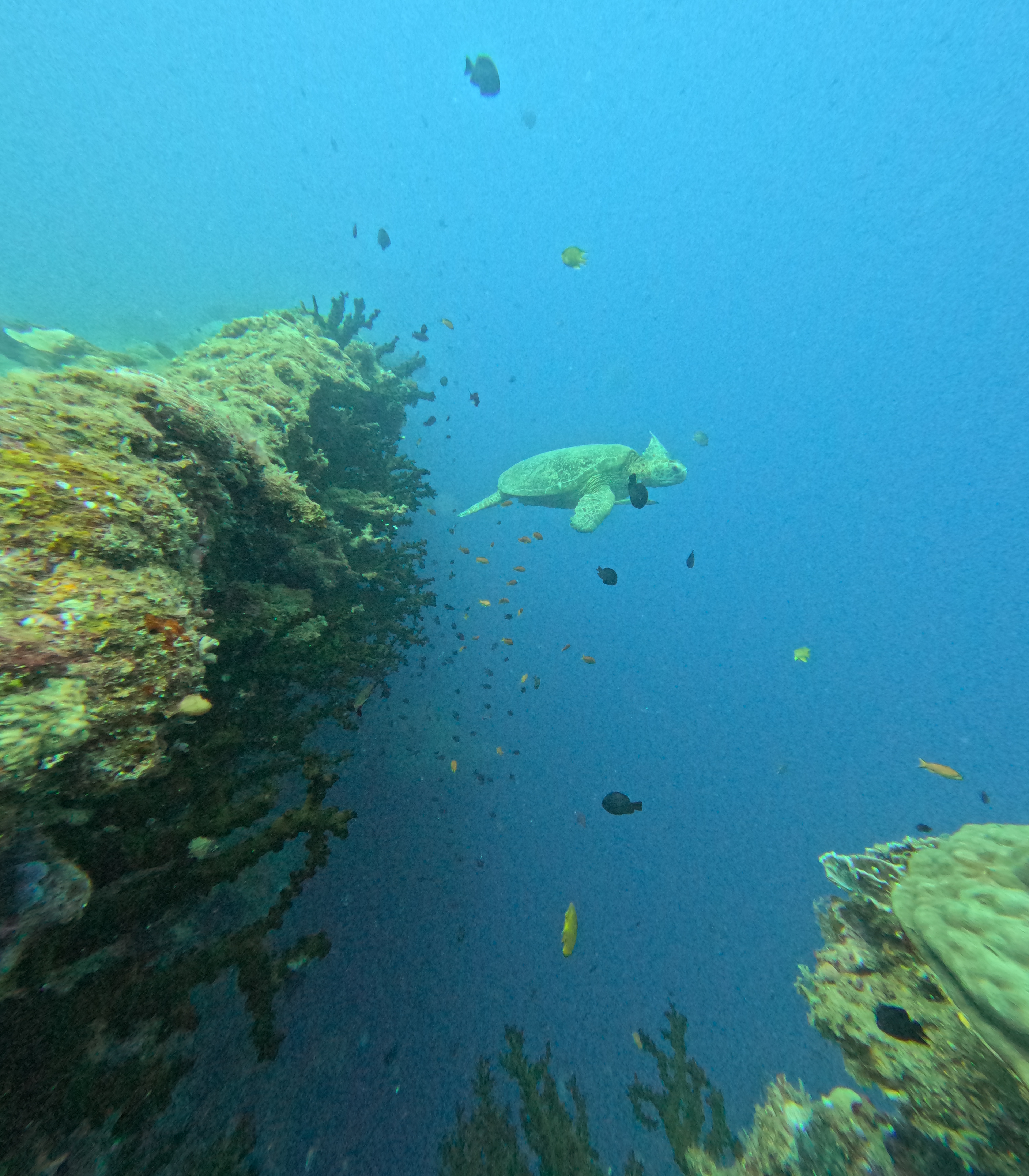
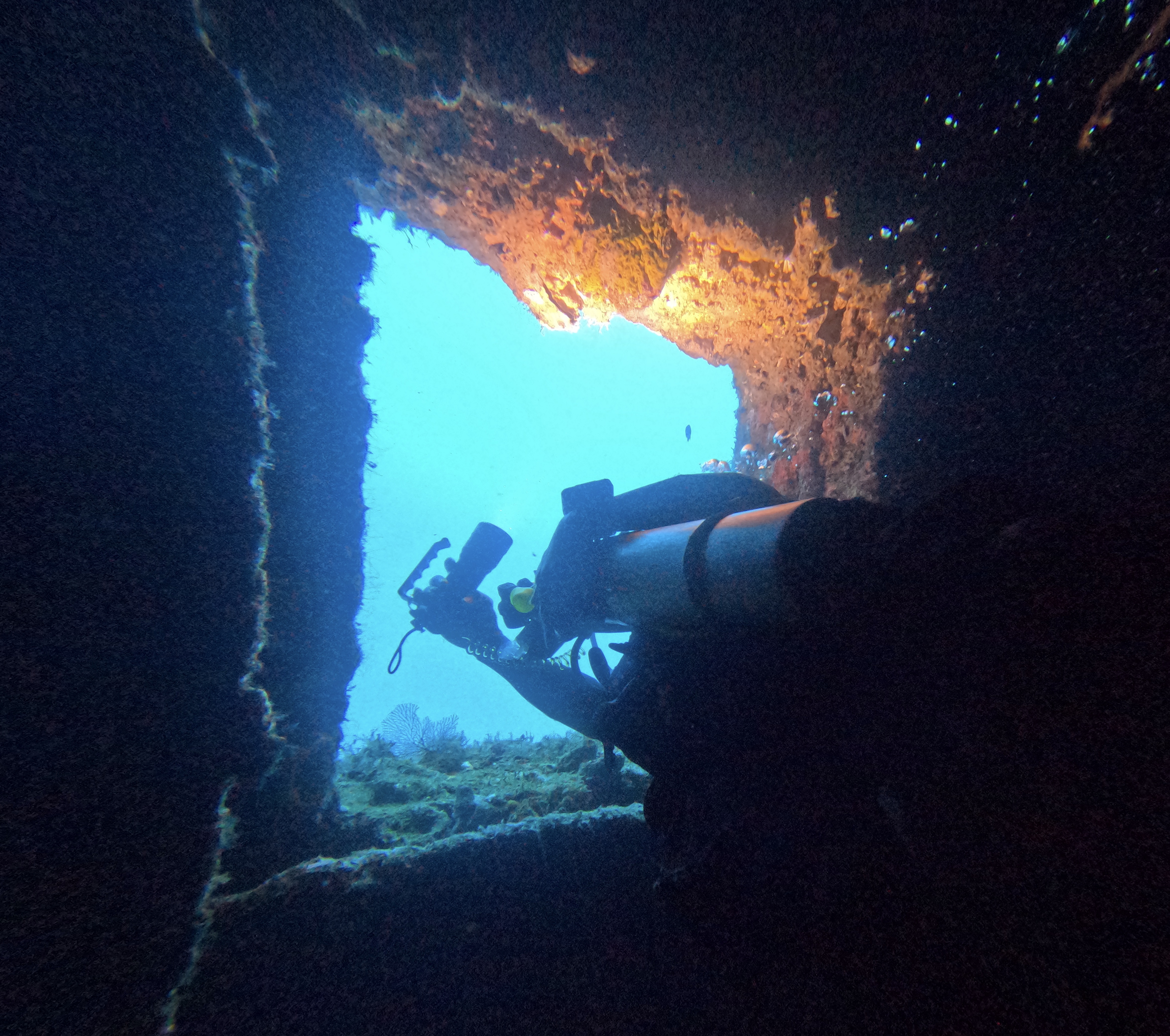
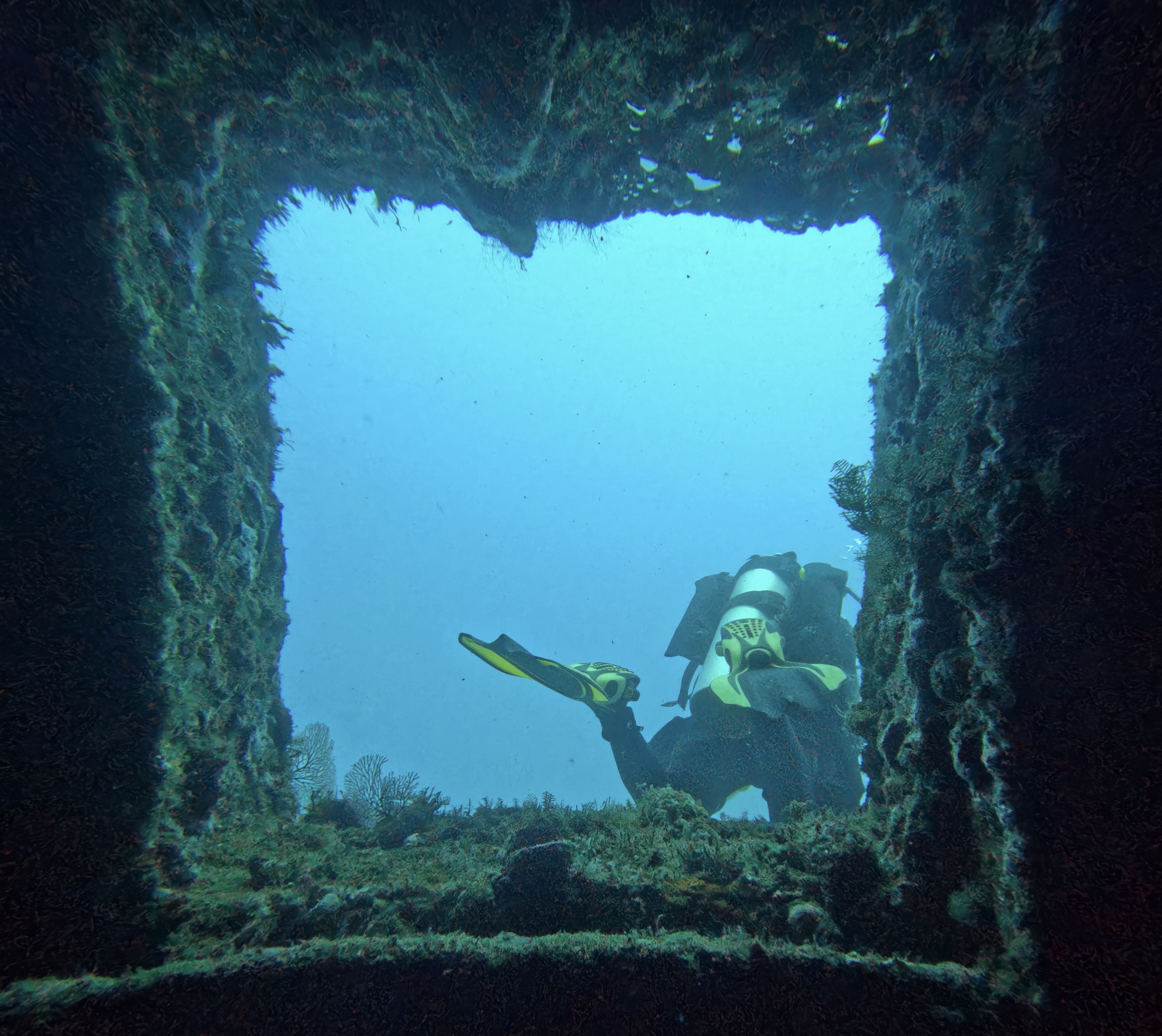
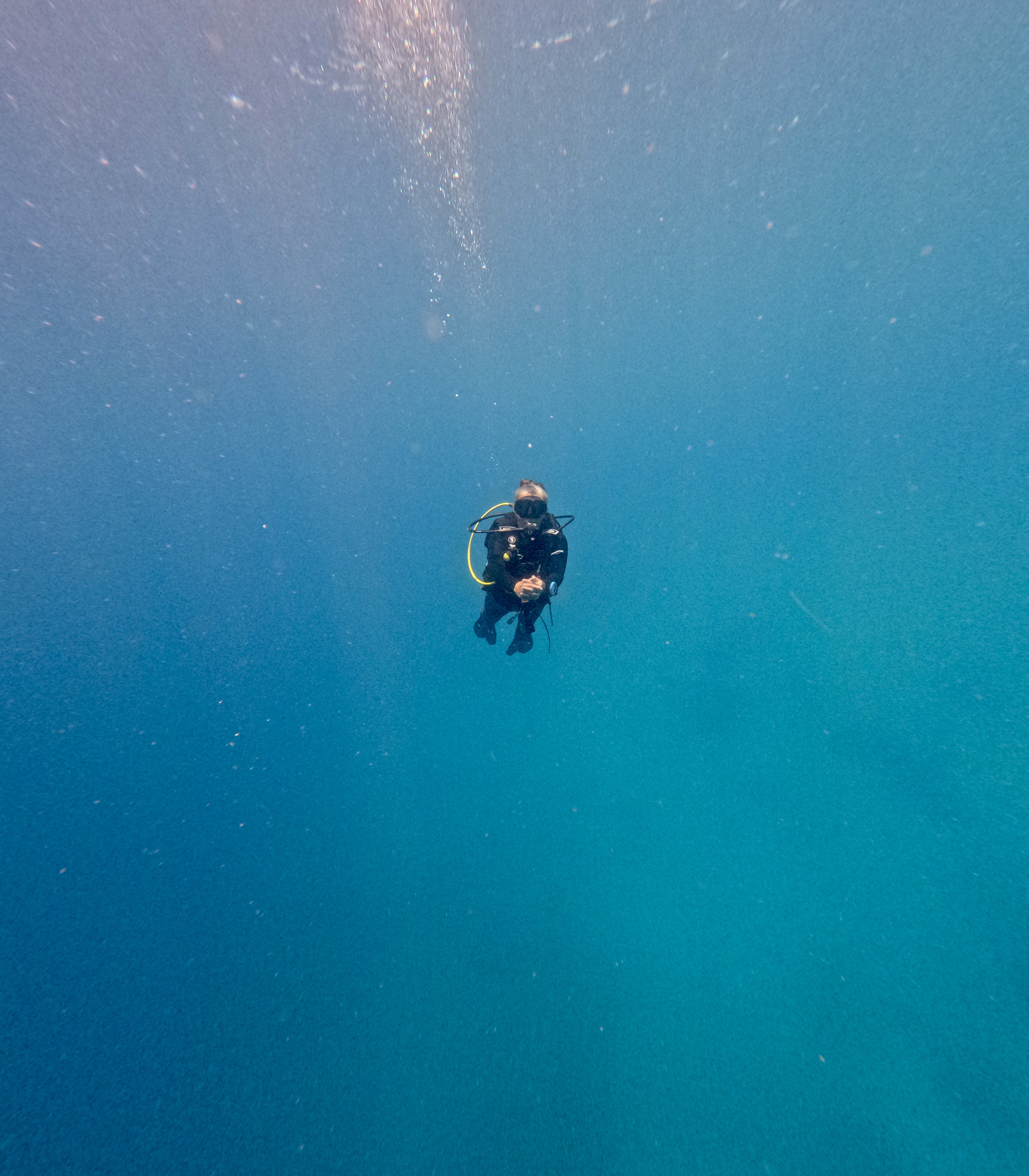
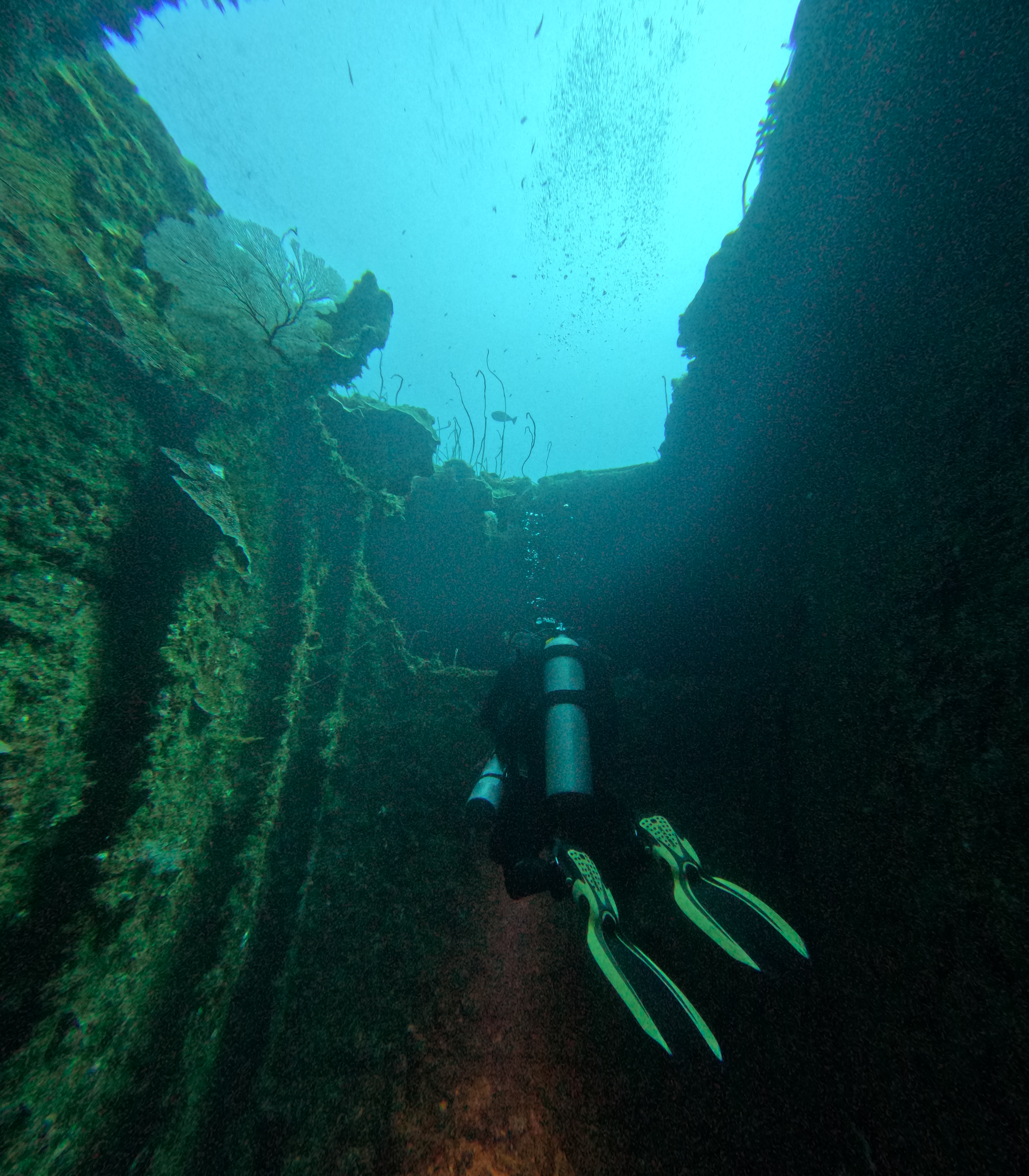
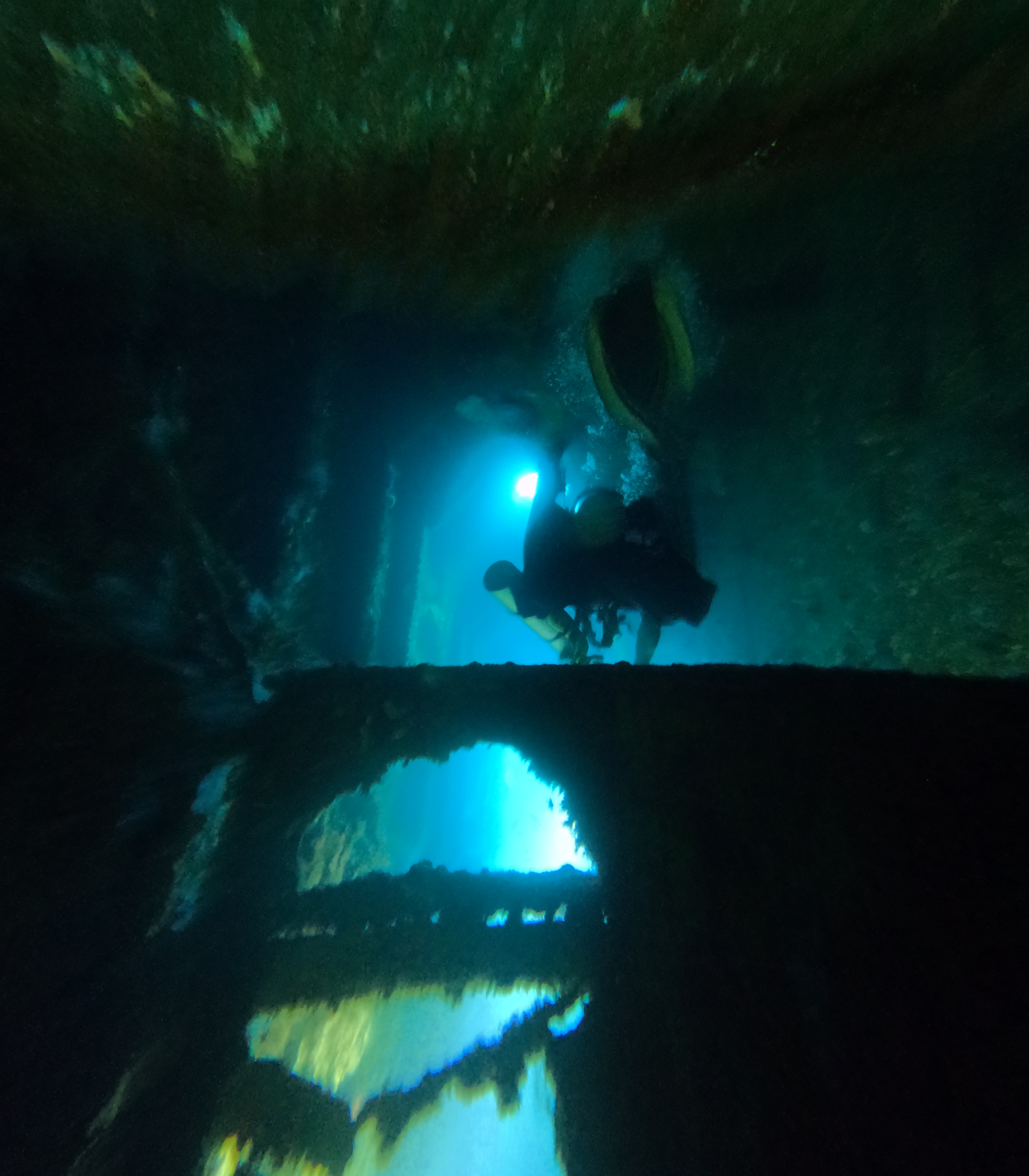
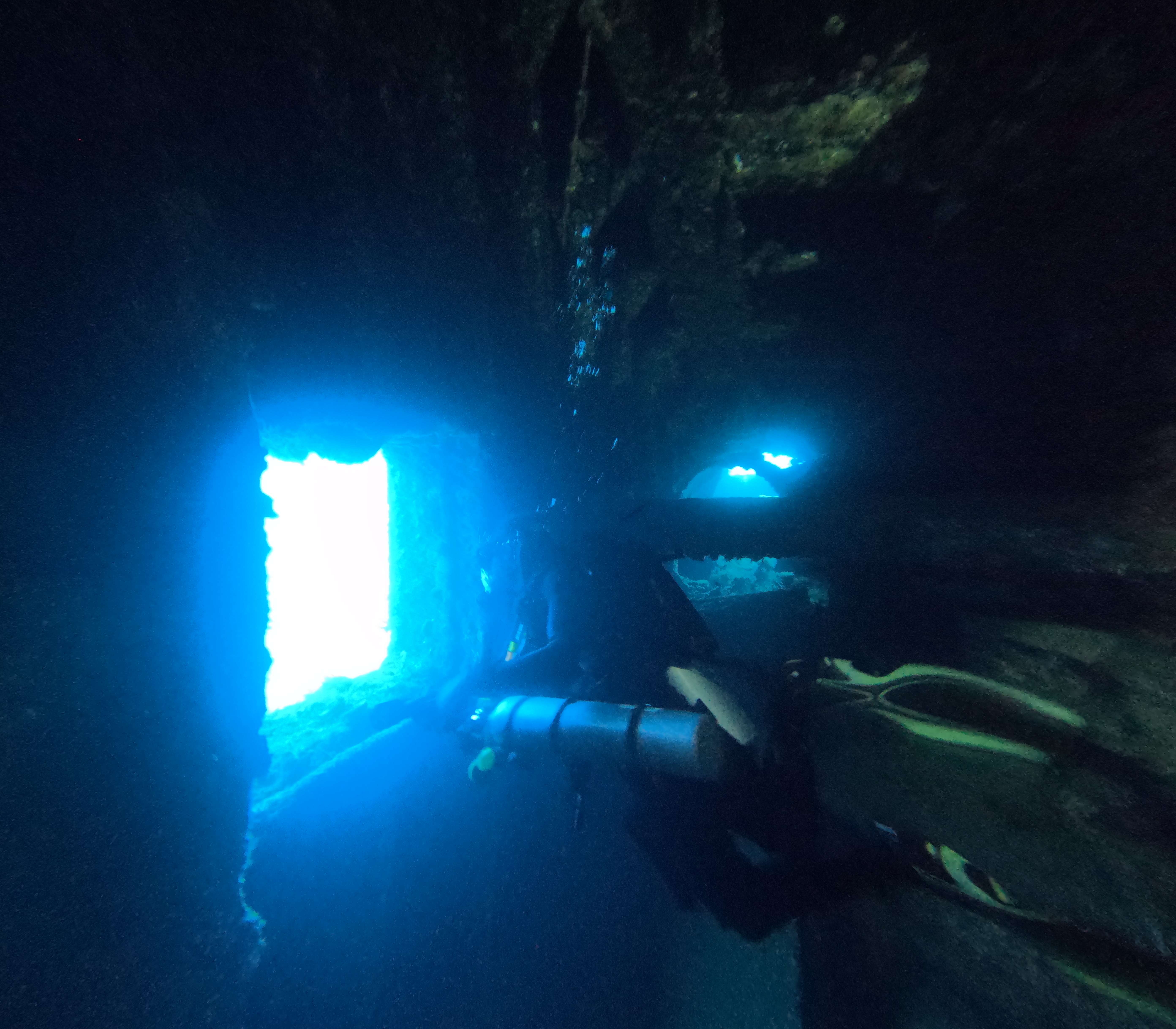
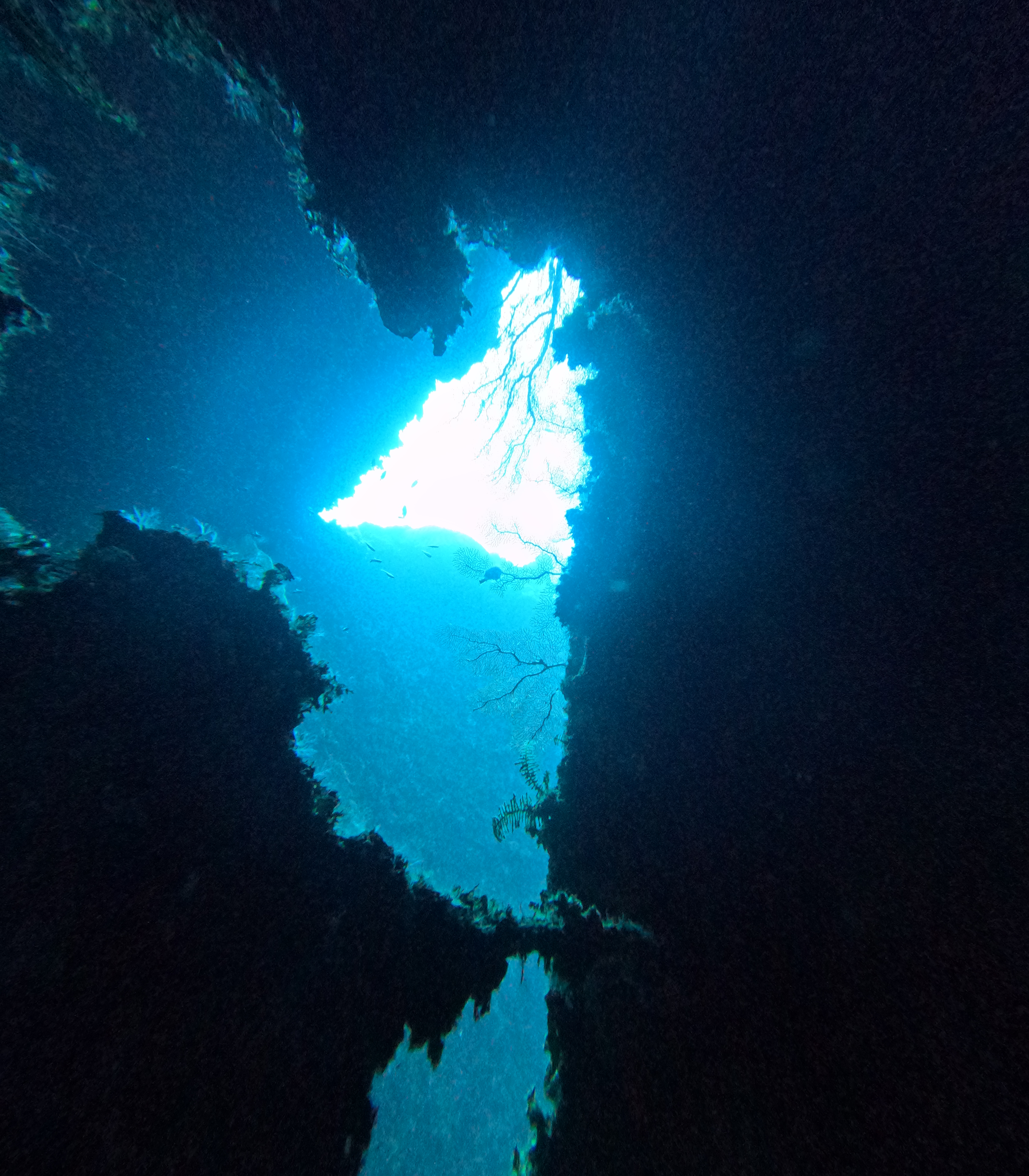
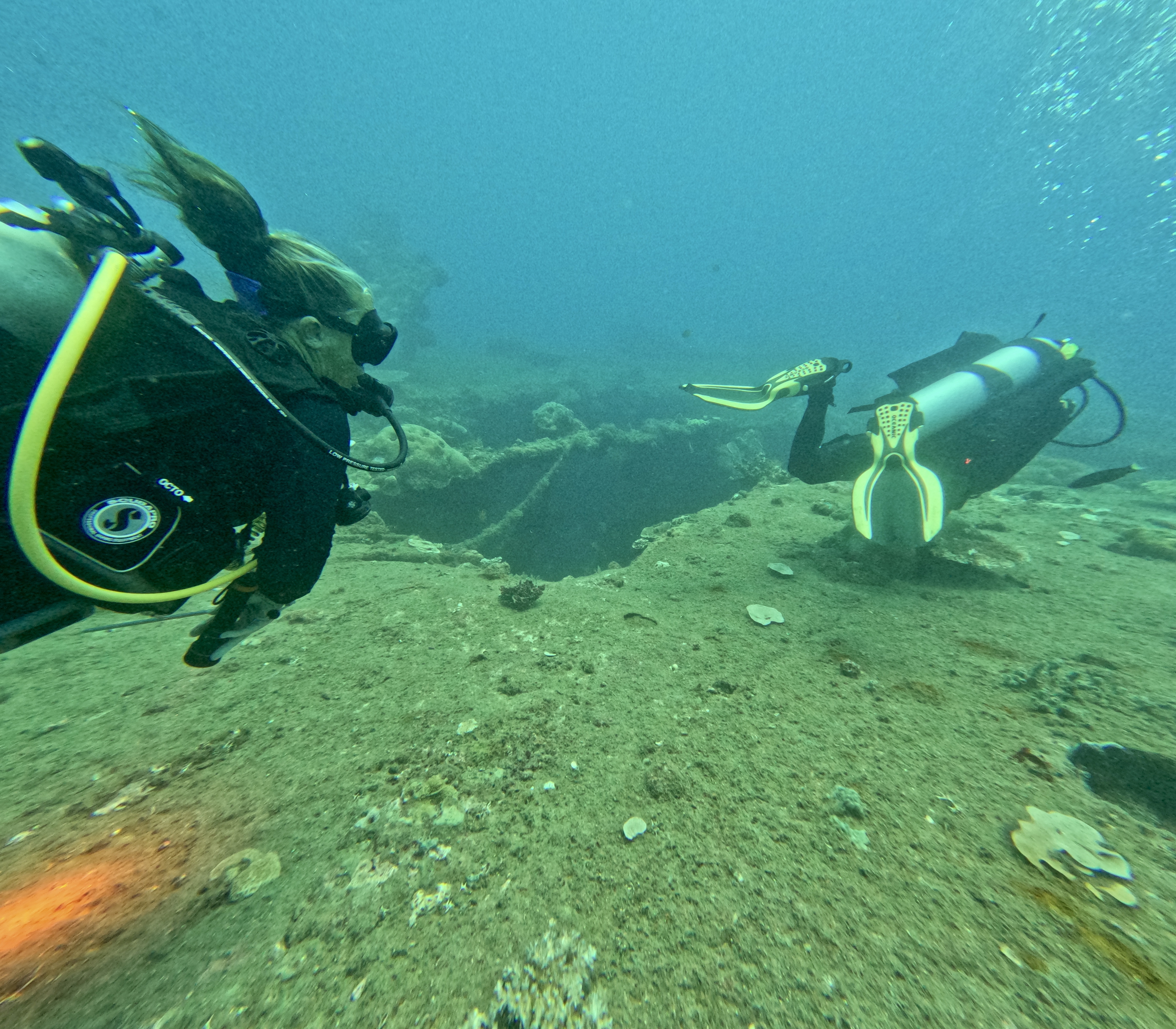
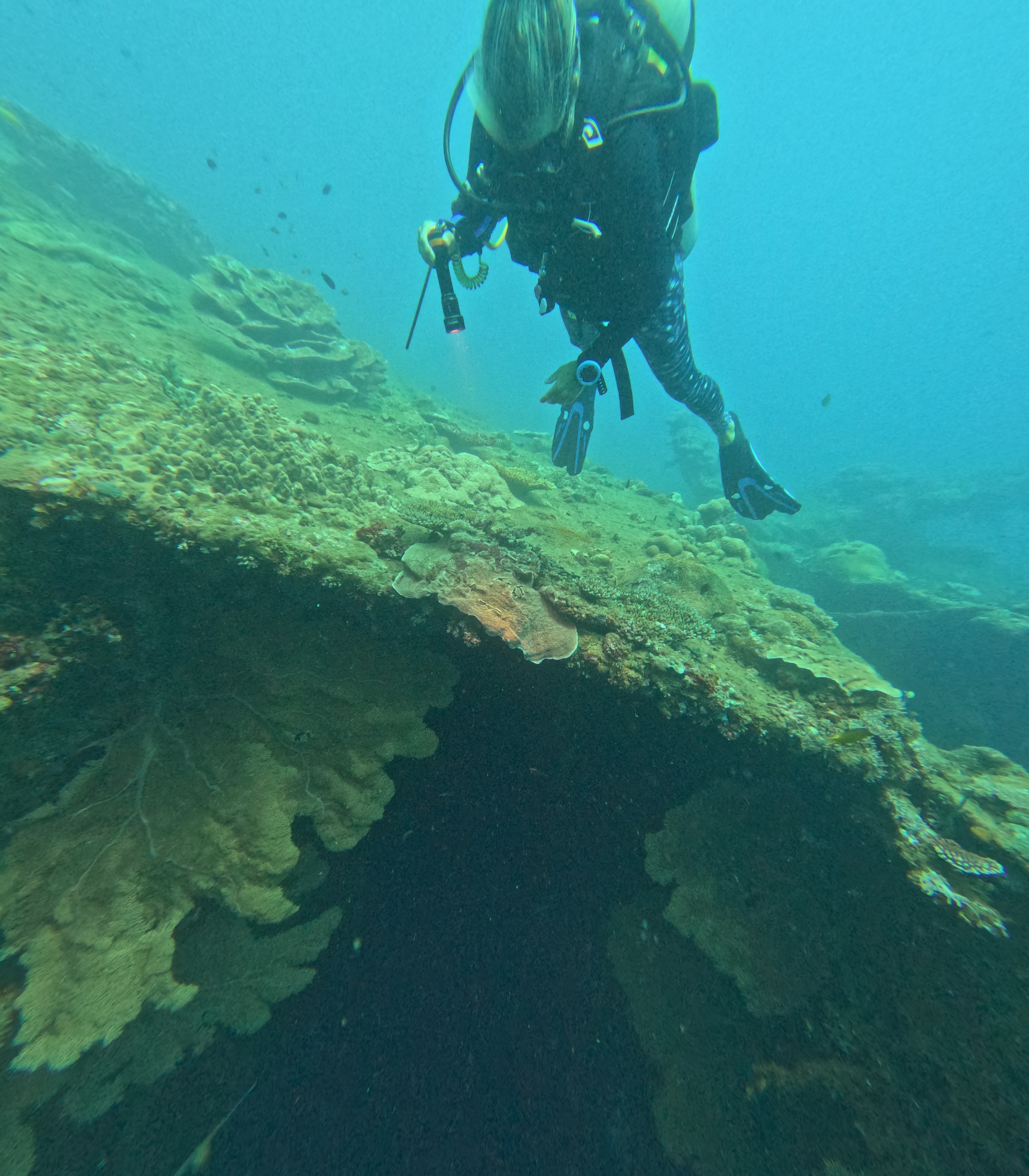
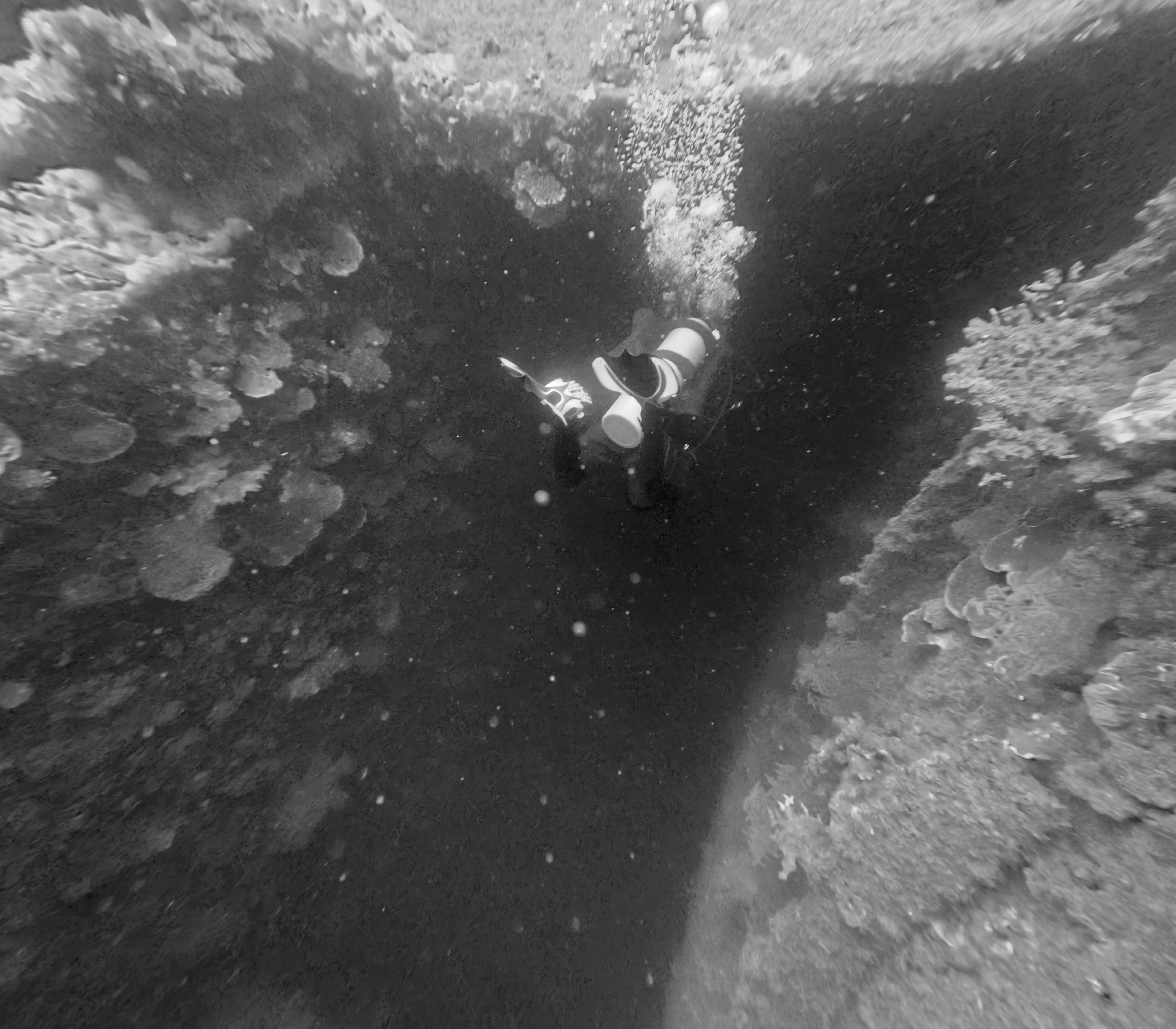
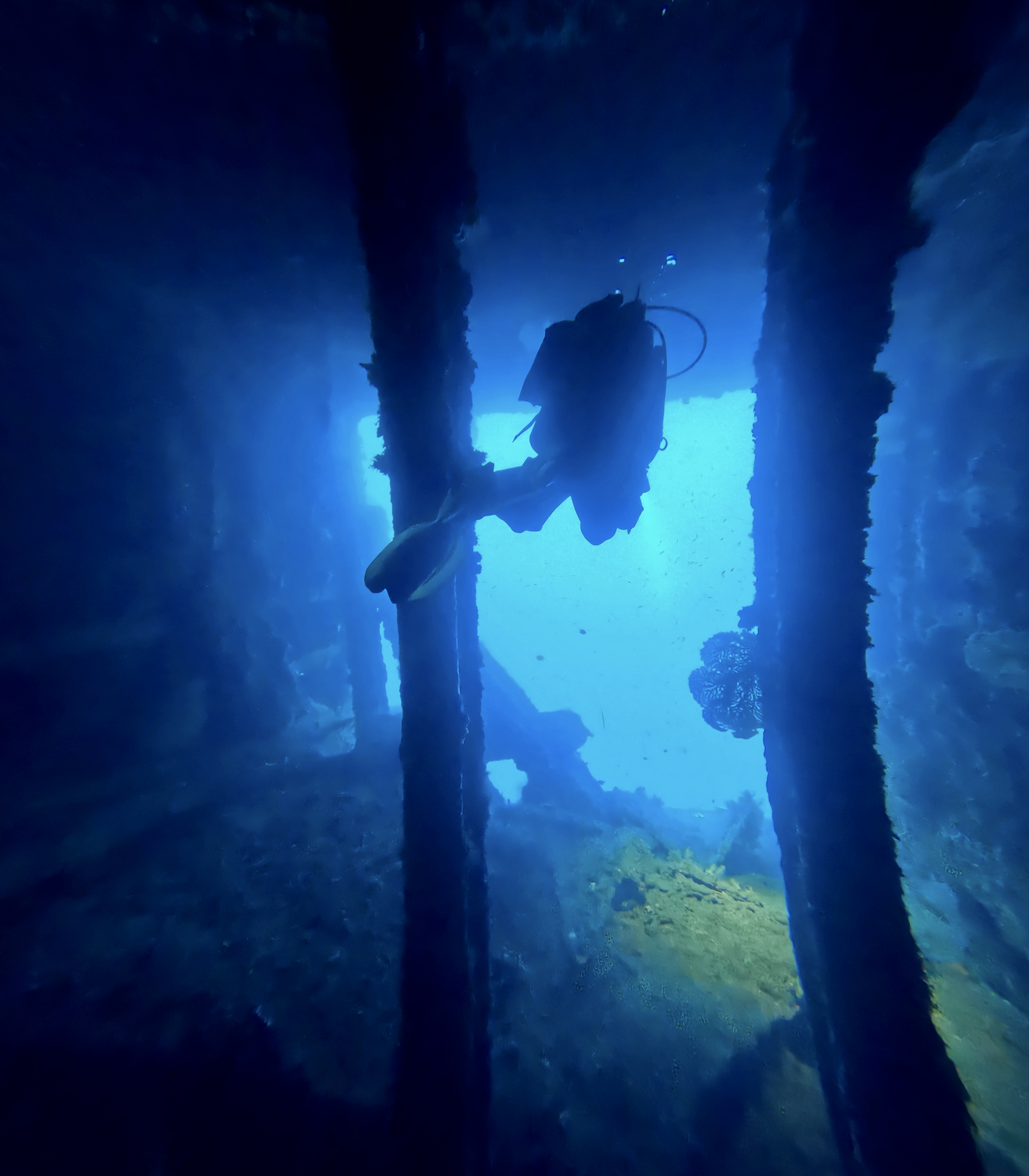
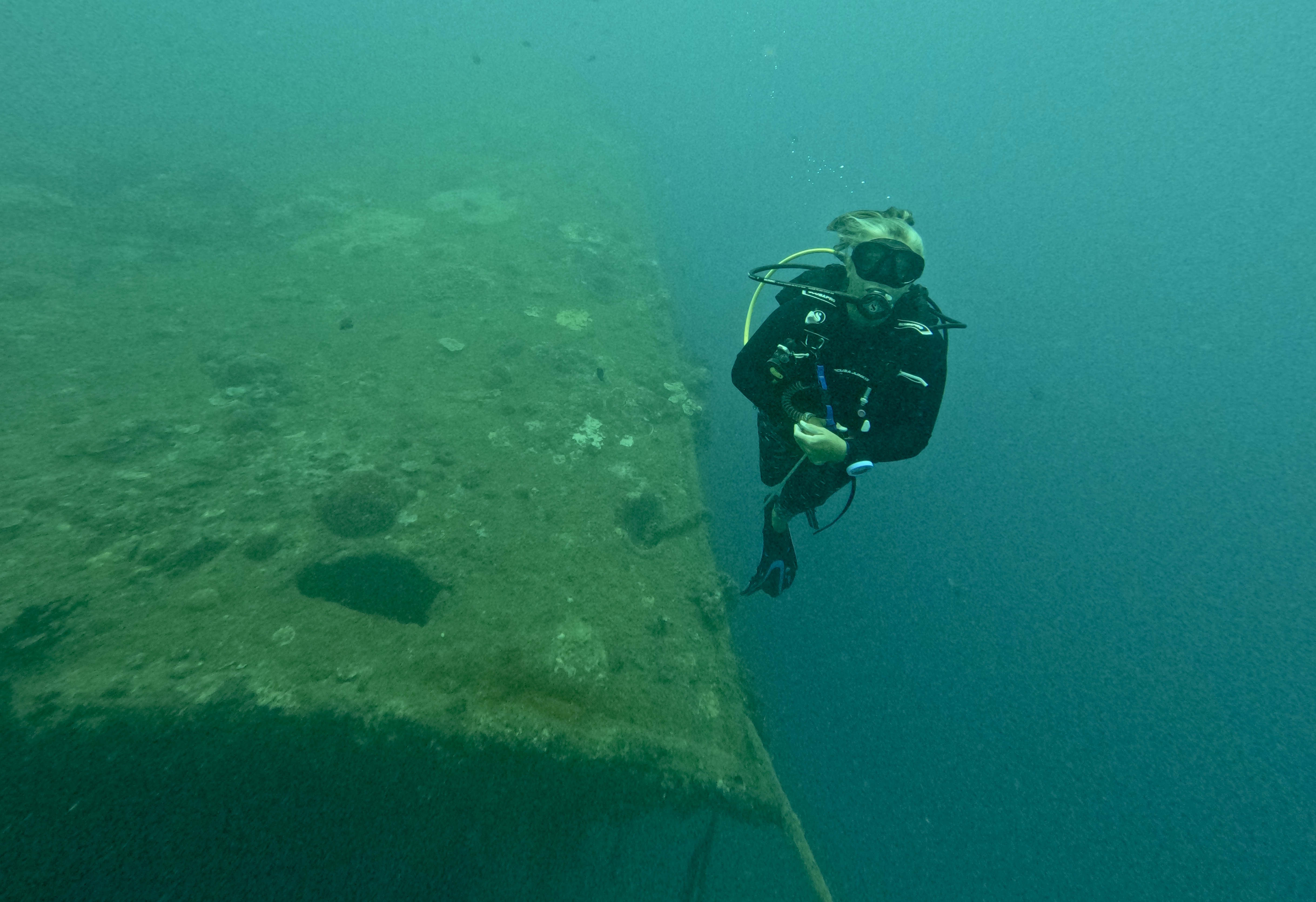
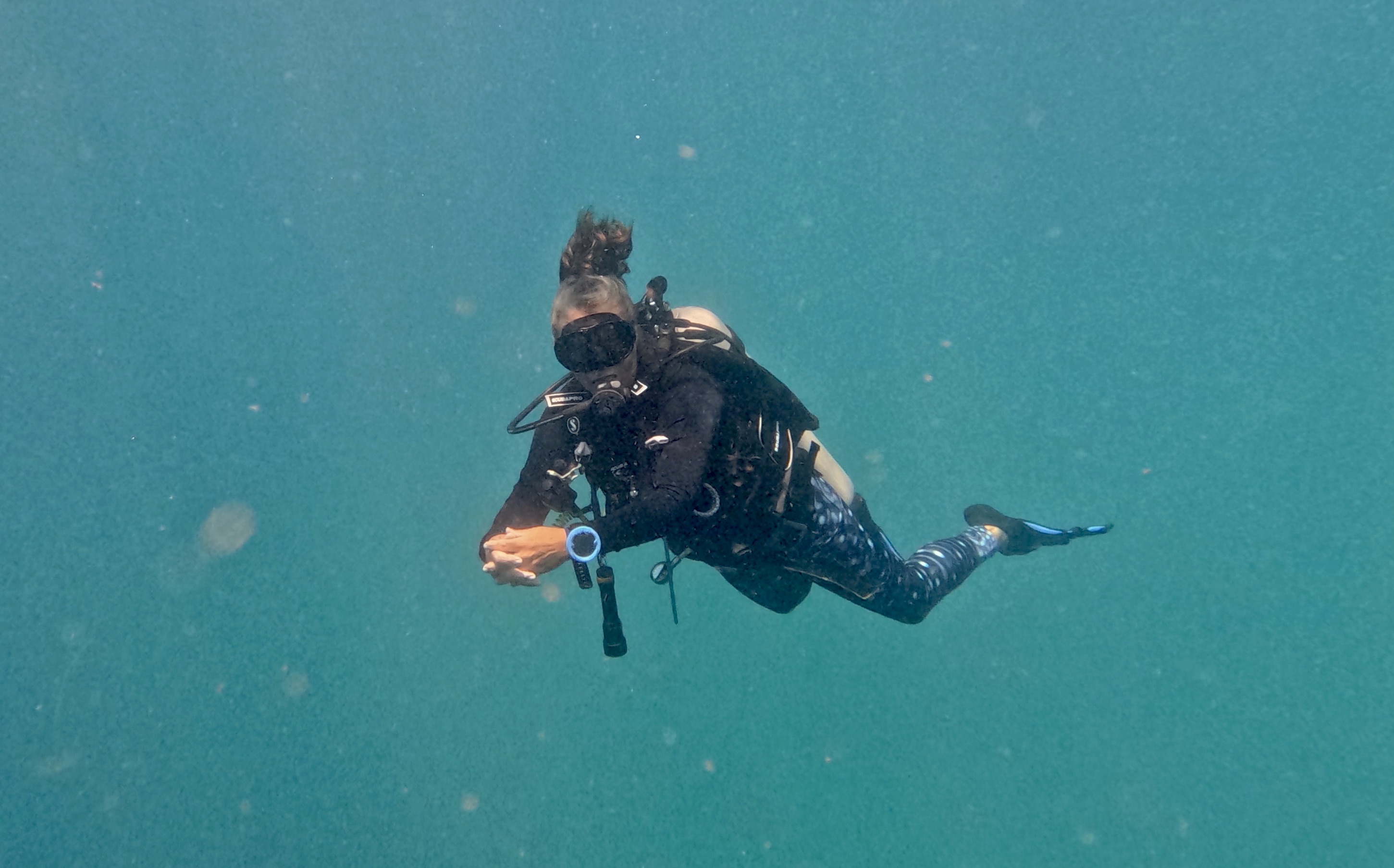
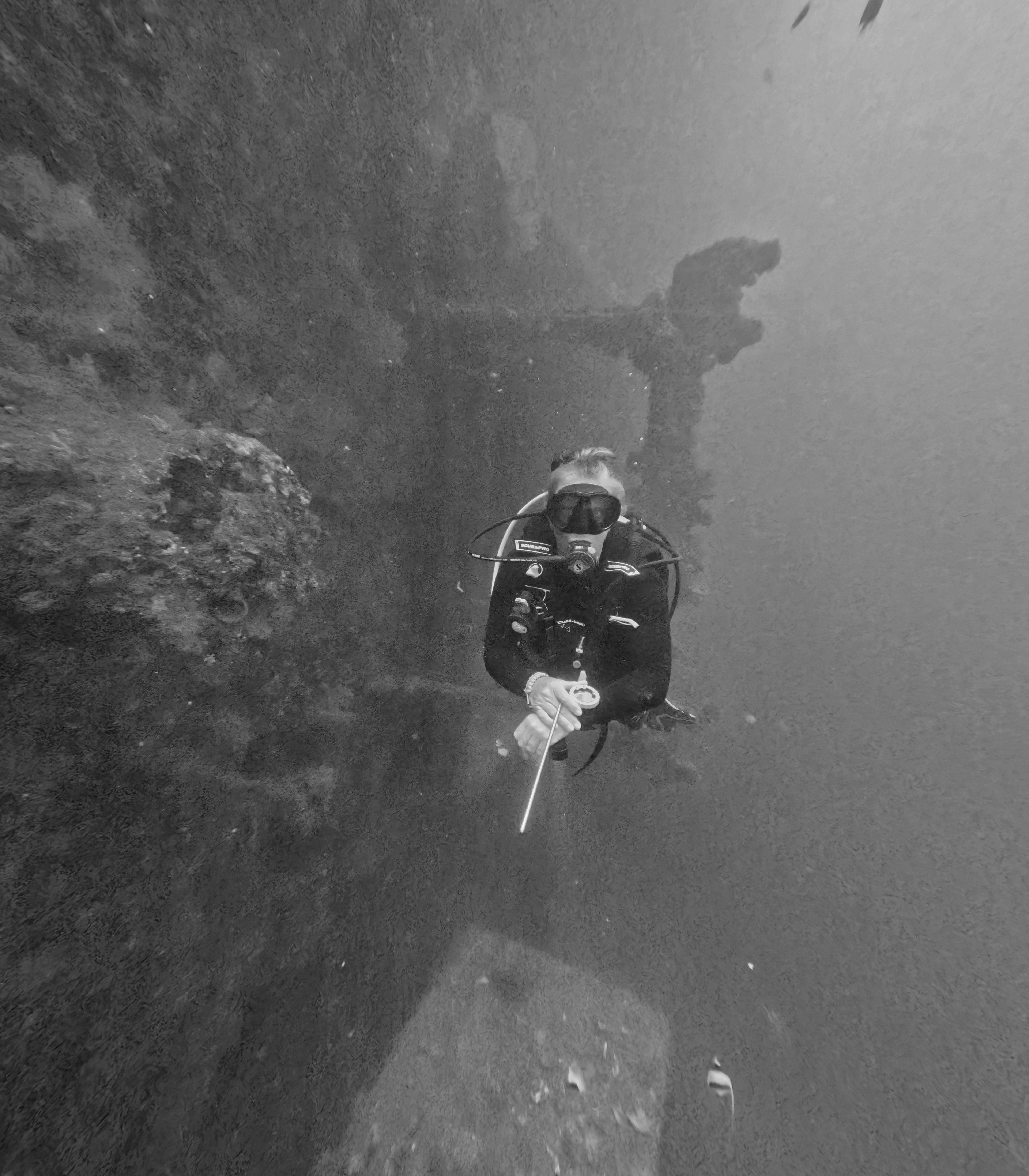
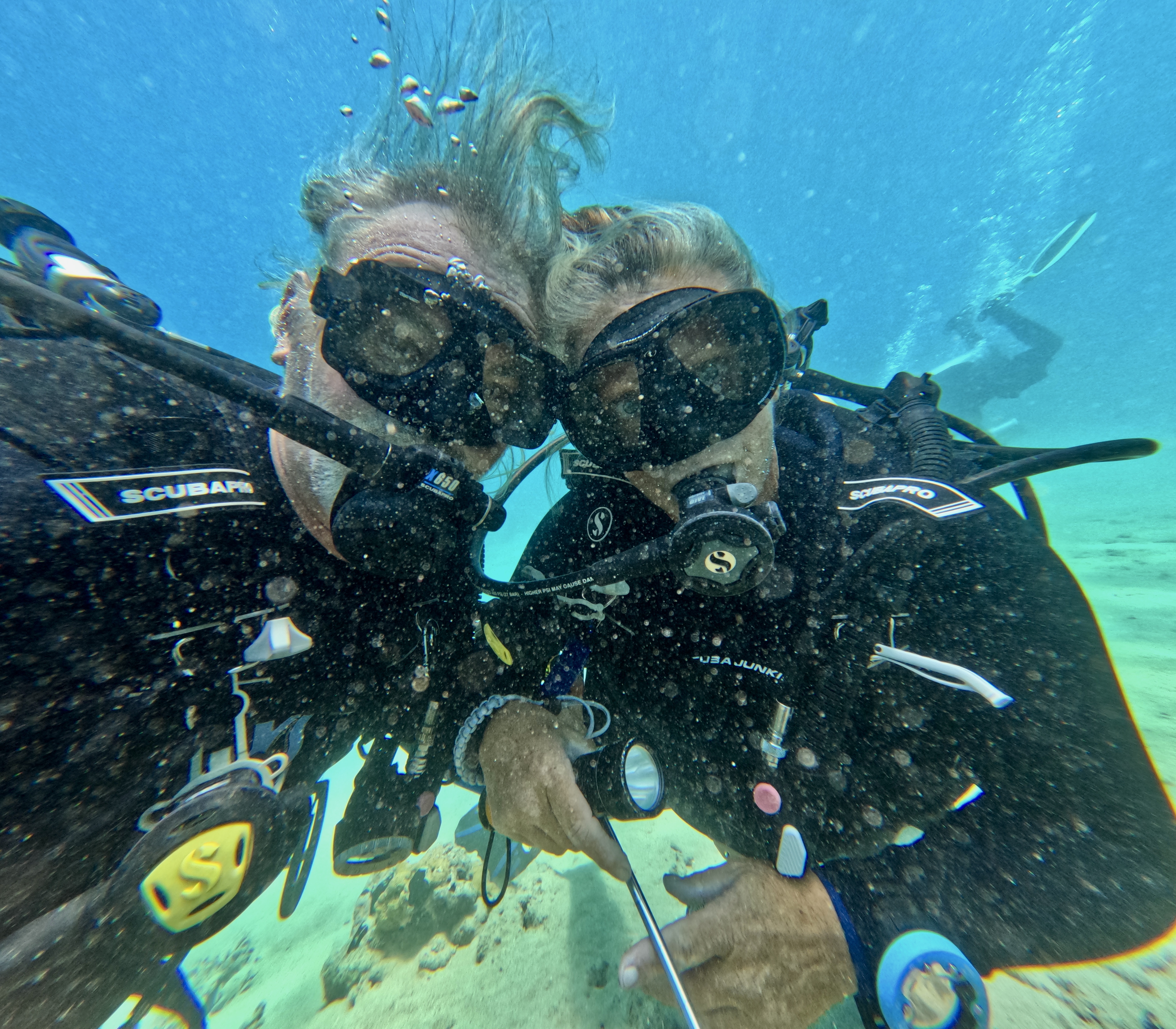
Words simply do no justice to describe the enormous scale of the President Coolidge which stretches more than the length of two football fields, not to mention the surreal experience of penetrating the wreck in scuba gear, and the somber reality of contemplating the incredible story surrounding its demise. So I will rely largely upon visual imagery to try to capture the experience as best possible.
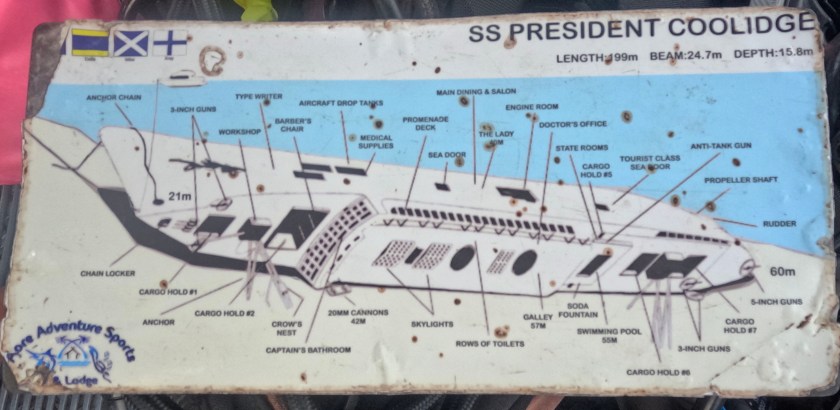
Day One of Diving: Dive #1 – January 16, 2025
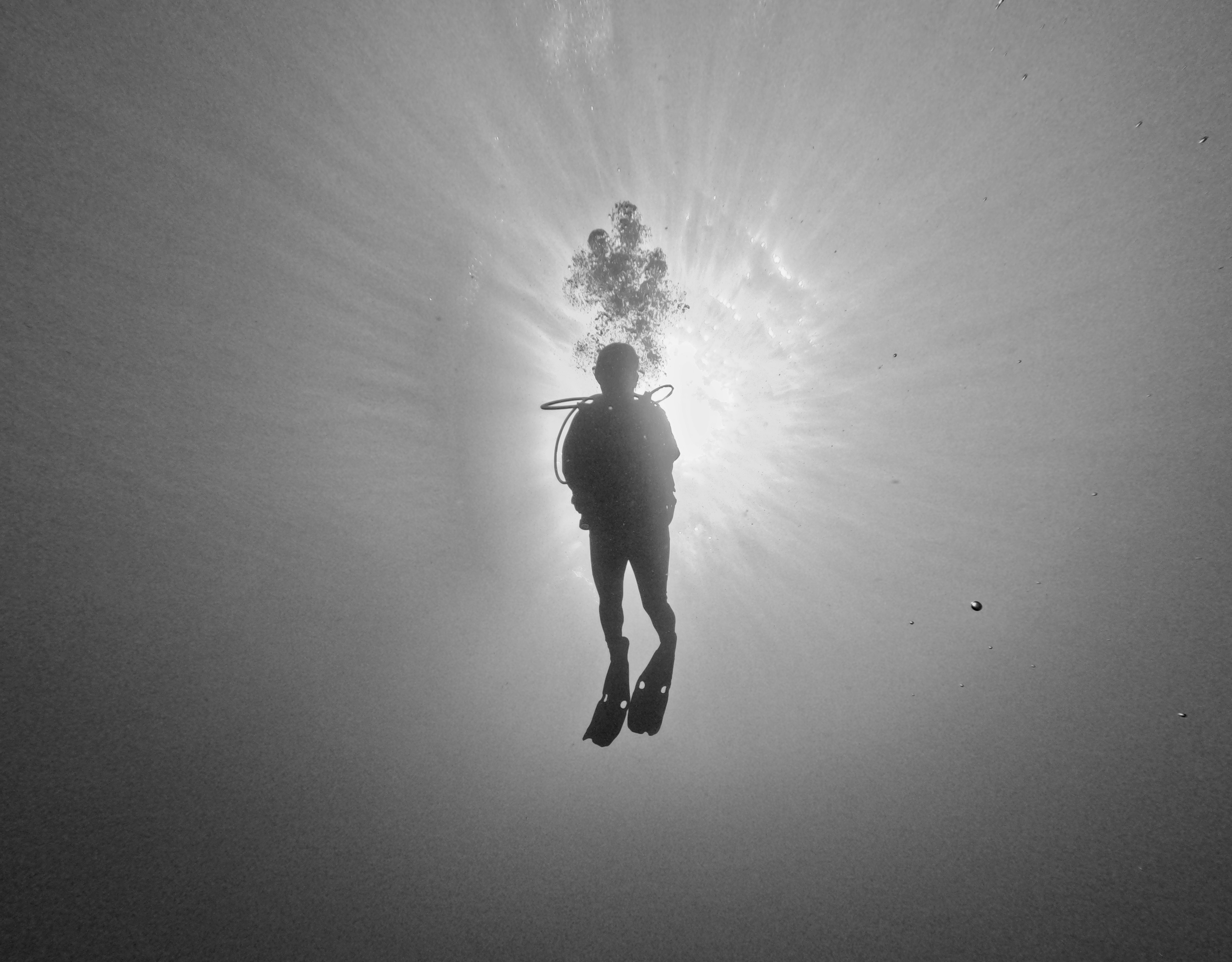
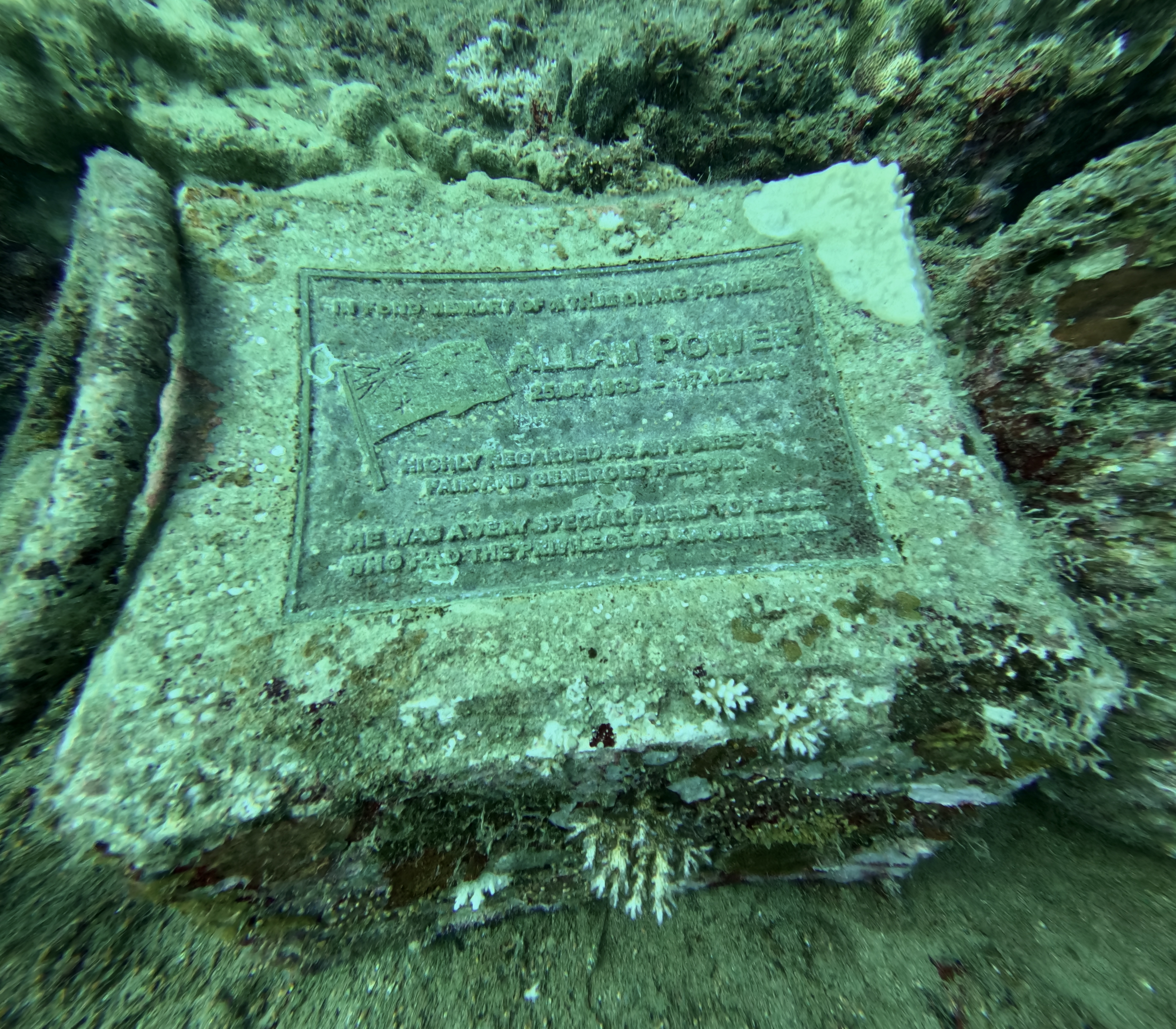
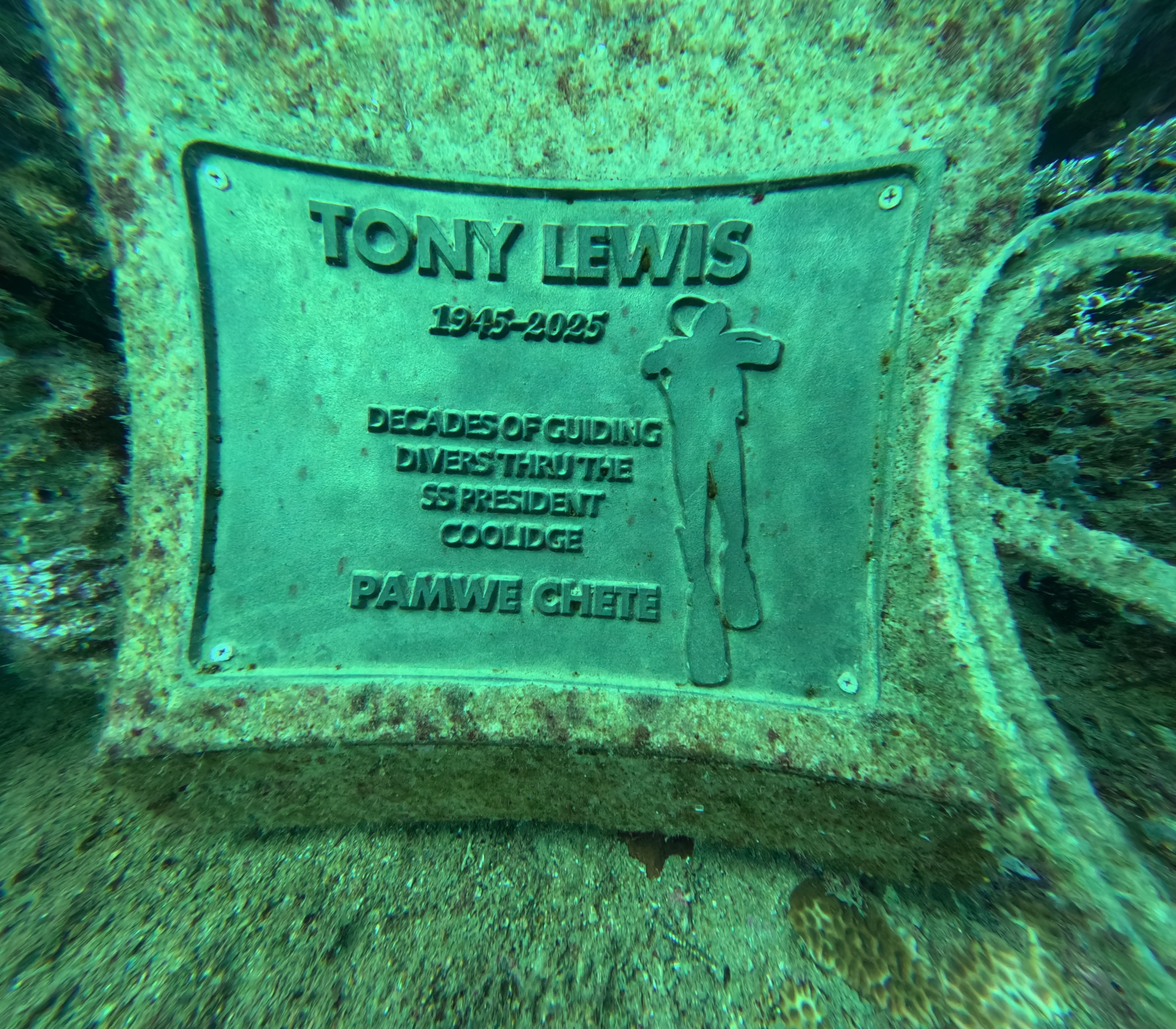
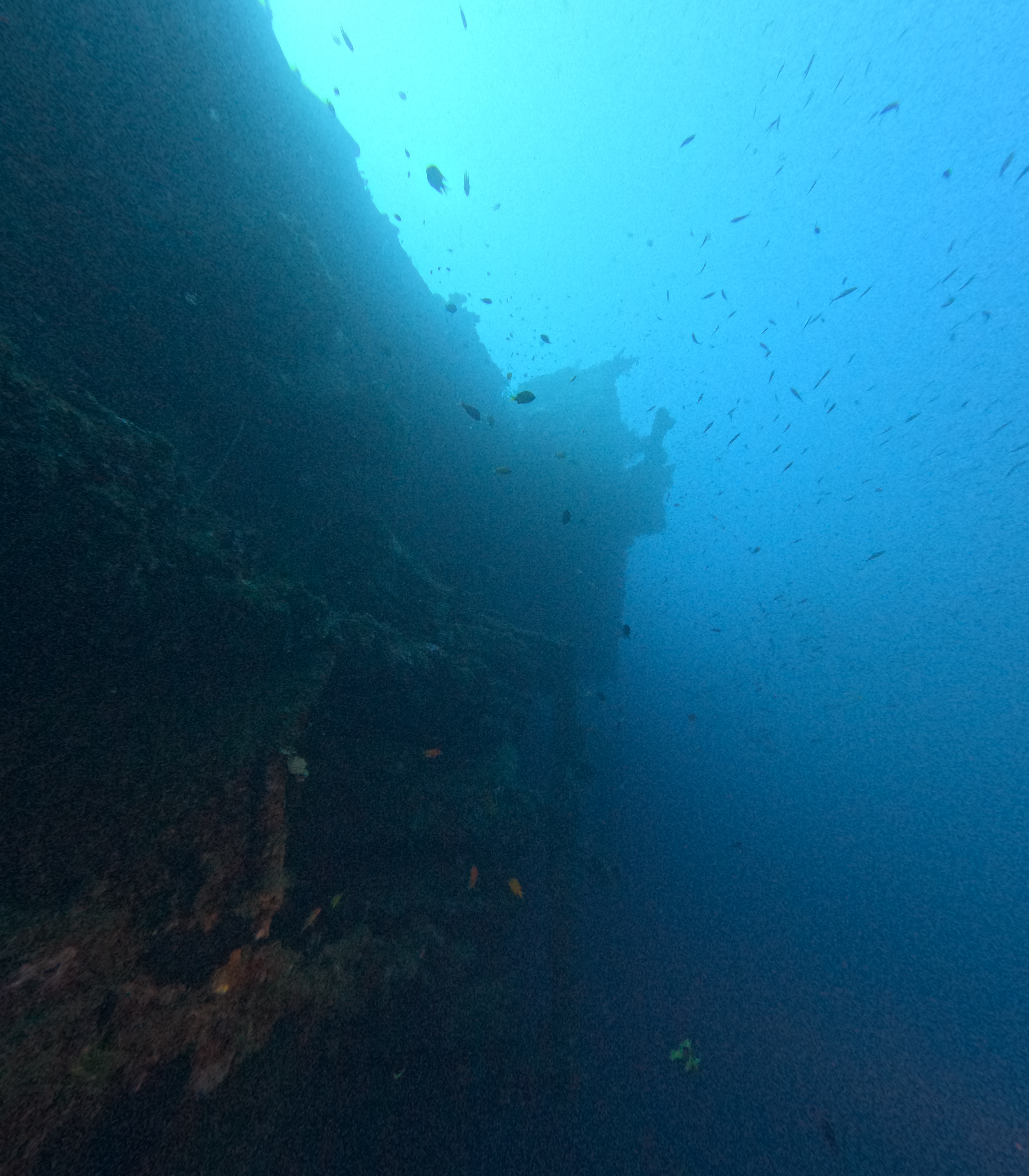
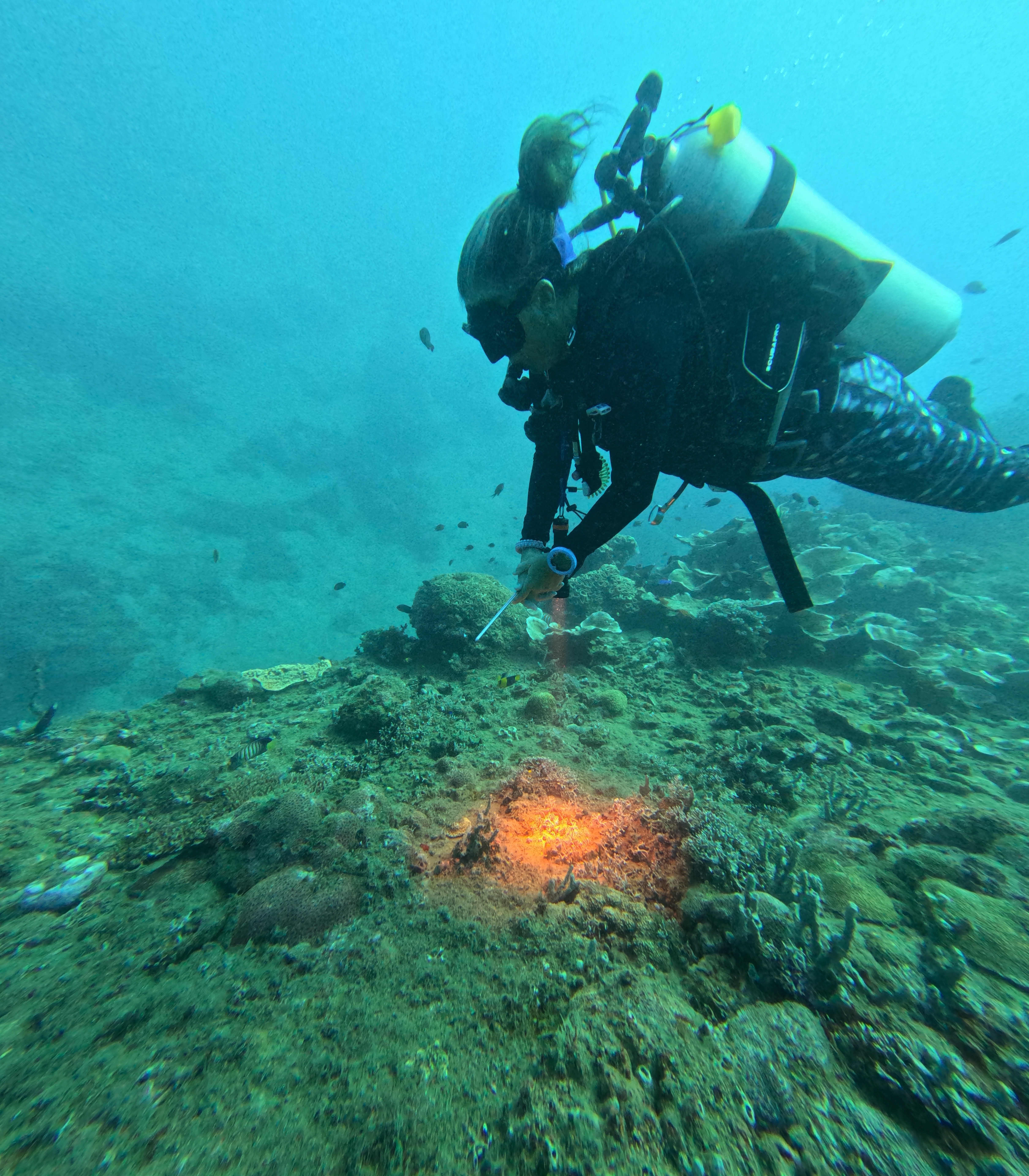
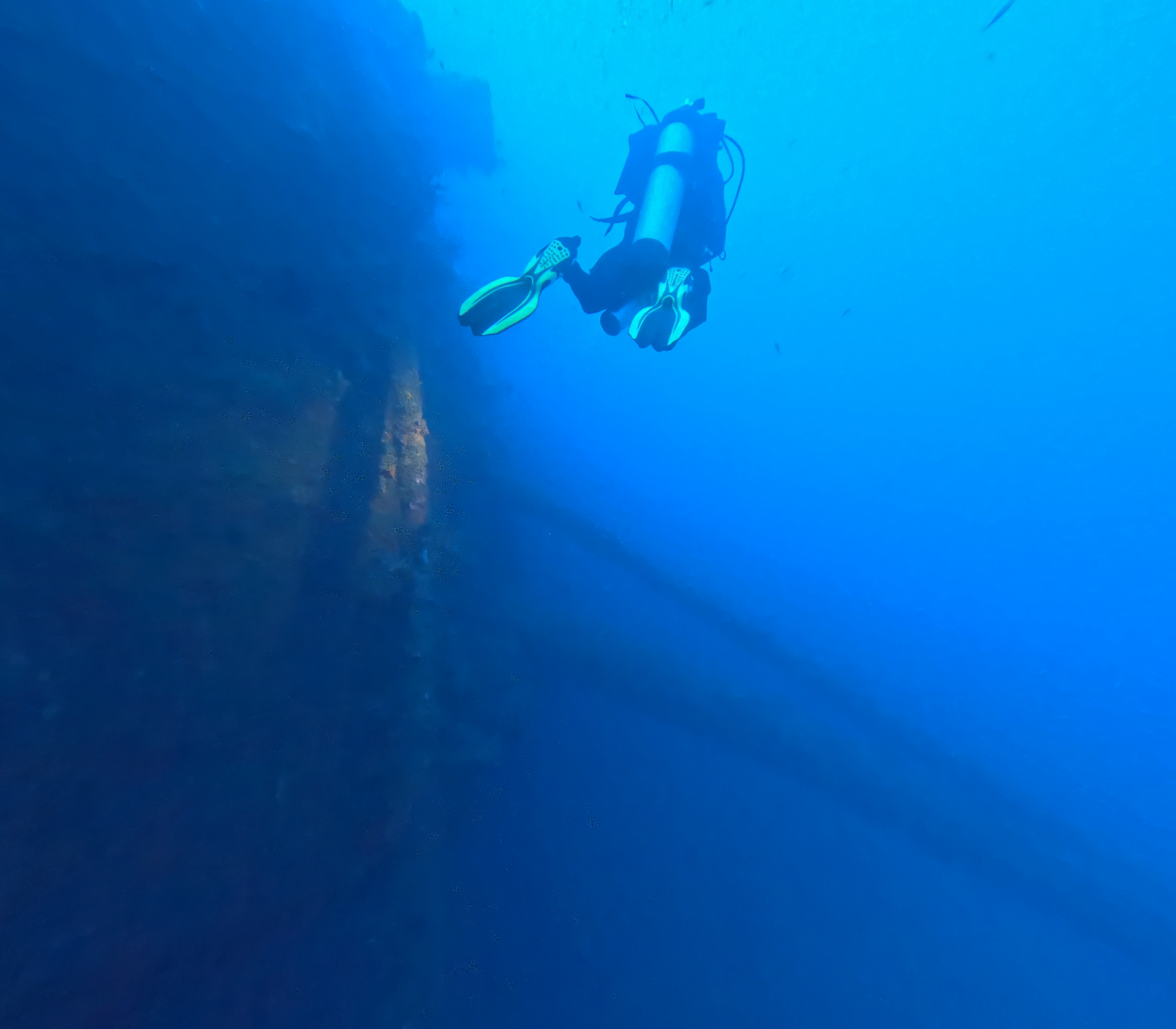
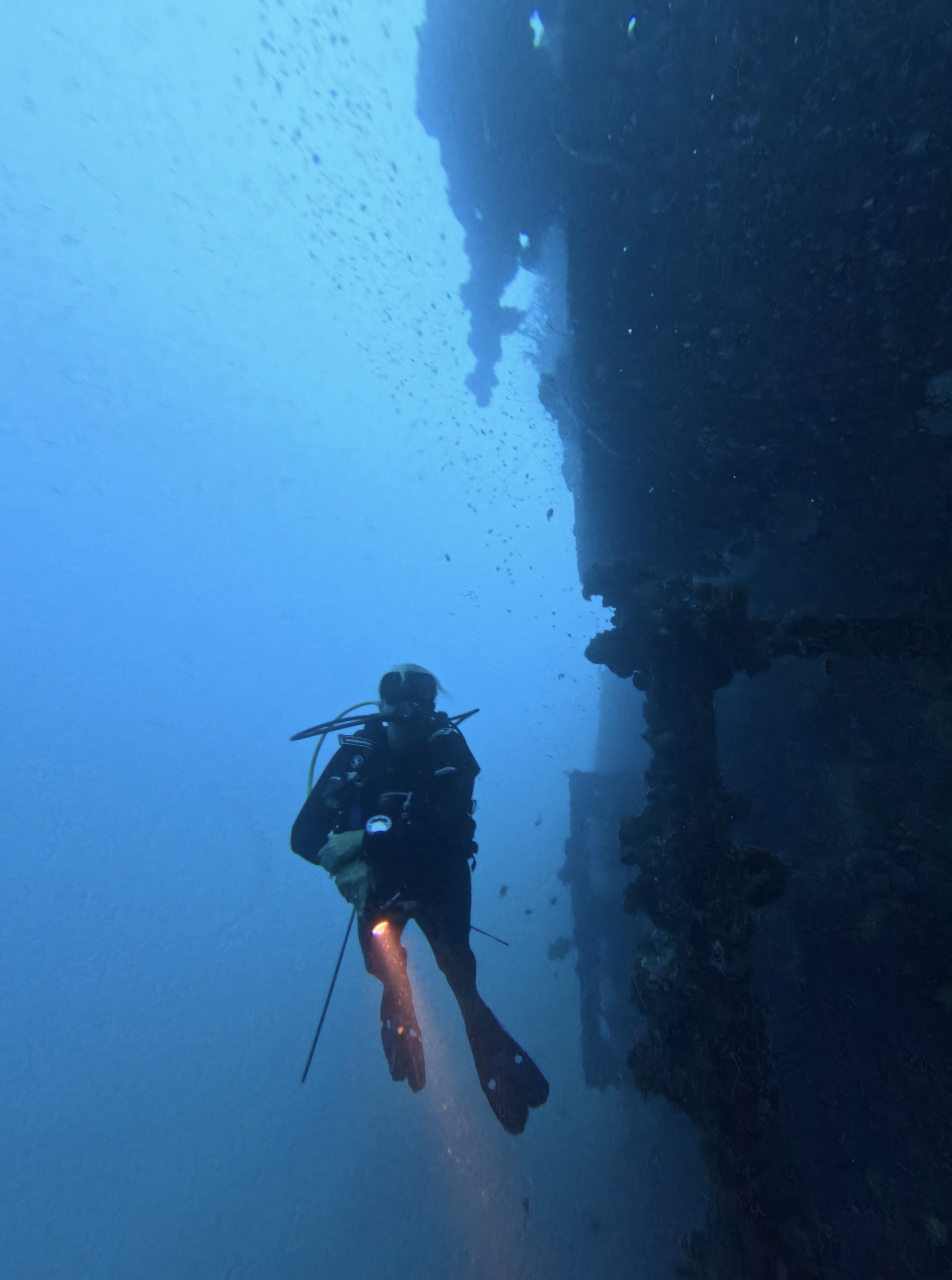
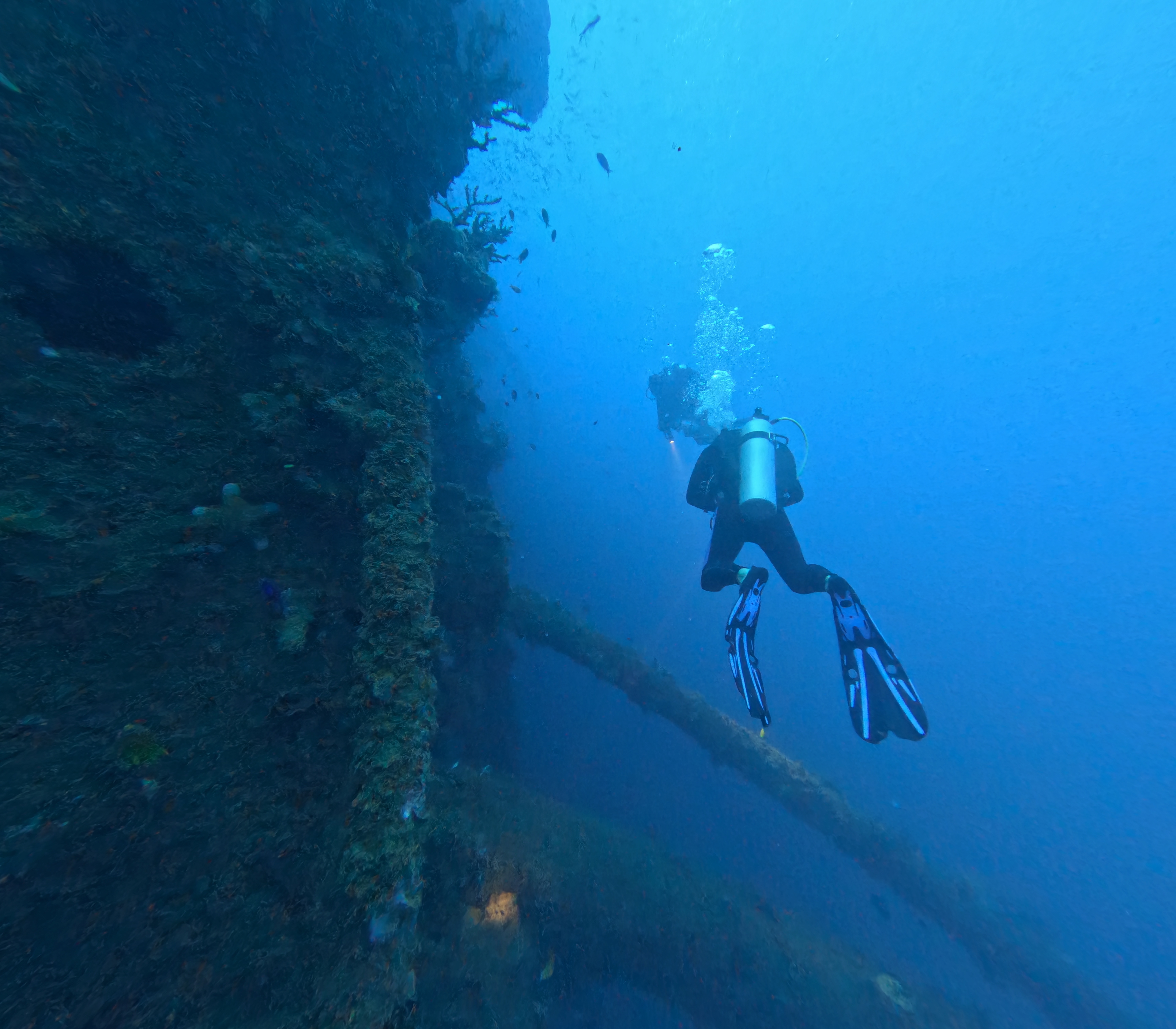
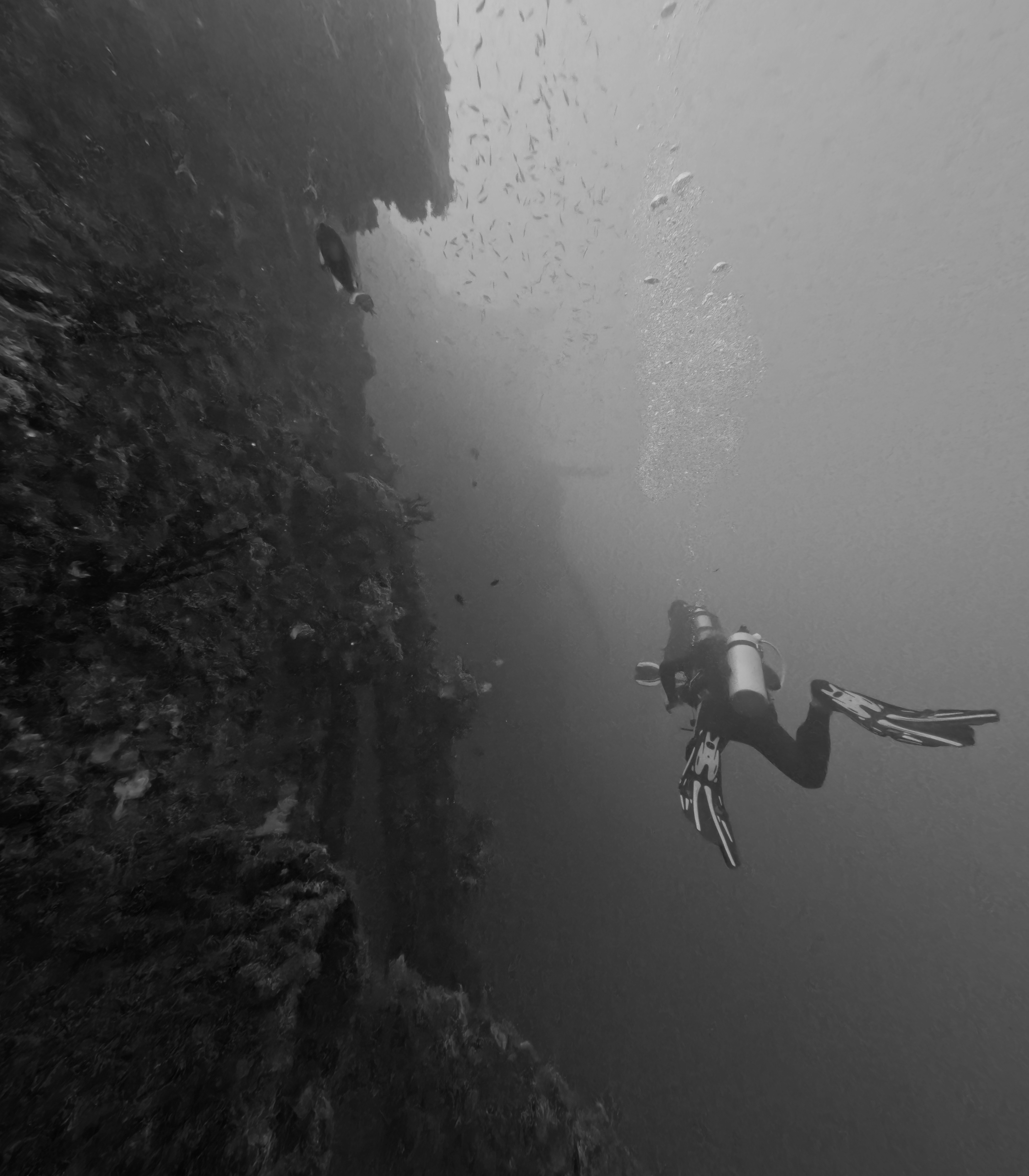
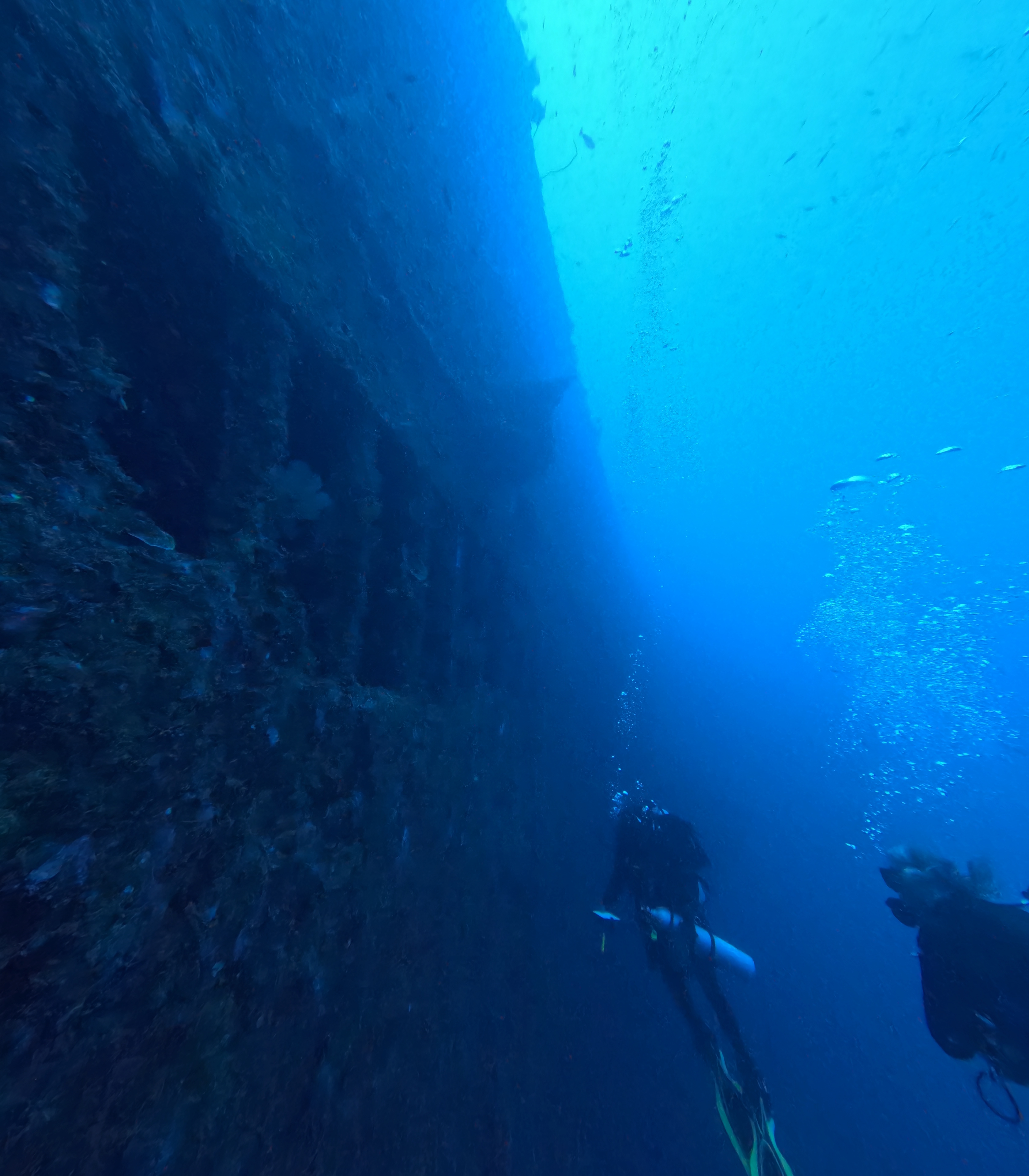
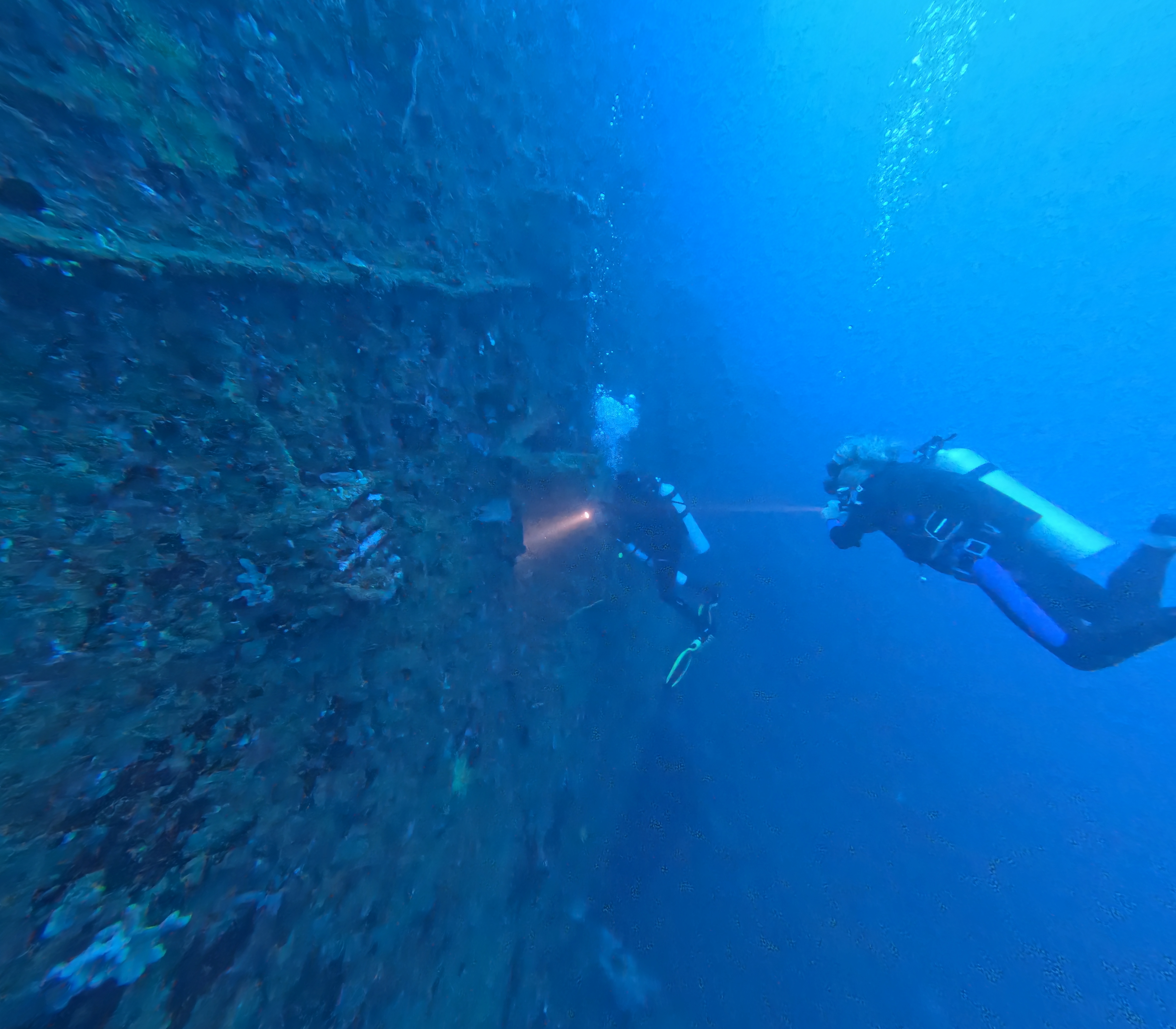
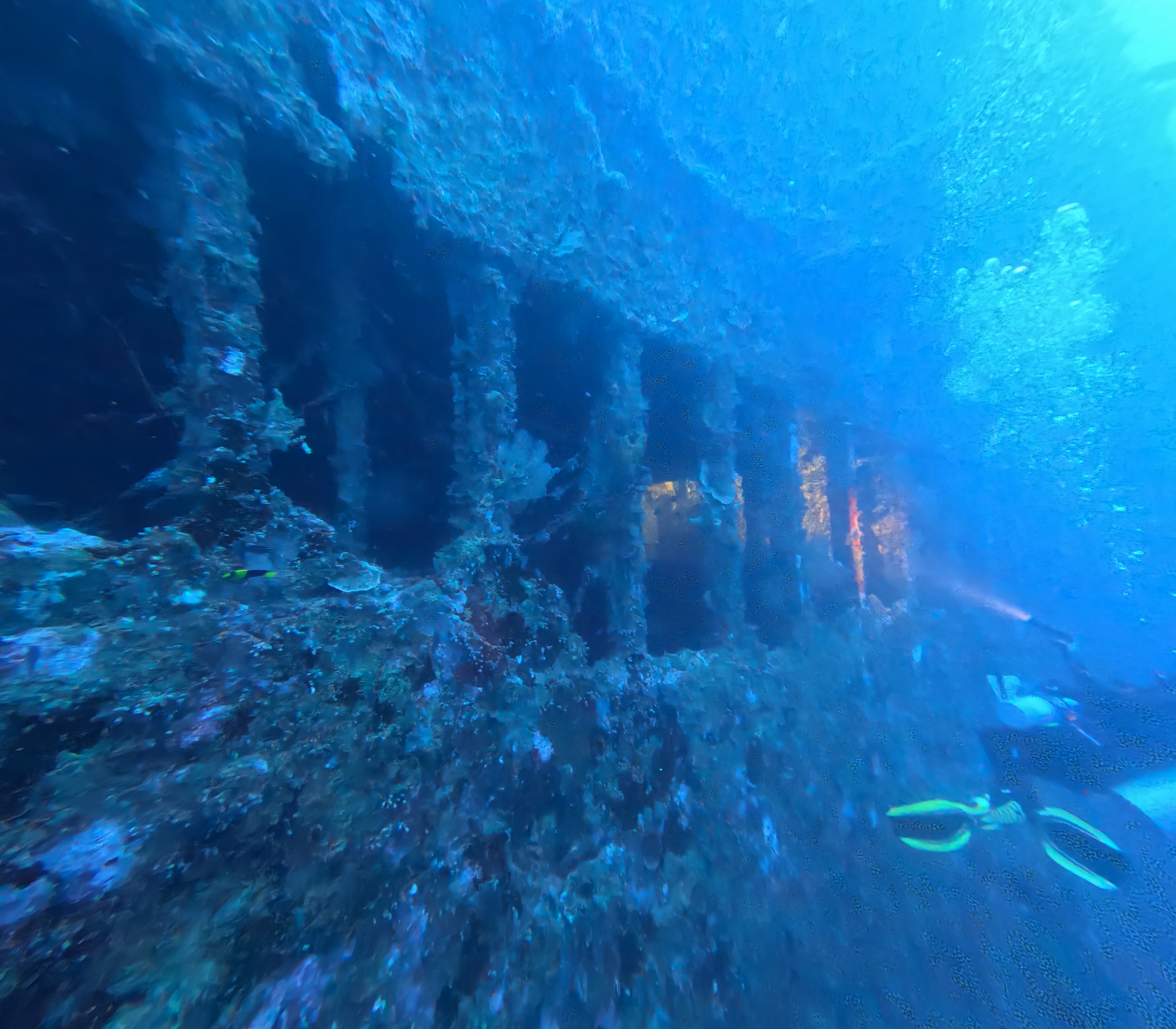
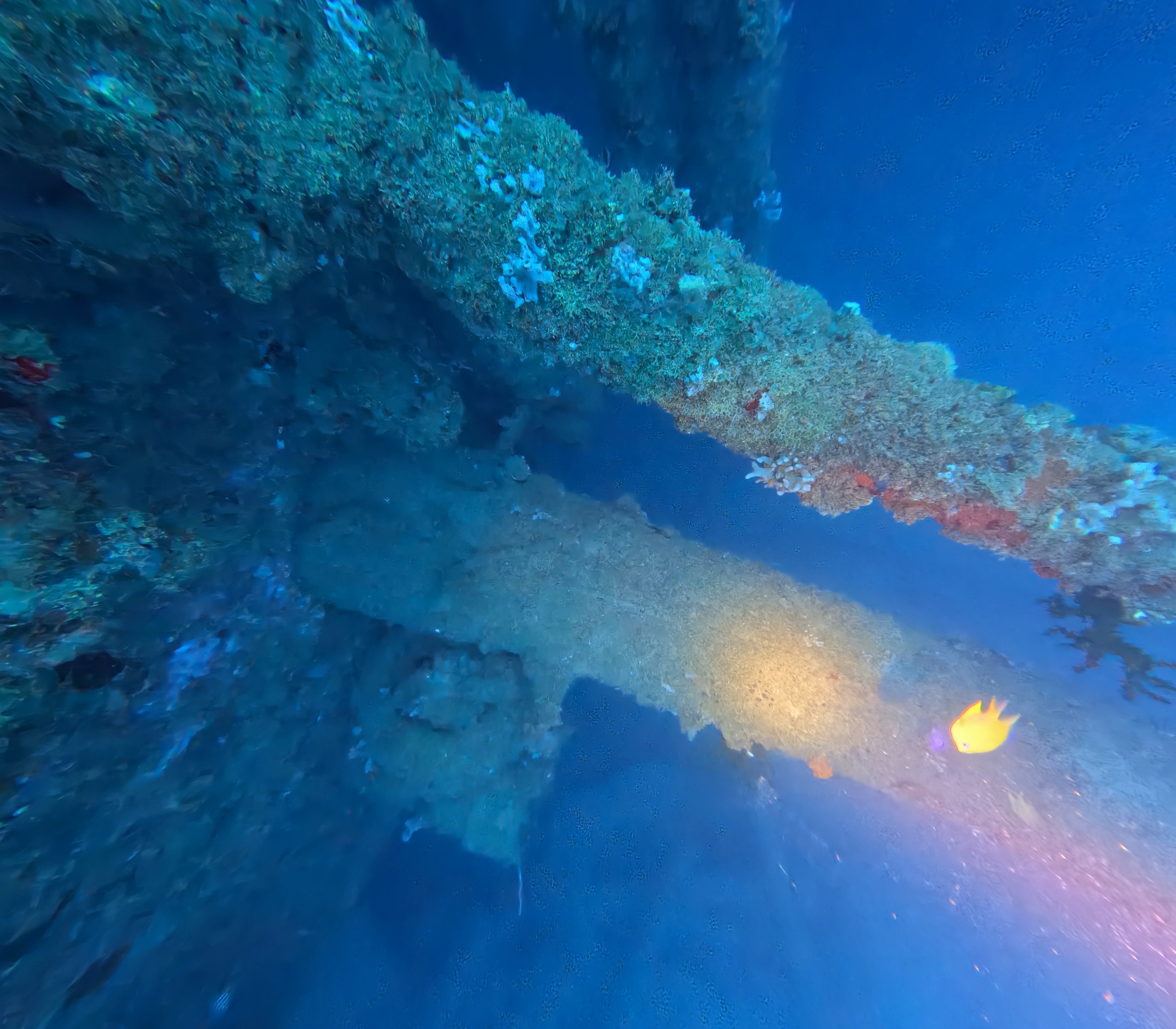
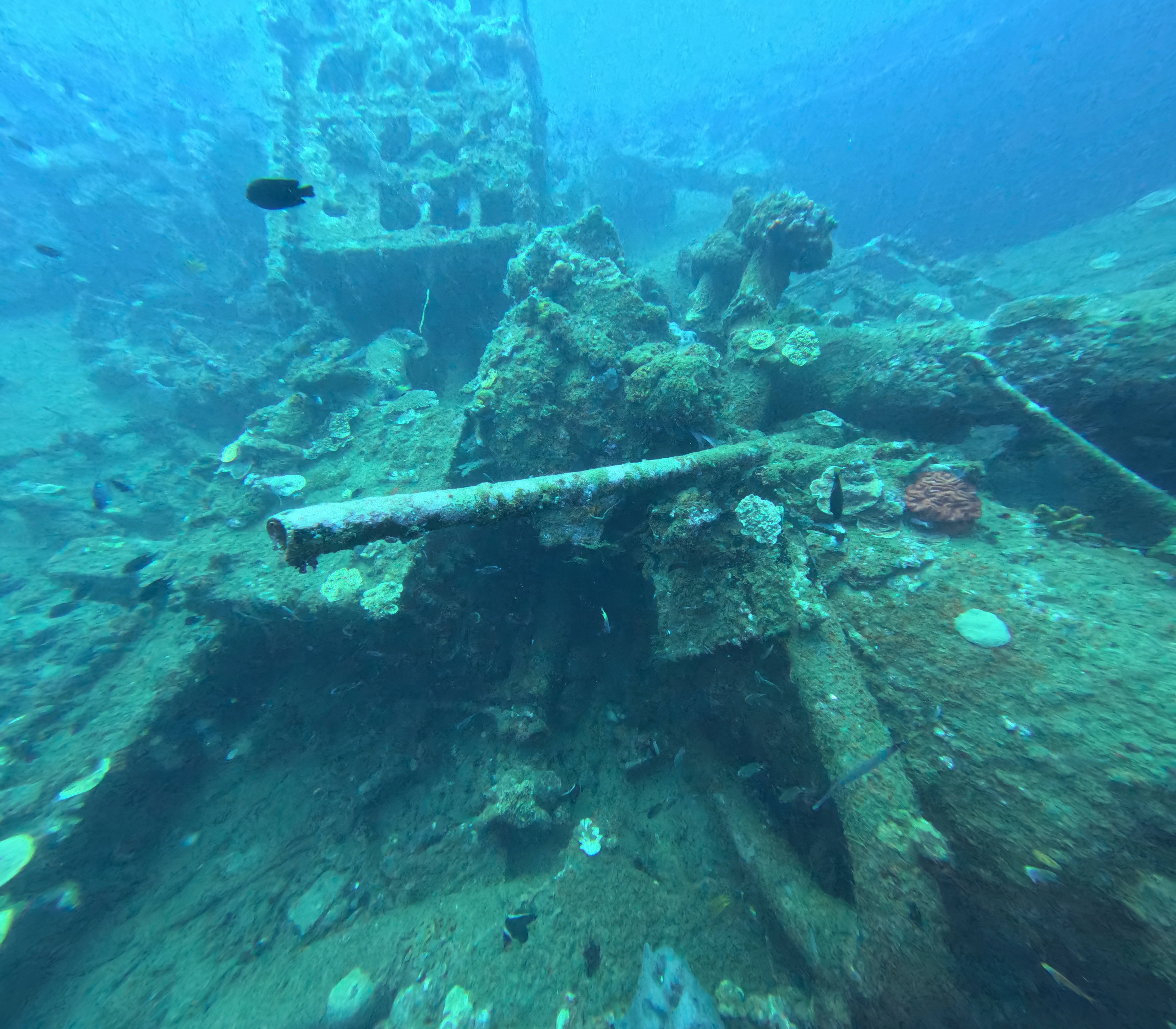
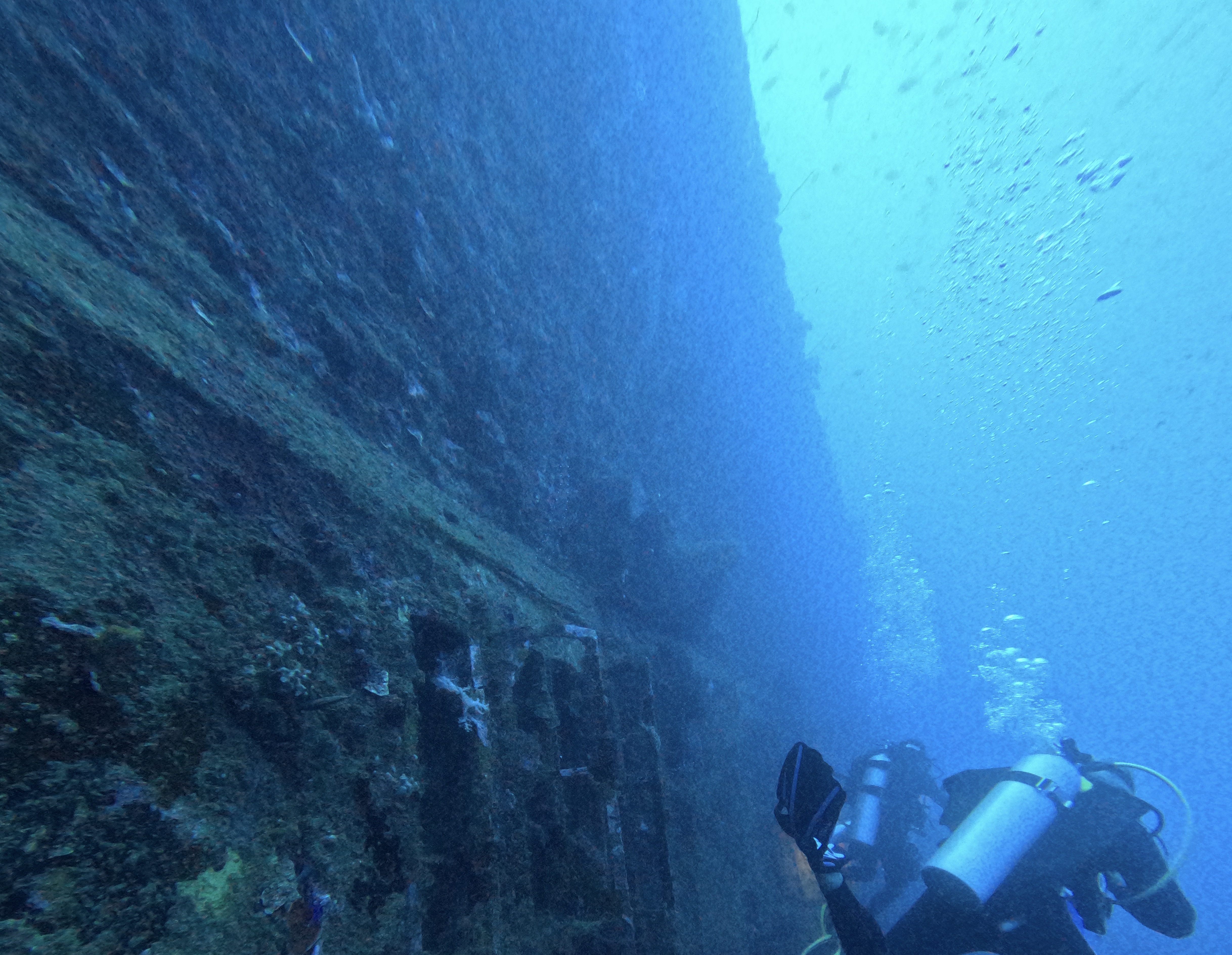
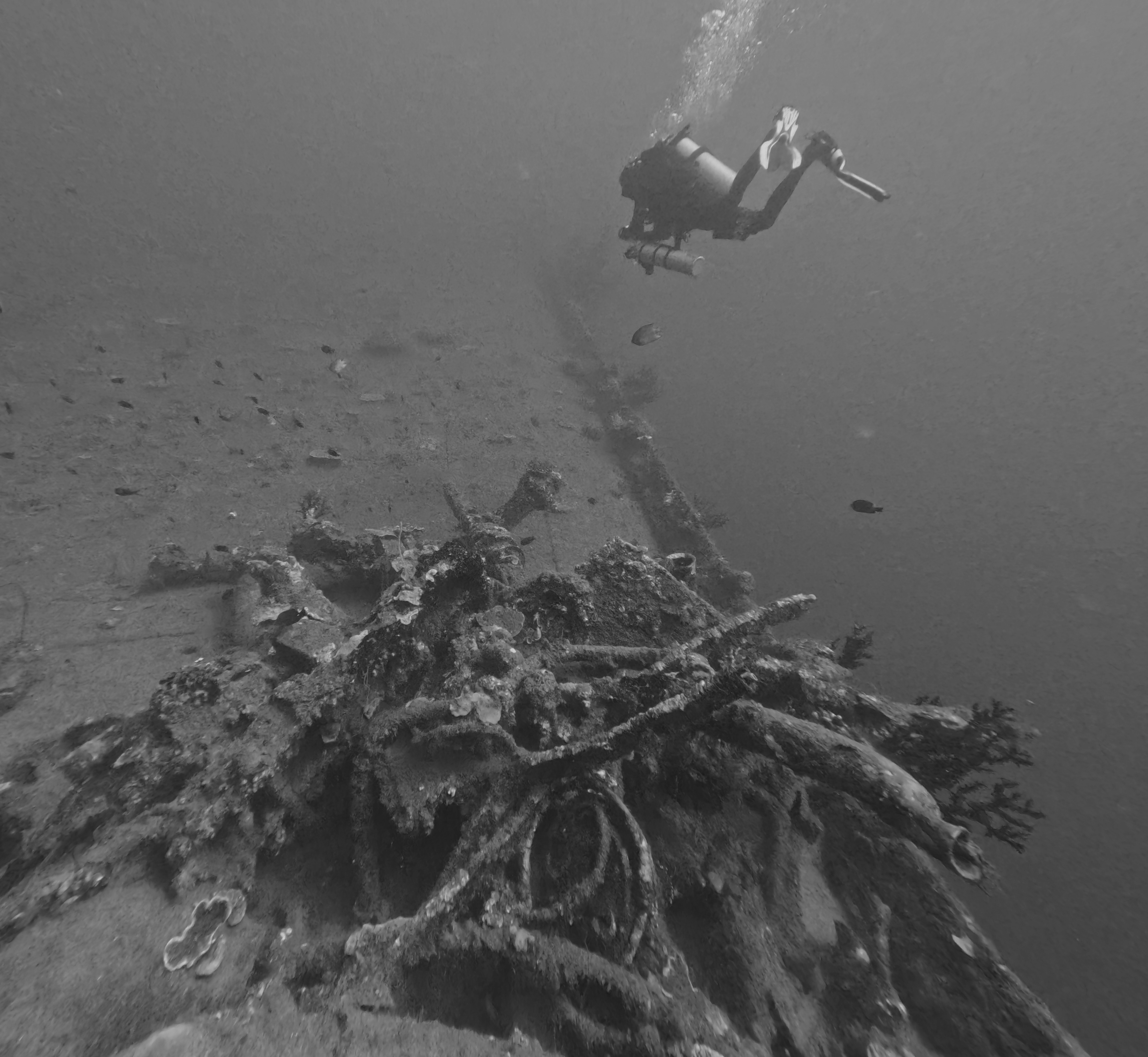
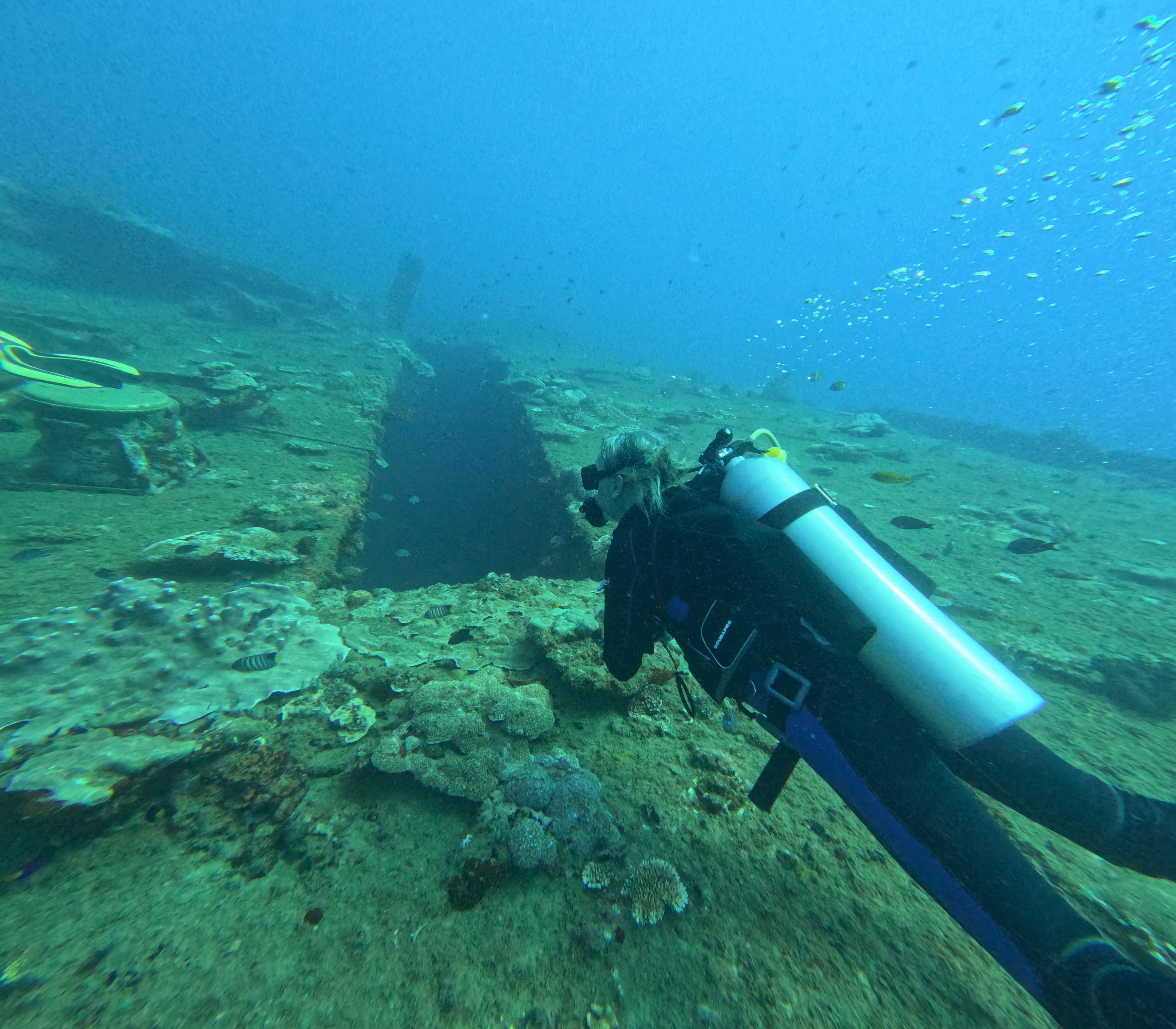
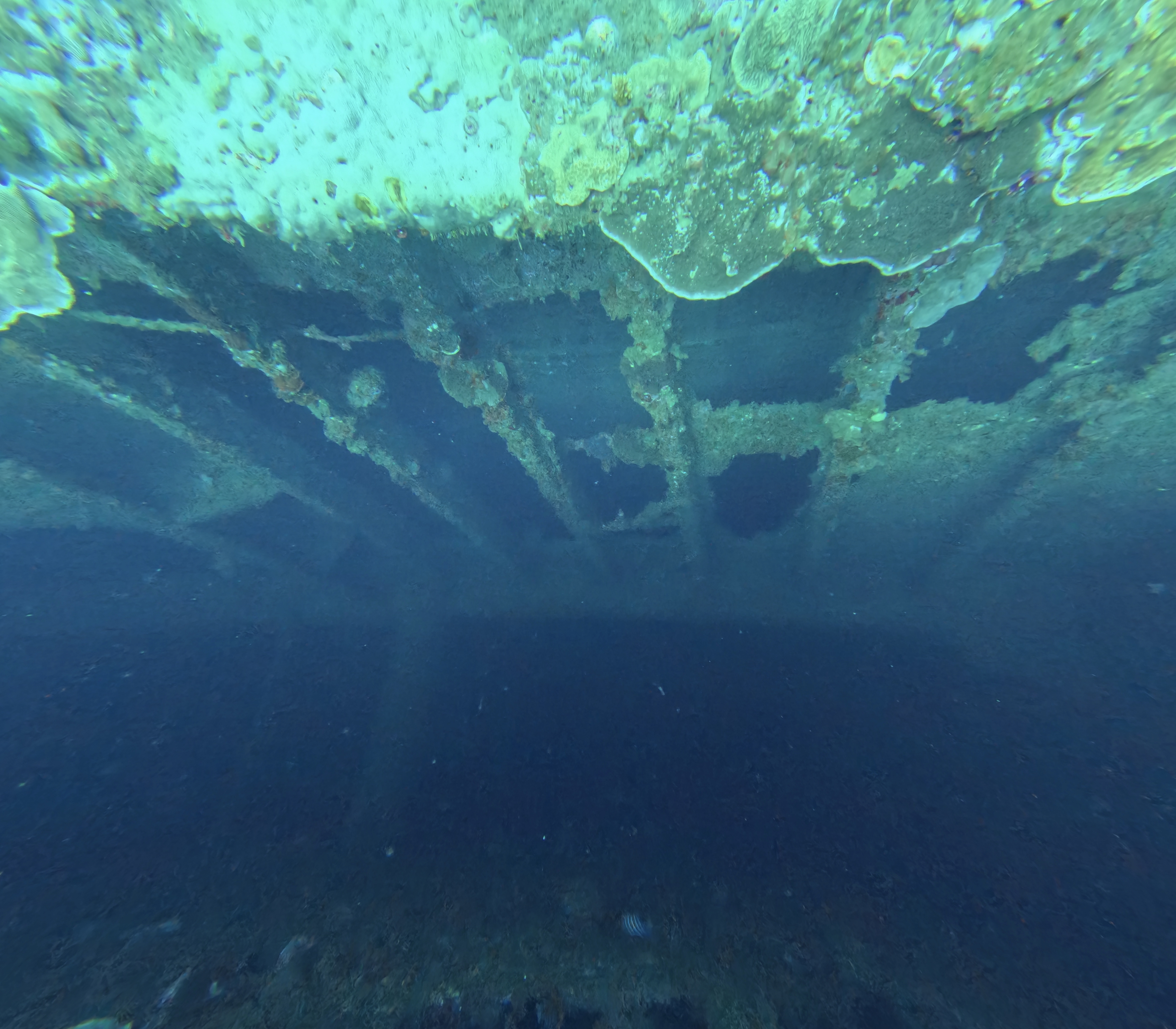
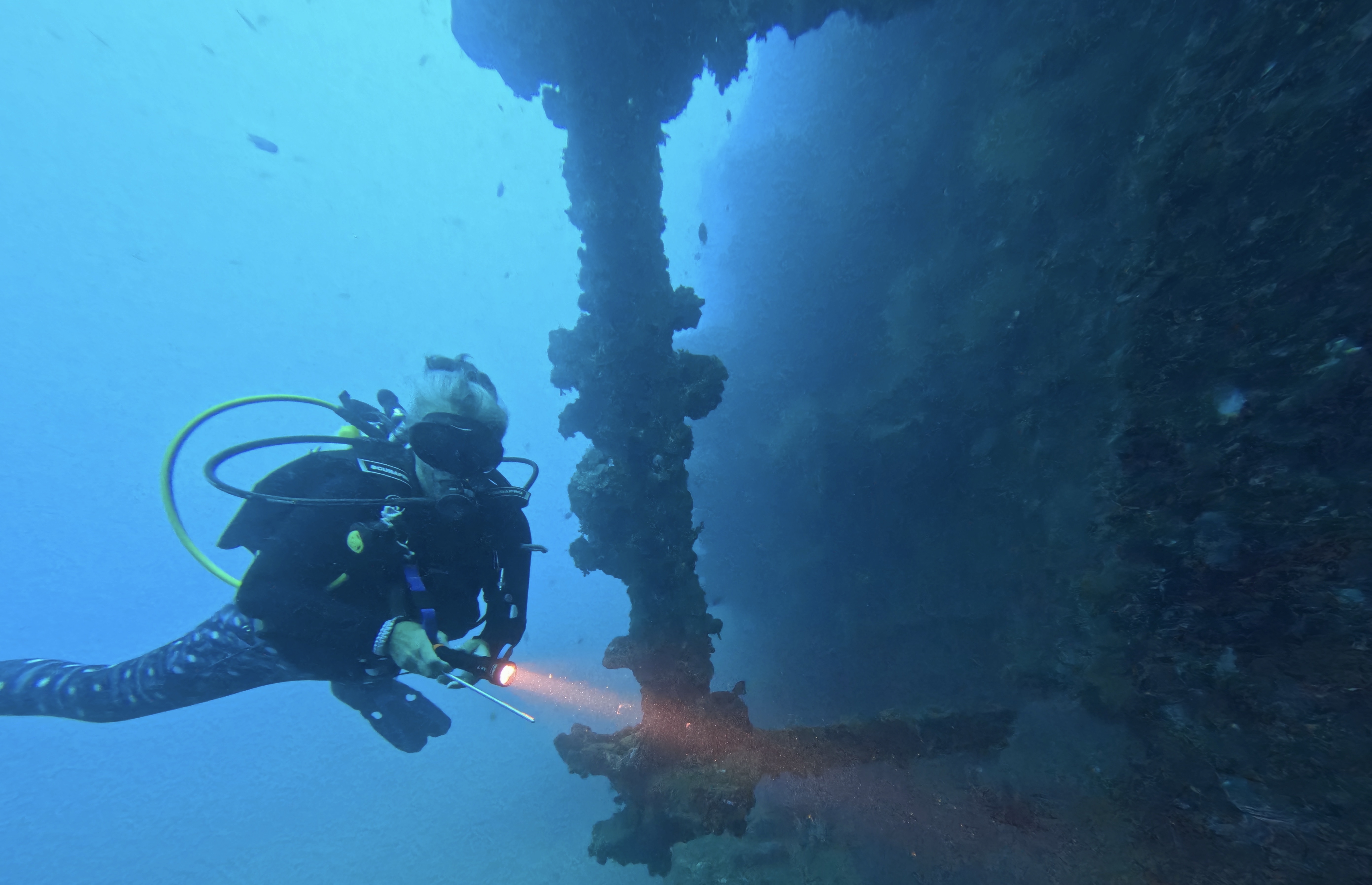
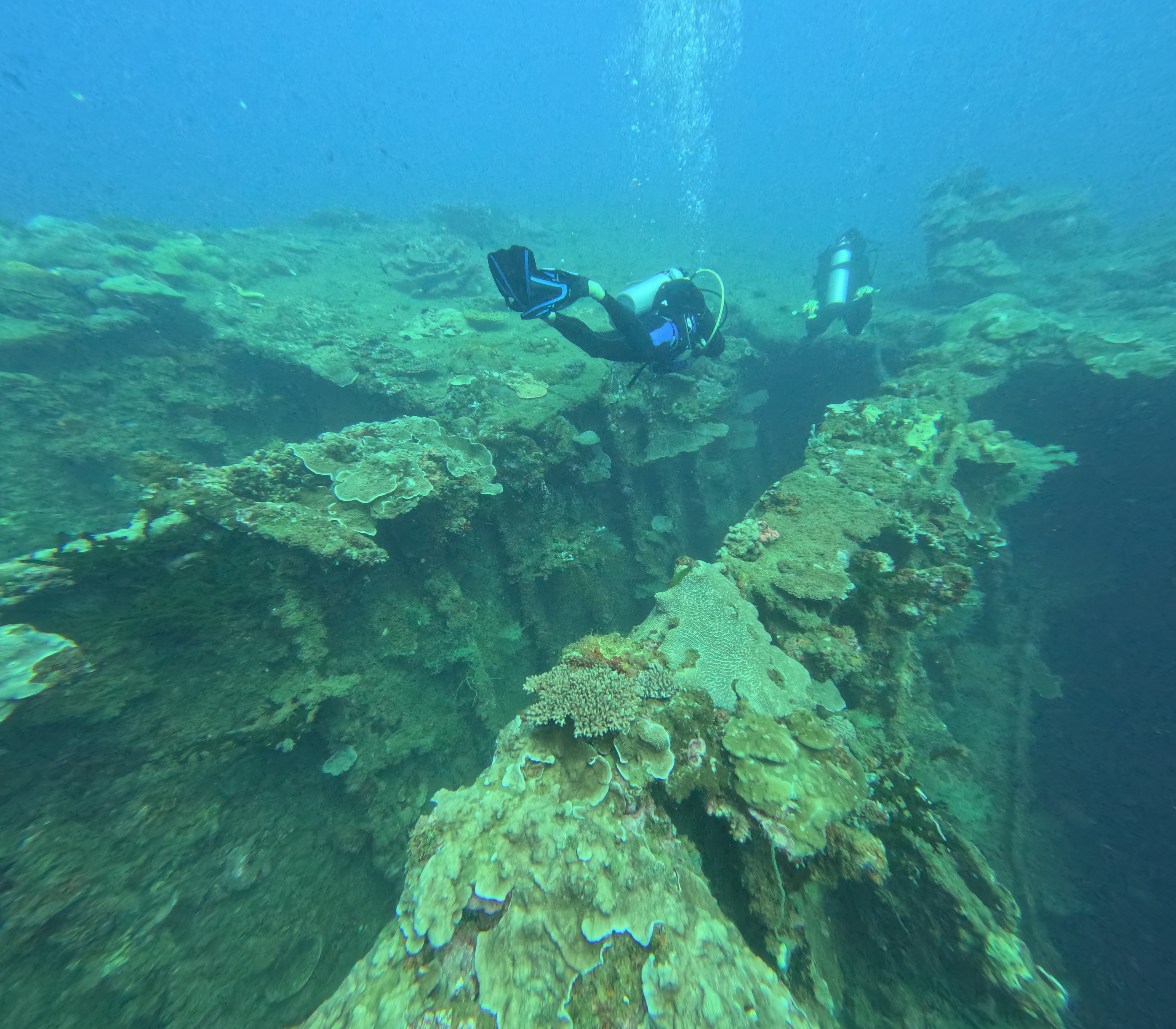
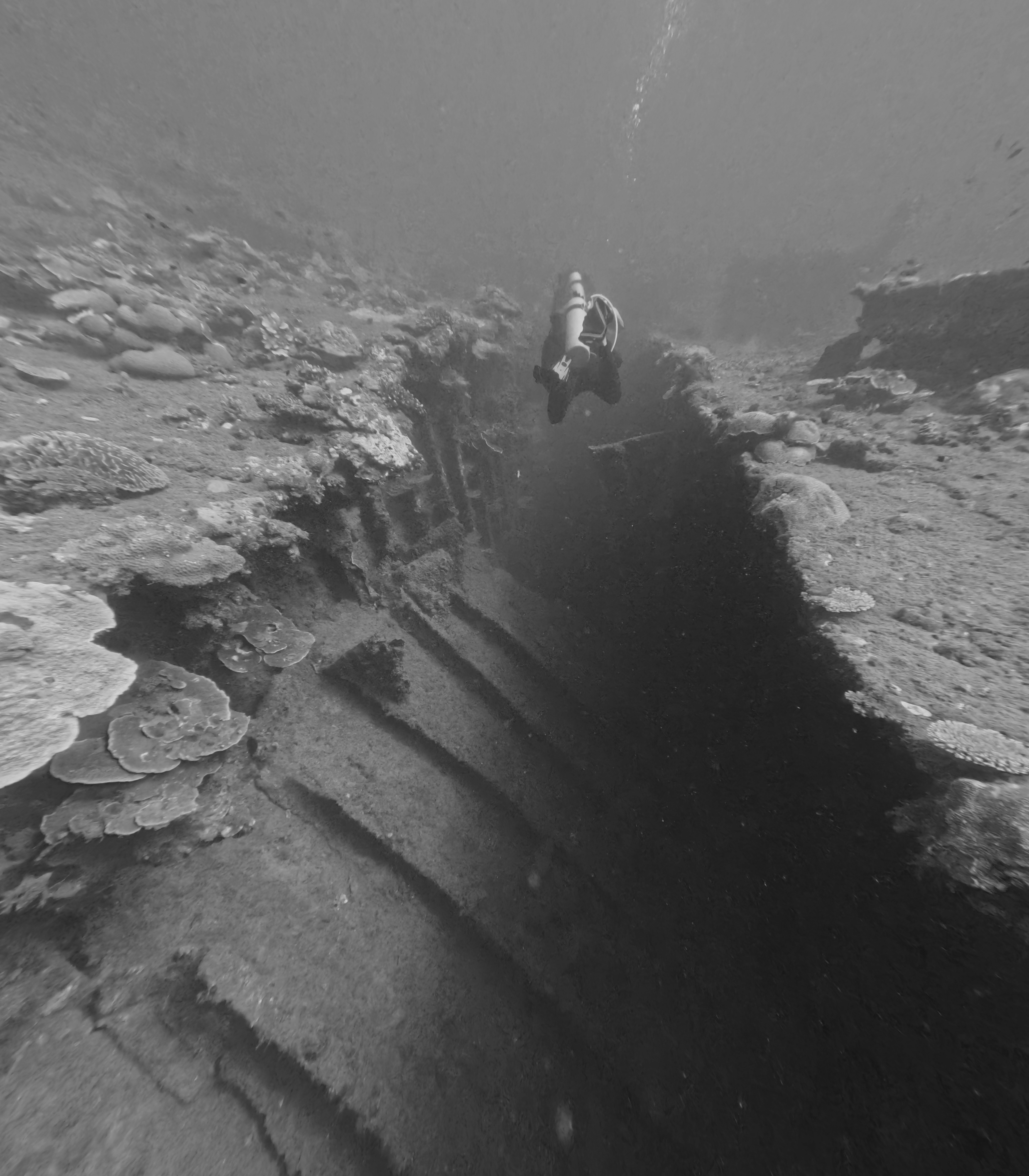
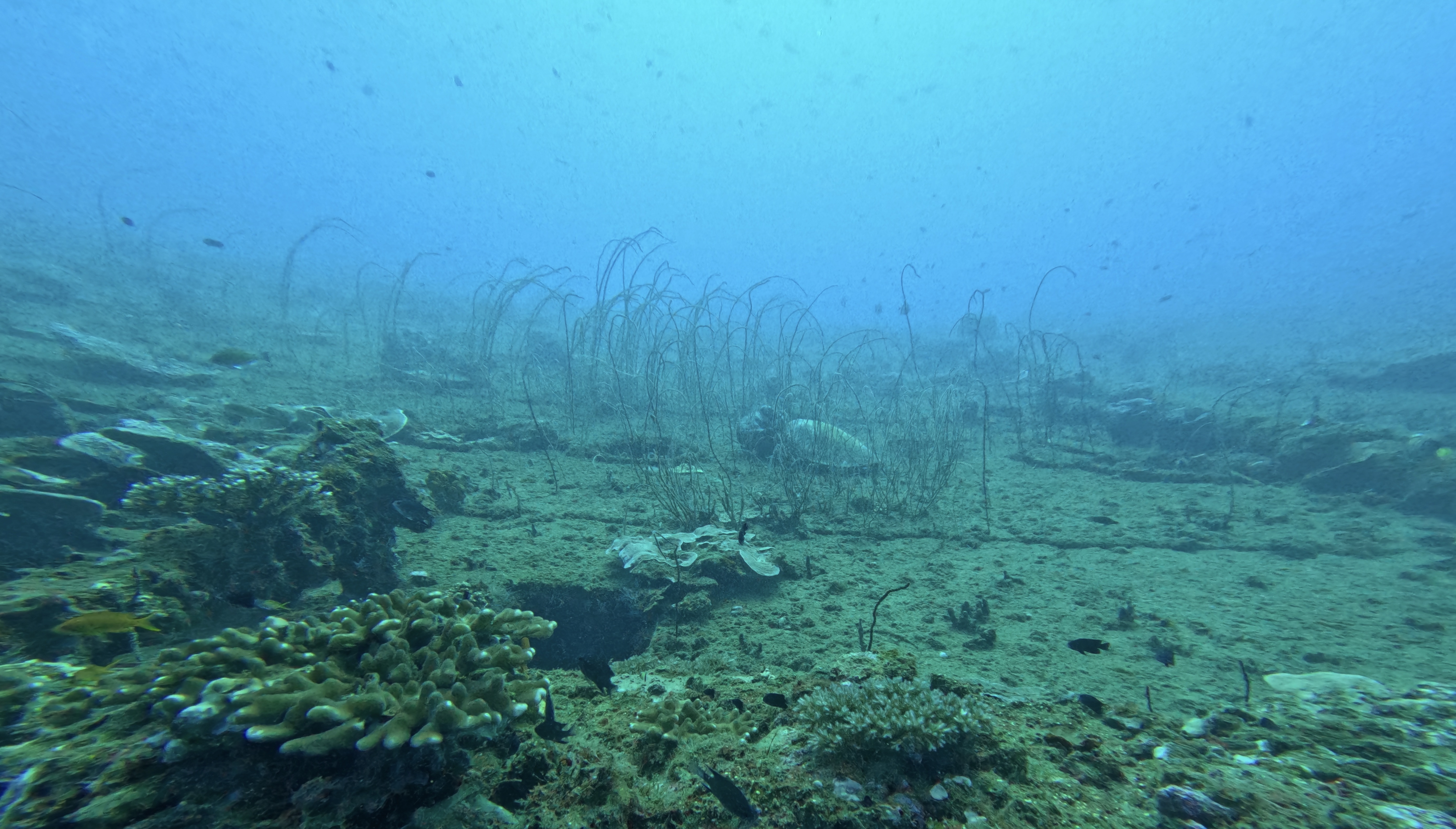
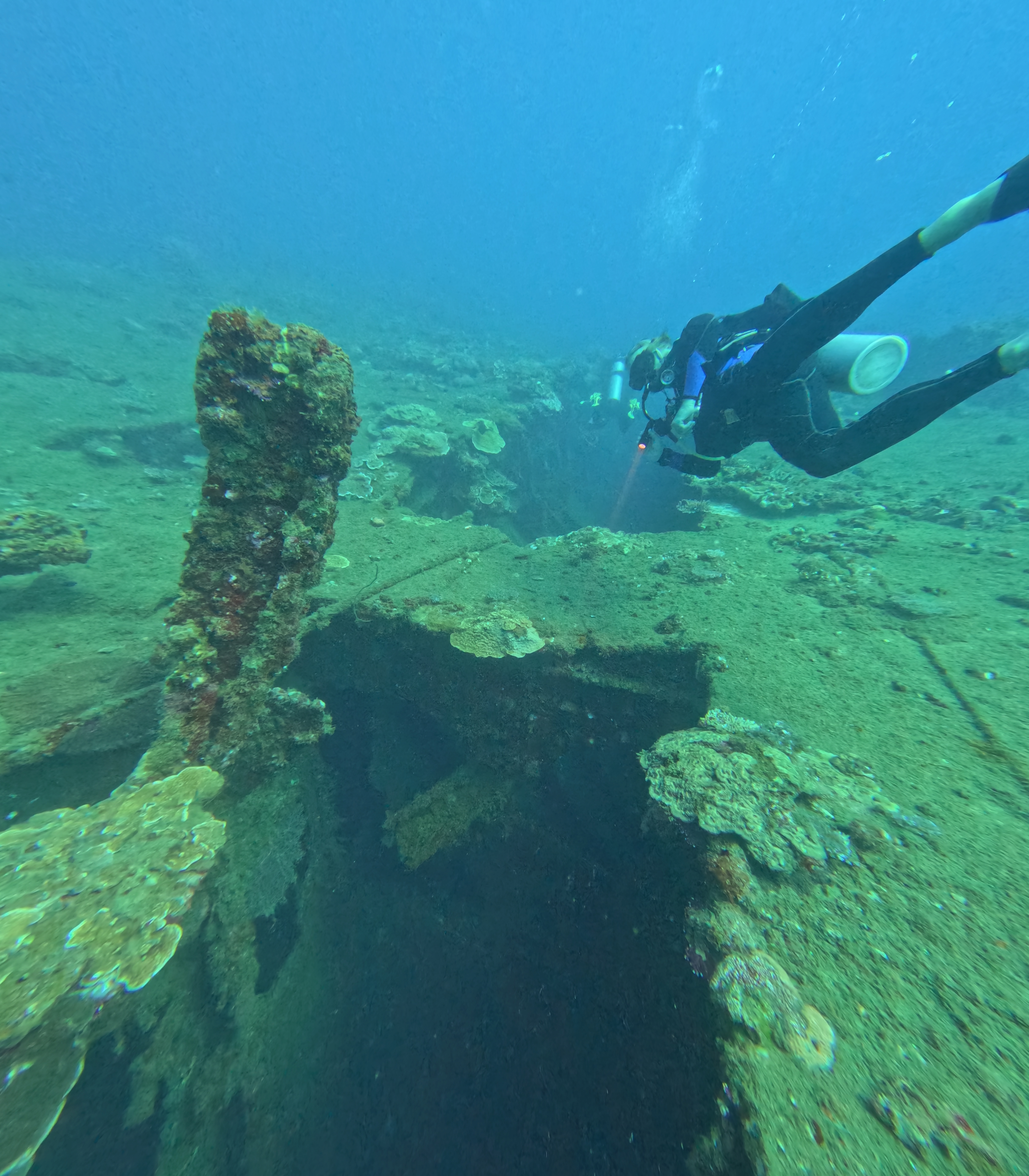
January 16: Dive #2 – Penetrating the wreck
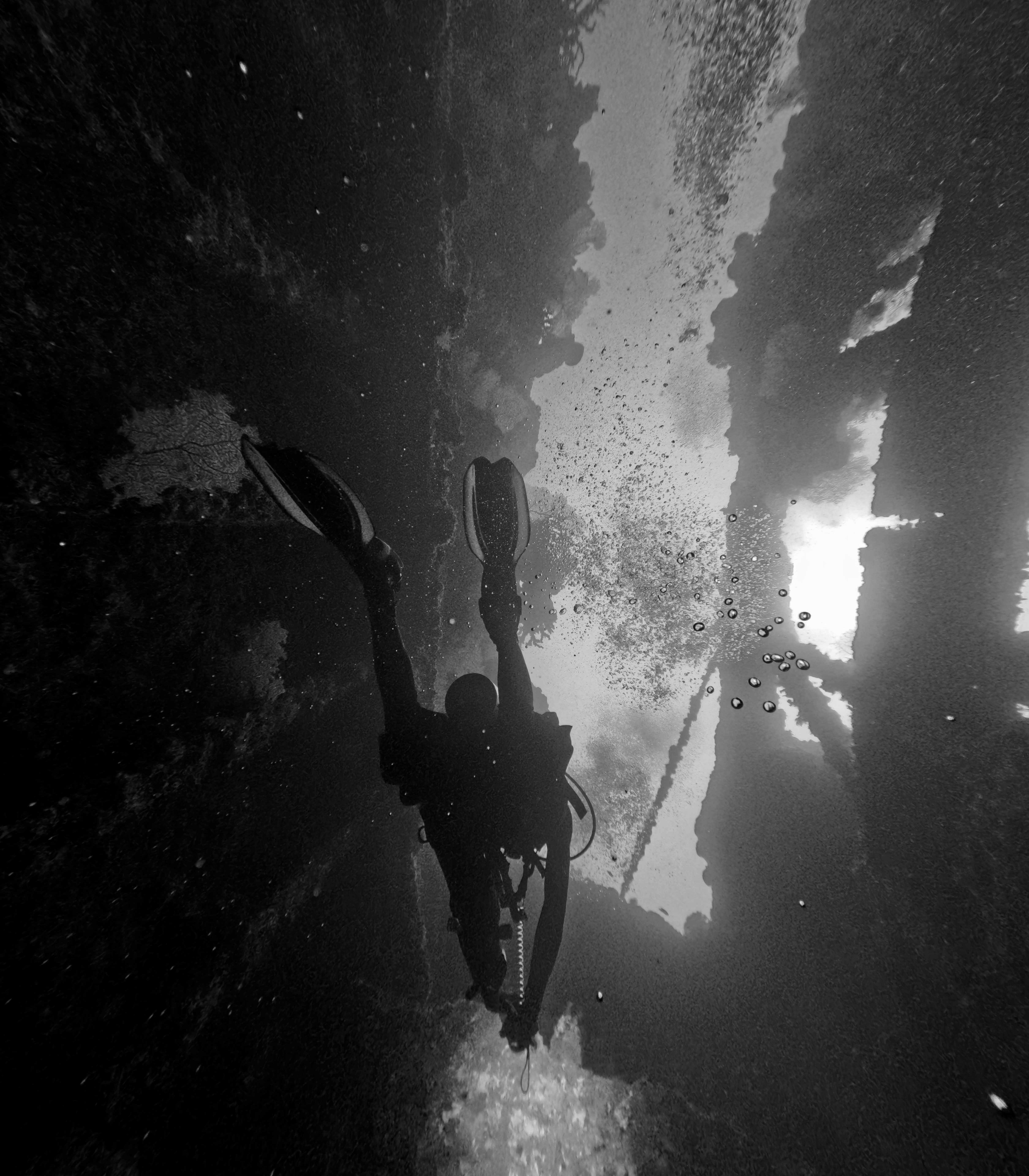
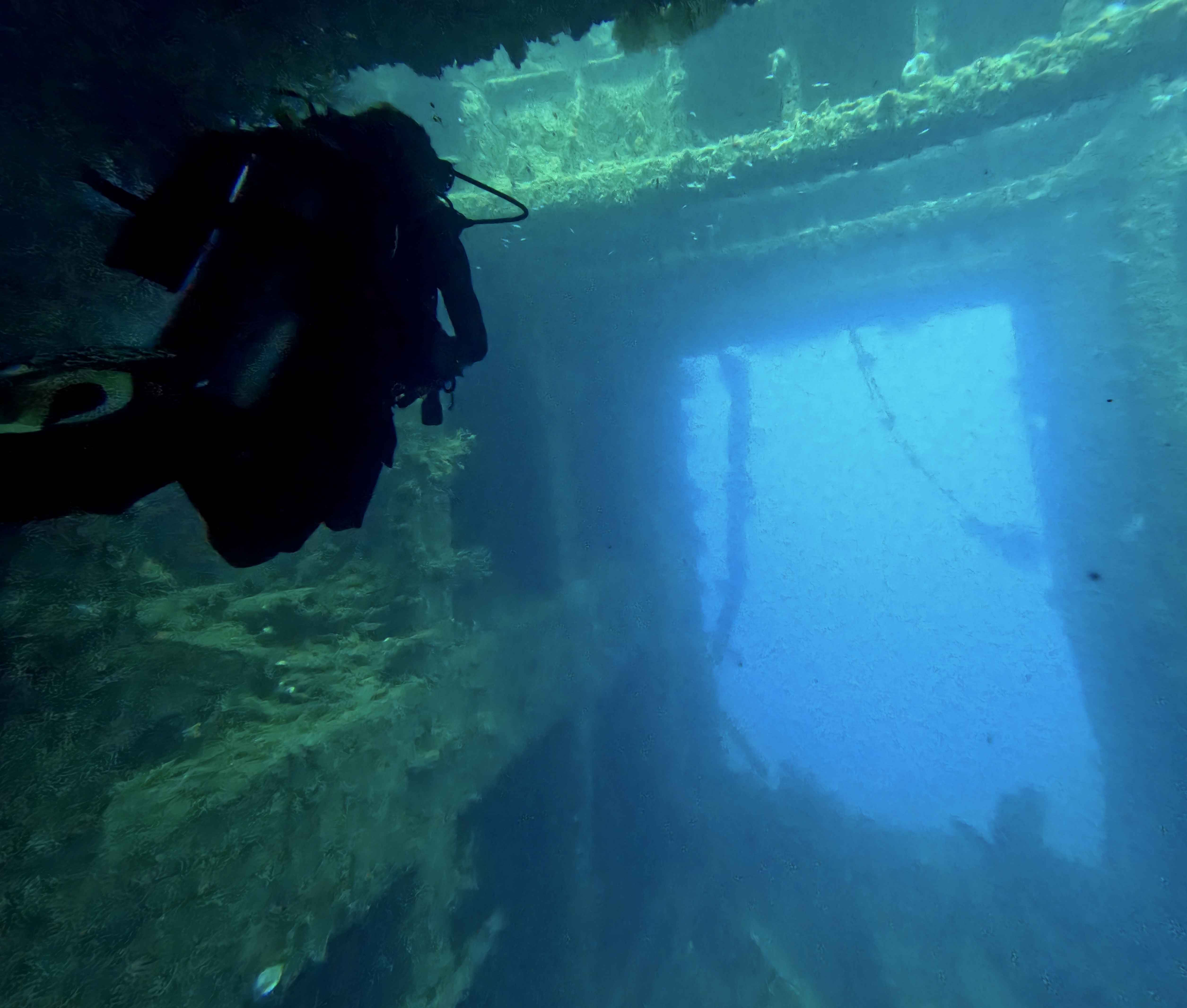
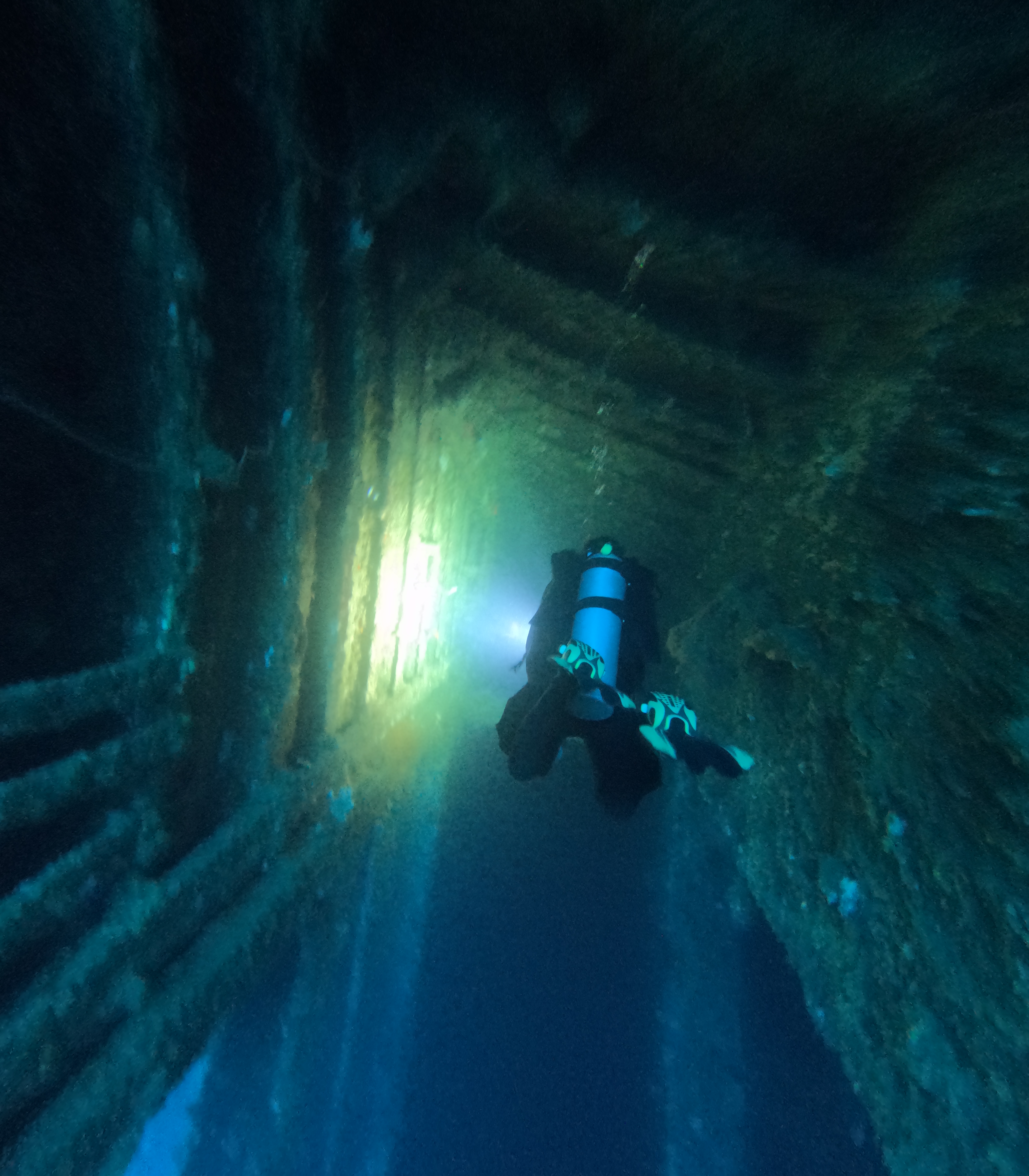
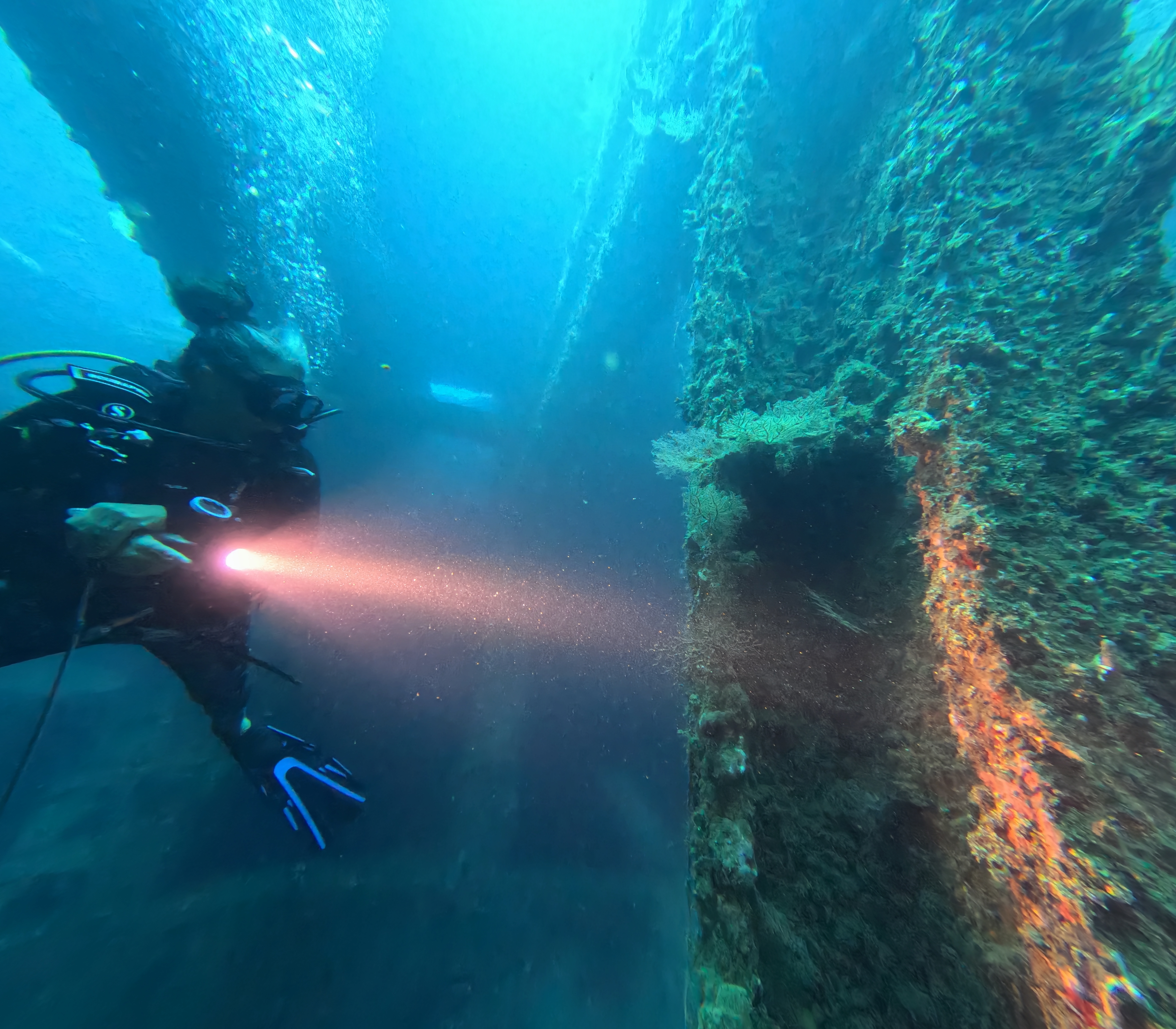
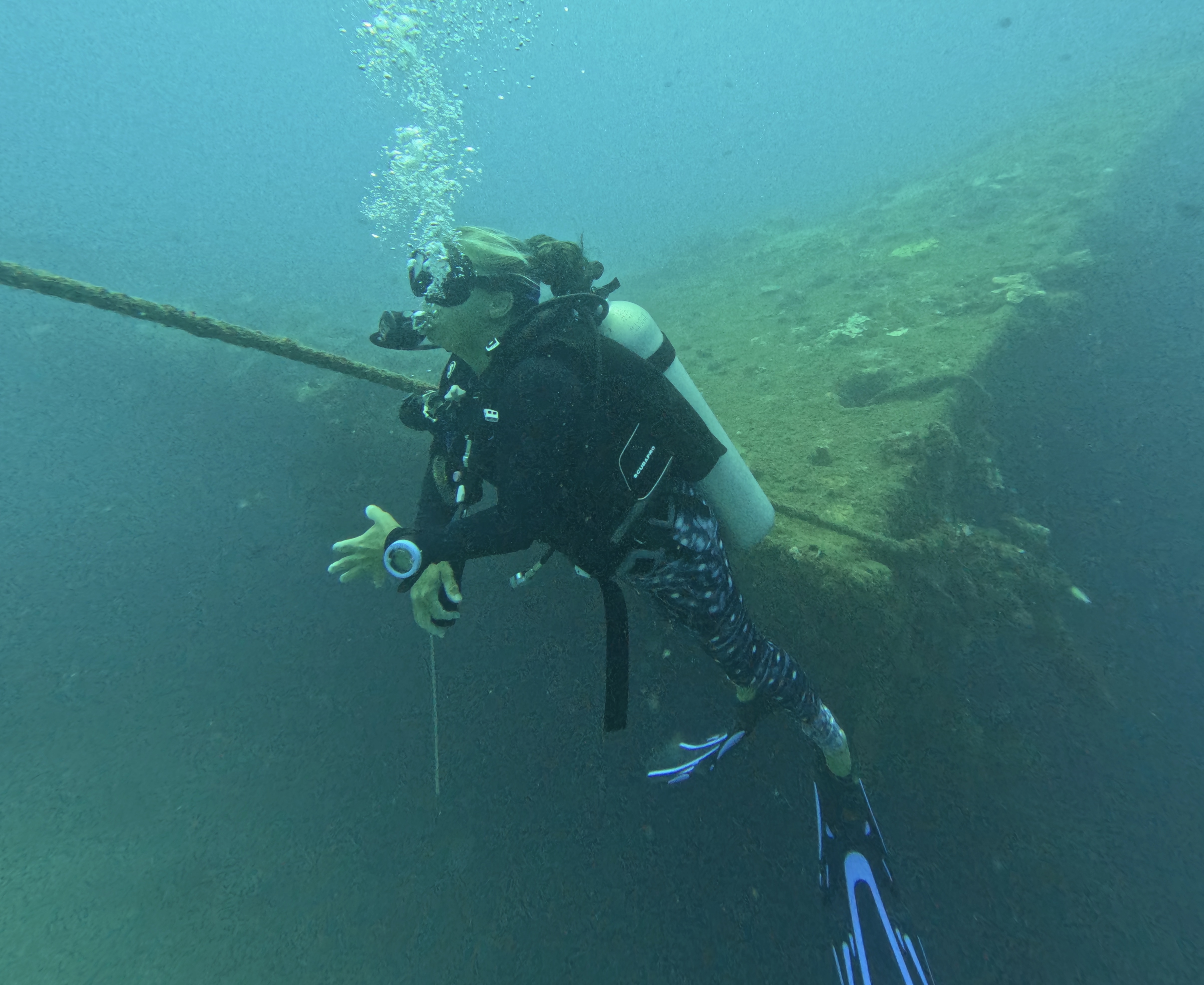
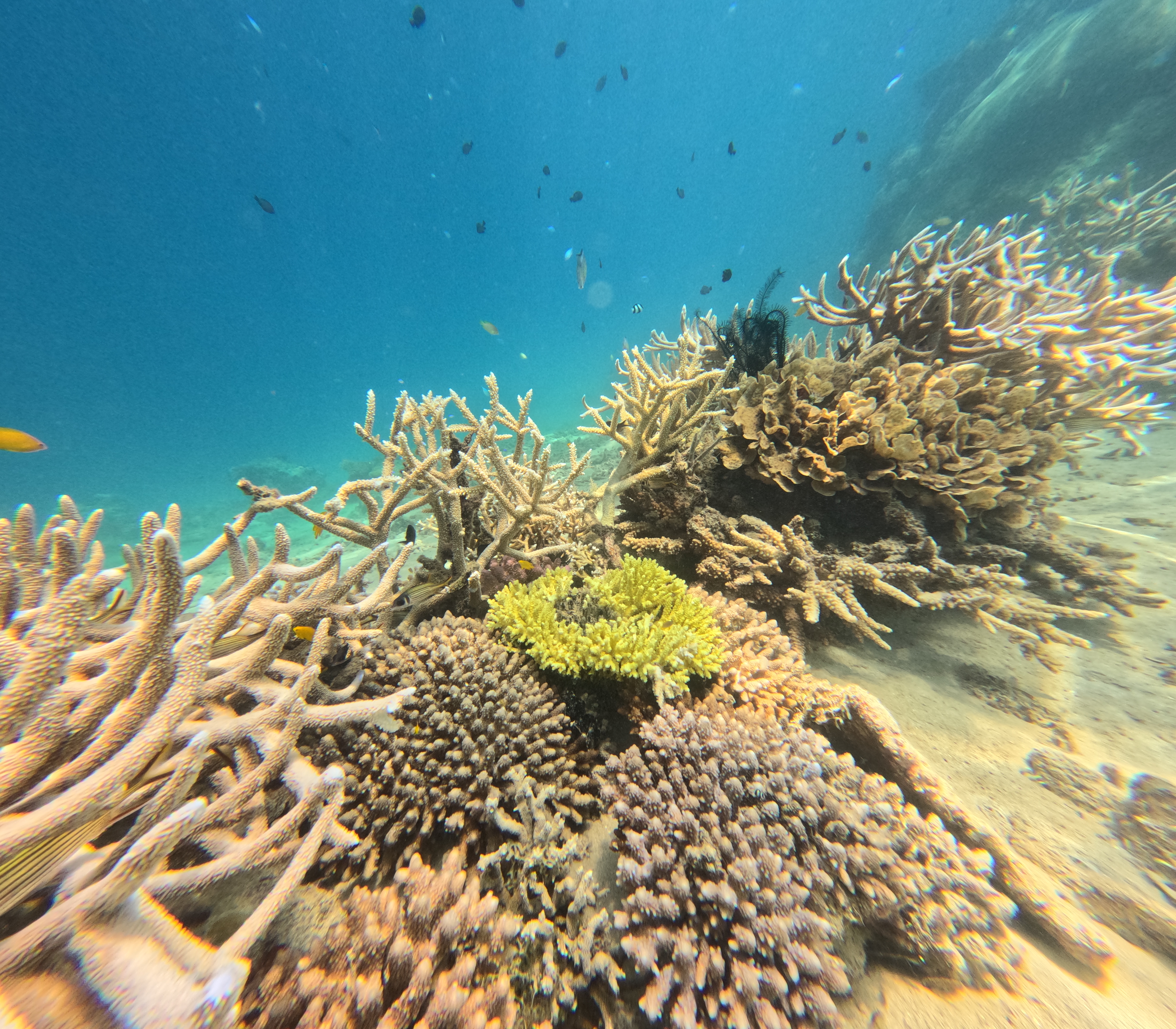
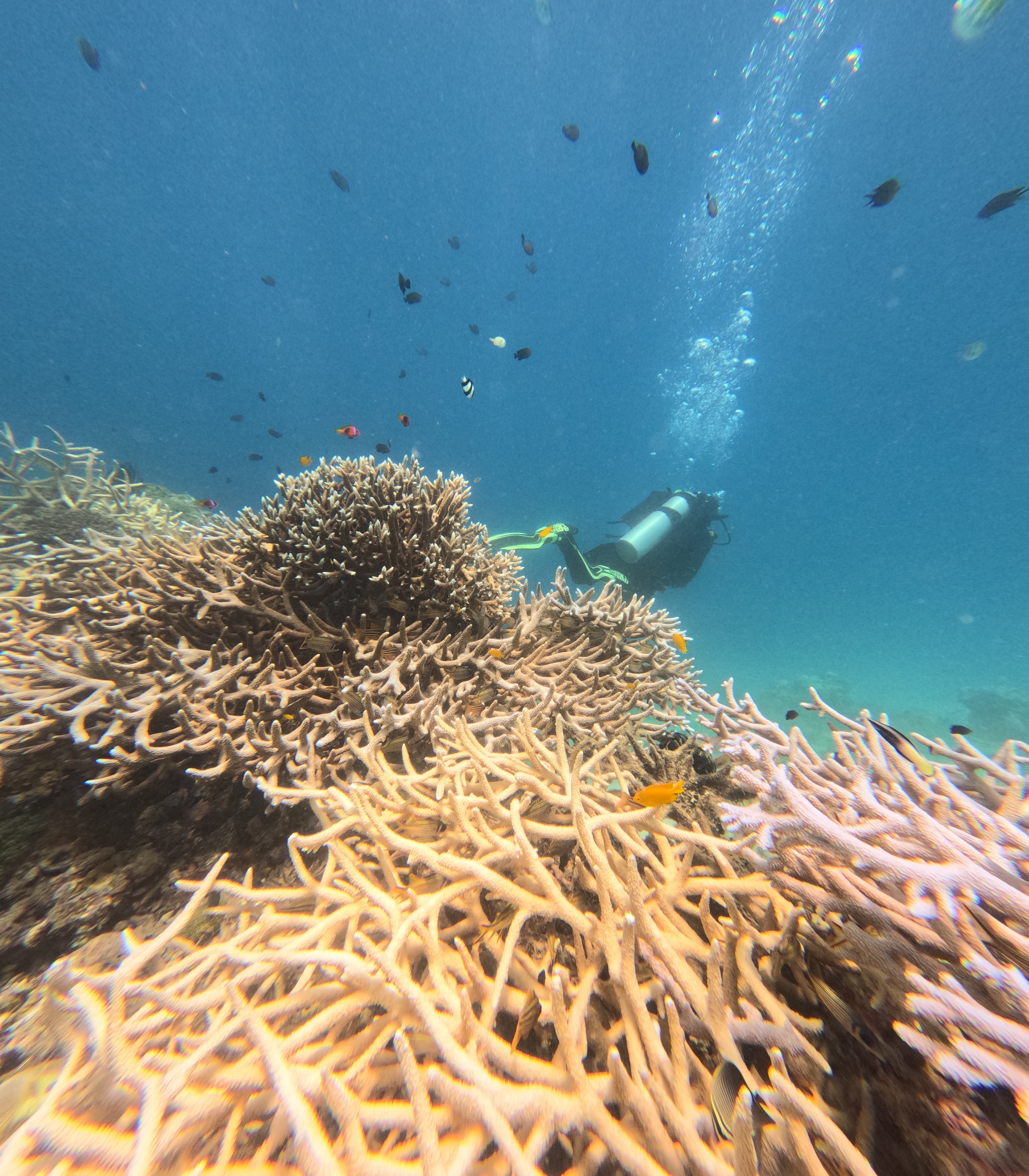
Day 2 of Diving the Coolidge – Dive #3 – Dec. 17, 2025
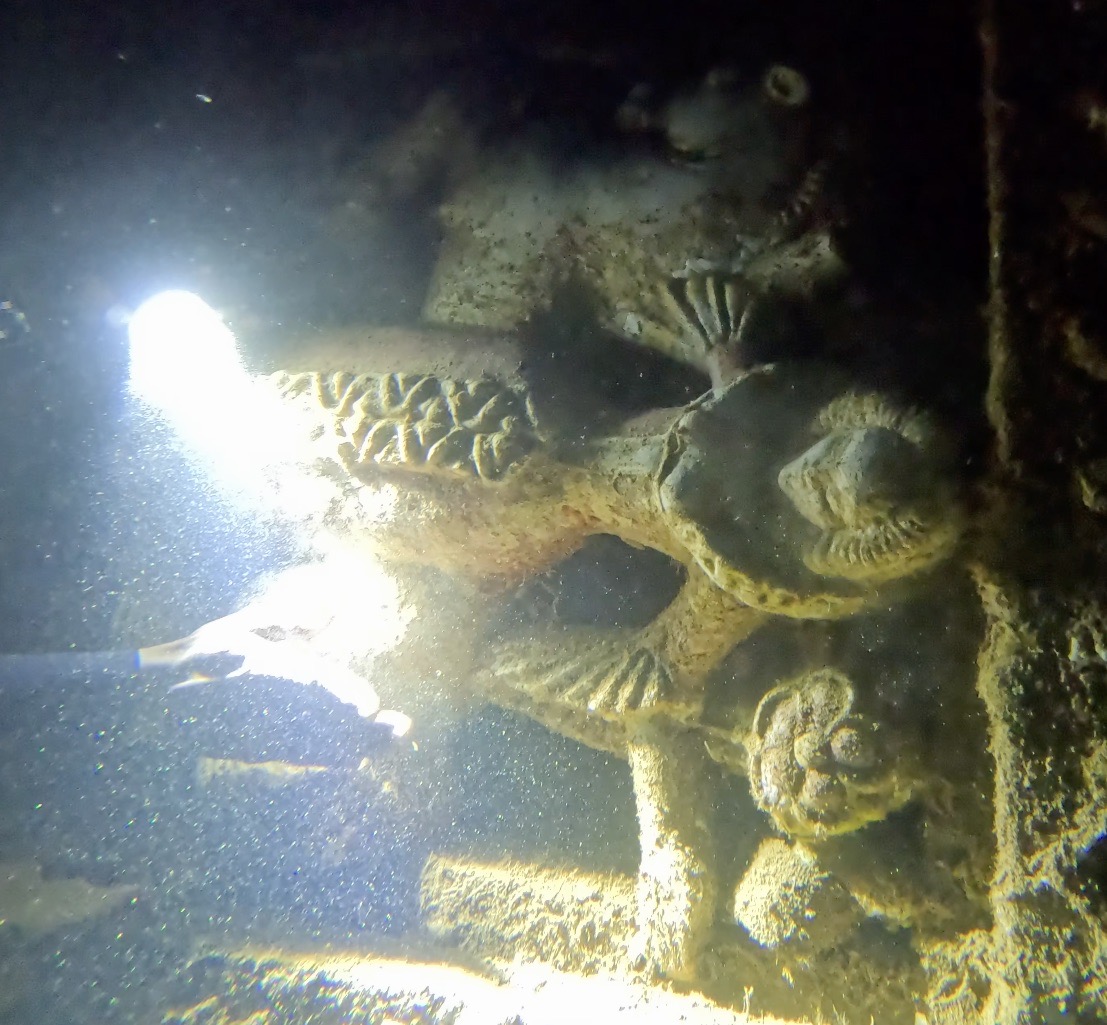
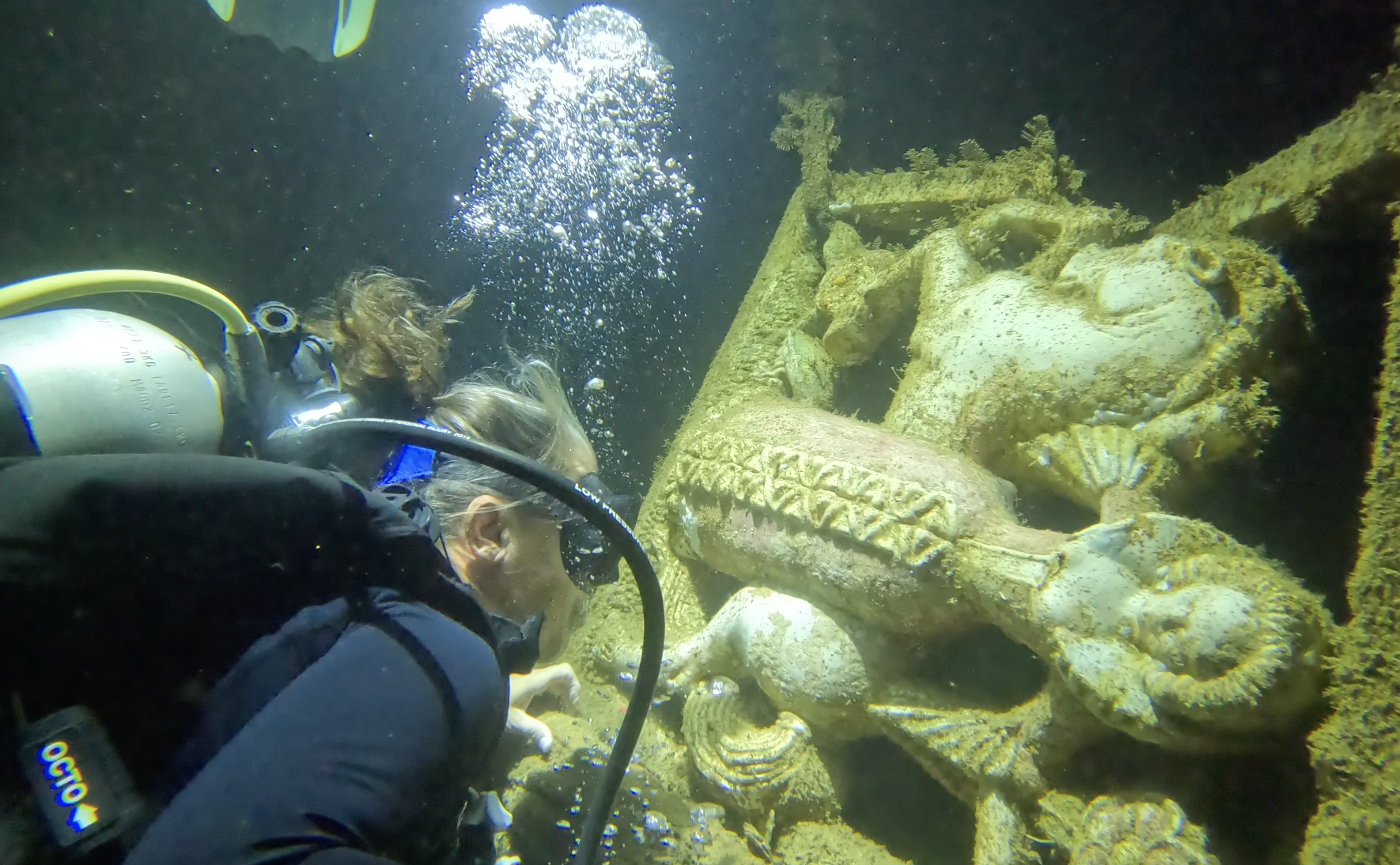
Visiting The Lady:
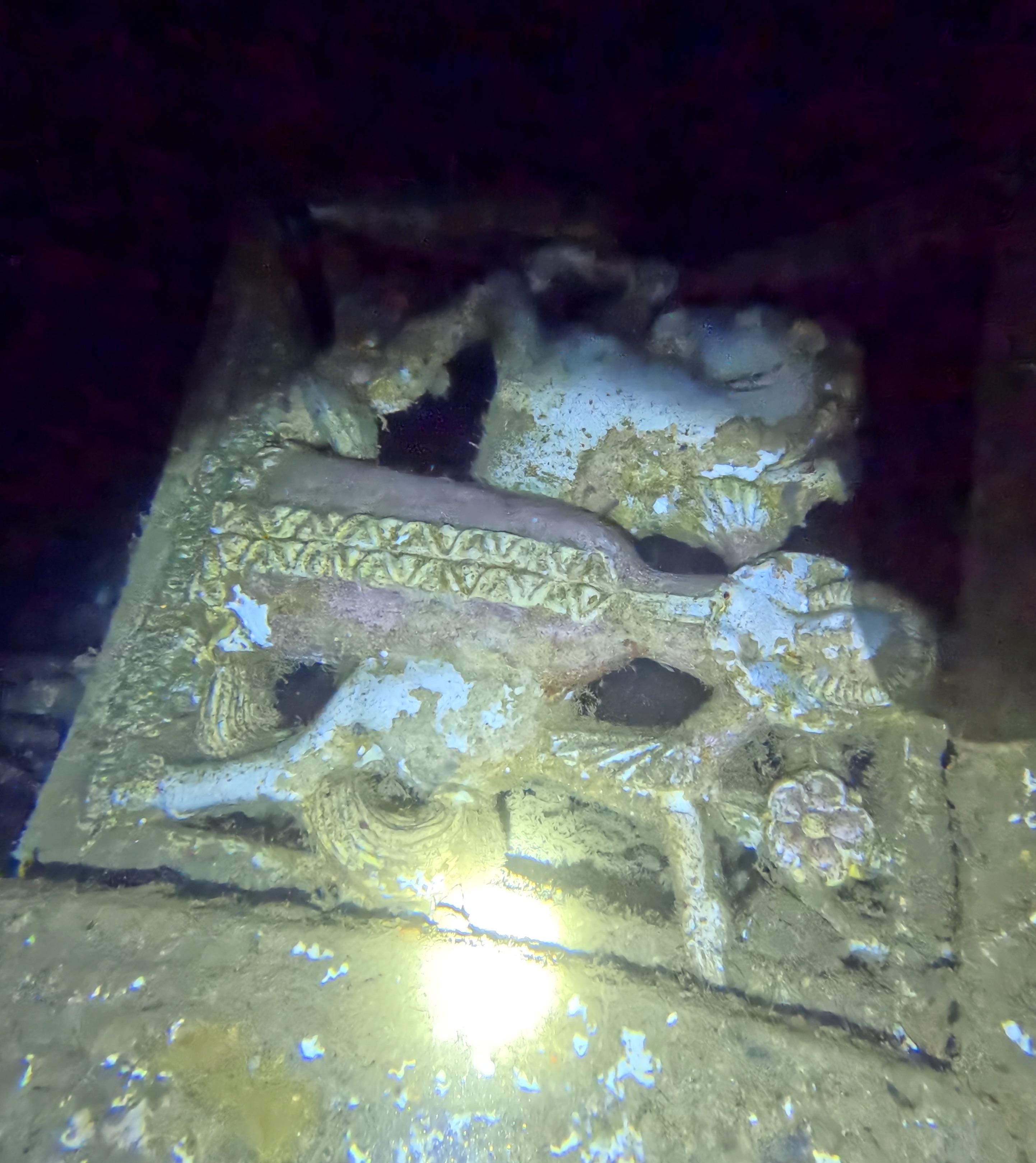
Inside the original first class smoking room, one of the grandest public spaces on the ship both in size and ornateness, was an elegant antique marble fireplace. Above its mantle hung a decorative panel set in a dull stainless steel frame with moulded iron. This decorative ceramic three-dimensional wall fresco, just under three feet square, is the ‘Lady on Horseback.’
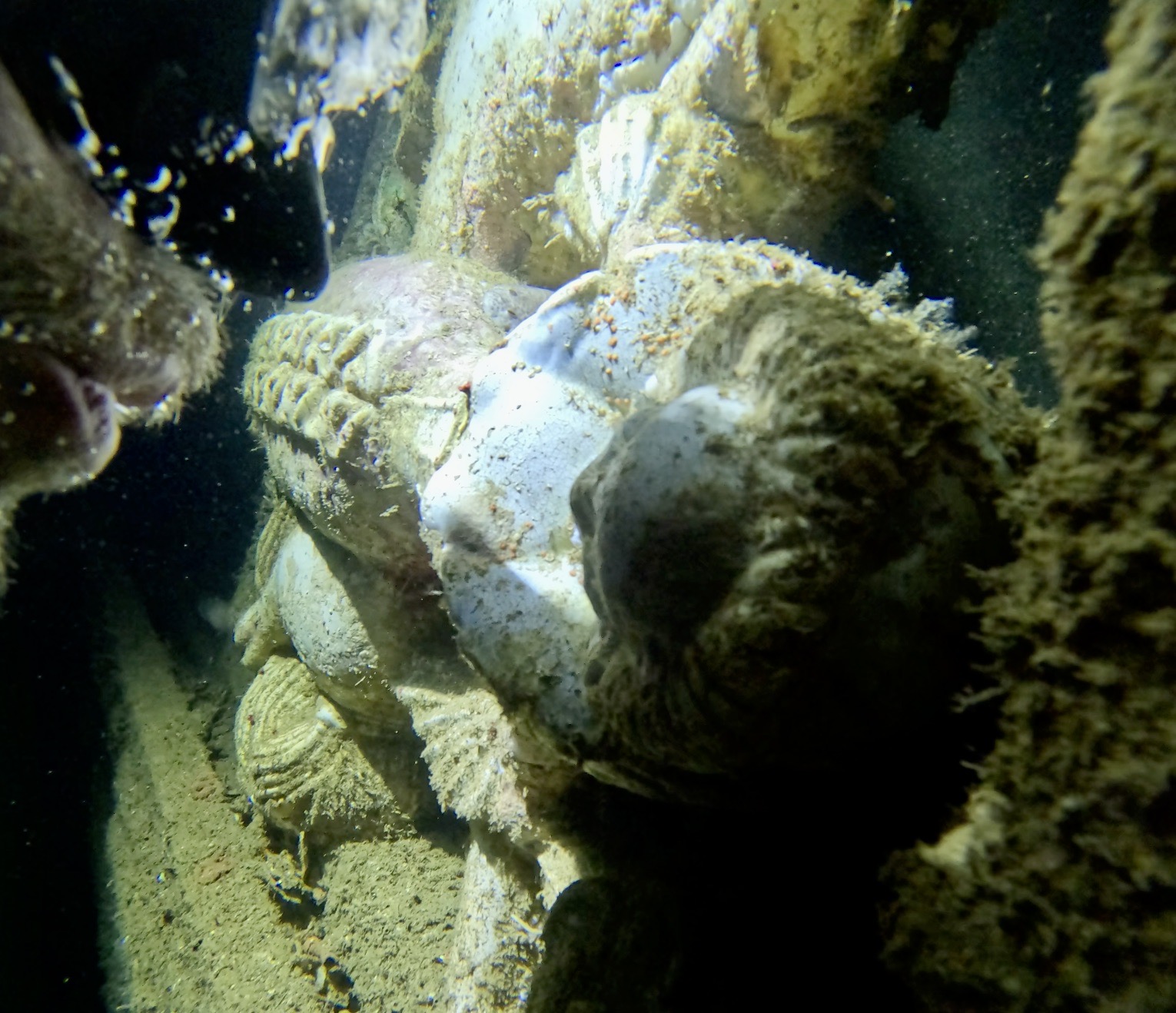
The ‘horse’ is, in fact, a unicorn whose tusk has broken off and the Lady is actually standing rather than sitting upon the animal. While all decorative features were removed from the Coolidge when the ship was converted for military use, the ‘Lady’ was built into the bulkhead of the Smoking Room and could not be easily removed so she was, more than likely, covered in timber for protection. On the 26th of October 1942, the ‘Lady’ went down with the ‘President’. Found by Allan Powers in 1981, after the timber would have rotted and collapsed leaving The Lady exposed, she has remained at her resting place at a depth of 150 feet in remarkably good condition and become an icon of the wreck of the President Coolidge.
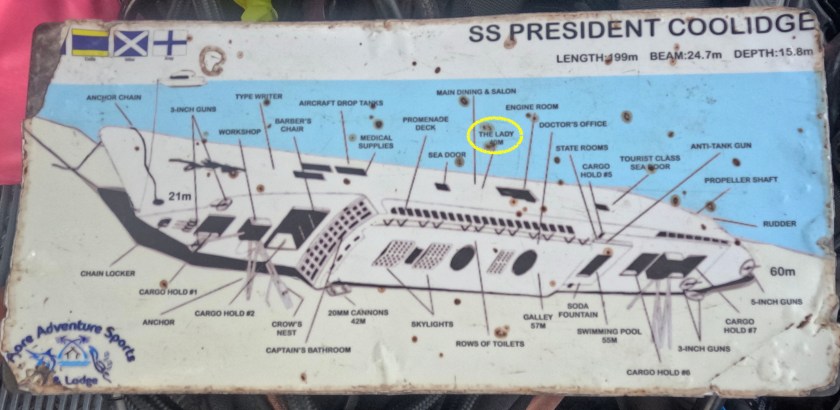
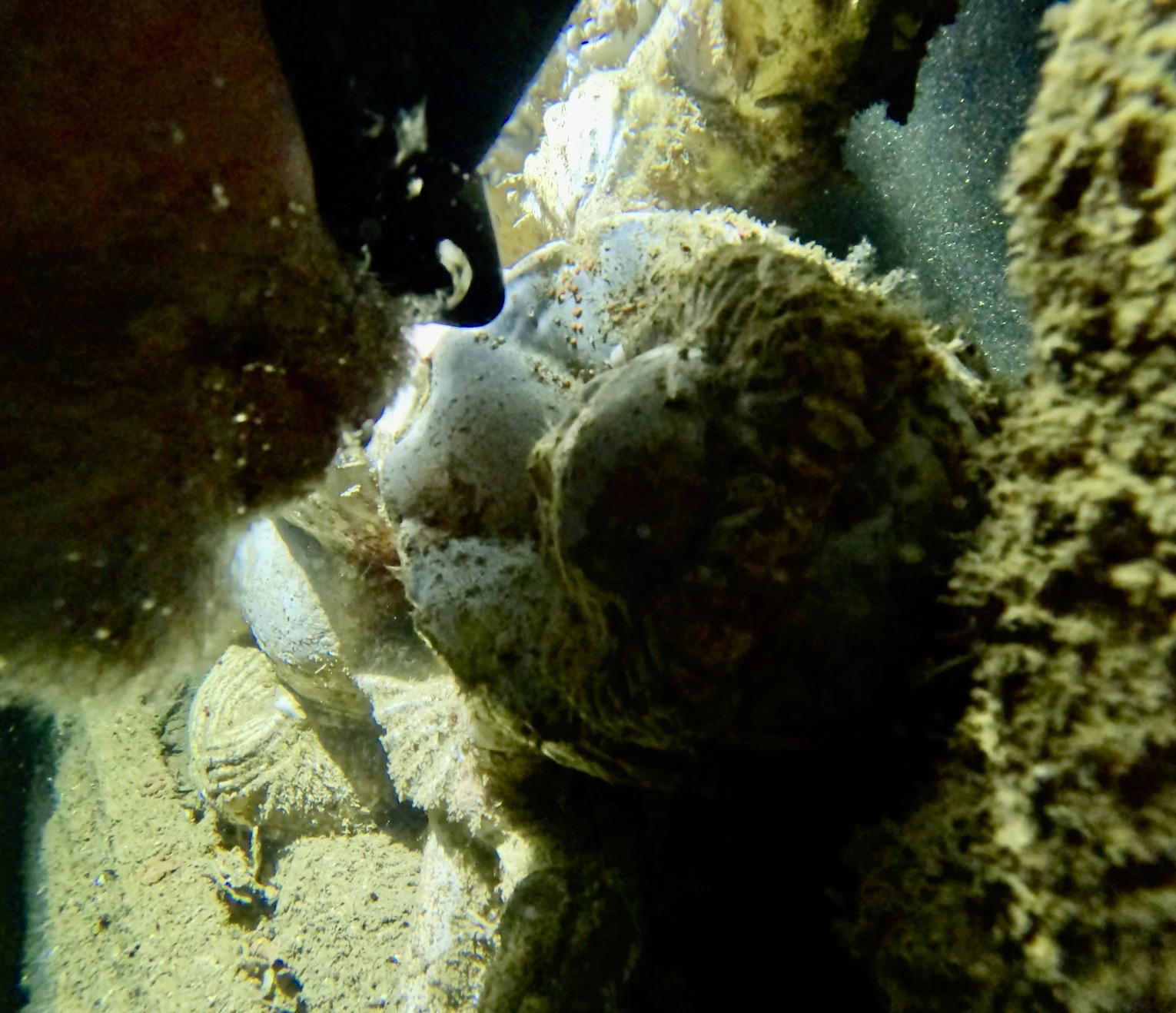
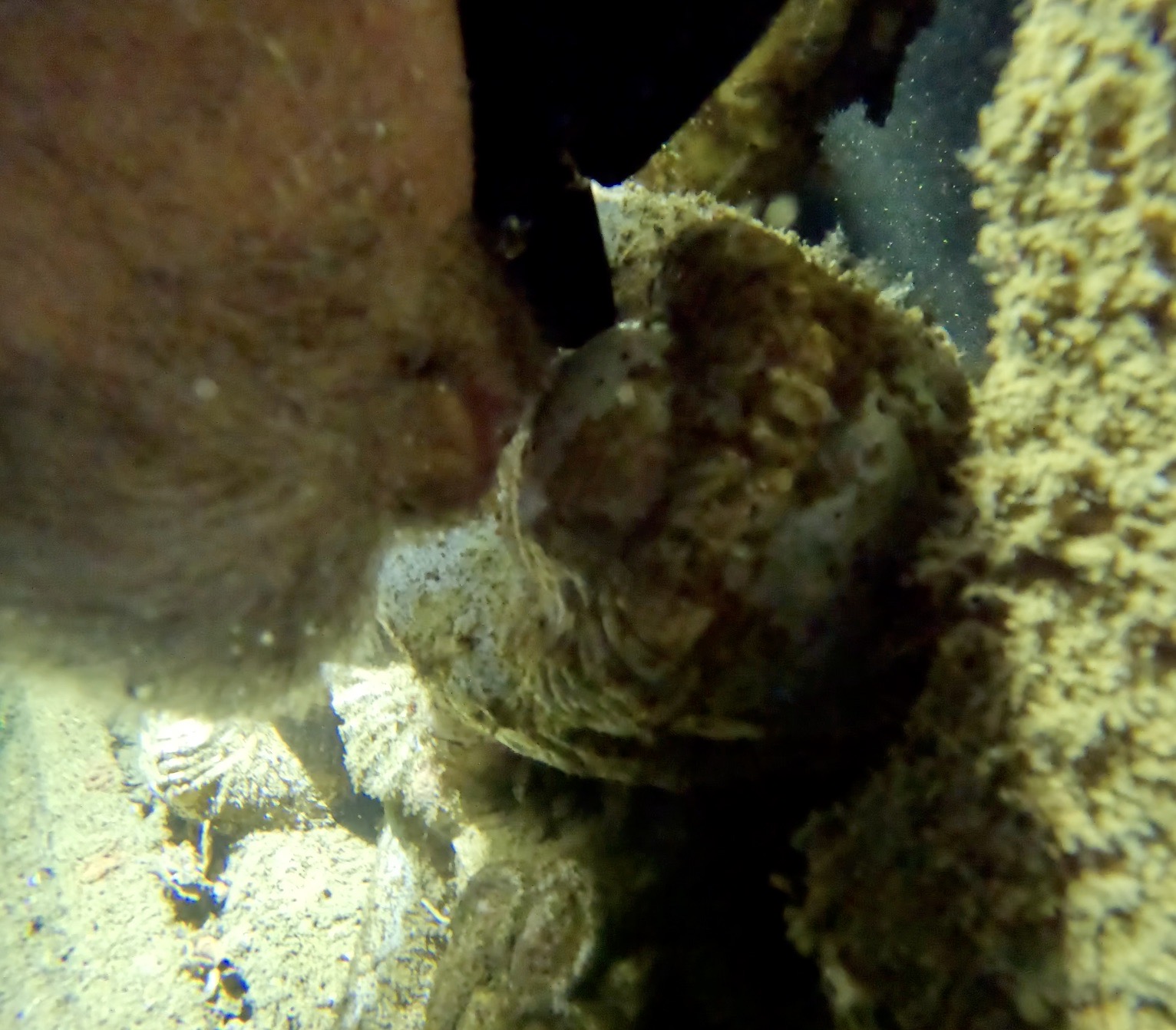
During our pre-dive briefing, we were informed that an odd tradition has evolved for scuba divers visiting The Lady. Men are expected to kiss the Lady on the forehead and women are expected to kiss…the Horse’s ass (technically, the Unicorn’s ass I suppose). What can you say? Ya gotta honor tradition…
Dec. 17: Dive #3 – Visiting “The Lady”
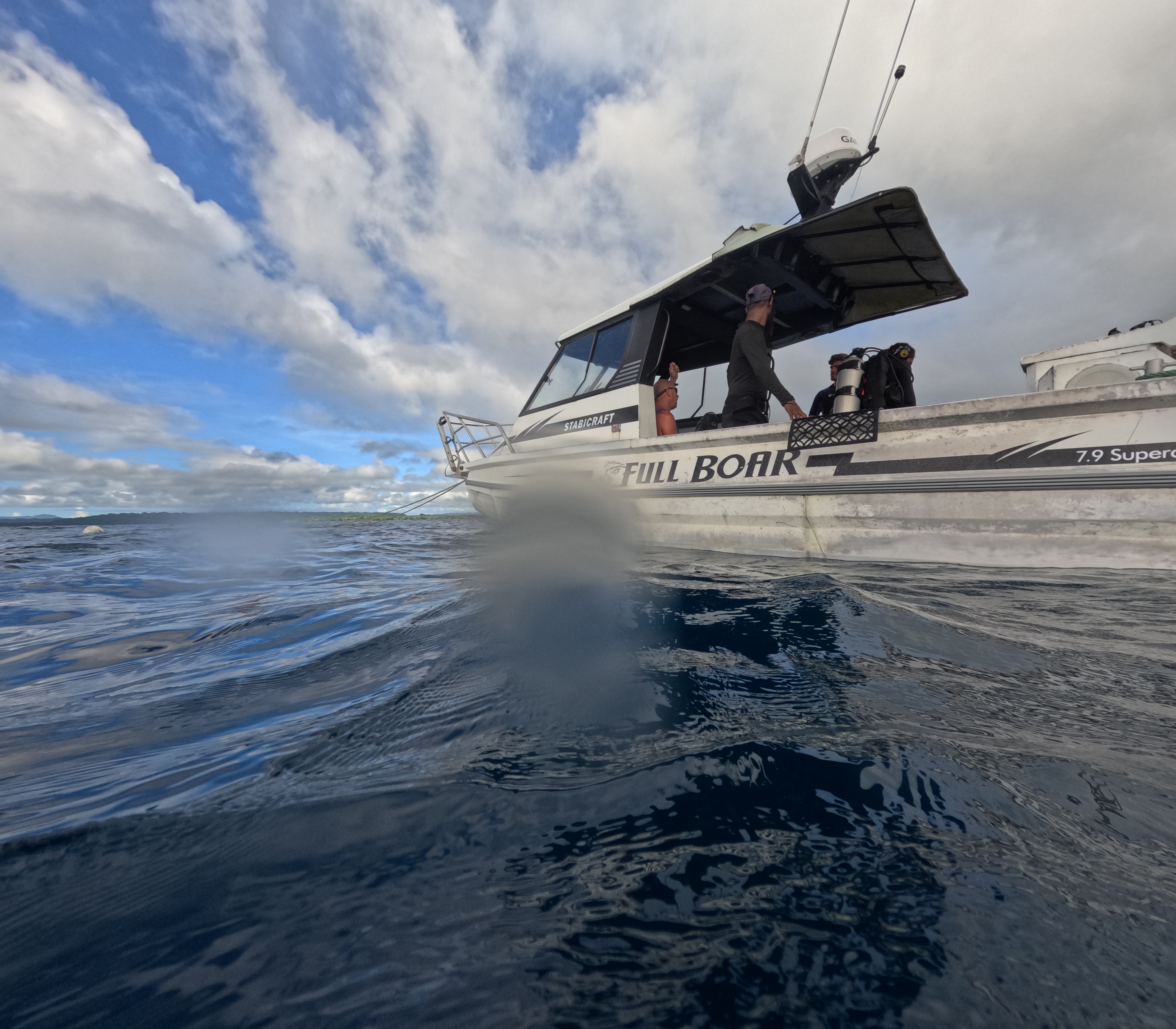
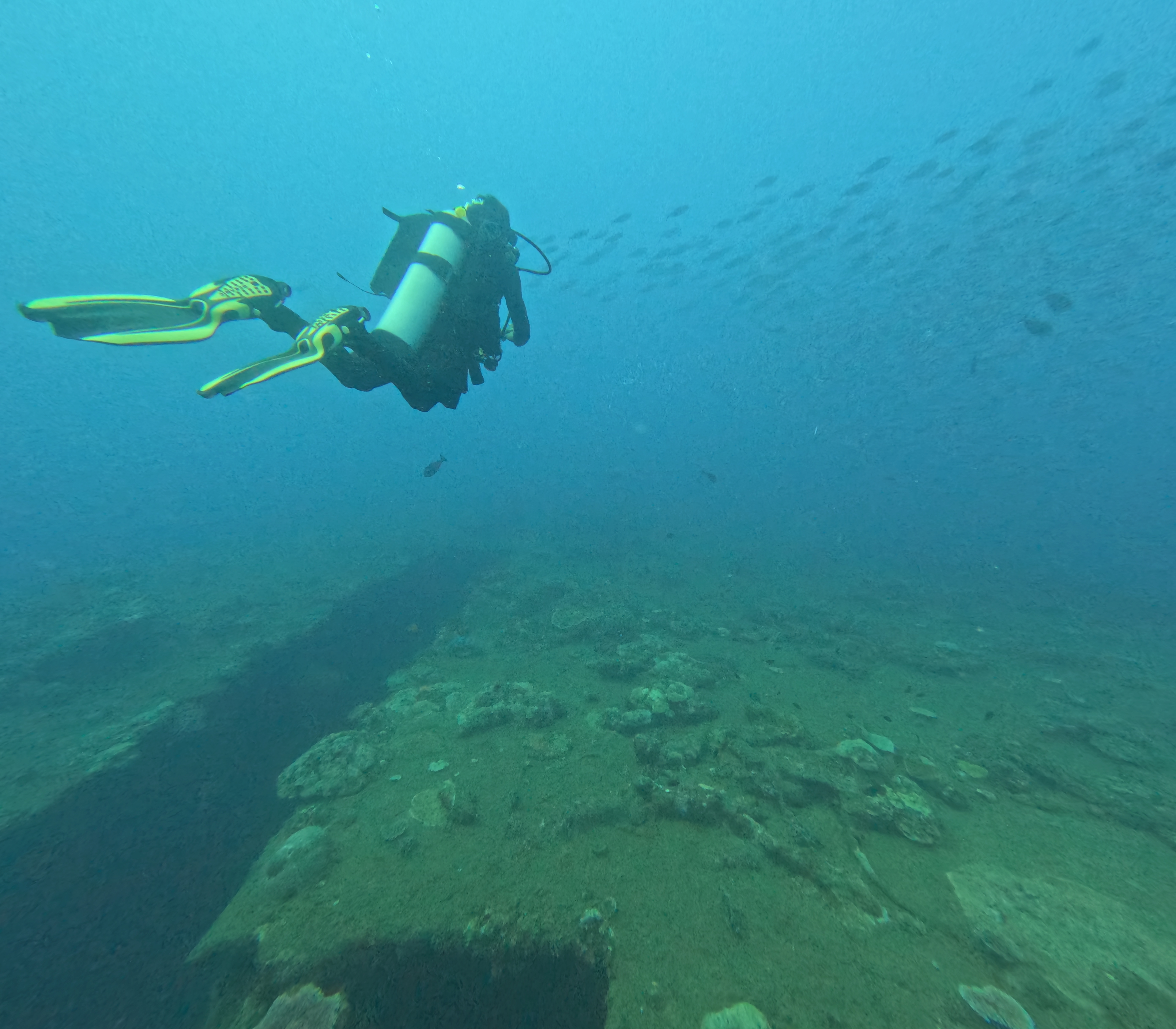
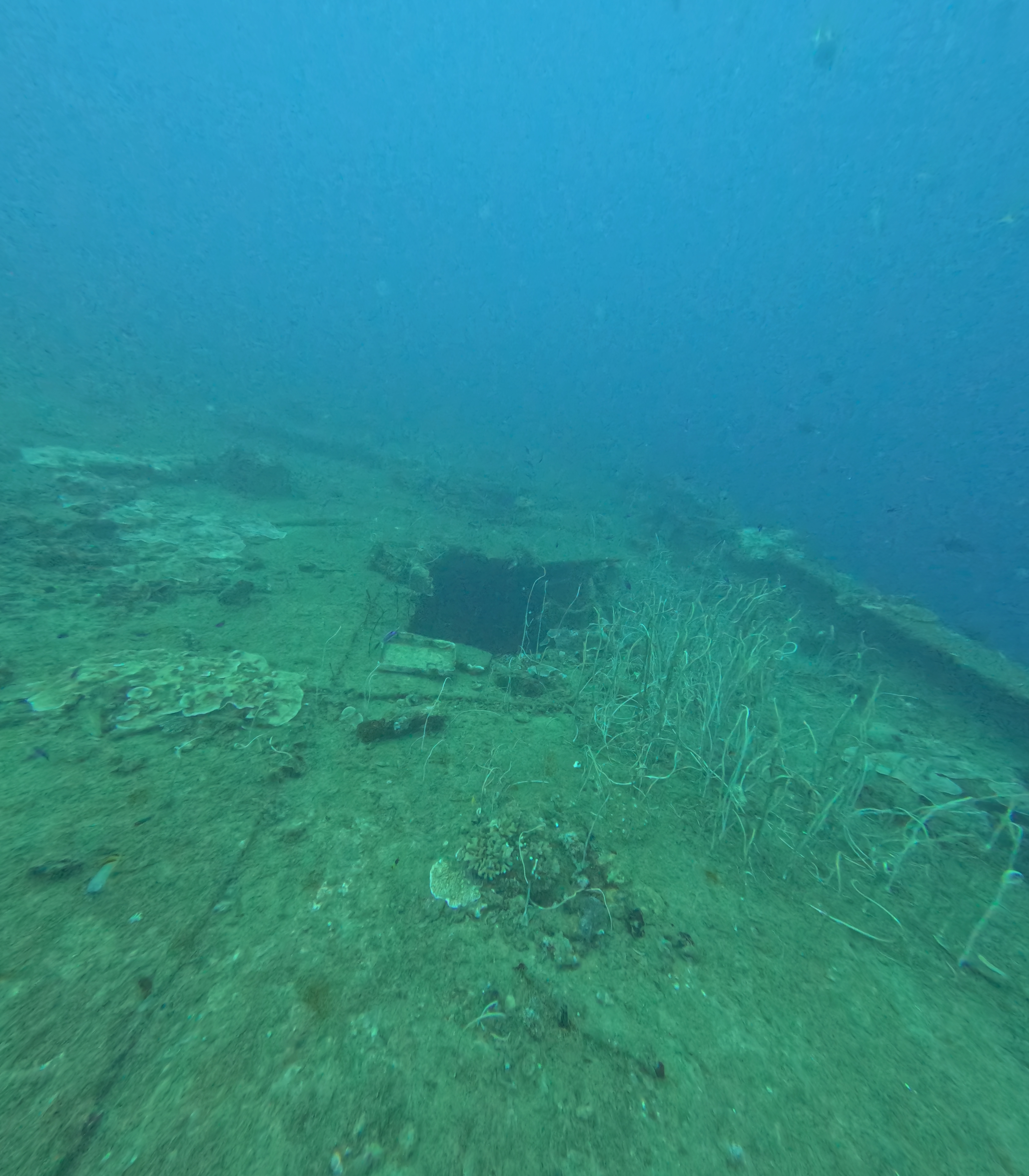
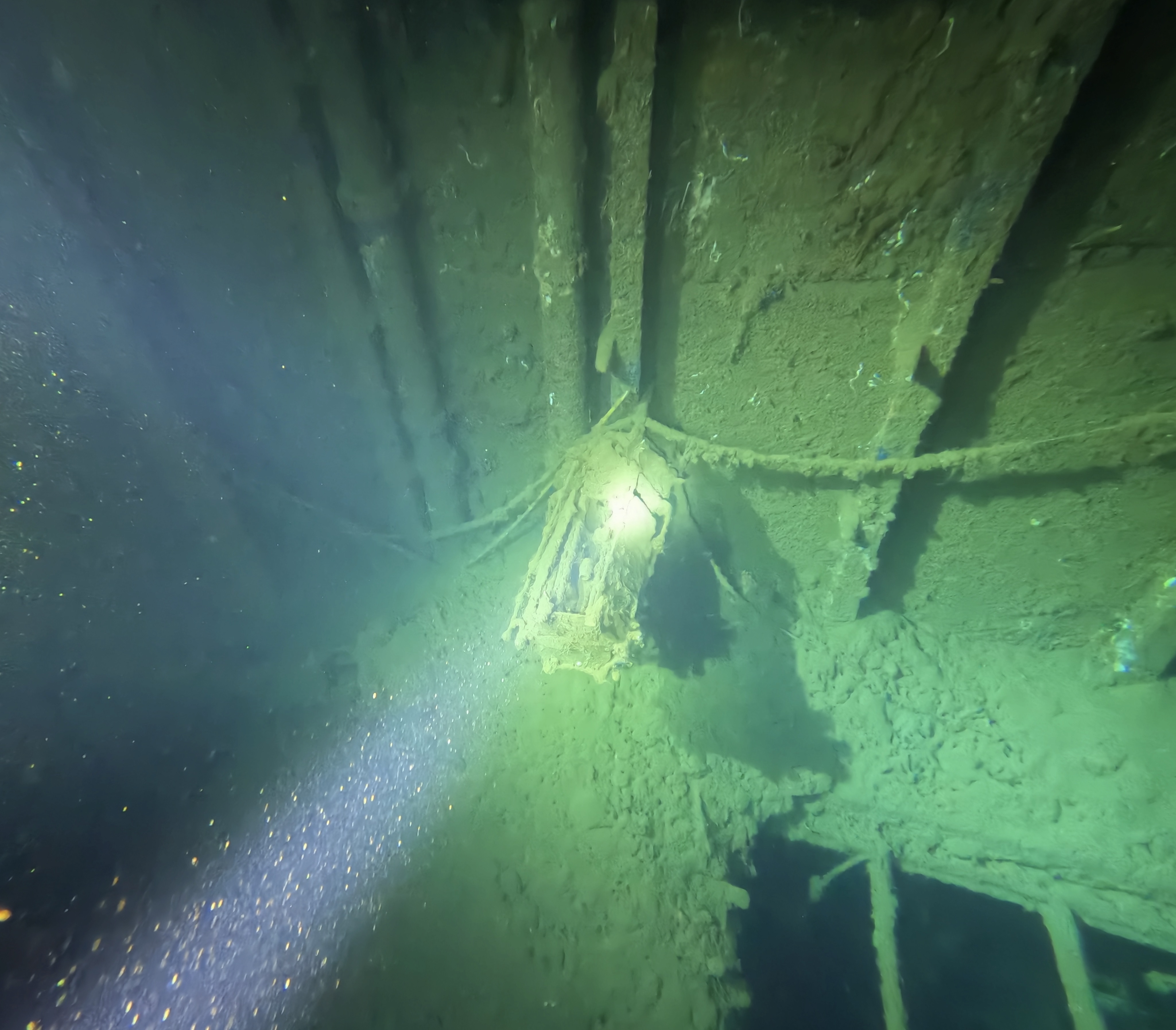
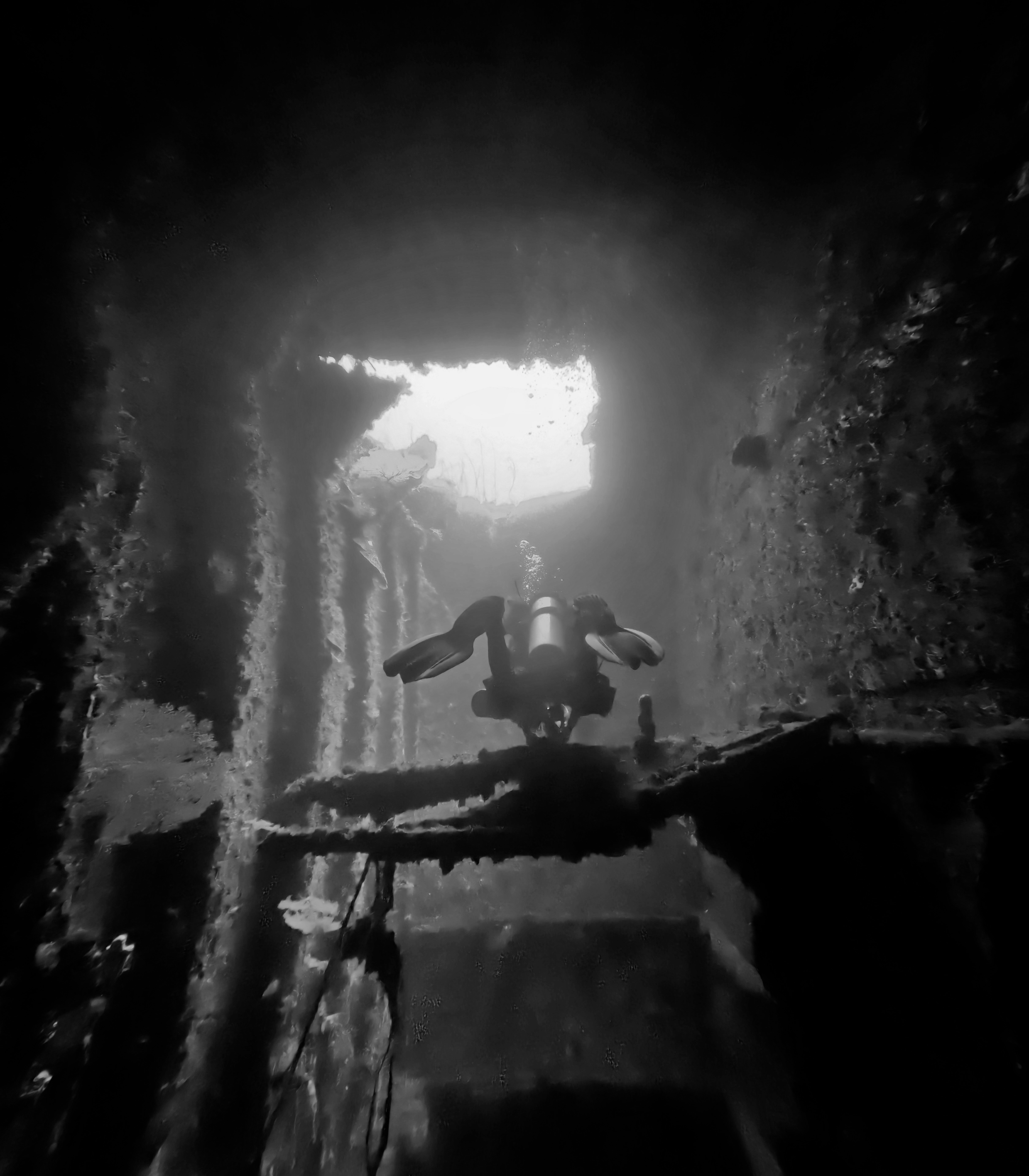
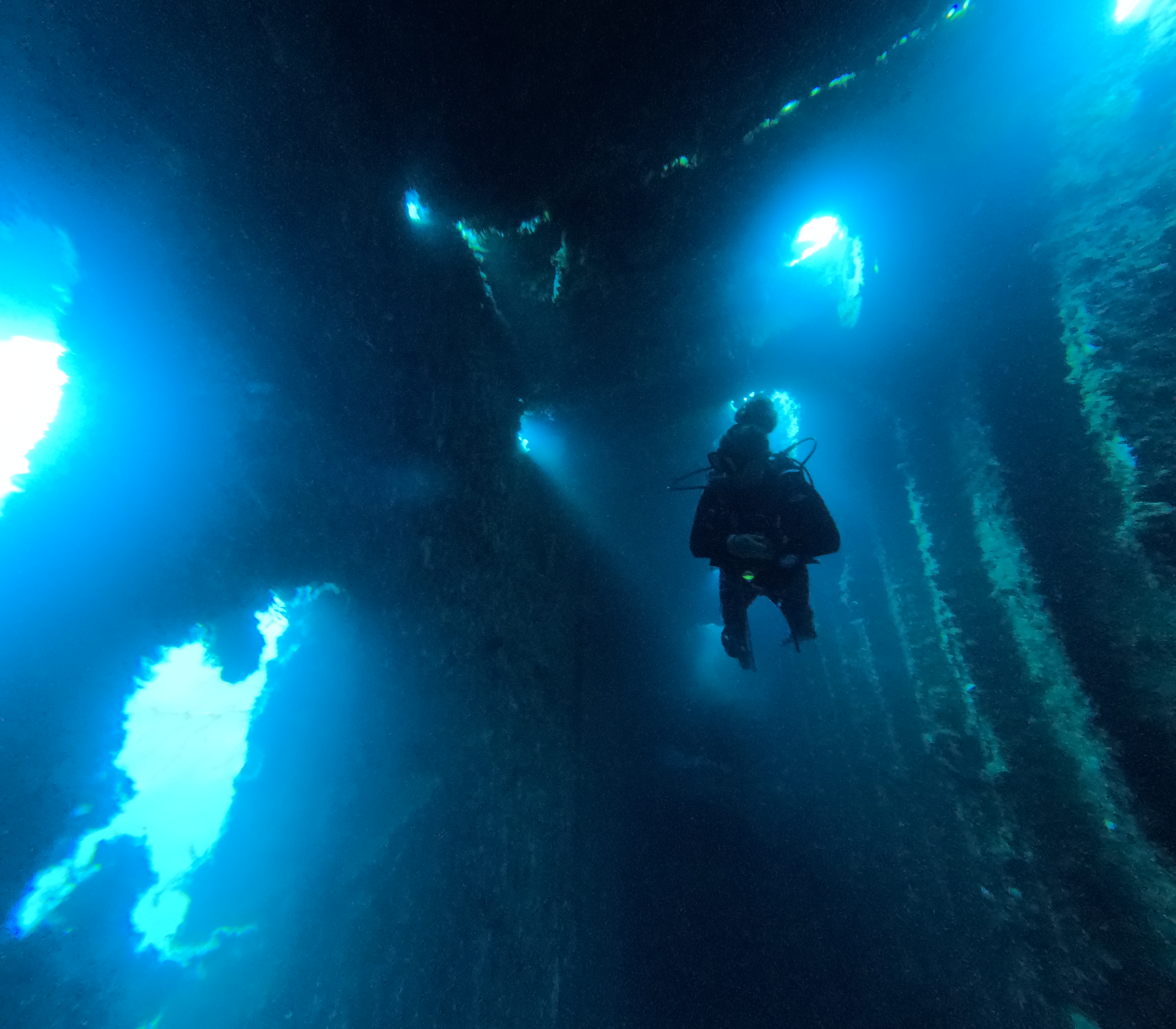
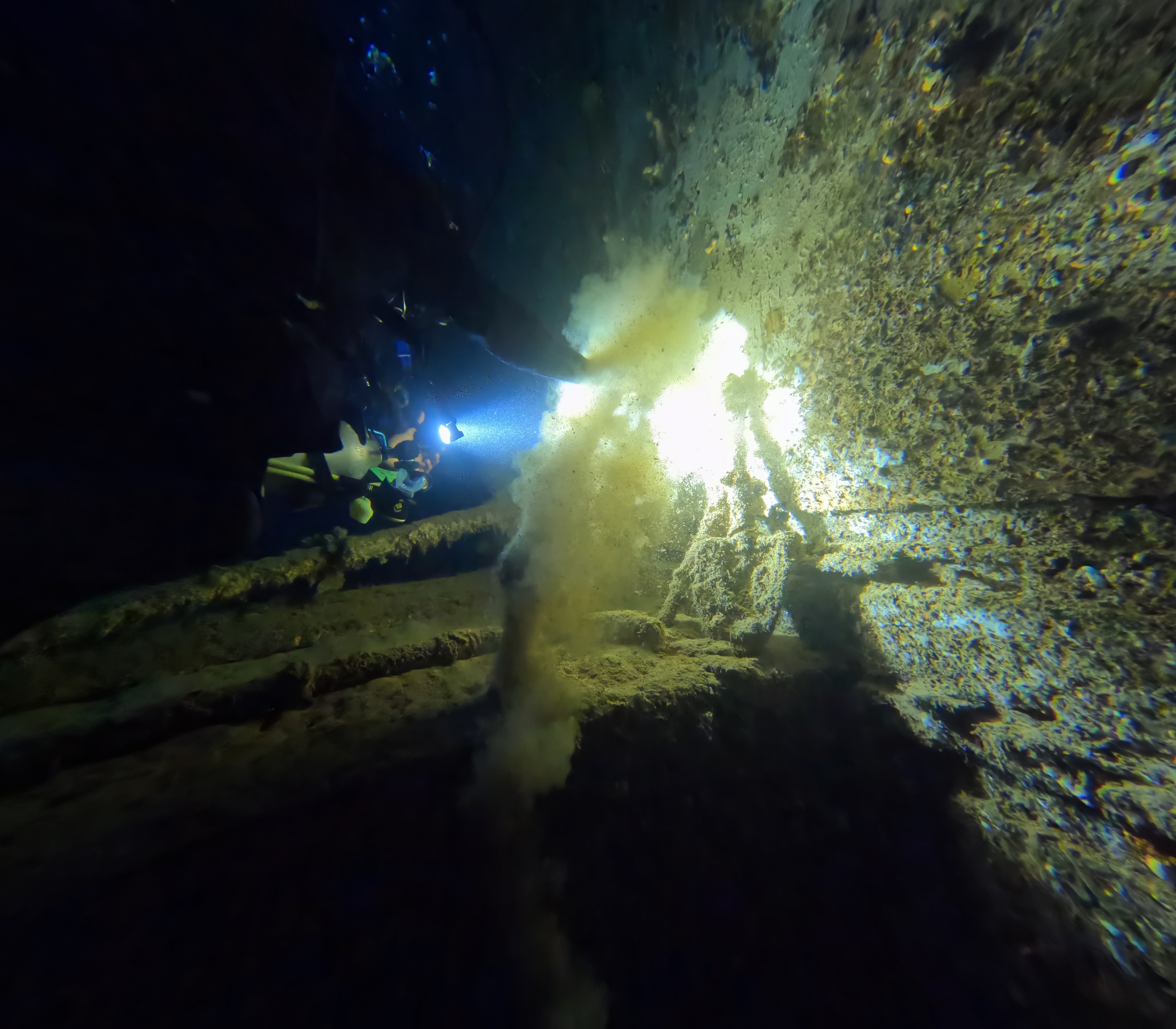
Paying our respects to The Lady…
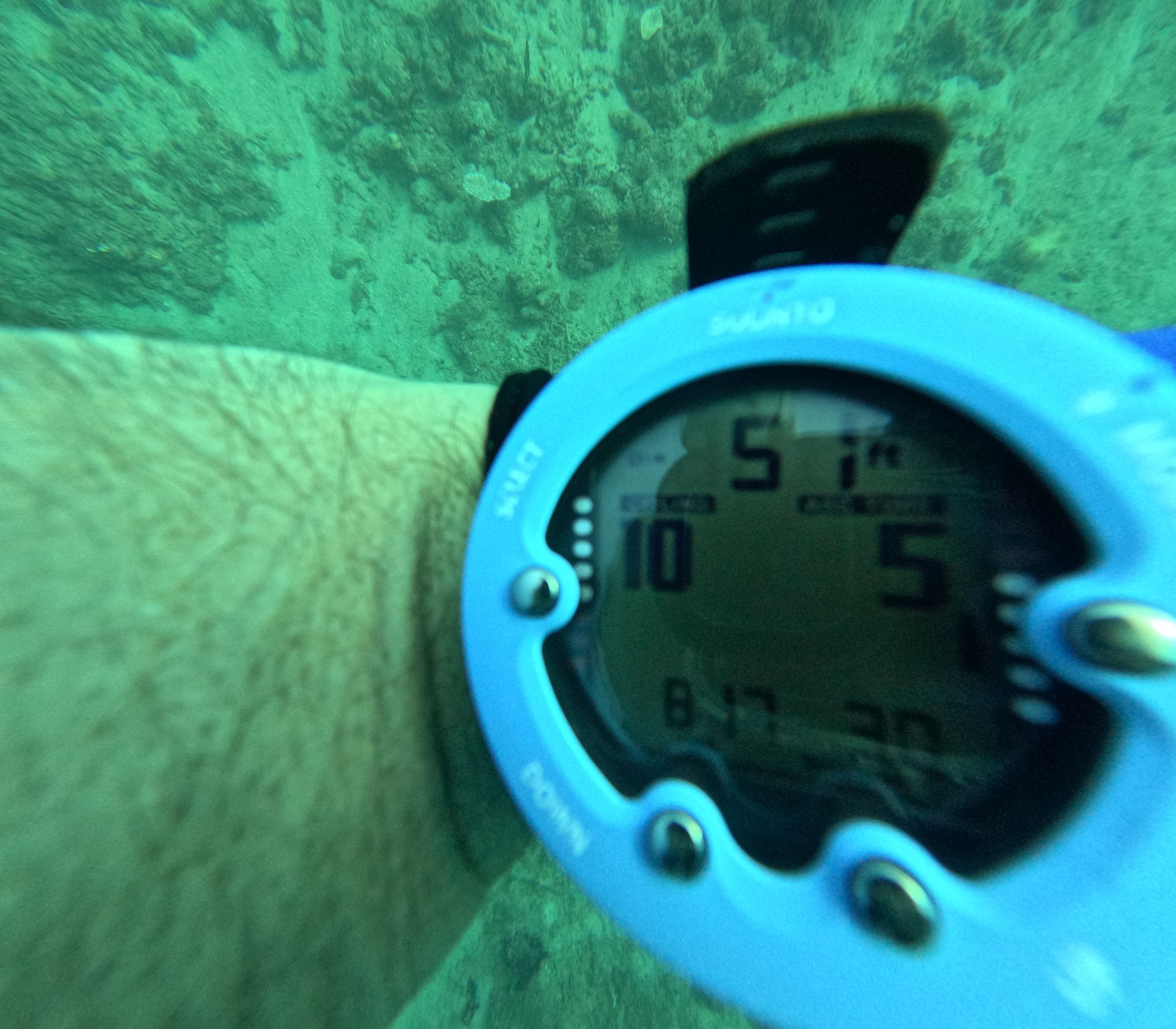
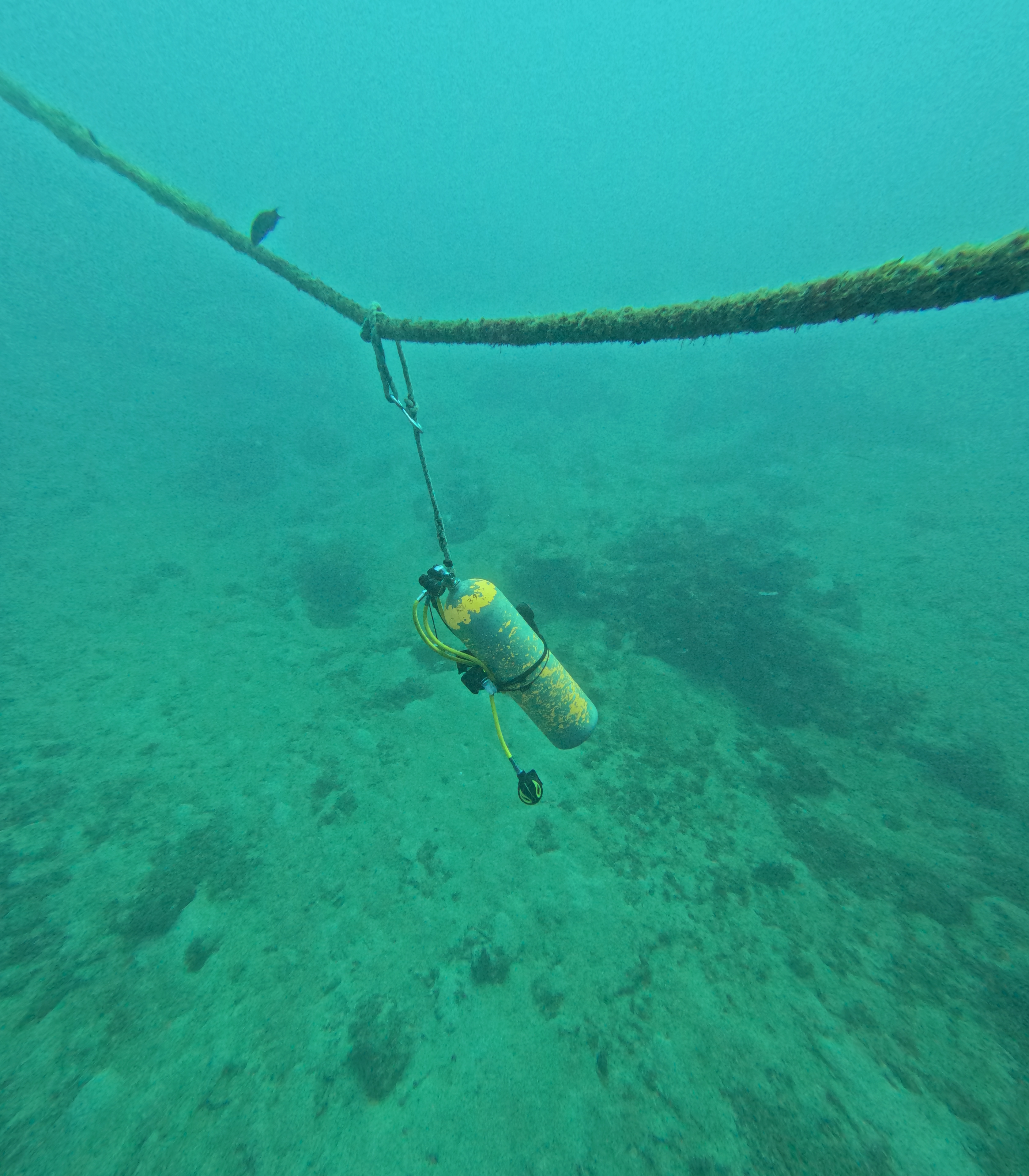
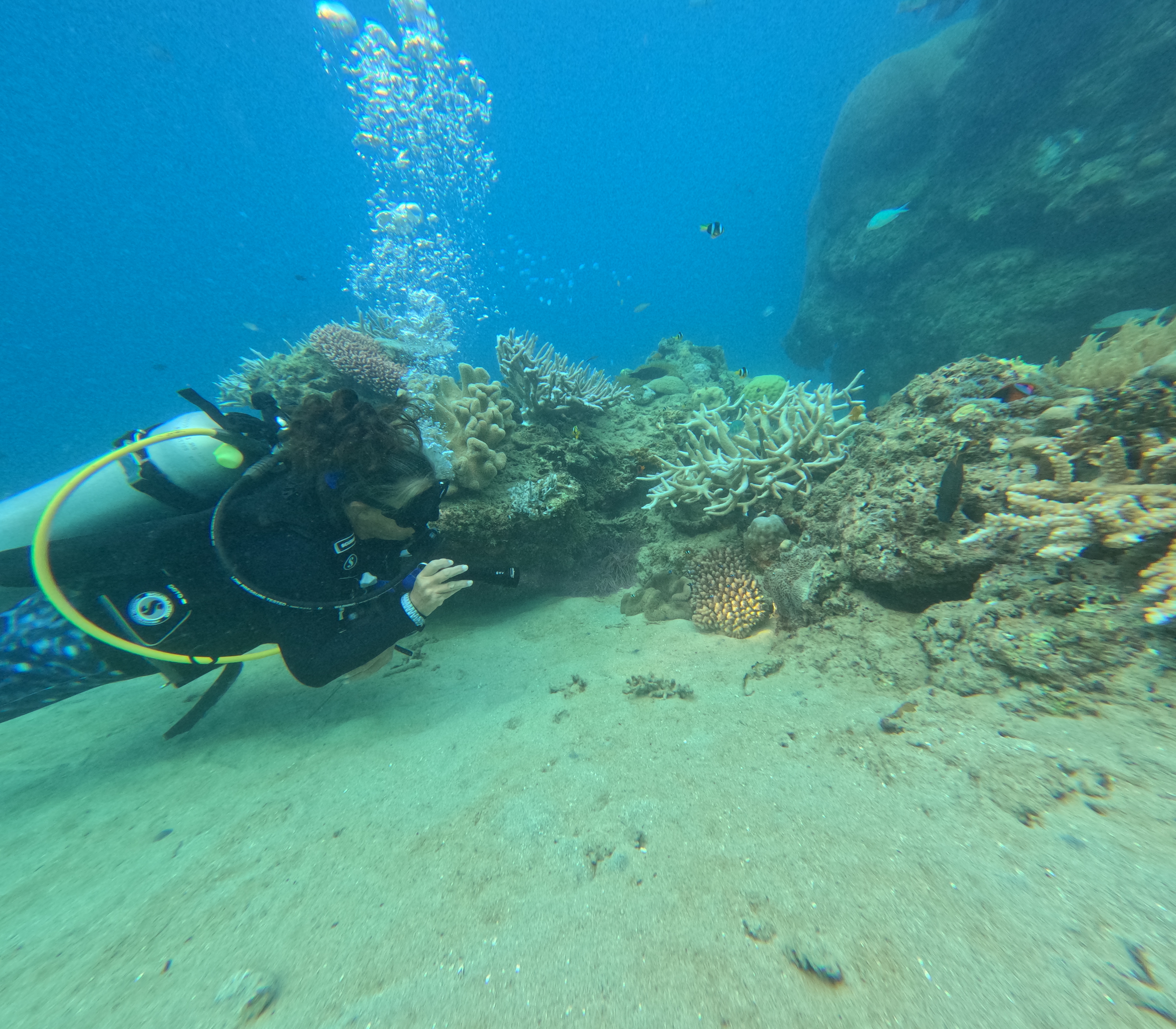
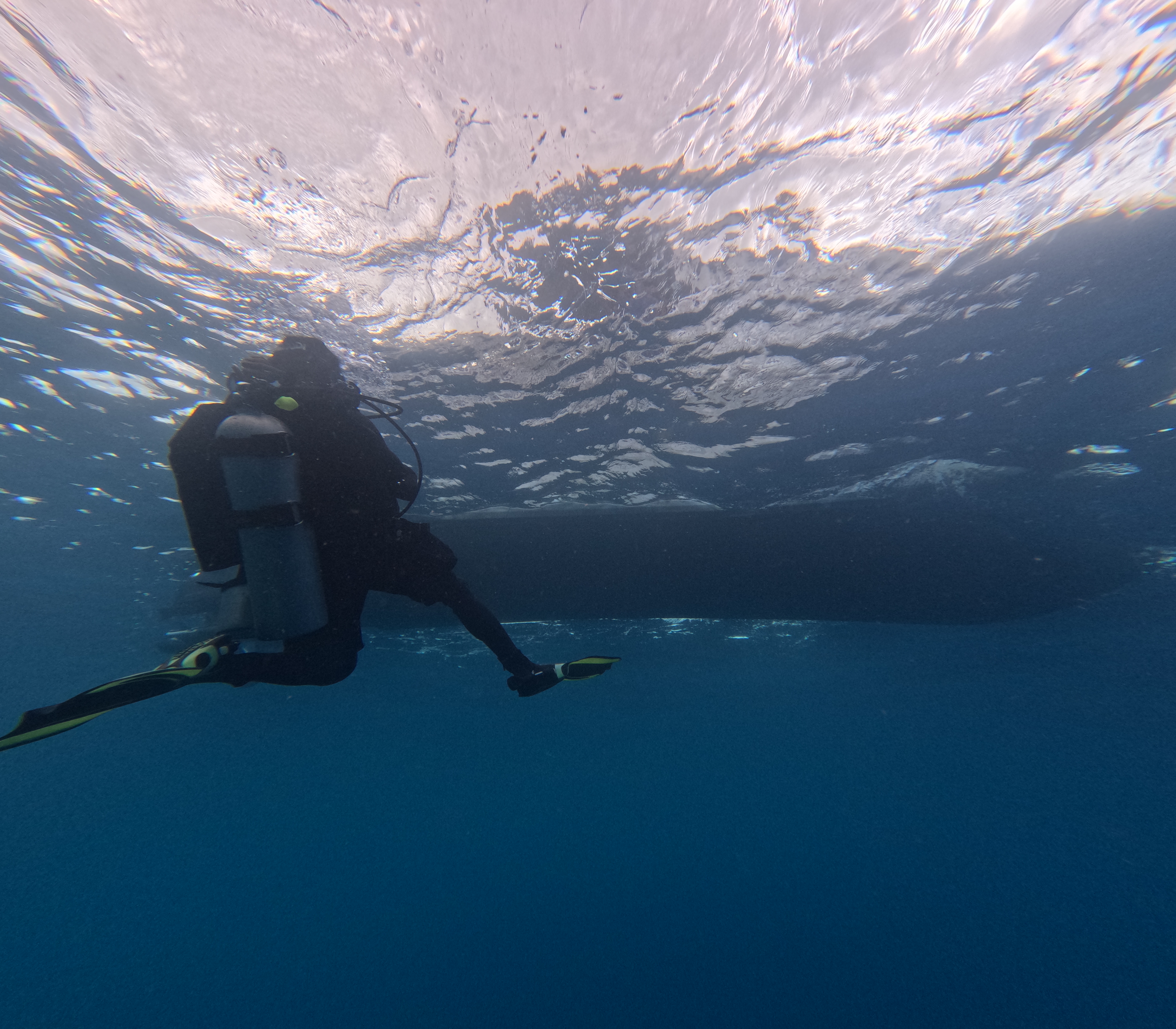
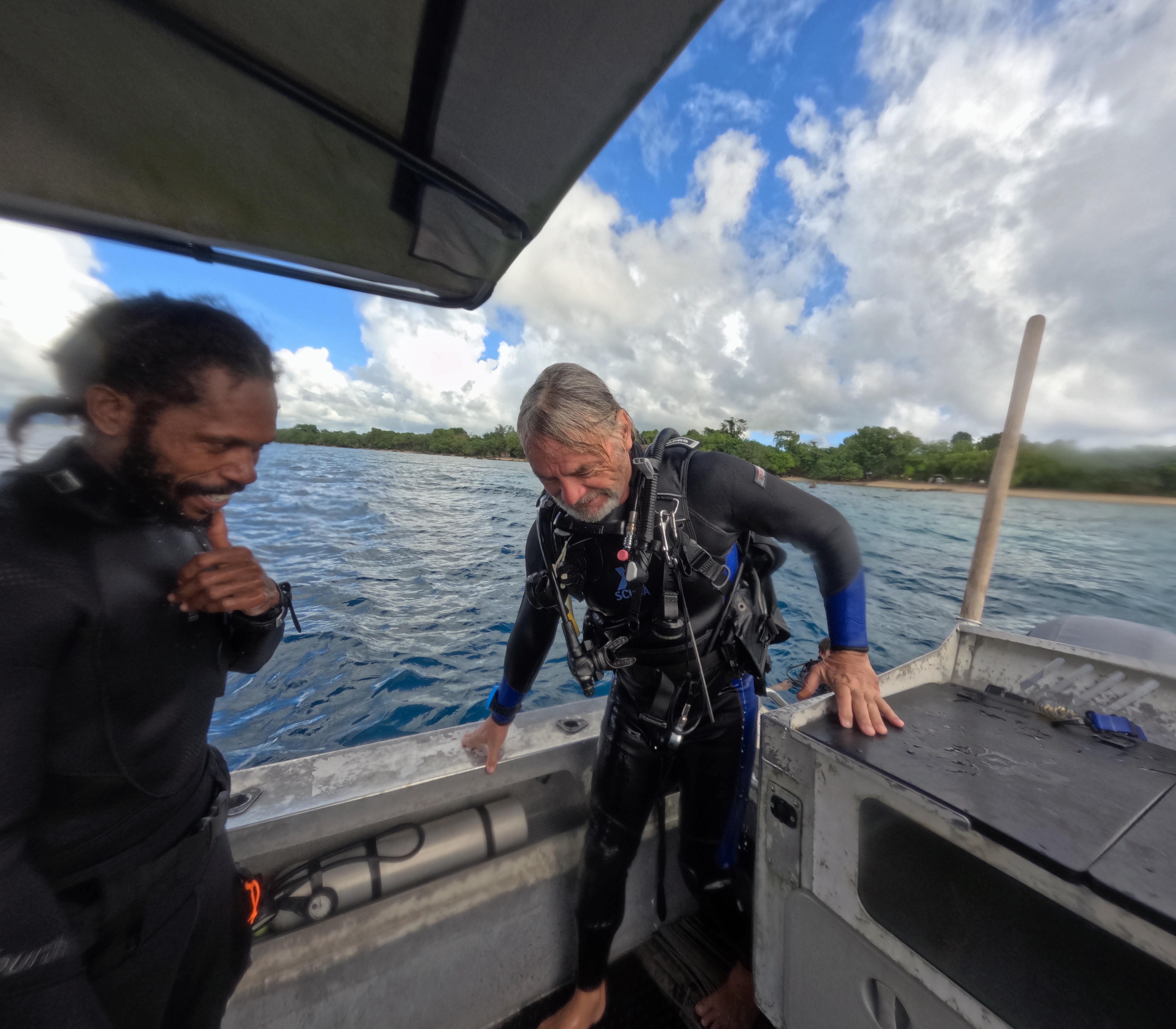
Dec. 17: Dive #4 – The final dive on the wreck
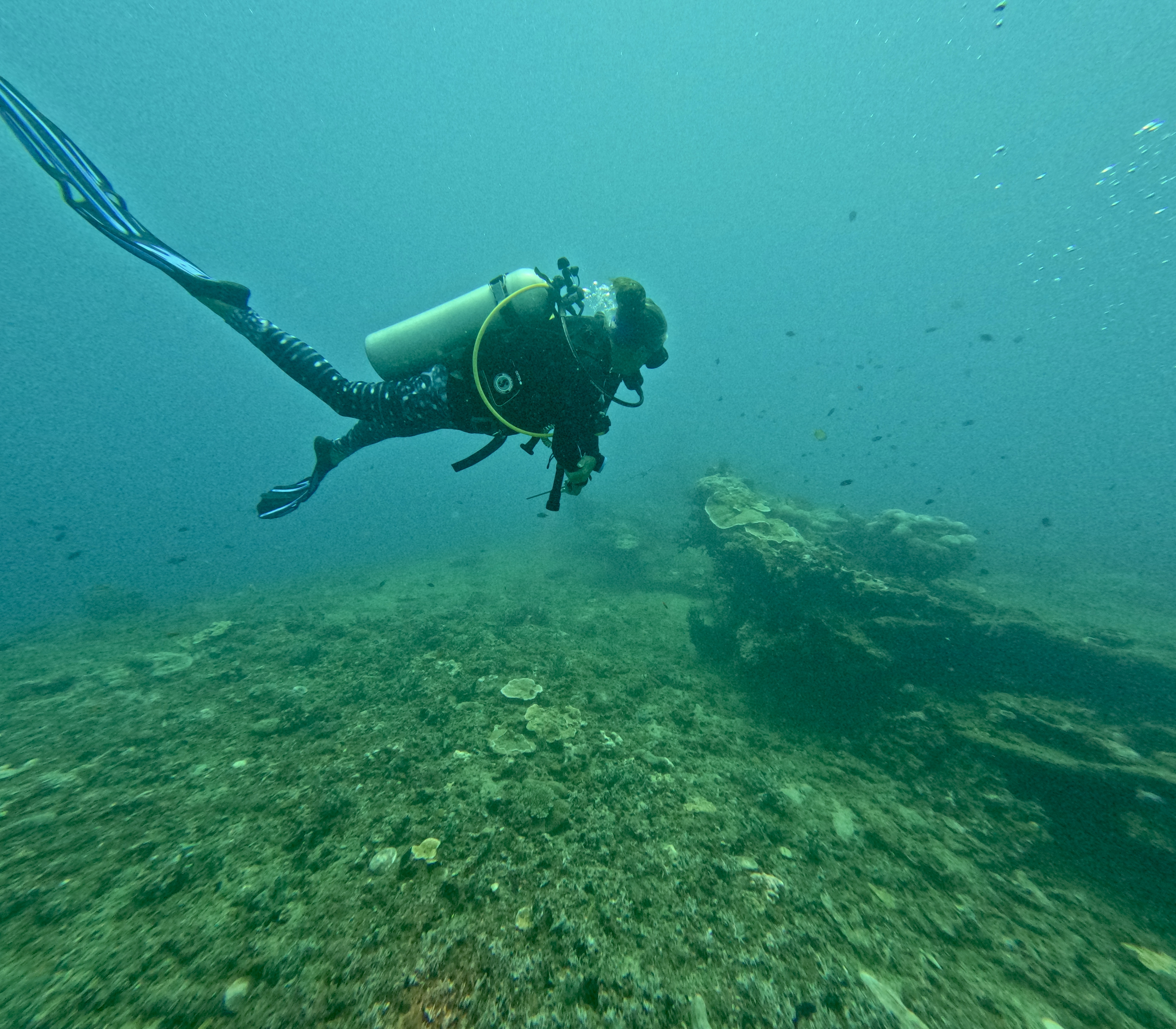
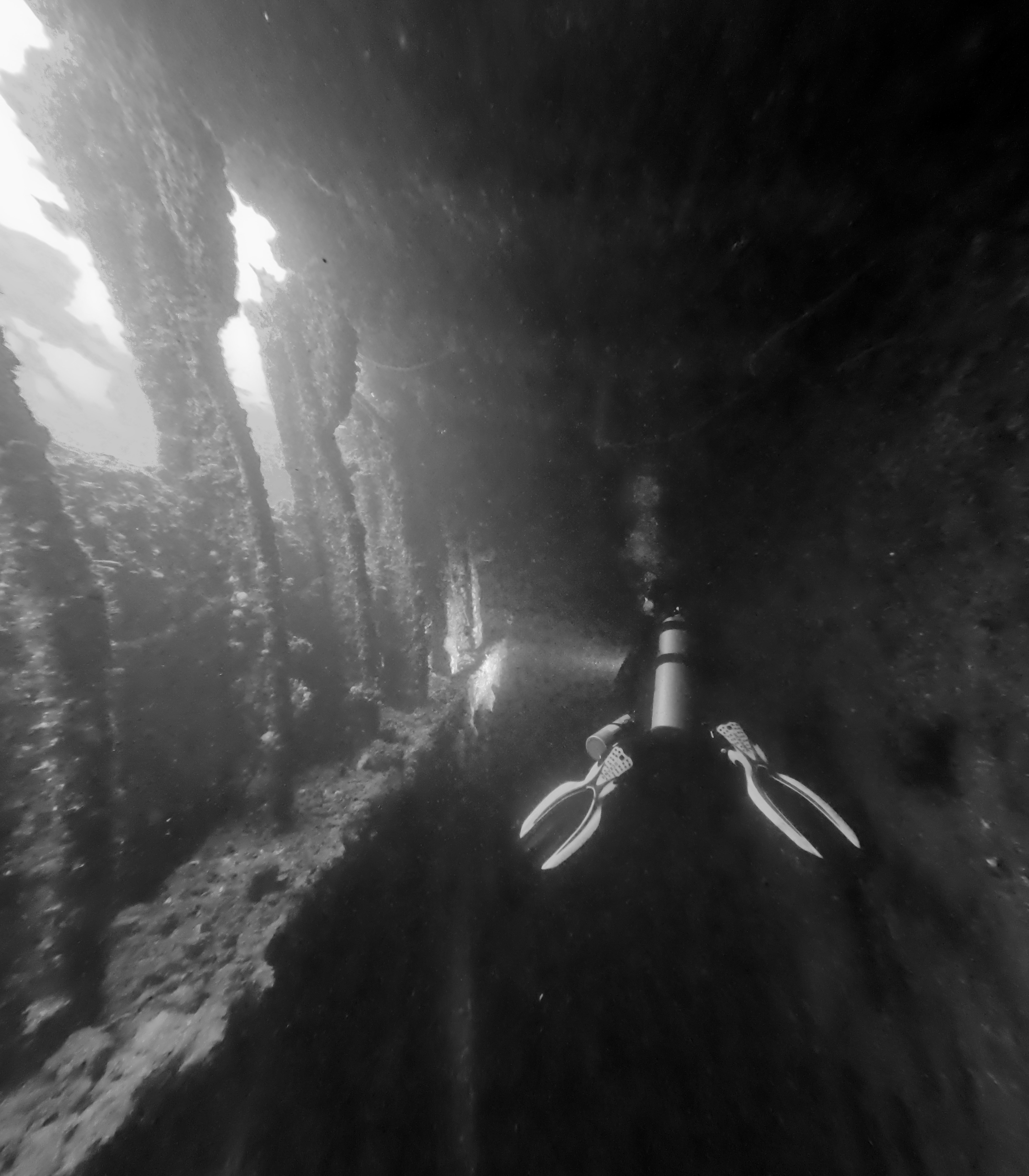
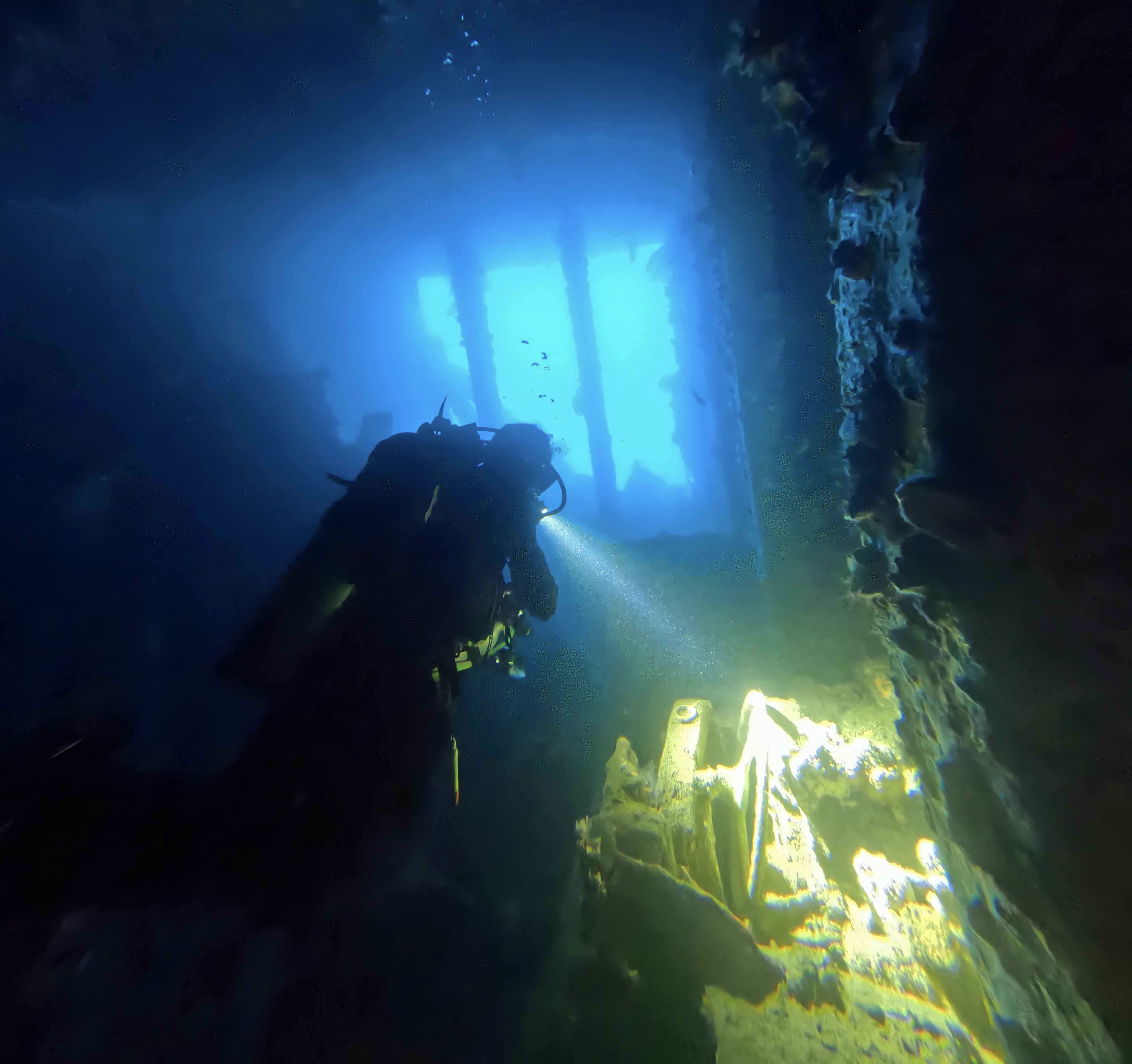
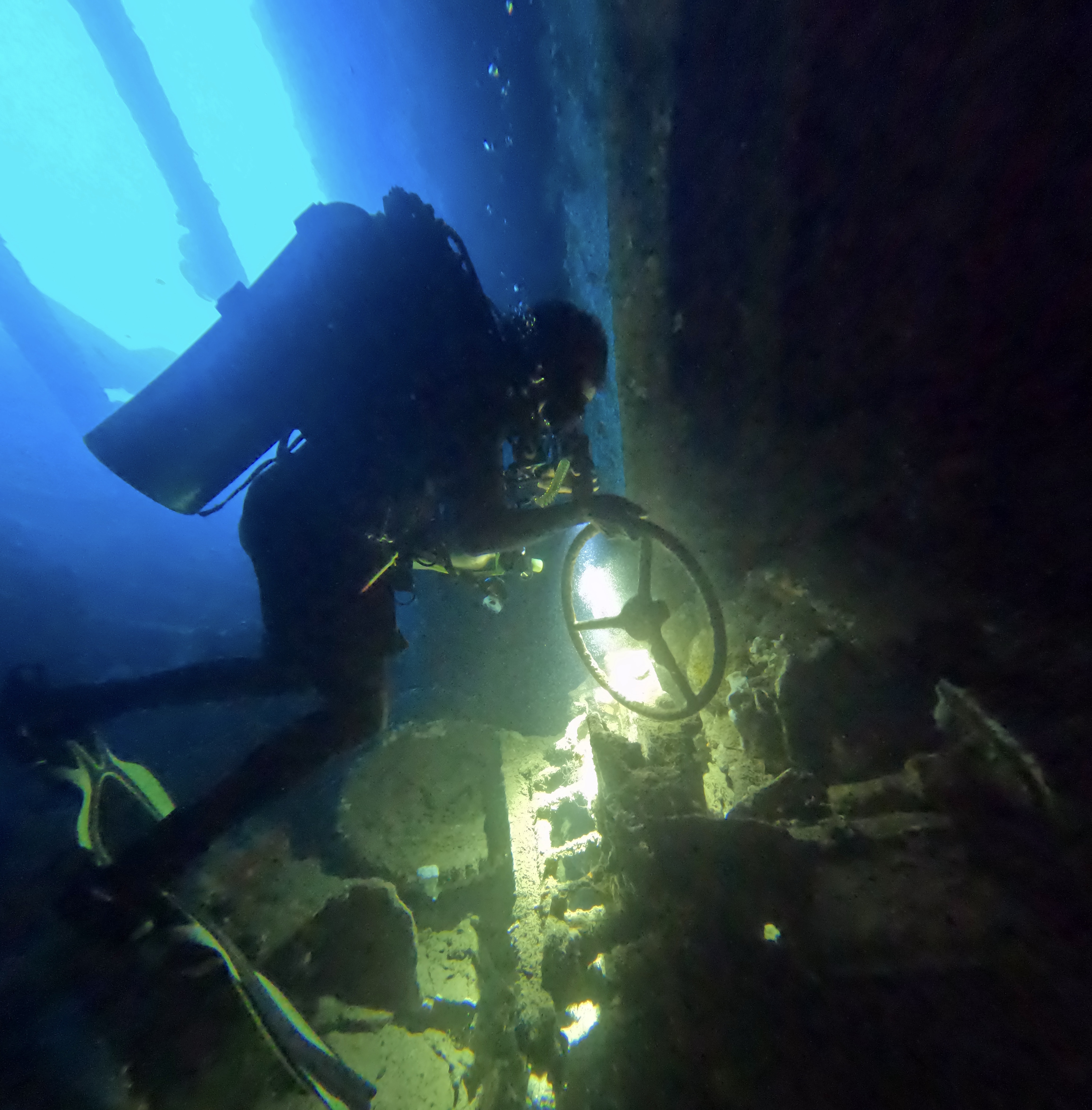
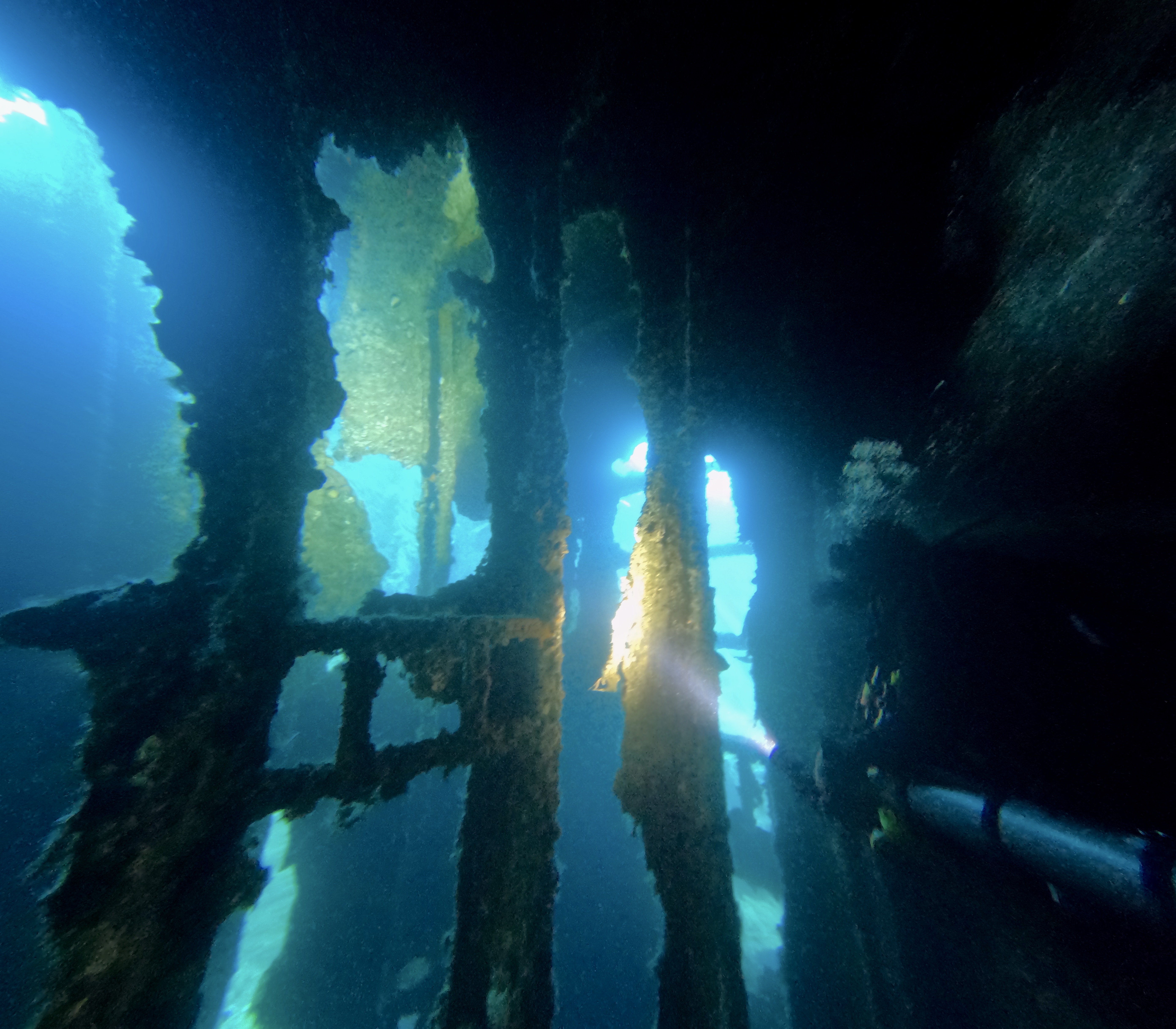
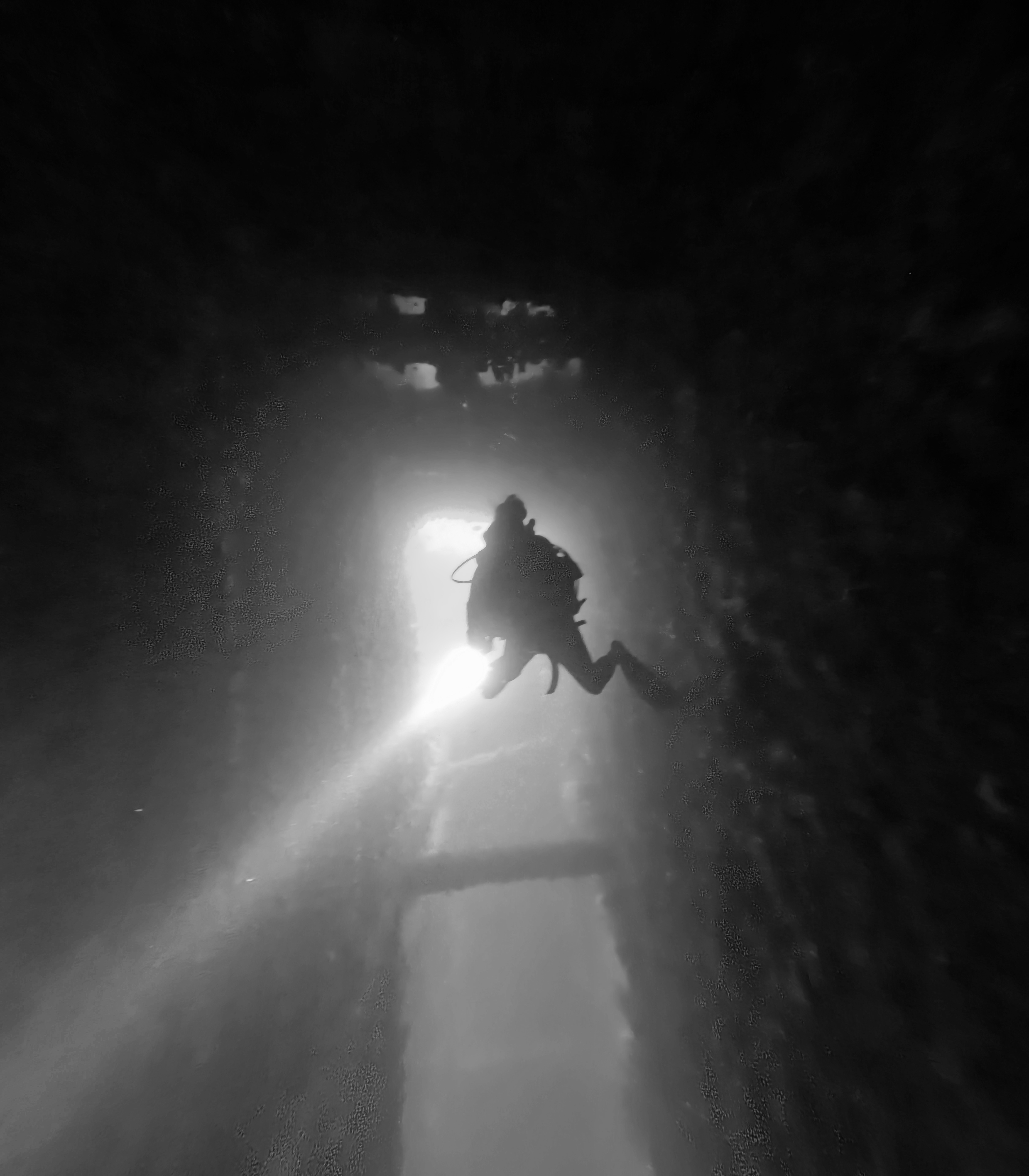
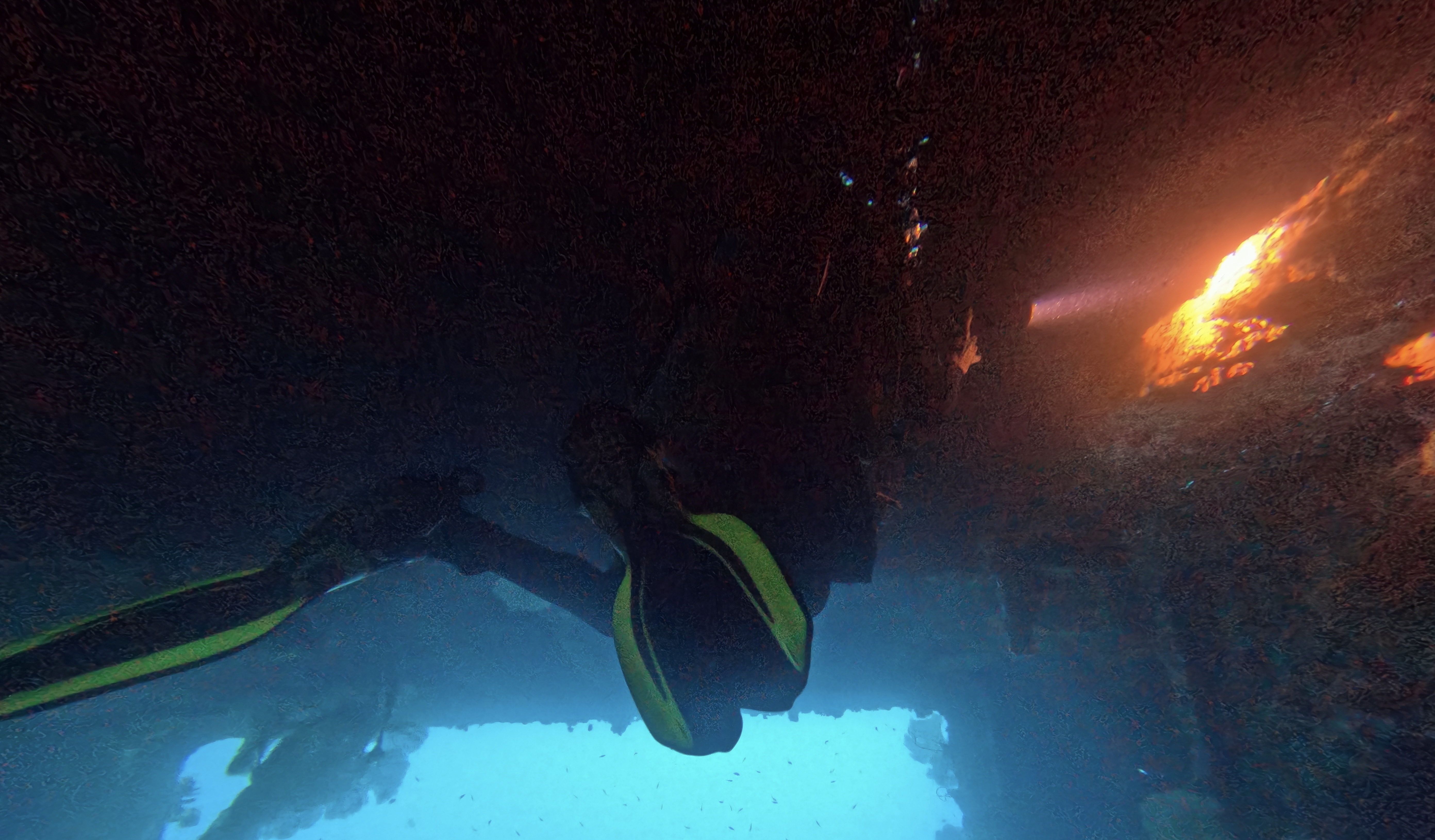
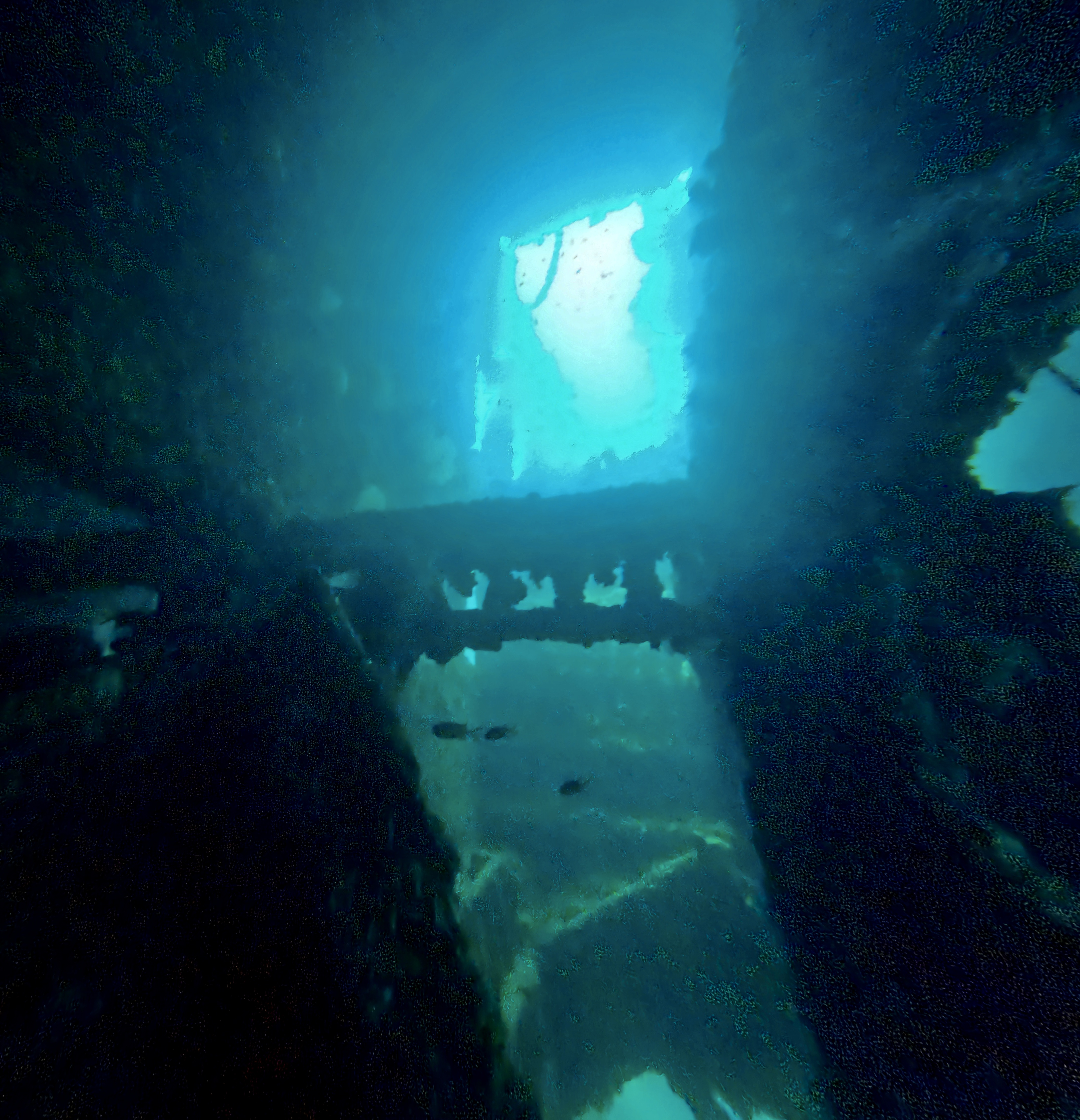
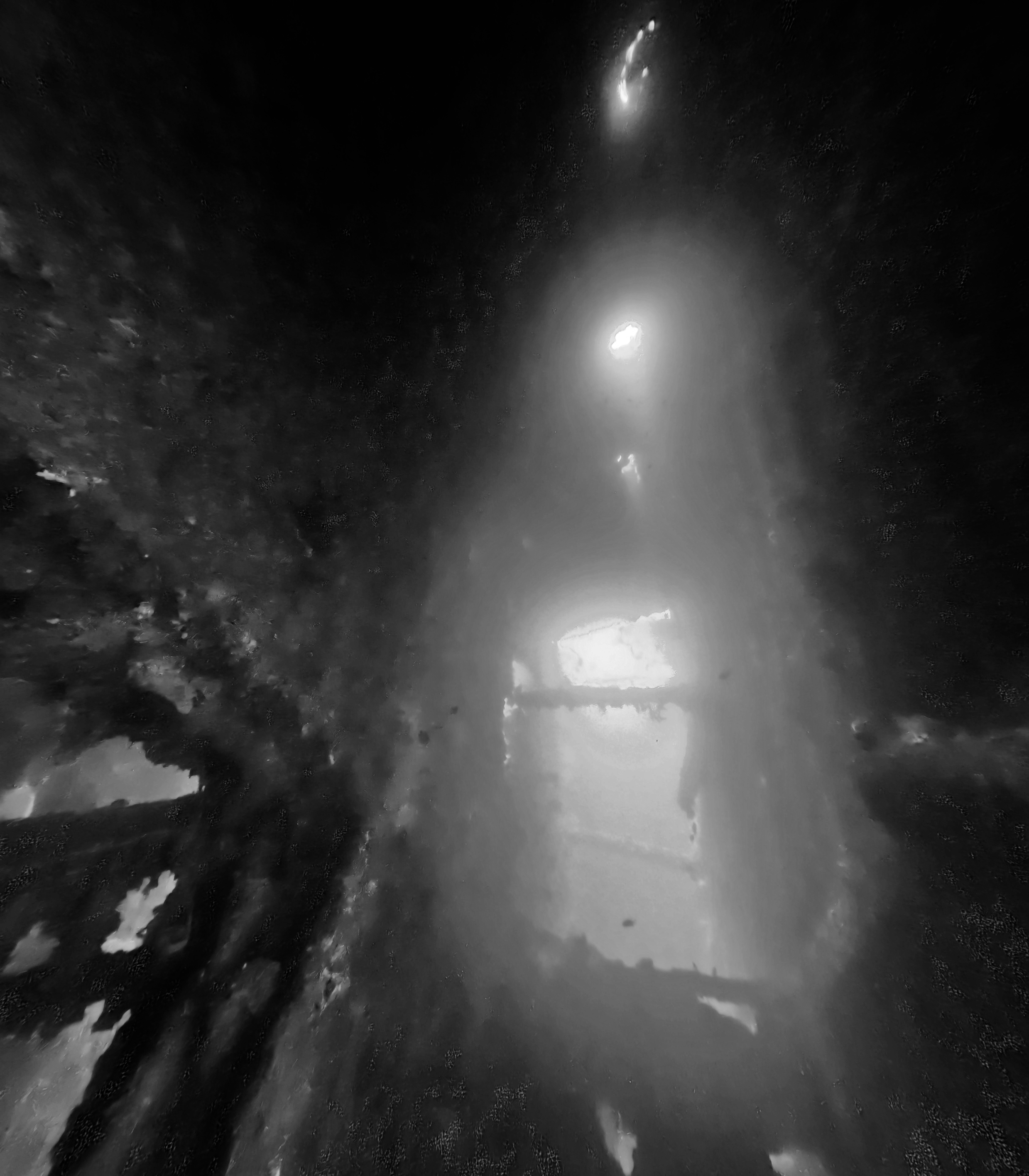
Unbelievable.
Stunning.
Powerful.
Epic.
We have dived many wrecks during the last twenty five years.
Many have been small, inconsequential craft without a known back-story.
Some, such as El Águila (The Eagle) – a 230 foot cargo ship that sank in Honduras which was salvaged and later re-sank near Roatán in 1997 – were purposely placed as artificial reefs specifically for recreational scuba diving. Prior to scuttling wrecks such as El Águila, they are usually thoroughly prepped by removing all possible environmental contaminants and potential entanglement obstructions, welding hatches and doors open or closed for safety, and often cutting additional holes in the vessel for accessibility.
Others, such as the SS Yongala – a 363 foot passenger ship that sank in a cyclone in 1911 that lies in 100 feet of water off the coast of Australia – sit untouched, exactly where and as they were when they succumbed to ill-fated circumstances. Because of the SS Yongala’s current state of structural decay, as well as the fact that all 122 passengers and crew who were aboard the ship when it went down are still buried inside, the wreck cannot be penetrated.
Still, no other wreck we have ever visited matches the immense scale of the SS President Coolidge in sheer size, the accessibility for recreational divers to its interior spaces, the incredible collection of relics and artifacts that one is actually able to dive amongst, as well as the unbelievable history and sobering story that help define its past.
The chance to do multiple dives on the SS President Coolidge was truly a once-in-a lifetime experience. One of those you don’t fully realize or appreciate until after the fact…a vivid memory that will always stick with us.
And yet, we also realized there were less than two weeks left of December and 2025. Well into the cyclone season and still below 15 degrees of latitude…south of the 10 degree latitude line we should have already crossed.
It was time to move on…to the Solomon Islands.

