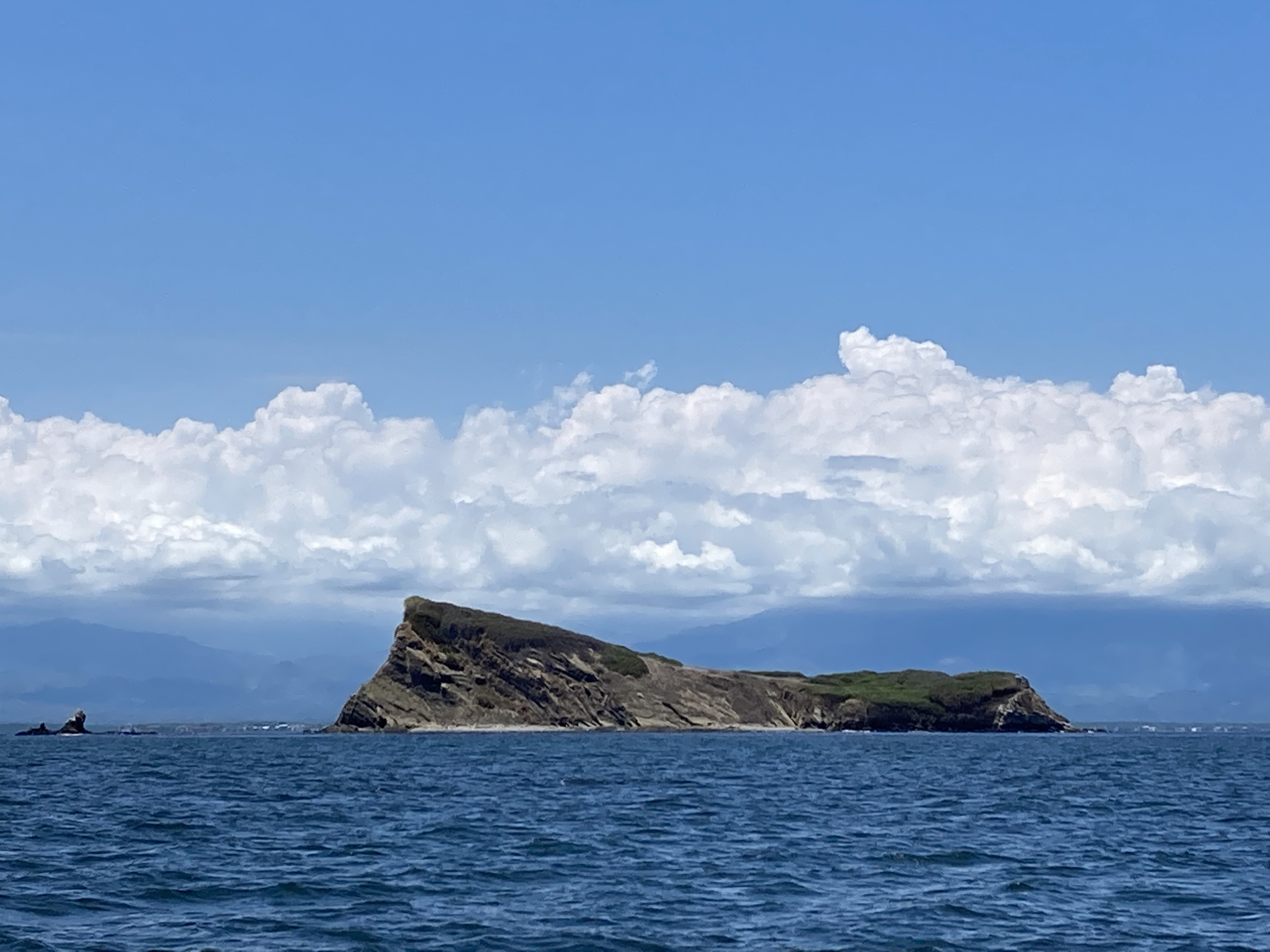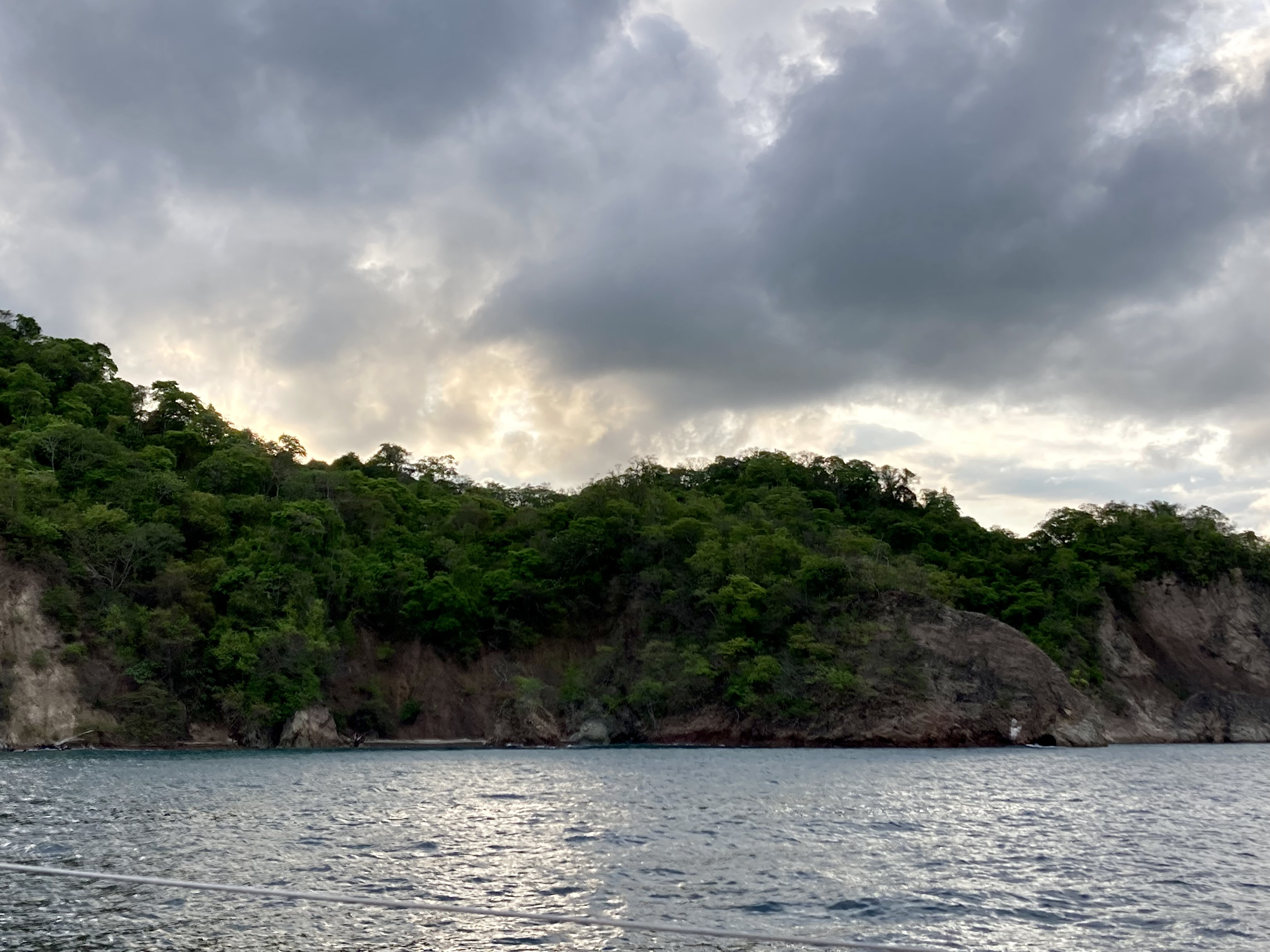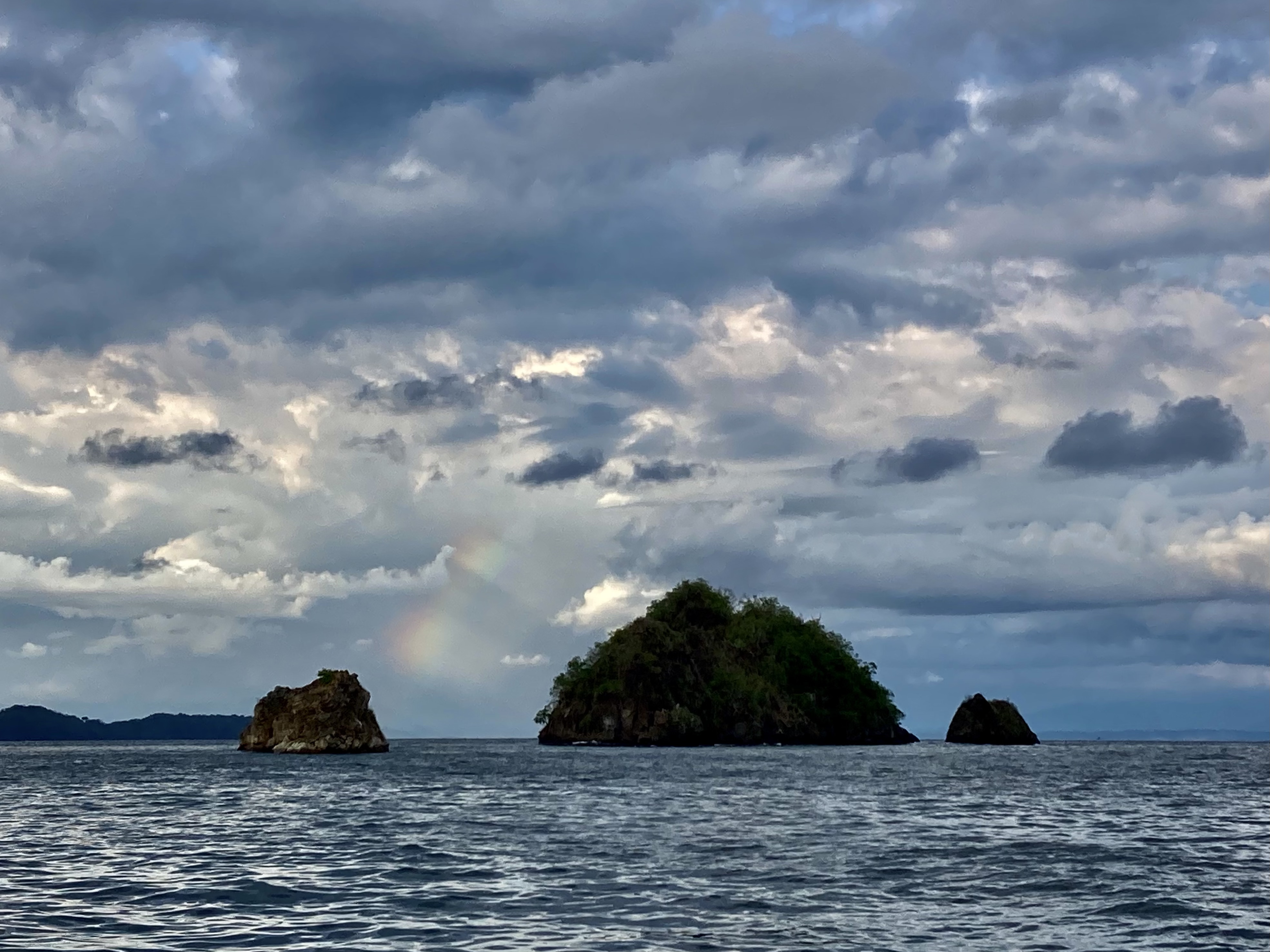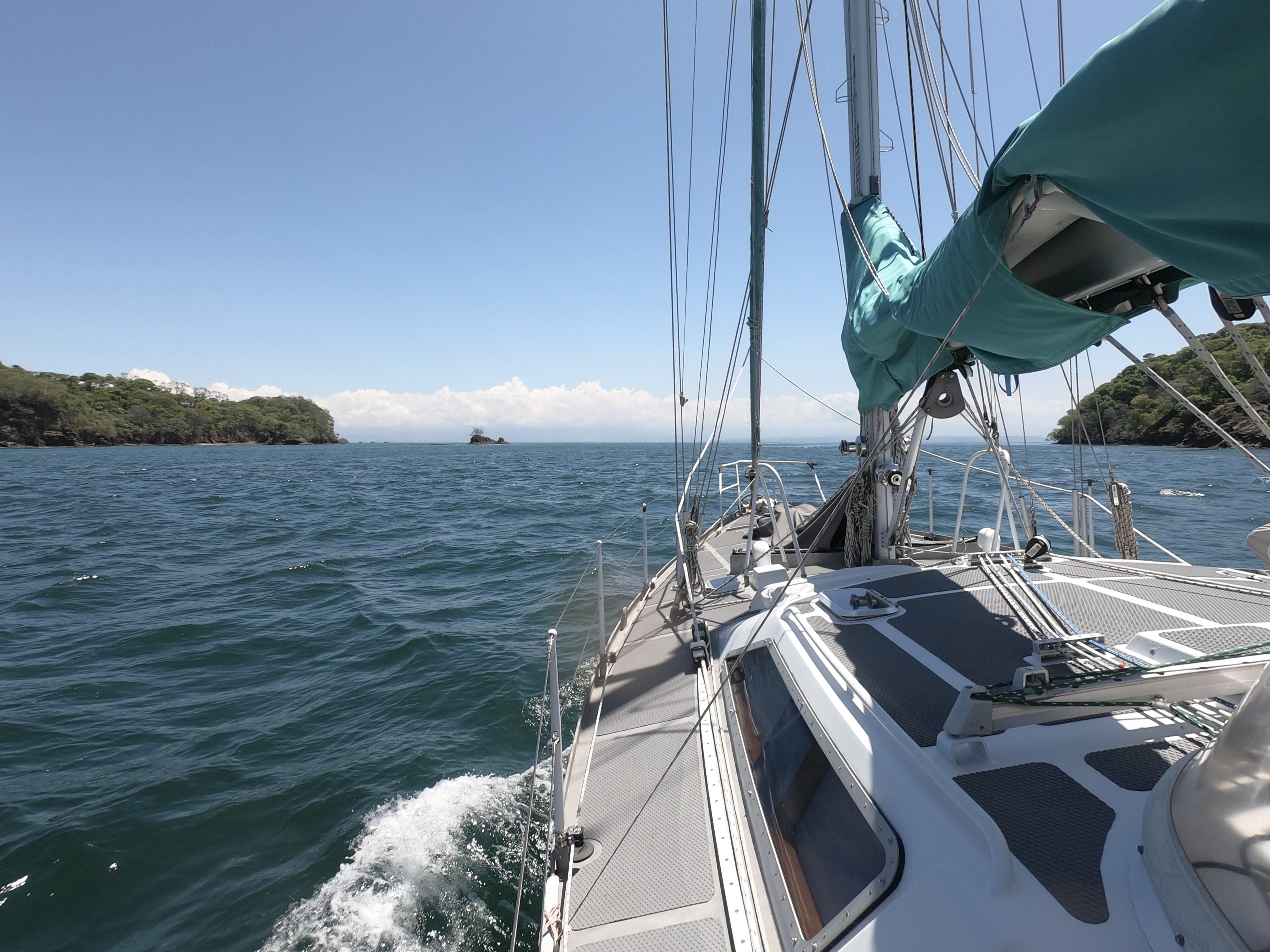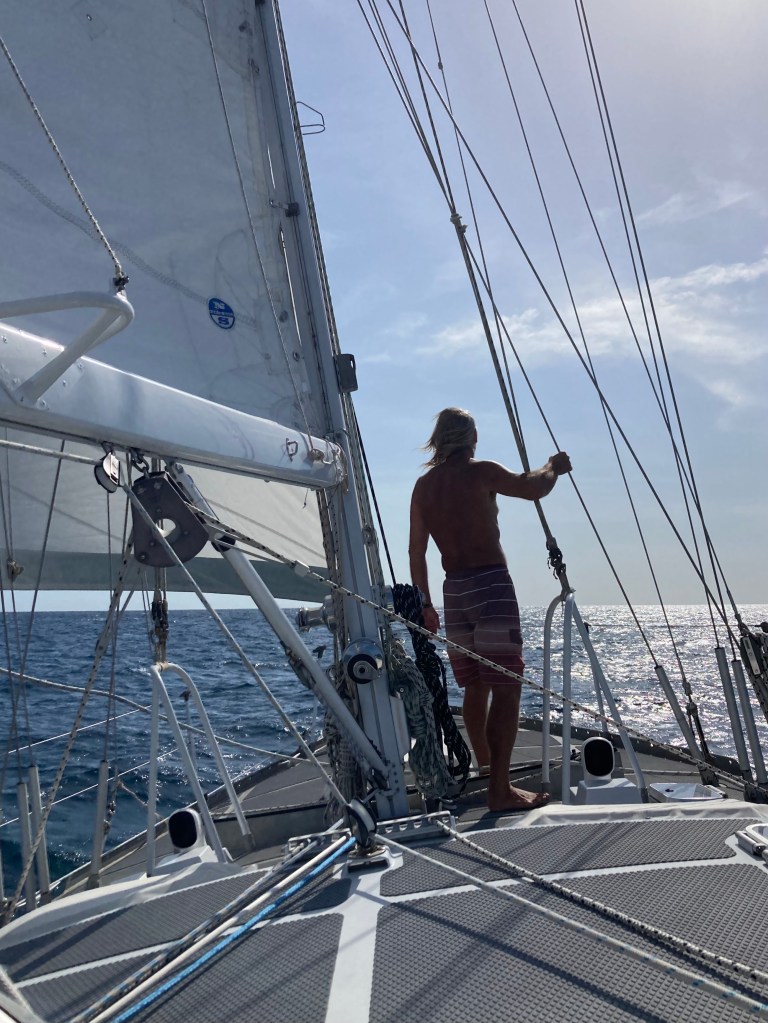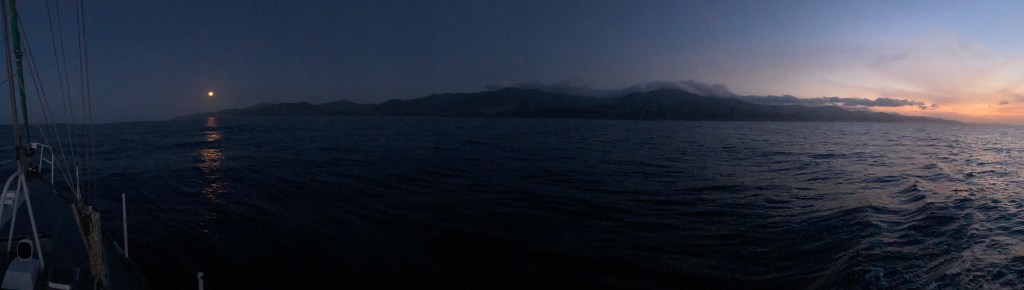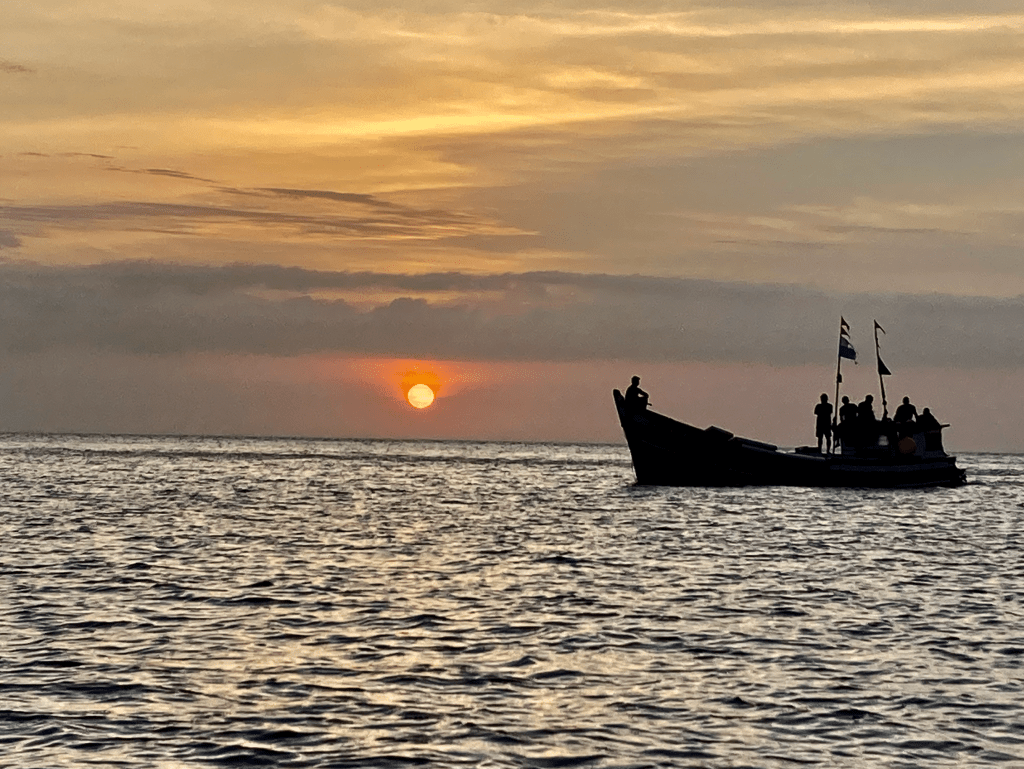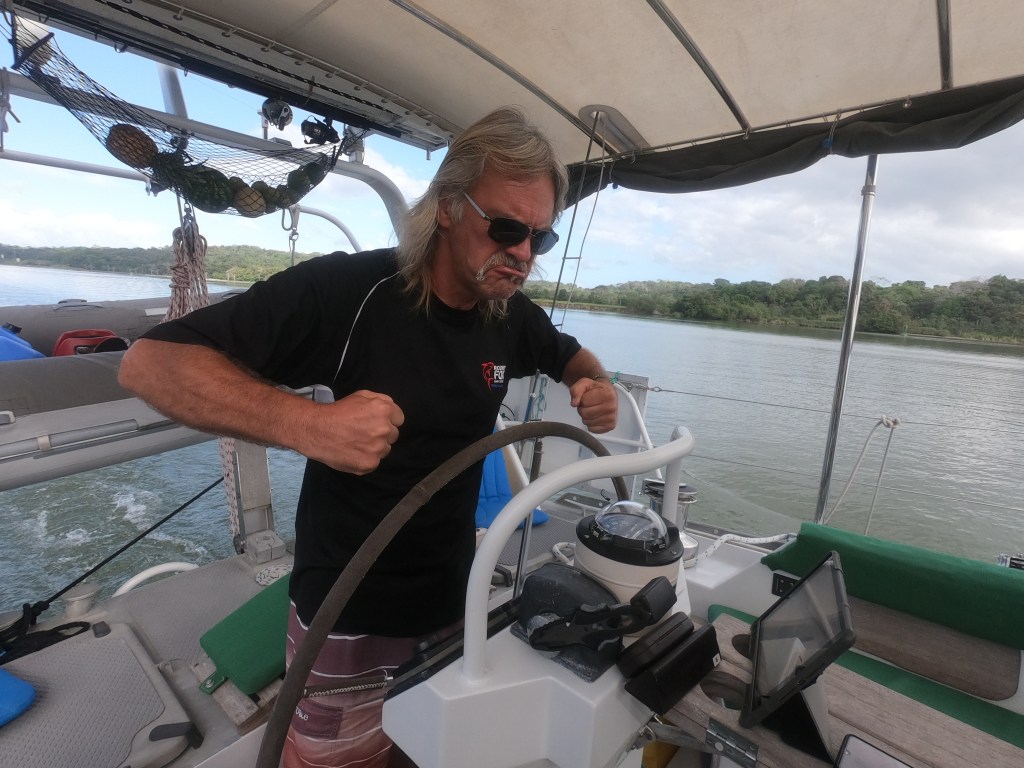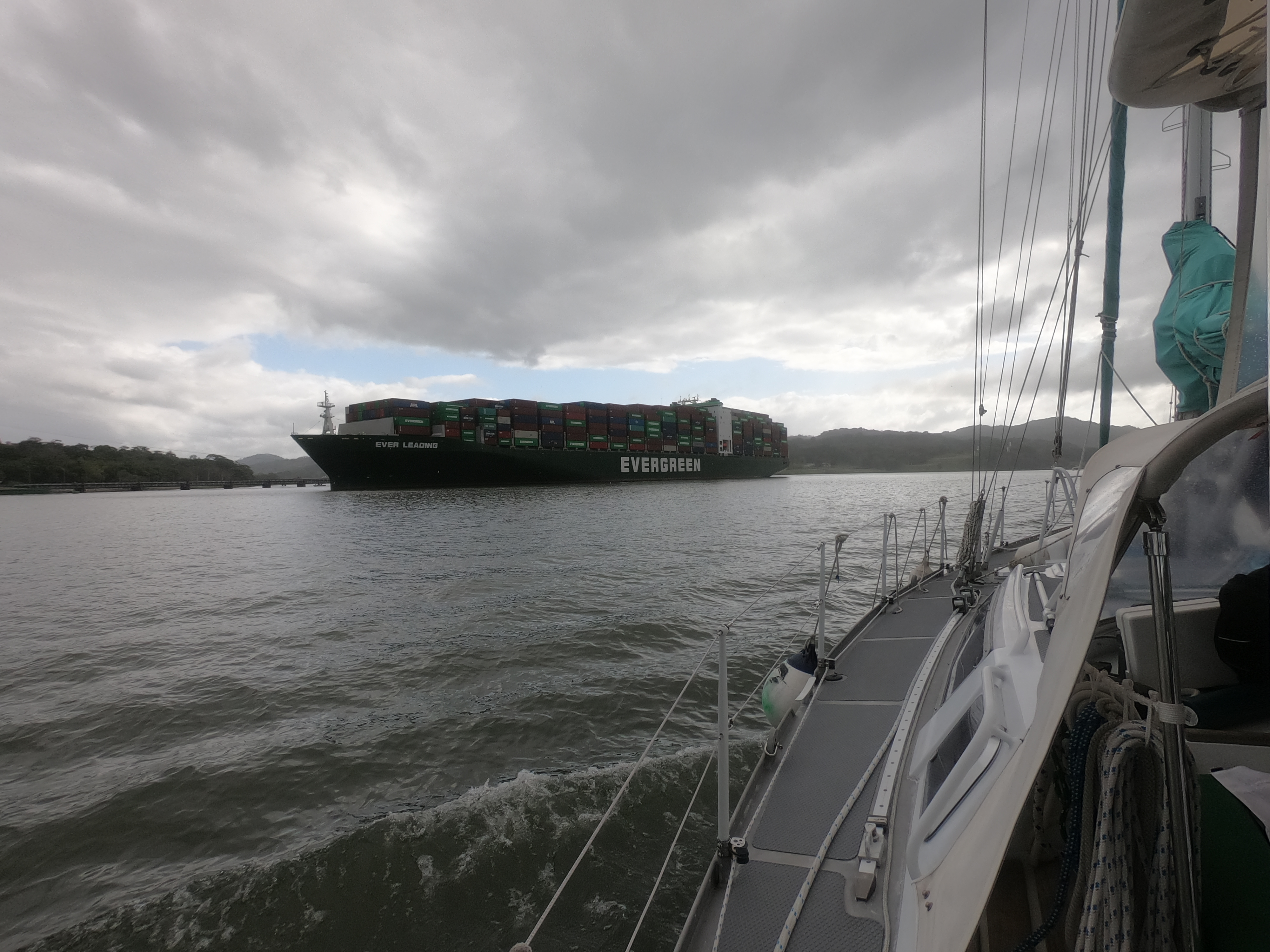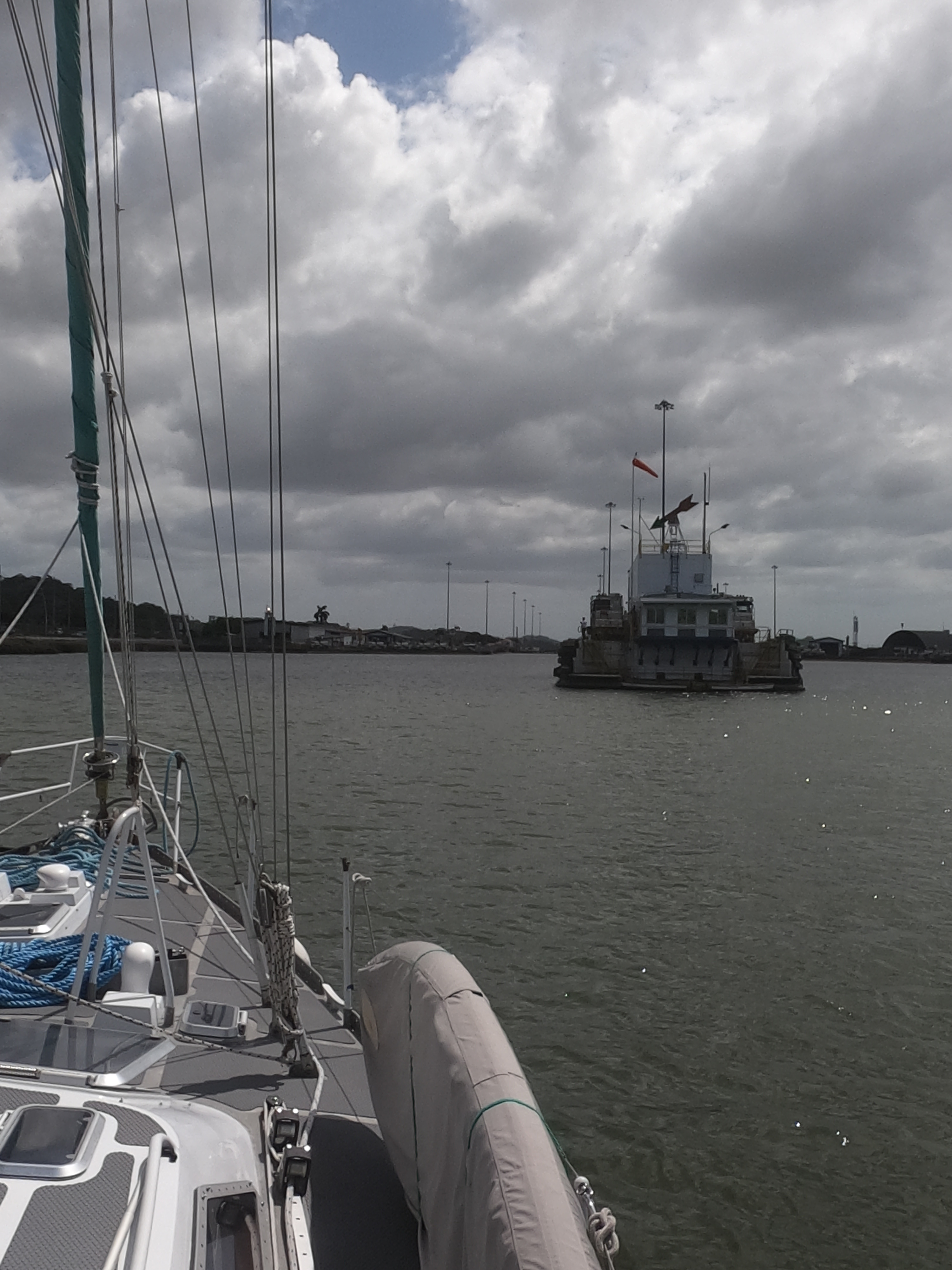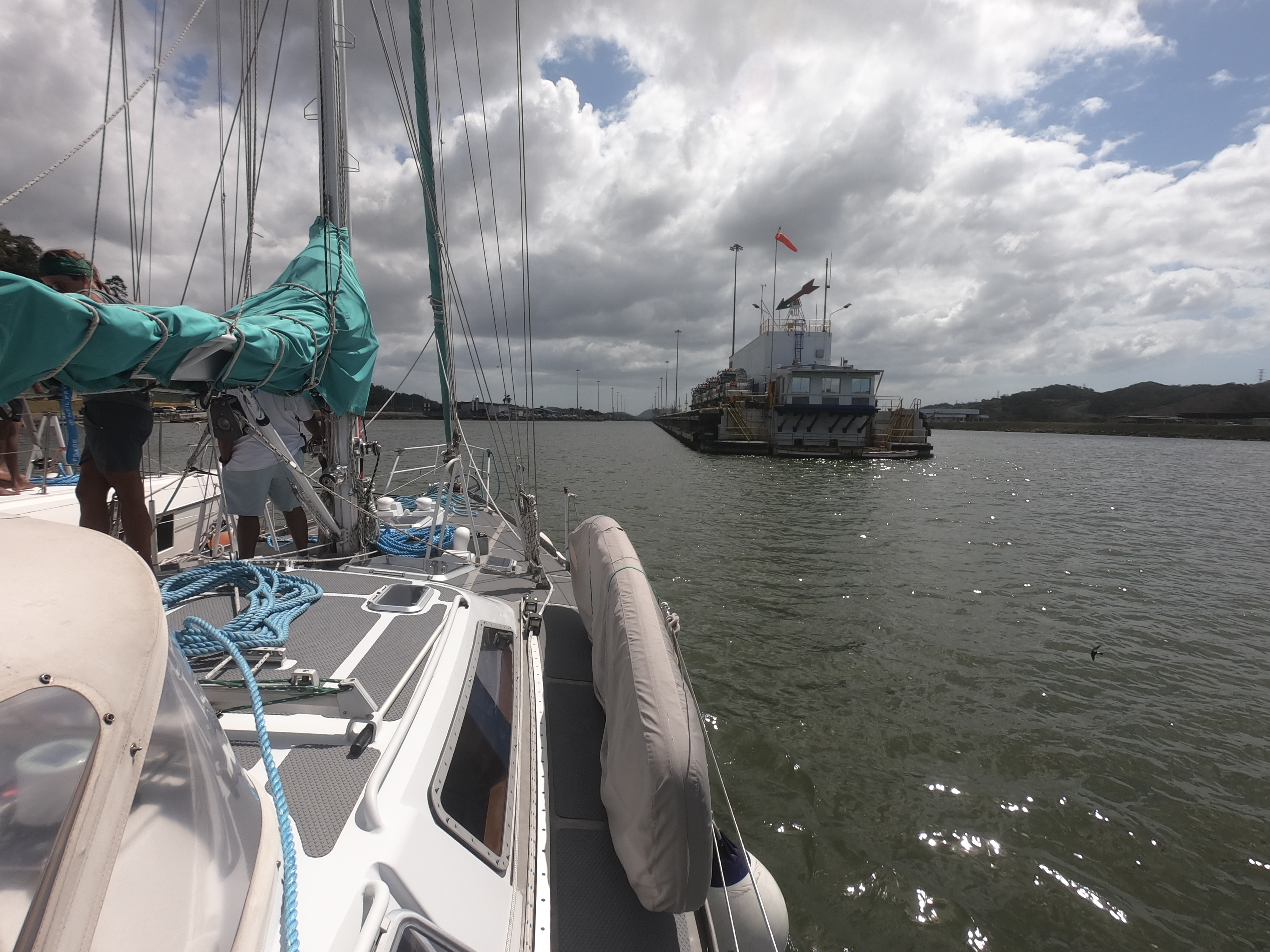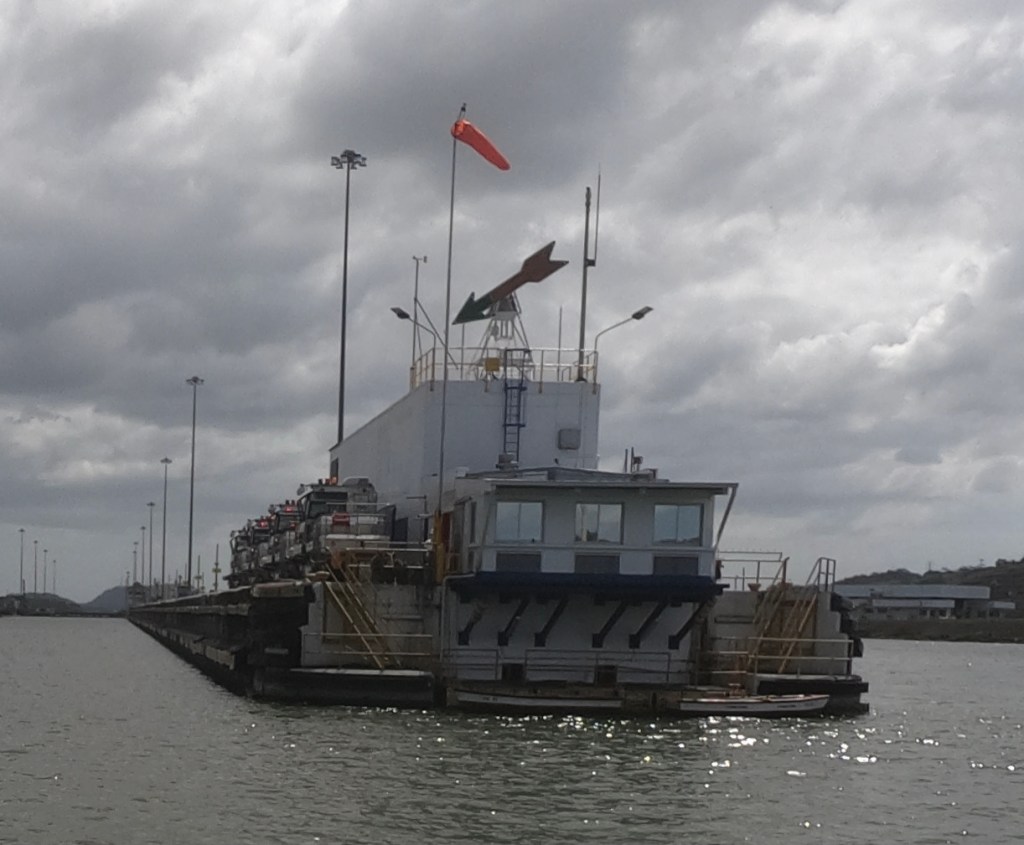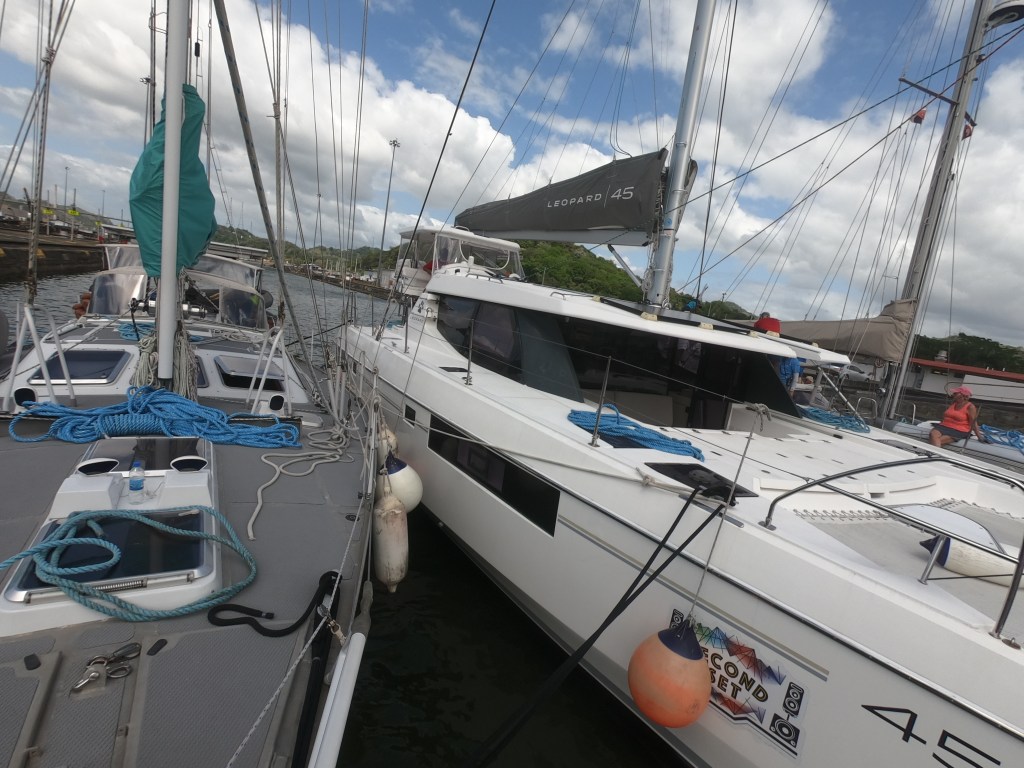
Making A Break For Mexico

May 21-25, 2022

Every time I get a bit complacent, Exit gently (or sometimes not so gently) kicks me in the huevos and reminds me why that is unwise.

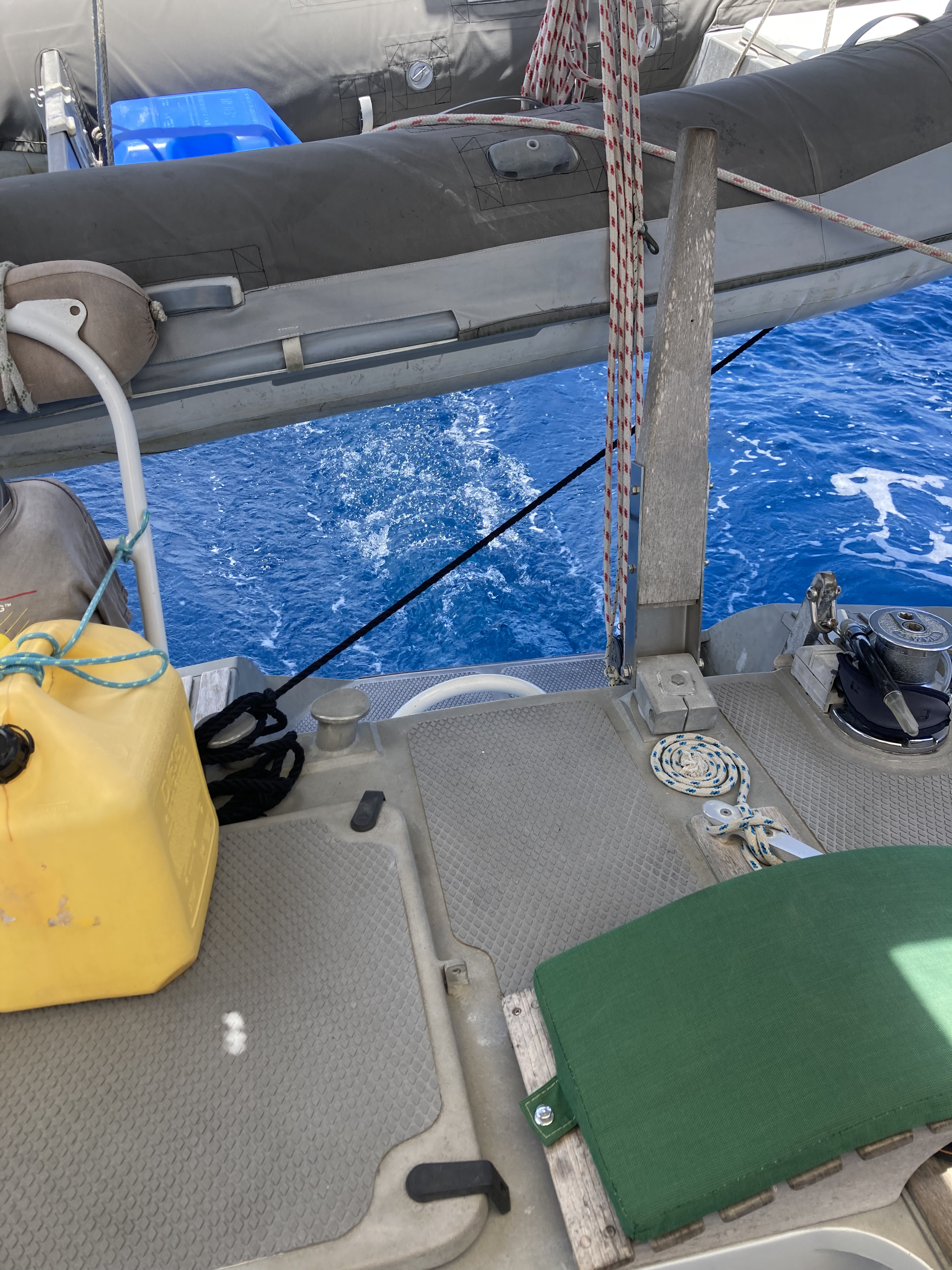
We had been making water for almost three hours.  

The one true upside of having to run the Perkins engine is that it gives us plenty of charging amps to power the water maker, which otherwise puts a heavy drain on the solar charging system that we typically rely on to top up our battery bank. 

After nearly three hours, we had made about thirty five gallons of fresh water from the ocean.  Sweet.  Or literally, sweet water.  

As I sat gloating in this little tidbit of self-satisfaction, a tingle rose in the back of my head.  Not the Neanderthal fight or flight tingle.  Rather, the oh shit I just realized something tingle.  I had forgotten to check the water at the output.  

There is a manifold with three levers on the output side of the water maker – on/off valves for the left and right water tanks and a third with an open hose on it.  Almost religiously, I check the output water with a cup at the end of that hose, just to taste it as well as to make sure the solenoid that diverts the water from discharge overboard has actually switched and the good water is really going to Exit’s tanks.

The tingle was me knowing before I saw.  When I lifted the floorboard and opened the valve, nothing came out.  Shit!  The third time this has happened in four years.  

Statistically unlikely in the overall number of running hours…high probability when I don’t check it.  In all the times I have checked the output water, I have caught it not opening once.  In the few times of not checking it, I know it has happened twice.  Damn.  This time, we donated thirty five gallons of fresh water back to Poseidon.  Hmmmm.  Bigger penalties have been paid for complacency.  I got off lucky this time; just sore balls.  Thanks for the reminder Exit.

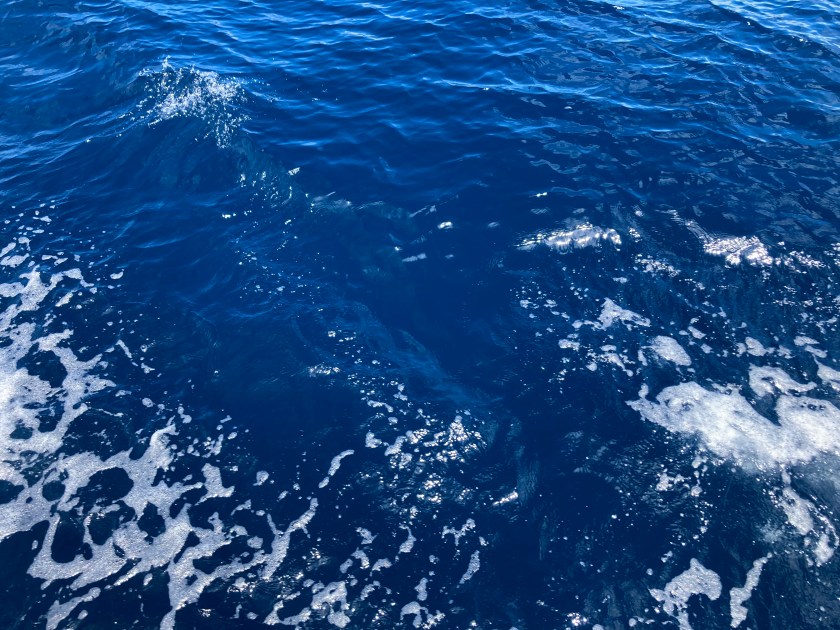
Shortly afterwards a small family of dolphins stopped by briefly to have a chuckle at us.


We knew we couldn’t have it all.  But then again —- if you try sometimes you just might find you get what you need.

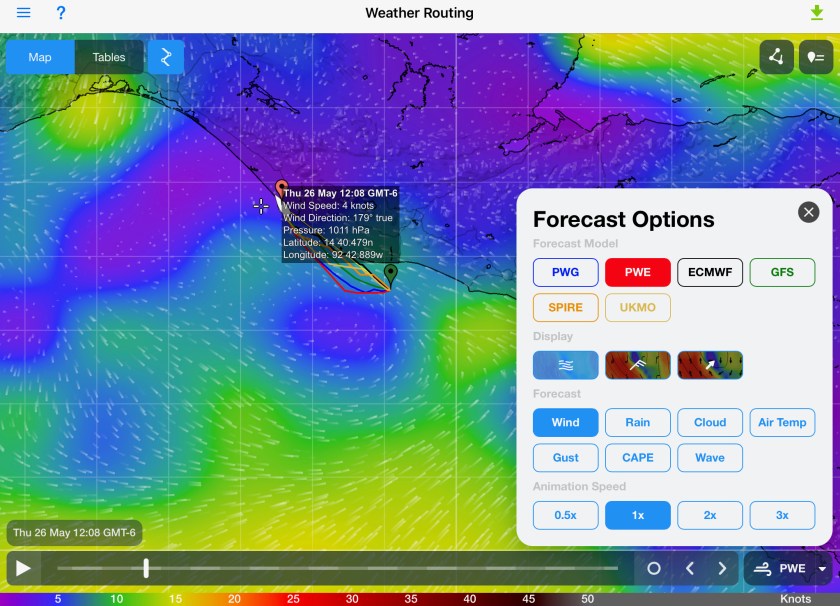
Regardless, while we would have preferred ten knots on the beam, we were happy to take almost no wind at all in the right direction over potentially horribly uncomfortable seas, undue stress, and a much higher potential for broken shit.

The give and take was that as May turned to June, the Papagayo and Tuantapec winds would begin to die down; however, the hurricanes would begin to pick up.  Not really reassuring.  We were fearful that may be exactly what was unfolding before us.

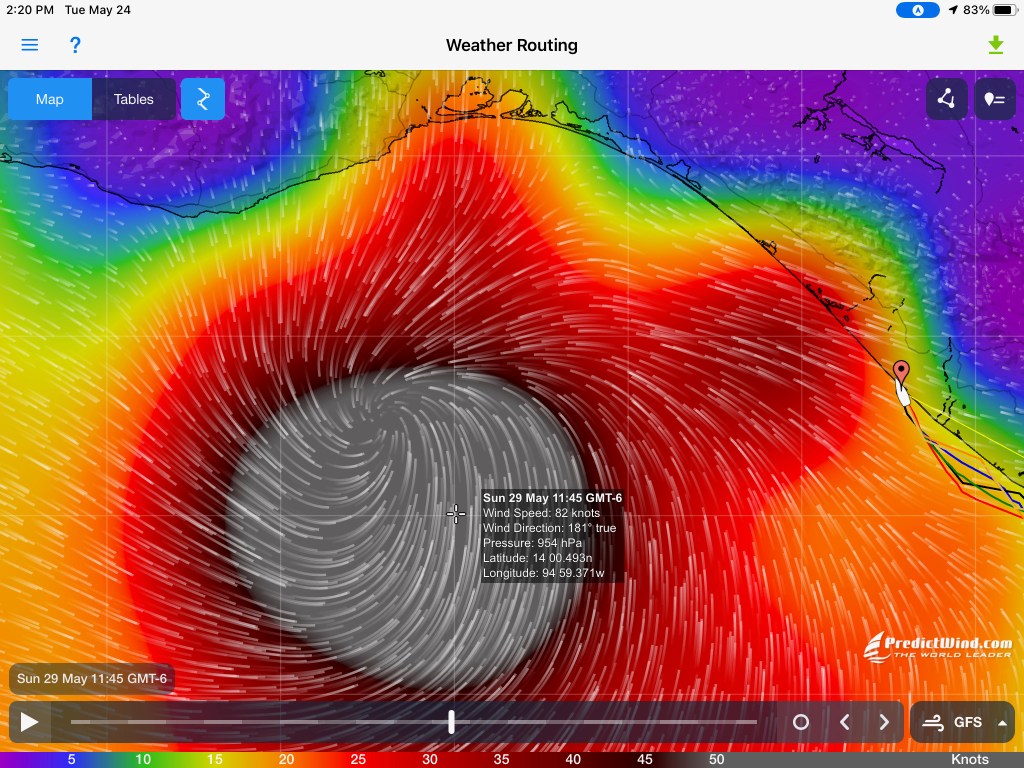
There was still only one of the weather models we were monitoring currently forecasting the disturbance to the south of us would develop into a hurricane, but the others were gravitating in that direction.  And the National Hurricane Center had begun looking closely at it as well.

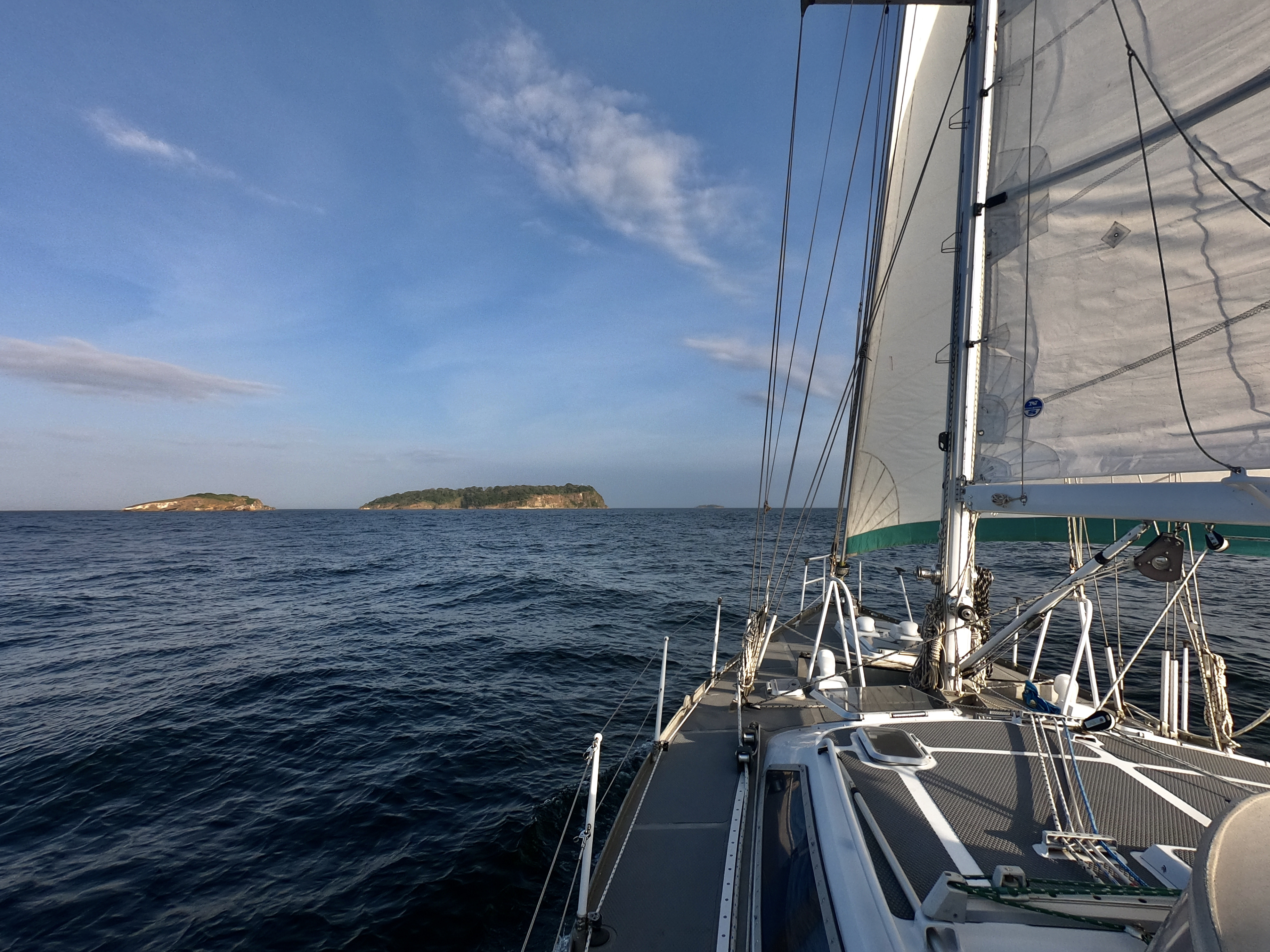
Thirty six hours into our passage we opted to divert to Golfo de Fonseca, a massive bay almost halfway between Playa Del Coco and Chiapas.  The eastern side is Nicaragua; the western side is El Salvador; and the island in the center is Honduras.  Golfo de Fonseca offered the only alternative shelter along the entire coast before Chiapas for bad weather.  Our thinking was that in twenty four or forty eight hours we would have more confidence in the likely trajectory of the system to the south.  If Chiapas looked like the higher risk, we would sit tight.  Otherwise, we would press on.  

We had no desire to sit through a hurricane in a marina (nor anywhere else for that matter), but the fact was Marina Chiapas’ very isolated location almost a mile inland from the beach would be the best protection we would find anywhere.

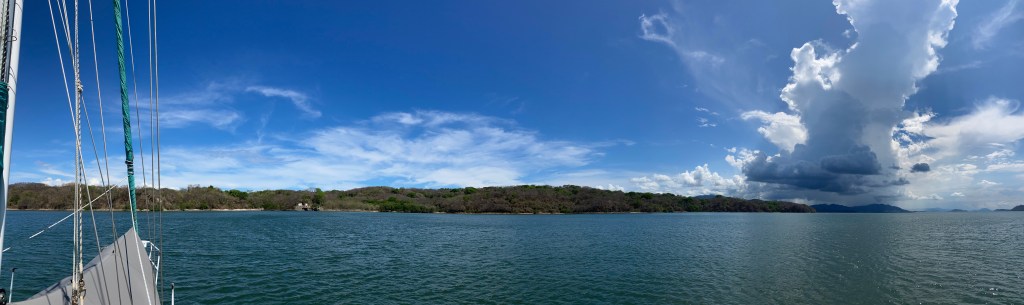
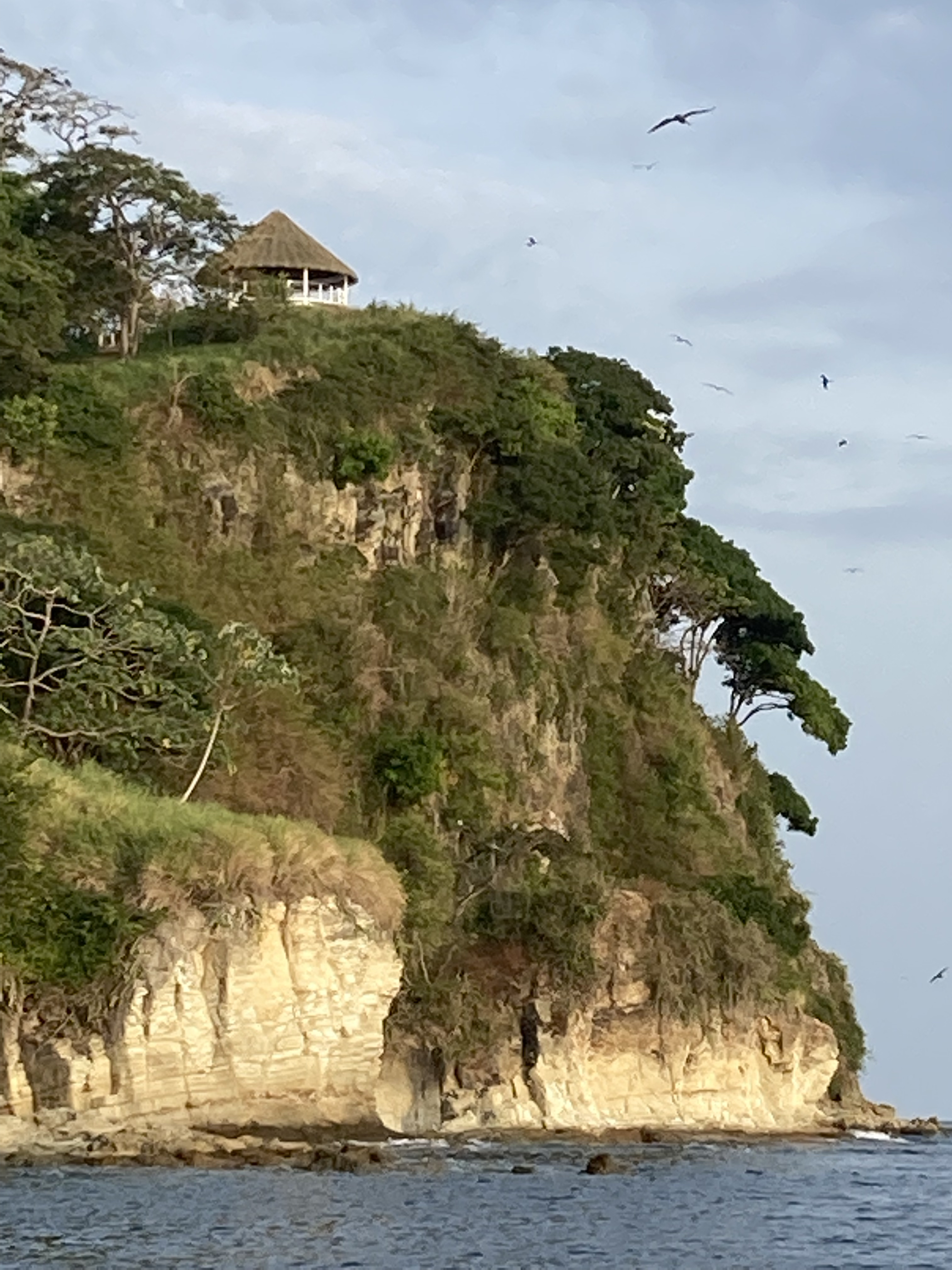
We chose Punta El Pateon as our anchorage, on the El Salvador side.  Easiest access, as well as less likely that we would be regarded suspiciously and boarded by a navy boat, which we heard may be the case in Nicaragua.  

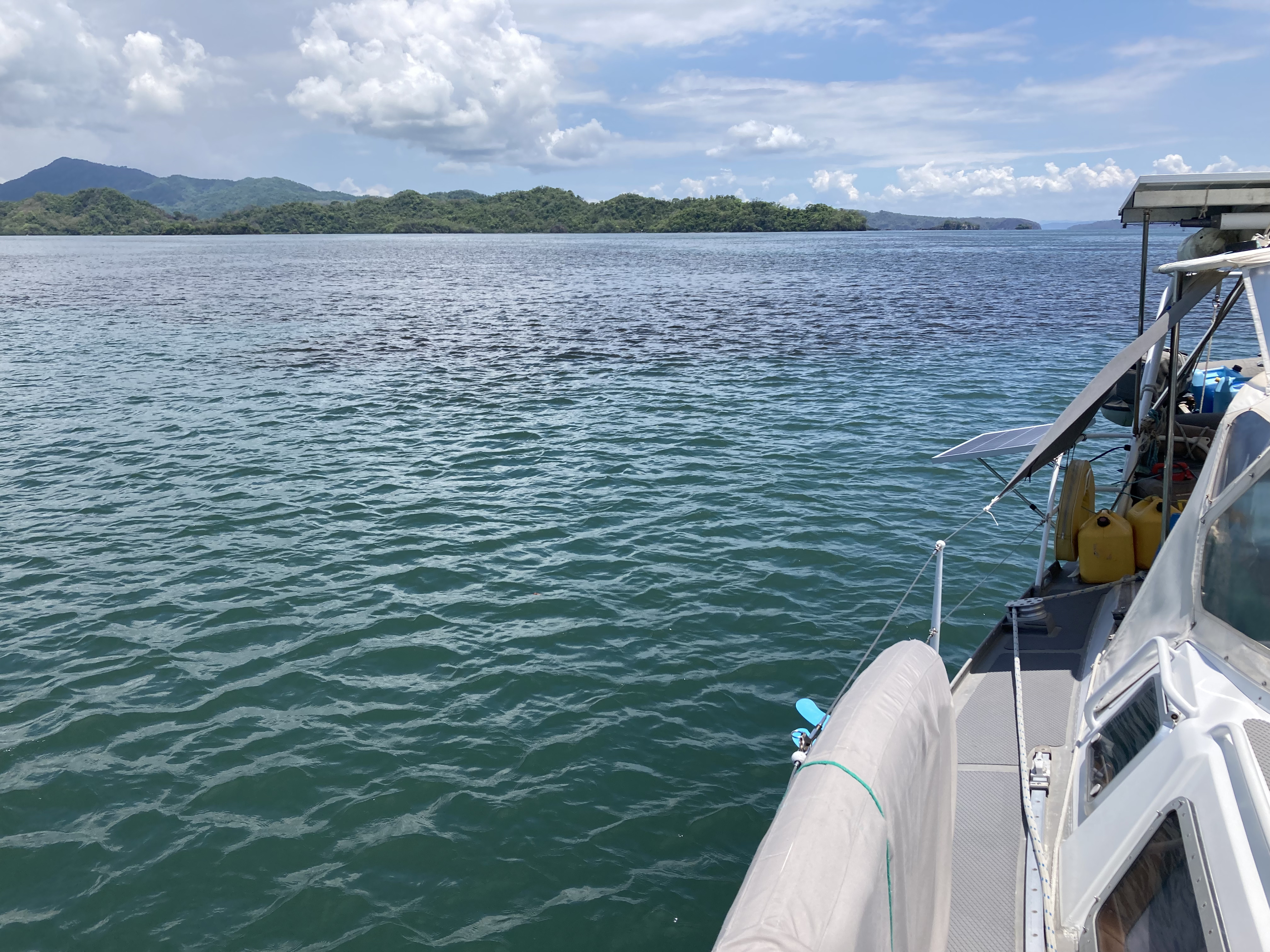
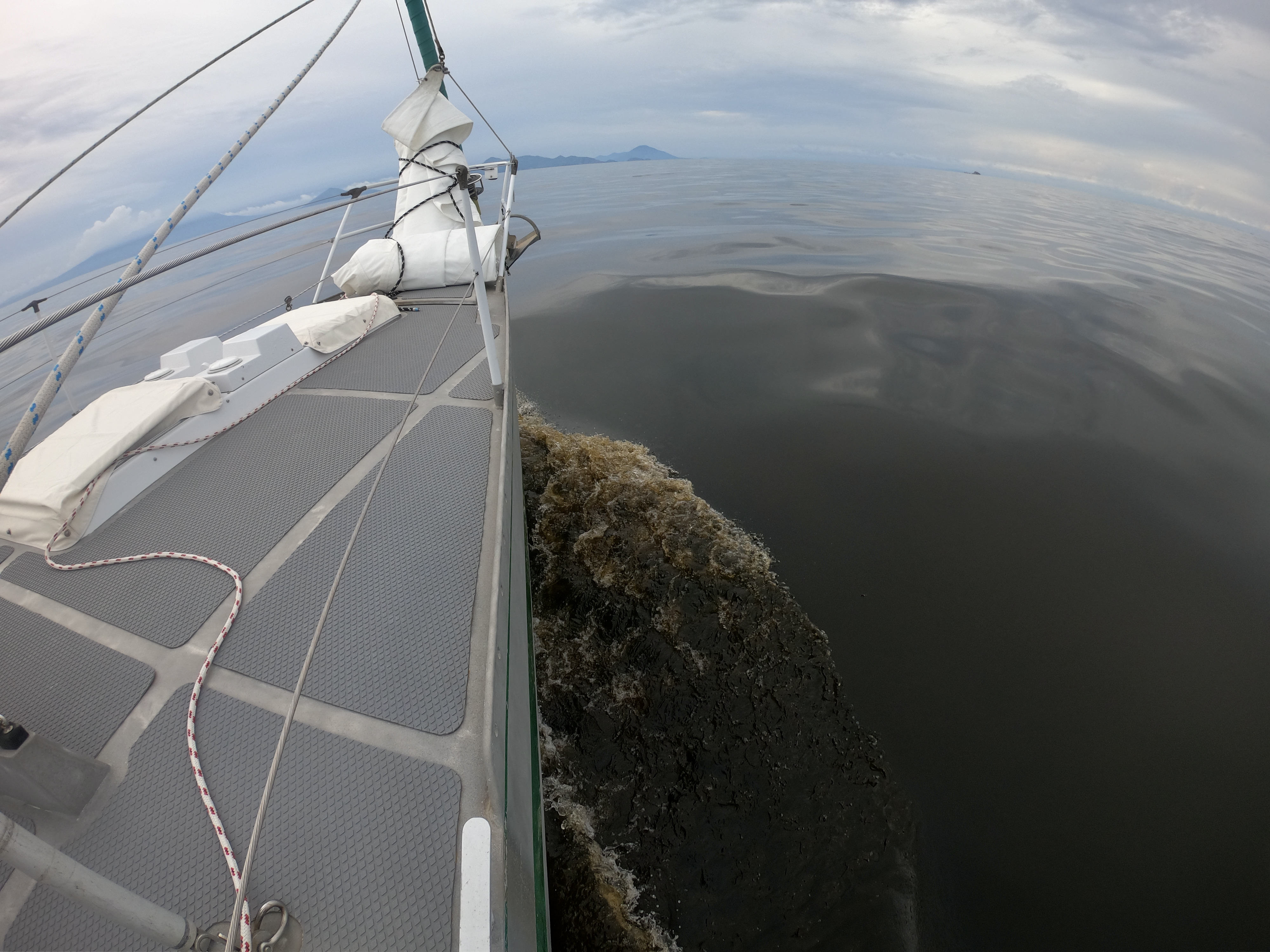
Entering Bahia de Fonseca, Exit had already been moving under engine power for hours.  Any hope of sailing had been cast aside with the realization that we needed to get to our destination before nightfall, which turned out to be a sound strategy we would more fully appreciate upon our departure.  Aside from passing through the worst red tide we had ever come across in which the water surrounding us looked like coffee and smelled horrendous, we arrived and anchored without incident at Punta El Pateon well before sunset.

Though we didn’t go ashore, it seemed like a lovely little community.  And, despite what had to have been a lack of any tourists at all, they certainly maintained their own community vigor regarding late night sing-alongs and cranked up stereos.  Still, much more endearing than listening to a lobster-red gringo drooling semi-coherent lyrics to Hotel California in a tourist bar…anytime.

The following morning we found the weather forecasts still quite ambiguous. The system still hadn’t been officially upgraded to a named hurricane yet, but it seemed inevitable now. The bigger question for us was where it was going. All indications were that it would overtake our position and continue north within two hundred miles or so of the coast all the way into Mexico.

The Bay of Fonseca, our current location, had a handful of anchorage options, but they all still seemed too exposed.  The fact that they occupied different countries made things even more complicated.  After a great deal of discussion, we concurred that Chiapas was still our best bet.   We could wait until the following morning, depart with favorable winds to sail by, still arrive at Marina Chiapas two days ahead of any nasty weather and be a mile inland from the surf and surge when things kicked up.

With the decision made, our anxieties seemed to lessen temporarily…until the boat carrying El Salvador authorities arrived at Exit.

As best we could, we attempted to explain that we were a boat in transit to Mexico, and had just taken shelter temporarily while we assessed offshore weather conditions. We did not intend to clear into El Salvador nor did we intend to leave the boat; only stay one more night and then continue on to Mexico.

They politely but firmly proceeded to explain in Spanish that, having already been at anchor for nearly twenty-four hours, our options were twofold.  Option one:  come ashore and clear into El Salvador at the immigration office which would be closing in one hour.  Option two: pick up anchor within the hour and keep moving.  

We told them thank you very much for having already allowed us the overnight stay and we’d be leaving immediately.  Casting a bit of a suspicious look our way, the guy who had been doing the talking clarified that meant leaving El Salvador waters…not just moving to a different location where they couldn’t see us and dropping anchor again.  

Yes, we absolutely understood.  We were leaving Bahia de Fonseca before sundown. 

Shortly afterward, we raised anchor and headed out.  Not a big deal.  We wouldn’t have as favorable sailing conditions, but we were already good to go.  However, the one thing we failed to consider was, as dusk approached, a number of fishermen had already set out nets and fishing lines.

We were already well familiar with the unpleasant task of dodging fishing gear.  In the best of circumstances, it might be a small panga with a guy inside hanging a line over the side.  Easy to see and relatively easy to dodge.  

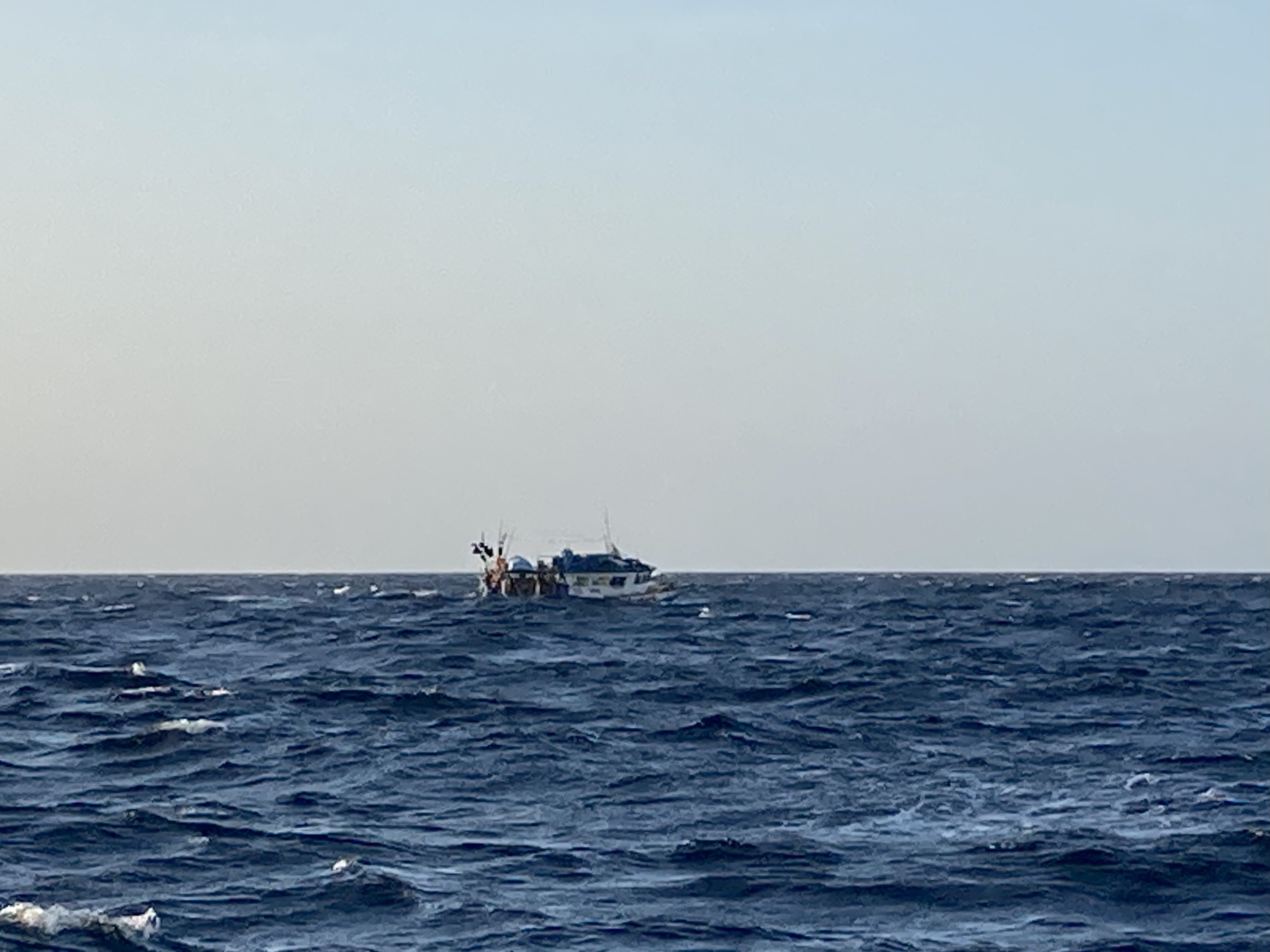
However, more typically there would be no one in the vicinity.  Only a net or long line stretched out underwater, invisible to the eye, except for a small flag made from a black plastic bag attached to the top a two meter tall pole floating in the water.  If we were lucky, the other side would also be attached to a flag, or even better yet, a panga which would give us a sense of where the net or long line extended to.  Maybe a series of clear plastic bottles at the surface trailing along the length of the whole thing which, once again, at least gave a visual reference.  As often as not, there would be nothing more than a single flag.  Some people said the nets were far enough below the surface that your boat could pass over the top; more people had stories about getting caught up on them.  If that happened, you now had big problems – maybe having to get in the water to untangle; maybe damaging your engine if the prop fouled badly enough; certainly pissing off a fisherman if you damaged their gear or cut their lines.

Fishing nets typically weren’t more than a few hundred feet long and, if seen, could be navigated around fairly easily.  Some of the long lines extended much farther, even a mile.

At night, the only hope of seeing anything was if the flag had a light or strobe attached…and it worked.  This was, by no means, an absolute.

Leaving Bahia de Fonseca, we had the misfortune of passing through the fishing zone at dusk.  Exactly the time when black plastic flags and clear plastic bottles were almost impossible to spot, and before the time any that actually had lights would be illuminated – they seemed to be switched on and off by light sensors.  At one point we spotted a flag in the distance just before passing over a net, forcing us to detour back and forth before determining the exact position of a long line that extended over a mile across our path.

Fun times.

Dodging fishing nets at dusk…

Ya… but do you see that one? Really…it’s out there.

Invisible black flags

Eventually, after three hours of dodging black plastic flags and floating water bottles, with our  nerves frayed and eyes strained, it appeared that we had cleared the last of the gauntlet of fishing gear.  It was dark and we were finally in the open water heading well offshore trying to avoid any more fishing net drama…hopefully.   We could see tiny flashes of strobe lights scattered behind us, illuminating the maze of lines and nets we just passed through; however,  no flashing lights appeared in front of us, meaning we were either home free, or blind to the dangers surrounding us.  

We would later hear first hand from a friend who had become entangled in an unmarked, unlit long line over thirty nautical miles offshore just outside Chiapas in the middle of the night.  They had to dive in pitch black conditions to free their prop.  We would later have a similar, though less dramatic encounter ourselves.  But that’s a different story…

As it turned out, though we didn’t encounter any more nets that evening, there would be no escaping the excitement.

Surrounded by rain…

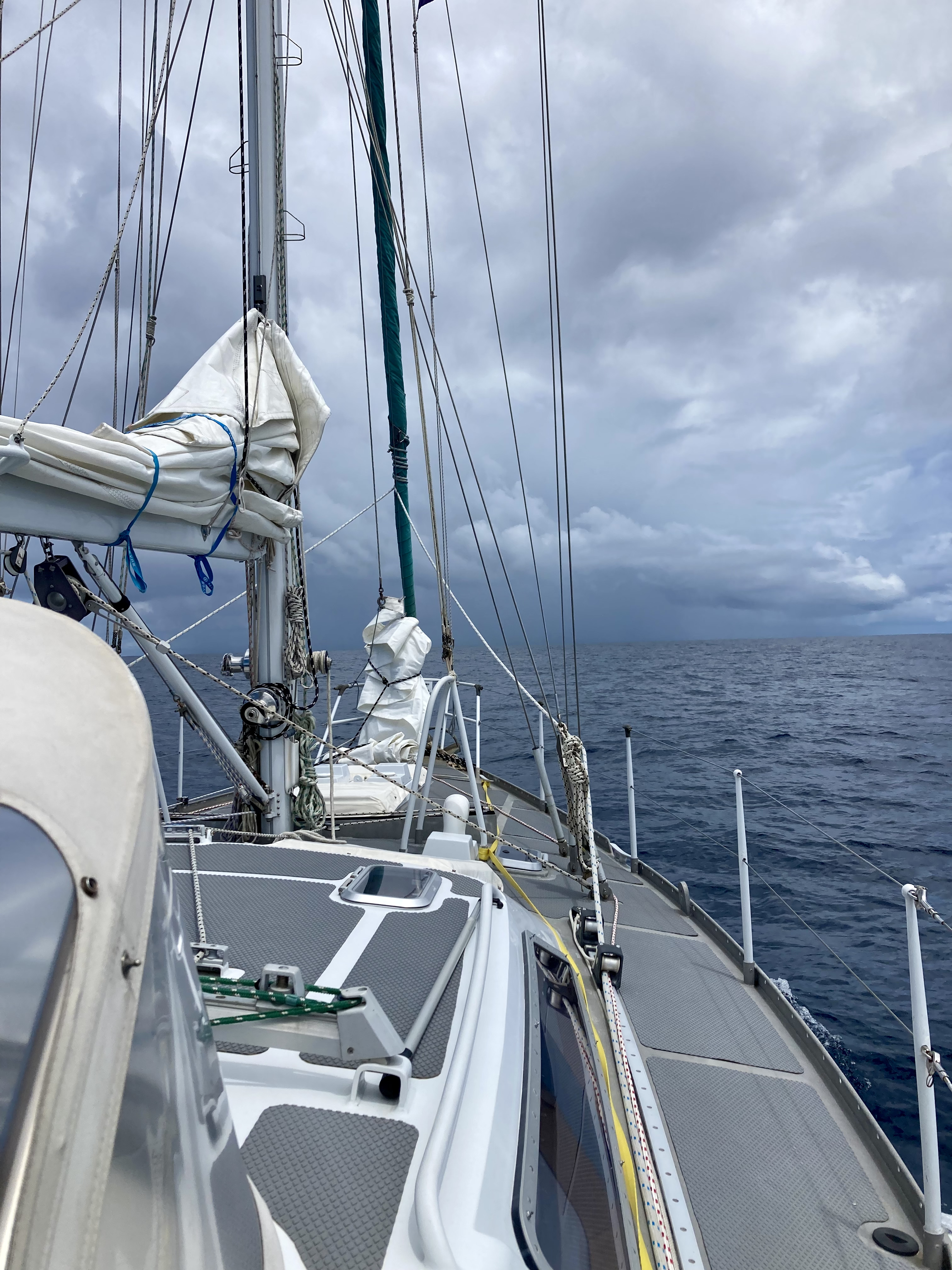
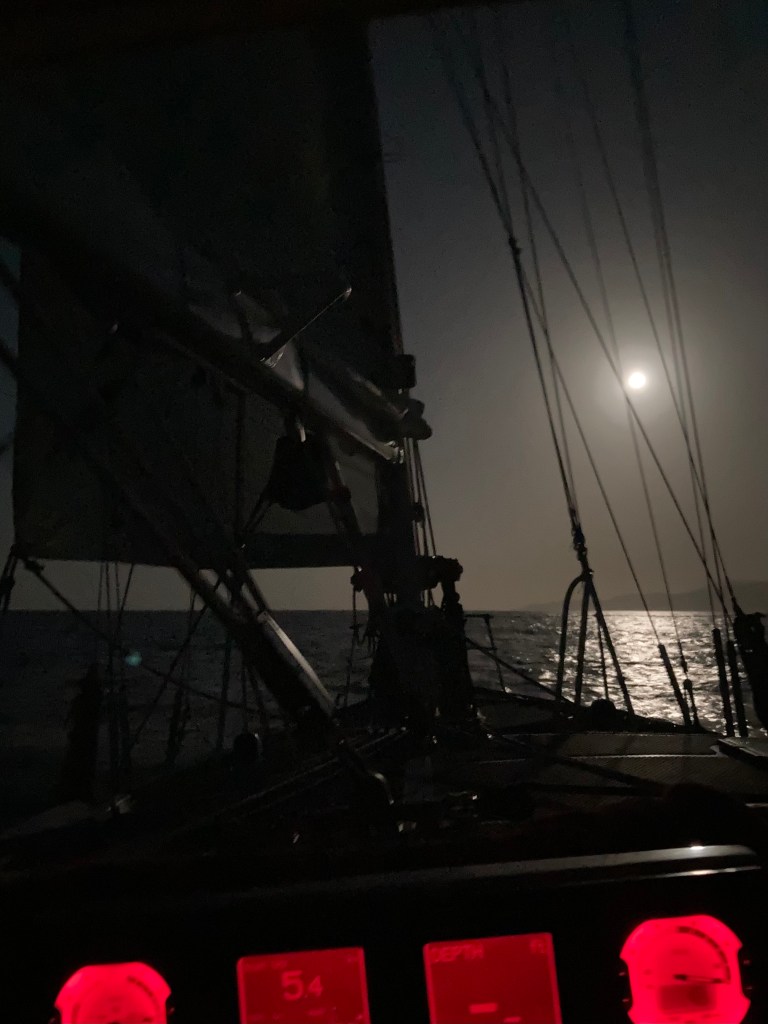
Our ongoing wishes for any wind at all turned against us that night; and the pendulum swung during Kris’ watch.   The night was jet black, the winds kicked up to twenty five knots, rain smashed down, and ridiculously close lightning exploded all around us.  Sometimes the majesty and power of the ocean and sky can be awe inspiring.  Other times it just scares the shit out of you.  Dawn couldn’t come soon enough.

And, while the arrival of the sun and blue skies were a relief, the drama continued when an  alarm screamed out first thing in the morning indicating the autopilot had failed. Jeeves, the name we adopted for our computer driven chauffeur, had decided to once again go on strike.  Thankfully, we were able to quickly rig up Schumaker, our ancient backup autopilot which can only be described as having far less computer intelligence but a more reliable work ethic, and our automatic steering was restored.  Sometimes simple is just better.

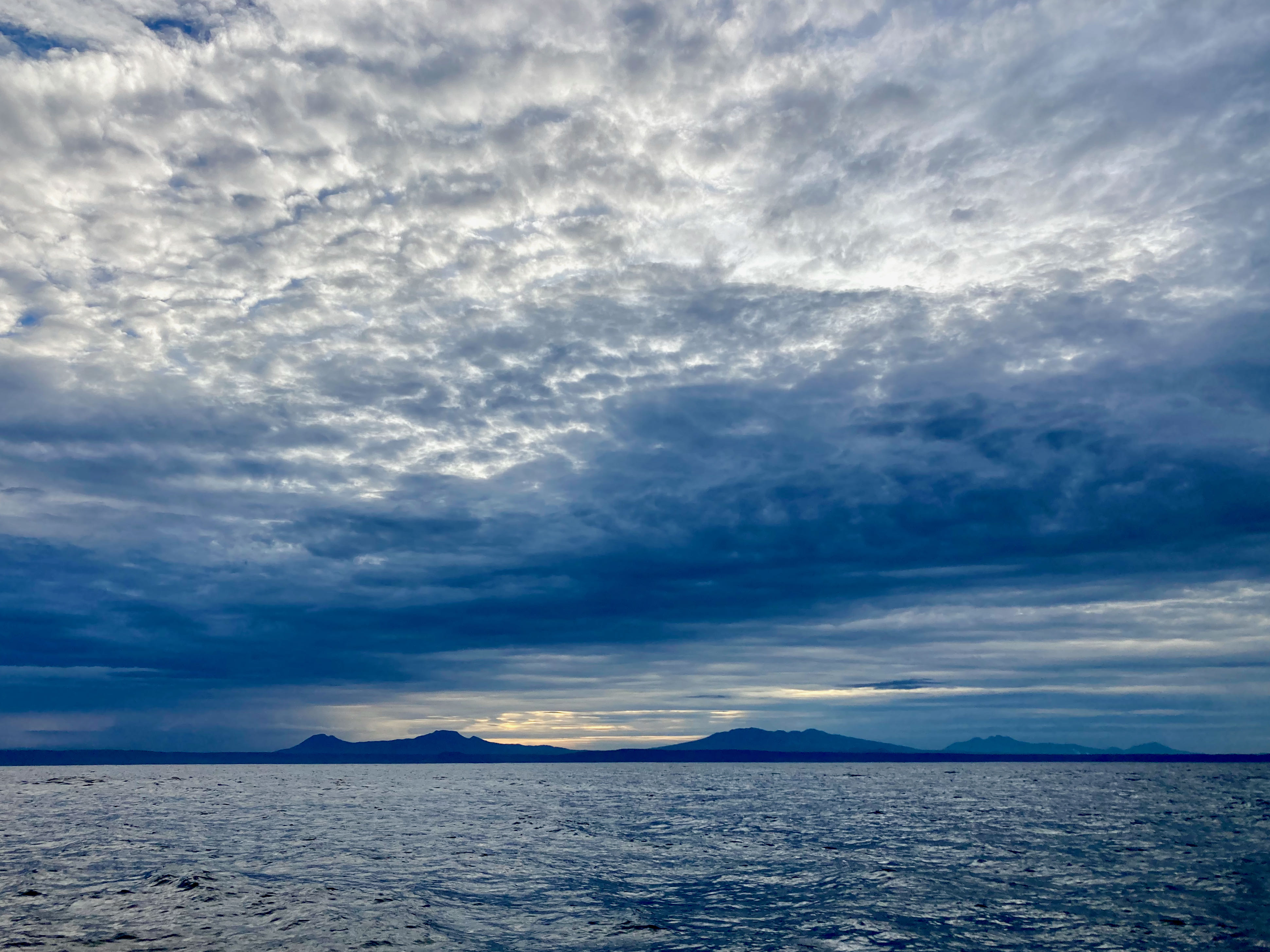
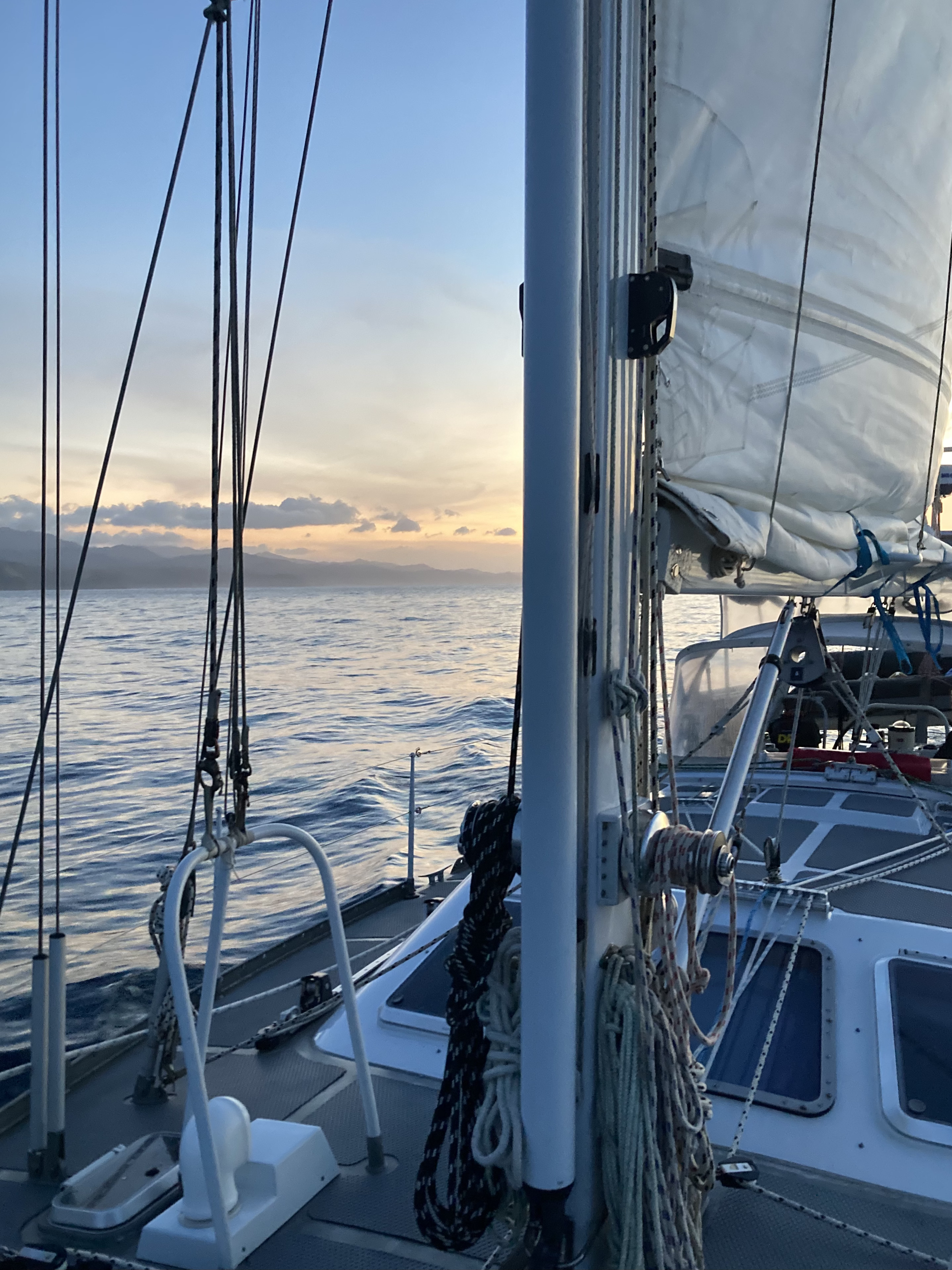
A welcome sunny day the next morning underway to Chiapas…

That day we experienced yet another amazing dolphin encounter while underway.  Under power of sails only, barely moving in five to six knots of wind, we were approached by a pod of  dolphins.  Typically, only brief encounters were on the menu, as the dolphins would quickly grow bored riding our bow wake at such a slow pace.  For some reason, this time they opted to stick around for quite some time.  

Much to the chagrin of Kris, who foresaw a potential catastrophe unfolding, I decided to attempt submerging our GoPro on its extendible pole into to water while we were underway trying to capture footage of the dolphins moving alongside us.  Even though the GoPro was inside an underwater housing and we were only moving at a couple of knots of speed, I admit I was flirting with disaster.  The resistance caused by the water made it much more difficult than I thought to keep ahold of the pole.  If the pole snapped or I dropped the GoPro, it would be  gone forever…we were in three hundred feet of water.   I would be keel-hauled by Kris and it would be well deserved 

Carefully, I lowered it over the edge of the deck to about a foot under the surface and maintained an iron grip.  I could only do this for ten or twenty seconds at a time.  Initially, it was pretty sketchy but I quickly got a feel for it.  Eventually, I moved to the transom where I could get down right next to the water.  One of the dolphins was unbelievably curious; I actually thought it was trying to grab the camera a number of times and I ended up quickly snatching the GoPro out of the water as it came right up to me.  After a half hour or so, the dolphins disappeared into the blue.

I just kept recording snippets, without seeing any of the footage until after it was loaded onto the laptop.  Later, we were stunned watching the video we had managed to capture; it turned out incredible.  Our Space X-it endeavor with the drone may have just evolved and expanded to include a Wet X-it branch into its program. 

Amazing dolphin encounter while underway

Unlike the previous evening, the night passed with minimal excitement.  Sporadic lights in the distance revealed the presence of fishing boats that had to be navigated well around; but the unforeseen reward of a nighttime passage came in occasional visits from dolphins.  Speeding towards us and alongside Exit just under the surface, they took on the appearance of  torpedos as the water surrounding them was illuminated in a crazy and eerie green glow due to the bioluminescence.

Approaching Chiapas the following morning, our stress levels increased exponentially.  It appeared there were floats marking fishing nets everywhere around us.  Fortunately for us but not the planet, it turned out everything we were seeing in the water – plastic water bottles, pieces of styrofoam, empty jugs, as well as flip flops, plastic bags, and everything else you can imagine – were all just floating garbage deposited by assholes instead of fishermen.  Had the choice been ours, we would have preferred that it been fishing markers we had to dodge instead of simply a pathetic and depressing reflection of our species.

We never prefer staying at marinas; in fact, we avoid them like The Plague. (Or The ‘Rona)  However, Chiapas has no alternative anchorage as an option. The swell outside is relentless and the port captain prohibits anchoring in the small bay just inside the breakwater due to boat traffic passing through.  Furthermore, the tropical depression which was two days behind us, had just been upgraded to a hurricane.  Officially, it was the first of the season – Agatha.

In our eyes, there was no choice.  We just had to suck it up.

Finally, after nearly three days and just over three hundred fifty nautical miles we were safely in a slip at Marina Chiapas. Ahead of us remained over a two hundred mile crossing of the tempestuous Golfo de Tehauntepec, for which the Papagayo winds had been merely a warm up, followed by a daunting eleven hundred nautical miles more to the relative safety of the Sea of Cortez – our ultimate destination to sit through the hurricane season.

Marina Chiapas
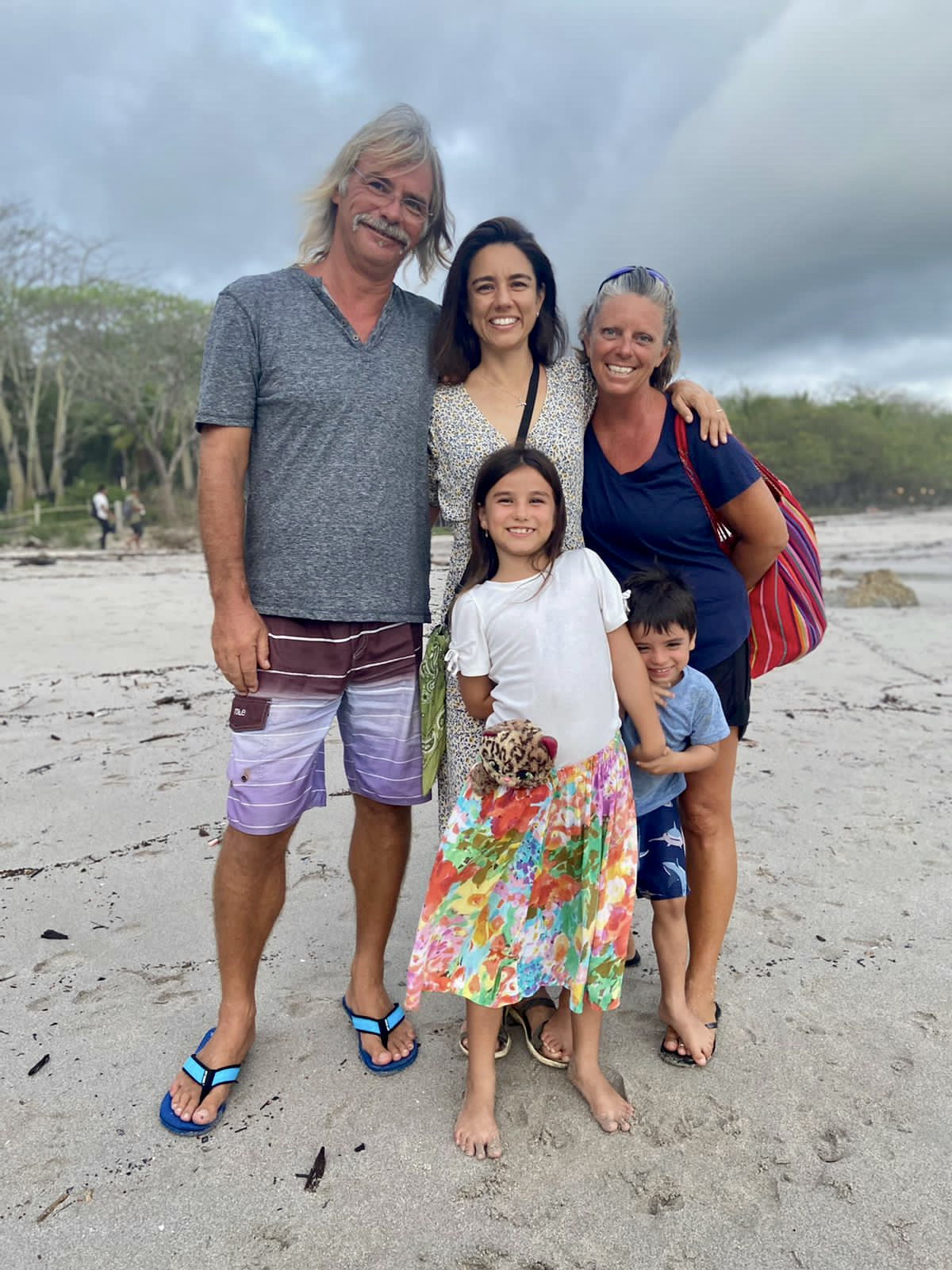
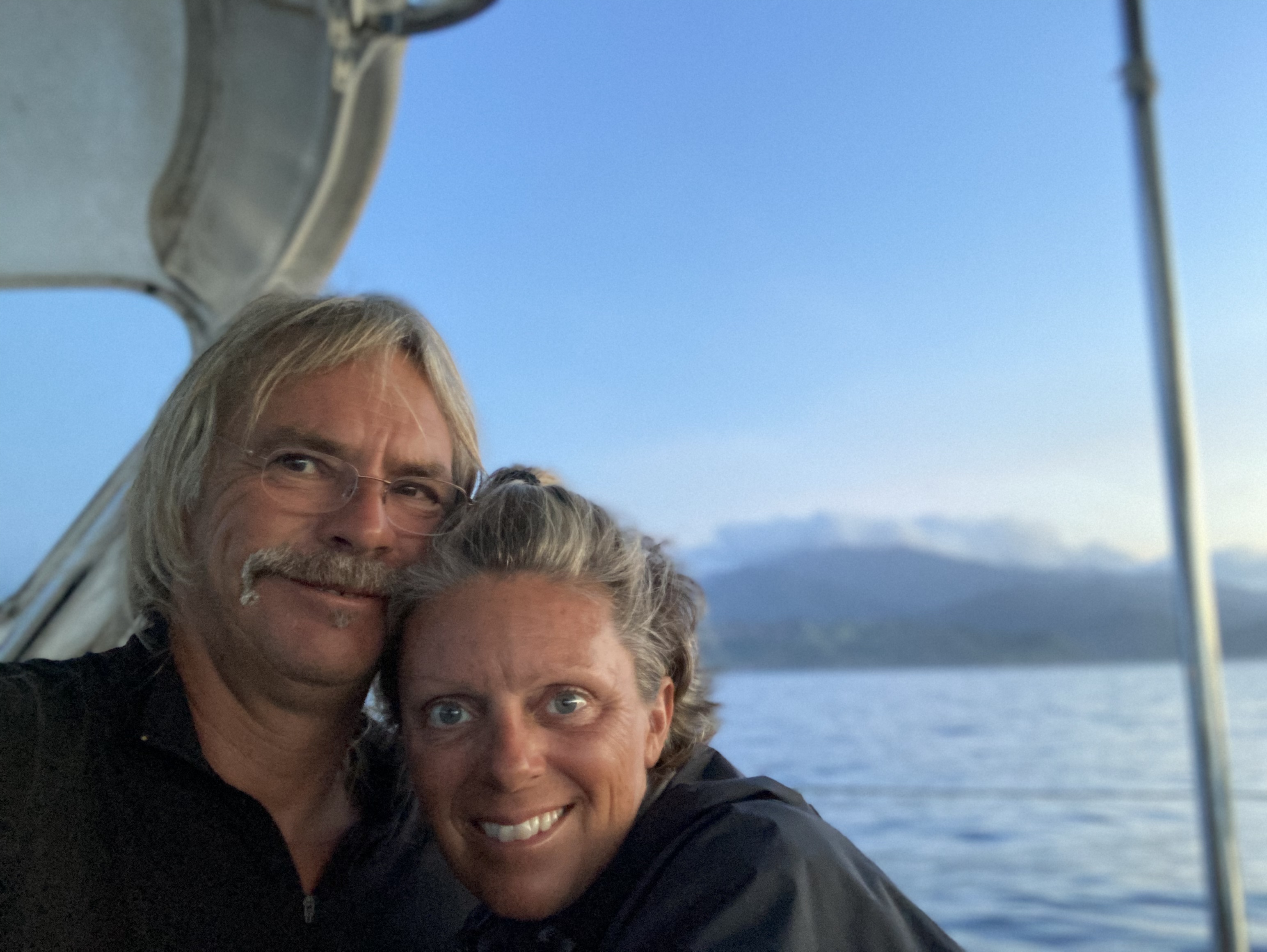
Memo and Rolf at Marina Chiapas

Aboard Exit we had already traveled more than fifteen hundred nautical miles since passing through the final lock of the Panama Canal and entering the Pacific Ocean just over four months ago. By our calculations, this put us barely beyond the halfway point.  Theoretically possible to complete the remaining distance in ten days, but realistically likely to be closer to a month.  No small feat, to be sure, yet we were making progress.

We were still adjusting our lines on the dock when we were boarded by the port captain, who politely took us through all the paperwork to clear in, while two men in military camouflage fatigues leading a nervous German Shepherd performed a quick search belowdecks to make sure we weren’t smuggling drugs or weapons.  

At least we now felt safe from the hurricane that had seemed to be tracking us.  The marina was located at the end of two small bays and three channels a mile inland from the shoreline.  Landlocked.  Agatha was projected to slide up the coast right past us without making landfall, but it would be close enough that we needed to be where we were.

Little did we know at the time, we would have a much easier time getting into Marina Chiapas than out of it…
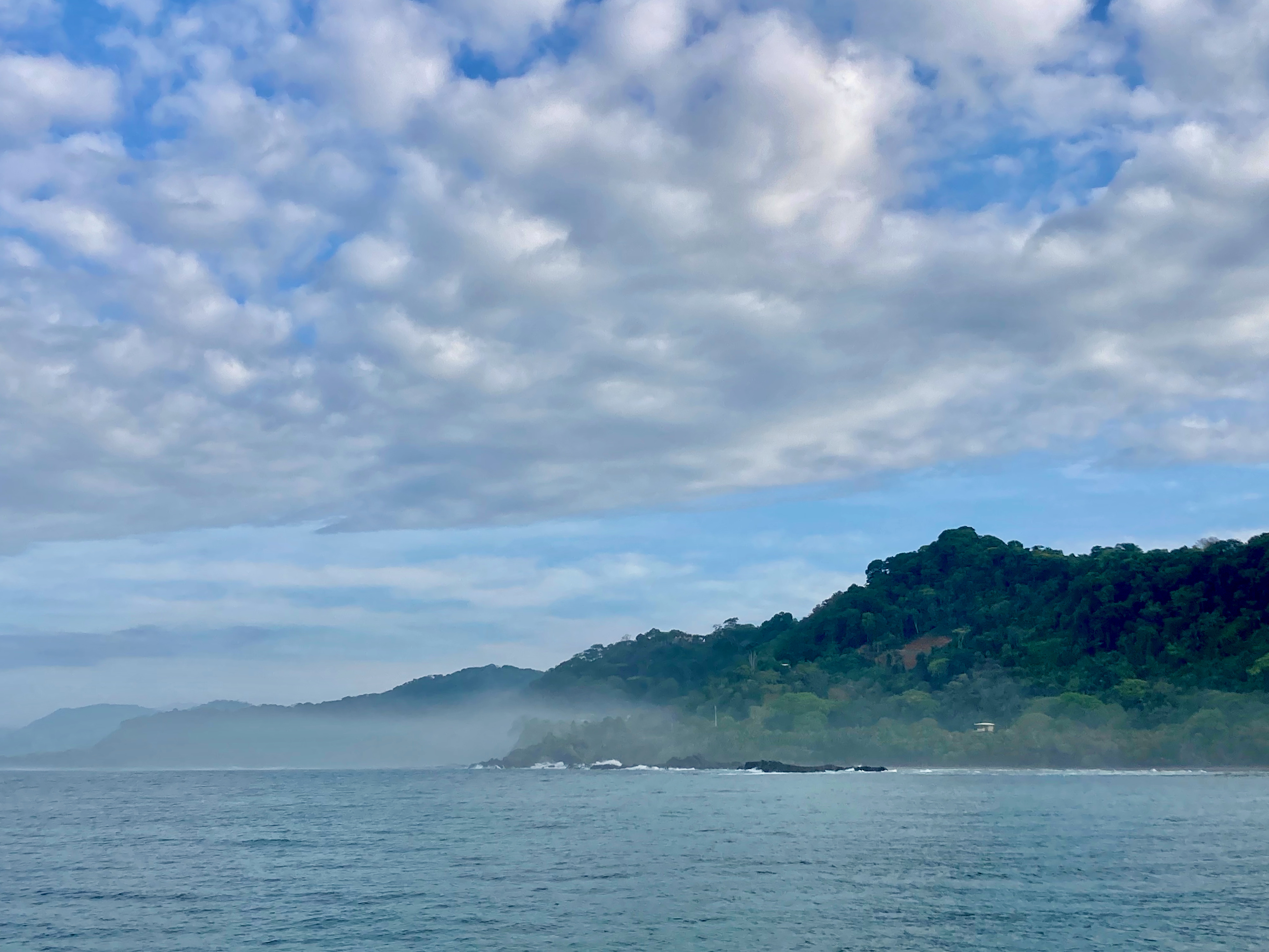
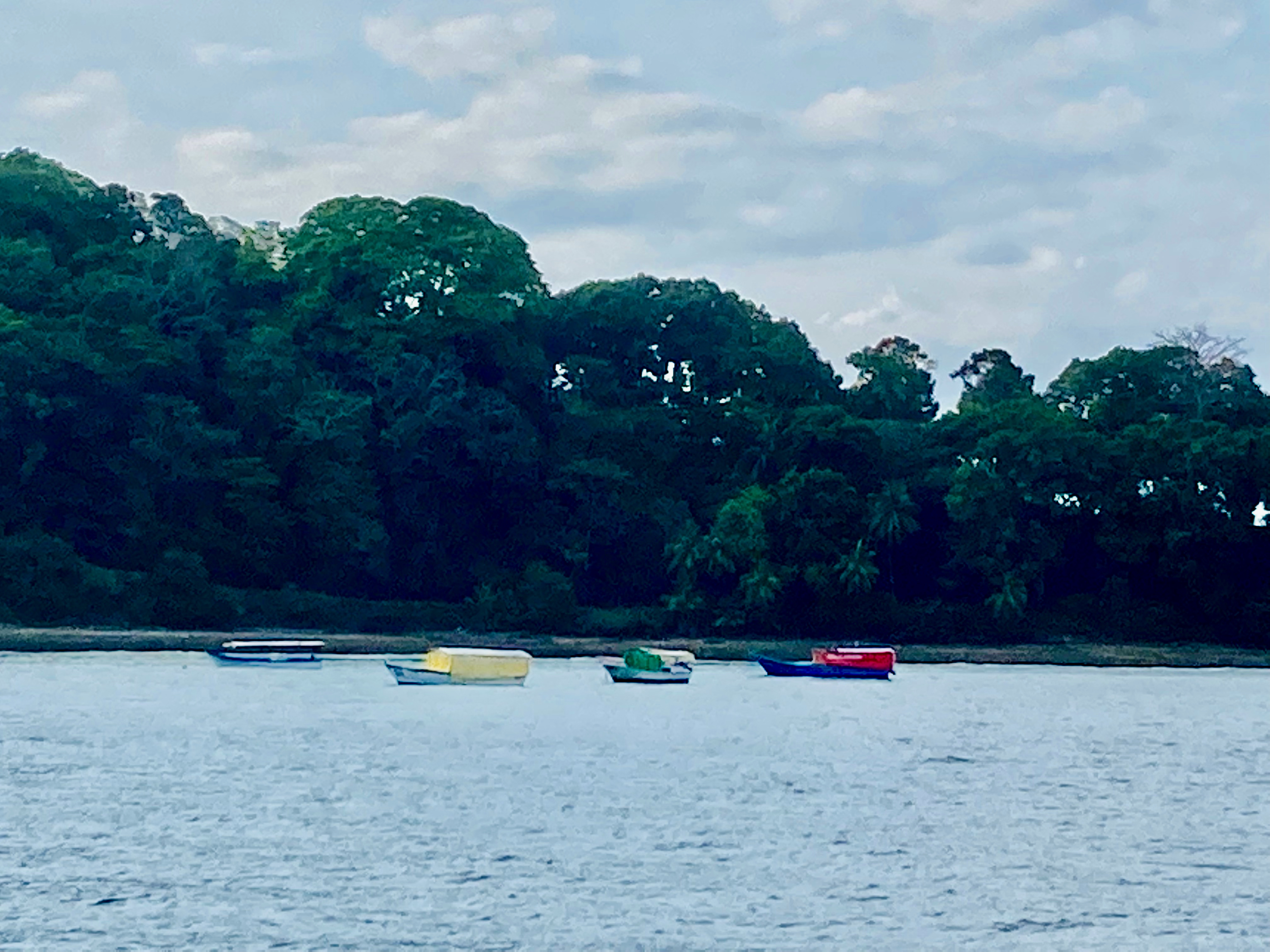
Zarpes, Prisons, And Junkies (Costa Rica – Part Two)

April 12 – May 21, 2022

After departing Bahia Drake, we split the sixty nautical miles we needed to travel north to Quepos in two by stopping for a night at Punta Dominical – another spot along the Costa Rica coast popular with surfers. We were learning very quickly that beaches ripe for surfing were often horrible beaches for dinghy landings. No going ashore, but still a nice anchorage to chill out at for a night.

The following day we made for an anchorage near Manuel Antonio, three miles south of Quepos, which we had to visit on order to be issued a new national zarpe.

Though the international clearing in / clearing out procedures were not necessarily that much more complicated or expensive than other places we had visited, Costa Rica introduced us to national zarpes.  International zarpes, by comparison, we had dealt with.  This official document issued by the country you are departing declares your next port of call.  It is often asked for when you first arrive in a new country.  If an  authority of a country you are entering doesn’t ask for your zarpe it’s no big deal.  But if they ask for one you don’t have, all kinds of problems can arise.

National zarpes seemed effectively the same but were required when moving between states or regions within the country.

They didn’t necessarily charge for these, but the process to get them could take the better part of a day to sort out or may require taxi rides to various official offices that often were not conveniently in close proximity to one another. A trip ashore was required to get the zarpe before departing, it had to be during limited office hours or business days, and sometimes included time restrictions. A destination had to be put on the zarpe. Copies of our own documentation had to be provided. Only certain places could issue them or be listed on them. Furthermore, the procedures, processes, and locations had to be sorted out each time. Overall, a giant pain in the ass for us with no clear benefit or necessity that we could fathom.

We had declared Quepos as our destination departing Golfito. We were told it was commonly used. To us, this meant a procedure the Quepos authorities would be more familiar with, thereby making it simpler. Especially with language limitations, trying to complete an obscure government procedure at a location that is not already very familiar with that procedure can be a nightmare.

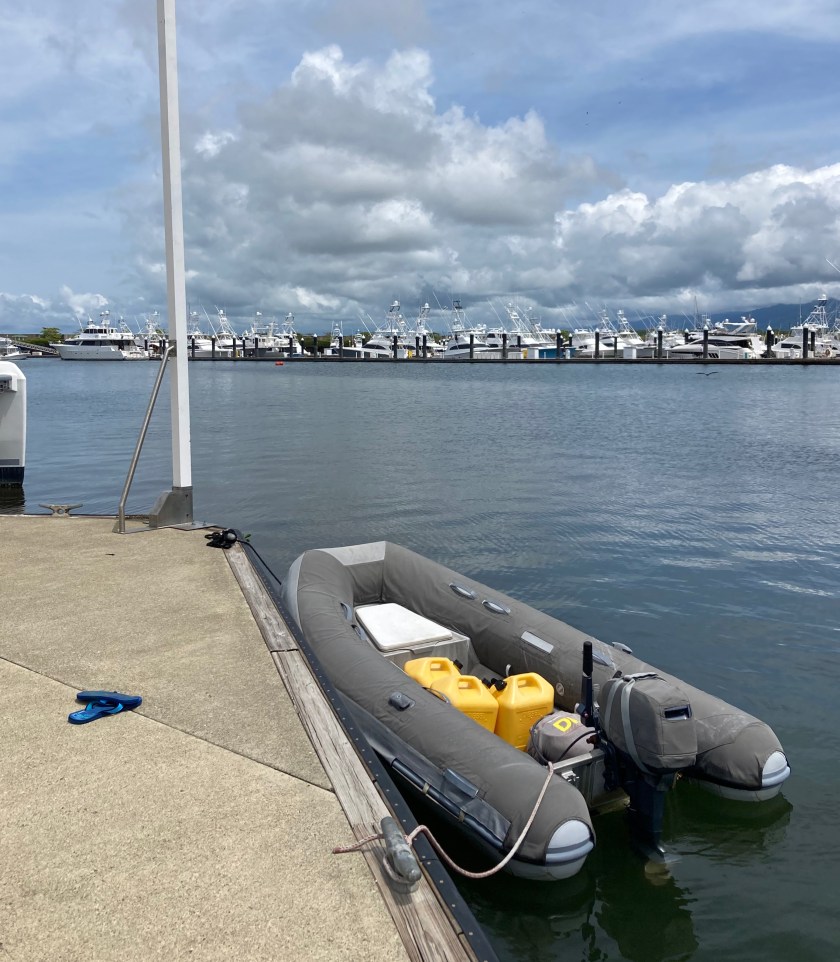
Obviously, the marina just outside Quepos had decided to take full advantage of anyone not staying at the marina who needed to use their dinghy dock.  Thirty five bucks just to tie up!  Bastards.  They took even more advantage of those choosing to stay at the marina charging boats a daily rate of two dollars and fifty cents a foot – for us that would have been over a hundred dollars a night.

Since the only alternative was a beach landing at the anchorage followed by a round trip taxi ride that would cost close to fifty dollars, we chose a bouncy dinghy ride the three miles to the marina and tied up for the day, adding a provisioning run in town and filling our jerry cans with diesel to try to help offset the marina charge for tying up our dinghy to their dock.

The town of Quepos was pleasant enough to visit, and the process of receiving a new national zarpe there turned out more inconvenient than painful.

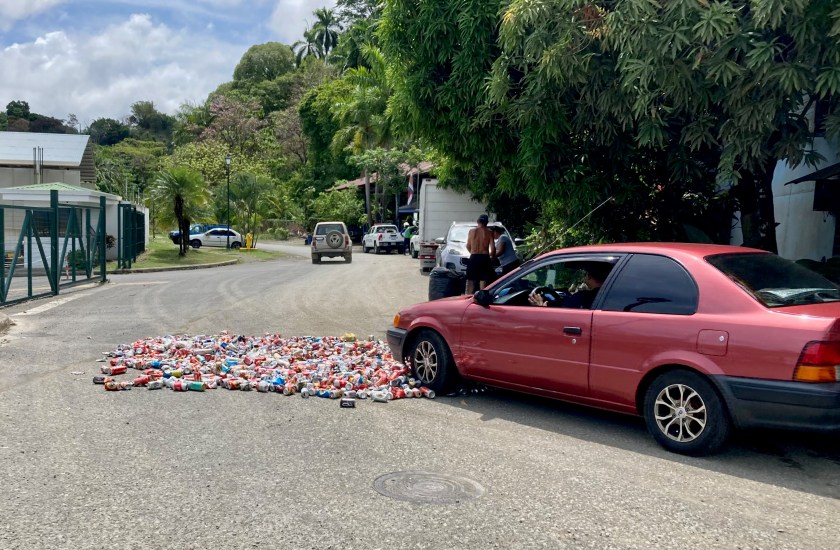
A unique approach to crushing cans for recycling

However, at the end of the day, the three mile dinghy ride back to the anchorage was choppy, uncomfortable, and wet.  The wind had kicked up, causing the waves to respond in kind.  Loaded down with jerry cans now full of diesel and bags of provisions, we had no prayer of getting the dinghy up on a plane.  Not pleasant at all.  Downright fucking sloppy even.

The anchorage itself, though nice enough, was subject to a lot of panga traffic with an endless supply of tourists during the day, as well as seeming to unfortunately be a popular spot for mega-twats (mega yachts) to anchor at.  However, the swell was what eventually drove us onward.  One night, we endured the most ridiculous swell movement we had ever experienced, and a lack of any wind at all made using a swell bridle ineffective.  It appears we may have to sort out a flopper stopper to cope with this in the not too distant future as we’re apparently still quite gun-shy about using a stern anchor after our first fiasco.

All in all, it had taken us five days to sort out everything we needed to before we could move on. Once we were ready, we were gone first thing the following morning.

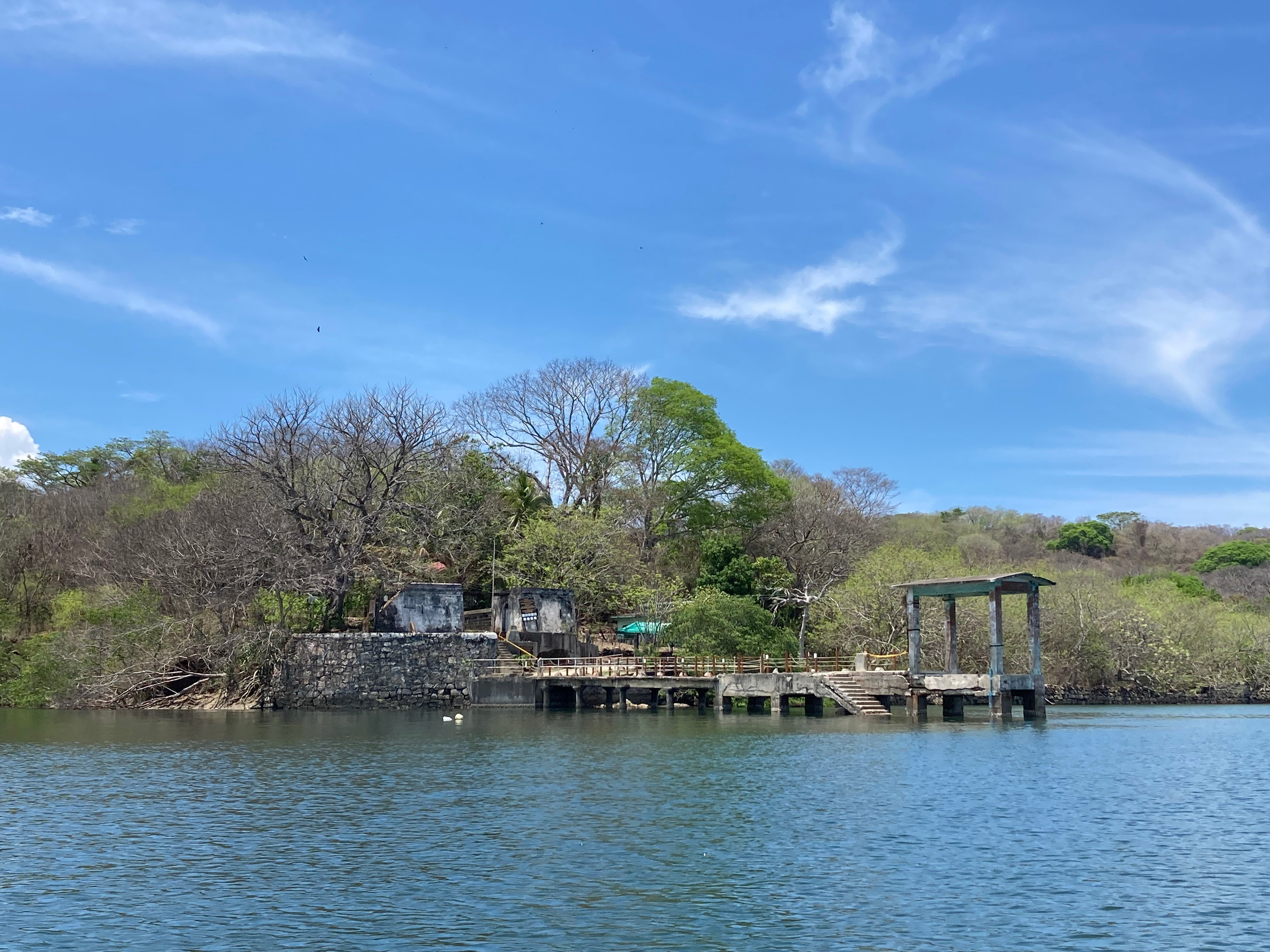
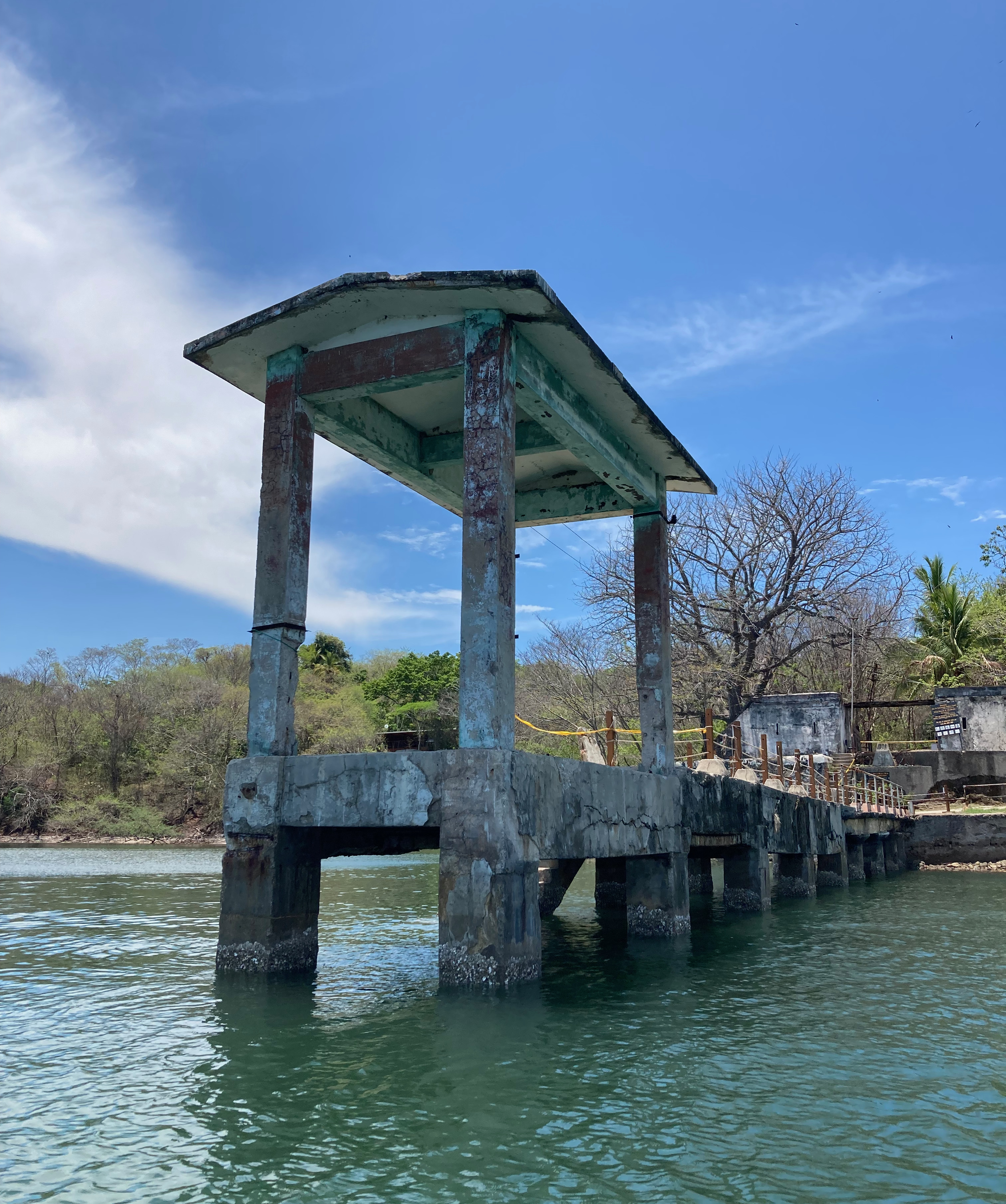
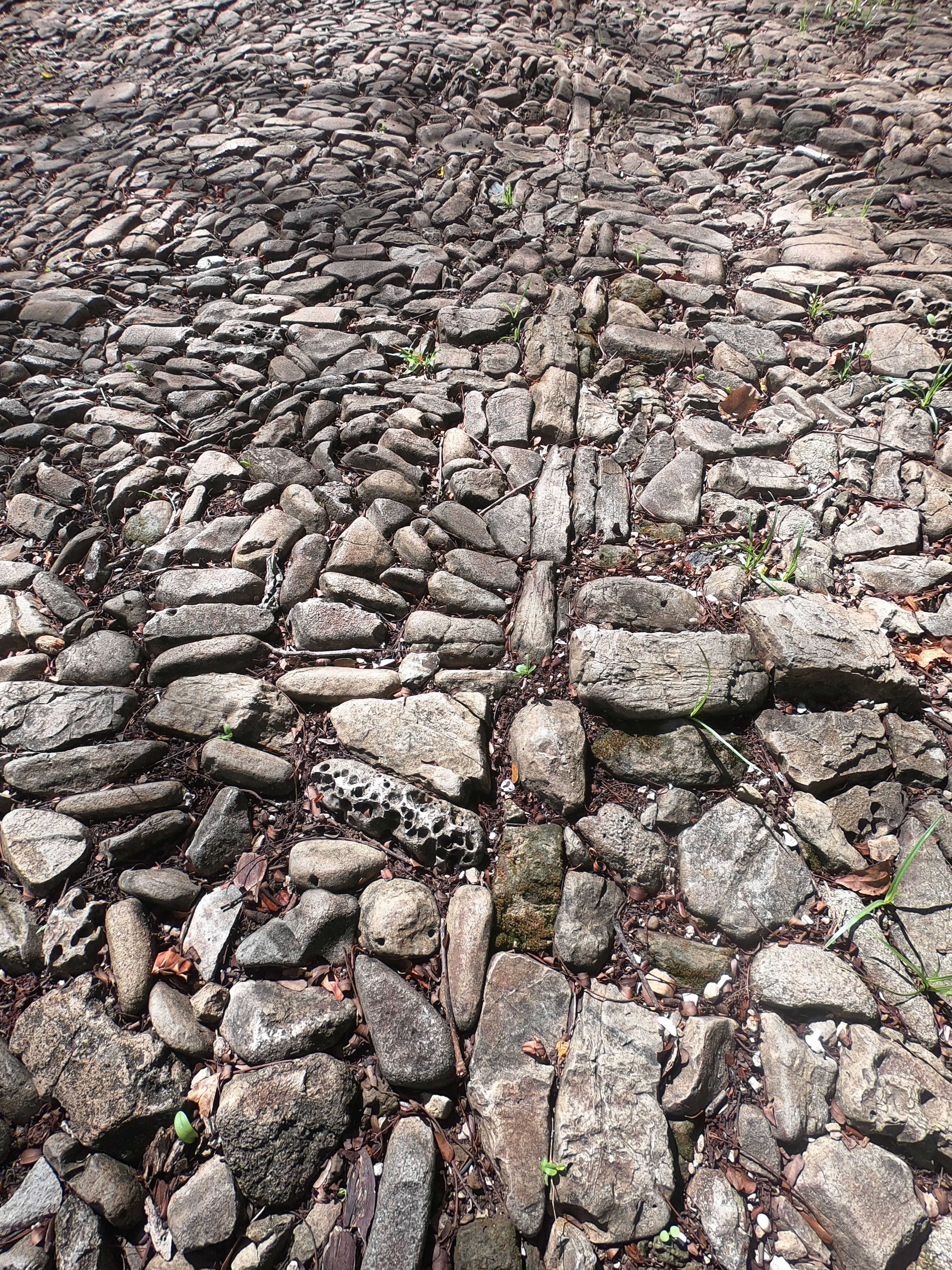
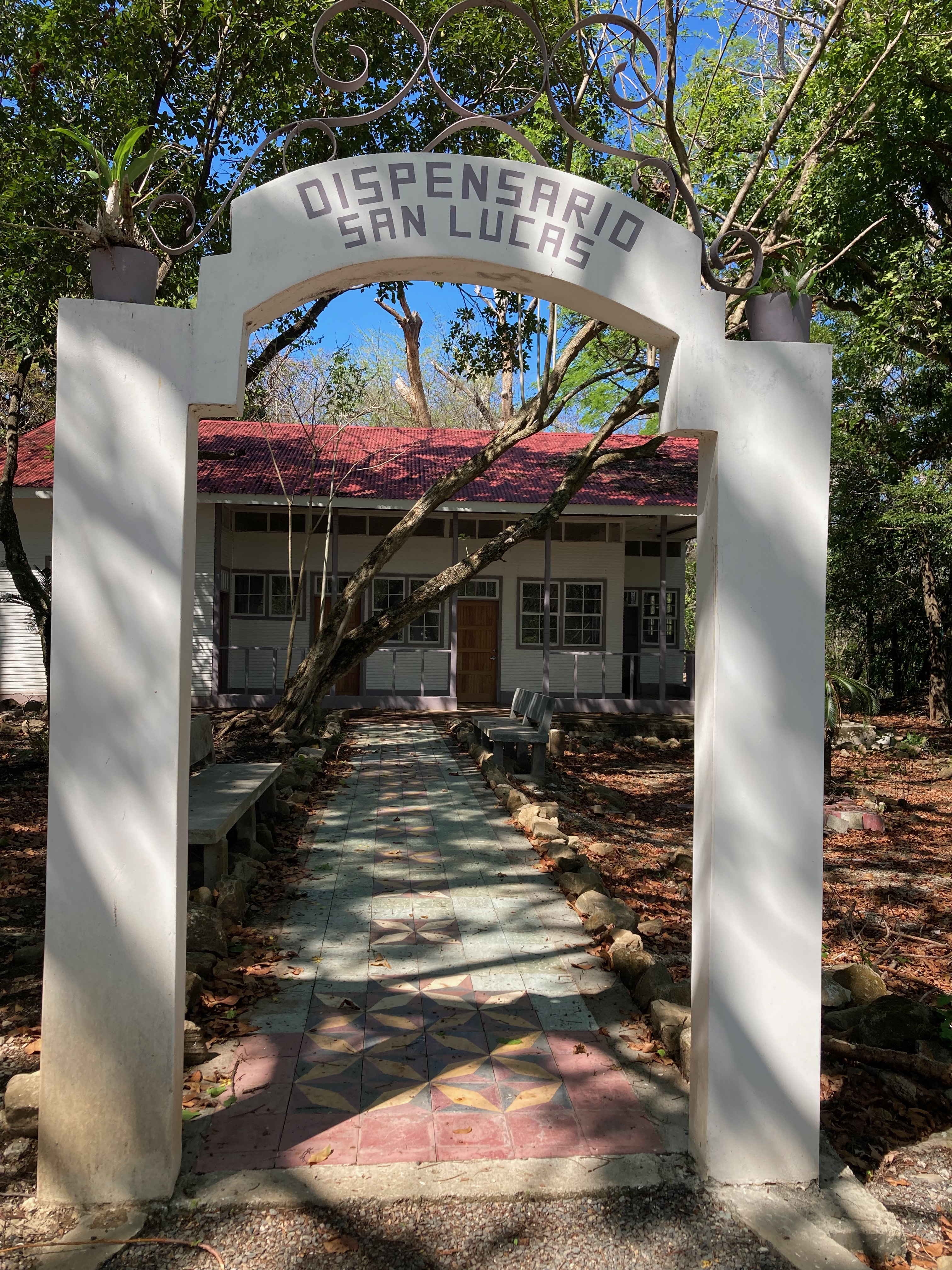
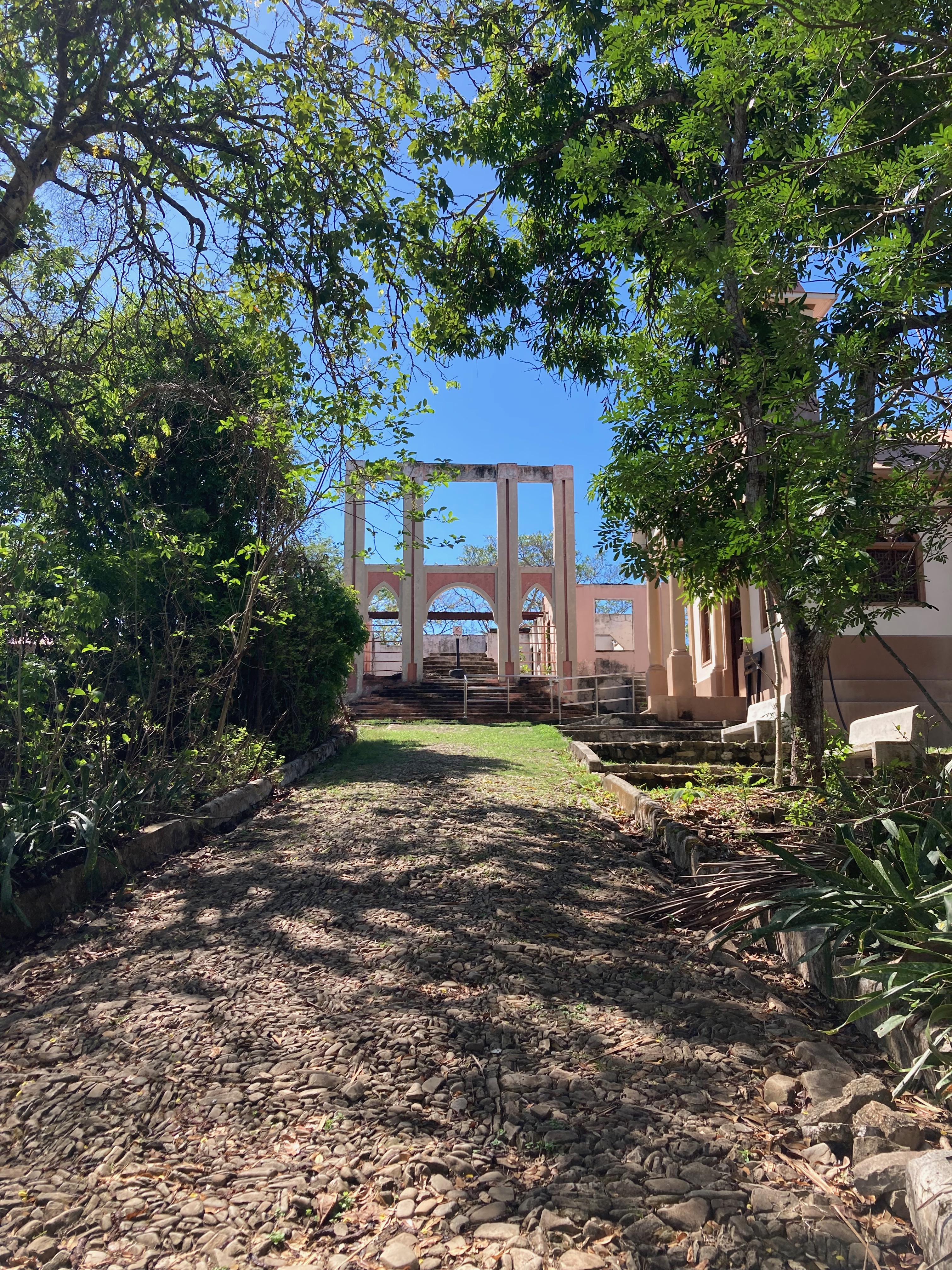
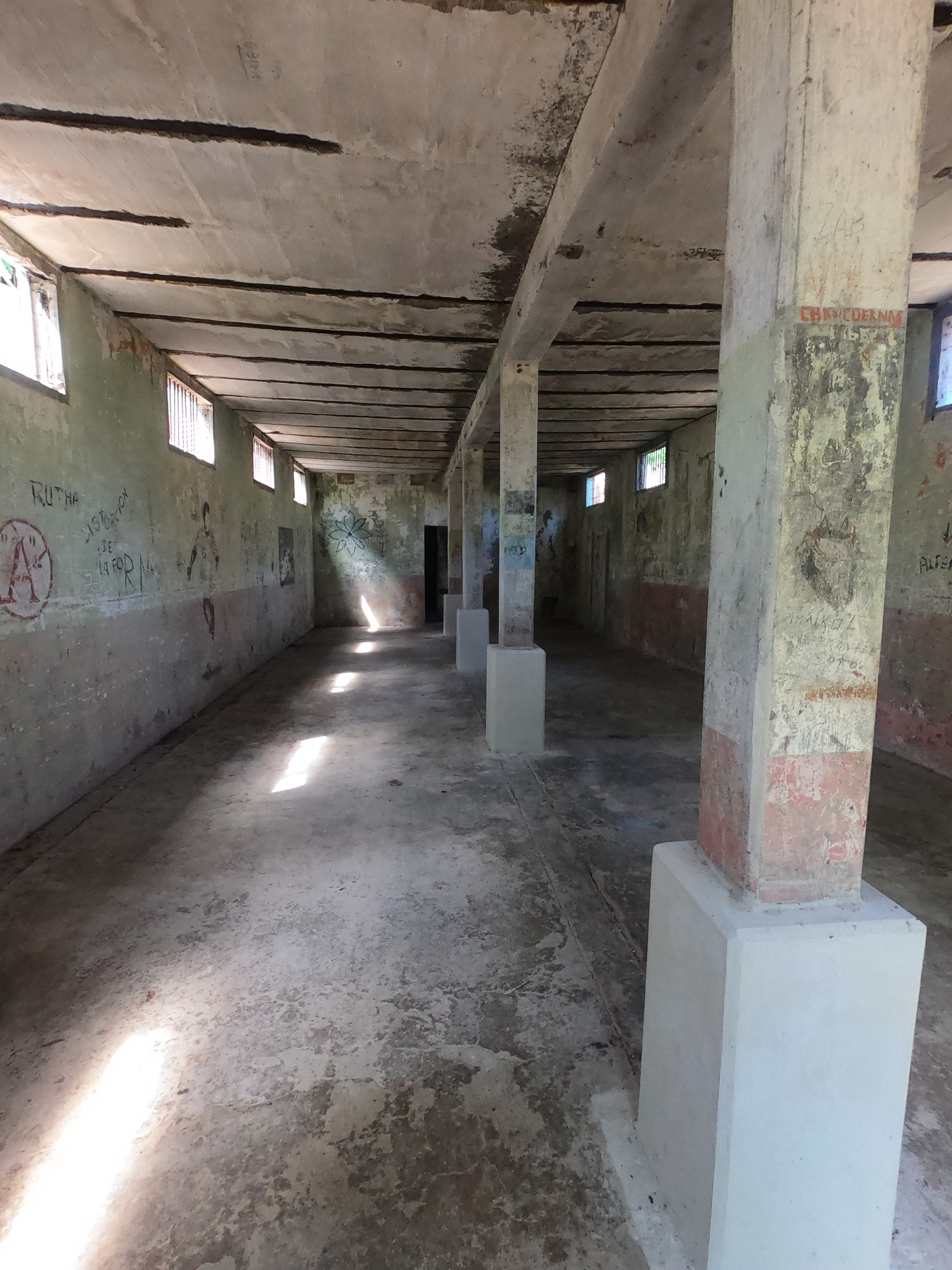
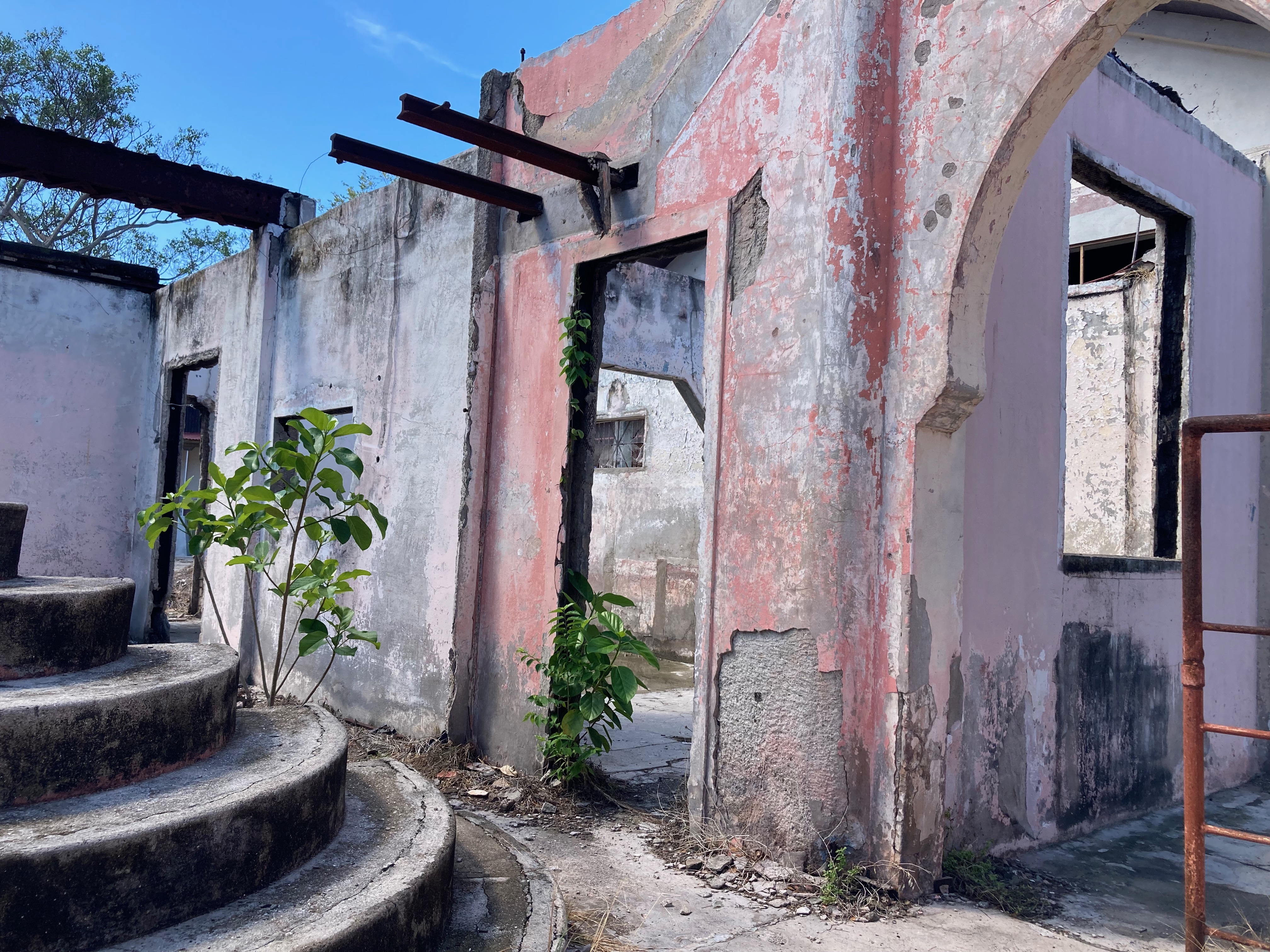
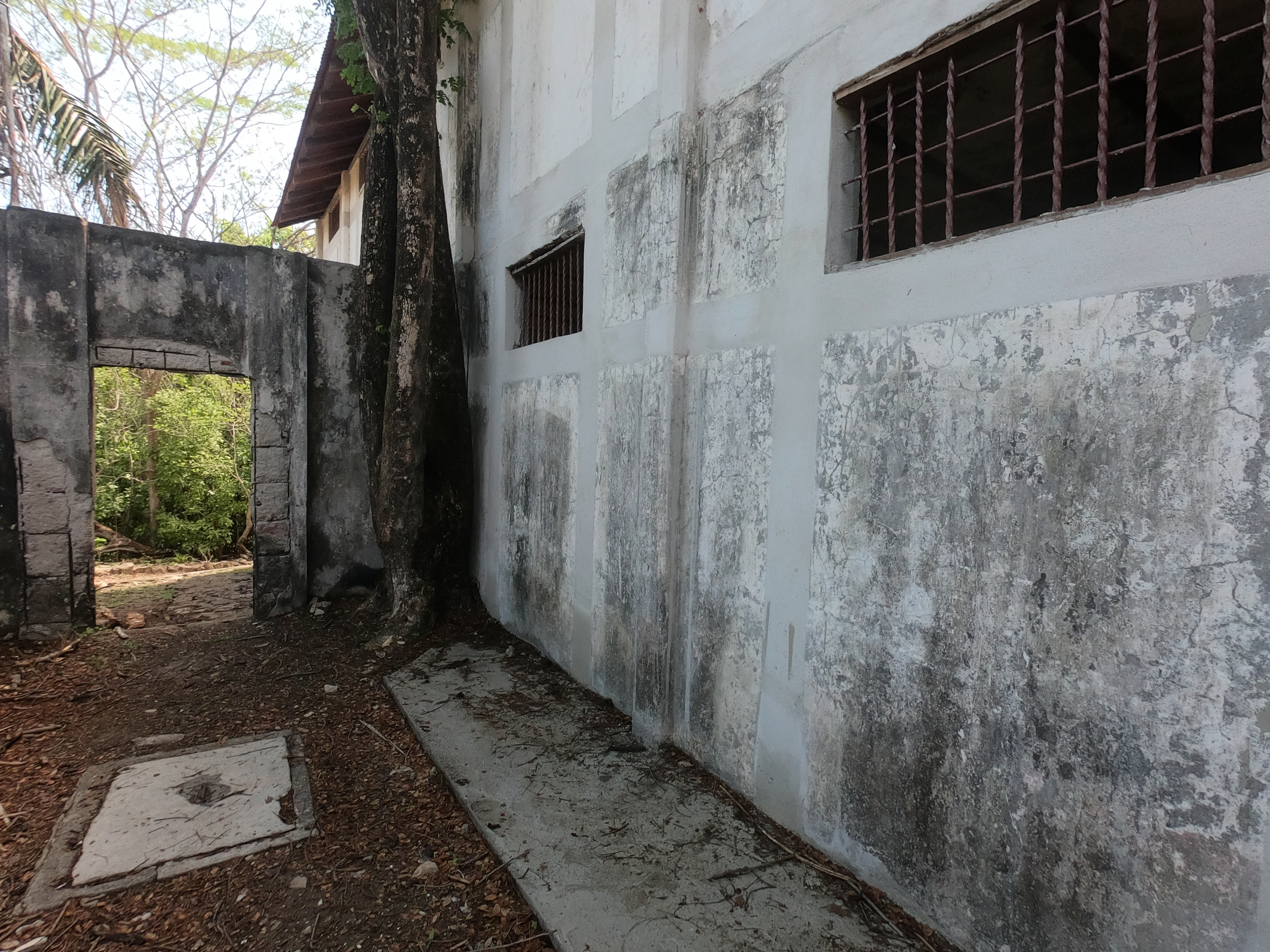
A number of anchorages later we found ourselves at Isla San Lucas, Costa Rica’s version of Alcatraz. From the late 1800’s until 1991, this less than two square mile island housed a high security prison globally notorious for the torture and inhumane treatment its prisoners endured; or more often, failed to endure. Their crimes ranged from violent multiple murders to political dissidence.

The water surrounding the prison, like Alcatraz, added an extra security ring.  However, in addition to strong currents, there was the added Costa Rican flair of hammerhead sharks and crocodiles.  Didn’t see hammerheads…did see a croc.  Didn’t go swimming…did go ashore.

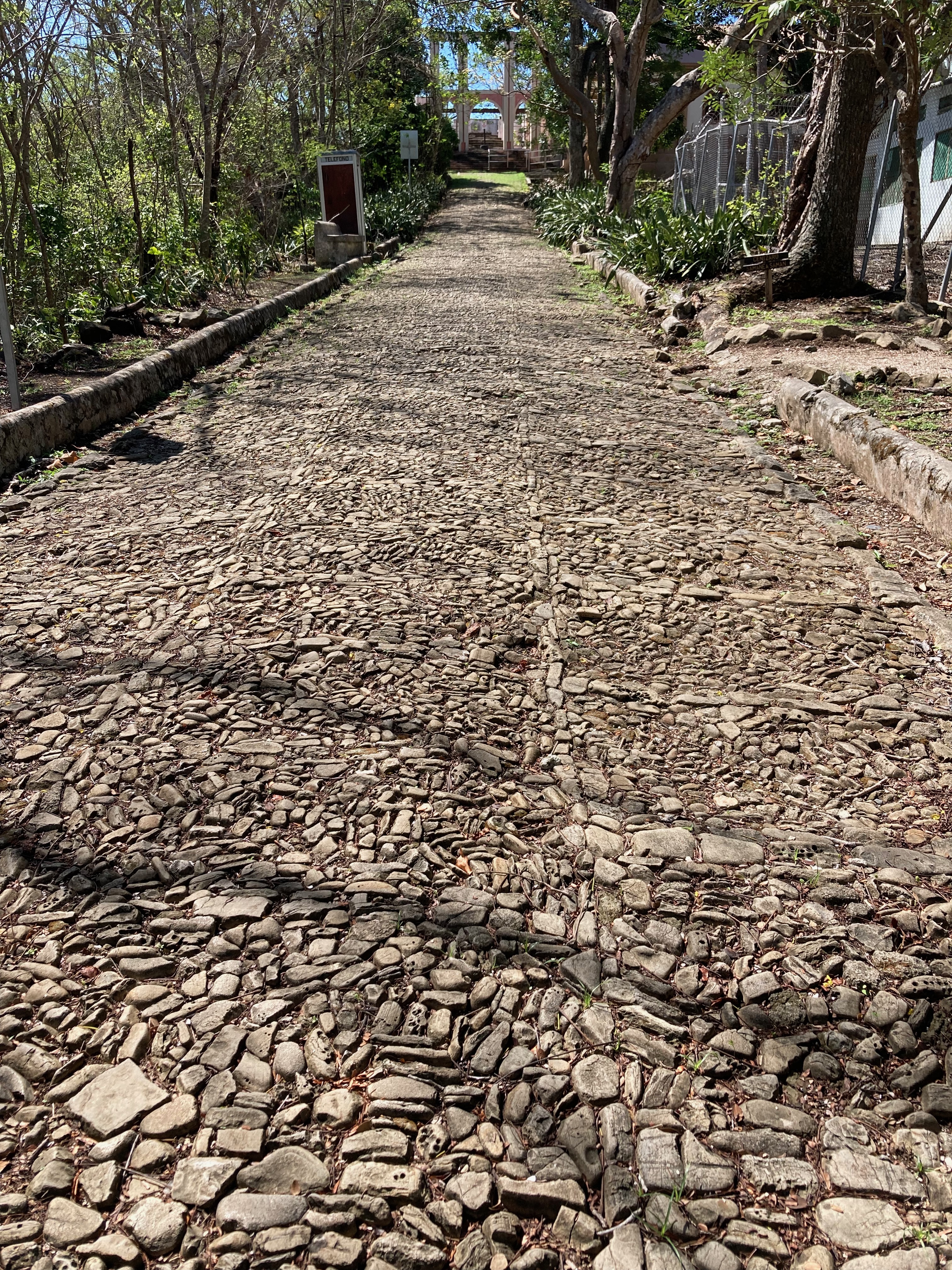
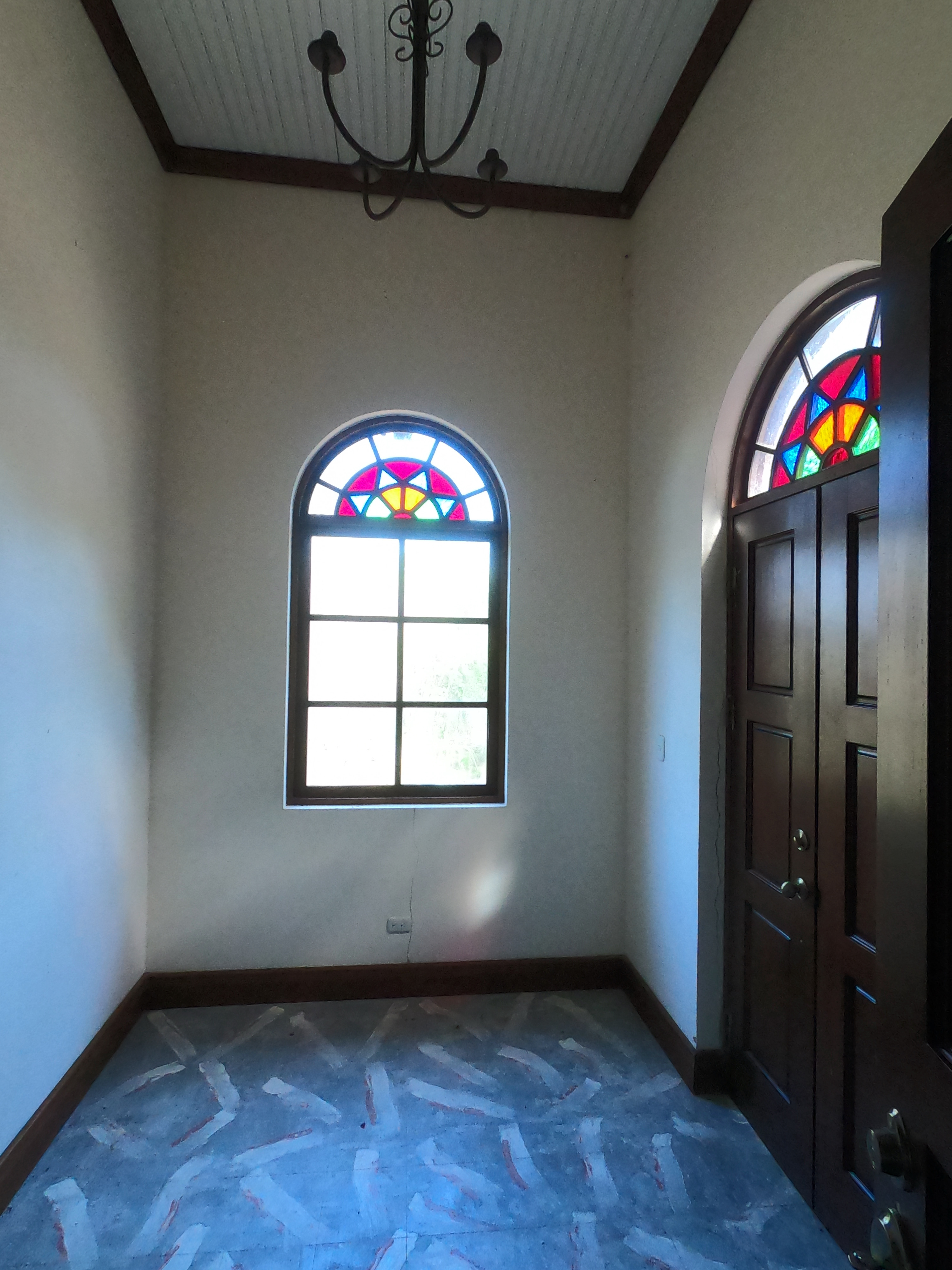
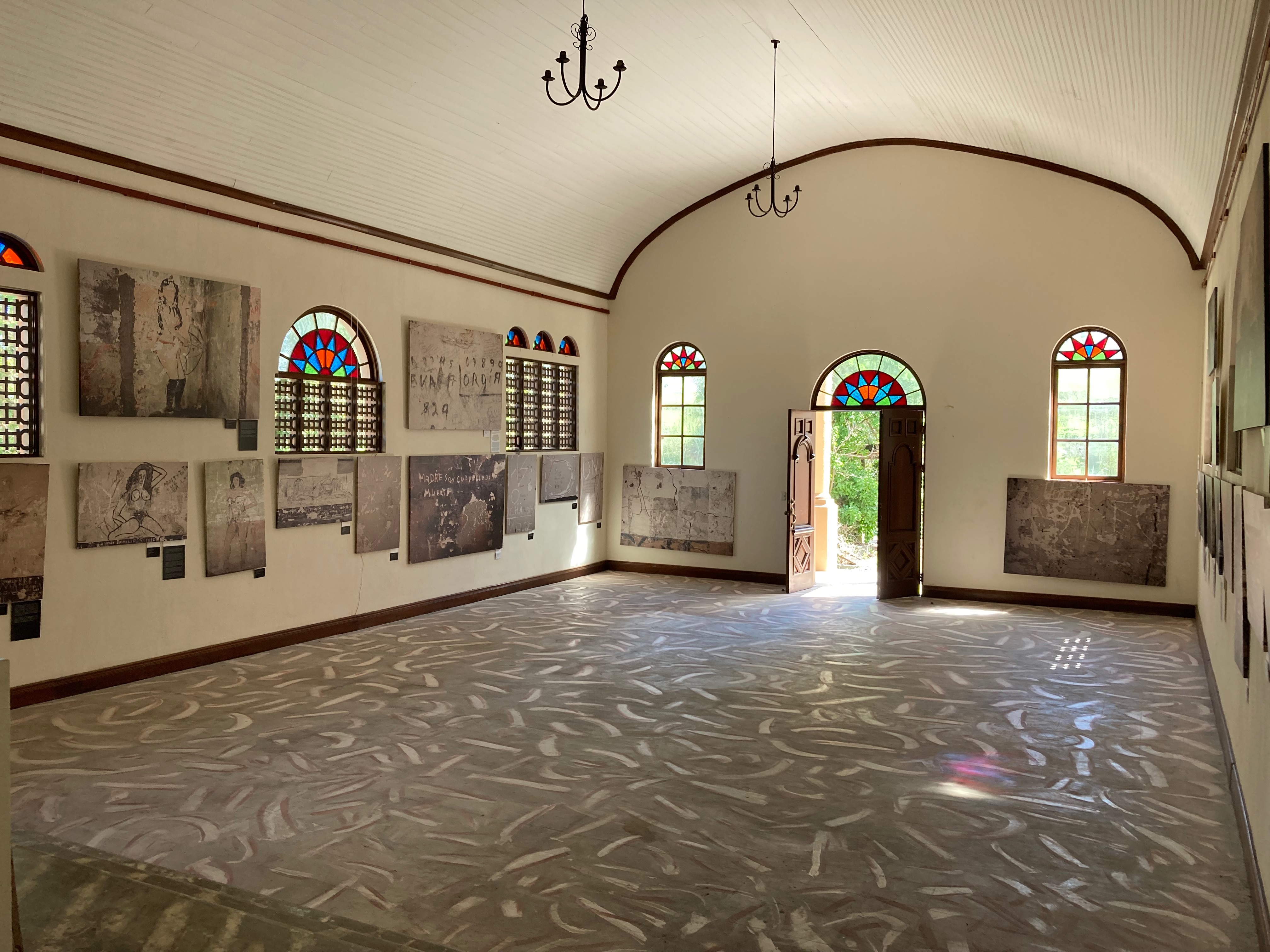
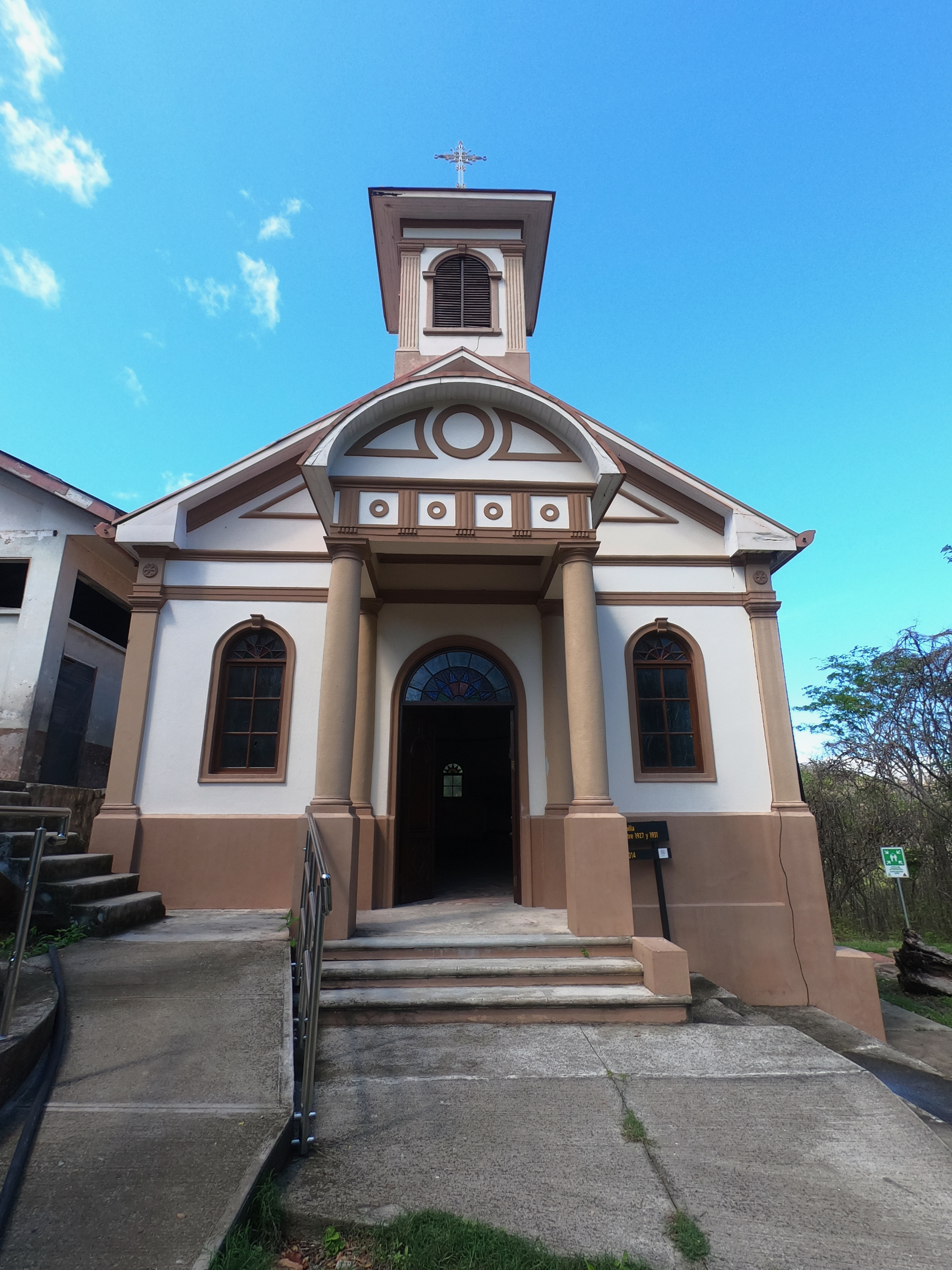
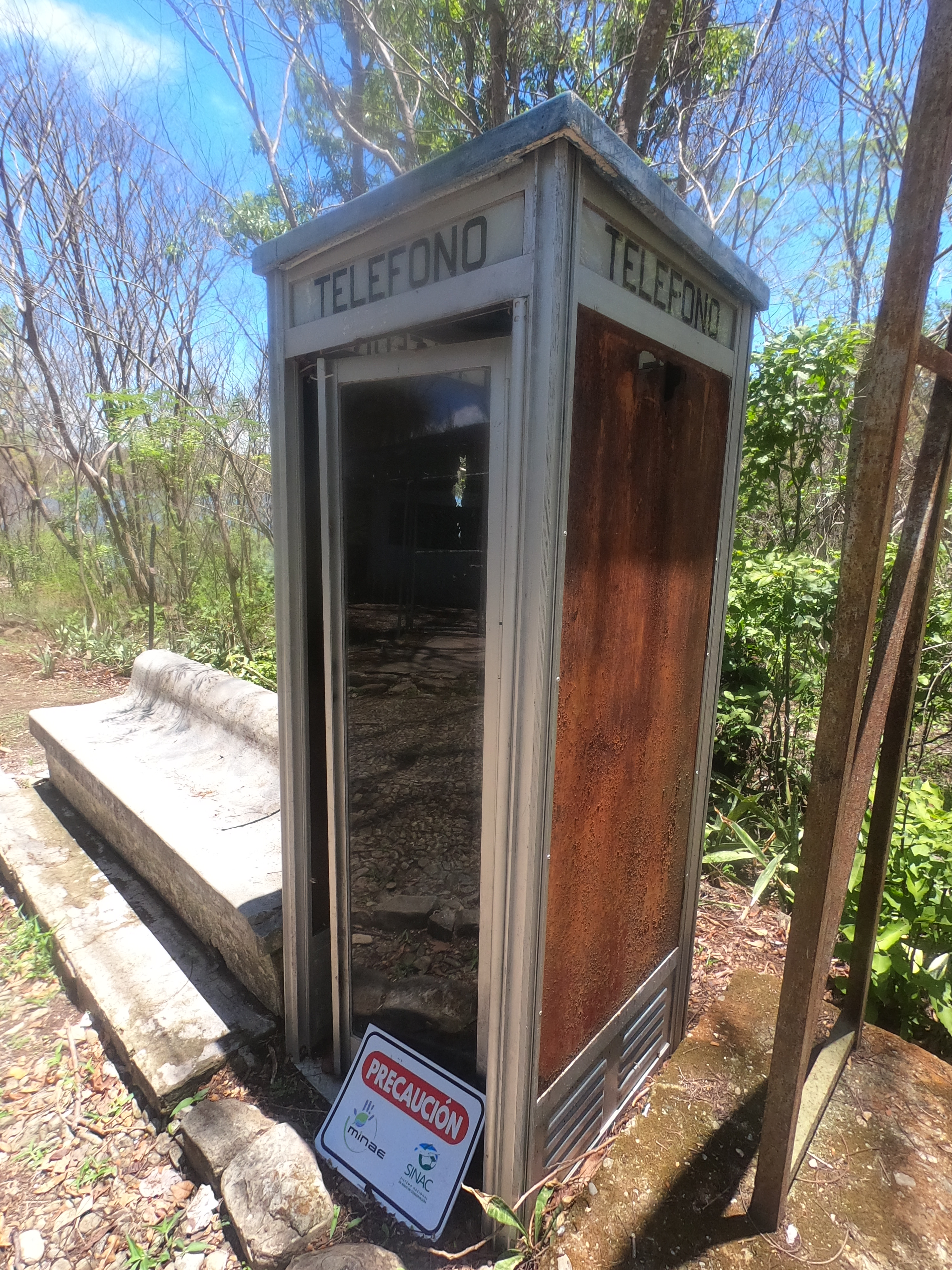
Only a couple of years ago, it was upgraded from Wildlife Refuge to National Park status. Currently restoration efforts include a church, medical facility, and holding cells which can be walked through.

A nominal fee helps to support the ongoing restoration efforts for the prison facilities as well as numerous archeology excavations of thousand year old Indigenous sites. It also grants you access to wandering around the island for a day. Since we hadn’t arranged a guided tour, we just had to wing it.

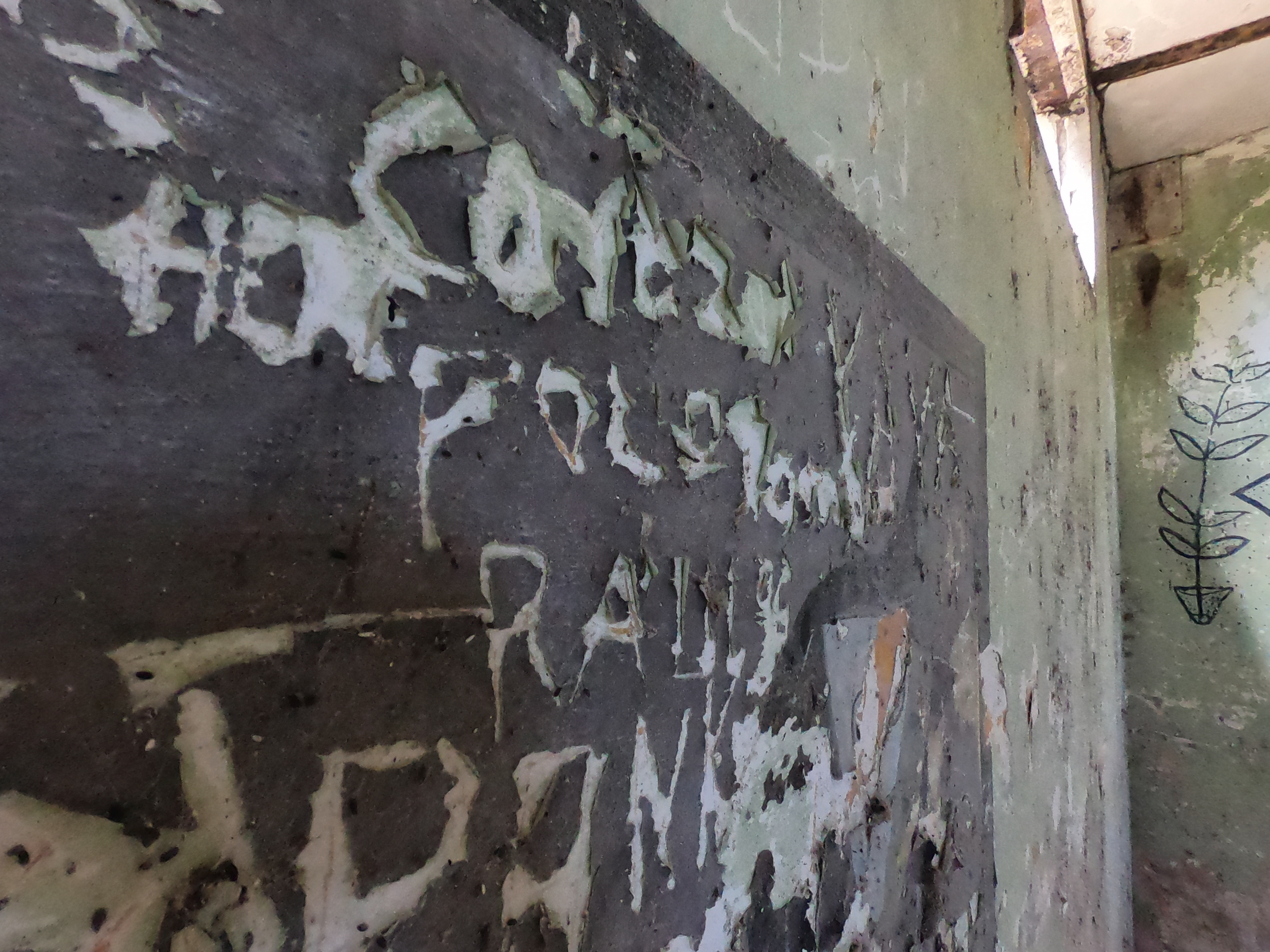
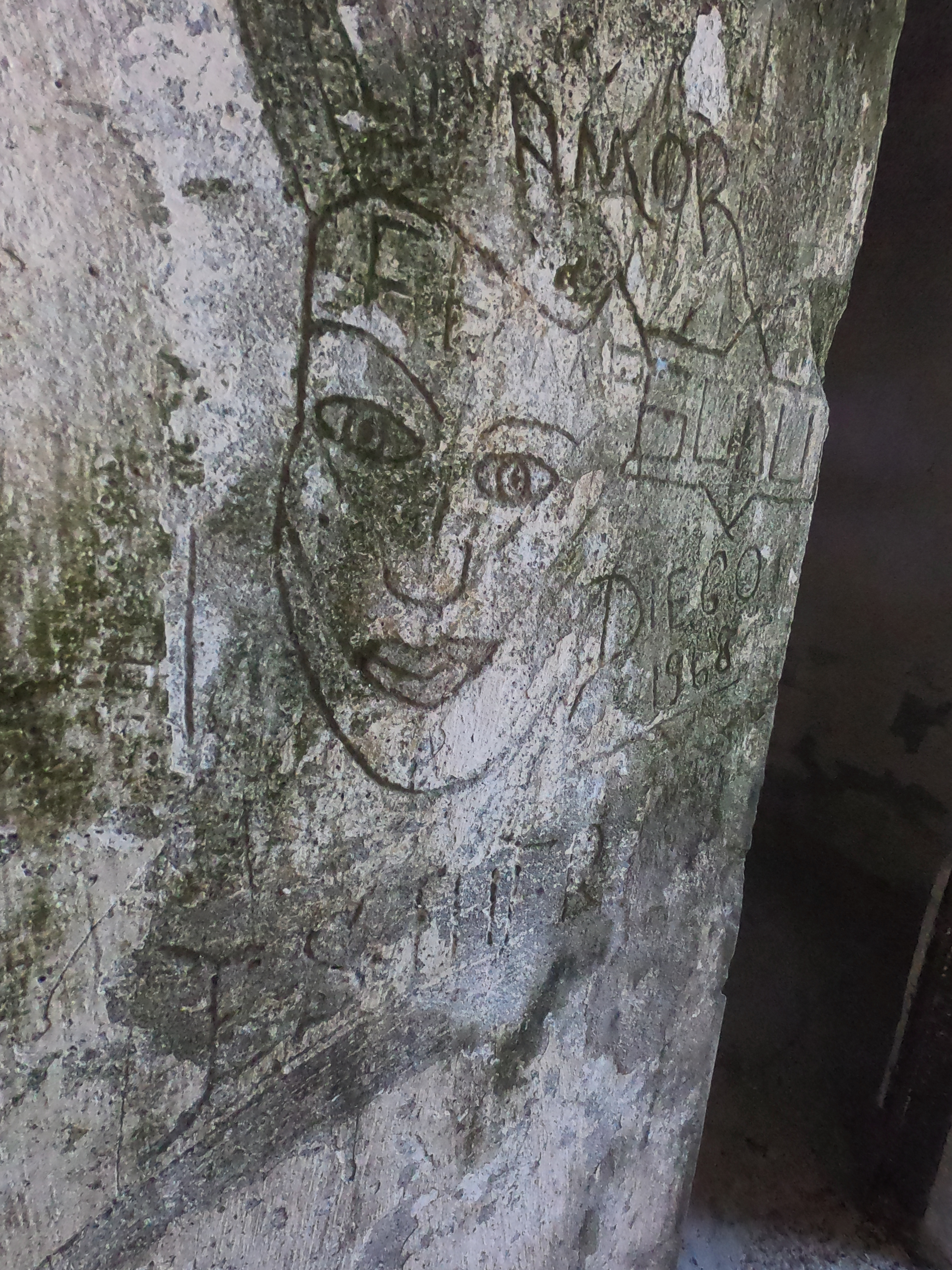
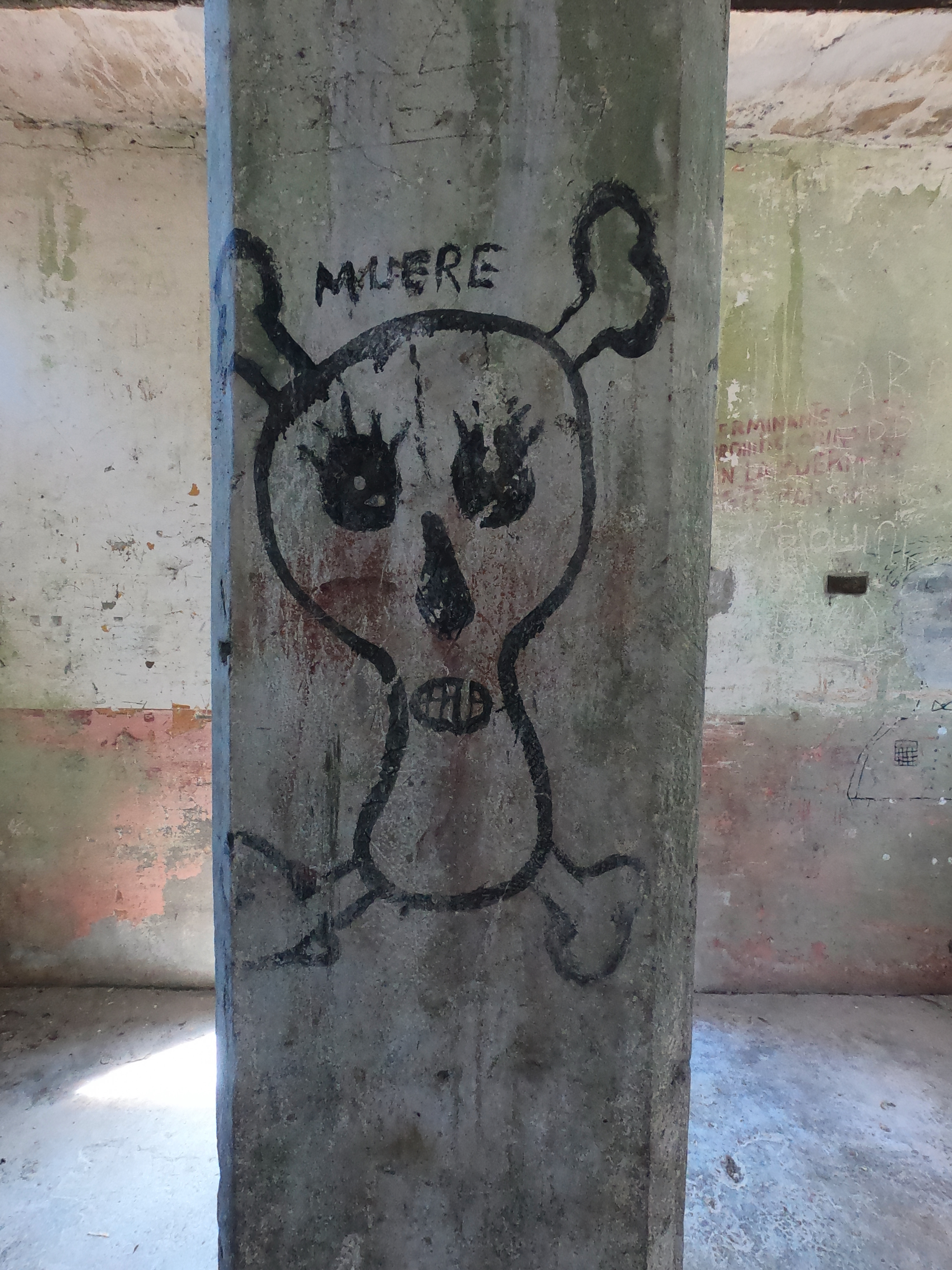
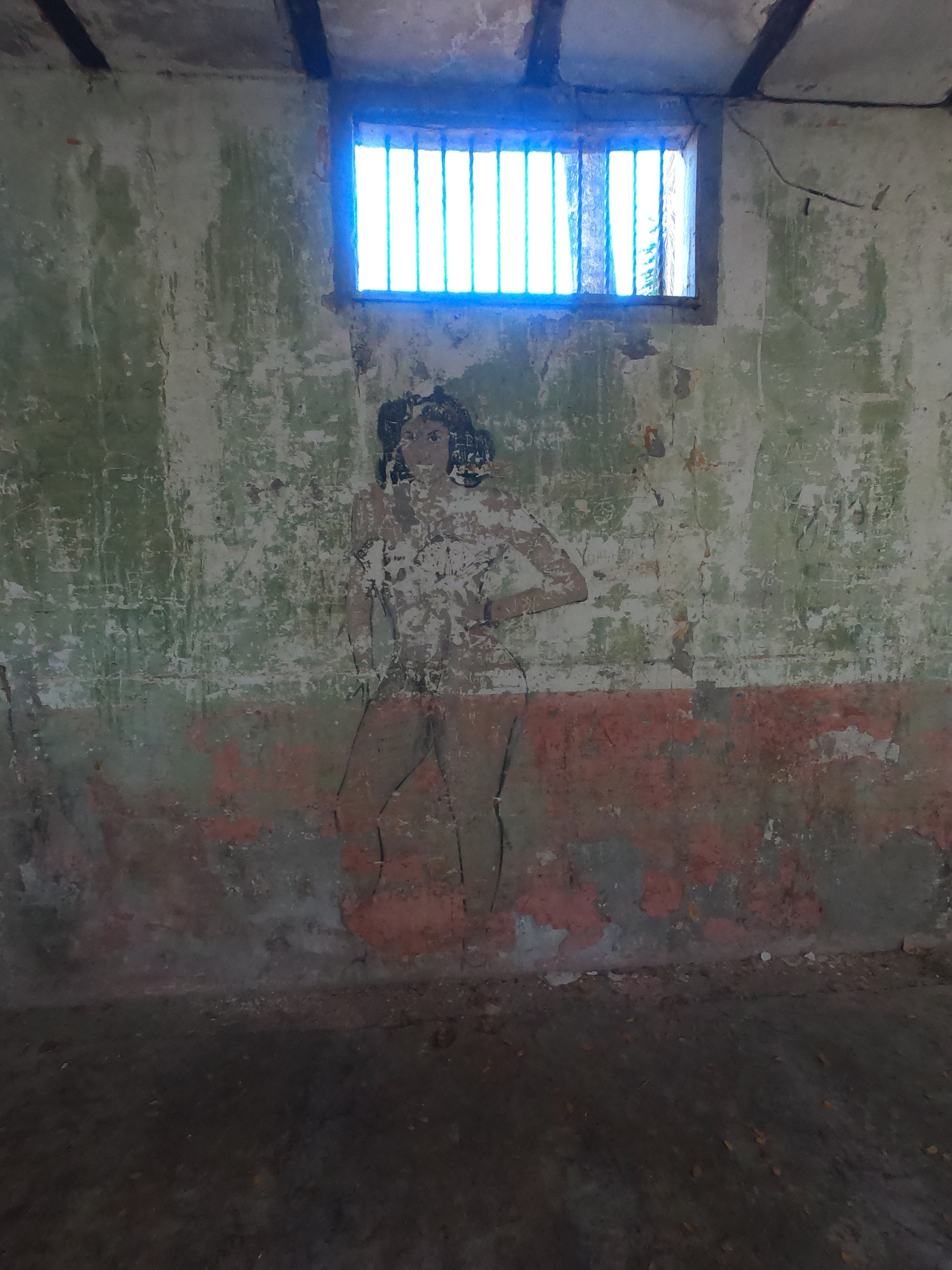
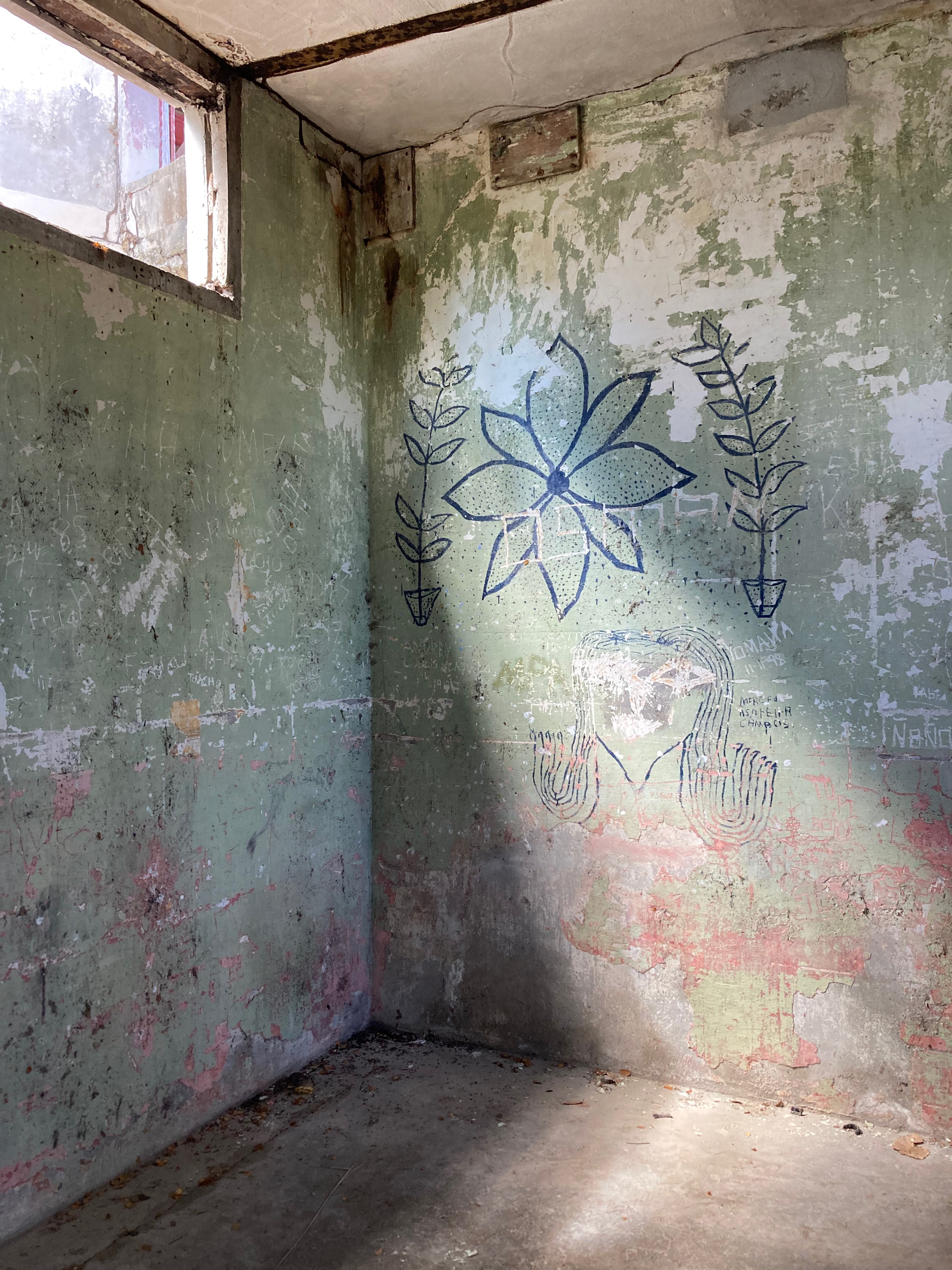
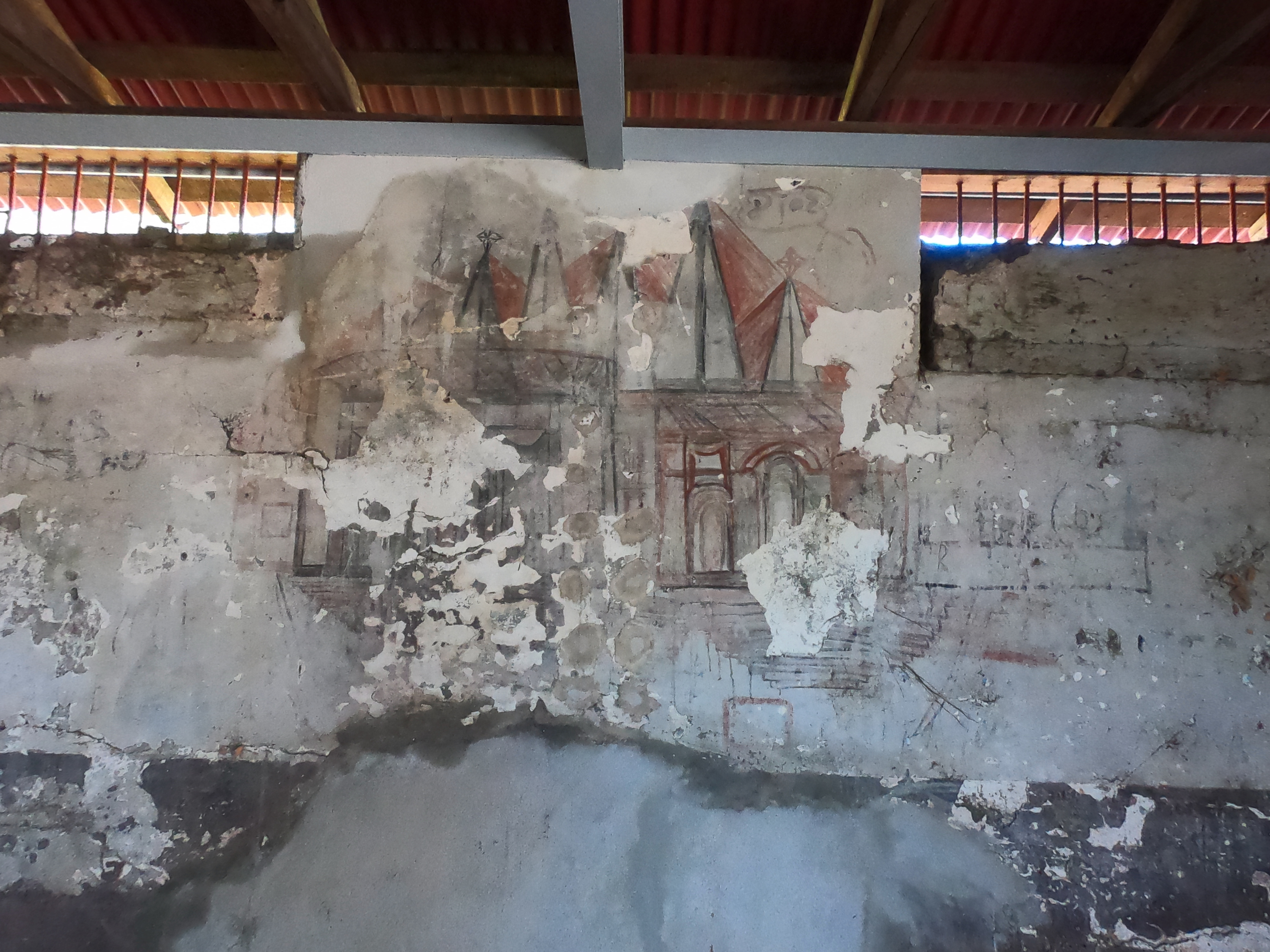
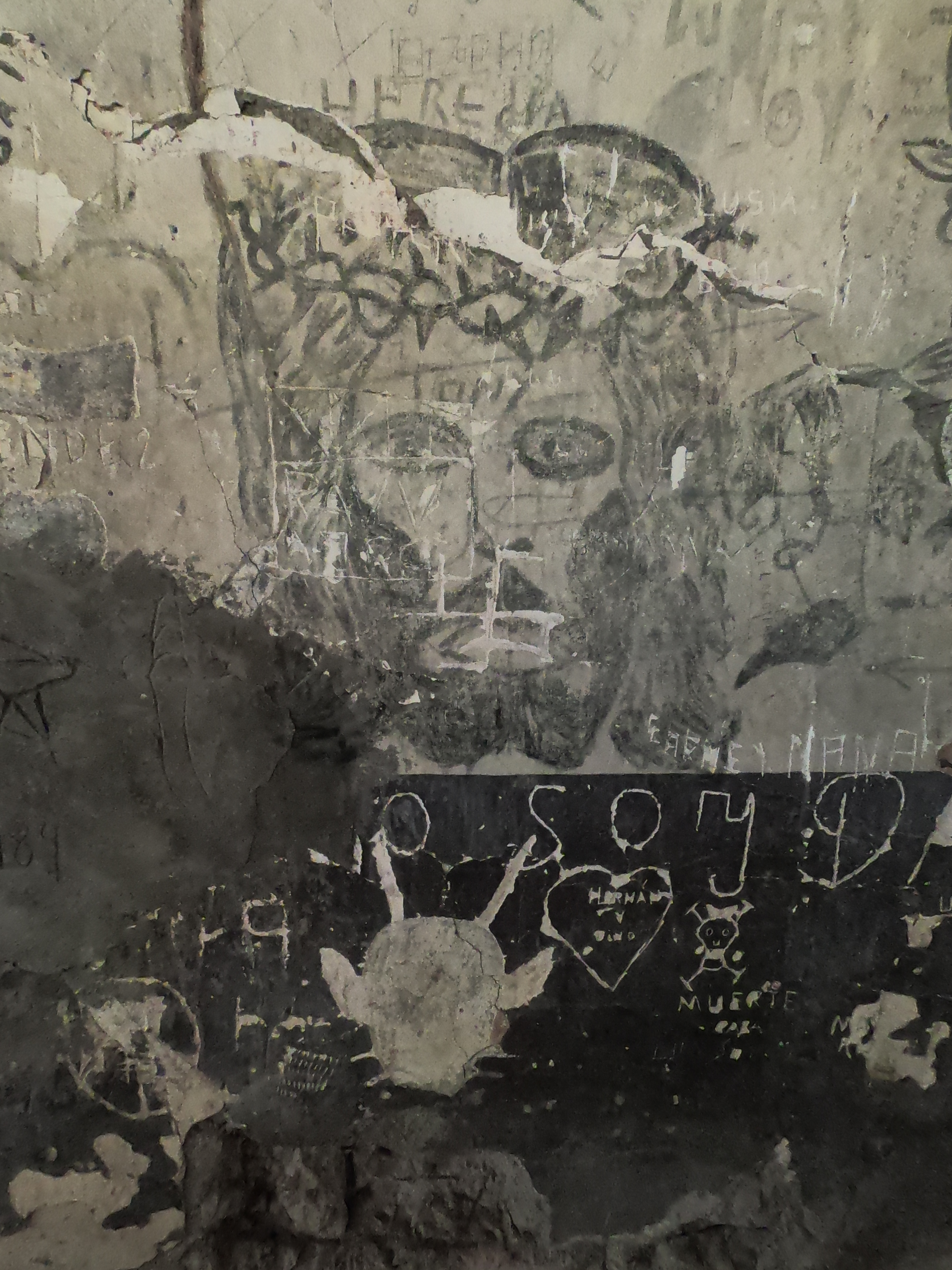
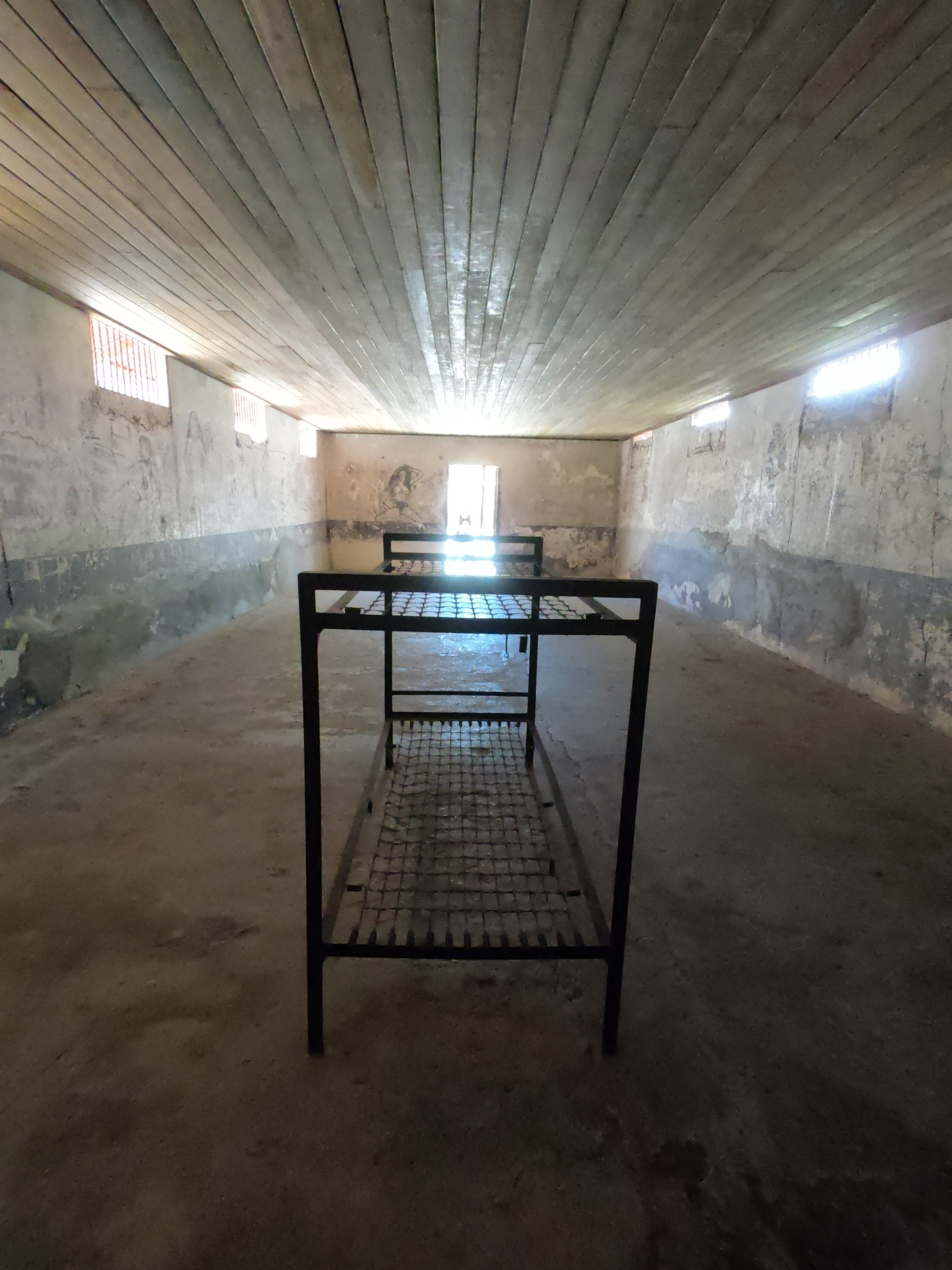
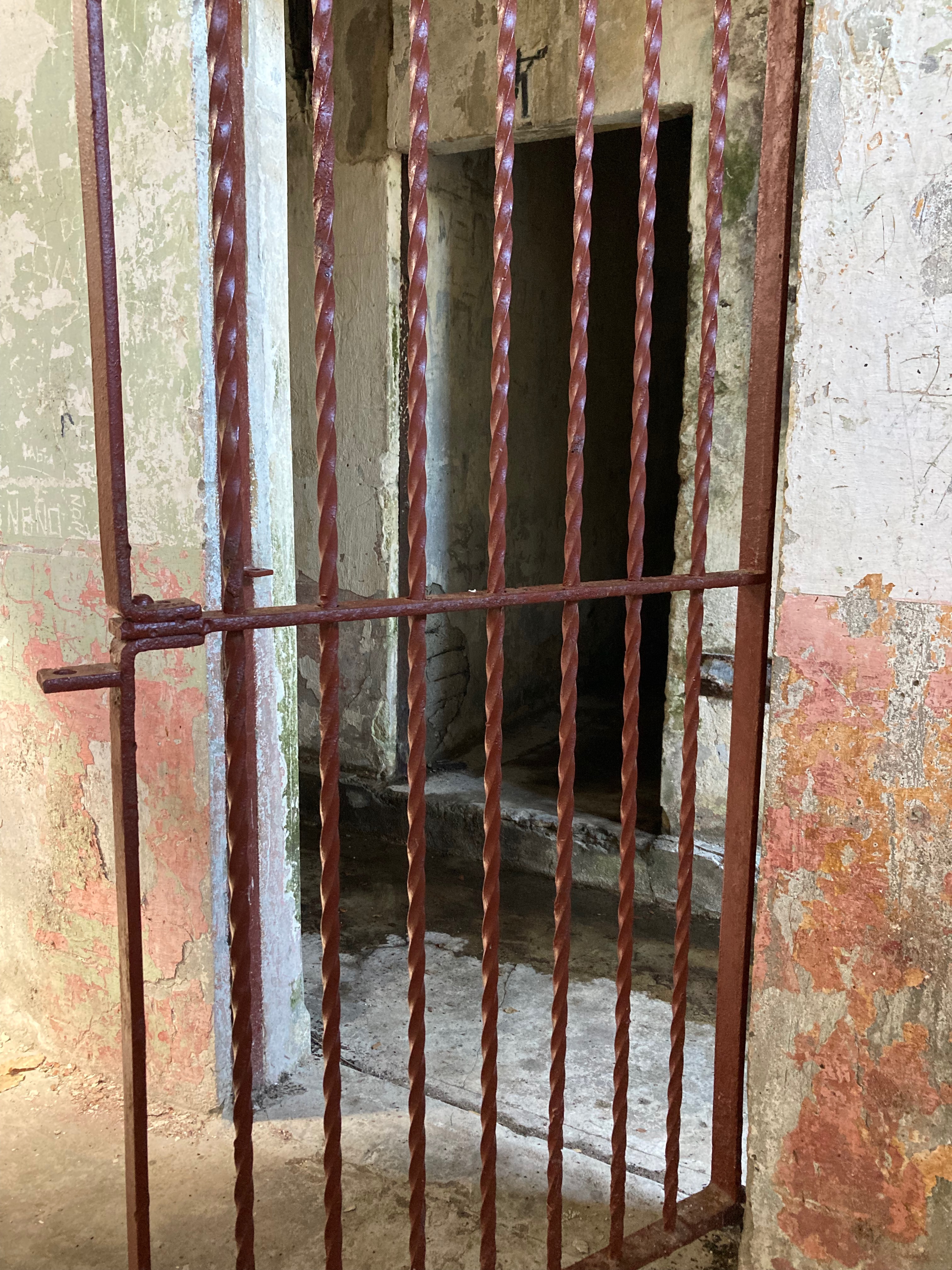
The walls of the cells are covered with graffiti. The musings of a hundred years of misery. Sketched, painted, and carved onto and into the walls, they run the gamut of what you would expect to be on the minds of tortured prisoners— salvation, damnation, freedom, and sex.

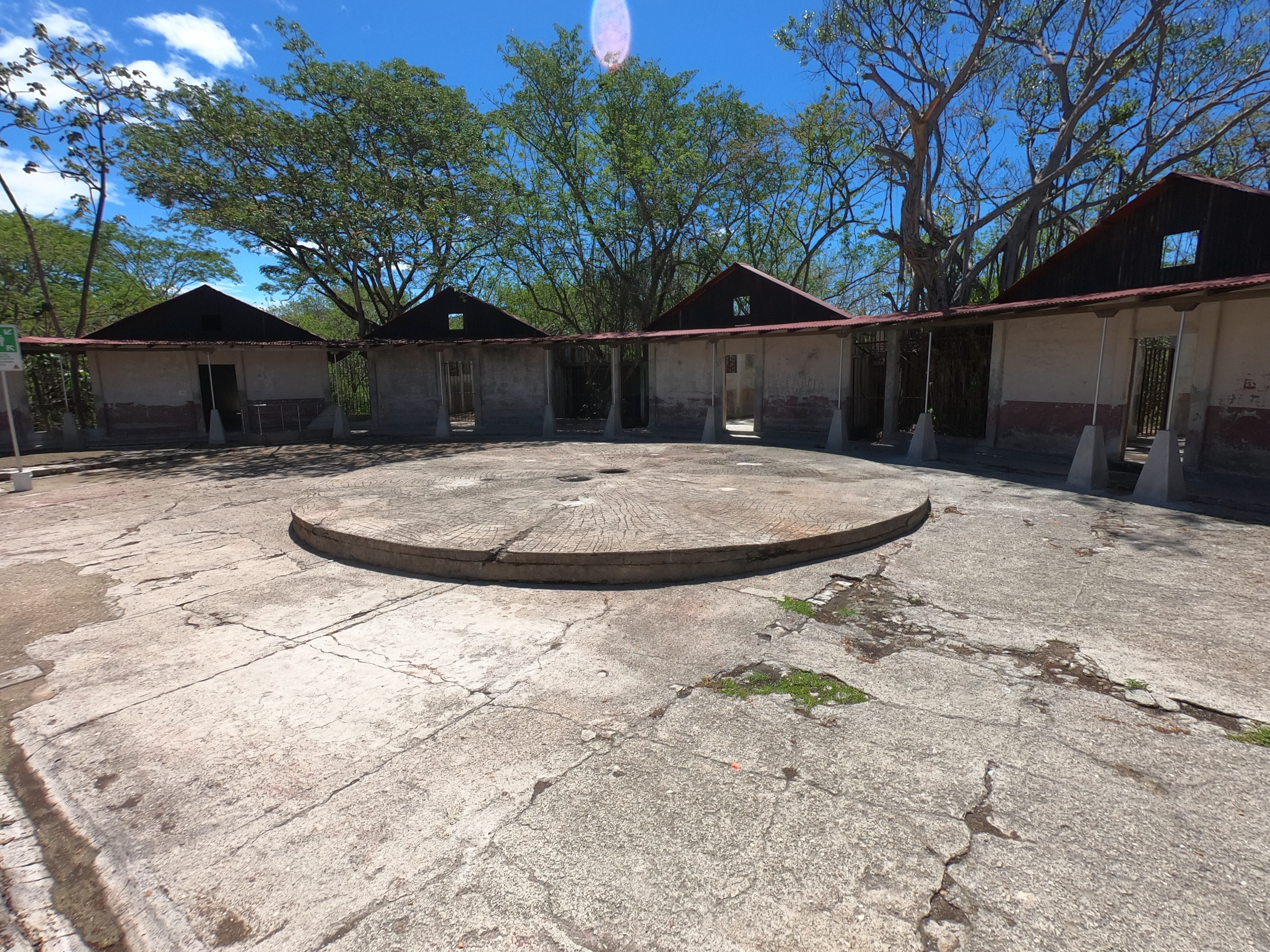
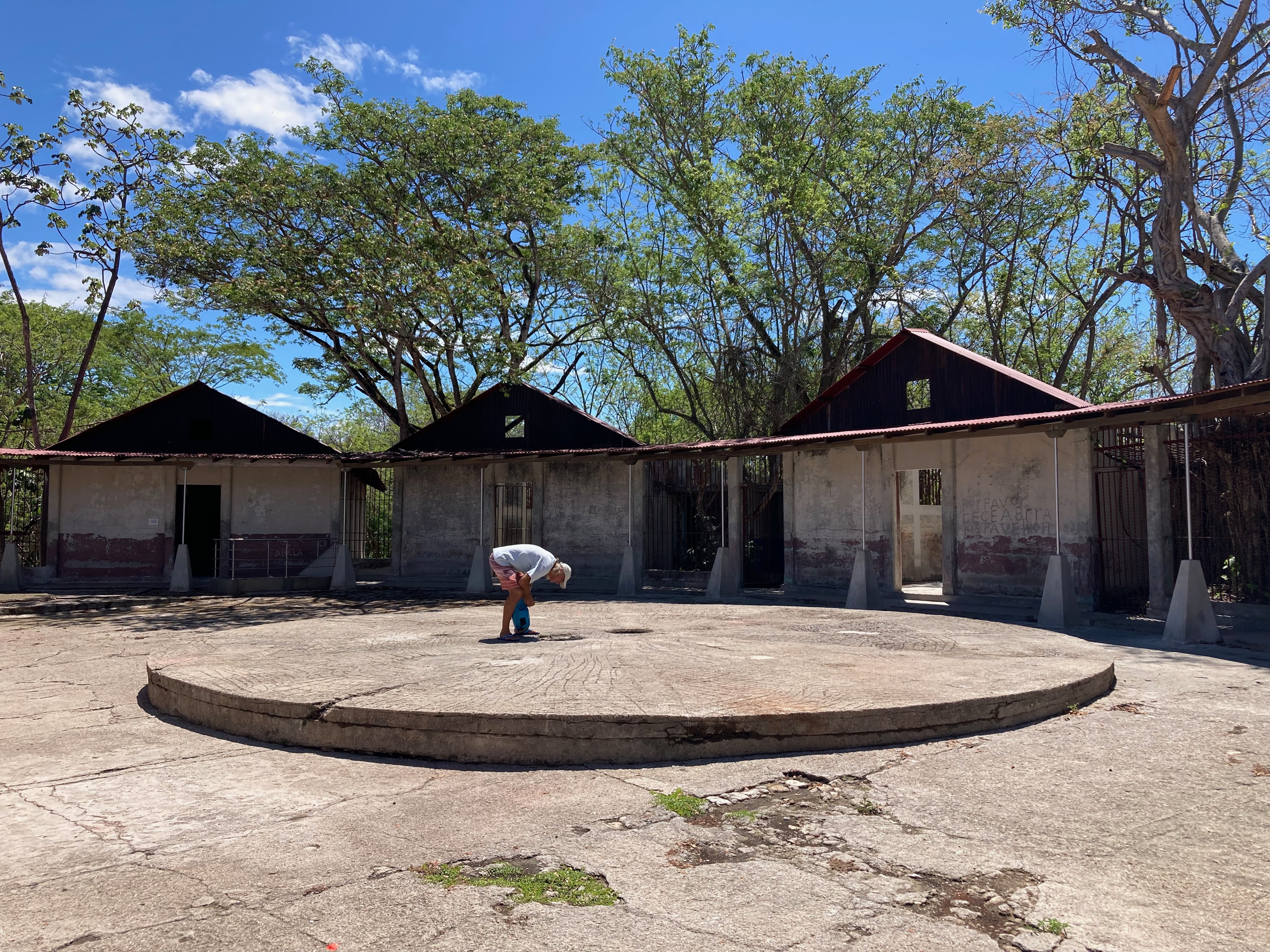
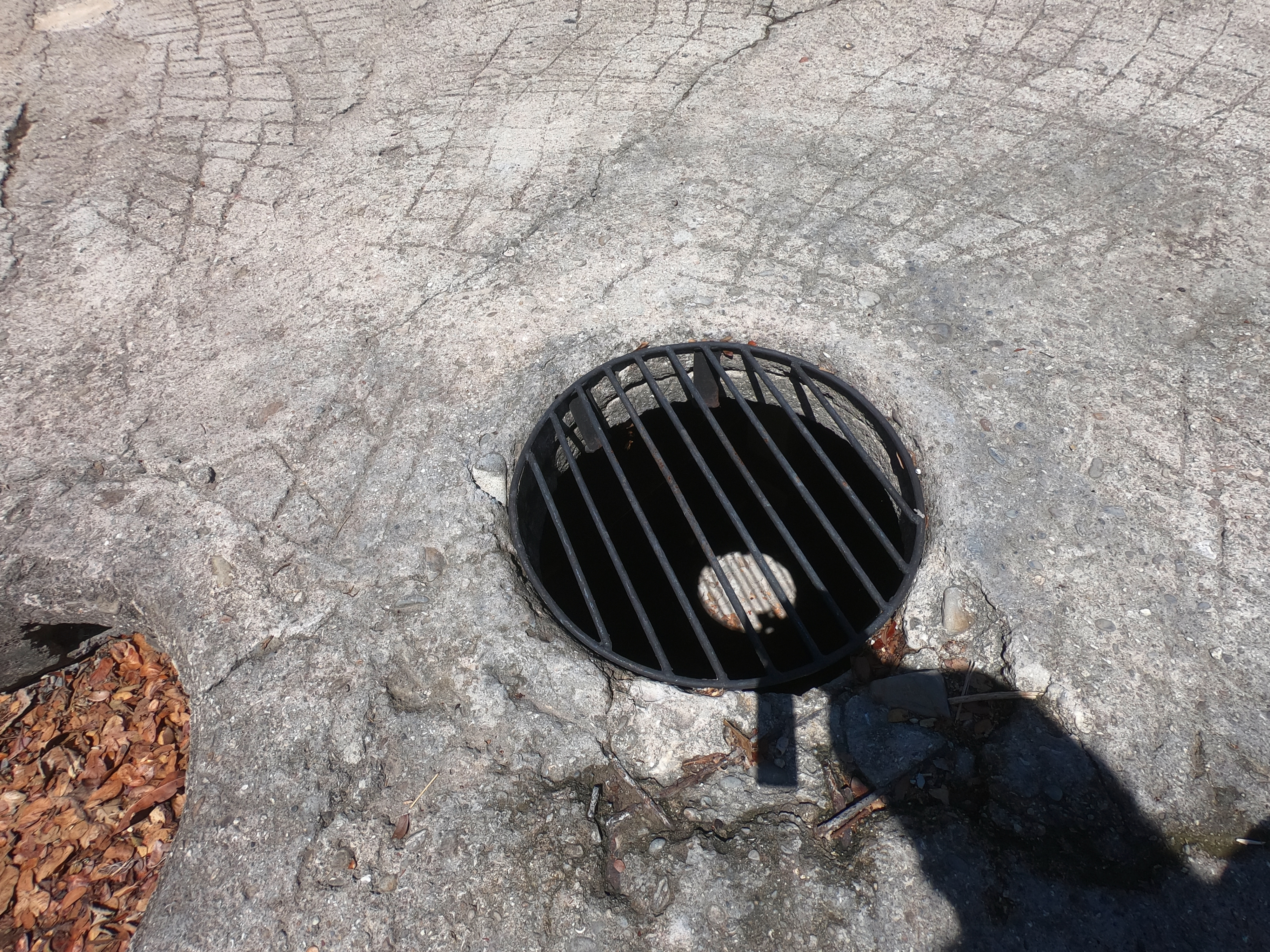
The cement disc apparently had something to do with a water storage tank and/or a particularly nasty solitary confinement area for trouble makers.

Random wandering photos…

More than a dozen trails offer the potential for hours and hours of hikes around the island – a welcome counterbalance to the darkly morbid specter of the prison. However, the reality is that skyrocketing afternoon temperatures from an absolutely blistering sun typically quash the plans of all but the hardiest on walkabout.

With only a couple of cruising boats and a couple of day tour pangas in the bay for only a short time during our entire four day stay, we essentially had the entire calm and protected anchorage to ourselves.  The visit to Isla San Lucas was well worth the stop.

To be honest, it’s the only way one wants to visit a prison… as a tourist.

Now, fresh outta prison – it’s a story often heard. It was time to drift back into orbit with our old Junkie friends.


Junkie Reunion

Long before our arrival in Costa Rica, we knew one of our top priorities would be a Junkie reunion.  Cindy and Juan, two of our Divemaster students over ten years ago from our days working at Scuba Junkie in Borneo, now lived in Santa Teresa – a small surfing and tourist destination along the coast.  We would be sailing right by.

While many of our previous students had gone on to work in the scuba diving industry, Cindy and Juan were the only ones we were aware of who had gone on to own their own dive shop.  This was a Junkie reunion that couldn’t be missed.

The beach off of Santa Teresa is a really popular surfing spot.  Big waves = no dinghy option.  And the whole coast was completely unprotected as an anchorage which meant there was no way we could safely leave our boat unoccupied at anchor.  We found a small fishing village, Tambor, in a very protected bay called Bahia Ballena on the opposite side of the peninsula, within about a one hour drive from Santa Teresa.

Another sailboat was anchored there as well; and we befriended them enough to feel comfortable leaving Exit at anchor for a few days with eyes upon her and a WhatsApp contact if trouble arose.  After a dinghy ride to the cement dock used by the local fishermen (far too scary for us to tie up to) and a brief conversation with one of the fishermen on the dock, we were able arrange a ride with one of the fishermen between our boat and the dock.

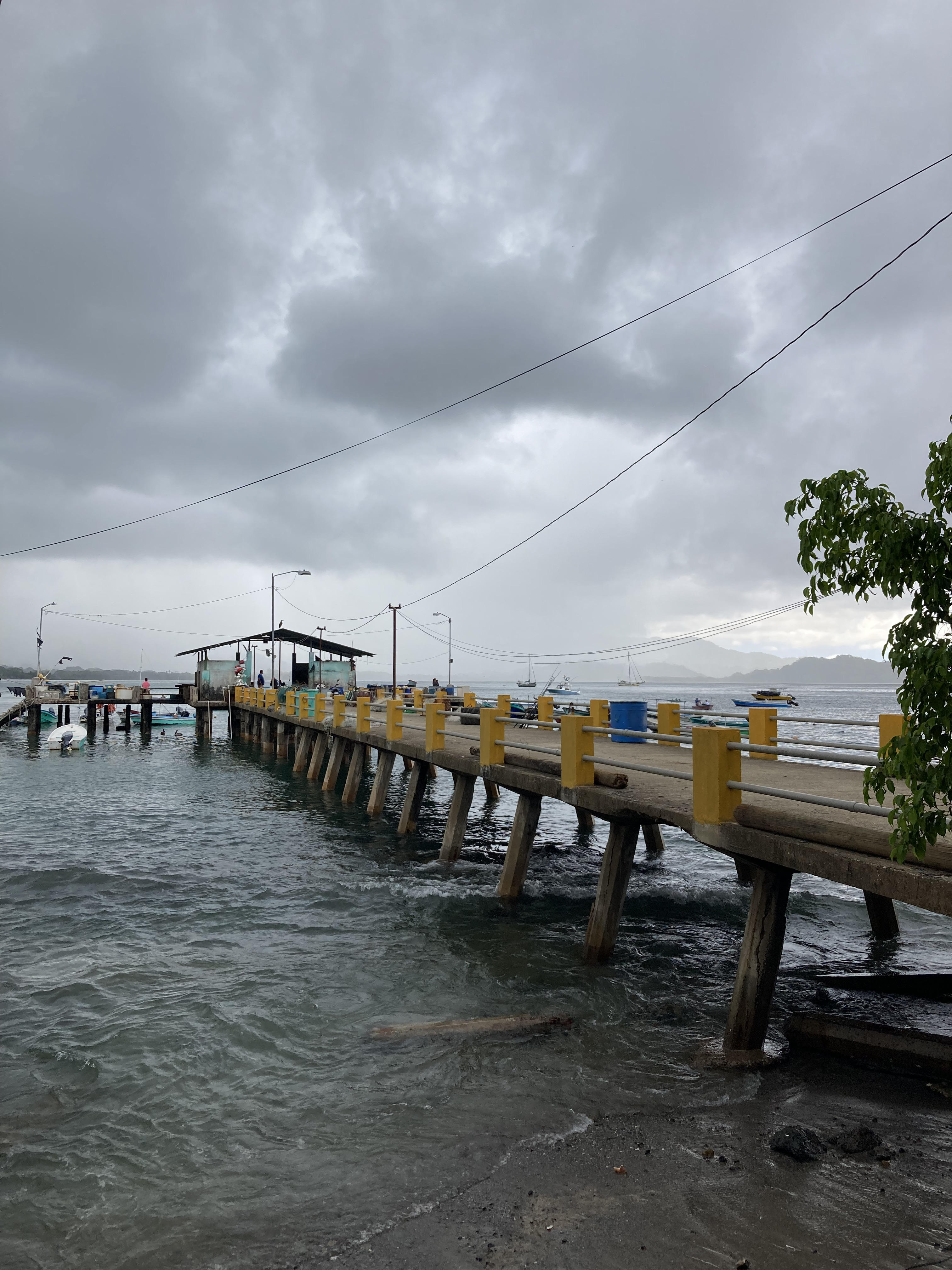
Tambor dock

The logistics weren’t easy but, in the end, we were ecstatic to have figured it out. Cindy and Juan were fabulous hosts. It was as though ten days had passed since we saw them rather than ten years.

In addition, we had the opportunity to meet their two incredible kids, Marina and Bruno, for the first time, as well as two other diving friends of theirs, Tim and Barbara.

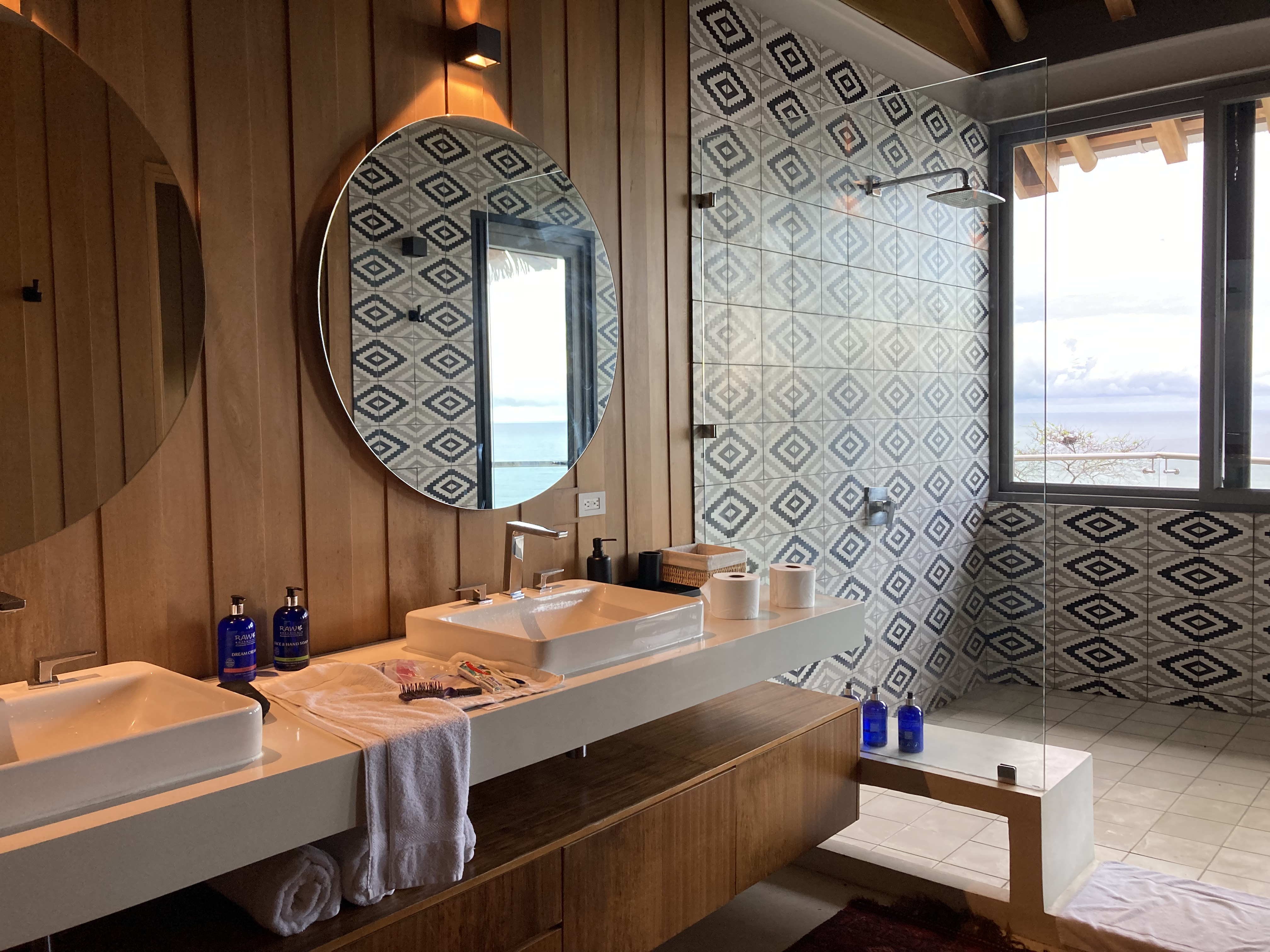
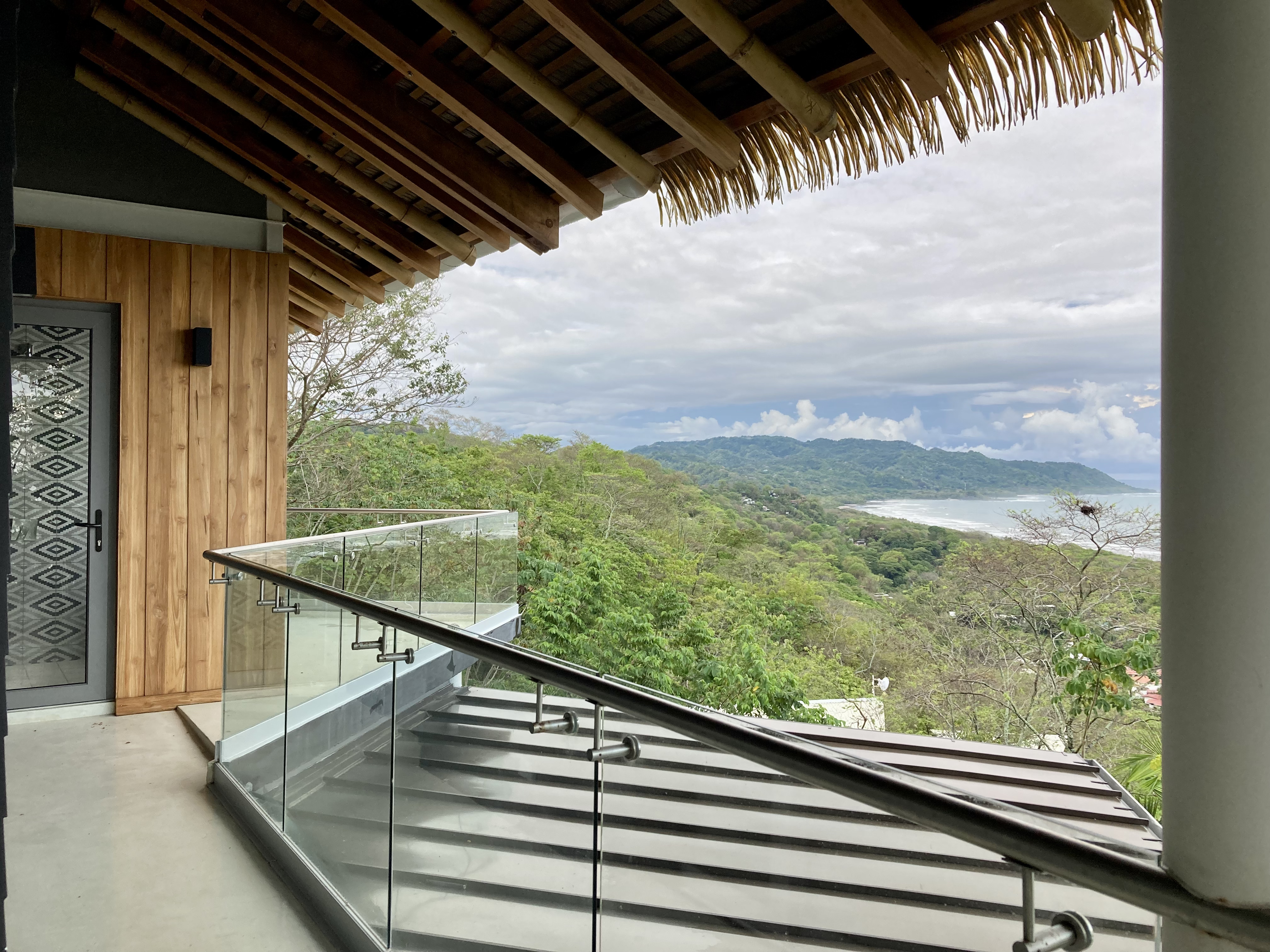
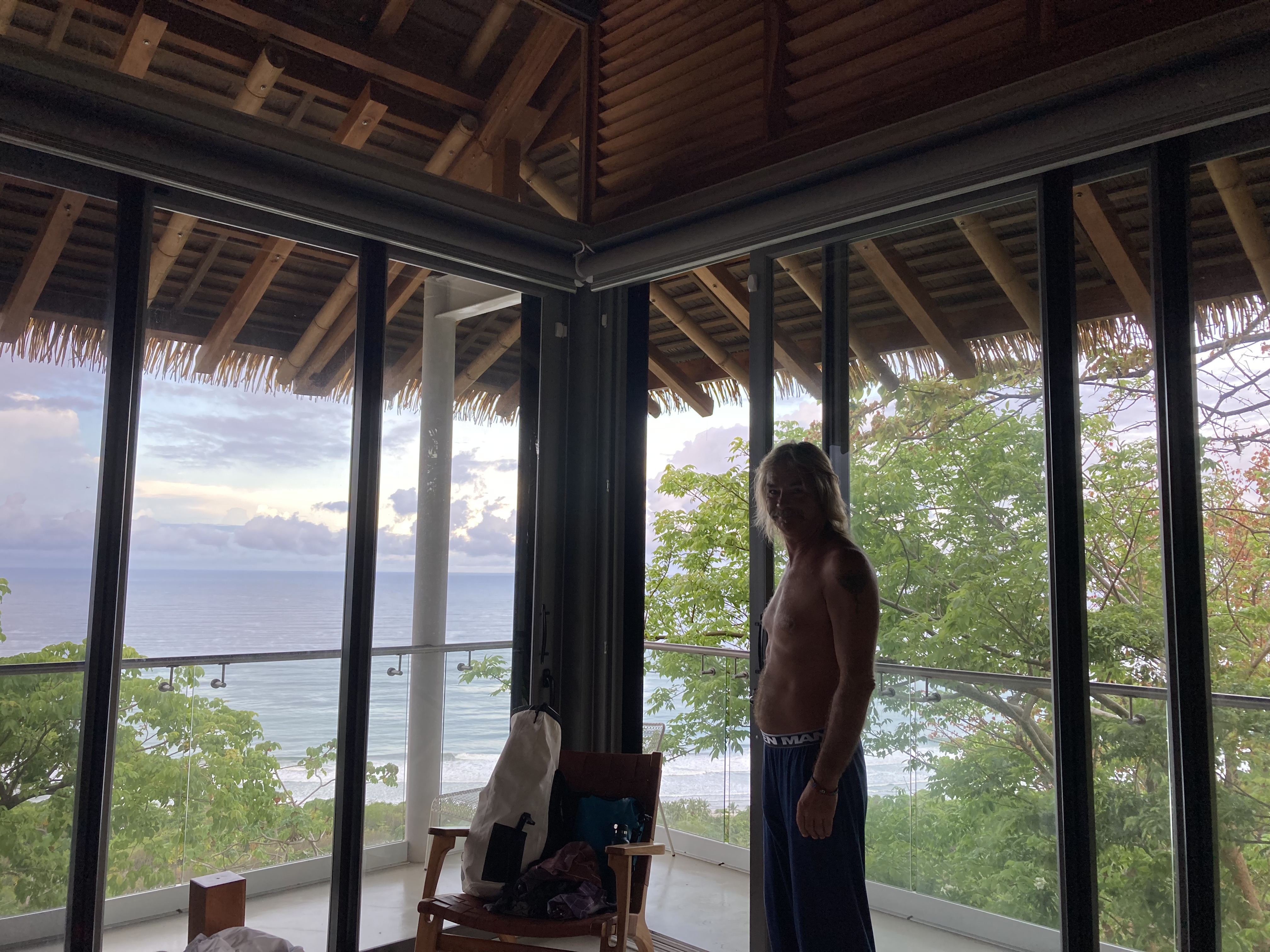
We were astonished to learn they had managed to arrange for us all to stay at a property which provided a base of operations unlike anywhere we could have imagined. Fortunately, the thousand dollar per night rate was waved! The place was decadent; the view was wondrous.

Sometimes it pays to know someone who knows someone…

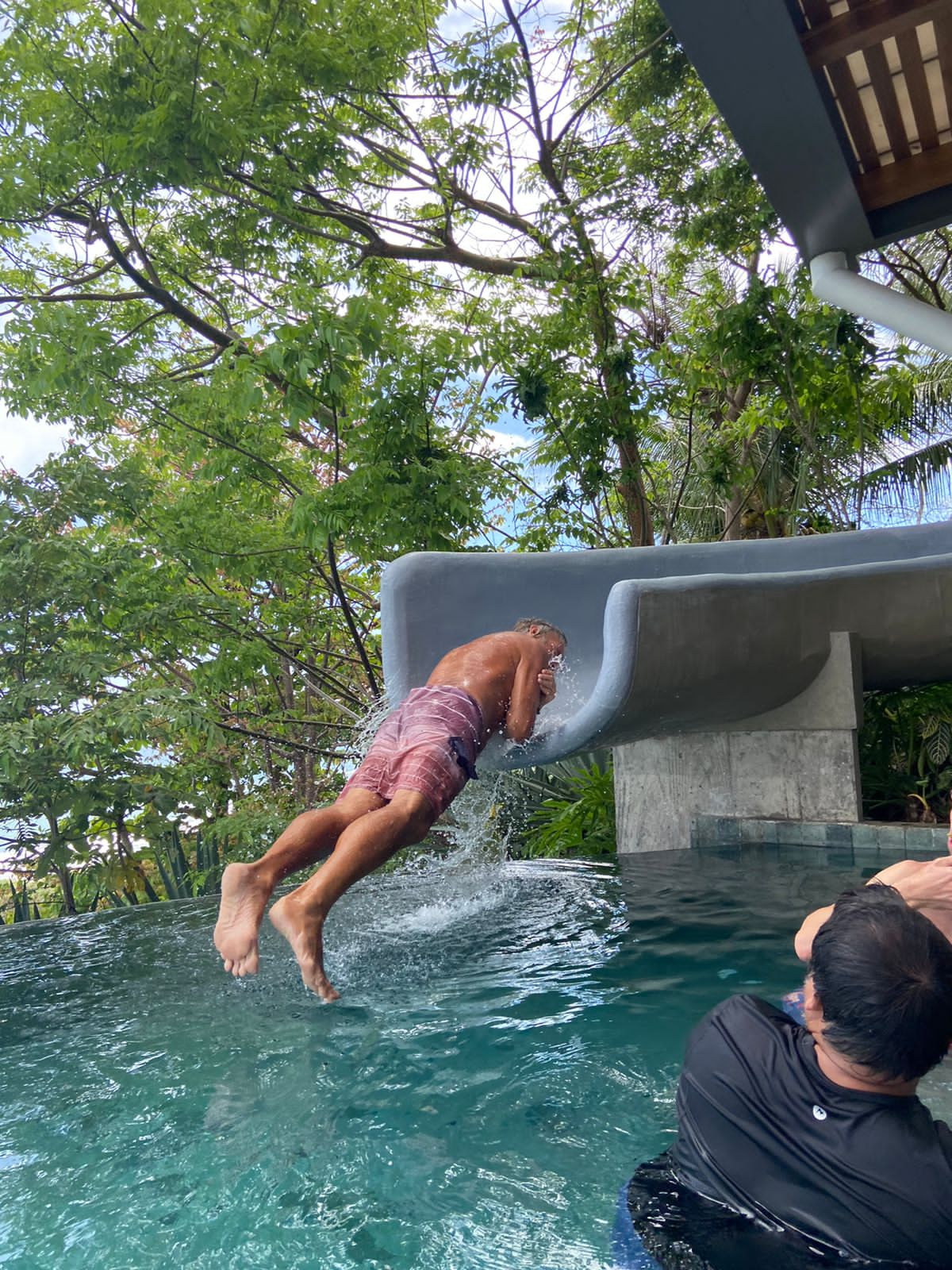
The nearby beach, at the bottom of the treacherous hill our house was perched upon, provided an afternoon’s entertainment of socializing and even attempted surfing.

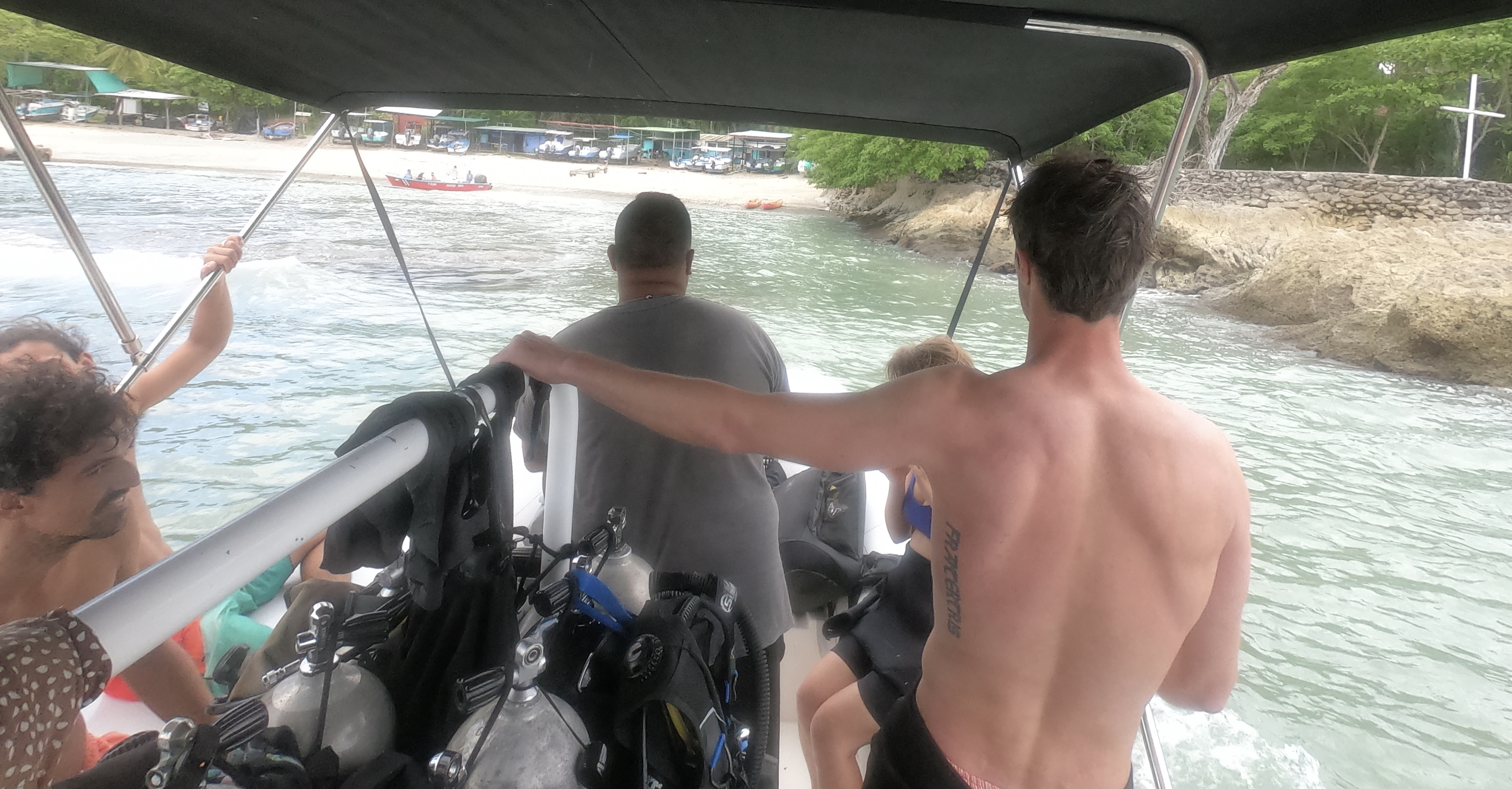
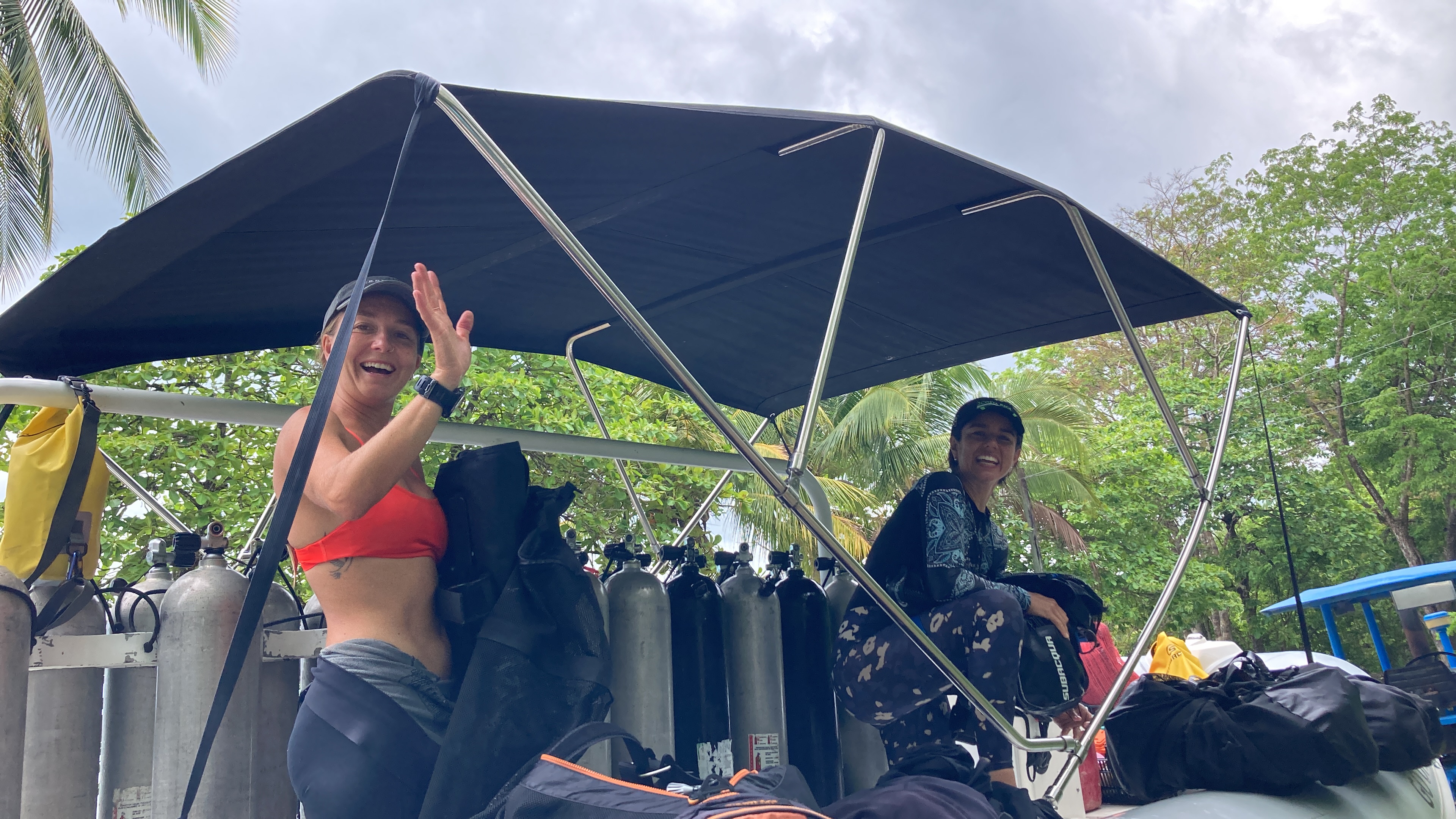
And, of course, when your ex-students own a dive shop, how can you not go diving?

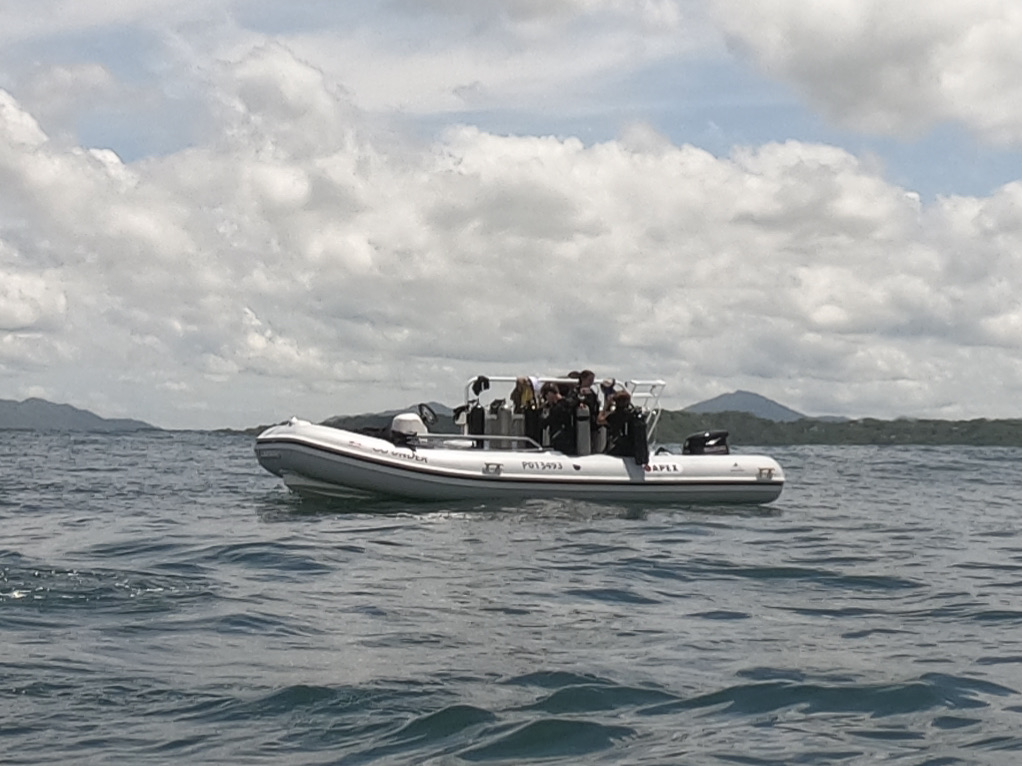
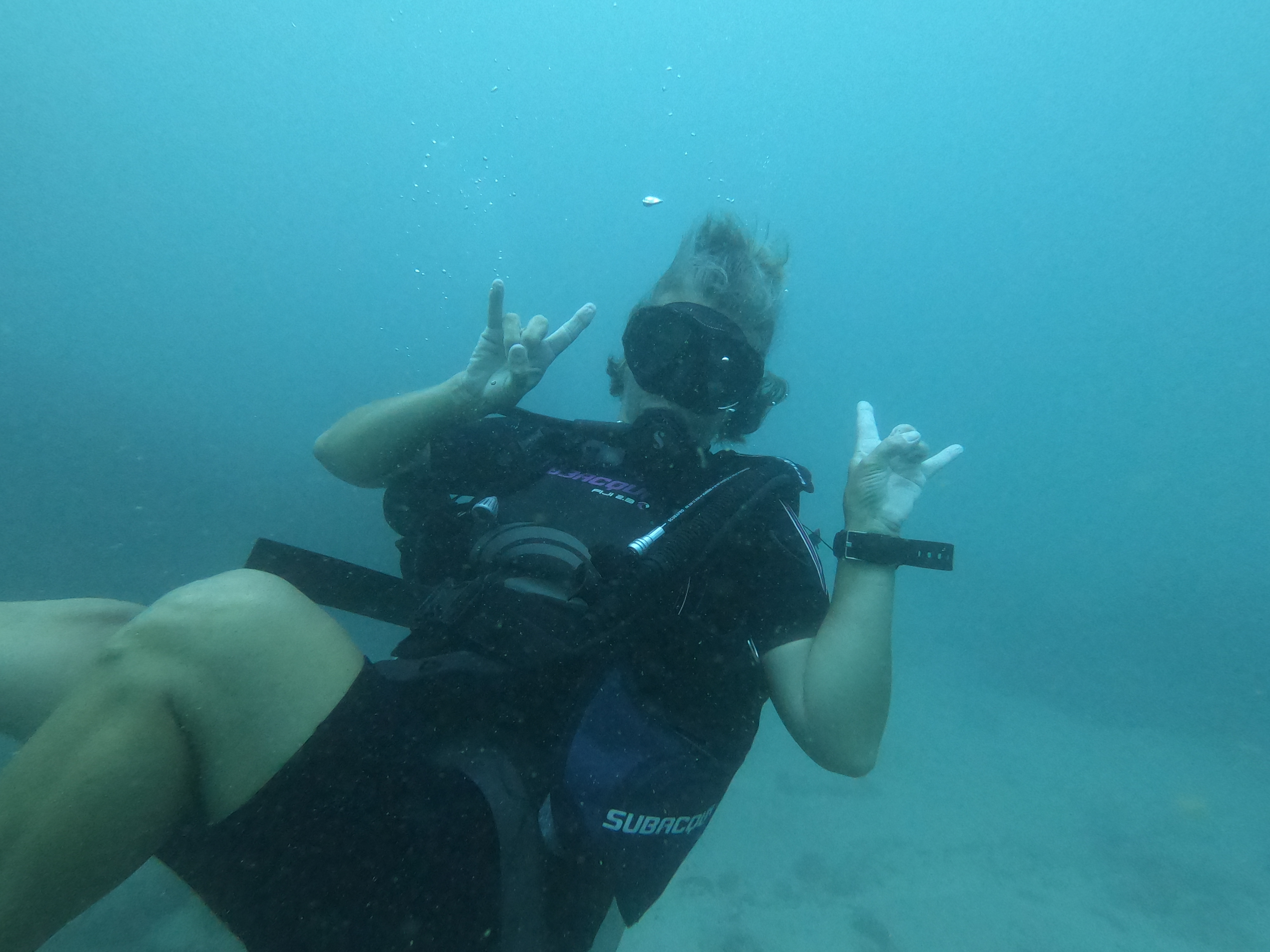
The day of diving with old friends was incredible. Conditions were pretty challenging with significant swell and shocking visibility (damn red tide). Still, it was the phenomenal people we got to spend time blowing bubbles with that made all the difference.

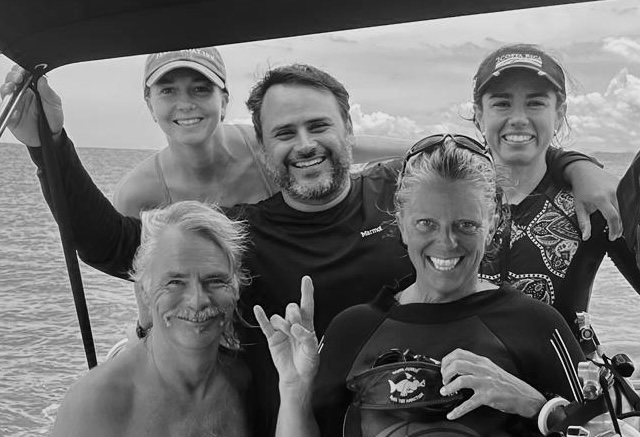
Iguana Divers. Well done Cindy and Juan. Kudos to you as fabulous divers, businesspeople, parents, and friends!

They told me long ago, on the road…once a Junkie, always a Junkie.

Once a Junkie, always a Junkie

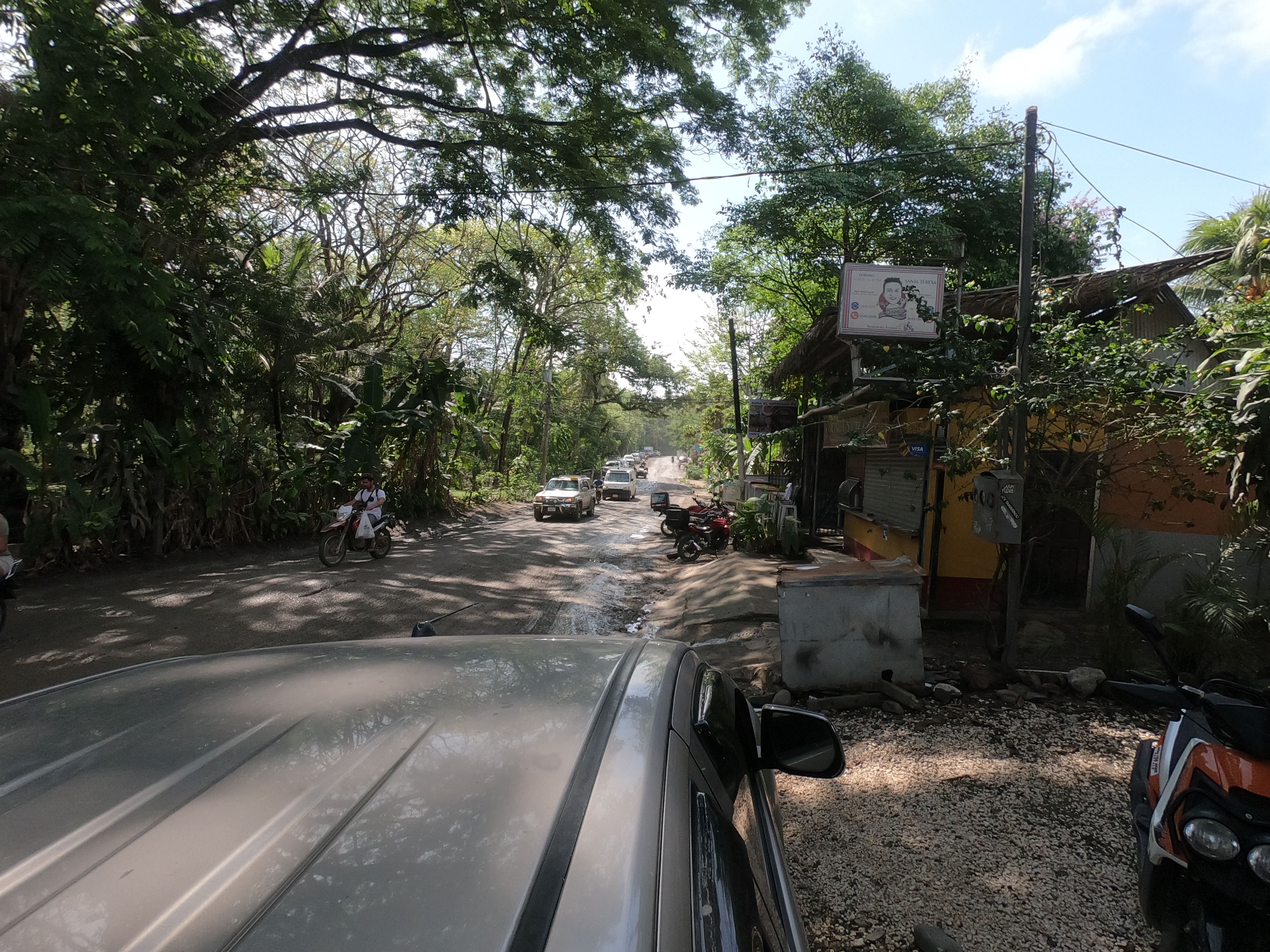
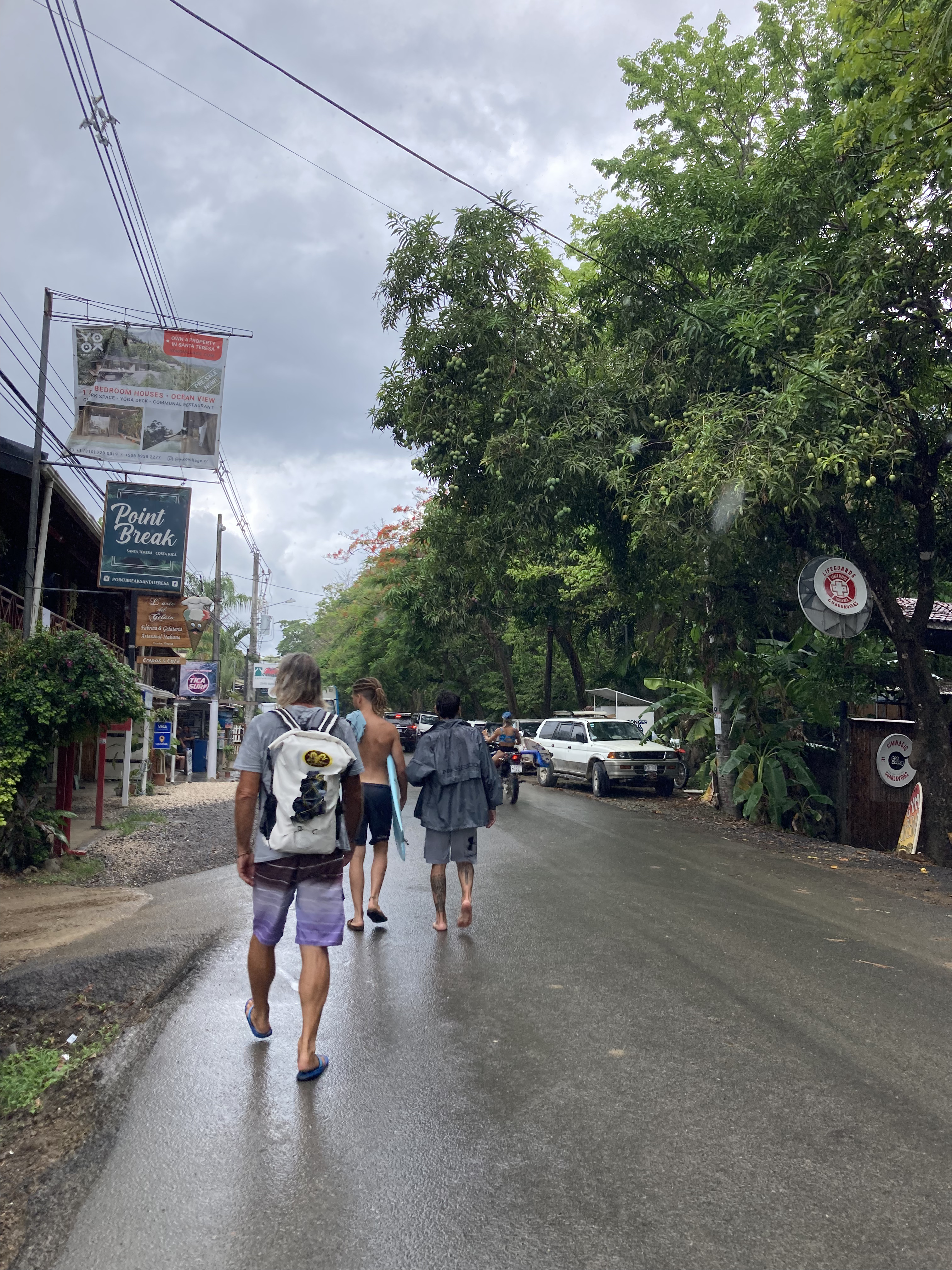
The town of Santa Teresa itself was quite unique.  With all the look of a tiny surf town set into the lush Costa Rican landscape, it was hard to juxtaposition the tiny shops and businesses lining a single, mostly potholed dirt road with the completely unexpected caliber of international cuisine available and volume of multi-million dollar houses perched on the hillside.  Even more surprising was learning that no less than five billionaires, as well as mega-stars including the likes of Mel Gibson and Tom Brady, have homes in Santa Teresa.


Deja Vú / Full Circle…

Flash back almost exactly two months.

‘GO COUGS!’

Shouted by a passing tourist who had spotted our hailing port of Pullman, WA on our transom, they had strangely enough been the first words we had heard approaching Costa Rica, less than five miles from Golfito, the port of call where we would clear into the country.  

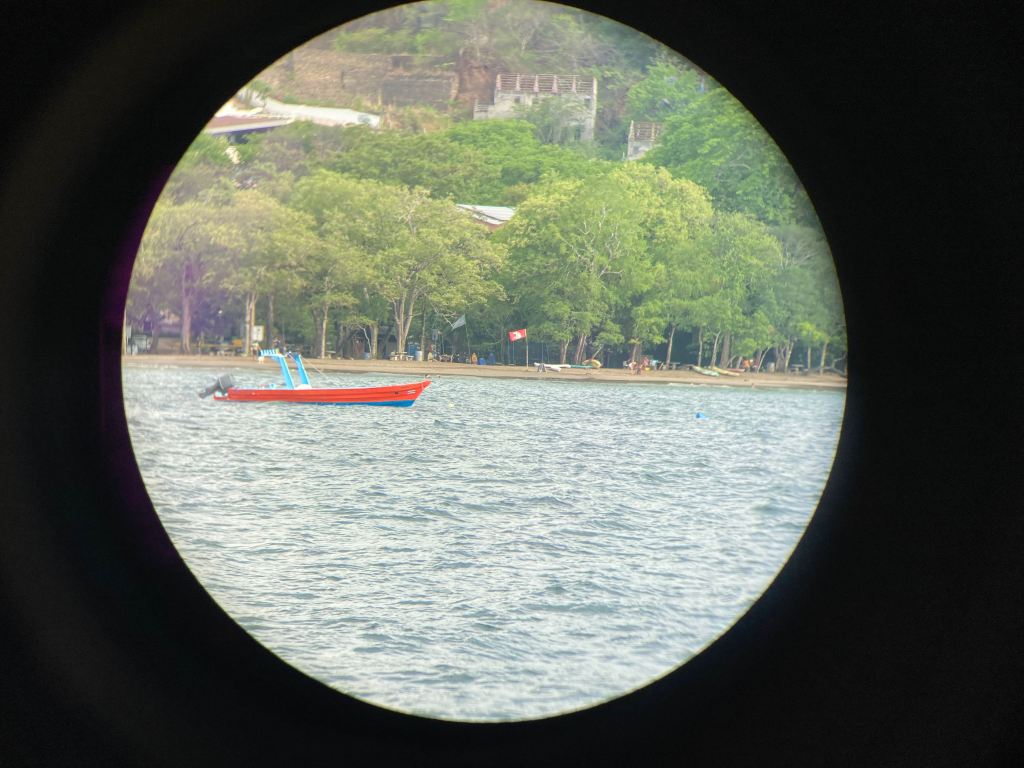
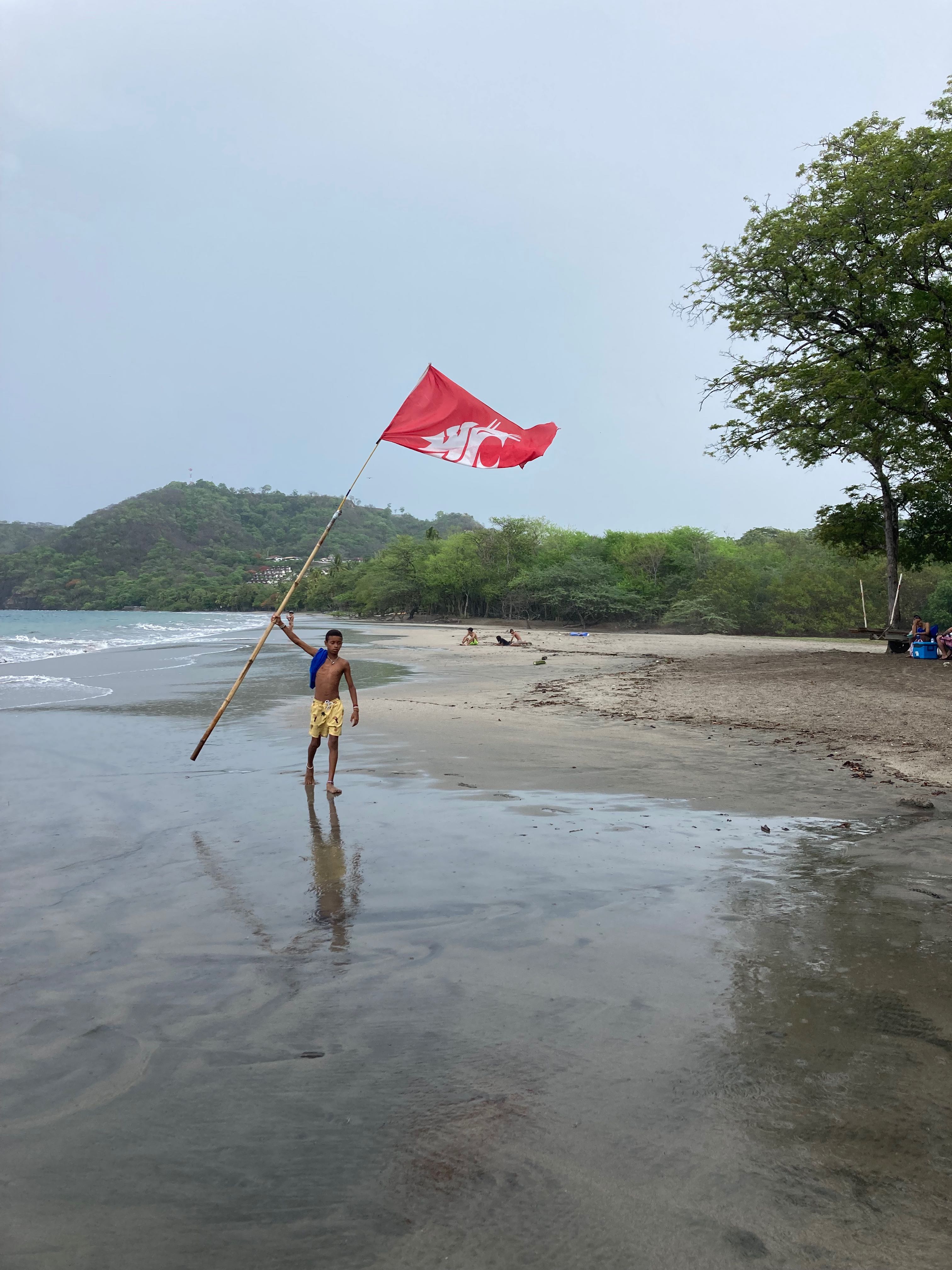
Now, fifteen anchorages later and four hundred nautical miles further up the coast, less than five miles from the town of Playa del Coco where we would clear out of Costa Rica, we were looking through our binoculars at a crimson flag clearly flying the WSU Cougar logo on the beach of Playa Hermosa.

Deja vú.

Shortly after Kris posted the photo she received a reply from the original flag owner. Apparently a WSU alum visiting Costa Rica on holiday had previously gifted the flag to a fascinated local, with the instructions to return any greeting with ‘GO COUGS!’

Small world.

It seemed to be a perfectly fitting full circle moment.


Costa Rica Challenges

In spite of all of the stunning landscapes and remarkable experiences, our time in Costa Rica will be remembered with mixed feelings.

From the perspective of a couple of sea gypsies, Costa Rica was well more challenging than we had ever perceived it would be.

Although the sixteen foot tides which had stunned us initially as we emerged from the Panama Canal in January seemed nearly five feet less in Costa Rica, at times it seemed impossible to escape the Pacific Ocean’s relentless southwestern swell that seemed to wrap around every land mass we tried to take refuge behind.

Anchorages seemed farther and fewer in between. Choices in those that existed were more limited. Smaller bays. Moorings to contend with. Steeper banks which forced you either precariously close to shore or deeper than forty feet to anchor. It’s hard to set your scope when you swing between twenty five and seventy feet in depth.

And the strategy of just throwing out more chain only works when you know you have a clear space to swing.  Knowing you have that clear space relies on good water visibility and/or reliable charts, both of which we found to be in short order here in Costa Rica.  It is very disconcerting to increase the diameter of the circle you swing in when you know there may be rocks just under the surface of a low tide that you can pass over during high tide.

Weather forecasts, when consistent and accurate, provide critical information needed to make good decisions. Are conditions conducive to sailing or will we be forced to motor? Is an anchorage safe based upon wind direction? Are there storms developing? When should we move? In Costa Rica, that consistency and accuracy didn’t exist. Consequently, we struggled constantly with higher stress levels, frustration, and a general sense that we were always simply guessing instead of making informed decisions.

 Dinghy landings, more often than not, were excruciatingly difficult. Breaking waves of three feet can easily capsize the dinghy… a catastrophic event that poses both a safety risk and the very real possibility of destroying the outboard engine. Many beaches could only be reasonably landed on or launched from during the most benign cycle of the tide – high or low slack tide. With only two of each in a twenty four hour period, this made for a very small window…and it also meant unless the trip ashore was not more than an hour, either the landing or the launch would fall outside that safe zone. Hmmmm…a messy landing which subsequently forced you to walk around in wet clothes was never a pleasant prospect; however, getting swamped by a breaking wave launching the dinghy after loading three hundred dollars of provisions we had just purchased was even less appealing. Sometimes simply not going ashore seemed the wiser approach.  Oftentimes that turned out to be the conclusion.

Compared to other countries in Central America, Costa Rica proved to be one of the most expensive we visited. 

The whole national zarpe requirements just added additional complications.

And then there was the damn red tide.

The morning we arrived in Costa Rica, as we passed through the bay approaching Golfito, we first noticed discolored patches in the water. We attributed these to runoff from the rivers which can sometimes collect with tides and currents.

The patches continued off and on for a month before someone enlightened us that what we were looking at was red tide.

Apparently, these out of control algae blooms typically only last two or three weeks.  After three months, we learned that this particular tide was stretching all along the Pacific Coast and was the worst people had ever seen..or smelled.  And smell it does.  Like the combination of stagnant tropical salt water and rotting plant material that it actually is.  Yuck!

Hard to describe and harder to bear.

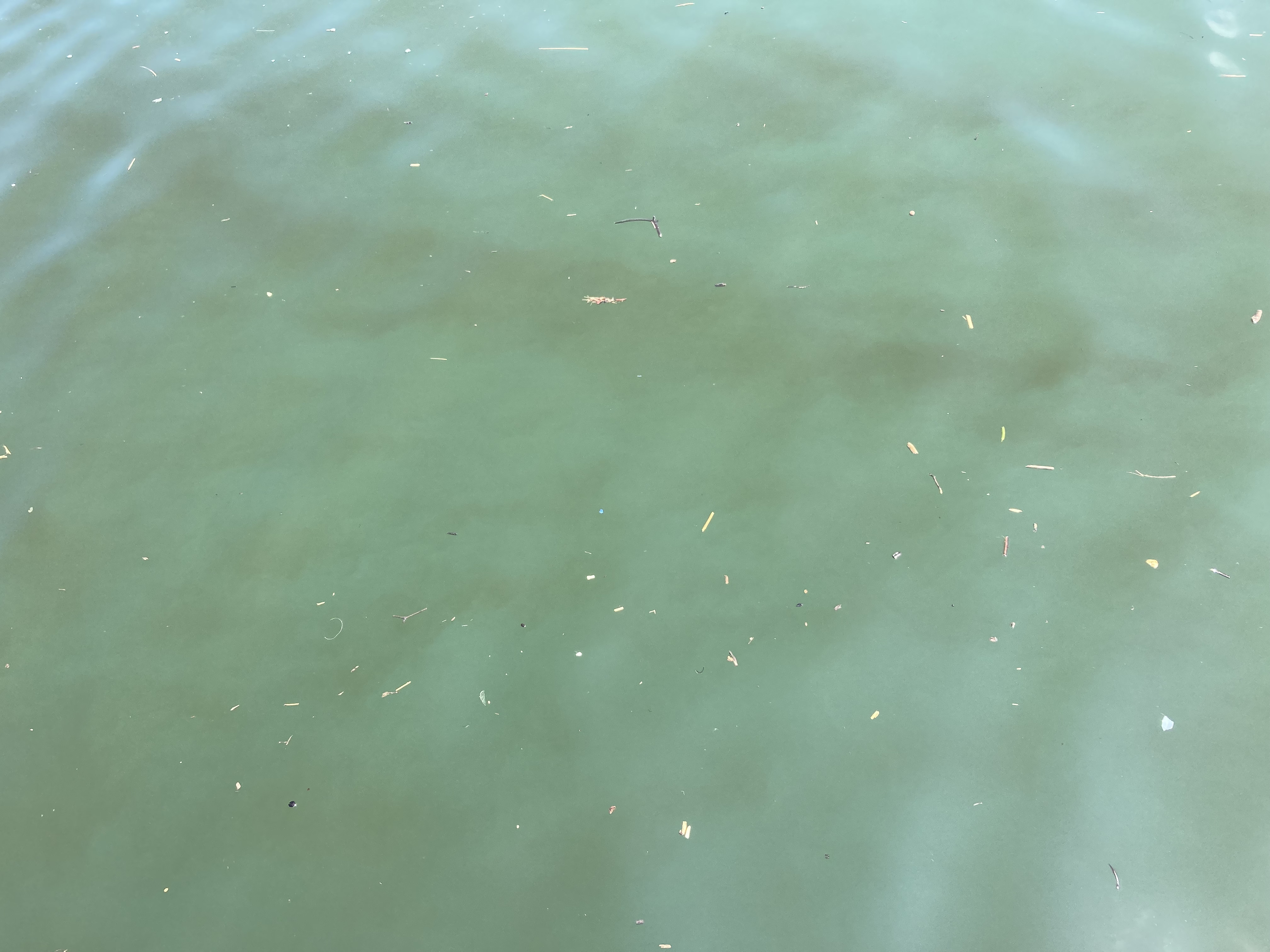
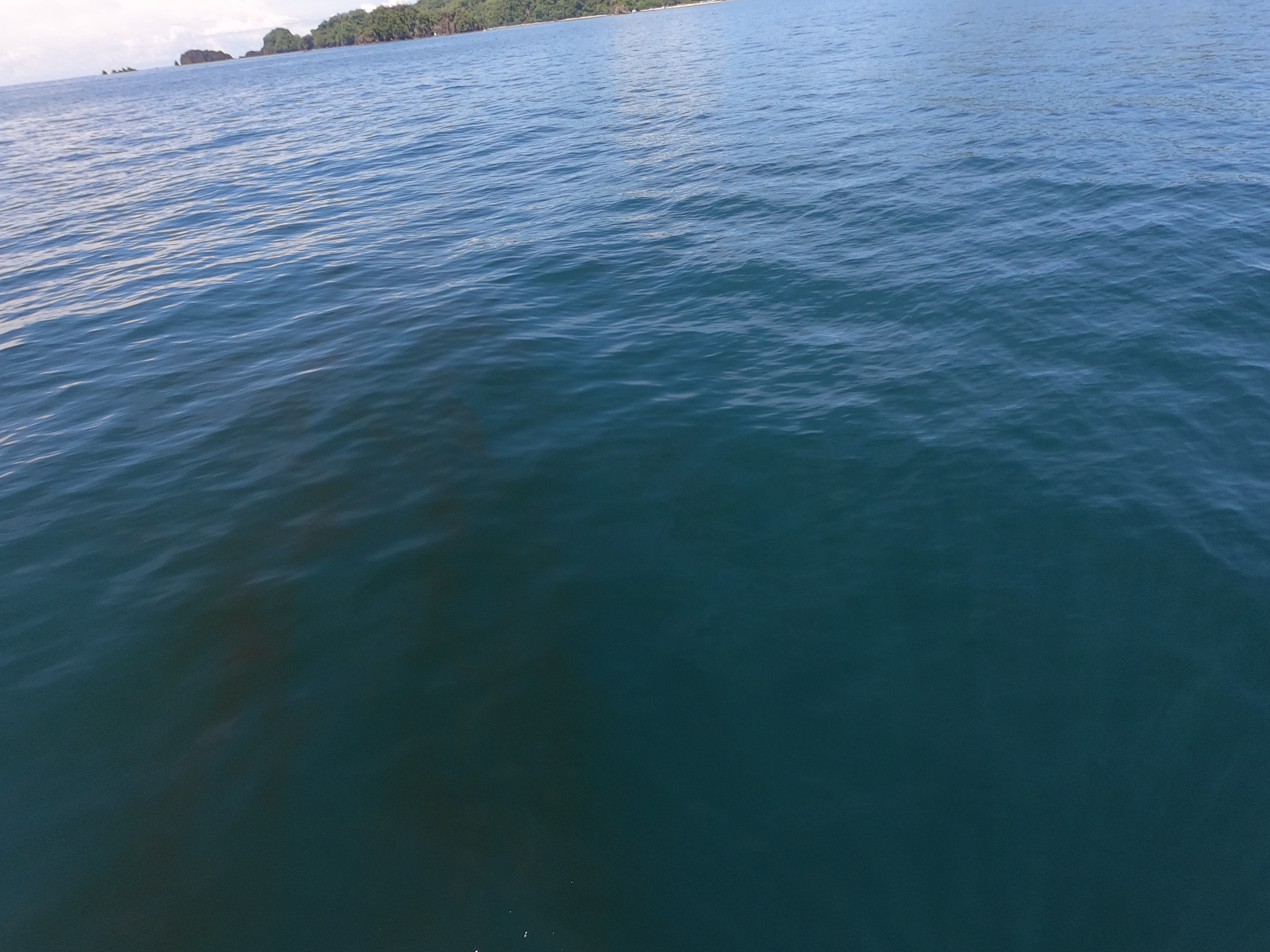
Sometimes it was possible to see the tendrils of algae in rather clear water pass by the hull. Other times the entire body of water surrounding us became as dark as coffee.

The difference between a mild and severe day…

Had we known just how severe a red tide we would encounter, we certainly wouldn’t have changed our water maker membrane in January.

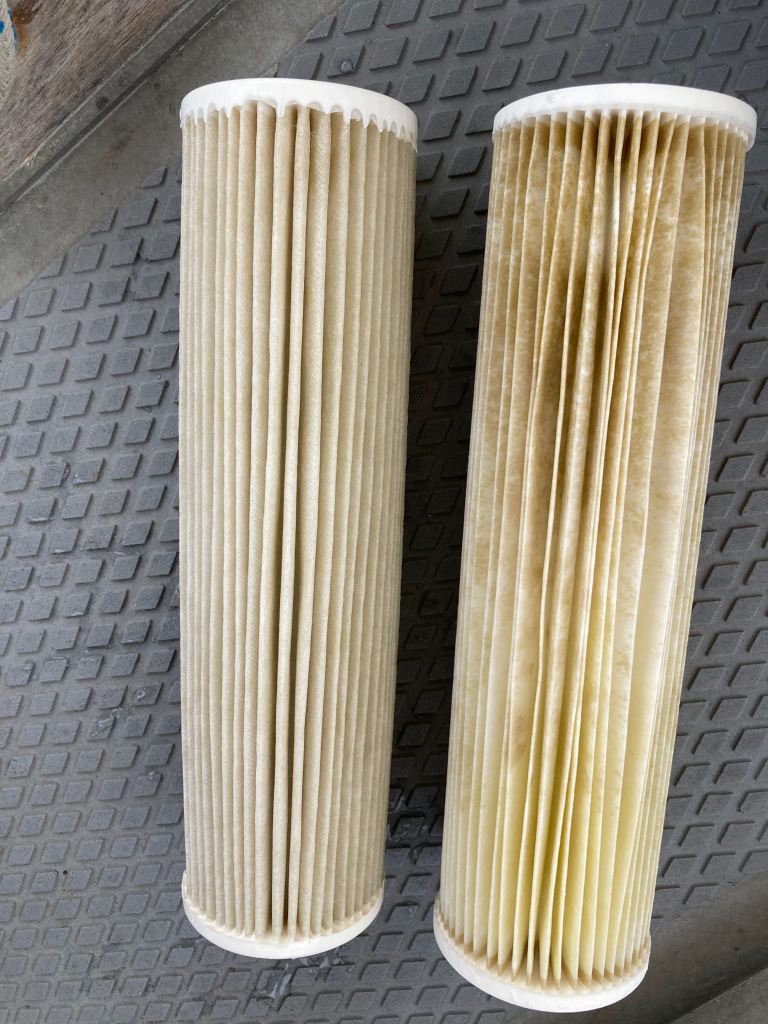
We learned very quickly how important it was, if we were making water, to shut down the system at the first signs a bloom was approaching.  It would clog the pre-filters with amazing speed.  Better yet, we would try to make water further offshore; though sometimes we could still find the red tide blooms had carried miles out on a falling tide or coastal current.

The pre-filters in the photo illustrate how problematic things can be. Both have just been cleaned. The one on the left has about fifty hours of water making time under fair conditions. The one on the right has only one hour of use but looks far worse because of the red tide water that was drawn through it.

On the occasions we got far enough offshore to seemingly at least temporarily break free of the red tide’s chokehold, the difference in water quality was stunning.

Nevertheless, despite the tides, and the weather, and the chart shortcomings, and the lack of protected or viable anchorages, and the swell, and the beach surf, and the cost, and the national zarpes, and the stinking red tide…

…regardless of all the challenges, Costa Rica was well worth the visit.  

At times, traveling by land instead of by sea would have made things far easier, and we would have encountered less situations where we had to pass on an adventure because of the logistical impossibilities.  

Still, it was worth the visit.

But we had now been in Costa Rica for almost exactly two months. We still had over fifteen hundred miles to travel before reaching the relative safety of the Sea of Cortez… and it was almost June — officially two weeks into the start of the Pacific’s hurricane season.

Our choices would soon be quite limited. Either we had to get our asses up to the Sea of Cortez immediately or we would be stuck having to sit through the hurricane season in El Salvador, Honduras, or Nicaragua with few options outside of a handful of marinas and questionable anchorages. This was not a good place to plan on hanging out on the hook for the next six months.

If we opted to just keep going until we reached Mexico, Chiapas was our first port of call that we could clear into. Five hundred miles. And that still left another thousand to go after that to the Sea of Cortez.

A fifteen hundred mile mine field of potential hurricanes

As a sobering reminder of both the risk of sitting and the uncertainties of moving, as well as the very real dangers of being at the wrong place at the wrong time, our decision was being made even more difficult by inconsistent and contradicting weather forecasts.

Yet one forecast stood out prominently, shouting loudly above all the others. It was still over a week away but it certainly had our attention.

If the forecast was accurate, this would be the first named storm of the 2022 hurricane season…Agatha.  It would also likely follow a trajectory mimicking our current path, passing  right next to Chiapas.  But a week out is forever and a day when it comes to forecasting weather.  And this was the only model that was currently flashing ‘danger’.

Others showed a completely different picture for the future.

Erratic weather forecasts and a potential hurricane were only two of many considerations we were having to process.  We had already arrived in Playa del Coco, where we could clear out of Costa Rica.  However, once we had cleared out, we were committed to go.  The clearing out process would more than likely take a full day; and once that undertaking was completed, the Costa Rican authorities would allow us twenty four hours, at the most, to pick up anchor and physically leave Costa Rican waters.  In other words, a major process with a very short window that had to be initiated with incomplete information in hand.

The process of getting everything ready on Exit for a substantial offshore passage; the process of making a big decision regarding a safe weather window that hopefully didn’t force us to motor the whole way; the process of getting cleared out…

Not for the feint of heart.

As if there wasn’t enough to have to keep track of already, there were also the Papagayo winds that had to be considered.

Departing Playa del Coco, there is a stretch of coastline just to the north that marks one of the narrowest points between the Atlantic and Pacific across the Central American isthmus.  It is very susceptible to influence by winds that can come rushing down from the highlands after crossing massive Lake Nicaragua and deliver storm force and, at times, even hurricane force winds reaching far out from the coast.  These winds, running contrary to the direction of the Pacific swell, can cause a massive buildup of tall waves with very short intervals between – potentially an extremely dangerous situation for boats.  Mariners have to carefully monitor not only the normal weather driven winds, but also the forecasted Papagayo winds which can sometime strengthen or at other times even contradict what should be happening.

It is only about fifty nautical miles across the area of concern, but for us that represents a ten hour stretch of exposure.  On more than one occasion, we had been advised the Papagayo winds (and even more so the Tuantapec winds just beyond Chiapas, Mexico) are not to be taken lightly unless you fancy having your ass handed to you.

We continuously looked at forecasts and analyzed things. Eventually, we made the call. We go.

The optimism of rainbows and unicorns…

The clearing out process was, as expected, lengthy and complicated, but achievable thanks to Kris’ tenacious online research which uncovered a step by step procedure to follow provided by another sailor who had documented their experience, complete with photos of the building fronts to look for…well done.

We had officially cleared out of Costa Rica; and the clock was ticking.


4:20 a.m. May 21, 2022…

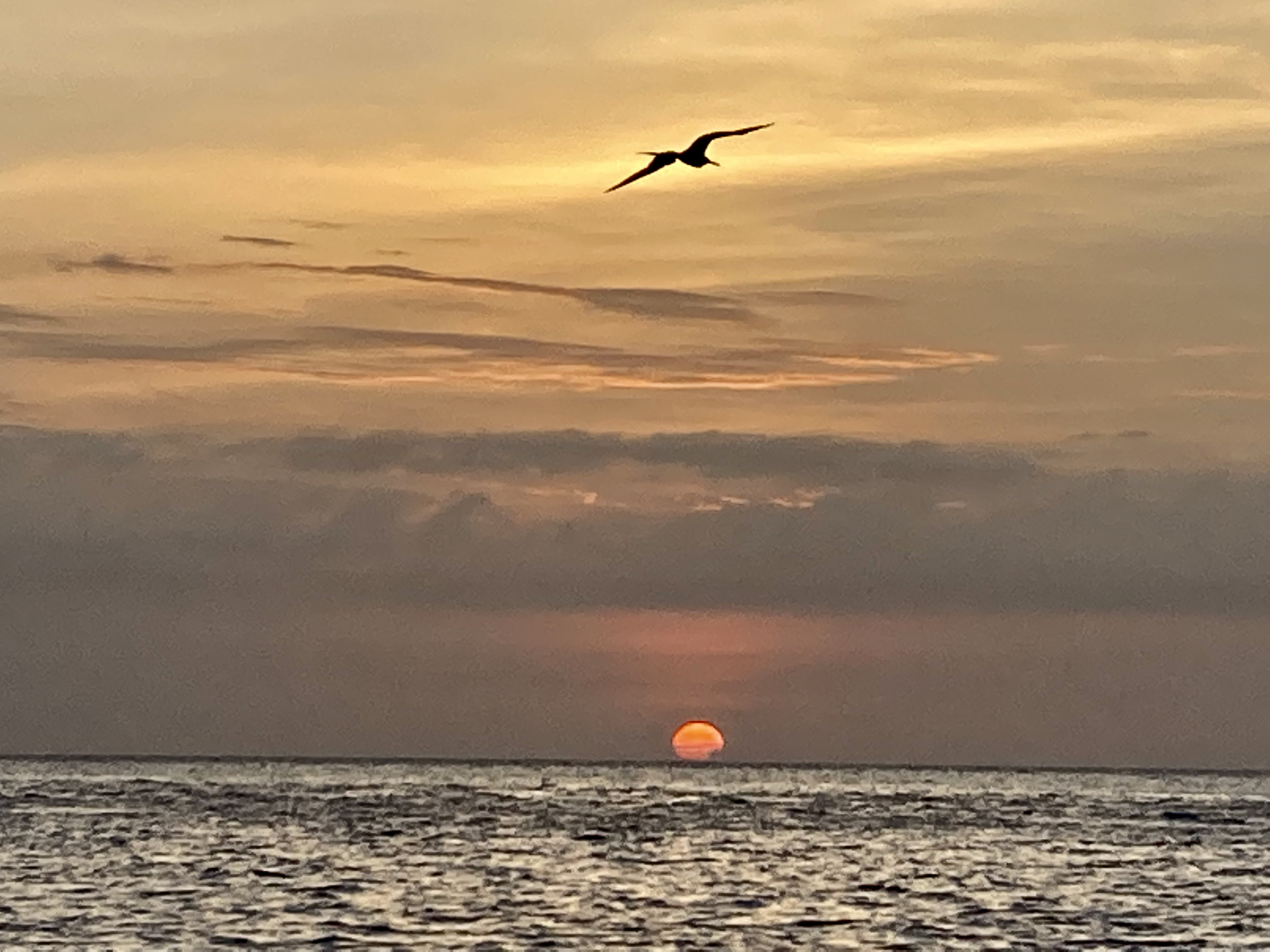
First light.

Looks like gray skies. A camouflage day for us. We blend right in.

As we pick up anchor, the skies look ominous but not as threatening as the most current weather forecast we have just downloaded on our iPad. Still only one of the four weather models predicts a hurricane will develop…but that model still says it will pass right by our destination of Chiapas, Mexico.

We are a week ahead of it. Best get moving.

Our destination of Chiapas one week after we arrive?

Costa Rica – Part One

March 17 – April 12, 2022

Golfito, Costa Rica, once one of the local casualties of a changing banana industry, certainly appeared to have finally found its stride. What had apparently become quite a sketchy location to be not so long ago, now appeared to us a very welcoming and friendly place to clear into.

First time we have seen a “scarecrow” atop one of the fishing boats

Every country has its own clear in procedure. Always an adventure to navigate.

Entering the country in a maritime setting automatically means the port captain is involved, requiring paperwork and possible fees. We, like any other traveller, have to get our immigration papers sorted, requiring paperwork and possible fees. Exit requires clearing through customs, requiring paperwork and possible fees.

Every port is a bit, or a lot, different.

At the time we cleared in, Costa Rica required every tourist entering the country by boat to use an agent to complete the process of clearing in and out. Depending on the country, this service may incur a reasonable or unreasonable fee. Furthermore, depending on the competence of the agent and/or the difficulty of the process, this can be money either well spent or money wasted.

In hindsight, as our exchange with our agent was a positive one, we were much less irritated to learn that the requirement for utilizing agents was dissolved the month after we arrived.

Costa Rica also required a quarantine officer to actually come aboard Exit in order to verify we weren’t bringing any pork products into the country. This included filling out a declaration of all meat we had aboard followed by an actual inspection of the refrigerator and freezer.

Fortunately for us, being sent to a Costa Rican prison for international pig smuggling will not be on the itinerary.

Waiting for the quarantine officer at Banana Bay Marina in Golfito

The noteworthy generosity and kindness of Gabriella, manager of Banana Bay Marina, was amazing. Yes, she was being paid as an agent to clear us into Costa Rica. Still, we weren’t staying at the marina. So allowing us free access to the dock to tie our dinghy, ability to dispose of rubbish and recyclables, unlimited water if we needed, even actually taking us to the port captain and immigration authorities in a taxi she paid for – were all gestures well above and beyond. Her energy and enthusiasm were contagious. Her endless knowledge of the area cleared up any questions we had, and she offered assistance repeatedly.

It made it even easier to return to the marina for happy hours and decadent meals prepared by someone else.

Except…once we were cleared in, it was time for a major water maker maintenance project.

We had been waging an ongoing battle with the water maker since our arrival in Panama. Yet, it had never failed us by ceasing to make fresh water and we fully understood the importance of settling for functioning versus risking having it out of commission for any length of time. Consequently, we were constantly having to fuss with it while respecting the boundary of “don’t fuck too much with something that currently works.”

While trapped in Bocas del Toro during the Covid lockdowns, we had managed to get spare sensors, hoses, fittings, pumps, and even a membrane shipped to us; so we had parts for the Spectra. Yet, we couldn’t do anything that could even possibly jeopardize our ability to make water since it was one of the top critical systems on our boat to keep us off the grid.

The decision had been made long ago to hold off on any major water maker surgery until we were in the Pacific Ocean. Now that time had finally arrived.

Two sensors, a number of high pressure fittings, an intake hose, and the membrane itself all needed replacement. It required disassembly of nearly the entire water maker — a process during which I found myself experiencing numerous moments of doubt. If I fucked it up, we would be in a seriously bad way. But, in the end, everything was back together with no extra pieces still sitting on the table.

Now we just had to get out of the bay we were in and try everything out a few miles offshore where the water would be clearer. We could have gotten away with testing it where we were anchored, but we were adamant that we would be more selective about the water conditions we would consider making water in this time around…a philosophy which always seems to work better in theory than in practice.

A few miles out the water was not pristine, but we needed verification that everything was working at least. If we had to sacrifice a couple of filters, so be it. A few hours of making water seemed to concur the repair was a successful endeavor.

While we were testing the water maker, we were visited by a couple of very social dolphins. Normally dolphins only stick around the boat to ride the bow wake while we are underway and, even then, it rarely takes long before they grow bored of our sluggish pace. For some reason, these two really took an interest in us, and kept coming around to get a closer look. They were so persistent, eventually I slid into the water. They kept a bit of distance, but we were stunned how long the visit lasted.

“Dolphins Outside Golfito, Costa Rica”

It was one of two absolutely amazing experiences with dolphins here in this area.

A few days later while we were anchored in nearby Bahia Dulce, during a night of particularly intense and bright bioluminescence in the water, we had a visit from what may have even been the same two curious dolphins.

Upon hearing the unmistakable sound of their blowholes as they surfaced we came up on deck to a surreal sight. As the two dolphins swam around the boat, they were surrounded by an amazing glow of eerie green light. But even more unbelievable, the amount of bioluminescence was so intense that every detail of the dolphins were lit up also. A green, glowing line traced the entire outline of each dolphin, perfectly and distinctly, as well as every contour and detail of their bodies. It was almost like a sharp, glowing drawing which had been animated. Like the manta ray scene from the movie “Moana”.

Impossible to adequately describe. Impossible to capture with video or photos. Even more impossible to forget.

A re-creation attempting to capture the magic of the moment

Hints that the dry season may be coming to an end…

We had not collected rain catch water since Christmas in San Blas. It wasn’t that we didn’t want to. The fact was we hadn’t had any rain fall on our deck since we had crossed through the Panama Canal in mid-January… definitively the dry season. Despite seeing rain in the distance occasionally, it would be three months and a different country before the first drops of rain once again began to flow into our water jugs — March in Costa Rica.

Still, Costa Rica’s rainy season was only beginning to kick off in April. Largely, we had impeccable weather.

Yet, the heat of the Costa Rican sun on our aluminum hull made for some frying pan days and reminded us that the rainy season had its advantages as well.

Temperature on the bare deck in the direct sun

Only a couple hours outside Golfito, Bahia Dulce turned out to be a fabulous location to anchor. For much of the time, we were the only boat at anchor in a huge bay.

Going ashore at Bahia Dulce
Kris conducting a moth rescue via SUP

Costa Rican law prohibits any permanent structures from being built less than fifty meters from the high tide line. Consequently, almost every beach appears completely undeveloped, even if there are inhabitants just behind the tree line.

Such was the case with Dolphin Quest — a family run eco-lodge built on seven hundred acres of largely undisturbed land offering accommodations, tours, and jungle adventures. With a deeply seated philosophy of maintaining pristine wilderness, nurturing self-sustaining ecological practices, and rehabilitating environmental damage, they have managed to successfully cultivate a truly “green” business model.

In the few interactions we had with them, we found them to be very authentic. Touring their extensive yet very well thought out and unobtrusive garden proved to be both fascinating and educational. Afterwards we returned to Exit carrying a large bag of incredibly tasty, organically grown fruits and vegetables, as well as a plethora of various herbs and greens that found their way into our meals for a week after our visit.

After a couple of weeks bouncing back and forth between Golfito and Bahia Dulce it was time to get moving again.


Sixty five nautical miles further up the coast brought us to Bahia Drake, which provided a launching point for additional excursions.

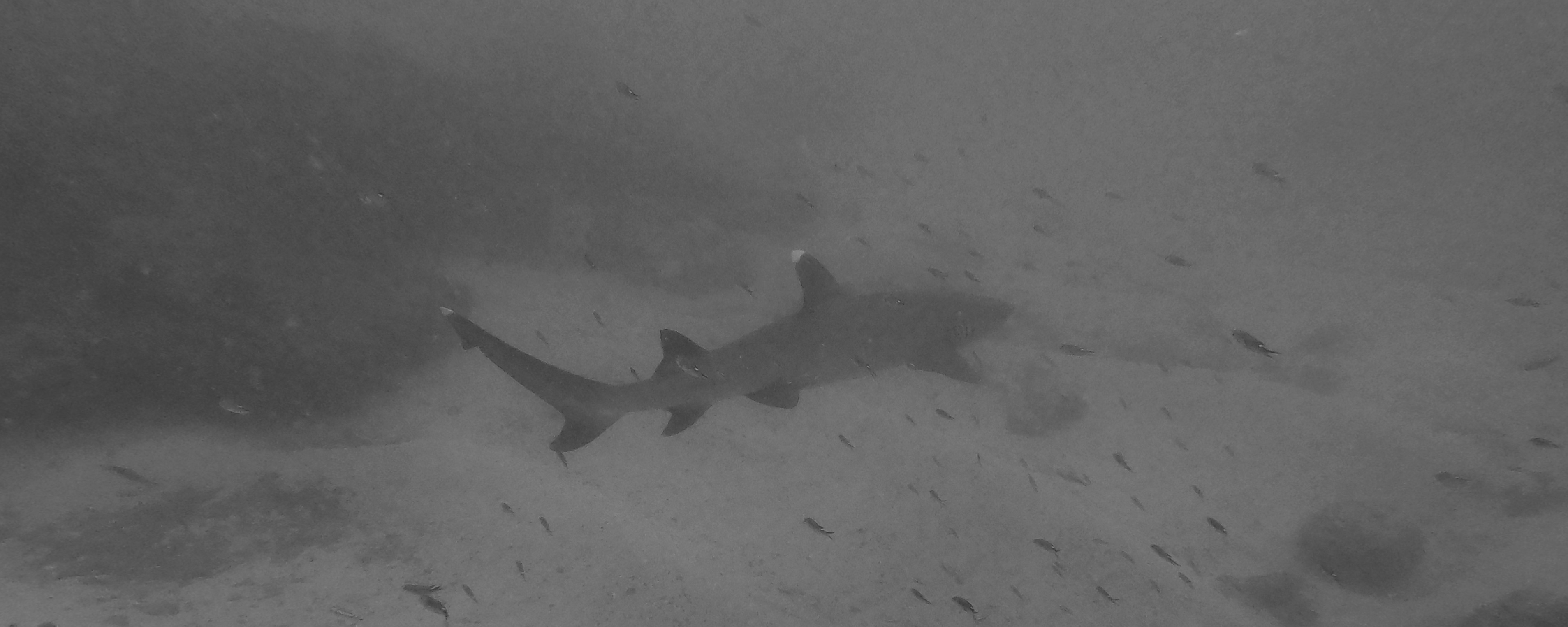
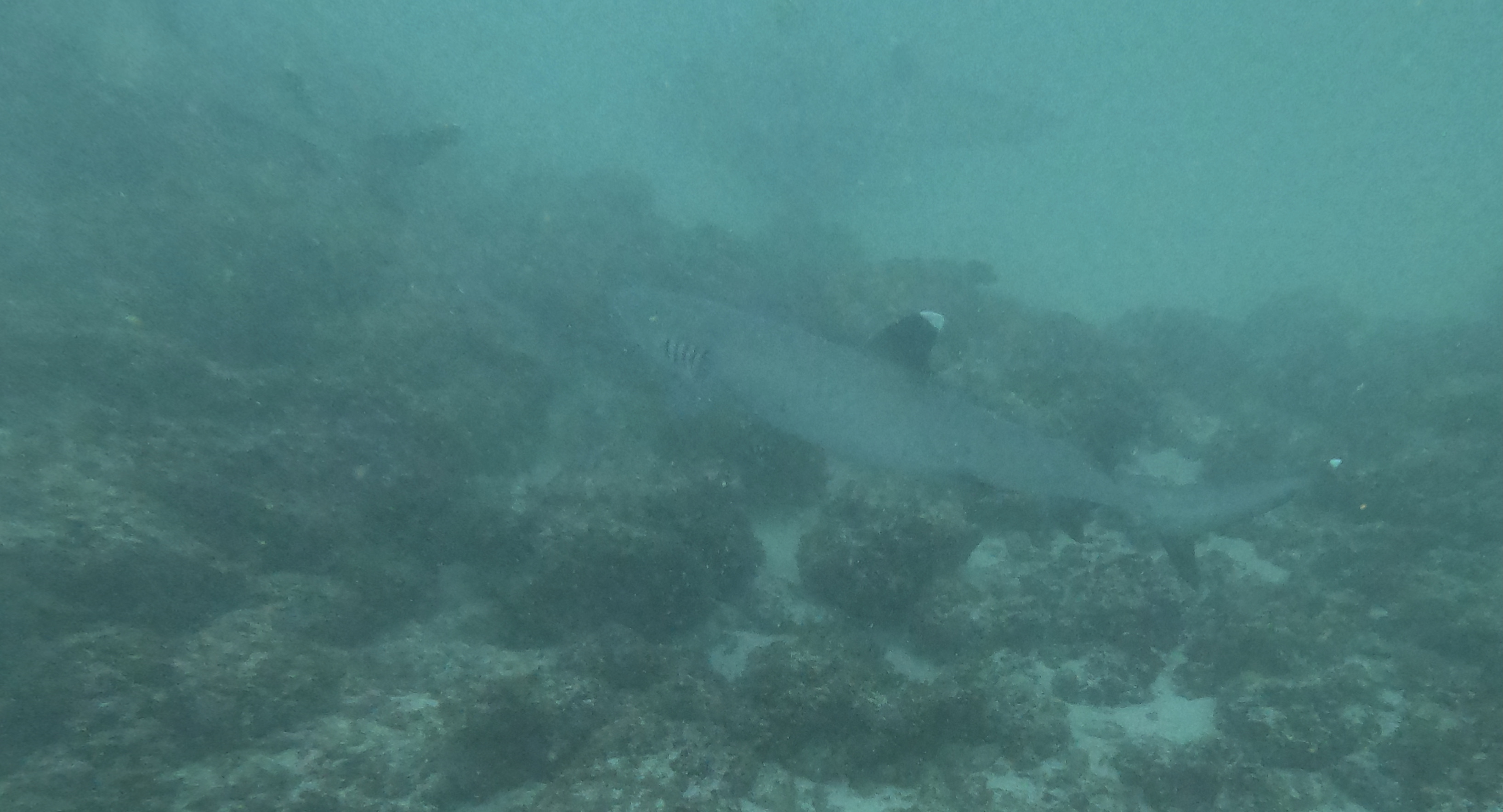
Nearby, Isla Caño was only the second dive trip we paid to go on since we had moved aboard Exit nearly five years ago. While it would never be considered among the dives that top our list, it was a great day. Conditions sucked… the boat ride ten minutes off the island was rough, visibility underwater was horrible at times, it was the coldest water had dived in some time, and we felt remarkably guilty for the other eight guests on the boat (who were all snorkeling, some for only the second time above an invisible reef twenty feet below the surface). Still, our dive guide was very good and we managed to see a surprisingly impressive range of creatures — sharks, turtles, a sea horse, rays, eels, schools of jacks, and even harlequin shrimp (which we had last seen only in Indonesia almost ten years ago).

Also in close proximity was Parque Nacional Corcovado — a two hundred fifty square mile swath of untouched jungle established in Costa Rica as a protected reserve inside one of the most biodiverse regions on the planet.

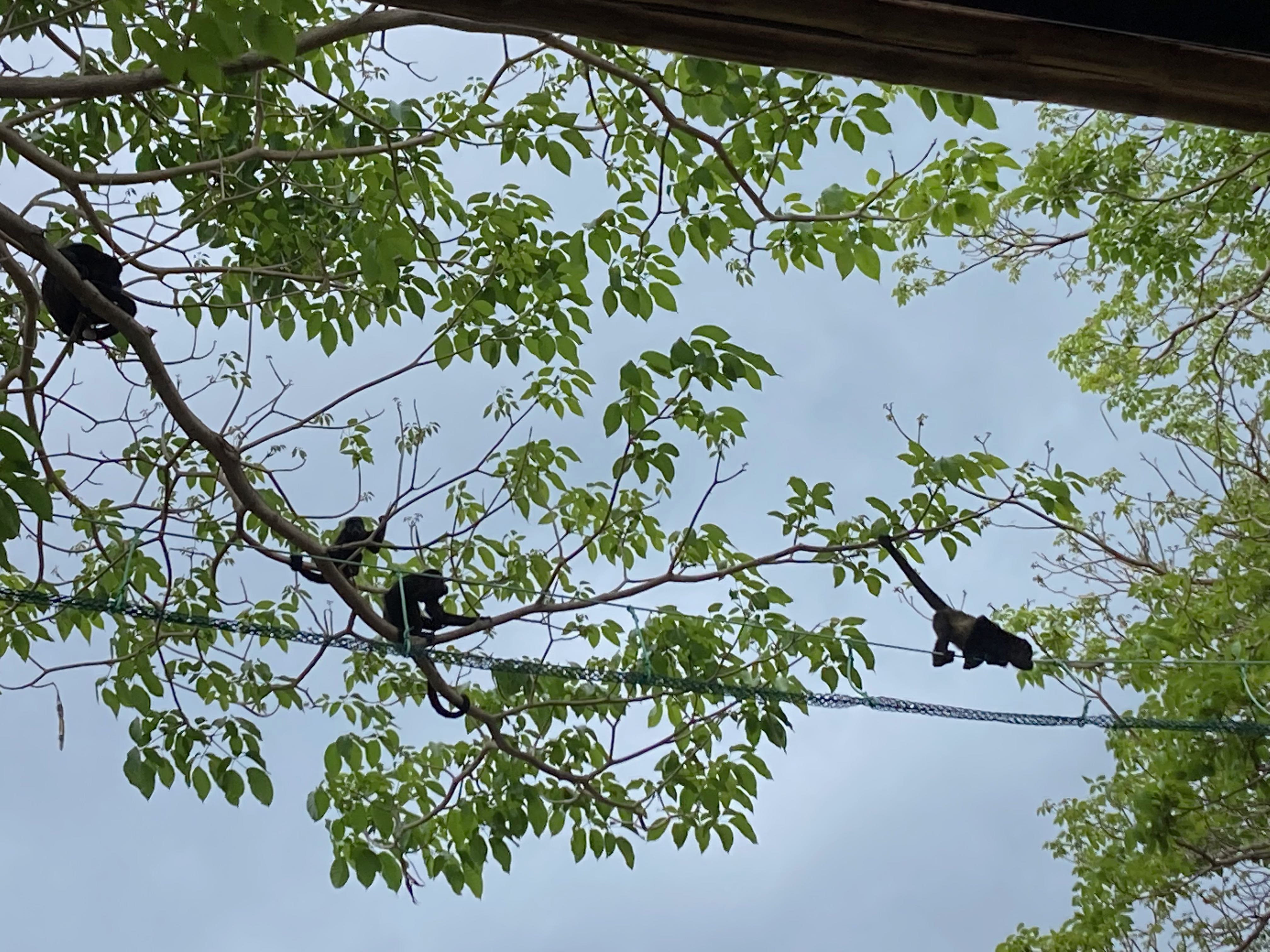
With our remarkably knowledgable and eagle-eyed guide Carlos, we managed to catch glimpses of a dizzying array of wildlife which included: monkeys, crocodiles, scarlet macaws, tiny frogs, lizards (including the basilisk or “Jesus lizard” which actually runs on water), leaf cutter ants, and tapirs; all amongst the stunning backdrop of the dense Costa Rican rain forest.

You have five seconds to spot the croc before you become a spot on the croc…

Croc spotting

Costa Rica — the coast is rich but beach landings are a bitch! Props go out to the Costa Rican captains, whose skills are astounding. We got to witness these skills again and again, which ultimately resulted in both an immense respect for the local captains as well as a constant and intense fear of capsizing our own dinghy in the beach surf.

Our captain for the Parque Nacional Corcovado tour

We never remotely considered ourselves bird watchers before living aboard Exit. Even after five years, I would consider ourselves more sporadically interested and curious observers rather than avid bird watchers.

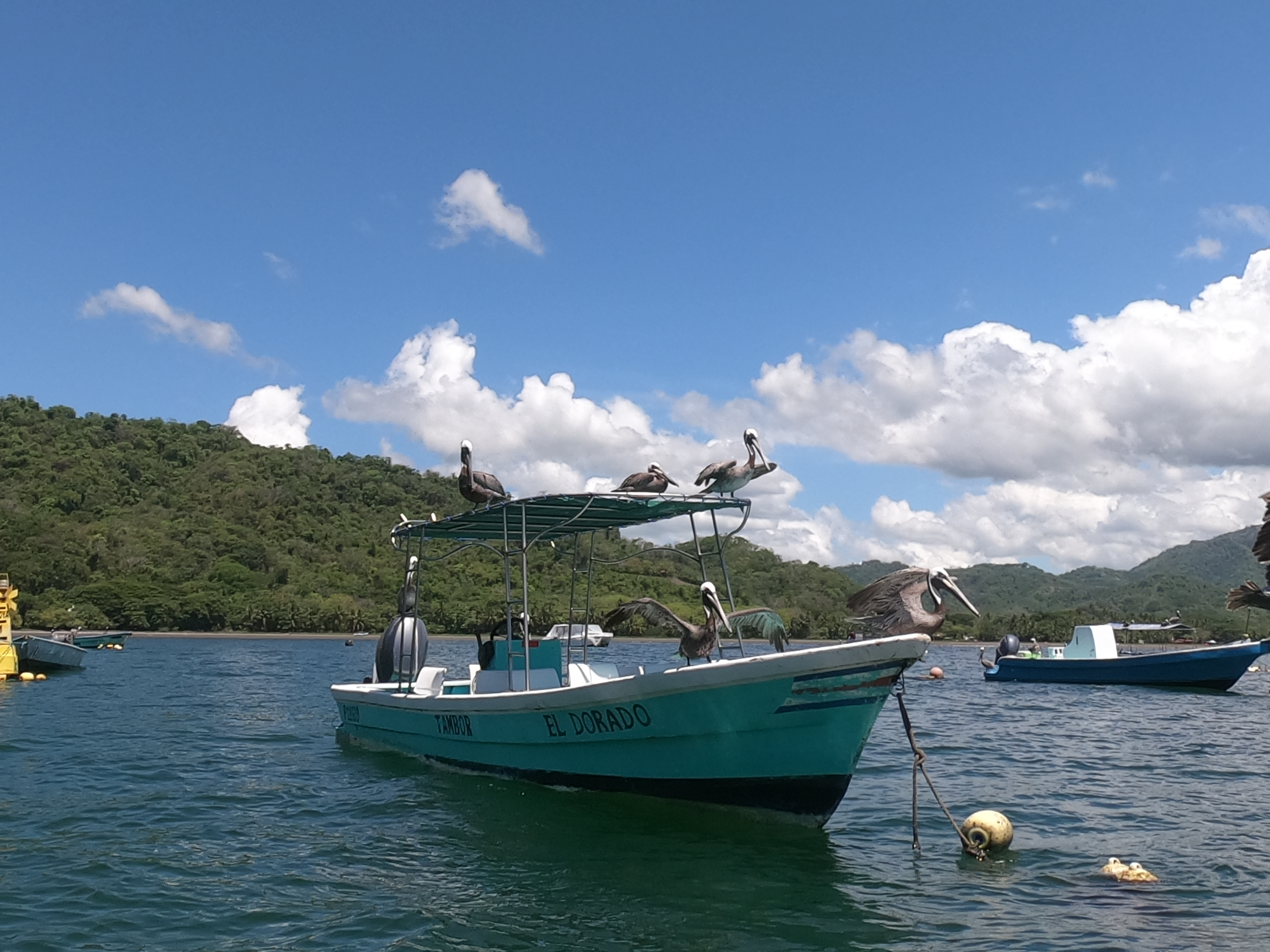
Pelicans? Always. The coolest of the cool.

And rare or exceptionally unique birds… sure.

But as often as not, I am more likely to cuss out a bird for taking a big messy dump as it passes overhead, or sits on our spreader, or worst of all – tries to sit at the top of our mast, jeopardizing an expensive wind indicator or antennae.

Occasionally, we are visited by a bird that leaves an indelible impression and happy memory rather than an obnoxious turd, as was the case with an extremely curious and inquisitive blue footed booby that visited us while we were at anchor at Bahia Drake. After watching us for quite some time from the relative safety of the dinghy, it grew more courageous and eventually hopped aboard and took a full tour around Exit’s deck.

“Boobie Inspection”

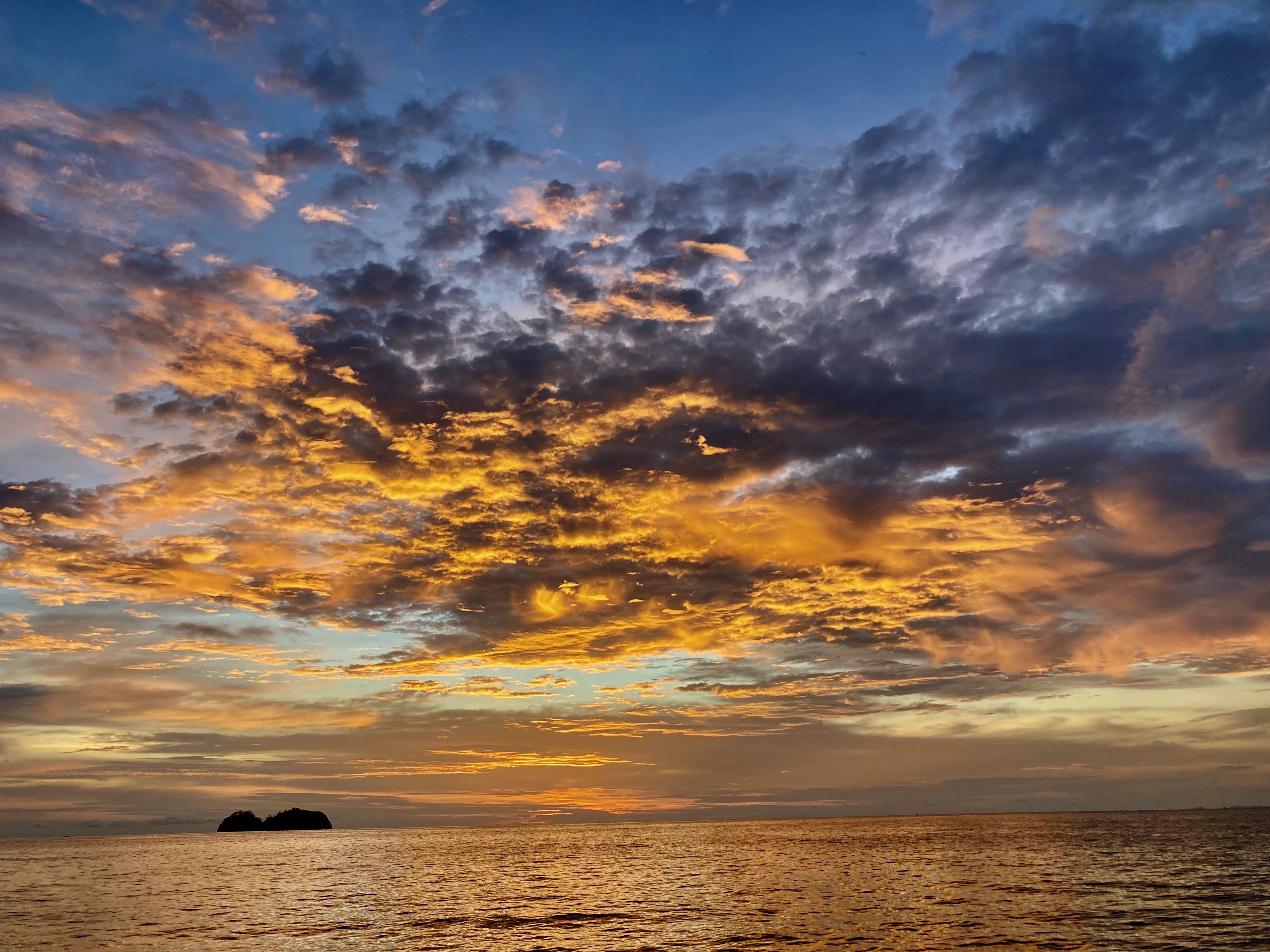
One thing we never grew tired of during our stay was Costa Rica’s propensity for breathtaking displays of astonishing cloud formations. Variety and depth seemed to always be the theme.

To be continued…

Who’s Counting?

March 18, 2020 – March 17, 2022

Seven hundred twenty nine days. We were counting.

It seemed impossible to really wrap our heads around…except for the fact that we had just lived it.

After arriving in Bocas Del Toro, Panama literally the night before the entire country locked down in reaction to a terrifying new phenomena that was sending shock waves around the globe and causing an identical worldwide reaction – Covid – we had no idea how things would unfold.

Days of uncertainty turned into weeks. Weeks became months. After a year we were moving about on Exit but still trapped in Bocas Del Toro. After eighteen months we had explored a large part of Panama’s Atlantic coast but it took twenty one months before we finally cleared the final lock of the Panama Canal and found ourselves in the Pacific Ocean.

Still in Panama.

We were counting down the days that would mark our two year anniversary in the country.

Now it looked as though we might actually get out of Panama before that day arrived. Unless, of course, we didn’t.


Santa Catalina

With our new alternator installed, Exit could once again charge her batteries while underway.  We were back in business.

Departing Santa Catalina, we made for Bahia Honda which was less than twenty five miles away.   For a couple of days the huge bay provided a protected and calm anchorage for us to relax in…mostly.  But it had been a compromise.  

Isla Coiba had been our first choice.  Coiba and its neighboring islands had a reputation as being the premier go-to location on the Pacific side of Panama for scuba diving, whale sharks and whale watching.  

However, a number of factors came into play which altered that trajectory.  The alternator had been the first.  Had it not gone tits up, we probably would have made straight for Coiba after waking up at Bahia Arenas following our overnight passage from Las Perlas. Now, once the alternator was up and running again, we would be backtracking to get to Coiba.

The second factor turned out to be a high likelihood that we would pay out the ass for access to the islands.  A ranger station on the north side of Coiba oversaw the national park and charged a fee for any boats anchoring within the park.  As divers and conservationists, we appreciated the effort Panama was making to preserve and protect the area.  However, we were having trouble swallowing the amount they were collecting on that behalf.   Sixty dollars for the boat plus twenty more per person… one hundred dollars PER DAY!  It occurred to us that the area was too big to realistically be patrolled by one boat and it was probably possible to sneak in at the southern most island of Jicaron, over thirty miles from the ranger station.  Yet we couldn’t get past both the ensuing guilt that would accompany that infraction as well as the fallout and cost if we were discovered.  

Over the past four years, we had learned diving from Exit without any outside support was not a simple undertaking.  Arriving in the Pacific Ocean, we found this became even more complicated due to the extreme tidal changes.  Since transiting the Panama Canal, we had suddenly found ourselves having to deal with ten to fifteen foot tidal swings twice a day, creating both depth and current challenges that had to factored.

Conditions at Coiba could be very sketchy for attempting scuba dives.  We might not even be able to dive at all.

As for the whales, it was possible we could see some, but it was out of season.  As for whale sharks, we had already cashed in a huge dividend at Isla San Jose in Las Perlas and it seemed unlikely to us that we would hit the jackpot again.  Odds were against us.

At potentially one hundred dollars a day, the gamble seemed like too much of a long shot.  We would pass on Coiba.

As we set out for Bahia Honda, we were a bit dejected we would miss out on Coiba but ultimately felt certain we had made the right choice. Three hours later that certainty was reinforced.

A lack of wind meant we had been forced to motor sail part of the way. The upside of that was, with our alternator fully functional, not only were we able to charge our battery bank but also make water without having to worry about the power draw.

After two hours of making water with the engine running the wind finally picked up. Not only were we able to sail, we decided the batteries were sufficiently charged that we could run the water maker for another hour to try to top off our water tanks. Thirty minutes later, the peace and quiet of our engine-free sail was shattered by a bang. It sounded a bit like a distant gunshot except that it came from inside Exit.

I hustled down the companionway and started looking around. When I removed the floorboard directly below the water maker I was shocked to see water draining into the bilge. And it was coming at quite a fast rate.

Immediately, we shut down the water maker and closed the seacock which fed sea water to it. The flow rapidly slowed to a trickle. A further inspection of the membrane and pump assembly, located in a locker underneath the bed of the aft berth where the water maker was located, revealed that the source of the sound we had heard and ensuing flood of raw water had been triggered by a high pressure fitting which had blown off.

Fortunately, the seacock was shut off before the water level became a problem. Also fortunate was the fact that we had gotten a rather extensive supply of spare parts for the Spectra water maker shipped to us while we were hauled out at Shelter Bay Marina in June. The specialized hose and high pressure fittings were among those parts… hallelujah. It turned out we needed them.

We arrived at Bahia Honda late in the afternoon and decided to tackle the water maker the following day.

Bahia Honda

After wrestling with the Spectra for most of the following day, it seemed like everything was once again good to go. We spent one more day in Bahia Honda and then continued on to Islas Secas, a small group of islands just outside the park boundaries of Isla Coiba.

Dolphins underway to Islas Secas, Panama

It wasn’t Coiba, but it was near enough we hoped to get some of the same bang without the hundred bucks a day.

We found the furthest southwest island of Islas Secas, both unnamed and uninhabited, to be a stunning anchorage. Incredible shades of blue both above and below the water, an easily accessible and beautiful beach, great holding for the anchor and fair protection from the southern swell.

As had been the case in Las Perlas, there were almost no other sailboats in the area. Both fishing boats as well as boats bringing day trippers made for a lot more traffic at Islas Secas. However, generally we had the anchorage to ourselves by late afternoon.

We also got in our first dive since crossing the Panama Canal. We joked that we would have been unhappy paying a hundred and fifty dollars for a dive company to have taken us, but it was good to be blowing bubbles again. The coral was quite impressive in places, and the abundance of fish and marine critters surpassed anything we had seen for a long, long time.

Even a mediocre dive is better than a great day’s work.

Diving at Islas Secas

The most frustrating thing we had encountered recently seemed to be our inability to access any kind of weather report we could rely on. The forecasts were available. They were just highly variable, even contradictory. And more often than not, most all of them were flat out wrong. Throwing chicken bones and reading tea leaves probably would have provided an improvement in accuracy. We were lucky that, with the current dry season, weather was almost entirely benign. Blue skies and very little wind over ten knots. The seemingly schizophrenic wind shifts turned out to be largely cyclical after a few days of observation – east in the morning, south during the day, clocking to west by sundown and north into the night. Not a problem for most of the week we spent there.

If things kicked up from the north we could always move to Isla Cavada nearby.

After ten days at Islas Secas we decided it was time to get motivated and keep moving. Boca Chica, twenty miles away on the mainland was our destination, not for its scenic beauty but, rather, a final provisioning excursion prior to clearing out of Panama.

While we were able to get fuel at a marina in Boca Chica, it became necessary to sort out transportation inland to David, Panama’s second largest city, for additional supplies. Fortunately, we were able to arrange a reliable driver that our friend Sharon, from Isla Joya back in Bocas Del Toro, used regularly. His English was impeccable and he was a lifelong resident of David, making it easy to locate the best places to find particular things.

Not only were we able to bring back an entire car load of food, supplies, and alcohol; he also helped us track down more elusive things. Club soda and tonic water were among those, as was a precious impact wrench which had elevated to the top position on my most needed tools list following my recent battles with both our furler and alternator. Ironically, finally being in possession of an impact wrench all but assured that we would never have use for one again.

We even managed to obtain Covid booster shots at a pop-up clinic in a public park. First try and it took no more than fifteen minutes. Quite a different story from our previous shot which had taken more like ten tries over the course of days in multiple cities.

After stowing away all of the goodies we had procured in David and sorting the final logistical details of our impending departure, we even treated ourselves to our first fancy sit down dinner of 2022.

Our final task in Panama was the process of clearing out, for which we needed to go to Armuelles, the last port of call before Costa Rica. Six hours of motoring. At least we could make water along the way.

Over the course of our stay in Panama, our water maker acquired the name Larry. During water making sessions, Kris would ask how the Spectra was doing, and I would answer ‘seems happy as Larry.’ The name stuck.

It had been three weeks since the high pressure line had blown out. Happy as Larry for the past twenty five operating hours of water making. I had become complacent. I should have known better.

Kris asked how Larry was. Flippantly, I replied, happy as… I would guess. The floorboards aren’t floating.

Kris didn’t smile. Immediately, I realized the error of my ways. It was too late. The words had already tumbled out of my mouth. I didn’t even need to look. As I went below, I could hear an alarm on the Spectra, buzzing at a volume slightly less than audible from the cockpit with the engine running.

It had shut itself down. The bilge was filling with water. The high pressure fitting had blown out again. Fuck. Served me right. It hadn’t been fixed correctly. Larry had done left the house, and Jessie had just arrived [an inside joke best left inside].

This was going to require some serious attention, but our water tanks were almost full. It could wait.

Armuelles was the place to clear out of Panama; not to sort out more repair issues.

Despite having heard some nightmare stories about attempted dinghy beach landings in sketchy conditions at Armuelles, we experienced no drama. The clearing out process was easy enough. A man by the name of Omar from the port captain’s office met us on the beach and took us back to his office, completed a bundle of paperwork, and then walked us from office to office getting the appropriate stamps and signatures while seeming to berate each office for their inefficiency and slow responses.

With all of our paperwork in order, we were officially cleared out of Panama. Barring a beach ambush by a rabid pack of wild dogs upon returning to our dinghy, it seemed nothing could stop us from setting sail for Costa Rica the following day…

No. No rabid pack of dogs. Only a lone shade seeker.

We had a celebratory mix of Perfect Storm drinks that evening in the cockpit. The toast was to Panama. Panama had provided comfort, safety, and exploration. We couldn’t have asked for more. Now it was finally time to go.

Almost two years…but not quite. Seven hundred twenty nine days in Panama. Well over ten thousand hours on the water. Three hundred sixty five of those hours with the anchor up. Approximately nineteen hundred nautical miles traveled aboard Exit since our arrival in Panama.

And yet possibly the most ironic and surprising number? After all that, despite the fact we were now in a different ocean — as the crow flies, we ended up clearing out of Panama only seventy five miles away from the location where we had cleared in.

But who’s counting?

We raised anchor and departed Armuelles at sunrise the next morning.

Sunrise at Armuellas

For the second day in a row, our wind indicator provided digitally displayed confirmation of the depressing reality that we would be burning diesel to get anywhere.

The rising sun slowly burned away the morning mist, revealing a shadowy outline of Volcan Baru in the distance behind us. The active volcano’s ten thousand foot peak represents Panama’s highest point.

Volcan Baru

As we approached the southern tip of Burica Peninsula, looking through binoculars the beach we were seeing was Panama. However, just behind the line of trees was Costa Rica!

Nine hours and fifty or so nautical miles later we were almost there.

Ten or so miles outside Golfito, the first port of call in Costa Rica, the alarm for our autopilot sounded. The same autopilot we had brought back from the States and installed less than six months ago. Fuck. Another battle to be waged when we had mistakenly assumed the war was over. It would have to get in line.

You’d think the elation of arriving at a new country after all this time would be at the front and center of attention.

To the contrary, I was pretty bummed. In twenty four hours we had killed the water maker, nearly fifteen gallons of diesel, and now our auto pilot.

Welcome to Costa Rica.

Approaching Golfito, Costa Rica

Still, the moment turned when a panga full of tourists overtook us in the entrance channel. As the boat carrying a dozen or so pasty white passengers passed by us, a random guy wearing a straw hat held up his fist and yelled something at us that I couldn’t quite make out.

Kris said he obviously had seen the “Pullman, WA” on our transom.

Hmmm.

Occasionally it prompts the question, “Are you guys from Western Australia?”

Other times, like this, it prompts the response, “Go Cougs!”

I had to smile. We hadn’t cleared into Costa Rica yet, but I was already starting to feel at home.

The Right Tool

February 22, 2022

To-day… Tue-sday… month zero-tw0, day two-two, year two-zero-two-two. Right day, wrong to-ol. Might as well be two-twenty-two in the afternoon.

Okay. That’s it. Enough of the tooooos.

Second repair in a row. An impact wrench is now officially on the list.

The impact wrench wouldn’t have sorted everything with the furler repair that we completed just before our Panama Canal transit, but it sure as hell would have helped.

This time it made all the difference.


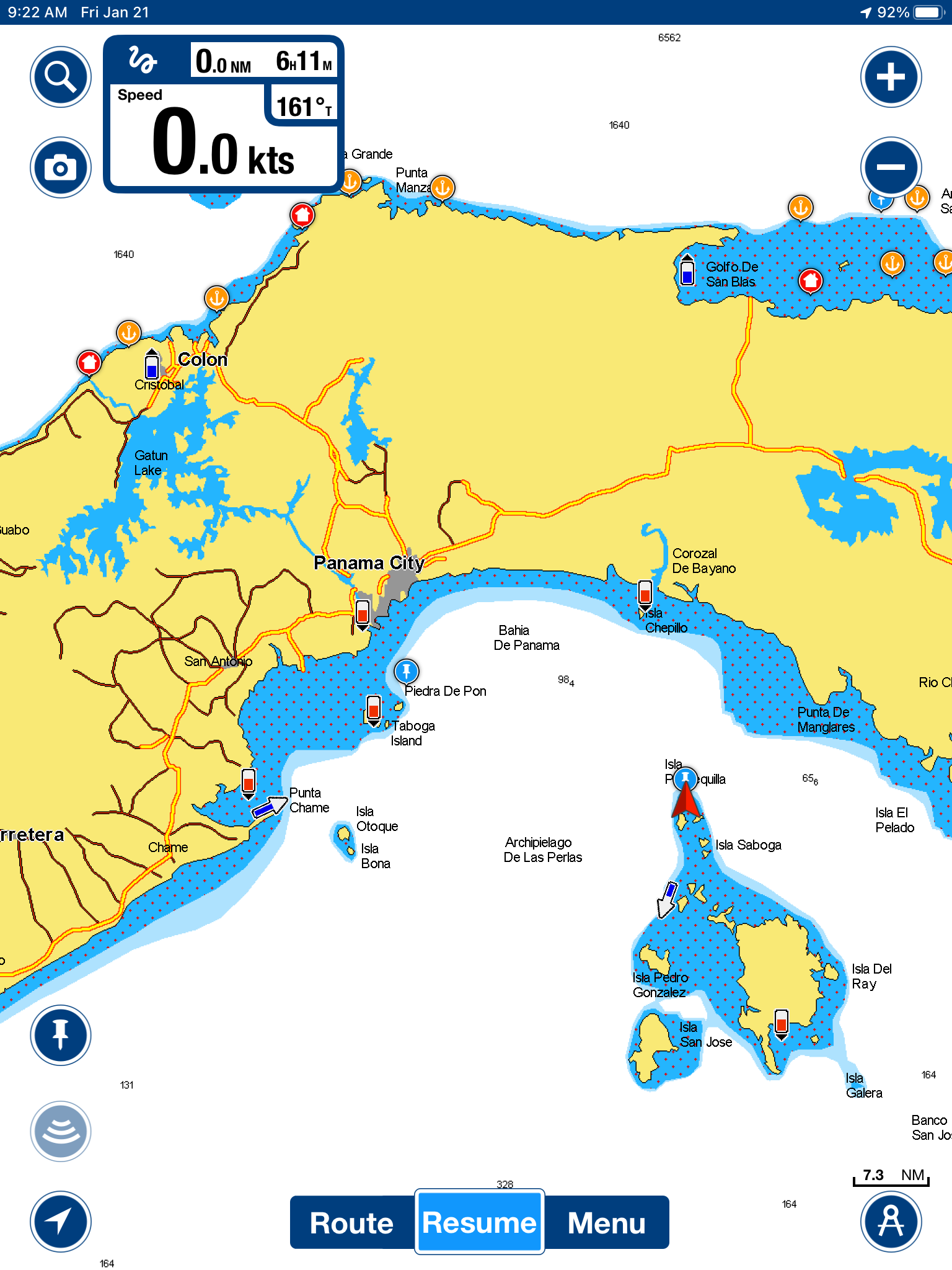
We departed from Las Perlas cautiously optimistic. Erratic weather forecasts left us completely guessing on what we would encounter once underway. Leaving early in the afternoon provided us with an option to bail out the following morning just after clearing Punta Mala (Bad Point…great name) if things were going against us, or continue if things were looking good.

After threading our way through an endless convoy of ships approaching and departing the Panama Canal, we had nothing but open ocean to let Exit run. Only the occasional fishing boat crossed our path, surprisingly small for how far away we were from anywhere.

The Predict Wind calculation of ten hours to get around Punta Mala seemed more than optimistic. It was the best of four forecast calculations ranging from ten to seventeen hours. Amazingly, it actually took us only nine hours [yes…for dirt dwellers doing the calculation, that averaged a snail’s pace of slightly more than twice walking speed, or not even that if you are a fast walker].

During the day we were treated to a visit by a pod of enthusiastic dolphins, quite different from those we had seen in the Atlantic.

For us, it was an epic, exhilarating sail from Las Perlas to Punta Mala, during which we averaged a screaming pace of over eight knots for the entire nine hours. Even once the darkness of night had set in, an incredible full moon illuminated the watery path before us. Eventually, after passing Punta Mala, we found ourselves having to finally turn on our engine when the wind completely died.

Despite our own reluctance to run the engine, our battery bank would be much more appreciative of the gesture.

Yet to our dismay, even with the Perkins diesel engine churning away, the number on the ammeter remained negative and the charge deficit continued to grow.

The alternator wasn’t charging at all.

Shit.

By sunrise, the charge deficit showing on the digital display was the highest it had been since we had replaced the entire house battery bank at the end of our haul out in June. At least now, as the sun climbed higher and higher, our solar panels were being fed and the batteries would begin to recover.

Twenty one hours and one hundred fifty nautical miles after departing Isla San Jose in Las Perlas, we set the hook in the expansive though calm bay of Bahia Arenas and immediately chose sleep over troubleshooting.

By sundown a number of tests had confirmed what we already suspected. The alternator was dead. No output at all.

It was, by no means, an immediate emergency.

The house batteries were only six months old and were getting nearly fully charged every day just with solar collection. Currently, Panama was in its dry season. We hadn’t collected a drop of rain catch since before Christmas.

Still, our location pretty much qualified as middle of no where and we really needed our alternator running.

Unfortunately, diagnosing the exact problem inside the alternator was a bit academic since we had no spare parts aboard that would facilitate a repair.

Fortunately, during our recent visit to the States, Kris managed to convince me that the overall benefits of having a spare alternator aboard Exit far outweighed the overall pain in the ass of carrying that alternator back to Exit.

No parts… but we actually had the entire brand new alternator. Sweet. The only problem was we only had one pulley. On the broken alternator. And it was not going to budge.

Hours became days.

I tried everything except the one thing I knew would work but didn’t have… an impact wench.

Half inch drive socket wrench.

Half inch drive socket wrench with a breaker bar.

Half inch drive socket wrench with an even bigger breaker bar.

The leverage didn’t matter because the damn pulley kept spinning.

Holding it with a towel didn’t help.

Wrapping a belt around the pulley slipped.

An oil filter wrench didn’t work.

Channel locks couldn’t stop the pulley.

The nut was too tight; the pulley wouldn’t stop turning; the alternator itself couldn’t be secured well enough.

It became an exercise in frustration.

Eventually, desperate and somewhat delirious, I concocted what I deemed would be a victorious apparatus of MacGyver proportions to get that damned pulley off — a V-belt with the teeth wrapped around the alternator fan to grip, twisted into a tourniquet and held by the handle of a hammer, supplemented with a pair of channel locks holding the pulley which had been wrapped with electrical tape for protection, all wedged against a deck cleat and held in place by one person while a second got on the 22mm nut with a socket attached to a two foot breaker bar.

Confident that this would be our moment of glory, I held tight and Kris leaned into the breaker bar.

It slipped immediately.

Arrrrrrrrrrrrrrrrrrrrrgh.

Cursing my lack of an impact wrench for the thousandth time, I crawled back into the engine compartment and completely reattached the damn alternator and tightened the belt.

Why? To remove it, of course.

The final option.

The thinking was: the alternator would be bolted to the engine block to keep it secure from movement; the belt would be tensioned back up as tight as possible to keep it gripping the pulley; the engine compression would hold it all in place against the torque. Why hadn’t we tried it earlier? Because it was a giant pain to reattach something that had to come right back off again.

Plus, it didn’t do shit. After all that, the pulley rotated backwards with almost no effort applied.

Arrrrrrrrrrrrrrrrrrrrrgh.

Like Charlie Brown and that damn football.

The alternator got pulled out once again.

Fuck.

We concluded that Santa Catalina, a bit less than forty miles away, was the only possibility for the near future. If we hoped to either get the broken alternator repaired or, at the least, have the pulley removed so the new alternator could be used, we’d need to get to a town of some sort.

Consequently, we enjoyed five hours of brilliant sailing followed by two solid hours of smashing headlong into three to five foot waves directly on our bow in winds surpassing thirty knots at times. Oh, the constantly swinging pendulum.

Varying conditions come with the territory, sure. But thirty degree wind shifts accompanied by nearly instantaneous fifteen knot increases in wind speed make for some pretty interesting moments.

With the anchor finally set outside a tiny town known more by surfers than typical tourists, we waited another thirty six hours for the wind to die down enough for us to brave a beach landing in our dinghy.

Sailboat repair, even in a local fishing village, would be a long shot. But car repairs would not. And our alternator was no different from a car alternator. As luck would have it, Santa Catalina appeared to have more cars than anyplace we had been since Panama City.

Kris had learned of a possible source of help from a couple on another boat at anchor who had already been ashore. A guy by the name of Senior Roberto who owned the first restaurant on the right.

When we got there, the restaurant was closed. A guy sitting at one of the outside tables informed us Senior Roberto was gone until afternoon. He tried to call but no one picked up.

As best we could, we tried to communicate our situation and need for a mechanic, machine shop, or car repair shop. We pulled the alternator out of the backpack to help clarify.

While the guy was looking through the contact list on his phone, trying to figure who he knew that could possibly help us, another man walked past the restaurant in the middle of the road. He looked over, saw the alternator, and asked, “Mechanico?”

“Si,” we nodded.

He smiled and tilted his head slightly, indicating further up the road, then gestured with his hand for us to follow.

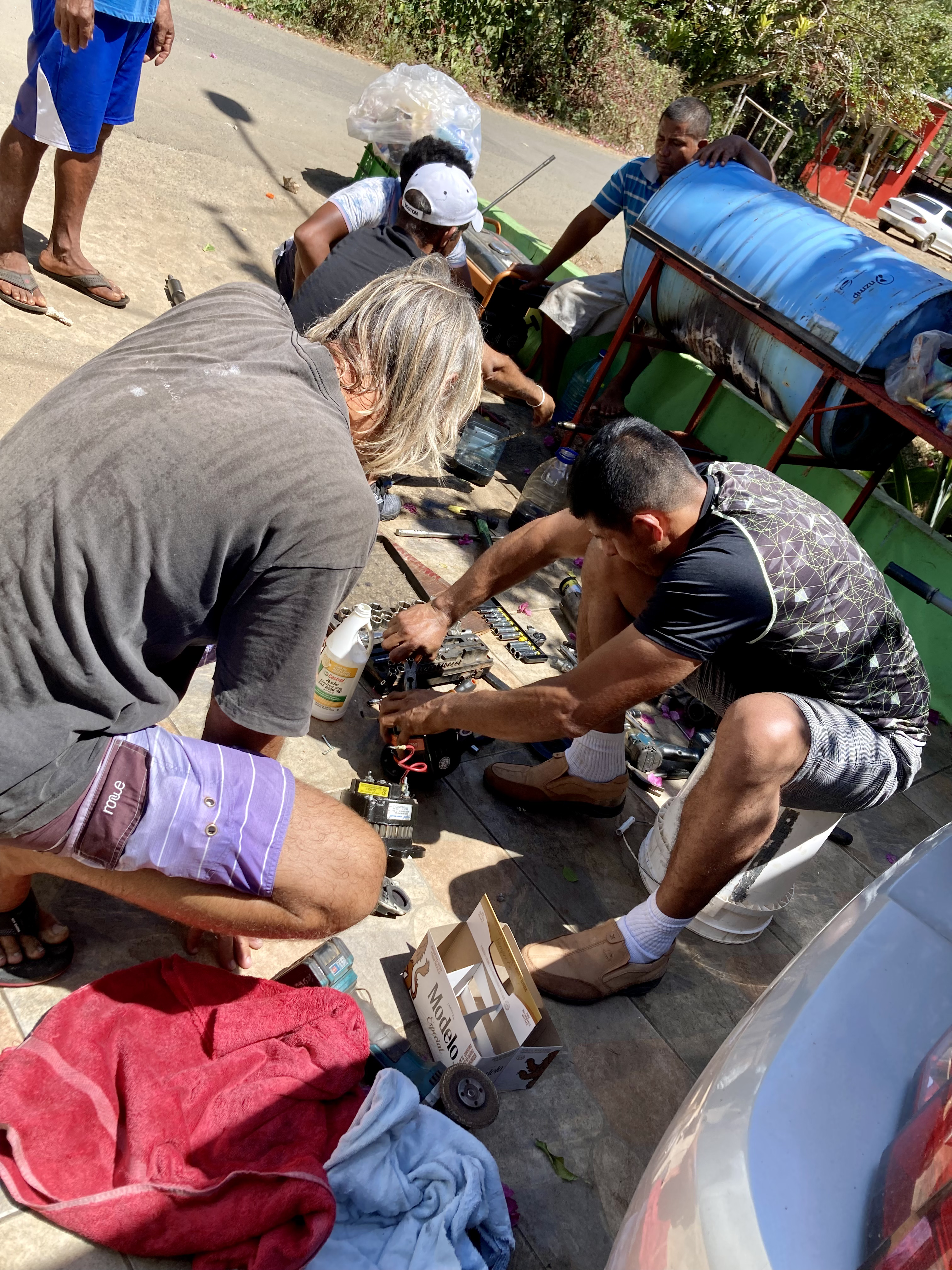
A short walk brought us to a driveway that had a half dozen or so guys standing around watching two other guys work on the lower unit of an outboard engine.

They all seemed genuinely friendly and interested. After a bit of circuitous back and forth [saying something is broken is pretty straightforward, however, explaining what you need is not], we were told to come back with the other alternator as well. The guy was confident he could get us sorted out.

Back to the dinghy, which was now sitting on a sprawling beach about fifty yards from the water, thanks to a twelve foot lowering tide. This was one time we especially heralded the joy of having purchased a used $350 set of dinghy wheels for $40 in Bocas Del Toro over a year ago, anticipating this very need once we reached the mighty Pacific Ocean.

Back across a treacherous stretch of water rife with numerous dinghy puncturing rocks lurking just under the water’s surface. Back to Exit. Pick up the second alternator. Back in the dinghy. Back across the treacherous stretch of water rife with numerous dinghy puncturing rocks lurking just under the water’s surface. Another beach landing. Since the tide would be rising soon and we didn’t know how long we’d be, we had to haul the dinghy back to almost the same spot we had left it the first time. Back up the road, past the restaurant, to the driveway with the half dozen or so guys still working on the outboard bottom unit.

Whew.

It took him about two seconds.

The impact wrench was so fast he was able to hold the pulley with his bare hand.

Damn.

Without parts, the actual repair of our old alternator would have to wait. But the new one could now be installed.

It all went back together without a hitch. And just like that, once again, we had an alternator that could charge batteries.

VICTOOOOOOOOOOOOOOOORRRRRRRRRRRRRYYYYYYYYYYYY!

An impact wrench is now officially at the top of my priority list for acquisition… before something else breaks.

Like pissing into the wind or taking a dump upside-down, using the wrong tool may ultimately get the job done, but its gonna make things a lot more complicated than necessary, a lot more messy than necessary, and inevitably come with unforeseen consequences.

So let that be a lesson to you kids – always use the right tool for the job… and only take care of business right side up with your back to the wind.

A long look from a very curious pelican

Exit’s Pacific Ocean Baptism – Archipielago De Las Perlas, Panama (Part Three)

January 20 – February 15, 2022

First Day Bay (Ensenada Playa Grande on Isla San Jose) had indeed given us an epic first day.

Ohhhhhhh ya… I do sense another movie coming on…

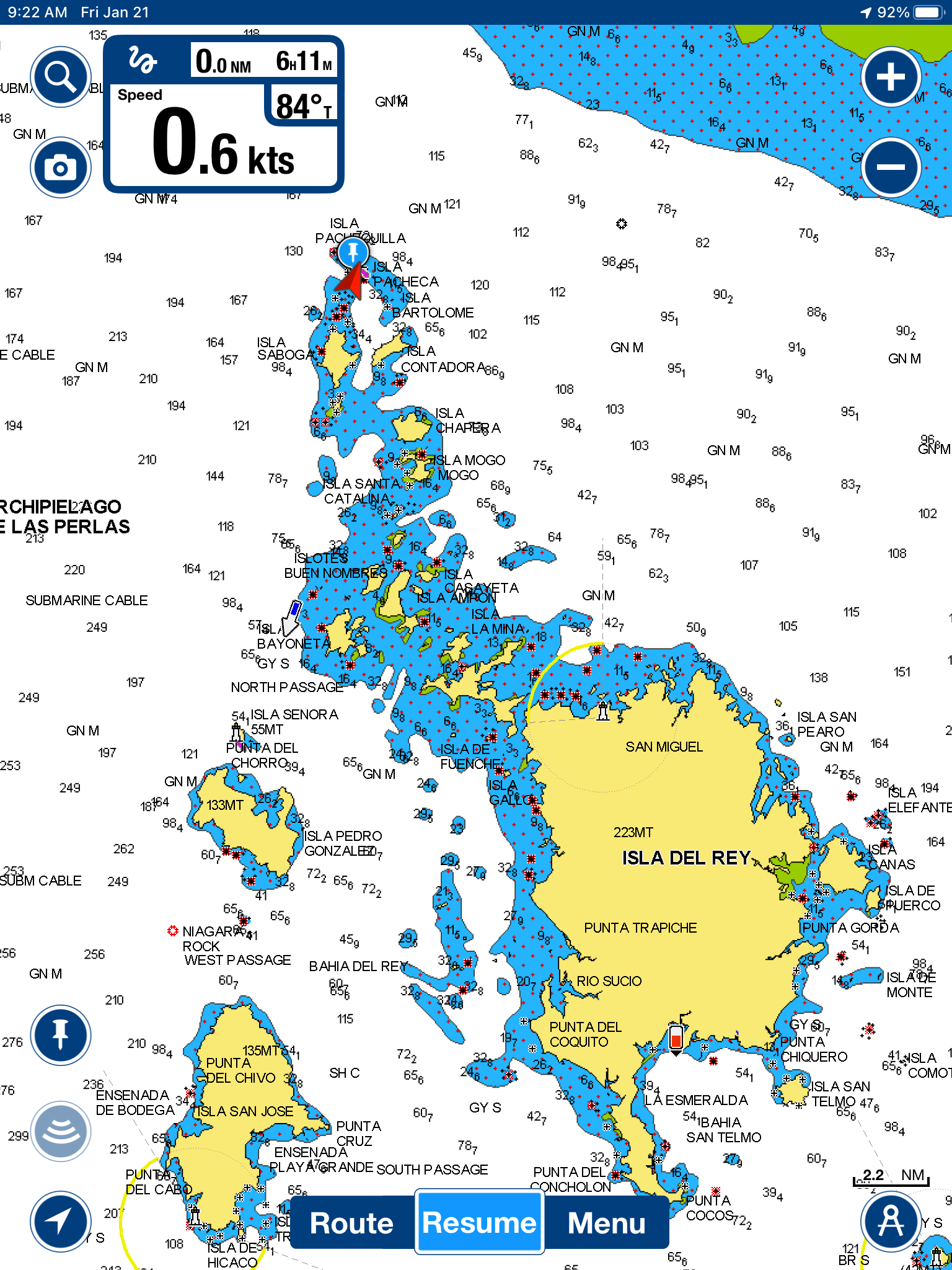
Over the course of the week, we went out on the water again and again, both in the dinghy and on the SUP.  The show never stopped.  At times during the changing tides, traffic would seem to slow down, and then another group of rays would surface somewhere else in the bay.  Fortunately, one of the busier times seemed to be just before sunset, which provided a daily ritual of happy hours in the dinghy floating amongst schools of crazed devil rays and feeding whale sharks. 

More whale shark footage at Isla San Jose

Unbelievable.

First Day Bay.

During one trip to the beach looking for Macaws, which we saw only a few brief glimpses of, we found evidence that we were on the front doorstep of a crocodile’s abode.  The tracks left in the sand by its feet and tail were a dead giveaway.  Given the fact that this was just entering the beginning of their nesting season, we opted to not go wandering around the shoreline, barefoot and all.  Probably smart.

When we did eventually leave Isla San Jose and First Day Bay, it was not due to boredom.  We were running desperately low on fruits, veggies, and beverages; and it would take a trip to Isla Del Rey or even possibly farther to Isla Contadora to sort ourselves out.

Departing Isla San Jose for Isla Del Rey
Isla Del Rey

On the southern side of Isla Del Rey we anchored just off of Rio Cacique.  It was our first stop and introduced us to the brutal and relentless roll the swell from the south that would hound us on that island.  

Rio Cacique turned out to be a beautiful dinghy excursion up another one of the mangrove rivers which had become so familiar throughout Panama.  For us, the real uniqueness of this river was its entrance.  During low tide, the mouth of Rio Cacique was completely choked off by a sand bar.  Once the incoming tide rose high enough, the river was re-connected with the ocean, causing a messy and wave sticker point of contact.  Slack high tide was the only feasible time to enter the river.  Too long before or after resulted in a maelstrom of surf and three knot currents that surely would capsize the dinghy.  

This left a small one or two hour window during which the tide was high enough for the dinghy to not run aground and the surf was controlled enough to not be outright dangerous, where we could explore the river as it wound back and forth, continually growing narrower until we could barely even turn the dingy around.  Long before we had the opportunity to really check out many of the areas as the river branches or proceed too far inland, we had to remind ourselves to turn around and head back in time to get back outside the sand bar before all hell broke loose again.

Dinghy excursion up Rio Cicaque

We had read that coming around the southeast side of Isla el Rey, on tiny Isla San Telmo, one could find the wreck of a small submarine, which would reveal itself along the shoreline as the tide dropped.  The sub, apparently one of the earliest technologies of its kind which had been used for pearling, had mysteriously shown up over a hundred years ago.   We were able to locate it, and it actually was larger and more intact than I expected.  Cool, and worth a stop; but we moved on shortly afterward.


AN ABUNDANCE OF CAUTION OR JUST A BUNCH OF DICKS

SÉCURITÉ… SÉCURITÉ… Attention all boats on the east side of Las Perlas.  Our sailboat was boarded and robbed yesterday.  Be sure you take appropriate precautions.

The announcement over the VHF radio stunned us as it was repeated.  The caller hadn’t identified themselves.

We were on the east side of Las Perlas.  More specifically, the east side of Isla Del Rey… almost as east as you could get in the archipelago.

Exactly where the voice on the radio had been talking about

Immediately after the announcement, a boat identifying itself as S/V Papillon replied asking for more information as they were also currently in the area.  Papillon’s herald went unanswered.  That was all we heard from either person.

Not just strange.  Bizarre.

A Sécurité announcement generally implies a warning or maritime safety situation.  Urgent but not an immediate life threatening emergency.  We had heard them issued over the radio before for things like large logs, or unattended vessels that had broken free of moorings, floating about freely which posed a risk of collision; or a disabled boat entering a high traffic channel asking for space to maneuver.  

Not a Mayday call.  

Which would be appropriate in the context of being boarded and robbed.

But yesterday?

Our radio had been on the day before.  We had heard nothing.

Not just strange.  Bizarre.

We had already planned to move to a different anchorage, still on Isla Del Rey.  Without more information, we saw no reason to alter that.   The night before had been miserable thanks to a wicked swell that had us rolling all night long.

We picked up anchor and worked our way north along Isla Del Rey’s eastern coast.  Our first option looked just as exposed to the swell as the anchorage we had just left, so we continued on.

The second option didn’t have any swell, but also didn’t jump out at us.  One sailboat was already there; the first one we had seen on this side of the island.  There was a guy on deck hanging laundry…obviously, not someone recovering from a robbery.

Again, we continued on.  We ended up anchoring in a bit of a channel between Isla Del Rey and an island called Isla Espiritu Santo. 

Shortly after we had set anchor, as Kris paddled away on her SUP, a catamaran sailed into the channel and anchored near us.  

About a half hour later, a small panga motored up to Exit with three local teens inside. 

After a few niceties, one of them lifted a jug sitting on the floor of their boat and said something I couldn’t make out.  I asked if it was water they wanted.  They said gasoline.  I said I had no extra.  They asked if I had chocolate.  I laughed and said all I had to offer was water.  

They decided that was better than nothing, so I handed over a few bottles of water we had left over from our Panama Canal transit, during which we were required to provide bottled water for the advisor and line handlers, and threw in a small pack of cookies for good measure.  They seemed to appreciate the cookies more than the water, offered what I thought was a sincere thank you, and motored away.

I watched as they headed toward the cat.  

Three people from the cat had headed to the nearby beach right after setting anchor, one on a SUP and two swimmers.  Now the guy on the SUP was paddling straight past the three teens in the panga, making fast for his cat.  The teens appeared to be speaking with the other two, who eventually swam back to the cat as well.  Then in an odd display, the teenagers buzzed a couple of circles around the cat and sped off.

Not long after that, Kris arrived back at Exit.  She had watched the last exchange play out with the people on the cat as well, and I relayed to her what had happened when the kids stopped at our boat.

Less than ten minutes later, we heard the rattling of chain and watched as the cat picked up anchor.  They slowed as they passed right up next to us.  According to the guy at the helm, the guy I had seen on the SUP, they had spoken with the person we had heard earlier on the radio with the Securite announcement.  He said it was the boat in the previous anchorage we had seen putting out laundry.  

Weird.

Also weird was the fact they seemed to have little more information than we did already.  

The boat had been boarded and robbed.  That was it.  It was incredibly lacking in specifics.

And now they just had what they described as a questionable encounter with very aggressive locals in the boat.  Very aggressive?  Really?

The guy said they were “quite nervous given the earlier robbery, and after asking what the kids wanted, had tried to establish that they were not people to be messed with.”   After that, the guys in the boat had “aggressively raced around them.”   So, “out of an abundance of caution”, they were now leaving for an undisclosed location.

And off they went.  Last we saw, the cat was still motoring off into what appeared to be who knows where.

We were unsettled.  But it also seemed largely like a crock of shit.

To me “boarded and robbed” were trigger words.  High octane vocabulary.  In my eyes, it implied an occupied boat being assaulted by armed assailants.  

The boat we saw earlier didn’t try to hail us directly on the radio as we passed; they hadn’t even left the anchorage; they were doing laundry!  It did not appear by any stretch of the imagination that they feared for their imminent safety or security.  All speculation without good information.

A situation in which someone had taken an unlocked jug of petrol off an unoccupied boat – technically still “boarded and robbed” – seemed much more likely, and a scenario I could live with.  Not cool, but digestible.

As for the cat’s “abundance of caution”, I was even more inclined to call bullshit.  I had just had an exchange of my own with the guys.  They were asking for petrol, but certainly not demanding it.  They left Exit with smiles on their faces after being offered water and cookies.  It sounded to me like the aggressive party was the group on the cat – paranoid about thieves, they postured as badasses not to be trifled with and were looked at by these kids who live here as a group of foreign assholes.

We ended up moving out of the channel we were anchored in, which served as the main thoroughfare for any passing boat traffic, and re-anchored less than a mile away, in the corner of a small bay, choosing to spend the night dark.  Nothing happened at all.  We’ll call it just to be on the safe side, because from here on I will associate the phrase abundance of caution as a term potentially to be used by a bunch of dicks.


Initially, Isla Contadora held little appeal for us. The most populated town and a lot of moored boats in the bay. We skipped past it the first time, but were actually happy when we later returned and went ashore for some provisioning and a bit of a wander around. The town ended up being quite pleasant to visit, and provided our first restaurant in nearly a month, since we had left Shelter Bay Marina.

Isla Contadora, Las Perlas

It had been a week since we departed Isla San Jose. Having both exhausted all the stops in Las Perlas that we had hoped for and adequately restocked our fruit, veggie, and beverage supplies, we returned to Isla San Jose one last time as a staging point for our departure to start heading in the direction of Sea of Cortez, our ultimate destination before summer arrived to Central America.  We hoped for one last finale at First Day Bay.

Between Isla Contadora and Isla San Jose, it appeared our mojo was still working.  We were approached by a family of what we initially thought were pilot whales.  There were more than a half dozen, both adults and calves.  Over the course of nearly half an hour, we watched with fascination.  Initially, they seemed very curious.  A couple of the adults came right up to Exit and gave us a rather intimate inspection.  Eventually, they continued about their business, allowing us the gift of a slightly more distant though still extraordinary encounter.  Later, a bit of research lead us to the conclusion that we had not been visited by pilot whales, but rather either false killer whales or melon headed whales – a detail which surprised us but made the whole experience no less stunning.

False Killer Whales while Exit is underway

As we approached Isla San Jose for the second time, at nearly the same location we had previously seen our first whale shark two weeks prior, a large dorado (or mahi mahi) leapt out of the water.  A brilliant green and blue color, it was the first we had ever seen.  Again, our mojo seemed to be operating at full tilt boogie for our return to First Day Bay.

Alas, it was not to be.  Not entirely surprisingly, but sadly, no one was there.  First Day Bay seemed all but empty.  Our marine friends had left.  The devil rays and whale sharks had moved on with the food supply.   Ultimately, it made the entire experience even more special.   We had lucked out completely; our previous visit had perfectly coincided with the arrival of krill and small organisms – a smorgasbord for the filter feeding devil rays and whale sharks who had so amazed and entertained us.  Though fleeting, for us Isla San Jose will always be thought of as the island of whale sharks and leaping devil rays.

All that remained were the cows that had come to the beach nearly every day.  

Beach cows. 

First Day Bay.


After nearly a month at Las Perlas, we sensed the time to move on was upon us.

Our stay had been brilliant.

Though we had not done any diving during our visit, the snorkeling had revealed just a smidge of the potential the Pacific Ocean held for us.  Stunning colors and clear water, healthy reefs, and far more fish than most everywhere we had been in the Caribbean.

Over time, it became apparent to us that Las Perlas is not considered nearly as much of a destination as other places in Panama such as Bocas Del Toro or San Blas.  The number of other boats we encountered there was surprisingly small.   Obviously, boats in the area are either headed for the Panama Canal or have just transited it, and Las Perlas is viewed as a brief stopover, if it even makes the cut.

During our visit, one of the few things even more scarce than other boats was rain –  none since our arrival to the Pacific Ocean.  We had not seen a drop since we entered the Canal in mid-January; even then, it was only a brief sprinkle just outside Shelter Bay.   Strangley, the last day we had actually collected any rain catch was the day after Christmas in San Blas.  In fact, it would be March before any rain would land on the deck of Exit.  Here on the Pacific side of Panama, when they say dry season, they mean it.  On the Atlantic side, the term seemed much less definitive, apparently applying sometimes to certain months on certain islands.  Go figure.

Regardless, it was time to put Las Perlas in our rear view mirror and press on. There was still twelve hundred miles between Exit and the Sea of Cortez; we needed to get moving.

Archipielago De Las Perlas…the perfect name. Archipelago Of The Pearls.

Exit’s Pacific Ocean Baptism – Archipielago De Las Perlas, Panama (Part Two)

January 20 – February 15, 2022
Isla San Jose

Twenty years of scuba diving at some of the most exotic locations on the planet and thousands of dives each.  Never had we seen a whale shark.

It had become a running joke – unicorns and whale sharks… both creatures of fable.

Now we were coming around Punta Cruz, the point jutting a mile out from Isla San Jose, southwestern most island of Las Perlas.  That made it less than two miles from Ensenada Playa Grande (Big Beach Cove) where we planned to anchor.  Less than half a mile from the shore in one hundred feet of water, just as we started to make a gentle turn towards the bay, we saw something dark cutting through the surface, not more than a couple hundred feet forward and starboard.

A fin.

A big fin.

A big fin with spots.

Holy shit!

We took Exit out of gear and let her drift.  Lo and behold, what should swim straight out of the pages of a fable and alongside us?

That’s right.  A fucking whale shark!

And a big one at that.  Though over thirty feet long is possible, ten to twenty feet is more typical when you hear of whale shark encounters with people.  This one was over twenty.  Right about half as long as our boat.  Wow!

Not a snorkeling experience paid for by a tourist – an incredibly rare treat.  Not a scuba diving encounter – even more rare to occur.  Rather, a visit of its own choosing while we are underway on our sailboat.

Incredibly large for a fish, yet absolute in its grace and gentle demeanor.  

What a magical creature.  Now we believe.  As though a whale shark actually came out of a fable.

For fifteen minutes, time seemed to distort in opposite directions, elongating into something with an elasticity resembling the arms of an old childhood Stretch Armstrong toy while it simultaneously blinked past at the speed of a camera lens shutter.  

And then it was gone.  With both the incontrovertible absoluteness and longterm fragility of a snap shot, our first encounter with a whale shark became a memory.

Whale sharks actually do exist!!!!!!

And, as it turned out, it also was a preview of coming attractions.  Our encounter as we arrived would become the embodiment of our our entire experience there. Within days, Ensenada Playa Grande would come to be known to us as First Day Bay. First day to have seen that…

Just minutes after anchoring, we had our second whale shark encounter.  A different whale shark, this one not much over ten feet long, swam right up to Exit and slowly passed by.  Amazing. 

Second whale shark encounter; first one to visit us at anchor.

First Day Bay.

First whale shark at anchor

Moments later, another show commenced that would continue almost uninterrupted throughout our stay.  The Rays Craze.

For a week straight, we watched and heard a non-stop performance from what had to be thousands of mobular rays, devil rays to be specific.  Countless groups, each in the hundreds or more, moved about the bay constantly churning up a froth of water with their movement that looked and sounded like boiling water.  Randomly, individual rays or entire groups started leaping out of the water, typically landing with a slapping bellyflop but sometimes in a fit of acrobatic flips (we referred to them as floppers or flippers).  The scene was ridiculously amusing to watch.  A group would disappear below the surface, only to return in a churning cauldron moments later.  Sometimes the leaps were individual rays repeatedly bouncing across the water like a skipping rock.  Other times dozens would erupt from the surface nearly simultaneously, comically reminding me of carefree and overly energetic children jumping on a trampoline or, even more, popping popcorn.  

Pelagic Popcorn

What those crazy rays were doing is anybody’s guess.  Communicating with each other?  Cleaning themselves of parasites?  Just having a blast?  Who knows…but it sure was an endless source of both smiles and laughter for us.

The morning after we arrived, Kris went for a paddle on her SUP.  On the beach, she found fresh tracks from a turtle who had come ashore the previous night attempting to lay eggs.

But the real entertainment was in the water.  Even though Kris had already enjoyed incredible encounters with schools of cow nose rays while we were in Bocas Del Toro, these were devil rays and the leaping was unique to them. 

And never had a creature twice as long as the SUP swam within ten feet of her…yep, another whale shark. 

First Day Bay.

One would think that would be a mic drop and walk offstage moment.  Day finished.  Might as well go to bed.

Not quite.

What could possibly upstage that surreal instant with another, all before lunch?  

How about Space X-it drone footage of a whale shark swimming with a school of hundreds of leaping devil rays… BOOM!

First Day Bay.

Space X-it drone footage of whale shark and rays

So now what?  It’s still morning.  Fuck ya, let’s take the dinghy out.  And so we did.  Before we knew it, we were amongst the group of rays we had just flown the drone over.  The whale shark was still there as well, and proceeded to swim right alongside the dinghy.  Eventually it disappeared into deeper water, but the rays just kept circling about.  We seized the moment and jumped into the water, snorkeling in a surreal and unforgettable devil ray soup.

Mind-blowing.

First Day Bay.

Later, when we looked closer at the video footage, we actually saw a single cow-nose ray infiltrator hiding amongst the massive population of devil rays.

Cheeky.

TO BE CONTINUED IN PART THREE…

Exit’s Pacific Ocean Baptism – Archipelago De Las Perlas, Panama (Part One)

January 20 – February 15, 2022

The relief we felt was palpable.

After twenty two months, we were still in Panama. Nevertheless, the forty mile journey just completed aboard Exit had delivered us through the doorway to a new world.

The Pacific Ocean.

Yet who stops at the doorway?

The appeal of seeing Panama City represented more of a visual (or visceral) confirmation of what we perceived as our incredibly massive accomplishment of transiting the Canal rather than the actual appeal of visiting the sprawling metropolis of Panama City.

Panama City

We weren’t sure if we’d do some more provisioning once we reached Panama City, but we had stocked up adequately enough before our Canal transit to make it unnecessary.

Freshly baptized in the waters of the Pacific Ocean, Exit needed to keep going. Why lose momentum?

We were all too happy to trade the moving steel islands of commerce surrounding Panama City…

…for more natural tropical islands of solitude.

We had spent fourteen months in Bocas Del Toro. We had spent six months in San Blas. We had a friend say he grew tired of looking at tropical islands of sand and coconut trees.

We, apparently, had not.

Less than forty miles south of Panama City are a small group of islands. Still within the Gulf of Panama but far enough that they reside right at the edge of the Abyss…

La Archipielago De Las Perlas – The Pearl Islands of Panama.

Isla Pacheca

The first island we arrived at; privately owned though we saw no one there while we were at anchor. Technically, we could go ashore, but only as far as the high tide level on the beach.

Beautiful and unoccupied except for the population of birds.

An unbelievable number of birds. Frigates; boobies; pelicans; cormorants. Who knows how many. I have tried to count swimming fish during Reef Check surveys… a very scientifically subjective number. Flying birds? I’d guess a gazillion.

Sunset on Isla Pacheca

Our first stop at Isla Pacheca, the northernmost island of Las Perlas, turned out just what the doctor ordered.

Yet, despite the solitude and space, somehow we managed to be on the receiving end of our first hit and sit collision, when a local fishing boat at anchor up current from us dragged down onto us in the middle of the night.

As if our late night collision with the fishing boat didn’t give us enough of an adrenaline shot to tide us over for quite some time, the following day we upped the ante even further with an entire bottle of adrenaline and came very close to losing our drone Space X-it.

We had already launched the drone successfully from the deck of Exit oncewhile we were in San Blas so, in theory, it was not an outrageous endeavor.  However, this time things went far from smoothly. As we proceeded with the liftoff, for some reason the drone immediately begin backing just as it rose off the deck. It barely cleared the edge of the dodger, but the landing gear, equipped with floats, clipped the corner of the bimini sending the drone careening out of control backwards until it hung up on the solar panel structure attached to our arch. The rotors, still spinning wildly, began grinding against the edge of the panels, making a sickening noise as the drone got hung up underneath.

In a moment of pure panic, I put down the GoPro camera I had been taking video footage with, and darted to the other side. There were only seconds before the drone would cascade off the edge of the bimini and into the sea, where it would certainly suffer an instantaneous death.

Not even thinking, I reached up and grabbed the drone, fully aware that the horrible thwacking and whining sound meant the rotors were still trying to turn at full speed. Instantly free of the structure of the boat, they started spinning again; however, now against my fingers.

Somehow, I managed to keep ahold until Kris was able to shut Space X-it down. Miraculously, the drone was safe. Also miraculously, all my fingers were still attached, though bloodied and sore.

Taking one for the team.

It was no NASA accident, but I envisioned a CNN breaking story that seemed the equivalent.

Space X-it — Failure to launch

Later we learned of an airstrip in the area. We may have breached some sort of proximity protocol for flying the drone and ended up with signal interference that caused the malfunction.

Oops.

Isla Bartolome

On the charts Isla Bartolome appeared as an insignificant speck. Barely above water. More of a hazard than a destination. Certainly no indication of an anchorage.

It would have been easy to pass by without a second glance.

Fortunately, we stopped.

Though we were hardly the first people to anchor at Bartolome, it felt like our own private discovery. With the exception of a few pangas arriving during the day for brief visits with day trippers, we had the entire island and bay to ourselves.

Ooolala… a Pacific Mermaid!
A stunning variety of landscape

The lowest tides revealed a staggering range of formations and landscapes that seemed completely random and utterly unique from one another. Such a strange combination of long term geological events must have played out to result in so much variety in shapes and materials. It seemed even more unusual given the tiny size of Isla Bartolome.

What could be globally separated and unrelated examples from a geology text book actually reflect one location’s infinite possible outcomes when the unrelenting forces of an ocean are pitted against stone, given a billion years or so. Mo’ Nat’s artwork.

Despite its small size, Isla Bartolome ended up being our second favorite place to anchor in all of Las Perlas.

However, we may have done a triple take when we saw a small fishing boat anchor just up current from us – a boat looking remarkably like the one that had recently dragged down on top of us at Isla Pacheca.

Hmmm.

Other Islands

Isla Mogo Mogo; Isla Bayoneta; Isla Pedro Gonzalez – all stops along the way as we meandered throughout the archipelago.

Dinghy explorations; paddling on the SUP; relaxing.

And always birds; more birds. It became apparent to us that we were witnessing some sort of migration process unfolding. The numbers of birds were astounding. And they just continued to grow.

TO BE CONTINUED IN PART TWO…

Hit & Sit Accident

January 22, 2022

Hit & run… okay.  Someone runs into something, panics, and flees the scene.

But when someone runs into something, parks right back where they were, and goes back to sleep — there’s gotta be a name for that…Hit & Sit? Mark & Park?


Having just completed our first, and probably our only, Panama Canal crossing, we were seriously motivated to do something other than pay to sit on a mooring ball at the edge of the Canal channel.

We could also spend more money in Panama City but we had already done a fair amount of provisioning before leaving Shelter Bay, so we really just needed to move.

Less than forty miles south of Panama City, the Archipelago of Las Perlas had caught our attention.

After arriving at Isla Pacheca, the the larger of the two northern most islands in Las Perlas, we had sat contently at anchor all by ourselves for two days.

The island, inhabited by zero people and thousands of frigates, pelicans, boobies, and cormorants, provided a stunning introduction to the west coast of the Americas.  Rocky bluffs, white sandy beaches, ripping current with a bit of swell, and twelve foot tidal exchanges were all part of the new norm.

Confused, choppy and rolling swell interspersed with completely benign conditions shifted back and forth every six hours or so, depending upon the interaction of tides and wind.

A number of local pangas, sport fishing boats, small ferries, and even a mega-twat or two had approached Pacheca, but only following the charted ferry path around nearby shoals.  They motored right past, rarely even coming close.  Two larger shrimp boats had anchored off the smaller island Pachequilla but that was nearly a mile away.

Late during the second afternoon we had our first neighbor – a steel boat that looked like some sort of small ferry – smaller than the shrimp boats but much bigger than the pangas; bigger than us.  It tied up to the only mooring float in view; just upwind from us.

A short time later Kris and I were sitting in the dinghy, which was currently sitting at anchor between Exit and the shore, enjoying happy hour.  We had strategically placed ourselves there to be in the middle of what we hoped would be a repeating sunset show — the day before we had seen numerous mobular rays leaping spectacularly out of the water.

As we sipped our gin and tonics, patiently waiting for the rays to reappear, a much smaller, more traditional wooden fishing boat, maybe thirty feet long with a half dozen locals aboard chugged by, a short distance away.  The guys on deck offered friendly waves as they passed.

Just as the sun was setting, the boat went by once again, passing between us and the sun in dramatic fashion, eventually stopping upwind of us, a thousand feet or so in front of Exit.  They looked to be pretty much right next to the larger ferry tied to the mooring.

Sharing the sunset

Largely unsuccessful in our attempt to crash the leaping ray sunset show, which turned out not to be the regularly scheduled event we had hoped for, we eventually returned to Exit.

Hours later, though the sun had set long ago, the night’s darkness was still being kept at bay both by the illumination from a near full moon overhead as well as two piercing floodlights facing astern on the deck of the larger ferry boat sitting on the mooring in front of us.

There wasn’t more than ten knots of wind.  However, during the period of highest tidal exchange, we could see anywhere from one to two knots of current.

At 10pm, Kris was sound asleep and I was sitting at the laptop.  A particularly quiet night.  The only sound at all was a dull whir from the fan on the wall… specifically switched to the low setting to try to keep from waking up Kris.  With all the recent activities and drama, a sound night’s sleep had been hard to come by.  It seemed overdue.

No din of noise from a nearby city.  

No whining outboard engines from passing boat traffic.

No whistling wind whipping through the rigging.

No waves or swell slapping against the hull.

Just the constant whir of a small fan inside and steady hypnotic rhythmic background rumble of distant surf.

Without any warning, a thunderous, resounding BANG rang out.  It was not just nearby.  It was resonating through the hull of Exit.  We felt it almost as much as we heard it.

A fucking impact.  We had just hit something… hard

Kris bolted upright like a catapult, instantly awake and yelled out, “What the fuck?”

I scrambled from the settee reaching for our big torch, not so much answering her question as echoing the same three words, “What the fuck?”

Had we run aground?  It sure as hell sounded and felt like it.

The next few moments became mostly a blur.

Clamoring up into the cockpit, I looked to the left and saw what appeared to be a wooden boat alongside of us facing the same direction as us, but moving backwards.  

“What the fuck?”  I continued to asked frantically, trying to put the pieces together. 

Only a few feet away, I could make out more and more details as the boat alongside us slid further and further astern, almost sheering off the solar panel which extended horizontally from our stern railing as it drifted backwards.  I could only imagine what I was hearing from the other boat was the Spanish equivalent of “What the fuck?”

It quickly became apparent that my initial fear that we had either dragged or swung erratically into the nearby rocks was not quite accurate.

There had most certainly been an impact; only something had hit us.  

The other boat’s engine fired up with a cough, and its reverse momentum slowly stopped.   As it began to pull forward, about twenty feet off our starboard side, loud conversation continued among the crew.

I went forward to the bow and tried to make a quick damage assessment.  We still had absolutely no idea where we had been struck, exactly what had happened, or if we were damaged. 

As much as I looked, all I could see was what appeared to be a small scuff, not longer than six inches, approximately halfway between the bow roller and waterline, just slightly to starboard from dead on to our bow.  In fact, it looked more like a tiny spot where paint had been deposited on our aluminum hull rather than a scratch that actually took something off.

The boat next to us seemed to be the same smaller wooden fishing boat that had anchored in front of us earlier.  The faces aboard appeared just as startled, confused , and sleepy as ours.

There didn’t appear to be any sense of malice or anger.  Just an equal lack of comprehension. 

I still couldn’t locate any point on our boat that matched the intensity of the collision sound we heard inside Exit.  Even with a wooden boat on the other end, it would seem we should have more visible evidence of the impact we experienced. 

Certainly more than what amounted to a paint scuff.

Best I could guess at that point was that the brunt of the impact from the fishing boat must have been taken on our anchor chain hanging down, right under the bow roller.  It would help to explain why we could only find a tiny scuff on our hull.  Yet, my recollection was the sound of them hitting us seemed well more solid and resonated far more deeply than one would expect from an impact with our anchor chain.

Slowly, the wooden fishing boat crept forward, its outboard chugging away as it angled around in front of our bow.

Only one floodlight was now illuminated on the steel ferry still tied off to the mooring, but it was enough to confirm the boat lit up between us was definitely the same boat that had anchored a thousand feet in front of us just before sunset. 

The same flood light we could see them with should have made us easily visible to anyone else, as well.  That, and our mast light… and lights on inside the salon.  Unless they hadn’t been looking.  Which would be the case if they were all asleep.

Eventually it became apparent that the wooden fishing boat which had just collided with us was resetting their anchor in just about the same spot it had been before.  Pretty soon it shut off its engine and all was quiet again.

Whatever damage they had incurred, they didn’t seem to be sinking.

As far as we could tell, we were just the victims of a Hit and Sit accident [rim shot here].

With our heart rates eventually slowing and our adrenaline levels beginning to drop, amazingly after some time we were finally able to drift back to sleep.

By first light the steel ferry was gone.   The wooden fishing boat was gone as well.   They must have left just before sunrise.

The light of a new day allowed us a closer inspection of Exit, which revealed a previously unseen second point of impact on our hull – at the top edge of the toe rail, directly above the first mark we found.  However, it too was nothing more than a paint scuff.

Ultimately, we pieced together a storyline which seemed to represent the most likely sequence of events that took place the previous night.

During the wee hours of the morning with everyone on the wooden fishing boat sound asleep, a ripping current brought on by the changing tide probably caused them to start dragging, which nobody realized.  They would have drifted straight down onto us, more than likely broadside in the current.  Based upon the height and color of the scuffs on Exit, it must have been the prow of their boat that struck us, causing their boat to spin around and drift backward alongside us.  

The impact they felt on their boat must have been even more jarring than what we experienced.  What only later occurred to us, was that their perspective, as they first looked out still half asleep, would have been of us alongside them appearing to move forward instead of them drifting backwards.  They would have initially thought they were still stationary at anchor and had just been sideswiped by a moving boat – us.   After they had started their engine and were moving, the discussion we heard must actually have been them sorting that fact out amongst themselves.

It could have gone much worse.

In retrospect, the initial confusion on both sides may actually have helped to freeze the moment with mutual indecision, effectively defusing a situation that could have become quite volatile.

In the end, there appeared to be more confusion than damage.

No blood, no foul.

The guy in charge of setting the anchor on the fishing boat would probably be getting shit for quite some time.

Big noise.  No damage.

Aluminum boat (aluminium… sorry).

Thanks Garcia.

Panama Canal Transit – Day Two

January 19, 2022

Following a fitful and rather unsettled night’s sleep tied up to one of the big mooring balls in Gatun Lake, we were ready to depart as soon as Victor and the other boats’ advisors arrived on the pilot boat.

Not only had we been tied alongside the mooring instead of swinging from a line attached to it, we had also shared the ball with the catamaran S/V Second Set.  For some reason, the combination had resulted in us orienting beam on to the upwind side and being pushed against the mooring ball all night while chop generated from the wind slapped loudly against the side of the hull.  Not very conducive to a good night sleep.

After sorting through the near disaster of losing half our required line handlers only hours before our scheduled commencement of the crossing, day one of our Panama Canal transit had gone without a hitch once we were actually out of Shelter Bay Marina.  Gatun Lake was only ten miles into the forty four mile journey, less than a quarter of the total distance we had to travel to reach the Pacific Ocean, but we now had the experience and understood the process of rafting up the boats together as well as the procedures for actually going through the locks.

Today would bring us all the way to the other side of the continent and the shores of a new ocean.

Our first time in the Pacific aboard Exit.  Her first time in the Pacific, ever.

The three chambers of Gatun Locks which we had passed through on day one had raised the boats eighty four feet from the elevation of the Atlantic to Gatun Lake.  The lake, created during the Panama Canal’s original construction by damming the Chagres River, is huge, although only a thousand foot wide marked channel cutting through it is used by all the vessels transiting the Canal. 

The schedule on day two required motoring four to five hours to reach the other locks.  The expanse of Gatun Lake would slowly begin to constrict until both directions of boat traffic would be passing through a section of the Canal not more than six to seven hundred feet wide.

Technically, the passage is still part of the Rio Chagres,  In places along the Canal, the banks look similar to the same uninhabited and pristine river we had anchored in previously.  Other areas along the way look more like the shore of an industrial canal you would expect.

Upon reaching Pedro Miguel Lock, we would once again have to raft up with the other two sailboats and proceed through the single lock.  However, on this side, we would be positioned in front of the cargo ship sharing the chamber with us which made it imperative that we arrive ahead of the cargo ship… they would not wait.  Once through the lock, the three boats would remain rafted together during the one mile stretch separating Pedro Miguel Lock from the two chambers of Miraflores Locks, which lower the boats back down to sea level.  

Once through the final pair of locks at Miraflores, only a couple of miles remain before passing under the Bridge of the Americas, a suspension bridge which, for us, will serve as an impressive landmark heralding the prodigious achievement of having arrived at the Pacific Ocean. 


Strangely, a quite different achievement of note occurred right at the onset of our second day in the Panama Canal. It came and went completely unnoticed… eleven thousand nautical miles travelled aboard S/V Exit.

With so much going on just before we left Shelter Bay Marina, especially the chaos on the morning of our departure, I had failed to notice we were starting our transit only seventeen miles shy of the 11K milestone.

The morning sun was just starting to peak over the trees as we got underway shortly after 6am on day two.  We were motoring at about 500 rpms higher than we typically run our Perkins engine.  With around thirty miles to Pedro Miguel Lock, we needed to make good time to assure we arrived well before the ship that would be directly behind us inside the lock.  Once we got there, we would need enough time to get the three sailboats rafted together again as well.

We had the benefit of one knot of current in our favor, so after an hour we were happy to have made good on over seven miles.  All was good.  The engine temperature gauge was indicating we were running just a little bit hot, but everything seemed fine.

Breakfast for seven, Kris’ favorite morning

Though it didn’t register at the time, it must have been almost that exact moment that we surpassed eleven thousand nautical miles.

However, no bells and party whistles sounded to commemorate the event.  

Instead, it was the grating and panic inducing sound of a harsh, loud buzzer.  It pierced through the droning noise of the diesel engine, causing everyone to freeze and look questioningly at the helms person… me.

Fuck.

An alarm.

One of the alarms on the Perkins instrument panel.

Fuck.

Kris looked at the panel and indicated it was the oil pressure alarm.

Fuck.

As Kris scrambled behind the wheel, I climbed below and removed the companionway steps, exposing the engine.  We shut the engine off to make sure it didn’t burn up completely if there was, in fact, no oil pressure.  A cursory inspection revealed that no engine oil appeared to be leaking and the level on the dipstick read full.  

Good, but confusing.

We didn’t even have a spare oil pump aboard – which on one hand made sense because that would be a pretty unlikely part to fail; yet, on the other hand, made me nervous because it seems to almost always be the part you don’t have a spare for that does fail.

Regardless, something needed to be done now.

We were still barely drifting forward under momentum; any slower and we would lose steering control.  We were also still in the channel.  There were not a lot of options.

Panama Canal Authority regulations absolutely prohibit using sails while underway, under threat of heavy fines.  Given an emergency situation, that might be arguable.  However, it was a moot point since, at the moment, there was no wind at all.  

We needed to get to the nearest marker buoy, which we could temporarily tie up to, so a next step could be determined.  It was less than a thousand feet away, but we would never coast that far and the current which had previously assisted us now appeared to be gone as well.  Getting the dinghy down off the davit to help tow us would take too long.

There seemed like only one option.

I started the Perkins.  The oil pressure light lit up and the alarm buzzer immediately began whining.

Kris carefully eased Exit into gear and started us moving forward at just over idle speed.  We arrived at the marker buoy in less than two minutes and shut down the engine as soon as we were tied on.  The damn alarm buzzer went silent with the turn of the key.

Where we sat now, the outlook was grim.

If we could not get underway, the entire rest of the crossing would be cancelled and we’d be screwed.  The advisor and line handlers would be picked up by a pilot boat, probably at no small expense.  Exit would have to be towed out, probably at no small expense.  And we wouldn’t be towed the remaining thirty miles to the Pacific side of the Canal; it would be the shorter route back to Colon, right where we started.  There could be fines imposed for our infractions.  We’d have to start the whole transit process over.  Certainly another two grand.  Not to mention, back in the marina… again.  Sorting another repair.

Fuck.

A total calamity.

After about ten minutes, I still couldn’t find anything out of sorts anywhere on the engine.  The temperature gauge was reading hot by about twenty degrees Fahrenheit and the expansion tank for the coolant was full but that was it.  Nothing at all that I could see would be triggering an oil pressure alarm.  I had also noticed that, even after we restarted the engine and motored for the short period, there were no noises coming from the engine that would hint at any lubrication problems.   Nothing at all.

Even with my limited diesel mechanic experience, I felt certain the alarm had been sounding long enough that, had there truly been no oil pressure, I would have noticed some kind of change in sound with the engine running.  I couldn’t be sure, but it started to feel more like a sensor issue to me, possibly triggered by the higher operating temperature.

If we stopped here and it turned out only to be a bad sensor, it will have cost us thousands of dollars.  If I was wrong and we kept going, the engine would burn up and eventually seize completely, end of story.  Add at least ten thousand dollars more onto the previous equation.

Victor heard me out and then politely reminded me of the distinction in title between “Captain”versus “Advisor”. 

Your boat, your decision.

I took a deep breath, clenched my teeth, turned the key and pushed the start button.  The Perkins fired right up.  

The oil pressure buzzer was silent.

The oil pressure light remained off.

The temperature gauge indicated a drop of ten degrees.

I monitored the engine for a few minutes more and nothing changed.  The temperature was returning to normal.  Everything was running just fine.  Five more minutes and I started to feel more confident.  

We untied from the marker buoy, and started moving again.  Towards the Pacific.

Ten minutes later it was as though the alarm had never triggered at all.  We maintained five knots while running the engine at no higher than two thousand rpms, just to be sure.  During the rest of our transit, thankfully the Perkins ran perfectly. 

This was now our second near emergency barely avoided in Gatun Lake in only twenty four hours… holy shit.

As we continued our forward progress and persisting thoughts of recurring Perkins problems slowly drifted further and further into the back recesses of my mind, the expanse of Gatun Lake gradually gave way to scattered mangrove islets which slowly closed in around us.  Eventually the network of mangroves surrounding the channel gave way to more solid land.   The green and red marker buoys, which to this point had appeared to plot a rather arbitrary route through an open waterway with a fairly consistent thousand foot width, now bottlenecked into a channel only five hundred to seven hundred feet wide.  

On more than one occasion we had to stop and wait for a mega-sized super ship to pass in the opposite direction because it needed the entire width of the channel to navigate around a bend.  

Looking beyond the banks on either side of the channel we were in, I was perplexed at times by what I saw.  I had expected it to be a very gritty looking variation on a typical port construction of concrete and steel.  Noisy and busy.  While our surroundings varied considerably, often they were a landscape indistinguishable from some of the more remote and isolated rivers we’ve been on.  Most of the developed areas occupied by buildings of any sort looked more like small communities, certainly not the global hub of shipping traffic.  Only the locks themselves had any real industrial flavor. 

It often made the gargantuan cargo ships and tankers seem entirely out of place… surreal.


We had been motoring nearly five hours when we saw the Centennial Bridge appear on the horizon, signaling the approach of San Pedro Lock just beyond  The Perkins engine soldiered on indifferently, seeming to have long forgotten about any previous oil pressure alarms, once again happy to spin the propeller indefinitely, as long as it was being fed copious amounts of diesel.

Centennial Bridge

As we prepared to pass under the Centennial Bridge, we noticed a large crocodile sunning itself on a big rock along the nearby shore.  It didn’t move the entire time we were  passing by.  More than once, we had been told crocodiles are the only ones that don’t have to pay to use the Panama Canal.  Apparently they are also the only ones not on a tight schedule going through the Canal.

With the Centennial Bridge behind us, Exit, Second Set, and Swiss Lady all slowed and converged to repeat the complex sequence of choreographed maneuvers required to perform the intricate, and intimate, rafting dance we had learned the day before.  

A bit of wind again.  A bit of current again.  Nothing obnoxious.  

Most importantly, twenty one people on all three boats all paying attention and all helping to do what was needed.  

While an uncontrollable mishap inside the locks, like the nightmare situation our advisor had witnessed one week earlier, certainly had the potential to be the most cataclysmic in scope, the rafting process again appeared to me to be one of the most risky aspects of the transit for a potential calamity of epic proportions.  

Fortunately, the three boat dance resulted in no stepped on toes nor crushed hulls and, in short order, we were once again rafted together with all lines secured motoring into the entrance of San Pedro Lock.

Less than ten years ago, the Canal Authority completed construction on a bigger set of locks that was added to accommodate the newer generation of cargo ships so large they couldn’t physically fit into the original locks. The new locks require so much water, they had to engineer a recycling method for the water used into the design. Only the largest of the biggest ships are allowed to even use those locks.

For everyone else, there are two locks side by side that operate independently of each other, separated by a very narrow wall. Obviously, it is of the utmost importance that boats enter the correct lock.

With the volume of shipping traffic and the size of the ships involved, it would be natural to assume there must be a relatively failsafe system in place to assure that vessels actually get into the correct lock they have been assigned.

Natural to assume… but incorrect.

Don’t use the wrong entrance… whatever you do

For us, it was the source of quite an extended laugh. We joked that it looked more like a cardboard cutout pointing to a garage sale. At night, lit up, probably more likely to remind you of something to be found alongside a dark highway directing drivers to a cheap motel or greasy diner.

Fortunately, we opted for the correct lock entrance. Our temporarily tri-masted raft of sailboats carefully proceeded down the corridor and entered Pedro Miguel Lock.

DCIM100GOPROGOPR1161.JPG

Just like the day before, lock workers cast lines tied off with hefty monkey fists over to the boats which, in turn, were tied to our own lines and then hauled back to the lock walls. After being “walked” by the lock workers into position inside the lock chamber the lines were secured.

The one hundred ten foot wide by a thousand foot long chamber still had a lot of space in it… for now.
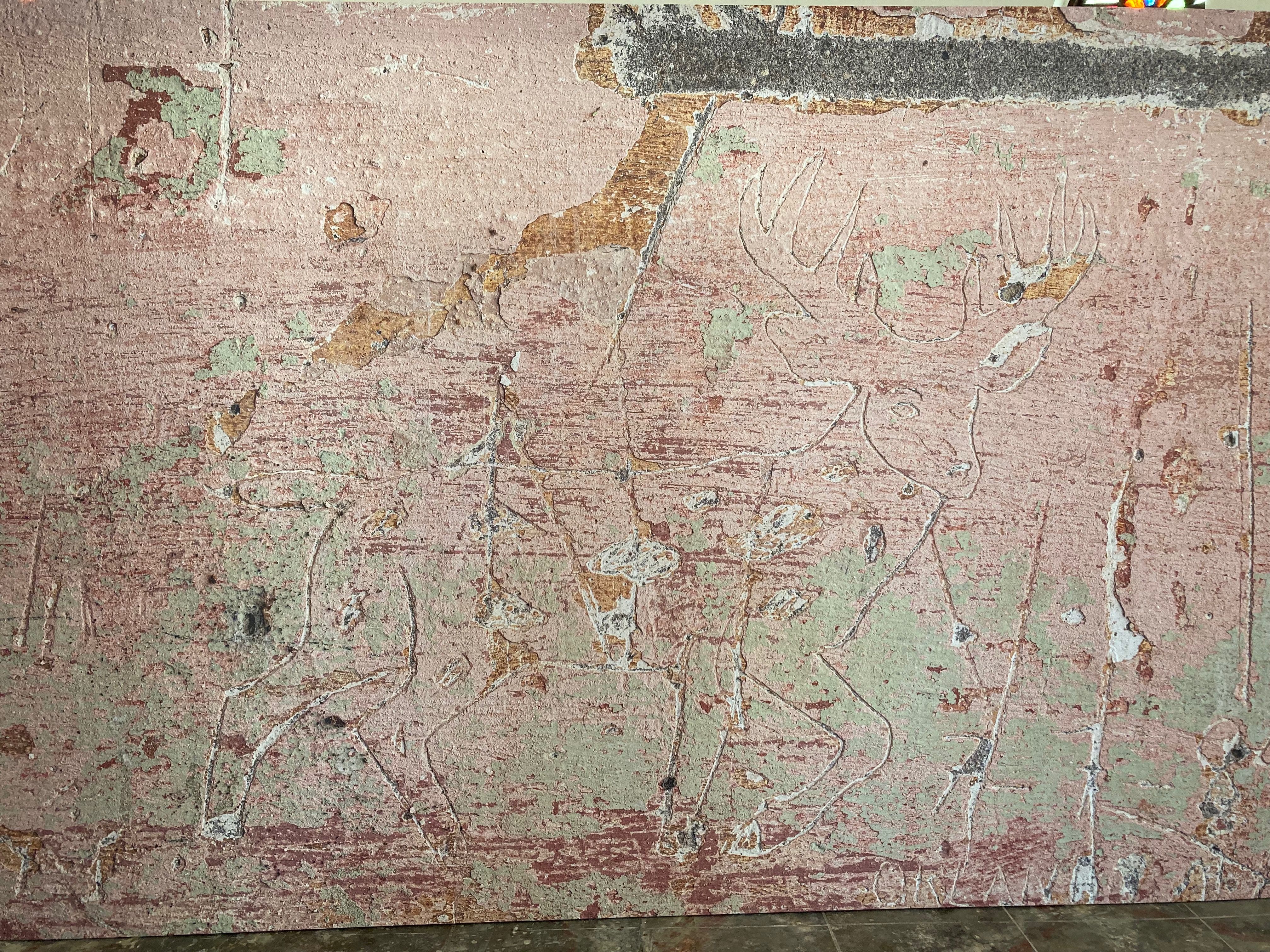
Almost everything went exactly as it did before, procedurally. Like a well-oiled hundred year old machine. Except today we were first in the chamber with the ship behind us. I never got a clarification why, but assumed it had something to do with the difference of going up versus down in the lock and how that tied in with safety.

A minor detail as far as front or back position. However, also a very intimidating detail. Pulling up behind a six hundred foot tanker which looms over you is menacing enough. Watching one pull up behind you can be absolutely terrifying.

In position and secure, we awaited the arrival of the ship that would consume the entire rest of the chamber. Watching it approach, a number of things occurred to me.

It’s hard to capture just how small and insignificant we seemed compared to the massive ship creeping up behind us. It’s even harder to capture how small and insignificant that ship seemed compared to the even bigger one in the lock so close beside us.

Seeing the ships actually under the control of the small railcars was in some ways reassuring while simultaneously being more than a bit disconcerting.

A more detailed view of the railcars

Before long, the ship behind us was in place and our attention shifted from behind us to all around us.

As the water inside the lock is released and the lock level begins to drop, it is critical for the line handlers aboard the boats to monitor and adjust the tension on the lines. Not enough tension and the boats can drift into the cement walls. Even worse, if the line tension is not released, the raft of boats starts listing from the hung up line which then has to be cut. Ugly. Dangerous.

Surprisingly easy to have happen I would suspect, given how difficult it is to perceive the changing water level. If you actually watch the waterline, you can follow the vertical movement along the surface of the lock walls. If you get distracted, it doesn’t take long to be startled by how tall the walls have gotten.

Ever so slowly, the water level continued to drop, until eventually it stopped. Only slightly more perceivable, the lock’s enormous gate, which our position the day before had only allowed us to view closing, began to open in front of us.

A tiny gap in the center grew wider and wider, until eventually the two halves split completely apart and stopped flush into recessed spaces on opposite walls.

Revealed on the other side was Miraflores Lake, a small body of water separating the single lock of Pedro Miguel from the two final locks at Miraflores.

The Pedro Miguel Lock gate opens

Panama Canal Authority time lapse camera footage at Pedro Manuel Lock:

Given how much effort is involved in rafting the three sailboats together, it made sense that we would not separate to travel the one mile distance between Pedro Miguel Lock and Miraflores Locks.

Approaching Miraflores Locks, the corridor looked almost identical.

The line handlers on the lock walls went through exactly same process as each lock before.

We crept forward until the gates were directly before us. With the lock full of water, we could barely peer over the top. Only a glimpse of the world that awaited just beyond.

To the right was a large white building with the words Miraflores Locks painted on the outside. Possibly a control station. The building to the left initially appeared more like a car parking structure; eventually I realized I must be looking at a tourist center of some sort.

What gave it away most were probably all the tourists.

By the look of the large crowd, there was going to be an epic show of some sort.

Apparently, us.

Center stage.

After a brief chance for the crowd to properly idolize and offer adulation to those taking the stage (or maybe it was just awaiting the ship behind us getting into position), it was showtime.

In an epic finale of dramatic flourish, our Panama Canal transit reached its stupendous climax in front of throngs of onlookers. With a feeling of electricity in the air and a sea of expectant faces watching from above – someone in an unseen room threw a switch.

And nothing happened.

Except somewhere below us, water began to slowly drain from lock, and at a nearly imperceivable rate we were lowered.

We were expecting it. We already knew how it would play out. After all, we had done this before. Experienced salts, eh?

For those in the nose bleed section above, probably more used to watching reality tv show dramas unfold, one can only imagine it would have held all the interest of watching paint dry.

Panama Canal Authority time lapse camera footage at Miraflores Locks:

For us, it was incredibly exciting.

Due to the extreme tidal variations of the Pacific Ocean (twelve feet at Panama City compared to one foot at Colon on the Atlantic side), the gates of the Miraflores Lock are the Canal’s tallest and the lower chamber is the highest in the system.

Once the double gates opened fully, we were looking into the final lock separating us from the Pacific.

We entered the last lock.

Inside the lock, it was one last case of deja vu.

With the second lock at Miraflores having completed its task of lowering us to sea level, we watched once again as the colossal gate silently and slowly opened.

However, this time looking out, we were looking at the West Coast of the Americas.

The scope of everything was still sinking in.

Emerging from the final lock of the Panama Canal, the three sailboats slowed, stopped, and separated from each other.

Freed from the cumbersome and awkward raft of other boats, Exit once again could begin making forward progress.

The homestretch.

Only two nautical miles remain before we reach the long awaited landmark that heralds our arrival to the Pacific Ocean – the Bridge of the Americas.

Approaching the bridge, there is plenty of time to smile; but it will take far longer for everything to fully sink in.

Jorge & Julia, to whom we are massively grateful

Moments later the Bridge of the Americas passes a thousand feet above our heads.

Considering the natural high of the moment, I found myself floating enough I might have needed to duck my head had the bridge been any lower.

Immediately beyond the bridge, just outside the Canal markers, lies the mooring field for the Balboa Yacht Club, where we dropped off Victor, our most competent and laid back advisor as well our outstanding line handlers Mario, Jamir, Jorge, and Julia.

We stayed on the mooring for a night.

The following morning we woke up on the Pacific Ocean.

Panama Canal Transit – Day 2

Panama Canal Transit – Day 2
Sovereign Nations

Just another WordPress.com weblog